The Dark Side of Fishing

Throughout history, fishing has been one of the most popular pastimes for all ages, renowned for relatively passive participation required to be successful (ie. sitting on a dock waiting for the fish to come to you). But this does not take into account the negative consequences towards the other half of this game – the fish themselves. 

Conventionally, fish are thought of as dumb, unfeeling creatures, making them the perfect specimen for a practice that is essentially dragging animals from their home environment on barbed hooks solely for human entertainment. This is a treatment that we would not give to any other member of the animal kingdom that we believe to exhibit a certain level of sentience, or the ability to think for itself. For example, cruelty against dogs or cats is heavily dissuaded, whereas such violence on fish, worms, or other “non-sentient” creatures is implicitly allowed.

This assumption about the pain capacity of fish, however, has been proven false. As it turns out, fish have the same types of pain receptors that humans and other animals due, alongside the necessary nerves and senses to detect this pain. They can be shown to feel bee stings, so one can only imagine how strong their pain must be when caught on a hook. 

Additionally, fish are much more intelligent than they are shown to be. Through experimentation, fish have been shown to be able to efficiently learn geometrical relationships with landmarks and navigate mazes, thus shattering conventional stereotypes about fish and with it humanity’s casual belief in their superiority. One cannot help but wonder about the pain these intelligent animals must have felt, and what thoughts would have gone through their minds as they were abused and killed simply for the pleasure of a stronger animal. 

While it is undeniable that fishing is important on various levels, from personal to cultural, it is equally important for us to ensure that our fellow animals are not needlessly injured for our own entertainment and do our part to protect this much munched on group of the sea.

Information adapted from Victoria Braithwaite’s LA Times article “Hooked on a Myth” (https://www.latimes.com/archives/la-xpm-2006-oct-08-oe-braithwaite8-story.html)

– Mahak M.
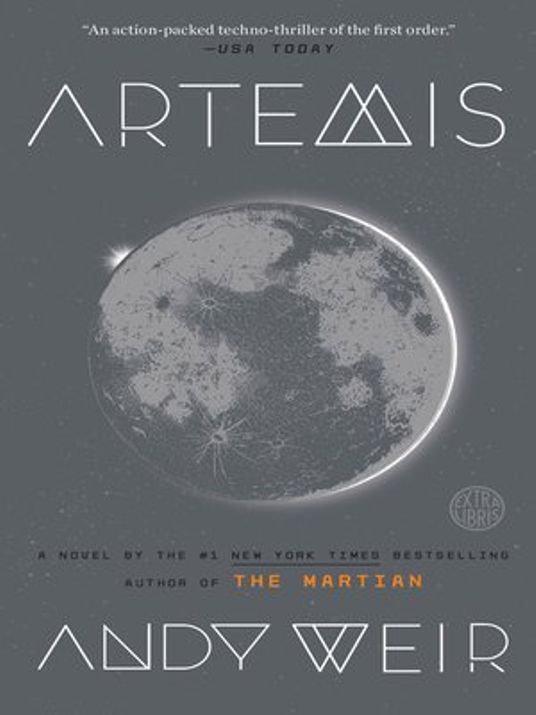
Artemis by Andy Weir

Six years after the rousing success of his debut novel, The Martian, Andy Weir returns with another exciting take on space life, but this time the civilization is a little closer to home.

Artemis is the first lunar city, yet it’s far from perfect, as the novel’s protagonist Jasmine “Jazz” Bashara discovered. Born and raised on the lunar surface, she has built up a “monopoly” over illegal trade and smuggling into and out of Artemis. Unfortunately for her, this causes significant problems when she accepts a job from a wealthy businessman client, only for that client to end up dead, kicking off an action-packed and suspenseful series of events.

Just like The Martian, Andy Weir’s writing immerses you in the scenes he’s created. It is clear that rather than using “fake” science or technobabble, Weir has put quite a lot of thought into the logistics of running a lunar city, to the extent that the vast majority of the plot seems to progress logically, a rarity in science fiction.

The emphasis on scientific reasonableness most definitely does not bog down the plot. The timeline of events moves lightning-quick, helped along by Jazz’s stubborn and clever nature. Intricate and complex, the plot will quickly suck you in, keeping you guessing until the very end.

So, for fans of The Martian (or any science fiction book, really), I would recommend Artemis as your next read. After all, in another year or so, we might actually have our own settlement on the lunar surface, and it doesn’t hurt to be prepared!

– Mahak M.

Artemis by Andy Weir is available to check out from the Mission Viejo Library. It is also available to download for free from Libby.

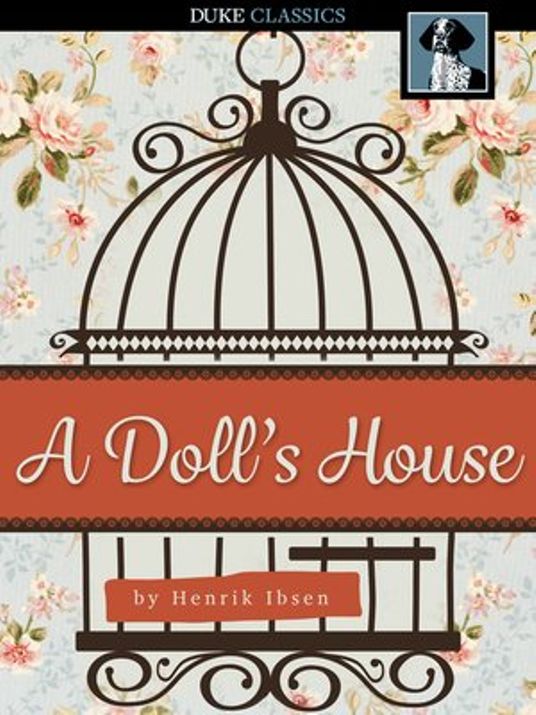
A Doll’s House by Henrik Ibsen

By the latter half of the nineteenth century, Europe had for the most part settled into a status quo. The great upsets of the 1800s had largely ended, and Europe enjoyed a period of relative peace and tranquility for the remainder of the century. However, to judge the impact of this time on the events that preceded and followed it would be to overlook one of the greatest developments in history – the feminist movement.

This change in attitudes towards women was only emphasized by the literature of the time, the most significant and impactful of which can be seen in Henrik Ibsen’s A Doll’s House. Published in December of 1879, the play explores how “a woman cannot be herself” in the male-dominated society of the time.

The play’s protagonist is Nora Helmer, a cheerful and naive middle-class housewife who, over the course of the play, contends with various truths about her existence, the foremost of which is that she has no agency over her own life. That is, her every action is dictated by her overbearing husband, Torvald Helmer. Up until this point, Nora and Torvald have lived in a relationship akin to a doll and its owner – that is, Nora exists only to look pretty and take care of Torvald. All of this changes, though, when one of Nora’s long-held secrets comes back to haunt her, causing her dollhouse to come crashing down.

Nora Helmer’s transformation over the course of the play from a passive and sheltered young woman to one who has the drive to seek out what she wants in life implies Ibsen’s intentions to show how women are indisputably as capable of heroic transformations as men. Despite having been written well over a century ago, the themes of this play continue to resonate with audiences today. When Nora takes her fate into her own hands at the end of the play, she serves as the mouthpiece for millions of women who have done and will do the same.

A Doll’s House by Henrik Ibsen is available to check out from the Mission Viejo Library. It is also available to download for free from Libby.

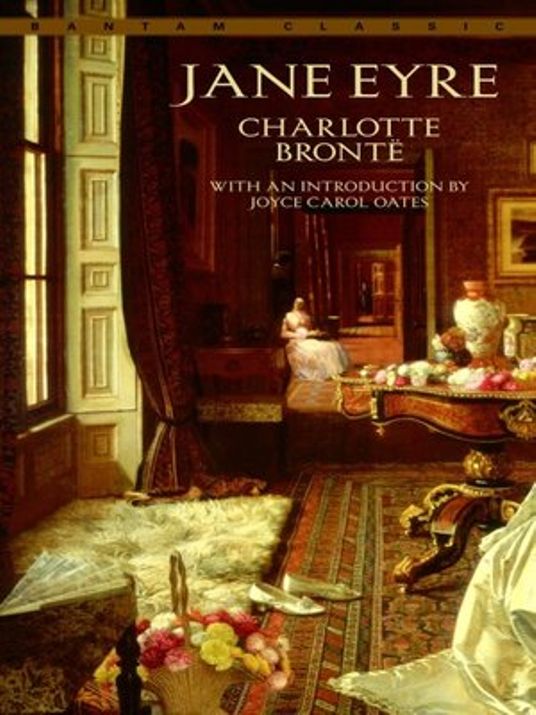
Jane Eyre by Charlotte Brontë

In the public eye, Charlotte Brontë’s Jane Eyre has been reduced to a romance novel. After all, all the elements are present: a plain heroine, a dashing love interest with a mysterious past, a barrier keeping them from their love, and much more. However, to reduce the novel to a story about a madwoman in an attic would be to disregard much of Brontë’s purpose in writing it.

The time Jane Eyre spends in Thornfield with Edward Rochester, the love interest in question, amounts to no more than one third of the book. After all, people do not just appear fully formed out of nowhere – they have a background, and Jane is no exception. Brontë masterfully details Jane’s childhood with her neglectful and abusive relatives at Gateshead, and the positive influence her first friend had on her at the Lowood Institution for Girls. In these parts of the novel, we see Jane growing up and growing into the strong, fierce personality Brontë makes it clear that her protagonist has – a first for female characters at the time.

Moreover, we continue to see Jane becoming her true self in the latter sections of the novel. Although she is finally reunited with part of her family, she does not let her attempts to fit in with them alter who she is and what she believes in. This can be seen when she rejects St. John’s proposal to marriage because she knows he loves another and only wants to marry Jane because she would make a good missionary’s wife. Despite internal and external pressures, she stays true to herself and eventually goes back to Rochester.

Jane Eyre is a bit of a dense read, but it will be time well spent. It covers a variety of topics and themes that allow the modern reader a glimpse into the nineteenth century, while also, of course, noting the forbidden yet passionate romance between Jane Eyre and Edward Rochester.

– Mahak M.

Jane Eyre by Charlotte Brontë is available to check out from the Mission Viejo Library. It is also available to download for free from Libby.

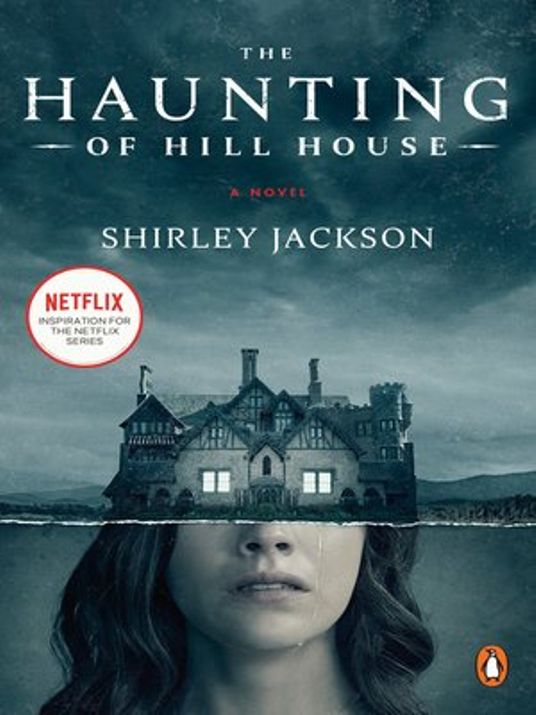
The Haunting of Hill House by Shirley Jackson

No live organism can continue for long to exist sanely under conditions of absolute reality; even larks and katydids are supposed, by some, to dream. Hill House, not sane, stood by itself against its hills, holding darkness within; it had stood so for eighty years and might stand for eighty more. Within, walls continued upright, bricks met neatly, floors were firm, and doors were sensibly shut; silence lay steadily against the wood and stone of Hill House, and whatever walked there, walked alone. 

So opens one of the greatest examples of horror fiction to ever be published: Shirley Jackson’s The Haunting of Hill House. This is the story of a cast of four characters from all walks of life who come together in the eponymous House to investigate possible supernatural disturbances. Little do they know, though, that Hill House refuses to be a passive subject in their study, choosing to fight back against what it perceives as an encroachment of its territory.

The narrator of this harrowing tale is Eleanor Vance, a woman who has spent her entire adult life taking care of her invalid mother. When the chance to escape her rootless existence appears, she jumps on it, but she finds that Hill House is perhaps more haunted than she cares to admit. As the novel progresses, the supernatural events begin to center around her, from mysterious writings on the wall to psychic communications. Eleanor, too, finds herself increasingly becoming out of touch with reality, merging with the House in a terrifyingly slippery slope with the consequence of one of the most shocking climax scenes in literary history.

Overall, The Haunting of Hill House is a brilliantly crafted example of horror fiction. While this genre isn’t usually my cup of tea, I appreciated Shirley Jackson’s masterful weaving of the plot and avoidance of the gore usually found in such books. I would absolutely recommend this book to anyone who needs a new read – so long as you remember to keep the light on.

The Haunting of Hill House by Shirley Jackson is available to check out from the Mission Viejo Library. It is also available to download for free from Libby.

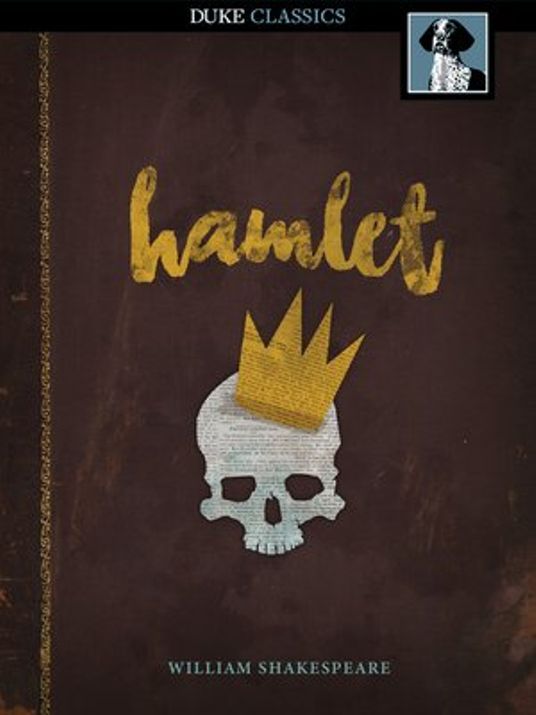
Hamlet by William Shakespeare

To read, or not to read? That is the question. Whether ‘tis nobler in the mind to suffer the slings and arrows of Shakespeare’s outrageous language, or to take arms against a sea of metaphors, and by SparkNotes-ing understand them.

This is, of course, a reference to perhaps one of the most famous scenes in literary history: Hamlet’s soliloquy in the Shakespearean play of the same name. This is the story of Hamlet, prince of Denmark, who, in his quest to prove his uncle murdered his father in order to ascend to the throne, faces obstacles both external and personal that cause his (and the majority of the characters’) downfall.

However, looking beyond the scenario as it is presented, Shakespeare’s characterization captures ideas that permeated throughout society then and still exist in society today. The character flaw that is acute indecision plagues all people in a multitude of ways. Though it may not end in complete misfortune like it does in Hamlet, there are still times when we are paralyzed while making a big decision, and this hesitancy ends up costing us. 

Additionally, for those coming from Romeo and Juliet, be forewarned: Hamlet is not a book of romance. While Hamlet and Ophelia are shown to be in love, Hamlet ends up using Ophelia in his quest to avenge his father, driving her to madness in one of the most tragic events of the play. Hamlet is, first and foremost, a play about appearances versus reality, loyalties and betrayals, and the overarching fear of death and the afterlife.

Hamlet balances these heavy elements with intermittent light-hearted scenes that keep the audience’s attention (after all, this was originally meant to be an Elizabethan-era play), and this creates a book well-worth reading. By doing so, the reader will not only be exposed to one of Shakespeare’s finest works, but also to his most famous lines, many of which originated from Hamlet.

– Mahak M.

Hamlet by William Shakespeare is available to check out from the Mission Viejo Library. It is also available to download for free from Libby.

James Webb Space Telescope: First Images Revealed Event

Launched on December 25, 2021, the James Webb Space Telescope (or Webb) has the potential to revolutionize astronomy, astrophysics, and other space sciences forever. Last month, the first images from Webb were transmitted back to Earth, and what they show is astonishing.

On Saturday, August 20, the Mission Viejo Library held the James Webb Space Telescope: First Images Revealed event, which showcased the preliminary images received from Webb as well as a live presentation by NASA Solar System ambassadors alongside expert comments and conclusions from video panelists. 

Webb works by using infrared light (or heat, imperceptible to the human eye), to view and capture images from deep space. This new technique complements the Hubble telescope, but it also allows Webb to see extremely far away at distances over 13 billion years away – nearly as old as the universe itself!

One of my favorite images from the presentation was the Carina Nebula, shown to the left. The James Webb Telescope has captured the first image of a star actually being born in a stellar nursery, confirming scientific theories while also raising new questions about the details of star birth. 

I also liked the picture of the deep space field, shown to the right. Although the brightest stars are “photobombing” the image, since they’re part of the Milky Way galaxy, some of the smaller and dimmer spots are actually never-before-seen galaxies, part of the ancient world formed just after the creation of the universe. The curves near the center of the image also show concrete proof of gravitational lensing (or the curving of space-time as theorized by Albert Einstein). 

Despite all of these fascinating discoveries, Webb is far from finished. Not only is there so much left to be discovered and explained about the images it has already sent, it is projected to last for a decade or longer, so it will undoubtedly unveil more and more about the universe we live in. Overall, I really enjoyed the Webb event, and look forward to presentations like this in the future.

Images courtesy of NASA (nasa.gov)

– Mahak M.

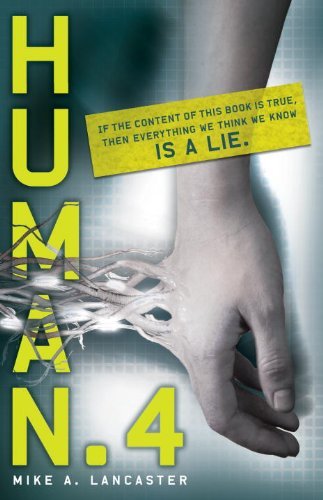
Human.4 by Mike A. Lancaster

When Kyle Straker volunteers to be hypnotized at the annual Millgrove talent show, he expected the usual amateur act – perhaps slight embarrassment from being made to act like a chicken, but nothing more than that. What he wakes up to, though, is a nightmare. Cars and televisions no longer work, townspeople communicate in a strange language, but worst of all, people simply pass by Kyle as if he does not exist.

In an attempt to discover what caused this monumental shift, Kyle teams up with the three other hapless volunteers in order to survive the strange new world they have found themselves in. However, the more they investigate, the more danger they find themselves in as they eventually realize that there is more than just their lives at stake, but also their way of life.

The novel is told through a series of cassette tapes that have subsequently become a historical artifact called the Straker Tapes. Mike Lancaster assumes the position of the historian with editor’s notes to explain parts of the story that would not make sense to the evolved human, which adds both humor and horror to the story. For example, he goes into great detail describing mouths, which, though amusing to the reader, inevitably implies that the future humans depicted in the novel do not have any and are therefore superior, emphasizing the oddness of the new world Kyle and his friends find themselves in.

Overall, I enjoyed Human.4 by Mike Lancaster because it was a unique premise I had never read or considered before. While it is not a conventional dystopian novel, I would recommend it to anyone who enjoys them for a new take on the genre.

– Mahak M.

The Steam Engine

If I were to ask you what the most important invention in human history was, what would you say? The computer, which kickstarted the digital revolution and launched us into the modern age? The lightbulb, which moved humanity out of the darkness and into the literal light? However, to find the invention that truly revolutionized humanity, one must go a few centuries back in time and consider the steam engine.

In 1698, an engineer named Thomas Savery invented the first steam engine, although it certainly was not used for the purposes we consider today. Instead, it was made to draw water out of flooded mines using steam compression. However, the slow heating-cooling process and wastage of steam made this and successive machines, notably the Newcomen engine, largely ineffective, but that changed with James Watt in 1765. Patenting a new, improved steam engine, James Watt was able to harness the power of steam into machines, which led inexorably into the Industrial Revolution.

Like the name suggests, the Industrial Revolution revolutionized industry. More specifically, it shifted the economy from agrarian to industrial, and people moved from working in the home to working for wages in the factories. These factories housed machines that were powered by the steam engine for every industry, from textiles to iron. Without the steam engine, these industries would have never gotten off of the ground.

However, the steam engine did more than impact industries – it revolutionized transportation. In steamboats, like those engineered by Robert Fulton, the steam engine allowed for the shipment of goods both downstream and upstream with ease, lowering costs and travel times. However, the most important impact of the steam engine to consider is the rise of the railroads. In Europe and America, railroads changed the way people lived, worked, and settled. The transcontinental railroad, for example, made moving to other parts of the country easier, since the transportation would cost less and there would be greater access to goods. Not only that, these railroads tied together the countries they were built in in a way that would have been impossible without the steam engine.

So the next time you use a computer or switch on a lightbulb, spare a thought for the oft-overlooked steam engine – it’s quite possible that none of these inventions would exist without it! 

– Mahak M.

A Critique of Eternals (2021)

Cover image for ETERNALS / produced by Kevin Feige, Nate Moore, Juan Cano Nono, Andreas Wentz ; screenplay by Chloae Zhao, Patrick Burleigh, Ryan Firpo, Kaz Firpo ; directed by Chloae Zhao.

Since the dawn of time, an eternal war has been waged across the universe: the Eternals, immortal aliens gifted with abilities to stop the Deviants, monstrous creatures who seek only death and destruction. Earth has been one such battleground for these two groups, and for millennia the Eternals have protected the seeds of humanity and allowed them to flourish into a thriving modern civilization. However, with the return of the Deviants, the Eternals are forced to come out of hiding and into the light to protect the Earth one last time.

This is the premise of Eternals, a 2021 film that is arguably the first film to really be a part of Phase 4 of the Marvel Cinematic Universe (MCU), since it seeks to connect the past with the present, providing a new structure for the MCU as well as teases for future storylines. Unfortunately, it is this emphasis on the future that weakens the present film itself, leaving viewers looking forward to the new additions to the MCU rather than enjoying the film.

This is partly due to the sheer number of characters introduced in the span of a two and a half hour film. There are ten main Eternals in the movie, and it is difficult for the casual viewer to commit to memory each name, face, and power, especially since some of the characters have incredibly similar and trite powers, like lasers or super strength. This endeavor is quickly rendered futile, though, since half of the major characters are killed off within the first hour of the film.

The audience’s inability to connect with the characters on the screen diminishes every aspect of the film. The surprising plot twist would have worked better if it wasn’t shown primarily off-screen. The romantic aspects of the plot were awkward and at some points distasteful to watch. The Deviants, supposedly the big bad villains of the movie, were almost completely written off by the end of it.

All of this is to say that, in my opinion, Eternals was one of more flawed movies of the MCU, rivaling Thor: The Dark World, however strong of a comparison that may be. In the end, the weak plot was spread far too thin, leaving viewers unsatisfied with the entirety of the film. As a dedicated Marvel movie-goer, I hope that future MCU films do not make the same mistakes as Eternals did.

– Mahak M.

Eternals is available to checkout from the Mission Viejo Library.