The House of Mirth by Edith Wharton

Cover image for The house of mirth / Edith Wharton.

Lily Bart: fashionable, socially-adept, and absolutely beautiful. Born and raised in the upper echelons of New York society, she seems the type of woman to immediately wed a wealthy man and secure her position as a rich socialite. However, due to her own warring nature between her material desires and her yearning for true love, Lily finds herself caught in a malicious web of jealousy and deceit that causes her fall from grace and social affluence to poverty and loneliness on the margins of society.

It is this unfortunate journey that Edith Wharton chronicles in her novel The House of Mirth. Although Lily is the protagonist of the novel, Wharton explores the events from other perspectives, notably Laurence Selden, Lily’s true love interest. The greatest irony of the novel is that although Selden openly despises the superficial and gossip-driven high society, when push comes to shove and Lily’s reputation is tarnished by forces outside of her control, Selden has the same prejudices against her, and it is these biases that keep Lily and Selden from their happy ending until it is too late to reach it.

Outside of Lily Bart herself, Wharton uses the novel to criticize the society of which she was a part. The most obvious of these is the disparity between what is expected out of men and women during this time. As Lily herself notes, while men could get away with shabbiness or not marrying, women were forced to always look beautiful and presentable, and had to marry in order to keep this up. Ultimately, Lily’s inability to cope with the demands her society made of her caused her decline into the fringes of society.

Overall, The House of Mirth is in no way a light or funny read as the title suggests. Instead, it represents the depressing struggle between what society has determined for people to be and what those people actually are through Lily Bart’s equally tragic story arc. In the end, The House of Mirth is an interesting read if only to understand the similarities between early twentieth century society and modern life.

– Mahak M.

The House of Mirth by Edith Wharton is available to checkout from the Mission Viejo Library. It is also available to download for free from Libby.

Magpie Murders by Anthony Horowitz

Cover image for Magpie murders / Anthony Horowitz.

When the brilliant yet mean-spirited author Alan Conway is found to have jumped off of his tower, there is no evidence to suggest that it could have been anything more than suicide. In fact, no one cares to look into it too much, since there were more people who detested Alan Conway the person than who loved Alan Conway the mystery novelist. However, his editor, Susan Ryeland, has her suspicions.

After all, Conway had just submitted to her the manuscript of Magpie Murders, his latest and final novel in his world-famous Atticus Pünd series, but the last chapter is mysteriously missing from the pages. As Susan searches for the missing pages, she comes to the realization that, perhaps, the supposedly “fictional” novel is actually based on real events, and that maybe, just maybe, the murderer in reality caught wind of Conway’s tactics to expose them and took matters into their own hands…

Magpie Murders by Anthony Horowitz is an interesting read because of its story-within-a-story format. On the outside, there is Susan Ryeland’s investigation into Alan Conway’s life, the missing pages, and the murder the novel was based on. Within this framework, however, is the actual Magpie Murders, an Atticus Pünd detective novel written by Alan Conway (without the ending, of course). I enjoyed this format because it almost felt like a two-for-one read, where there were two well written mysteries in the span of one book. 

I would recommend this novel to any fans of Agatha Christie, since there are obviously a lot of similarities between her books and those of “Alan Conway” (compare Hercule Poirot to Atticus Pünd, for starters). However, any and all fans of mystery and adventure will enjoy this novel too.

– Mahak M.

Magpie Murders by Anthony Horowitz is available for checkout from the Mission Viejo Library. It is also available to download for free from Libby.

Chronicle of a Death Foretold by Gabriel Garcia Márquez

Cover image for Chronicle of a death foretold : a novel / Gabriel García Márquez ; translated from the Spanish by Gregory Rabassa.

It was a clear, cold morning in an unnamed village in Colombia. Excited to see the bishop, who visited their town very rarely, the villagers were stunned when they learned, a few hours later, that the well-loved and respected Vicario twins had murdered a fellow villager, Santiago Nasar, in an attempt to restore her sister’s honor. The greatest irony of the situation, however, is that although the brothers tell anyone who will listen about their plans to murder Santiago, in the hopes that they will be stopped, the villagers either ignore the announcement, assume someone else has taken care of it, or, in some cases, actually encourage the twins to follow through.

This is the premise of Gabriel Garcia Márquez’s enduring literary work: Chronicle of a Death Foretold. Surprisingly, the actual novel is not a chronicle in any sense of the word; the narrator is shockingly unreliable and tells the sequence of events completely out of order. As for “death foretold,” where one might expect that to refer to the fact that the Vicario twins made their intentions perfectly clear to all, thus announcing the death, the truth is that the entire novel is steeped in dramatic irony, since the reader knows from the outset that Santiago Nasar is fated to die – it has been “foretold” by the narrator.

Aside from the murder itself, one of the more significant aspects of the novel is its representation of Colombian culture and society. Although traditional authorities are present, such as the bishop and the police, it quickly becomes clear that the ultimate authority in the town is the social construct of honor. The Vicario twins, who are established as good people, are pushed to commit a heinous crime because of honor, and people encourage them to do it because of the same. Even if the authorities previously mentioned attempt to stop them, the need to retain honor prevails. 

Ultimately, Chronicle of a Death Foretold is intriguing because it completely subverts the reader’s initial expectations for it while also shining a light on the influence of society on a murder. A departure from traditional “murder mysteries,” this novel manages to retain the aspects of a mystery while also being open about its true meaning, making it a fascinating read.

– Mahak M.

Chronicle of a Death Foretold by Gabriel Garcia Marquez is available to checkout from the Mission Viejo Library.

Waiting for Godot by Samuel Beckett

Cover image for Waiting for Godot / Samuel Beckett.

On January 5, 1953, the audience members at the Théâtre de Babylone in Paris entered a showing of Samuel Beckett’s En Attendant Godot, expecting to see a conventional play. However, faced with a play that lacked the key elements of Aristotelian models, viewers were torn between confusion and intrigue, and En Attendant Godot consequently became one of the most popular productions in France. When Beckett translated it into English a year later, christening it Waiting for Godot, it became a hit among British and American audiences too. Waiting for Godot chronicles two men, Vladimir and Estragon, who stand in a lonely landscape by a tree and, as the title suggests, wait for Godot, but this simple premise has a catch – it is the only premise.

All day, every day, Vladimir and Estragon do nothing but pass the time as they endlessly await Godot, and the only break from this dreary monotony is when two other characters, Pozzo and Lucky, pass through. The repetitive, inane discourse between the four characters initially irritates the audience, with good reason. After all, the seemingly illogical behavior of the characters rankles the usually more reasonable people watching or reading the play, who ask themselves: why don’t they just leave? 

However, as the play progresses, it becomes clear that they cannot leave. Even if they threaten to, there is some invisible force that keeps them tethered to the faint hope that Godot will arrive, even as it becomes increasingly obvious that he will not. As annoyed as one might be with Vladimir and Estragon’s behavior, one cannot help but draw parallels between their situation and that of humanity – after all, whether they are aware of it or not, everyone holds a secret hope or desire that they maintain despite clear evidence that it will never come to fruition. 

In the end, these men illustrate to the audience that humans as a whole, no matter what their differences may be, will continually strive for that which will never come without ever realizing its impossibility. As Vladimir and Estragon long for Godot, Pozzo for power, and Lucky for freedom, it is clear that they all are really searching for meaning in a world that has none to offer. 

– Mahak M.

Waiting for Godot by Samuel Beckett is available for checkout from the Mission Viejo Library.

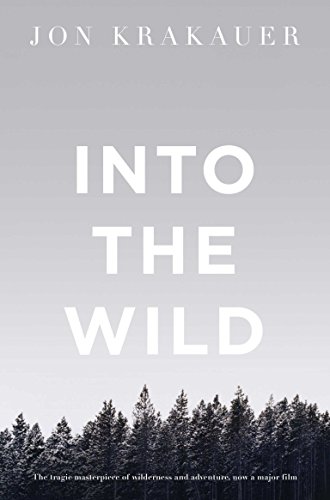
Into the Wild by Jon Krakauer

Amazon.com: Into the Wild (Picador Classic Book 78) eBook : Krakauer, Jon:  Kindle Store

On April 28, 1992, twenty-four-year-old Christopher McCandless walked into the untamed wilderness of northern Alaska. Having donated all his savings to charity, abandoned his car, and burned all the cash in his wallet, he was fully prepared to forge a new life for himself. However, only four months later, he was found dead by the Sushana River.

In Into the Wild, acclaimed journalist and outdoorsman Jon Krakauer attempts to crack the case of what killed Chris McCandless. He retraces McCandless’ steps from his former life as a member of a well-off family in Virginia to his increasingly meandering, wanderlust-filled travels across the continent to, eventually, the fatal trip to Alaska. Krakauer intersperses his findings with personal information and claims, including facts about McCandless’ home life and how it led to his Alaska trip, as well as events from Krakauer’s own life, such as his ascension of the Devil’s Thumb.

Into the Wild balances the themes of the call of the wilderness with the pull of familial ties, the desire to explore the world with the need to settle down, the need for belonging with the desire to discover one’s true identity, and more. Though it is a nonfiction book, it certainly reads like an adventure novel, admittedly tinged with sadness because of the inevitable conclusion.

While I am personally not one for the outdoors, I appreciated and was intrigued by Krakauer’s writing style. He manages to create an investigative survival story out of McCandless’ story in a way that keeps the reader hooked on both McCandless’ adventures and his family’s concern back East. In the end, although McCandless’ story has a tragic ending, it not only serves as a lesson for aspiring naturalists who wish to “live off the land” as he tried to do, but also to regular people living their lives, encouraging them to follow their dreams, whatever they may be, or wherever they may lead them.

– Mahak M.

Into The Wild by Jon Krakauer is available for checkout from the Mission Viejo Library. It can also be downloaded for free from Overdrive.

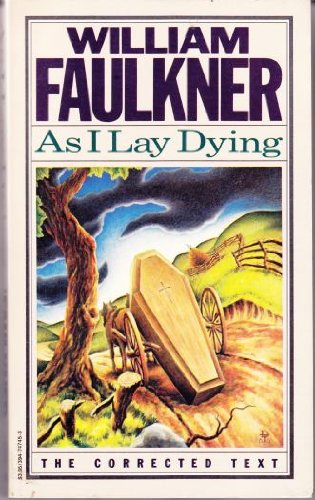
As I Lay Dying by William Faulkner

As I Lay Dying - V745: Faulkner, William: 9780394747453: Amazon.com: Books

Set during the Great Depression, William Faulkner’s As I Lay Dying explores the nature of existence while also denouncing the nature of humanity. Acclaimed for its stream of consciousness writing and use of multiple narrators, the novel challenges conventional grammatical and thematic ideas by showing the instability and unreliability of reality. 

The Bundren family consists of Anse (the father), Addie (the dying mother), and their children: Cash, Jewel, Darl, Dewey Dell, and Vardaman. The novel follows the Bundren family on their ill-fated journey from the (fictional) Yoknapatawpha County to Addie’s native Jefferson, Mississippi, ostensibly to bury her there as her last wish. In reality, each family member has a different, private reason for wanting to travel to Jefferson, and these desires come to light over the course of the novel.

In contrast to typical works of the time period, the Bundren family is shockingly dysfunctional. Each family member absolutely detests every other member, and, when faced with any problem, they will not hesitate to betray or place the blame on someone else. The lack of definitive parental influence only highlights this disparity between the ideal and the actual.

On a broader scale, As I Lay Dying investigates themes of mortality and inevitability. From Vardaman’s infamous statement when faced with his mother’s death (“my mother is a fish”) to Darl’s monologues on is and was to Addie’s narration of her story from beyond the grave, the novel considers the truth of life and death, and what it means to be alive, making it an interesting read.

– Mahak M.

As I Lay Dying by WIlliam Faulkner is available for checkout from the Mission Viejo Library. It can also be downloaded for free from Overdrive.

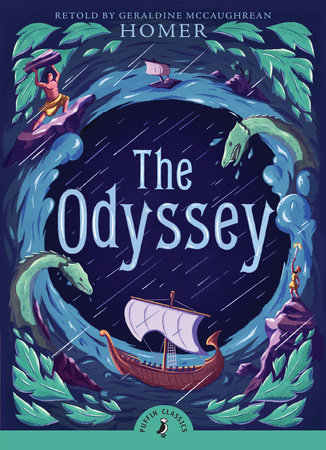
Odysseus: A Character Analysis

The Odyssey by Homer: 9780140383096 | PenguinRandomHouse.com: Books

Around 750 BCE, at the height of Greek civilization, a blind bard named Homer lived in Ionia, on the western coast of Turkey. Little is known about Homer, but his legacy lives on in his two great works – the Iliad and the Odyssey. While the former is formidable in its own right, it is in its sequel, the Odyssey, that Homer’s incredible craft is showcased. Detailing the adventures of Odysseus, the wily king of Ithaca, and his ten-year-long attempt to return to his country, the Odyssey explores lofty themes of human nature while remaining relatable to readers nearly three thousand years later. 

The poem can generally be split into three parts: immediately post-Trojan War, when Odysseus begins to set sail for home; the true odyssey, in which Odysseus must overcome many obstacles on his way back to his home; and the return to Ithaca, the chronicle of Odysseus regaining his rightful position as king. However, it is not the events of the poem that are worthy of note – instead, it is the behavior of the hero himself. Through the interference of the gods, whether to aid or hinder, Odysseus withstands harrowing experiences, all of which leave him a man and hero changed for the better. 

Odysseus is introduced to the audience as a god among men (in Ithaca, at least). However, this implies that Odysseus has never truly needed to better himself, making him vulnerable to hubris. Odysseus’ pride is justified to an extent, as seen when he and his crew are captured by the Cyclops, but Odysseus manages to trick the Cyclops and engineer their escape. However, just as they are about to sail away, Odysseus arrogantly stokes the rage of the Cyclops, not realising that the Cyclops he insults is the son of Poseidon, who then curses Odysseus. This is the catalyst for the change that Odysseus will undergo for the rest of the poem, because it makes it clear his pride will not serve him well in the future. 

In the ten long years between Odysseus’ departure from Troy and his arrival in Ithaca, Odysseus faces countless struggles that mold him into a character that is capable of overcoming his previously debilitating hubris. He meets characters who are equally as clever and wily as he is, forcing him to recognise people outside of himself. Famous characters who make an appearance during this arc are Circe, the wickedly powerful enchantress of the sea; Scylla and Charybdis, two sea monsters who devastate Odysseus’ crew; and Calypso, who successfully manages to trap Odysseus on her island for seven years. However, these experiences are mitigated by divine interference, notably via Athena and Hermes. 

By the final arc of the story, Odysseus has finally renounced his hubris and bowed to the will of the gods, while also being self-aware enough to understand his own worth. The situation in his country has deteriorated in his absence, and suitors of his wife, Penelope, have overrun the palace. Heeding the lessons of the past decade, Odysseus disguises himself as a poor beggar and wanders to the home of his loyal shepherd, Eumaeus, choosing to keep himself secret until he can determine who in Ithaca is truly loyal to him – a wise move, considering that the very next day, he is accosted by both one of his subjects and a suitor. By this point in his journey, Odysseus has learned how to let go of his pride with the knowledge that he will soon get his revenge. 

It is this that makes Odysseus a revolutionary hero: not that he is strong enough to kill all the suitors, but that he is clever enough to both withstand the abuse directed towards him while betraying nothing, and to trick the suitors into underestimating him until the fatal moment. Because of the way he handles the unfortunate situation he is in, although Odysseus does not fit the usual definition of a Greek hero (that is, all brawn and no brains), throughout his journey, he learns to be a more balanced heroic figure, which undoubtedly cements his status as one of the foremost heroes in literature for all time.

– Mahak M.

Homer’s The Odyssey is available for checkout from the Mission Viejo Library. It can also be downloaded for free from Overdrive.

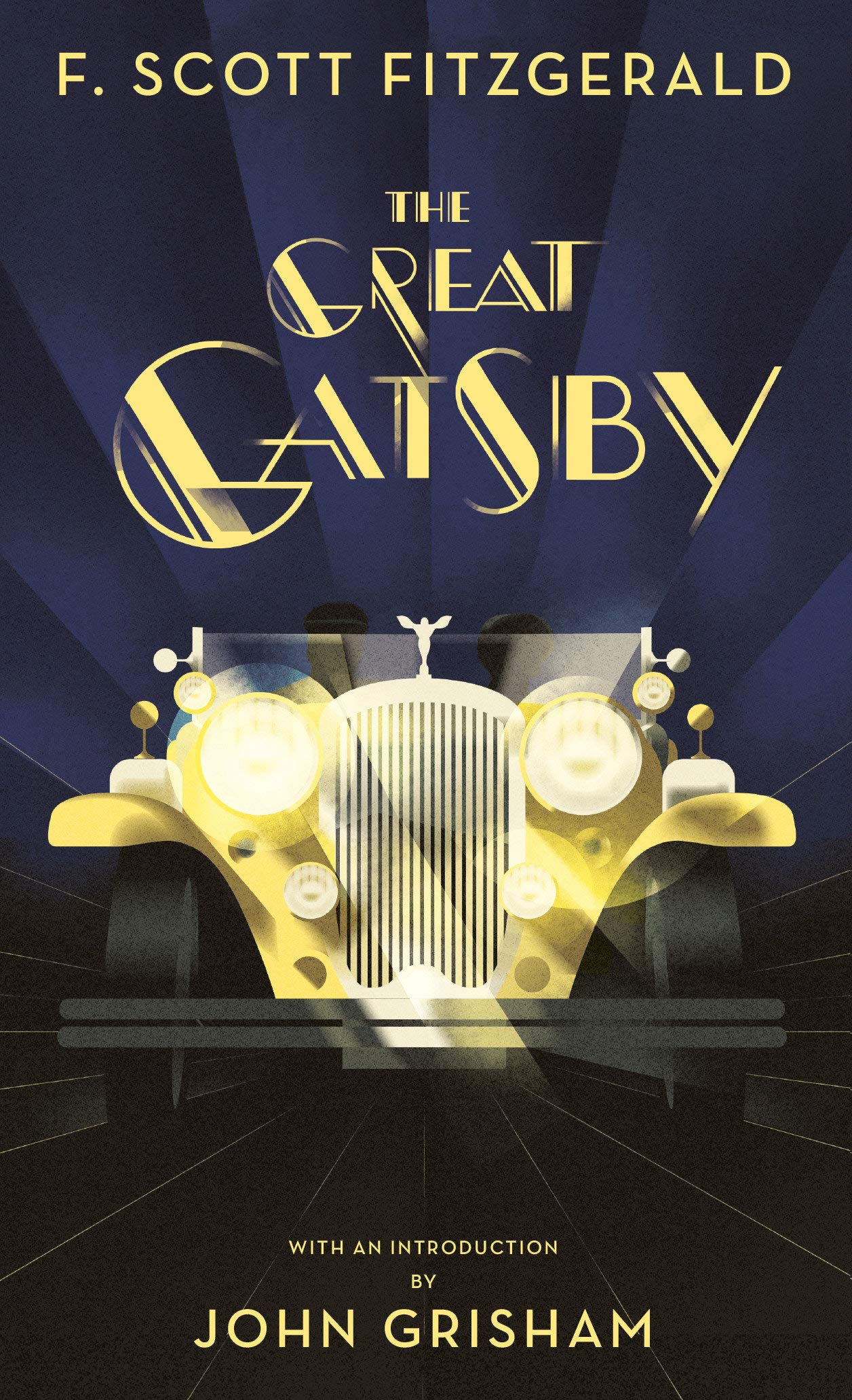
The American Dream in The Great Gatsby

The Great Gatsby (Vintage Classics): Fitzgerald, F. Scott, Grisham, John:  9780593312919: Amazon.com: Books

In the decade after the end of the Great War, the world was in shambles. Though relatively untouched by the devastation, America, along with the rest of the world, experienced a reactionary period against the brutal war, during which materialism flourished alongside the economy. The result was an era known as the Roaring Twenties, a cultural revolution that emphasised entertainment rather than functionality.

However, this veneer of excitement was underscored by the most important idea of the time – the American dream, the idea that all people have equal opportunities in life. Unfortunately, as people soon realised, the American dream was just that – a dream. The following disillusionment with society and life was reflected in the modernist works of the time, arguably the most significant of which was F. Scott Fitzgerald’s The Great Gatsby.

Nick Carraway, a young man from Chicago, moves to the “new-money” district of West Egg in New York, hoping to become a bondsman. Instead, he finds himself reconnecting with his “old-money” cousins in East Egg, Tom and Daisy Buchanan, as well as befriending the mysterious and even wealthier Jay Gatsby. The tale of Gatsby’s fabulous parties on the Long Island Sound is underscored by Gatsby’s obsession with his old love, who turns out to be Daisy Buchanan. Over the course of the novel, Gatsby uses Nick to reconnect with Daisy, but it is when Gatsby is closer than ever to achieving his dream that it is all torn away from him, and Fitzgerald’s message of the unattainability of the American dream shines through. 

This theme appears in various other characters as well, most notably in George and Myrtle Wilson. George, a destitute auto shop owner, dreams of running a successful business and of having a woman who loves him. He is foiled in the former because though he dreams of selling Tom’s blue coupé, Tom’s reluctance to sell it to him leaves him despairing for the future. He is also let down in the latter, considering that his wife, Myrtle, is Tom’s mistress. She, in turn, dreams of marrying Tom and therefore ascending to the upper class, but her hopes are fatally crushed in the novel’s chilling climax.

In The Great Gatsby, Fitzgerald writes his characters to each reflect a different section of society that aspires to achieve the American dream, ultimately concluding that no such thing exists or is attainable. Interestingly, the novel’s focus on the detrimental effects of materialistic culture and the relentless pursuit of the American dream lends itself to foreshadowing the Great Depression, which only proves Fitzgerald’s claim – the American dream is dead.

– Mahak M.

The Great Gatsby by F. Scott Fitzgerald is available for checkout from the Mission Viejo Library. It can also be downloaded for free from Overdrive

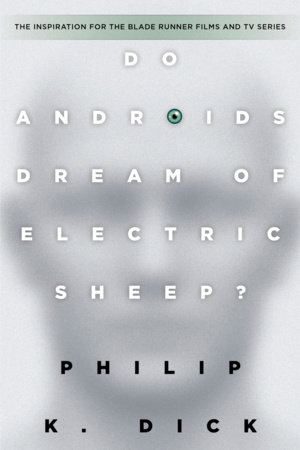
Book Review: Do Androids Dream of Electric Sheep? by Philip K. Dick

Following a devastating global war called World War Terminus, the radioactive fallout in the Earth’s atmosphere has left the planet near inhospitable, driving entire species of animals into extinction. Most of mankind has fled from their homeworld, preferring to live in off-world colonies. The humans who remain desire any living creature, and for those who cannot afford one, incredibly realistic copies of any creature can be made to order, from sheep to ostriches to anything in between – including humans.

While the androids were originally designed to assist the immigrants to Mars, their frightening indistinguishability from actual humans caused them to be banned from Earth. Some rogue androids, or “andys,” however, escaped, and now live among human beings undetected. Because of this, official bounty hunters are commissioned to find these androids and “retire” them.

Rick Deckard, a bounty hunter living in what was once San Francisco, is tasked with finding a special group of andys, designated Nexus-6, a highly intelligent model made of organic material so similar to that of humans that only an invasive posthumous procedure can determine the difference. While Deckard begins his commission believing it to be ultimately no different from his other missions, he quickly realizes that this is far from the case. The advanced androids are so indiscernible from regular humans that Deckard begins to empathize with them, finding it harder to complete his mission as it goes along. However, the andys are not human, and when faced with certain death, they are completely willing to fight for their survival by any means necessary.

Do Androids Dream of Electric Sheep? by Philip K. Dick is simultaneously an intriguing science fiction novel and an analysis of the psychological impact of loneliness and what it means to be human. The action-filled plot takes the reader on a rollercoaster of emotions with a twist ending. This book is definitely recommended to fans of the sci-fi or dystopian genres.

-Mahak M.

Do Androids Dream of Electric Sheep? by Philip K. Dick is available for checkout at the Mission Viejo Library. It can also be downloaded for free from Overdrive.

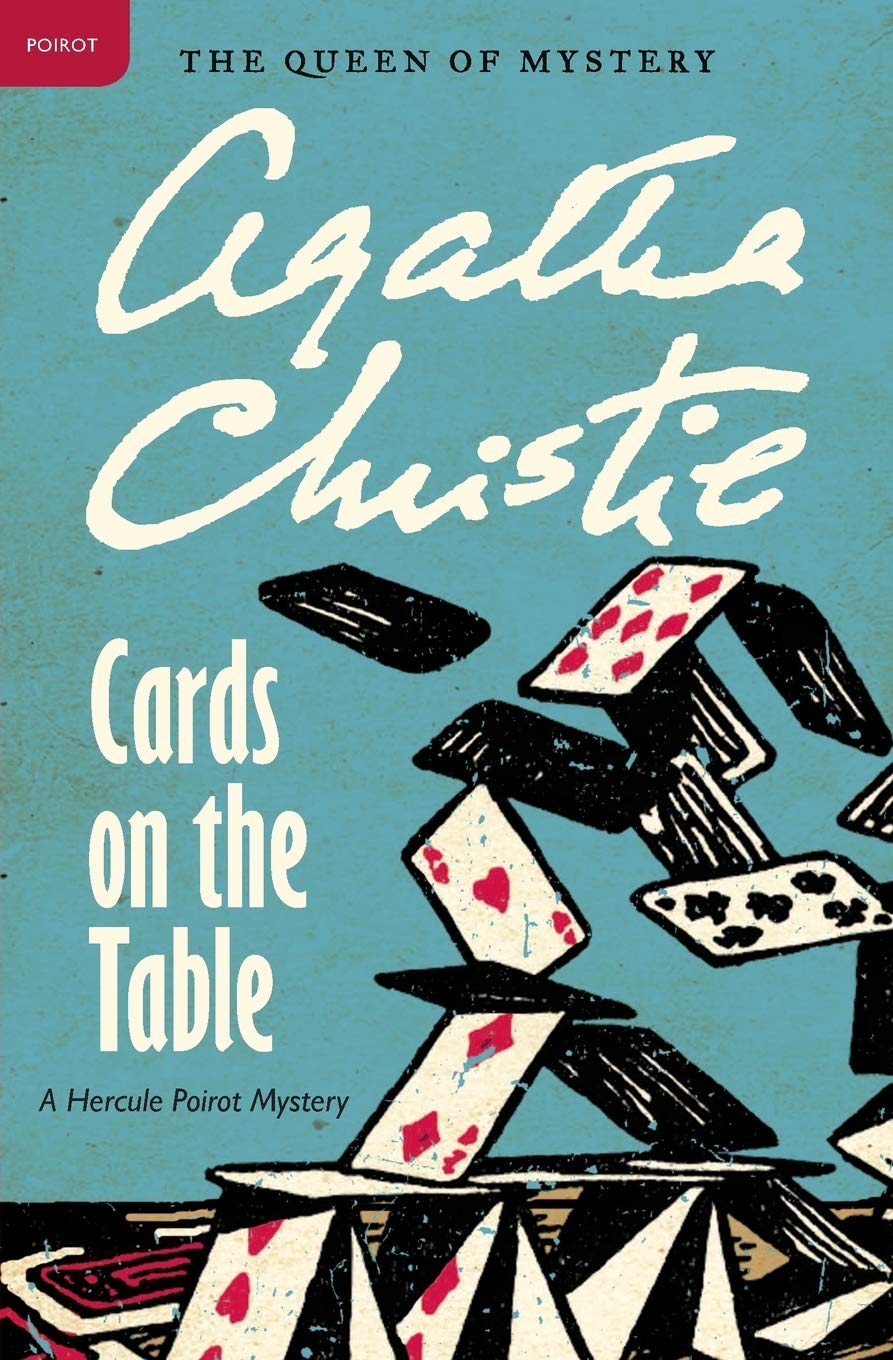
Book Review: Cards on the Table by Agatha Christie

Amazon.com: Cards on the Table: A Hercule Poirot Mystery (Hercule Poirot  Mysteries, 15) (9780062073730): Christie, Agatha: Books

When Mr. Shaitana, a flamboyant yet slightly sinister collector and party host, reveals to famous detective Hercule Poirot his newest “crime collection” – that of criminals who have evaded justice – Poirot naturally has some misgivings. These suspicions come to a head during an evening bridge party with the “collected” people, when Shaitana is murdered in full view of the entire room, all of whom have a reason to want their host dead.

The interesting aspect of Shaitana’s bridge party was the even matching of detective to murderer – four of each. The former group consisted of the previously mentioned Hercule Poirot, the mystery writer Ariadne Oliver, Superintendent Battle of Scotland Yard, and secret serviceman Colonel Race. In the latter group, Shaitana had “collected” Dr. Roberts, Mrs. Lorrimer, Anne Meredith, and Major Despard, each one with a criminal past.

Lacking a clear suspect, the detectives are forced to go far back into each person’s history to find the psychological connection between previous crimes and the murder of Shaitana. However, it quickly becomes clear that the murderer has only grown bolder with time, and as red herrings abound, the killer is not afraid to strike again…or again.

Cards on the Table is certainly a departure from Agatha Christie’s usual affair, but the plot is no less tightly woven, nor the end less surprising for it. Christie keeps the reader guessing throughout the novel until the dramatic final reveal. I would definitely recommend this book to fans of Christie, or investigative novels in general, because it provides a new perspective to crimes and motives.

-Mahak M.

Cards on the Table by Agatha Christie is available for checkout at the Mission Viejo Library.