Why Are We So Obsessed With the Apocalypse?

So much media features the end times. From movies like A Quiet Place and Mad Max to novels like Silo and The Girl With All the Gifts, people just can’t seem to get enough of the genre. Why are we so obsessed with the apocalypse? According to Hugh Howey, author of the post-apocalyptic novel series Silo, humans tell stories as much for warning as for entertainment. Stories about disaster are expressions of our internal fears, and seeing characters prosper in face of those disasters gives us hope.

For this reason, wilderness and survival stories have always been popular. But why have we moved past the wilderness and towards the world-ending?

As we’ve explored most of the Earth, we’ve lost a lot of the wonder and fear we used to have for certain environments. Howey believes that “we need to imagine a future where we might be exploring other worlds, or a future where our world returns to the wilderness that we fear” in order to make our stories interesting.

If you’re interested in the post-apocalyptic genre, here are my top 3 favorites:

  1. Parable of the Sower by Octavia E. Butler
  2. The Girl With All the Gifts by M.R. Carey
  3. Silo series by Hugh Howey

These books are absolutely amazing, and I highly recommend them!

Cryptics: The Hardest Puzzles and How to Solve Them

Be warned- cryptics are not for the faint of heart. These puzzles are confusing, convoluted, frustrating, and absolutely mind-boggling, to beginner and veteran puzzlers alike. There so many different ways to interpret and solve these puzzles; even after you’re told the answer to a particularly difficult cryptic, you still might stare at the clues wondering, “how on earth did they get that from that?” Intrigued? Me too.

At first glance, the British cryptic looks a lot like the American crossword. However, all of the clues are like riddles, with more than nine different ways to interpret them. There are typically two parts to a given clue: the “cryptic” (the riddle and answer) and the “straight” (a synonym for the riddle’s solution). The straight always includes either the first or the last word of the clue, but you don’t know which one. Here are some of the many ways to solve cryptics, with examples from The New Yorker:

  1. Anagrams– indicator words usually connote violence (ruined, shattered), altered states (crazy, drunk), or reconfiguration (mixed, remade, new). EX: in the cryptic “Honestly crazy, in secret”, the word “crazy” suggests the word “honestly” should be anagrammed. This means that “in secret” must be the straight: a synonym for an anagram of honestly. In this case, the answer is “on the sly” (an anagram of “honestly” and a synonym for “in secret”).
  2. Hidden Word– words like “includes”, “hidden”, or “has” indicate that the answer is a sequence of letters hidden inside the clue. EX: in the cryptic “Error concealed by city police”, the word “error” is the straight. Another word for “error” is “typo”, which can be found in the middle of “city police” (ciTY POlice).
  3. Homophones: indicator words usually relate to sound and speech, like “heard” or “said”. EX: in the cryptic “Stringed instrument untruthful person heard”, another word for an untruthful person is a “liar”, and a homophone of liar is “lyre”, or in other words, a stringed instrument. So “lyre” is the answer.
  4. Double Definition: instead of having both a cryptic and a straight part, this type of clue has two straights, both definitions of the same answer. These are the only types of clues that are never combined with other wordplay. EX: In “Wear out an important part of a car”, a synonym for “wear out” is the verb “tire”, and “an important part of a car” is also a “tire”.
  5. Assemblage: this is a tricky one; there aren’t usually any indicator words for these clues. You have to break the answer into chunks and piece them together for your answer. EX: In the cryptic “Put down prosecutor’s animals”, “put down” is swapped out for “pan” and “prosecutor’s” is swapped out for “DAs” (as in district attorneys). Putting “pan” and “DAs” together gets you “pandas”, or another word for “animals”, this clue’s straight.
  6. Deletion: indicators include words like “headless”, “endlessly”, “first”, or “half”- a prompt to remove the start or end of a word. EX: In “A Creed of Christianity is 75% niceness”, 75% of the word “niceness” (6 of the 8 letters) is “nicene”, which is a creed of Christianity, the straight.
  7. Reversals: indicated by words like “turned back” or “reversed”, these clues are exactly what they sound like- just words in reverse. EX: In “Returned beer of kings”, “of kings” is the straight and “returned beer” is the cryptic. A type of beer is called lager, which, when reversed, becomes “regal”, a word meaning “of kings”.
  8. Container: another especially confusing type of clue. Indicators like “within” or “surrounding” prompt you to put one word inside another. EX: In “Horse in South Dakota is covered with spangles”, another word for “horse” is “equine”, and an abbreviation for “South Dakota” is “SD”. If you put “equine” in “SD”, you get the word “sequined” (SequineD), which is a synonym for the straight “with spangles”.
  9. Bits and Pieces: this type of clue has you select the first letters from a series of words. EX: In “House of Pain debuts ‘Jump Around'”, the first letters of “house of pain” are h, o, and p, which form “hop”. Hop is a synonym for “jump around”, which is the straight. So the answer is “hop”.

Most clues don’t just have one of these; they include multiple aspects combined! And it never tells you upfront which types it involves, nor does it tell you which part of the clue the straight is. If this brief explanation wasn’t too convoluted and confusing, and you find yourself intrigued by this boggling little puzzles, then I highly recommend trying out some of the New Yorker’s beginner friendly puzzles. Good luck, and happy puzzling!

Agatha Christie’s Hercule Poirot

Agatha Christie, the most widely published author of all time, has written over 60 detective novels, as well as 14 short story collections. Among those many stories is a peculiar Belgian detective by the name of Hercule Poirot. Poirot has appeared in 2 plays, 33 novels, and over 50 of Christie’s short stories. This beloved detective is by far my favorite literary character, and I implore you to use your “little grey cells” to deduce why.

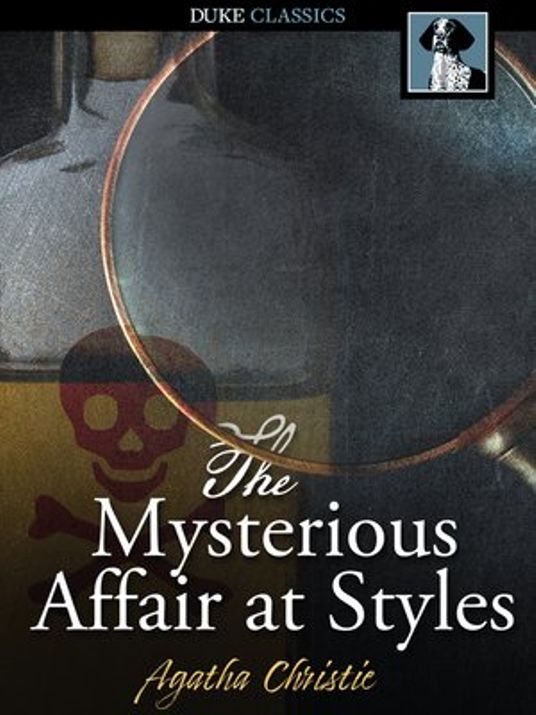
Poirot first appeared in Agatha Christie’s The Mysterious Affair at Styles in 1920. The detective was described as a short, somewhat pudgy man, with lovable mannerisms, an egg-shaped head, and an immaculate sense of cleanliness. Poirot refers to his brain as “ze leetle grey cells” and values method over all else.

Poirot’s friend and detecting sidekick is known as Captain Hastings. Hastings works with Poirot and narrates many Poirot stories, although according to Poirot, Hastings fails to employ his little grey cells. Despite Poirot’s charming self-absorption and constant rudeness to Hastings, the two remain good friends and have lots of adventures together.

In short, this lovable, egg-shaped detective is so much fun to read about, and I highly recommend any mystery where Poirot is involved.

Books featuring Agatha Christie’s Hercule Poirot are available for checkout from the Mission Viejo Library. They can also be downloaded for free from Libby

Murder Your Employer – Book Review

Murder Your Employer is a great read that I would definitely recommend. Rupert Holmes uses brilliant twists and clever wordplay to keep you turning pages as you follow the suspenseful tales of three aspiring deletists (the McMasters preferred term for murderers).

Cliff, Gemma, and Doria (also known as Dulcie) receive a very unique education at the McMasters Conservatory for the Applied Arts, which is kept a secret from the rest of the world. At McMasters, the three soon-to-be deletists study the art of murder and how to properly execute (pun intended) their plans to delete a special person in their lives.

For Cliff Iverson, that person is his despicable employer, Merrill Fielder. Fielder, the senior executive of Woltan Industries, an aircraft manufacturer, changed Cliff’s plans for the W-10, a change that could result in the plane crashing and ending hundreds of lives, should it ever fly. For this reason and many others, Cliff needs to end him. After botching his first attempt to end Fielder, Cliff is taken to McMasters with the support of an unknown sponsor to learn how to properly take lives.

Gemma Lindley enlists at McMasters to end her blackmailer, Adele Underton, who is also her superior at work. However, Gemma doesn’t seem to have it in her to kill, although perhaps McMasters will be able to change that.

Hollywood star Doria Maye, under the false name of Dulcie Mown, enlists at McMasters to delete her employer, Leonid Kosta. Kosta is trying to force Doria to voice a cartoon pig on television, which would turn her from a serious actress into a joke. But Doria is a professional; she knows it’s not curtains for her yet, and she’ll make sure of it.

Murder Your Employer is an excellent book with a fantastic ending that left me completely shocked. However, before you pick up this book, I would recommend checking the lock on your door.

Murder Your Employer by Rupert Holmes is available to check out from the Mission Viejo Library. It is also available to download for free from Libby.

My Favorite Christmas Movies

Watching Christmas movies bundled up in fuzzy blankets is one of my favorite winter break traditions. There are always a few Christmas movies that my family and I watch every year, and I thought it would be fun to share them. Here are my favorite family friendly Christmas movies:

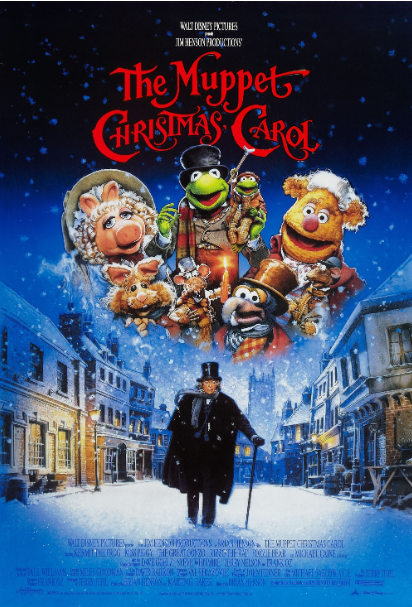
The Muppet Christmas Carol. While this movie sounds silly and even childish, I can honestly say that this is one of my favorite Christmas movies of all time. The Muppet Christmas Carol portrays the characters of Charles Dickens’s ‘A Christmas Carol’ in a fun way that I’ve never seen before.

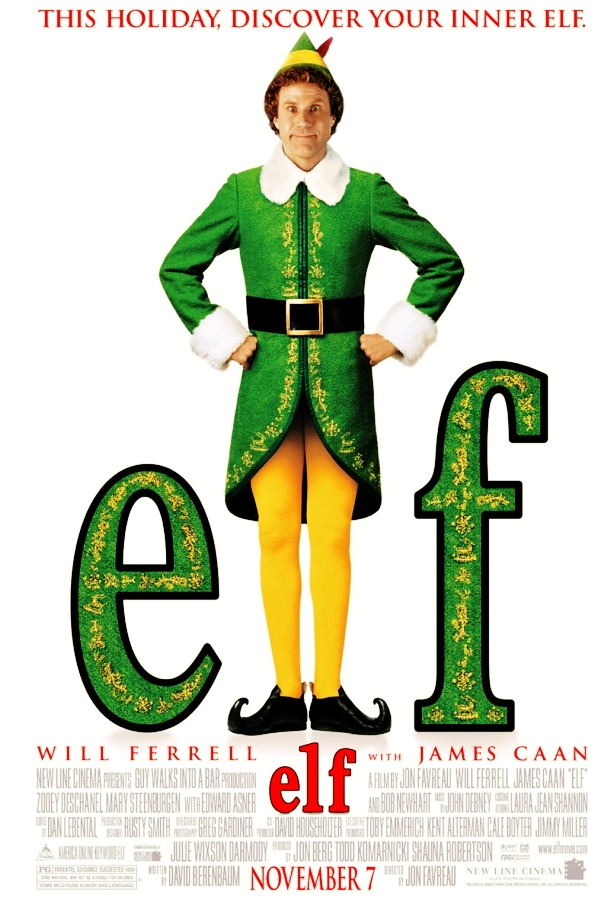
Elf. I feel like every Christmas lover has already seen this movie, but if you haven’t, I would definitely recommend it. It’s such a fun movie with so much energy, and it satisfies my aggressive kid urges every time I see it. When I saw Buddy the Elf eat his spaghetti with maple syrup, let me tell you, it changed my life.

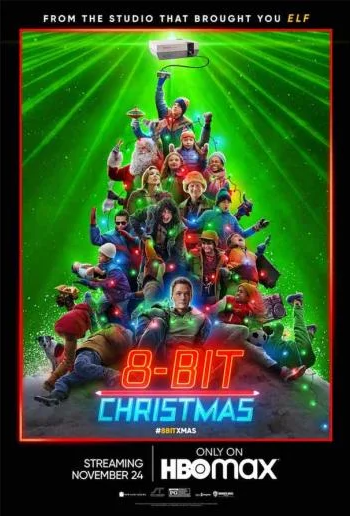
8-Bit Christmas. This movie actually came out relatively recently, but my family and I have seen it at least five times. It gets a laugh out of me every time, too! This movie is very reminiscent of the 1980’s movie, ‘A Christmas Story Christmas’, although in my opinion, better.

I hope you’ll like these movies, if you haven’t already seen them, and if you have any Christmas movies you want to share, I’d love to hear about them in the comments!

The Muppet Christmas Carol and Elf are available to check out from the Mission Viejo Library.

Coraline: Book VS Movie

Aside

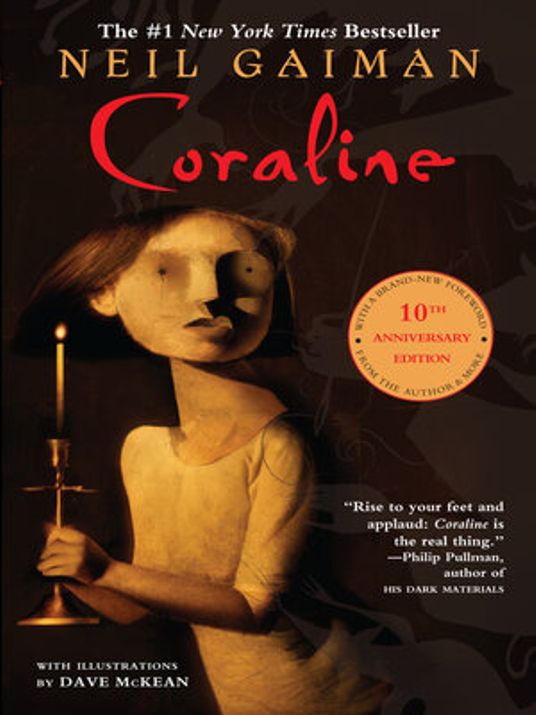
Coraline, by Neil Gaiman, is a fictional thriller, originally written as a novel, but later turned into a movie. The basic plot of the story is that a little girl named Coraline and her family move into a new house. Coraline finds a door in their new house that leads to a magical world where everything is perfect. Inside her perfect world, Coraline has ‘Other-Parents’ with sewn on button eyes. They try to convince Coraline to stay with them forever, on the condition that Coraline sews buttons into her eyes. This terrifies Coraline, who then tries to escape.

While I love both versions of the story, there are some major differences between the book and the movie.

Firstly, book Coraline’s parents are much nicer than they are in the movie. In the book, Coraline’s parents are stressed and tired. While they could have been nicer to their daughter, they were very busy and Coraline was being negative and bothersome. In the book, there is a very touching scene where Coraline tells The Cat about when her dad took her ‘adventuring’ and accidentally stepped on a wasp’s nest. Her dad took 39 stings to protect Coraline. So, in the book, Coraline’s parents are much nicer, and Coraline was mostly at fault. Throughout the book, she learns to appreciate her parents. In the movie, Coraline’s parents ignore Coraline and are unnecessarily snappish with her. In my opinion, the movie’s portrayal of Coraline’s parents makes more sense, because her parents’ unkindness is what drives Coraline to prefer the other world.

Secondly, in the book, Coraline visits the other world once and decides she doesn’t want to stay. In the movie, Coraline visits the other world three times before she decides to escape. Coraline in the book is very wary of other world and doesn’t trust her ‘Other Mother’. Movie Coraline was quick to accept the new world and wanted to stay there forever, until she learned that she would have to sew buttons on her eyes.

Thirdly, there is a character in the movie that was not present in the book. His name is Wybie, short for Wyborne. His grandmother’s sister was also taken by the Other Mother. Wybie finds a doll that looks exactly like Coraline, so he gives it to her. The doll was secretly a spy for the Other Mother, trying to find out what Coraline’s insecurities were to lure her to the other world. In the book, both the character Wybie and the doll he found did not exist.

There are many other small differences between the book and the movie (like Mr. Bobo AKA Bobinski, the singing rats, and Coraline’s blue hair), both the book and the movie were excellent. Would recommend!

Coraline by Neil Gaiman is available to checkout from the Mission Viejo Library. It is also available to download for free from Libby.

Why Harry Potter is Completely Overrated

Okay, I’m not saying that you shouldn’t read Harry Potter, because some people might appreciate it, but I’m very opinionated and I want to point out two of the most glaring problems with the series. If you stay until the end, I’ll also point out a much better alternative to Harry Potter, where things actually make sense.

Why is the Weasley family poor?

The Weasley family, regardless of their magical powers, are poor. This doesn’t make sense, because why don’t they just use their powers to spawn some gold? Or clothing, books, and food? There might be a wizard law against using magic like that, but Muggles wouldn’t know the difference between real money and magic money! The Weasleys could just magic up some gold, then trade it with a Muggle for whatever they need. Or, if magic gold isn’t convincing enough, they could magic some clothing and sell it to the Muggles for cash. So why are they still poor?

Why do wizard families send their kids to Hogwarts?

Hogwarts might turn out some of the most brilliant wizards in the realm of Harry Potter, but at Hogwarts, students are surrounded by incompetent and occasionally murderous teachers, dangerous classes, and multiple deaths each semester. In addition to this, Lord Voldemort and his minions are continuously attacking the school. This is definitely not safe, and if I was a parent I wouldn’t even consider sending my child to Hogwarts. Also, what kind of name is Hogwarts? You might as well call your school Pig Pimples.

Now, My Suggestion

Again, I’m not saying you shouldn’t read Harry Potter. Just because I think it’s badly written and poorly thought out doesn’t mean other people can’t enjoy it. But, if you agree with me and want a fantasy book with superior logic, then try reading The Scholomance, by Noami Novik. It has an explanation for everything I think is wrong with the Harry Potter series, and it’s just an overall good book.

If you know how to explain any of the two major faults I found in Harry Potter, please explain it to me in the comments. Thanks again for putting up with my criticism, and goodbye.

A Deadly Education (Lesson One of The Scholomance) by Naomi Novik is available to checkout from the Mission Viejo Library. It is also available to download for free from Libby.
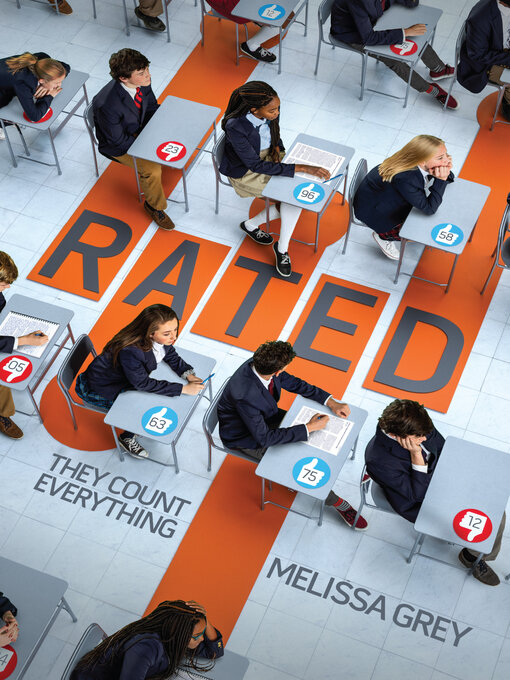
Rated, by Melissa Grey

I just finished reading the book Rated by Melissa Grey, and I really liked it! I always like stories when the point of view changes every chapter, and Melissa Grey definitely did it right! 

The main plot of Rated is that there is a Rating System, where everyone has a rating based on their schoolwork and social lives. This might sound okay, but in reality it’s very problematic. For example, if you’re smart but unpopular, then your low social ratings might cancel out your positive schoolwork ratings. If you have a low rating, then you won’t have access to good hospitals, good schools, or good jobs.

There are 6 main characters: 

Bex, who’s a workaholic. Bex has to keep her rating high for the approval of her parents, so she signs up for any activity that could boost her rating. She barely has any time to breathe! 

Noah, who’s a quiet photographer. His sister has been in and out of hospitals since she was very young, and when Noah’s parents’ ratings fall, they can’t afford to keep her in a good hospital.

Tamsin, whose rating is falling due to her rule-breaking. She knows that the ratings are superficial, and pretends to be a witch to scam her classmates out of their money. 

Hana, who’s an ice skater. She believes that the only way to stardom (and high ratings) is to be thin, which leads to a serious eating disorder. 

Chase, who’s a jock. Chase’s mom left and his dad is an alcoholic with low ratings. Chase’s only hope for a good future is to improve his ratings and get into college through a scholarship. 

Javi is a gamer. His parents died when he was young and his grandmother’s rating isn’t high enough to get a good job, so he has to support his large family on his own. He makes money by posting gaming videos online. 

The stories for each character were very impressive, and everyone had their own reason to hate the Rating System. Rated is a very creative story, and I would definitely recommend it! 

Fire Emblem: Three Houses

I started playing the video game Fire Emblem: Three Houses on the Nintendo Switch about a month ago, and I haven’t played another game since! For those who haven’t heard of it, Fire Emblem: Three Houses is a strategy game where you recruit characters to join your class, then use them to fight in battles.

In the game, you play a mercenary with strange origins who takes a job as a teacher at the Garreg Mach Monastery. The first major choice you make is which house to join; Edelgard, Dimitri, or Claude’s. You can then recruit characters from the other houses for their help in battles, and teach them to level them up.

My favorite aspect of the game is that there are four major paths you can choose. You can join Claude, Prince Dimitri, Lady Edelgard, or Archbishop Rhea.

Every character has a different personality and an interesting background. You can learn more about characters by having personal interactions with them, or observing interactions between them and another character. My favorite characters are Petra, Bernadetta (nicknamed Bernie), Felix, Alois, Shamir, Lysithea, Edelgard, Mercedes, and Marianne.

Fire Emblem: Three Houses is an incredibly fun game and I would definitely rate it 5 / 5 stars! I love the unique stories of each character and the strategic game play; I highly recommend playing it!

Fire Emblem: Three Houses is available to checkout from the Mission Viejo Library.

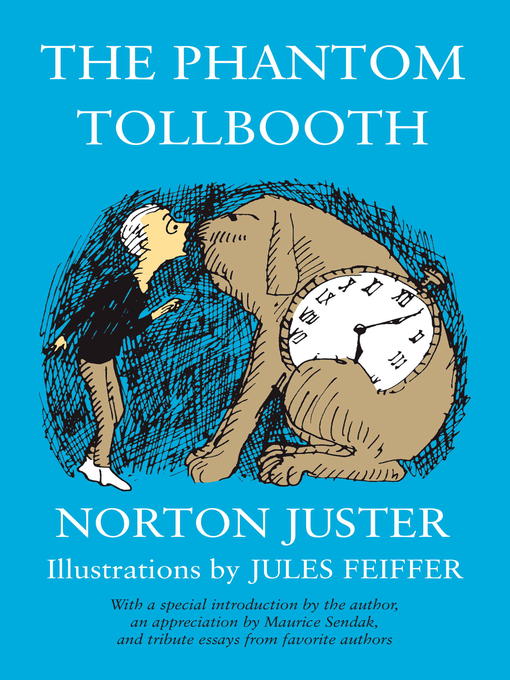
The Phantom Tollbooth, by Norton Juster

The Phantom Tollbooth by Norton Juster tells the story of young Milo, who thought that learning was useless and never stopped to smell the roses. Milo only focused on getting from Point A to Point B as quickly as possible. And when he did reach Point B, all he would do was lie around and complain that he was bored.

Until one day, Milo finds a mysterious package in his room addressed to ‘Milo, who has plenty of time’ Milo, having nothing better to do, opens the strange gift. Inside, is a tollbooth, instructions, rules, coins, cautionary signs, and a map. Milo pays the tollbooth and drives his toy car to a very strange and confusing place.

After traveling past the city of Expectations (where everyone starts out but few go beyond), he meets Officer Short Shrift, who thinks everyone is guilty and won’t believe otherwise; the Whether Man, who never comes to a decision; the Which, who was sentenced to jail for abusing words; and many more. Milo realizes that the only only way to bring peace and order to the Kingdoms of Wisdom is to rescue the Princess of Sweet Rhyme and the Princess of Pure Reason.To accomplish this, Milo and his loyal friends Tock (a watchdog who goes tick) and the Humbug (a boastful beetle who doesn’t like to learn) have to travel up the Mountains of Ignorance and rescue the princesses from the Castle in the Air.

During Milo’s journey he’ll learn decisiveness, the importance of hard work, the value of time, that things aren’t always as they seem, and that it’s worth the effort to gain some new knowledge. Every character and setting in The Phantom Tollbooth has a clever meaning, and people like Alec Bings and Canby have very insightful wisdom to share. The Phantom Tollbooth is a very creative book, and I would highly recommend it.

The Phantom Tollbooth by Norton Juster is available to checkout from the Mission Viejo Library. It is also available to download for free from Libby.