The Hundred Dresses by Eleanor Estes

The Hundred Dresses is a short novel by Eleanor Estes. This book won a Newbery Honor award in 1945. This book relates the experiences of Maddie, along with her friend Peggy, and a girl named Wanda. Wanda has only been seen wearing the same faded blue dress every day, even though she claims to have a hundred dresses “all lined up” in her closet. Peggy does not believe this at all, so she makes fun of Wanda every day at school. Maddie knows this is wrong, but she does not stop Peggy for fear of losing her friendship. Peggy teases Wanda on a daily basis, while Maddie just stays silent.  Even though she does not say anything, Maddie feels guilty for lacking the courage to defend Wanda.

One day, Maddie and Peggy are in class when the teacher makes an announcement.  Wanda’s father had sent a letter to the school informing them that Wanda would not attend their school anymore, because of the teasing she had received.  This gives Maddie a sick feeling in her stomach.  She knows that she should have tried to defend Wanda.  Peggy seems to be affected as well.  Later that day, Maddie and Peggy decide to go visit Wanda.

I have always enjoyed Eleanor Estes’ novels, and this book is no exception. In fact, I consider this to be her best novel. Despite its short length, this book conveys many emotions.  It seems light-hearted and melancholy at the same time. However, my favorite thing about this book is the story behind it. When Eleanor Estes was in elementary school, she had a classmate who was constantly teased because of her unusual Polish name. After a short while, in the middle of the school year, the Polish girl moved away before Estes had a chance to apologize. Years later, Estes wrote The Hundred Dresses as her way of saying that she was sorry.

After learning about this background story, it greatly enhanced my appreciation for this book. I really appreciate the lessons taught by this book about compassion and forgiveness. Even though this is such a short book it conveys a sweet but powerful message.  I would recommend it to everyone.

My Father’s Dragon by Ruth Stiles Gannett

My Father’s Dragon is a short novel by Ruth Stiles Gannett. This book won a Newbery Honor award in 1949. The story is about the narrator’s father, Elmer Elevator, when he was a young boy. Elmer is talking to a stray cat one day when he mentions that he has always wanted to be able to fly wherever he wants. Upon hearing this, the cat tells Elmer about a young dragon who is being held captive at Wild Island. According to the cat, the dragon is forced to carry passengers across a long river. The dragon is cruelly beaten by his captors whenever he complains. Elmer realizes that if he were to rescue the dragon, his dream of flying would come true. He starts packing immediately and sets off on a perilous quest to find and rescue the dragon.

This book is thoroughly enjoyable and satisfying, despite its short length. I found it very easy read and understand, and Ruth Chrisman Gannett’s illustrations are extremely charming and well-done. The story is action-packed and moves at a very fast pace. At times it even felt a bit rushed and overly simplistic, to be honest.  However, I can understand how this would be appealing to a young reader, and this book is certainly deserving of the Newbery award. I was entertained by this book and I think it is highly creative and imaginative. Older readers may not find this book appealing, but I would definitely recommend it to young readers and to anyone who enjoys children’s books.

The Big Wave by Pearl S. Buck

The Big Wave is a short novel by Pearl S. Buck. Kino is a young Japanese boy who lives on a small farm on the side of a mountain. If he is not at school or working with his father, he is usually with his friend Jiya, who lives in a fishing village just below the mountain. Because he lives so close to the ocean, Jiya often worries that the sea will suddenly become angry and create a phenomenon known as the “big wave,” a huge and destructive wall of water. Kino is aware that the big wave is a real possibility, but he does not consider it likely to actually occur. Unfortunately, the big wave suddenly appears one day and annihilates the entire fishing village, including Jiya’s family. Jiya was with Kino and his family when it happened, so he saw the entire destruction of his village. Kino does not know whether Jiya will be able to endure the emotional shock of this tragedy.

This book is short, but extremely impactful. I have always been fascinated with Japanese culture, and this book provides a great deal of insight into their traditions and way of life. This book is very realistic and meaningful. For example, Kino’s character traits, and specifically his flaws and weaknesses, are described in a very genuine way. Possibly my favorite thing about this book is its overarching message of dealing with grief and hardship. It also teaches about the power of bravery and the human spirit. After the big wave hit the village, I actually felt worried about Jiya and I wondered how he would be able to cope after this traumatizing experience. The way Jiya responds to this event would probably feel very relatable to anyone who has experienced a personal tragedy. I would highly recommend this book to anyone who is looking for a short but poignant read.

The Big Wave by Pearl S. Buck is available for checkout from the Mission Viejo Library. It can also be downloaded from Libby

Earwig and the Witch by Diana Wynne Jones

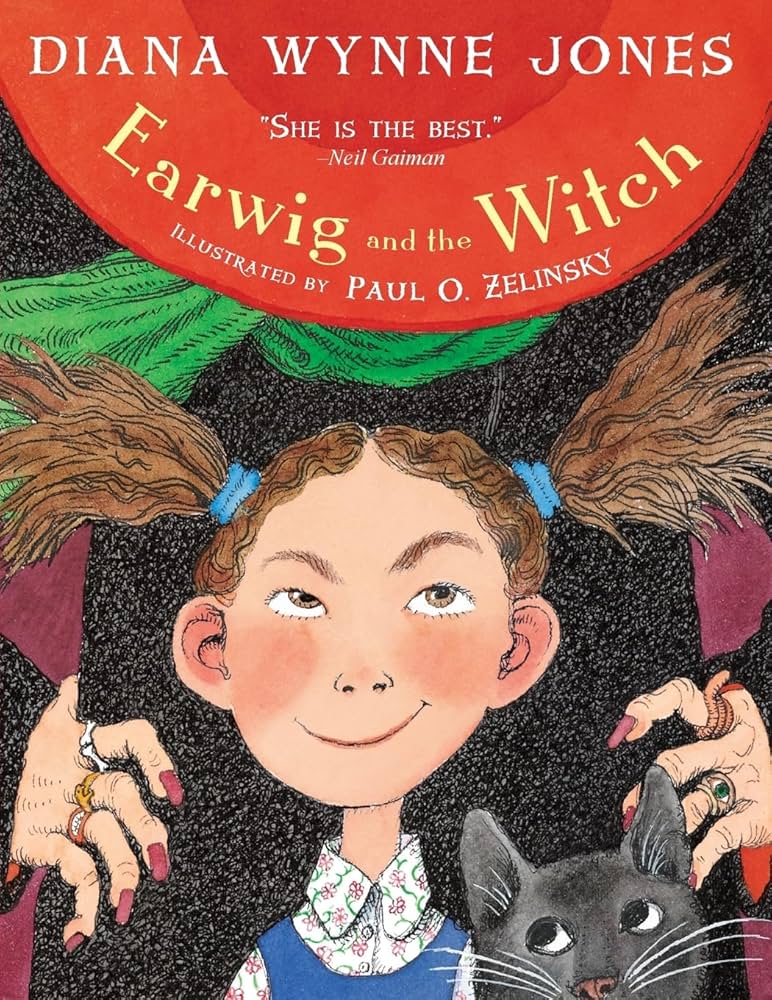
Earwig and the Witch is a short novel by Diana Wynne Jones. This was actually the last novel written by the author, who is well-known for her books of fantasy and science fiction. This book is about a young orphan girl named Earwig who lives at St. Morwald’s Home for Children. Earwig is content living at the orphanage, so she is surprised when a peculiar couple visits one day and decides to adopt her. When she arrives at her new home, Earwig realizes that the couple is not even really human. Earwig is now living with a witch named Bella Yaga and a nine-foot-tall demon called the Mandrake. Bella Yaga immediately makes Earwig her slave, forcing her to do most of the work around the house. However, Earwig fearlessly accepts the challenge and adapts to her new surroundings in unexpected ways.

This book is quite entertaining and filled with many amusing surprises. I enjoyed the cleverness of Earwig and her ability to handle difficult circumstances with courage and resourcefulness. This book also has good illustrations by Paul O. Zelinsky. However, I was disappointed that this book did not live up to my expectations. I greatly enjoy most of the books of Diana Wynne Jones, but this one seems unfinished and lacking in details. The ending is quite abrupt. Also, I found the characters to be unlikeable overall, even though I was entertained by the Mandrake’s antics. To be fair, this book was published posthumously, so the author may not have been able to fully complete it. Despite its negative aspects, I find this to be an enjoyable book that just falls a bit short of its potential.

Earwig and the Witch by Diana Wynne Jones is available for checkout from the Mission Viejo Library.

On My Honor by Marion Dane Bauer

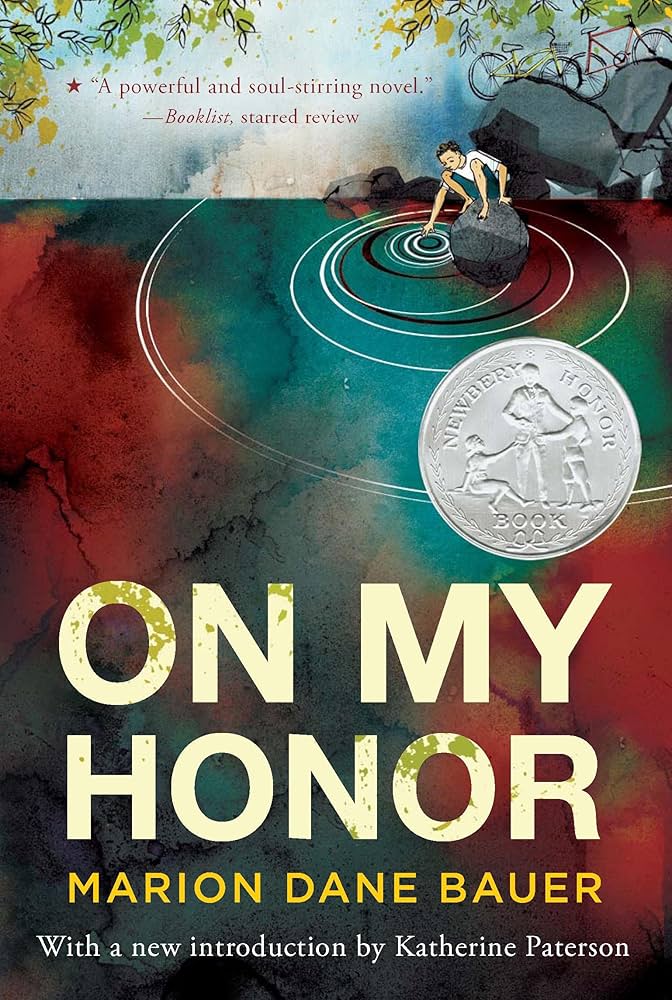
On My Honor is a short novel by Marion Dane Bauer. The story is about a young boy named Joel and his best friend, Tony. Joel and Tony decide to ride their bikes to a nearby state park. When Joel asks his father for permission, his father permits him to go under one condition: that they will go nowhere else except the park. Joel promises his father that he will not go anywhere else. However, on their way to the park, Tony decides to stop by the Vermillion River. Even though the boys had been warned never to go near the river, Joel challenges Tony to a swimming race to a nearby sandbar.  Hoping to prove his bravery, Tony agrees.  Joel finally makes it to the sandbar, but when he turns around, he realizes that Tony has disappeared. Joel is shocked and terrified at the thought of returning home and telling everyone the truth of what happened.

This book is quite short, but it is one of the most compelling and tragic stories that I have read. I was very impressed by how well it was written. It perfectly describes the thought process of a young boy. The way Joel rationalizes and excuses his lies within his mind is particularly realistic. I appreciate the message of this book about the consequences of dishonesty. Joel’s inner battles with guilt and grief are very powerful. This book teaches valuable lessons about the importance of morality and fatherhood.

I highly recommend this book. It won a Newbery Honor award in 1987, but I think it is deserving of the medal. This book would be especially beneficial to young people, because of the lessons it teaches about growing up and dealing with the consequences of our choices. Anyone can appreciate its realism and intensity. This is a powerful book.

The White Stag by Kate Seredy

The White Stag is a short novel written and illustrated by Kate Seredy. This book is a mythical retelling of the journeys of the Huns and Magyars as they migrated across Asia and into Europe. The story begins after the fall of the Tower of Babel. The great hunter Nimrod is waiting for his sons, Hunor and Magyar, to return from chasing after a mysterious white stag. Nimrod had been leading his people to a bountiful land promised to them by their god, Hadur. Now stricken with old age, Nimrod is unsure about who will lead his people. He believes that he must sacrifice his war horse, Taltos, to gain further direction from Hadur. After the performance of this sacrifice, Hadur communicates to Nimrod through symbols. These symbols are interpreted to mean that Nimrod will soon die, and that his sons will become the new leaders of his people. Hadur’s message concludes with a prophecy that a strong and mighty man named Attila would ultimately take Nimrod’s people to their promised land.

I found this book to be very compelling because I had expected it to be totally fictional, but as I read it I realized that it includes actual historical and religious elements. Nimrod and the Tower of Babel are ancient biblical references, and Attila the Hun is a major historical figure. The story of Attila was my favorite part of this book, because I enjoyed reading about his incredible strength and rise to power. I also enjoyed reading about the adventures of these people as they followed the white stag toward the promised land. Even though this is a relatively short book, it feels like an epic legend. This book is like an origin story of the modern-day nation of Hungary. The author is Hungarian, so I can understand why she would choose to write this. I appreciated the religious themes throughout the book, and I enjoyed imagining that this was the story of Nimrod from the Bible. This book deservedly won the Newbery Medal in 1938, and I would recommend it to anyone.

The White Stag by Kate Seredy is available to check out from the Mission Viejo Library.

One Hundred and One Black Cats by Stephen Mooser

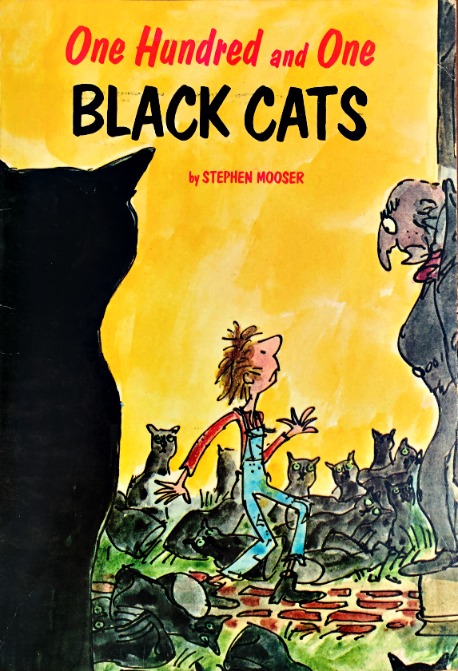
One Hundred and One Black Cats is a short novel by Stephen Mooser, with illustrations by Quentin Blake. Tod is a ten-year-old boy living in an old warehouse with his gout-ridden uncle, Captain Bones, in the harbor town of New Bedford. One day, Captain Bones sends Tod to Fogcutter Inn to pick up a package for him. According to Captain Bones, the package will make him and Tod wealthy enough to live in a big whaling ship. Tod is excited by the thought of finally leaving the dark and moldy warehouse, to go out to sea with his uncle. However, once Tod reaches the inn, a sailor tells him that the package is basically worthless. Tod begins to think that Captain Bones had tricked him, but then he finds out that his uncle has been kidnapped. Tod realizes that the package must be valuable after all.

This book is extremely short, but it is fast-paced and enjoyable to read. I found it very difficult to put this book down once I started reading it. The story is action-packed and engaging, and the characters are entertaining. I am also especially fond of Quentin Blake’s illustrations. I have enjoyed many other books illustrated by Quentin Blake. His illustrations give life and personality to the characters in this book. Some parts of the story seemed a bit rushed, especially toward the end of the book. However, I thought the conclusion was rewarding, and it was very satisfying to find out what happened to Tod and Captain Bones. I would highly recommend this book to anyone looking for a quick and entertaining read.

The Celery Stalks at Midnight by James Howe

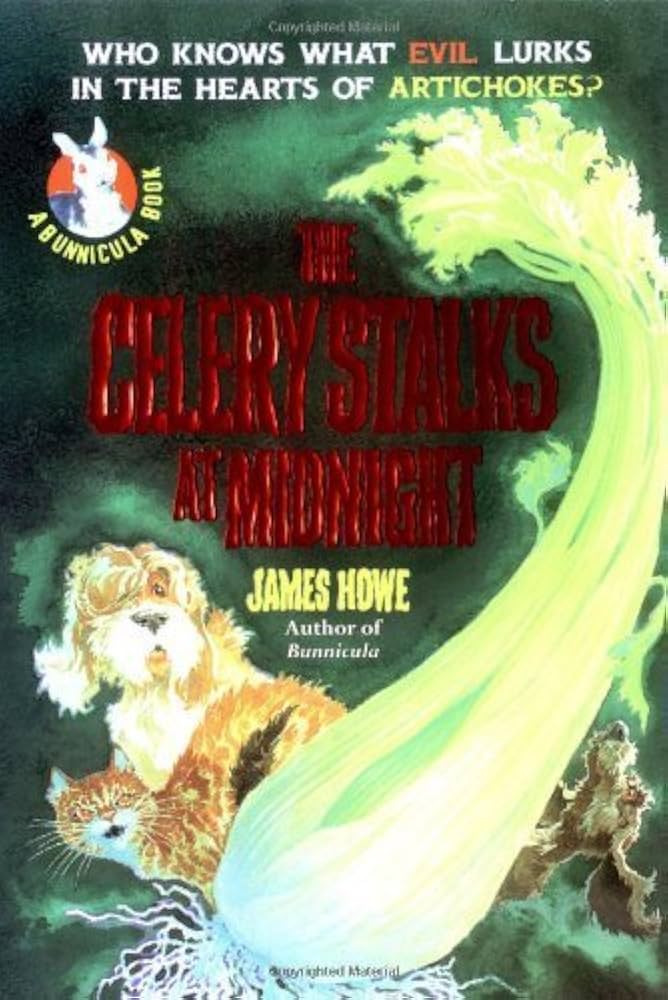
The Celery Stalks at Midnight is a short novel by James Howe. This is the third book in the Bunnicula series, its predecessors being Bunnicula and Howliday Inn. The story is told from the perspective of a dog named Harold. Along with Chester the cat and Howie the puppy, these are pets living in the Monroe household. At the beginning of this story, Harold and his friends make a frightening discovery. Bunnicula the rabbit has escaped from his cage. The problem with this is that Bunnicula is not an ordinary rabbit. Bunnicula is a dangerous vampire rabbit known for sucking the juice out of vegetables. The other pets fear that Bunnicula will terrorize the neighborhood by turning the town’s vegetables into deadly vampire slaves. No garden will be safe from Bunnicula’s evil plans. Soon, bloodless vegetable zombies will infest the entire neighborhood. Harold and his friends must stop Bunnicula before it is too late.

I had not read the other books in the series before reading this one, so I had no idea was I was getting myself into. This book is totally weird and unpredictable. It seems like a parody of a scary story. In my opinion, this book is hilarious. I found it to be very entertaining and one of the funniest books that I have read in a while. Some of the things that happen in this book are extremely ridiculous, but the absurdity of this book actually makes it enjoyable to read. It has some elements of a mystery and a little bit of action, but this book really belongs in the comedy genre. I highly recommend it.

The Celery Stalks at Midnight by James Howe is available to check out from the Mission Viejo Library.

The Matchlock Gun by Walter D. Edmonds

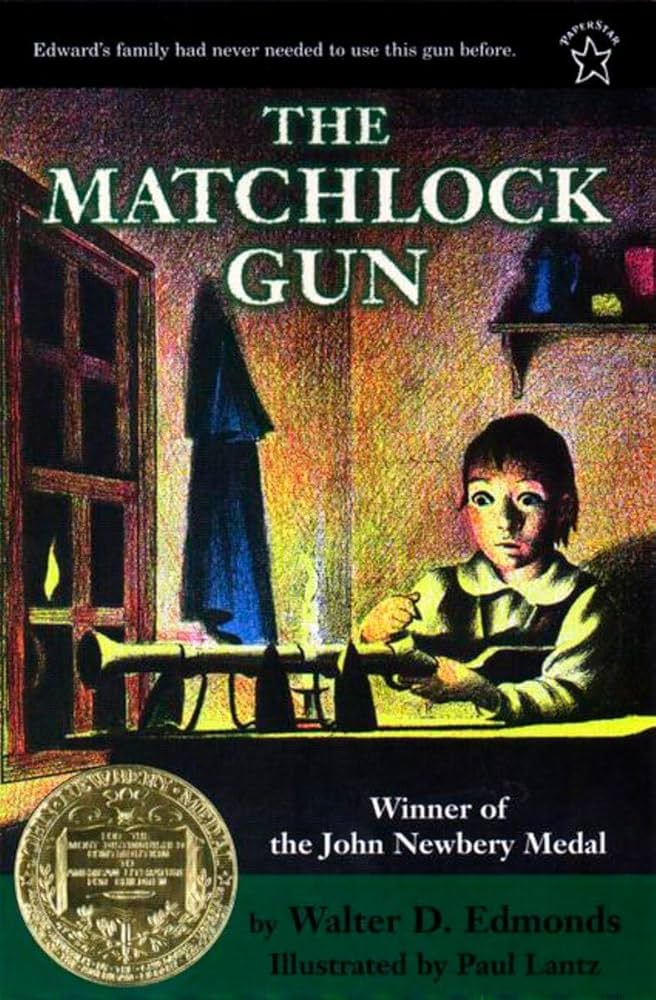
The Matchlock Gun is a short story by Walter D. Edmonds. The story takes place during the French and Indian War, in New York State when it was still a British colony. Edward’s father, Captain Teunis Van Alstyne, is once again leaving home for military service. This time, he is going to Palatine Bridge to make sure that the Indians do not cross it and attack the town. Even though Teunis has often assured his wife, Gertrude, not to worry while he is away, she is still afraid of what might happen while he is away fighting the Indians.

When some of the nearby towns are attacked and burned, Gertrude’s worries become reality. She decides to teach her son Edward how to use their matchlock gun. This gun is a special type of musket that has power and weight comparable to that of a small cannon. It is so heavy that Edward needs to rest it on a table so that he can shoot out through the window. Gertrude assures Edward that if he is able to use the gun correctly and at the right time, then they should be safe from any Indians. Deep down, however, Gertrude does not know if they will be able to survive if they are attacked.

The foreword mentions that this book is actually based on a true story, which gave me a much different perspective on the setting and the characters. The story is quite dramatic.  Even though this book is very short, I enjoyed it immensely. The story is very exciting, so I found it easy to read in one sitting. I was disappointed that the Indians were portrayed as ruthless killers, but I understand that this book was depicting events from the perspective of early American settlers in those days. Despite the harsh realities of that time, I was impressed by the strength and courage displayed by Edward and his family. I consider this book well-deserving of the Newbery Medal, and I would recommend it to anyone interested in a short but action-packed read.

The Matchlock Gun by Walter D. Edmonds is available to check out from the Mission Viejo Library.

Gabriel and the Phantom by Jenny Nimmo

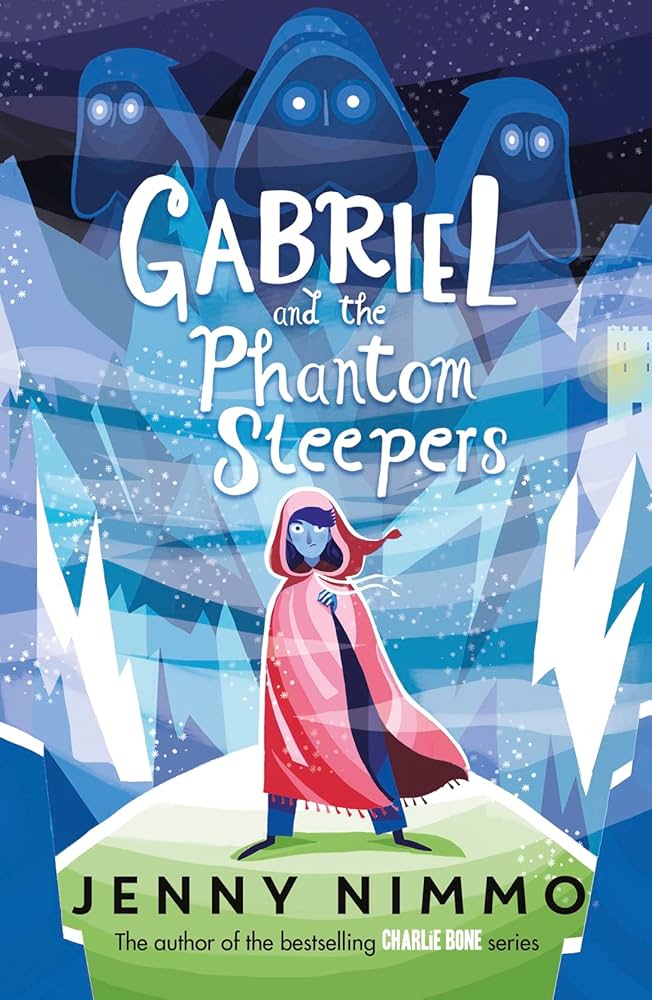
Gabriel and the Phantom Sleepers is a companion novel to the Charlie Bone series by Jenny Nimmo. This story focuses on the character of Gabriel Silk, whose family members have been the guardians of the cloak of the Red King for generations. When Gabriel’s father goes away for an alchemist convention, Gabriel becomes the caretaker of the cloak. It is said that this cloak is filled with magical power. If someone were to wear it, they would become completely invincible. Because of this, Gabriel feels an immense responsibility to protect the cloak from evildoers.

To ensure the cloak’s safety, Gabriel is sent to stay at his uncle’s house for protection. During his stay, the unthinkable happens—the Red King’s cloak is stolen. Gabriel now needs the help of his cousin, Sadie, and many of their friends to reclaim the cloak. Unfortunately for Gabriel, he is also being followed by a group of mysterious beings known as the Phantom Sleepers. Gabriel will soon find out whether these phantoms are friends or foes.

The Charlie Bone books are some of my favorites, so I was very excited when I learned that Jenny Nimmo recently wrote a couple of new books in the same universe. I had high hopes when I got my hands on this book, but it definitely surpassed my expectations. Just like Nimmo’s other books, this one is very well-written and exciting. The characters are compelling, and the story is filled with action, suspense, and magic. In my opinion, this book is even better than many of the books in the original series. I would highly recommend this book to anyone, but I would suggest reading the original Children of the King series first.