Poem of the Day: Stopping by the Woods on a Snowy Evening

I recently came across the poem “Stopping by the Woods on a Snowy Evening” by Robert Frost, and really enjoyed it, so I thought I would share it here!

Whose woods these are I think I know.
His house is in the village though;
He will not see me stopping here
To watch his woods fill up with snow.

My little horse must think it queer
To stop without a farmhouse near
Between the woods and frozen lake
The darkest evening of the year.

He gives his harness bells a shake
To ask if there is some mistake.
The only other sound’s the sweep
Of easy wind and downy flake.

The woods are lovely, dark and deep,
But I have promises to keep,
And miles to go before I sleep,
And miles to go before I sleep.

Stopping by Woods on a Snowy Evening -

On the surface, this seems like a very simple poem, speaking of a traveler and his horse stopping on a snowy forest, on an unknown plot of land. The woods here represent wildness, and nature in its purest form- they are past the outskirts of the village, past the bounds of human settlement. Still, the speaker acknowledges his humanness and worldly responsibilities, sadly admitting that he must keep them. However, this poem has a darker undertone- and there are other reasons that the speaker cannot stay in the woods. They are to be admired from afar- if the traveler becomes trapped in the snow and loses his way, he may well freeze and die. The horse, representing human society, seems confused at his owner’s admiration of the woods- representing society’s inability to appreciate nature in its fullest, rawest capacity.

-Vaidehi B.
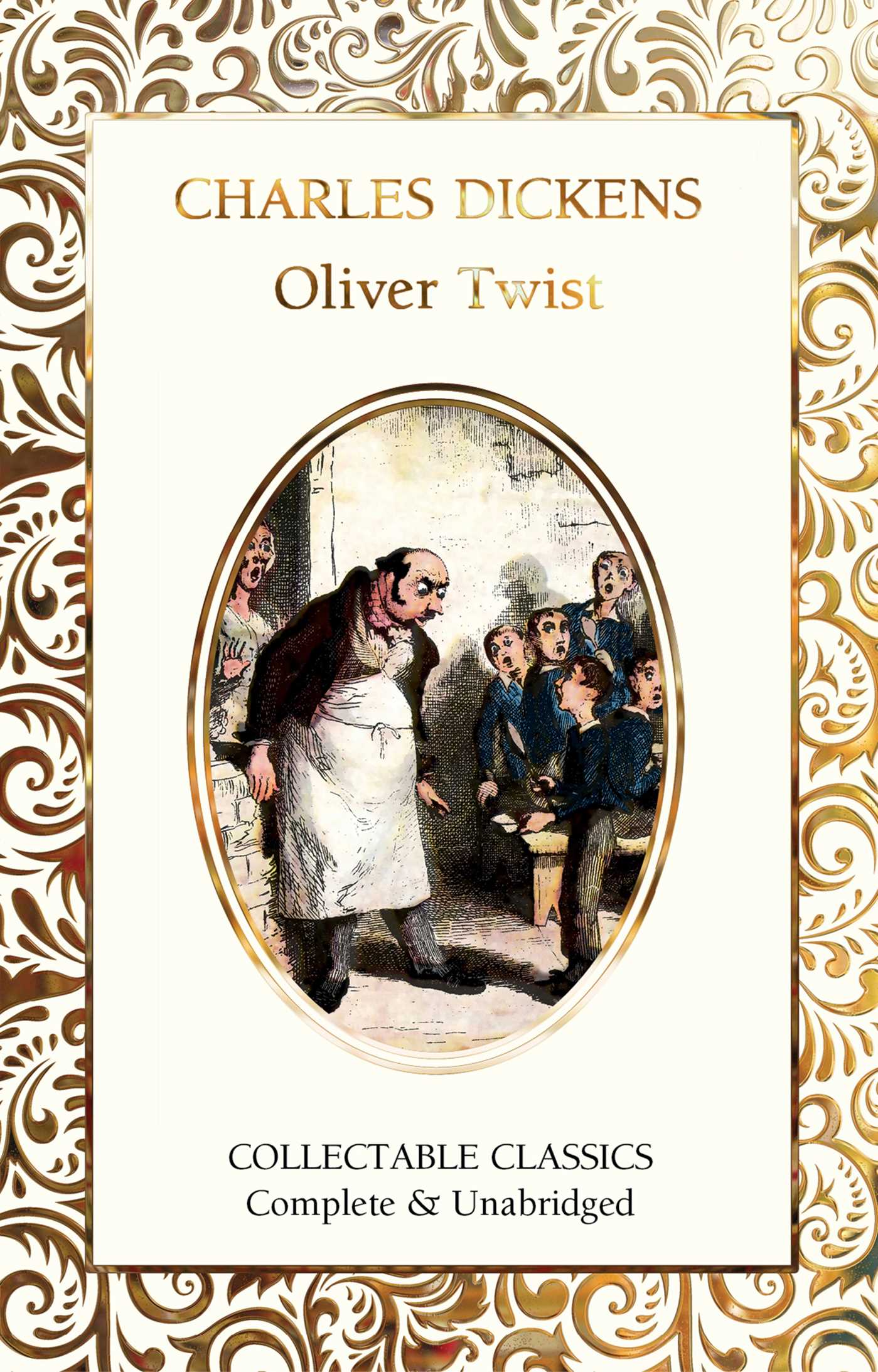
Oliver Twist by Charles Dickens

Oliver Twist by Charles Dickens is a raw, poignant novel about the realities of poverty, especially for children, in Victorian England.

The book centers around a young orphan named Oliver, who was given to an orphanage at birth after the death of his mother. Worked to the bone and severely malnourished, Oliver falls in with a gang of pickpockets and quickly turns to a life of crime. What follows is a powerful tale of Oliver’s desperate struggle to survive in the heartless world he lives in.

Although this book was quite bleak and depressing, I really appreciated it as an accurate retelling of poverty in Victorian times. The deep class divides affecting society even then are tangible, and Dickens’ fury and contempt towards the excesses of the rich are clearly felt throughout the novel. Overall, I would recommend it!

-Vaidehi B.

Oliver Twist by Charles Dickens is available for checkout at the Mission Viejo Library. It can also be downloaded for free from Overdrive.

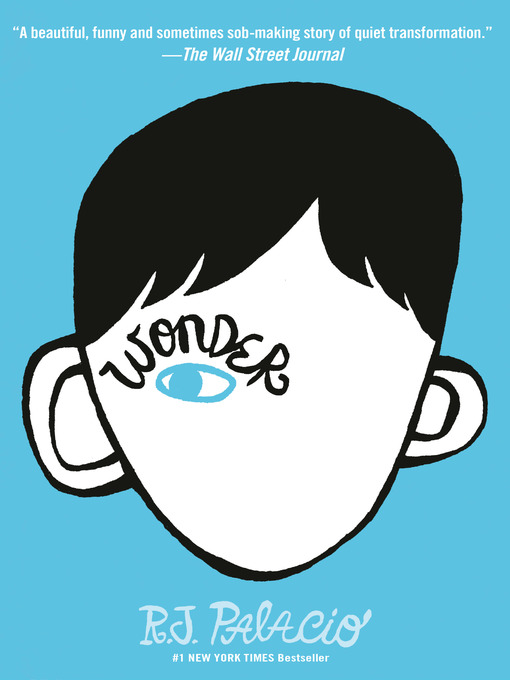
Book Review: Wonder by R.J. Palacio

Wonder by R.J. Palacio is a beautiful and heartwarming book about the power of friendship and a community in the face of hate.

August, by all accounts, is a normal ten-year-old kid- except for one thing. He has a rare genetic disorder and despite twenty-seven different surgeries, he will never look like other kids his age. This makes life extremely difficult for “Auggie” and his family. His older sister is overprotective of him, and gets angry when people stare at him funny in public- and his parents, who only want what is best for him, do not want to send him to a public middle school where he may be bullied. However, what Auggie finds at school is something much different- he discovers friendship, and the power of love.

This novel was an incredible journey from beginning to end- and it is no ‘wonder’ that it was adapted into an award-winning movie. Wonder is essentially a book about discomfort- the discomfort we feel when we see a person that looks different from us in public, the discomfort they feel at the inordinate stares and whispers. However, it shows that this discomfort and pity can be overcome- to make way for community, love, and acceptance.

-Vaidehi B.

Wonder by R.J. Palacio is available for checkout at the Mission Viejo Library. It can also be downloaded for free from Overdrive.

Book Review: Miss Peregrine’s Home for Peculiar Children by Ransom Riggs

Miss Peregrine’s Home for Peculiar Children is an American fantasy novel about a boy who puts together his grandfather’s old stories and photographs and finds an abandoned psych ward/orphanage on the (fictional) island of Cairnholm.

Jacob Portman had always been fascinated by his grandfather’s peculiar stories and collections of photographs, but never really believed in them- until he finds his grandfather, beaten and bloody, in his garden. His last words are mysterious, and Jacob suddenly sees a monster like the ones his grandfather always talked about. He is plagued by nightmares of the monster and his dead grandfather. His therapist suggests he goes to Cairnholm Island, the island his grandfather grew up on, to confront his trauma. Instead, he finds an orphanage full of ‘peculiar’ children- children with superhuman strength, children who can levitate, and even a child that is invisible! The adventures that follow are sure to keep you on the edge of your seat.

I really enjoyed this book- it kept me hooked from begin until end. What intrigued and captivated me most was author Riggs’ use of actual black-and-white photographs of children from old psych wards, and the way he wove them into the narrative. This was a very enjoyable read, and I’d recommend it to anyone!

-Vaidehi B.

Miss Peregrine’s Home for Peculiar Children by Ransom Riggs is available for checkout at the Mission Viejo Library. It can also be downloaded for free from Overdrive.

Book Review: Slouching Towards Bethlehem by Joan Didion

Slouching Towards Bethlehem is a collection of beautiful and poignant essays about growing up in California and the meaning of home.

This book was originally recommended to me as a “requirement for coming to age in California,” and I must say that I agree. Didion’s writing is smooth, and, albeit difficult to understand in places, it easily and beautifully covers a wide variety of topics- ranging from Didion’s childhood in Sacramento, to her visits in Hawaii and Alcatraz, to the hippie counterculture in San Francisco in the 1960s. She effortlessly captures the hazy, dreamlike quality of a childhood in California, in addition to the quiet desperation that accompanies living in tiny towns in the desert. What really struck me was how factual this book was- every character, no matter how briefly mentioned or how inconsequential to the essay overall, was a real person, as many brief Wikipedia searches proved.

Didion writes with a timeless quality and a quietly powerful observationalism, proving that life is indeed cyclical- that things change, but people never do. Her writing is uncomfortably personal, but she still somehow manages to capture the reality of the human experience as a whole- through small, ordinary events. The annual arrival of the Santa Ana winds merits a discussion about the kind of sparse unreliability that comes with living in Los Angeles- a visit to Hawaii sparks a discourse on the constant undergirding hum of ‘war,’ what with Vietnam and Cuba. This, I think, is what makes Didion’s writing so special- while calmly narrating her own life experiences to us, she forces us to turn inwards to ourselves and examine what we find within.

-Vaidehi B.

Slouching Towards Bethlehem by Joan Didion is available for checkout from the Mission Viejo Library.

Book Review: The Secret Life of Bees by Sue Monk Kidd

The Secret Life of Bees by Sue Monk Kidd is a heartwarming novel about the redemptive power of a chosen family.

The novel centers around 14-year old Lily Owens, who is raised by her abusive father, and Black housekeeper, Rosaleen. Lily’s mother left her when she was very young and died not long after, but in her mind, her mother still exists as a perfect parent- she blames her father for driving her mother away.

One day, Rosaleen goes to the city to register to vote, but is badly beaten by racists at the poll booth. Lily is present for the encounter, and her life is forever changed. In her mother’s old possessions, she finds the label for a honey jar and an address, and convinces Rosaleen to run away with her. The pair end up at a small honey farm run by three Black sisters- August, June, and May. The sisters graciously take them in, and it is here that Lily finds her true family, and the true meaning of love. However, as she grapples with growing up, fear of her father, and the truth about her mother, she also discovers herself- just herself, undefined by her cruel father or her desire for a motherly figure.

I really, really enjoyed this book. The exposition and imagery that Kidd uses is lush and beautifully contributes to the overall theme. The sisters’ home, the color of Pepto-Bismol, seems like a dream- a magical, otherworldly place where nothing could go wrong, and anything seldom does. However, what I loved most about this book is the fact that Lily’s story did not end simply when she found the mother figure she had been searching for her whole life. Instead, Kidd truly gave Lily development- she had to go beyond this desire and truly find herself for who she was.

-Vaidehi B.

The Secret Life of Bees by Sue Monk Kidd is available for checkout at Mission Viejo Library. It can also be downloaded for free from Overdrive.

Book Review: The Grapes of Wrath by John Steinbeck

The Grapes of Wrath by John Steinbeck, widely regarded as the most quintessentially American novel ever, is an evocative and heartbreaking story of poverty, industry, and resilience in the toughest of times.

The book centers around the Joad family, who, after the company that owned their land in Oklahoma repossessed it, are moving to California to find work. The group consists of Ma Joad, Pa Joad, Noah- the oldest son, Tom- the middle son, who was recently paroled from jail, and Al- the youngest son, who cares for nothing but cars and girls. They also have with them Granma and Granpa Joad, Ruthie and Winfield, the youngest siblings, and Rose of Sharon- their only (and pregnant) daughter with her husband Connie. As this ragtag group slowly makes its way across the country, and realizes that California may not be the ‘promised land,’ everything they know slowly falls apart- and only the love of community and family can save them.

Author Steinbeck uses simple and easily understandable prose to weave a beautiful and simultaneously sorrowful picture of life in California. Published in 1939, right on the heels of the private industrial complex boom, the novel carefully weaves together the individual story of the Joad family and the collective experience of the ‘migrant people’ to create a narrative that is heartbreaking in its universalness. Steinbeck writes about private companies and ‘big business’ with scathing contempt, contrasting their greed against the plight of the migrants from the Midwest, and in doing so, explores the sad and serene reality of human nature with a wistful, timeless voice.

-Vaidehi B.

The Grapes of Wrath by John Steinbeck is available for checkout at the Mission Viejo Library. The audiobook version can also be downloaded for free from Overdrive.

Ways to Stay Creative

Photo by Pixabay on Pexels.com

Many of us have probably experienced a creative block, whether it be for writing or art, at some point in our lives. Often, such blocks can be difficult to break out of, and can lead to us abandoning the task altogether. But it doesn’t have to be this way! Here are five tips to stay creative and get rid of artist’s block!

1. Create Distance

When you hit a block in your work, it’s actually a better idea to step away than to continue struggling. Create some distance between yourself and the task- go for a walk, talk to a friend, or even just step away from your desk and eat a snack. For bigger blocks, take a day or two off, and push the thought of the task to the back of your mind. That way, when you come back to it, you will feel rejuvenated and re-inspired.

2. Let Yourself Get Bored

Rather than try to chase down inspiration on the Internet or social media, let inspiration come to you! Put down all your devices and mental stimuli, and feel yourself get bored and start to daydream. Daydreaming, with no support from a stimulus, has been found to boost creativity.

3. Surround Yourself with Blue

It is exactly what it sounds like. Whenever you feel a creative block, try surrounding yourself with blue objects- sit in a blue room, or go outside so you can see the sky. Studies have shown that blue, being linked to peace, calm, and nature, can help us feel more creative and explorative!

4. Get Emotional

Inspiration most often tends to strike us when we are highly emotional. So do something that excites you! Go to a theme park or organize an outing with friends. However, negative emotions can also help stir up creativity- so you can even watch a sad movie or read a sad book!

5. Meditate

Meditation has long been used as a process to calm the mind and help shake loose new ideas from your brain. You should try it! If you feel incapable of sitting still and quiet for ten or fifteen minutes, try it in increments of three minutes. It will relax your mind and really help get your creative juices flowing!

-Vaidehi B.

Book Review: American Betiya by Anuradha Rajurkar

American Betiya by Anuradha D. Rajurkar is a soft and bittersweet novel about an Indian-American girl’s journey through love and heartbreak.

When high school senior Rani Kelkar begins a romance with tattooed and moody school-bad-boy Oliver, she is forced to hide the fact from her Indian immigrant parents, and sneak around behind their backs, as she is not allowed to date yet.

At first, the relationship is perfect- Oliver makes her feel seen, makes her feel beautiful, in a way that no one has ever done before. But soon, Oliver’s problems with drugs and his family lead to him demanding more from Rani- pressuring her into situations she’s not comfortable with, and disguising increasingly alarming racial microaggressions as offhand comments and jokes. Eventually, things with Oliver come to a head- and Rani must choose between her first love and her family.

I really enjoyed this book, as it dealt with an issue I hadn’t really seen discussed in popular media before- the fetishization of women of color, and the seemingly harmless microaggressions and gaslighting they face. The content of the book really resonated with me as well- as a daughter of Indian immigrants, I fully understood Rani’s often-complicated relationship with her family, and what she initially saw in Oliver. Rani’s longing for India and her grandparents and extended family was a familiar feeling to me. However, Rani’s complete inability to recognize any sort of red flags in her relationship with Oliver was frankly frustrating. I understand that she was infatuated with him, but even then, she repeatedly brushed off or simply refused to acknowledge his questionable behaviors. Even so, this was an incredible read!

-Vaidehi B.