Authors We Love: Mary Flannery O’Connor

Flannery O'Connor (Author of A Good Man is Hard to Find and Other ...

Flannery O ‘Connor was born in Savannah, Georgia, and graduated from Georgia Women’s College and the University of Iowa. She is a Catholic American novelist, short story writer, and critic. O ‘Connor has written two novels, 32 short stories, and numerous book and film reviews. O ‘Connor is a southern writer whose works have a southern Gothic style and rely heavily on regional settings and grotesque characters. O ‘Connor’s work also reflects her Roman Catholic beliefs and often examines questions of morality and ethics. O ‘Connor’s “The Complete Stories” won the National Book Award in 1972, posthumously, and was hailed by online readers as “one of the best American National Book Awards of all time.” Flannery O’Connor is said to have taught her favorite dwarf chicken to walk backwards when she was five years old. The stunt caught the attention of Pathe Studios, and a cameraman from the North was sent to O ‘Connor’s backyard in Savannah, Georgia, to record the stunt. O ‘Connor never saw the funny film, although it was shown in many American cinemas in 1932.

By The time she wrote “The King of The Birds” in 1961, O ‘Connor was a literary and artistic celebrity with a cult following. She made her name by publishing two novels — “Wise Blood” and “The Violent Bear It Away” and “A Good Man Is Hard to Find. Newsweek magazine featured a photograph of O ‘Connor’s pre-World War II home in Milledgeville, GA. Harper’s Bazaar has a rather glamorous portrait of O ‘Connor while her work has also been featured in Vogue. In her work, O ‘Connor depicted the American South. Set mostly in the rural South, “A Good Man Is Hard to Find” features at least four main characters — a widowed, conservative old lady and her unsociable daughter — living on a farm. These characters probably have something in common with O ‘Connor and her mother. As time went on, people began to notice that O ‘Connor herself was a devout Roman Catholic, and that her novels seemed to have something to do with religion. In the writings of a collection of essays and a collection of letters published after her death, O ‘Connor not only makes clear her own religious beliefs and the crucial role they play in her work, but also makes detailed interpretations of some of her own novels.

-Coreen C.

Wise Blood by Flannery O’Connor

Wise Blood by Flannery O'Connor

“Wise Blood”, the first full-length novel by American writer O ‘Connor, is a religious fable discussing salvation through faith. “Wise Blood” is set in The city of Taulkinham, Tennessee in the mid-20th century. The protagonist Hazel Motes tries to eradicate the influence of Jesus on him, and takes a path of spiritual disillusionment and conversion mixed with sadness and joy, which ends in failure. Hazel Motes, the protagonist, grew up in a family of village ministers and wanted to become a priest, just like his grandfather. His faith wavered during his years abroad as a soldier, and after his demobilization he tried to cast off his religious convictions. In Taulkinham, Hazel meets Hawks, a pseudo-believer who preaches-disguised as a blind man, his illegitimate daughter Lily, and an 18-year-old boy named Enoch. Hazel spoke to everyone about blasphemy as the only way to achieve truth, and publicly promoted a Protestant religion without Jesus. However, the public was indifferent to his words, and the Protestantism he preached was exploited by Hawks as a money swindler. After driving over Hawk’s fake prophet, Hazel blinded himself and fell into a gutter on a stormy night.

Sin and redemption are the most important themes in O ‘Connor’s novels. In “Wise Blood” with strong religious color, both the narrative structure of the Bible and the image of the Bible are cleverly borrowed to highlight the theme of sin and redemption. The title “Wise Blood” symbolizes original sin in the Bible, and human beings are born with sin, which is also one of the most critical kernels in the humanistic concept of the Bible. In “Wise Blood”, Hazel’s sins are realized through violence. Violence against others became a means for Hazel to rebel against God. At the same time, he blinded himself with lime, tied himself with wire, and put on shoes filled with stones. Such violence against himself became a means of self-redemption. Hazel’s physical torture meant the death of his sins, bringing him back to the faith of his childhood, and giving him grace. The two world wars completely disillusioned people’s dreams, vanity of pleasure behind the appearance of concealing the human selfish hypocrisy, empty spirit, and withered soul. These people are immersed in the mire of crime and do not know, mankind is facing an unprecedented crisis of faith. O ‘Connor wants to make those who believe that God is dead realize their own defects and sins through violence.

-Coreen C.

Authors We Love: Ernest Hemingway

Ernest Hemingway (Author of The Old Man and the Sea)

Ernest Miller Hemingway (July 21, 1899 — July 2, 1961) was an American writer and journalist who lived in Oak Park, a suburb of Chicago, Illinois. Hemingway won many awards during his life. He was awarded the silver medal for bravery during World War I. In 1953, he won the Pulitzer Prize for the Old Man and the Sea, which won him the Nobel Prize for Literature in 1954. In 2001, Hemingway’s The Sun Also Rises and A Farewell to Arms were included in The American Modern Library‘s list of The 100 Best English Novels of The 20th Century. Hemingway was a representative figure among the “Lost Generation” writers in the United States. In his works, he showed confusion and hesitation about life, the world and the society. He has always been known as a tough guy in the literary world, and he is the spiritual monument of the American nation. Hemingway’s works mark the formation of his unique style of creation, and occupy an important position in the history of American and world literature.

Ernest Hemingway was born in Oak Park and was baptised at Walloon Lake. Hemingway spent most of his childhood in his farmhouse at Walloon Lake, reading picture books and animal comics and listening to all kinds of stories. He liked to imitate different characters and was interested in sewing and other domestic things. Hemingway’s mother wanted her son to pursue a musical career, but Hemingway followed his father’s interests, such as hunting, fishing, and camping in the woods and lakes. So Hemingway, who grew up in a farmhouse on Walloon Lake, loved nature. From 1913 to 1917, Hemingway received high school education, academic performance, physical education, and an outstanding talent in English. He got his first writing experience in junior high, writing for two literary newspapers. When he entered high school, he became the editor of the journal. He sometimes uses the name Ring Lardner Jr in honor of his literary hero, Ring Lardner . After high school, Hemingway, rejecting college, began his writing career at the age of 18 as a reporter for the Kansas City Star, an influential newspaper in the United States. During his six months working for the Kansas City Star, Hemingway received good training.

In 1918, despite his father’s opposition, Hemingway quit his job as a journalist and tried to join the U.S. military to observe the fighting in World War I. Hemingway failed the physical examination due to a visual defect and was transferred to the Red Cross ambulance team as an ambulance driver. On his way to the Italian front, he stopped in Paris under German bombardment. Instead of staying in a safe hotel, he kept as close as he could to the battle. Hemingway witnessed the cruelty of war on the Italian front, shocked by the explosion of an ammunition depot near Milan and the fact that more women than men died in a makeshift morgue. Hemingway was awarded a silver medal for bravery by the Italian government on July 8, 1918, when he was wounded while transporting supplies and dragged the wounded Italian soldiers to safety. Later, Hemingway worked in an American Red Cross hospital in Milan. It was the inspiration for his early novel A Farewell to Arms. Hemingway regarded himself as the protagonist of the novel, the original creation.

In 1920, Hemingway moved to Toronto, Ontario, where he lived in an apartment. While there, Hemingway took a job with the Toronto Star as a freelance writer, reporter, and overseas correspondent, and struck up a friendship with Morley Callaghan, a star reporter. Between 1920 and 1921, Hemingway lived near Chicago’s north side and worked for a small newspaper. In 1921, Hemingway married his first wife, Hadley Richardson, and moved to a three-story apartment on the North side of Chicago in September. By December, the Hemingways had moved out of the country and never returned to live there. Ernest Hemingway, settled in Paris, gave an interview to the Star newspaper about the Greek-Turkish War (1919-1922). Back in Paris, Anderson guided Hemingway into the “Paris Modernist Movement.” Hemingway’s first novel, “Three Stories and Ten Poems,” was published in Paris in 1923. After the birth of his first son, Hemingway quit his job at the Toronto Star to support the family.

In 1925, the short story series In Our Time was published, showing a concise style of writing. 1926 Hemingway’s novel The Sun Also Rises was published. In 1927, Hemingway divorced Hadley Richardson and married his second wife, Pauline Pfeiffer and published Men Without Women. Hemingway left Paris in 1928 to live a quiet idyllic life in Florida and Cuba. He often goes hunting, fishing, and watching bullfights. Within a few years, Hemingway’s second and third sons were born. In 1931, Hemingway moved to Key West (where he lived in a house that is now a museum) and gathered material for Death in the Afternoon and Winner Gets Nothing. Death in the Afternoon was published in 1932. In 1937-38, he worked as a war correspondent on the front lines of the Spanish Civil War. During World War II, he went with the army as a journalist and fought in the liberation of Paris. During this time, Hemingway’s essay “Denouncement” was published in 1969 with “The Fifth Column and Four Stories of the Spanish Civil War.”

Hemingway and Pfeiffer’s marriage ended in 1940. During this period, physical health problems came one after another, causing great trouble to Hemingway. In the same year, Hemingway published For Whom the Bell Tolls, an anti-fascist novel set in the Spanish Civil War, and in 1950, Across the River and into the Trees, set in Venice after World War II. After the Pacific War broke out at the end of 1941, Hemingway immediately converted his yacht into a patrol boat to monitor the operations of German submarines and provide information for the destruction of the enemy. In the mid-1990s, Alexander Vasiliev, a former KGB officer, was granted access to Soviet intelligence archives. He was surprised to discover that Hemingway had been recruited as a KGB spy in 1941, codenamed Argo. Unfortunately, he had no talent for obtaining any valuable information.

In 1944, Hemingway accompanied the American army to Europe for an interview. He was seriously injured in a plane crash, but after recovering, he still went behind enemy lines for an interview. After the end of the second world war, he received a bronze medal. Hemingway divorced Martha in 1948, married Mary Welsh Hemingway, a wartime correspondent, and returned to Cuba shortly thereafter. Hemingway took his own life with a shotgun in Idaho on July 2, 1961, at age 62. Hemingway has an excellent command of language. He often employs the simplest words to express the most complex content, basic words and short sentence patterns to express the specific meaning, nouns and verbs to reveal the true colors of things without any affectation. Hemingway’s life and literary career were controversial from the start. Hemingway, whether as a legendary figure or as a writer, created a concise and smooth style with his unique artistic style and superb writing skills, which purified the traditional style of writing of a generation and had a great impact on the European and American literary circles.

-Coreen C.

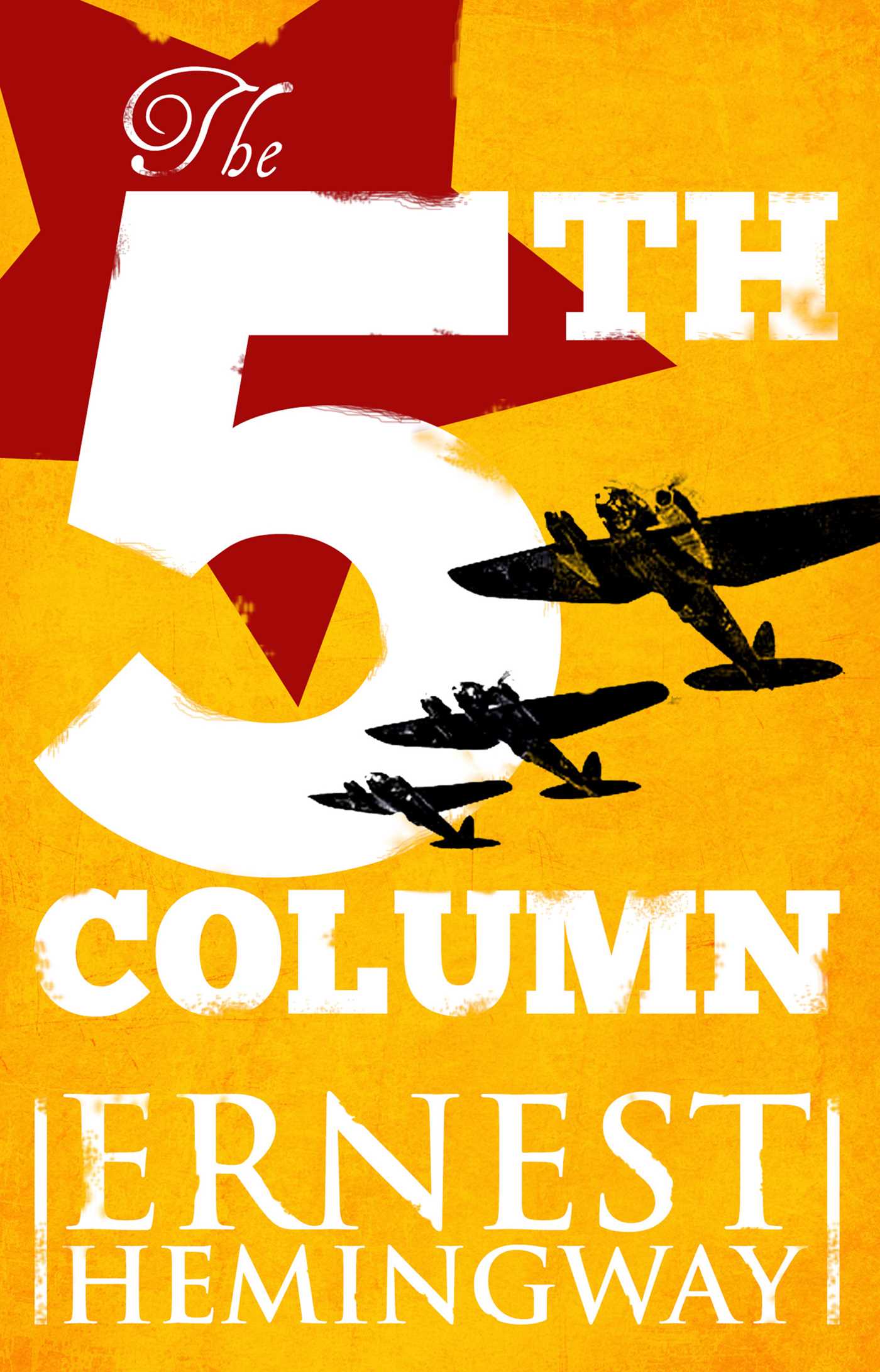
The Fifth Column by Ernest Hemingway

Fifth Column eBook by Ernest Hemingway | Official Publisher Page ...

The Fifth Column is a play by American writer Ernest Hemingway, first published in 1938. The play tells the story of Philip Rawlings, an active, attentive warrior at night, though ostensibly a bystander with no connection to Spain. This play is the only one that Hemingway wrote in his whole life and has a strong autobiographical character. Rawlings, the hero, was based on Hemingway. The Fifth Column is a three-act play depicting the Republican government in Madrid besieged by Franco rebels during the Spanish Civil War. An American, Philip Rawlings, and a German, Max, sent by the Republican government security service to spy bravely on the rebels, capture an important prisoner, and then let him escape.

Many fifth column members were subsequently captured. Under severe torture, they confessed their accomplices, and three hundred others were arrested. Rawlings and his assistant Max eventually break up the rebel spy ring in Madrid’s fifth column. In time of peace, everyone’s life is equal, and no one can deprive another person of the right to live. But when the smoke of war is in the air, it is easy to form a disorderly ethical environment. Especially when the unjust party temporarily wins, they do not care about ethics at all, but enjoy the privileges brought by the victory of war and indulge their desires to do whatever they want.

The evil side of human nature is concentrated. Hemingway’s writing has a special style, that is, colloquialism. It is in these seemingly plain colloquialisms in his novels that the atmosphere of the story is profoundly delineated, as is also the case in The Fifth Column, where the story appears to be simple, but the ups and downs of the characters are clearly revealed in the spoken language. The play focuses on Philip’s love affair with Dorothy, the daughter of a middle-class American, who is vain and incompetent. In the end, Philip gave her up for his political convictions in favour of a grisly Moorish woman. From Dorothy’s characterization, it is clear that Hemingway has begun to use the rich but insatiable American female as a symbol of a hostile class in The Fifth Column.

-Coreen C.

Cat in the Rain by Ernest Hemingway

Cat in the Rain - Ernest Hemingway - listen online for free

One rainy day an American couple visiting Italy stayed in their hotel. The husband was reading in bed and the wife was standing by the window looking out at the view when she came across a cat crouched under a dripping green table. In a spirit of compassion, the wife decided to carry the cat back to her room in the rain. But when she got down, the cat was nowhere to be seen. The wife returned to her room in great disappointment. A maid was standing at the door with a large tortoise-shell cat, which the landlord had given to her wife.

The novel comes to a screeching halt, leaving the reader with plenty of room for imagination. Cat in the Rain is one of the few short stories that reflect female consciousness. In this novel, the heroine does not have a name, but the author gives her different titles in different situations. This paper analyzes the desire and awakening of the female subject consciousness of the hostess princess in the patriarchal society from the perspective of appellation. It embodies Hemingway’s simple narrative style and implicit stylistic characteristics.

The novel was written in the early 1920s, when the status of women in the United States was undergoing great changes. The new women redefined their roles in the family and society. They demanded to be equal to men and no longer played the roles played by traditional women who were sheltered and subordinate to men. In fact, the new women are more like men, looking and acting like tomboys: they wear short hair, short skirts, play golf, drive cars, smoke, and drink like men. They are open-minded, enthusiastic and pursue fun. Cat in the Rain fully reflects Hemingway’s profound thinking on the status of women in the family and society under the background of that time.

Cat in the Rain is one of Hemingway’s few works with a female protagonist. In this novel, Hemingway delicately described their inner desires, anguish, needs, words, and deeds from the perspective of women, conveying the subordination of women in the patriarchal society and their strong desire to change the situation. Even with the gradual awakening of their self-consciousness and their struggle against the society, the theme of women in the works is more implicit, profound, and thought-provoking, implying Hemingway’s understanding and attitude towards women.

As a nameless woman in ordinary life, the American wife has no choice and no ability to choose between inner needs (desires) and external temptations during the journey of life, so she can only create an unreal world for herself to seek temporary satisfaction through whispering. The reason why women have a special liking for cats is determined by the specific aesthetic characteristics and perceptual requirements of women under the social conditions at that time. A woman and a cat are naturally linked by her natural maternal instinct and compassion. Cat in the Rain inspired the American wife’s desire to find the lost self, which was the inevitable result of women’s understanding and thinking about their own destiny.

-Coreen C.

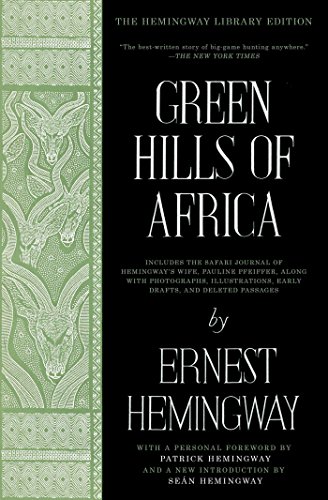
Green Hills of Africa by Ernest Hemingway

Amazon.com: Green Hills of Africa: The Hemingway Library Edition ...

From November 1933 to February 1934, Hemingway went hunting in Kenya with his second wife, Pauline Pfeiffer, and his good friend Karl. Upon his return, Hemingway vowed to write a “book of absolute truth” that would be “as good as fiction,” and hence came the Green Hills of Africa. Hemingway, with amazing memory and exquisite writing, recreated the hunting experience in the remote mountains and forests of Africa, allowing readers to feel the thrilling scene of the author’s battle of wits and courage with animals and listen to the unique roaring and howling of lions in Africa. At the same time, Hemingway vividly describes the competitive and jealous nature of his competition with Karl, mercilessly dissecting himself and displaying manly honesty.

A passage in the book about the critical community’s praise and abuse of writers makes it easy to read today. Hemingway’s Green Hills of Africa is full of the powerful beauty of tension and yet life erupting. Even after getting used to this unimaginable activity, the author begins to look at the wildlife around him with a slightly wild, but not without beauty. Hemingway, after fierce fights with lions and other wild animals, began to appreciate this kind of life and gradually found his own fun through every bit of this life style. In the text, the roar of the lion and the low cry of the beast are not just a phenomenon of biological activity, but form a fascinating landscape painting.

Hemingway quietly observed in the dark, listening and finally appreciated what happened here scene after scene. In the end, the author also presents his observations and experiences of the natural scenery and living conditions in Africa through a long description. Through the description of these scenes, the author shows his inner love and yearning for nature and a simple natural life. After the long development of human society, people often get lost in many material needs. In the natural scenery, it can better show the real pursuit of human heart and human yearning for purity.

-Coreen C.

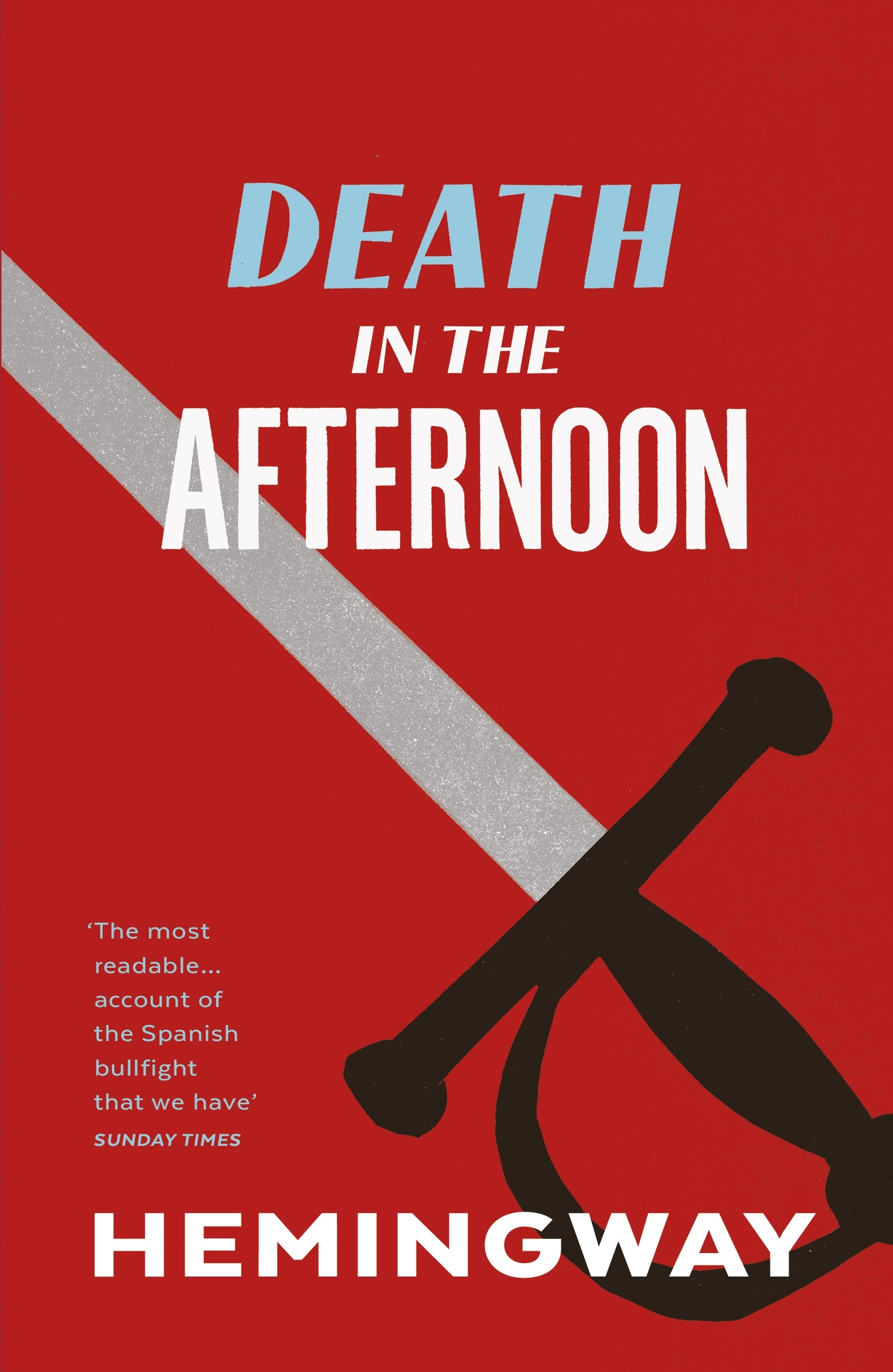
Death in the Afternoon by Ernest Hemingway

Death In The Afternoon by Ernest Hemingway - Penguin Books Australia

“Death in the Afternoon” is a nonfiction novel written by Ernest Hemingway in the 1930s. It is a rather long article on bullfighting in Spain. The novel takes the Spanish bullfighting culture as the background, tells the origin of the bullfighting culture and the cruel and bloody bullring scenes. In the book, he made a very detailed and in-depth introduction and discussion of bullfighting, pointing out that the life and death performance of bullfighters in the bullring has a strong appeal. In “Death in the Afternoon”, through the introduction of bullfighting, the author expounds the problems in literary creation. In the book, in addition to the free and flexible use of narrative, description, discussion, lyric and other expression techniques, he also added terminology annotation, news interview, etc., forming a unique stylistic phenomenon: cross-style writing.

A bullfight is divided into three stages: the first act is the trial, in which the lancer on horseback enters the arena together with the sword killer on foot. The bull first attacks the lancer and kills the horse that the lancer is riding, while the sword killer coacts with the fallen lancer and draws the bull’s attention with a red cloak to protect the lancer, and then the lancer leaves. This scene is designed to fully express the character of the bull, allowing the audience to identify the strength of the bull and fatigue the neck muscles of the bull.The bulls, though superficially intimidating, were only superficially victorious. In the second act, the matador attacks with a short javelin, throwing three or four pairs of short javelins, which are either inserted into the muscles of the bull’s neck to weaken it, or hooked onto one side of the bull’s neck, forcing the bull to always attack that side. The bull is sluggish because of fatigue and injuries, making it easier for the matador to focus on his target.

In the third act, the sword killer performs the muletta act with his red cloak and sword, lowering the bull’s head, and then, taking the opportunity, bending over the bull’s horns, thrusting his sword between the bull’s shoulder blades and killing the bull. From the above three acts, we can see that there is only one theme of this tragedy, which is life and death.”Death in the Afternoon” is a cross-genre novel, which makes extensive use of the achievements of all disciplines including natural science. It takes literary interest and literary aesthetic value as the core and embraces as many language functions as possible.

-Coreen C.

True at First Light by Ernest Hemingway

True at First Light eBook by Ernest Hemingway | Official Publisher ...

True at First Light: a novel written by Ernest Hemingway after a trip to Italy and his return from hunting in 1949. It reflects the author’s abhorrence of war, his concern for the future of mankind, and his reflections on the value of life, love, and death. The book’s title, taken from the dying words of Confederate General Thomas Jackson during the American Civil War, shows Hemingway’s tough-guy character — and that of himself — facing death. Although the novel is not his most famous work, it reflects the personal life of the writer incisively and vividly from one side, so that readers can have a comprehensive understanding of Hemingway.

Hemingway went on his second safari in 1953-1954 with his fourth wife, Mary Welsh. The couple, along with several locals who were working with them as their helpers, hunted a vicious lion. They also shot some gazelles, leopards, and sand hens on the way, which reflected the author’s pure and friendly sense of loyalty to the ignorant and loyal African indigenous people, Mary’s positive attitude towards learning shooting and training courage, and the happy atmosphere of their life together. Hemingway’s local girlfriend, Debba, is described in the book as “his fiancee” by Mary.

This girl was quite close to Hemingway, but she did not affect the relationship between the couple, showing a precious spirit of mutual consideration between people. An intricate counterpoint of alternating fiction and truth forms the heart of this memoir. In many passages, the author makes extensive use of this polyphonic tone, which will no doubt please any reader who enjoys this kind of music. True at First Light is a manuscript by Ernest Hemingway. The original was published in July 1999, just in time for the writer’s centenary.

What sets this book apart from many of his other novels is that it is an autobiographical novel written in the first person, so it feels intimate to read. It is a detailed and vivid account of the author’s second safari in Africa from 1953 to 1954 with his fourth wife, Mary Welsh, and reflects Hemingway’s affection for the uncomplicated natives.The book is permeated with a cheerful atmosphere, and appreciating this work is like tasting a cup of fragrant coffee which makes people have a sense of clarity and cheerfulness. In a way, this book is not so much a novel as a colorful travelogue or memoir, and many of its passages are beautiful prose pieces that add to Hemingway’s many works.

-Coreen C.

Islands in the Stream by Ernest Hemingway

Islands in the Stream: A Novel - Kindle edition by Hemingway ...

Islands in the Stream is a novel by American writer Ernest Hemingway. Published in 1970, it is one of Hemingway’s last works. It tells the story of painter Thomas’s rough experience of life. Painter Thomas went through ups and downs, had two marriage changes, the three children born after marriage were raised by his ex-wife. He loved his career and his children and often went fishing with them. There is a deep bond between father and son. Unfortunately, two of his sons were killed in a car accident, and the only remaining son was killed in World War II. In the end, Thomas decided to throw his personal sorrows and joys behind the tide of the anti-fascist war. In 1942, as the war in Europe raged, Hemingway commanded a submarine in Cuba to gather intelligence on the Nazis on the island, substituting espionage for writing and personal military adventures for brutal warfare. Although opinions vary on Hemingway’s adventures, this serious military action provided valuable material for his writing, based on which he wrote Islands in the Stream. In July 1944, Hemingway fought ground battles against allied troops in Normandy. For more than 20 days, he was in the midst of a bloody struggle.

The severity and danger of this war have never been greater. The terrible memory of the war pained him greatly. Hemingway, who experienced the cruelty of war, was awarded a medal. But the war made him more conscious. His experience of war was written into his series of war novels. In Islands in the Stream, Hemingway, by portraying the image of painter Thomas, once again emphasized the tough man spirit advocated by him, which is unyielding and indomitable. Thomas, the main character of the book, likes painting and fishing. He has been to the America, Europe, Asia, and Africa. But in middle age he chose to live in the Bahamas, rather than on the islands of Cuba which lies in the Gulf Stream. Through the crucible of his mind and body, Thomas persevered and dealt doggedly with his enemies. He embodies the characteristics of the tough guy that Hemingway often describes, and is a very successful artistic model.

-Coreen C.

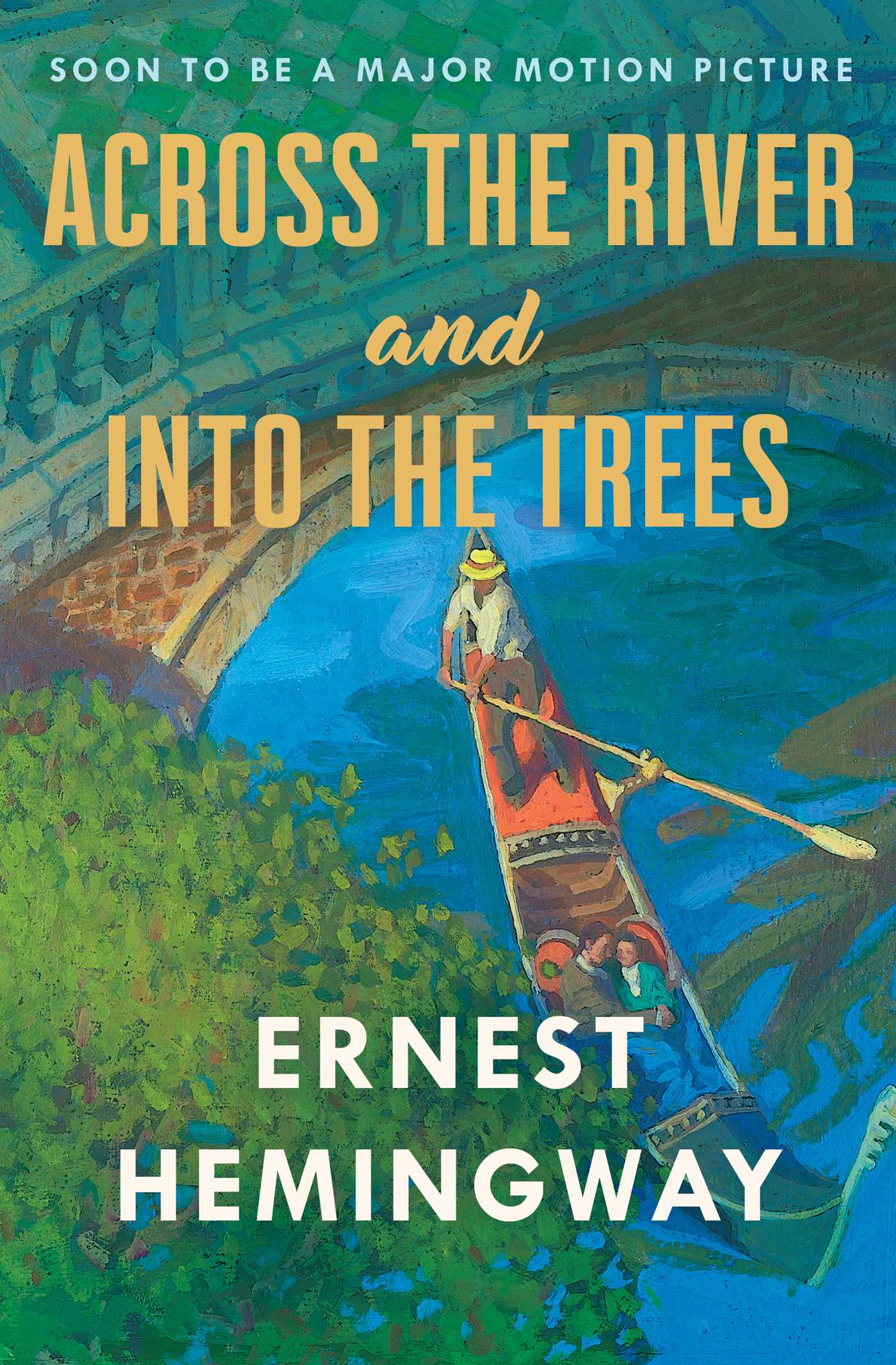
Across the River and Into the Trees by Ernest Hemingway

Across the River and Into the Trees eBook by Ernest Hemingway ...

“Across the River and Into the Trees” is a novel written by Ernest Hemingway after a trip to Italy and his return from hunting in 1949. The protagonist Colonel Cantwell has something of the author in him. As he grew older and more depressed, Colonel Cantwell went duck hunting in Venice and to northern Italy to pay his last visit to the battlefields of the past. He thought of past love, thought of death, and felt lonely and hopeless. Shortly after the war, the hero of the two world wars goes to Fossalta di Piave, Italy, to revisit the spot where he was wounded in battle. The hero, Colonel Cantwell, hunts wild ducks with his friends and focuses on the pure love between him and the beautiful Italian girl Renata, which has no utilitarian purpose.

It reflects the author’s aversion to war, his concern for the future of human beings, and his thoughts on the value of life, love, and death. Though this novel may not be the most classic work of Hemingway, its profound themes and traumatized account of the war shock the reader. Its rich background gives the reader knowledge and its unique way of writing left an unforgettable impression on people. The book’s title, taken from the dying words of Confederate General Thomas Jackson during the American Civil War, shows Hemingway’s “tough guy” theme similar to himself, who faced down death.

-Coreen C.