Book vs. Film: The Summer I Turned Pretty

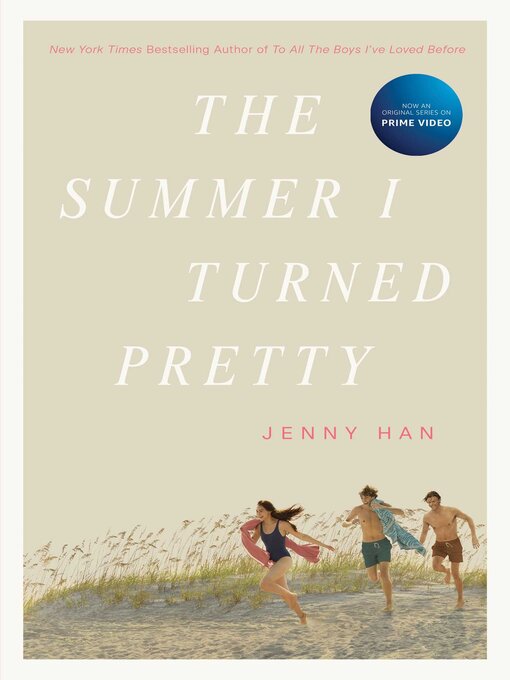
The very talented author Jenny Han’s book, The Summer I Turned Pretty, was recently made into a series that has everyone falling in love with the characters. Han’s book series includes the books, The Summer I Turned Pretty, It’s Not Summer With You, and We’ll Always Have Summer. So far, the series on Amazon, The Summer I Turned Pretty, has one season that covers the first book in the series. The show is confirmed for a season 2 already, and fans are hoping for a 3rd as well. For those that haven’t read or watched it, essentially, the series features a girl, Belly, who visits her mom’s best friend’s summer house at “Cousins Beach” every summer with her older brother, who is best friends with the other two boys, Conrad and Jeremiah, that own the house. All the previous summers, the boys have viewed her as a child, but all of a sudden they finally see her as an actual girl. I won’t spoil it, but the romance that goes between the characters is really interesting to watch, as are the character developments they all make. One of my favorite parts about this show is the soundtrack which features Taylor Swift, Phoebe Bridgers, Jack Harlow, and more.. I would definitely recommend reading the books first, but it is so cool to see what you pictured and imagined come to life and the actors did a great job portraying their roles. If you haven’t read or watched it, this is just a warning that the next paragraph does have spoilers. 

There are plenty of differences between the books and the show, however I don’t think it takes away from reading/watching either. It’s different in a good way and exciting to see how things play out in both. The first general difference I noticed is that in the book, the storyline focuses mainly on the two families, however on the show we are introduced to many more characters in a lot of events like the Debutante Ball, and those characters do affect the chemistry aspect between people a lot. It seems like in the show, they’re building more of a sense of community rather than isolating one group of people. I really like this because it mixes things up. Adding onto that sense of focusing on more people, the two moms are also given more of a storyline and have their own drama going on, unlike in the books where they weren’t highlighted as much. This same thing is seen with Belly’s older brother, Steven. In the books, he left the beach house in the middle of summer, but on the show he is a lot more involved. Speaking of Steven, Belly’s best friend ends up having a crush on Steven, instead of Jeremiah like it was in the books. This adds tension between Taylor and Belly and personally I like Taylor in the show better than in the books.

In the books, Belly had her first kiss with Jeremiah and he kissed her with the intentions of making Taylor jealous (because she liked him in the books), but since the show version of Taylor had a different love interest, Belly has her first kiss with an old friend, Cam. Their relationship doesn’t last too long as Belly ended things with Cam. In the books, it’s the other way around, but either way Cam knew where Belly’s heart truly was. Cam being there is a great asset to the plot because it allows the viewers to be empathetic as he was such a sweet boy. These are all somewhat minor differences, but some of the bigger ones include the fact that Belly actually had more chemistry with Jeremiah than she did in the book, creating so much more tension between the two brothers. Belly also doesn’t get a visit in the winter from Conrad, the scene is completely different. In my opinion, the biggest difference was the kids’ knowledge about Susannah’s (Conrad and Jeremiah’s mom) cancer. In the books, the kids all know about Susannah’s cancer. However, in the show, Conrad is the only one who knew about his mom’s disease. This is a huge explanation into why he acted the way he did. In the final episode, Jeremiah found out about the cancer which led to everyone knowing. This made everything serious and real, because Susannah didn’t want to go through chemo this time. Overall, the show and books were amazing and I truly think that since the author was involved with making the show, it had a great impact on the overall quality and vision of the show. I would highly recommend this series to anyone who likes rom-coms and tension. 

  • Kaitlyn Y.

The Summer I Turned Pretty by Jenny Han is available to checkout from the Mission Viejo Library. It is also available to download for free from Libby.

Interesting Sports Podcasts to Try

If you get bored while running, resting, or doing whatever it is that you like to do, you might want to try a podcast. I enjoy listening to sports podcasts to discover the opinions of experts on certain topics, and I’m here to share some of my favorite ones with you. 

There are 3 podcasts that I feel separate themselves from the rest of them and for different reasons. Some of them offer incredible insight on basketball, while others are fun because they have people debating passionately about players and headlines. 

The Draymond Green Show

The host of this show is the man himself, Draymond Green. He breaks down NBA games and talks about how his team, the Golden State Warriors, played and how the other games went down. His podcasts are especially fun to listen to after he has a big game or an important moment in a game, such as an ejection. Sometimes, he’ll have a guest on the show, who might be a fellow NBA player or someone associated with the NBA. His attention to detail really shows in his podcasts, and I recommend his podcast to anyone who wants to learn a bit more about basketball. This is definitely my favorite podcast at the moment. 

First Take:

What’s better in a sports podcast than Stephen A. Smith yelling at Kendrick Perkins or someone else on the show for their “blasphemous” takes? With various guests on the show as well as the usual crew (Molly Qerim, Stephen A. Smith, and sometimes Kendrick Perkins), the podcast can be really entertaining to listen to or also watch on ESPN. On this show, they primarily debate about basketball, but also have some sections that include football or baseball. Although it’s not my favorite podcast, it’s definitely in the top 2 and I love occasionally listening to small segments at a time. 

Skip and Shannon: Undisputed:

If you want a lot of deep analysis about the game of basketball, don’t go to this show. If you want to see Skip Bayless and Shannon Sharpe bickering back and forth for two and a half hours, then this is for you. On Undisputed, the 2 hosts don’t really talk about what teams need to do or what they should have done, but they debate on controversial topics concerning ejections, who’s better than who, and certain plays. However, before listening to this podcast, be aware that a lot of the things Skip and Shannon say are heavily biased, especially the ones from Skip. That being said, this show is still a lot of fun and I definitely recommend you check it out. 

If you’re a basketball (or sports) enthusiast, in summer, you might find yourself bored with nothing to do, and if so, give these podcasts/shows a listen. You probably won’t regret it!

-Mert A.

The Steam Engine

If I were to ask you what the most important invention in human history was, what would you say? The computer, which kickstarted the digital revolution and launched us into the modern age? The lightbulb, which moved humanity out of the darkness and into the literal light? However, to find the invention that truly revolutionized humanity, one must go a few centuries back in time and consider the steam engine.

In 1698, an engineer named Thomas Savery invented the first steam engine, although it certainly was not used for the purposes we consider today. Instead, it was made to draw water out of flooded mines using steam compression. However, the slow heating-cooling process and wastage of steam made this and successive machines, notably the Newcomen engine, largely ineffective, but that changed with James Watt in 1765. Patenting a new, improved steam engine, James Watt was able to harness the power of steam into machines, which led inexorably into the Industrial Revolution.

Like the name suggests, the Industrial Revolution revolutionized industry. More specifically, it shifted the economy from agrarian to industrial, and people moved from working in the home to working for wages in the factories. These factories housed machines that were powered by the steam engine for every industry, from textiles to iron. Without the steam engine, these industries would have never gotten off of the ground.

However, the steam engine did more than impact industries – it revolutionized transportation. In steamboats, like those engineered by Robert Fulton, the steam engine allowed for the shipment of goods both downstream and upstream with ease, lowering costs and travel times. However, the most important impact of the steam engine to consider is the rise of the railroads. In Europe and America, railroads changed the way people lived, worked, and settled. The transcontinental railroad, for example, made moving to other parts of the country easier, since the transportation would cost less and there would be greater access to goods. Not only that, these railroads tied together the countries they were built in in a way that would have been impossible without the steam engine.

So the next time you use a computer or switch on a lightbulb, spare a thought for the oft-overlooked steam engine – it’s quite possible that none of these inventions would exist without it! 

– Mahak M.

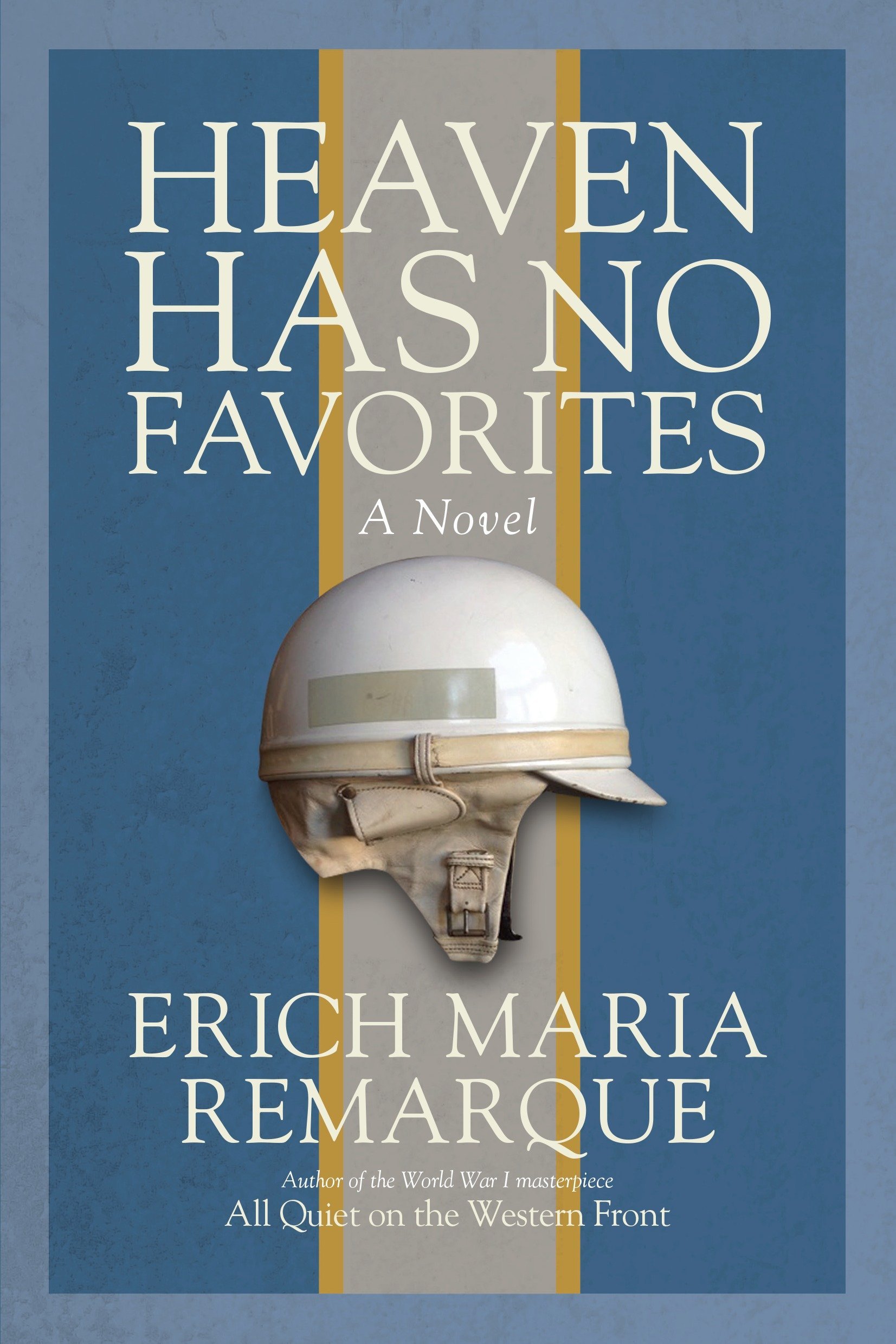
Heaven Has No Favorites: Erich Maria Remarque

Heaven Has No Favorites, written by Erich Maria Remarque, is a (post WWII) love story entwined with an unforeseen twist. 

The premise revolves around two main characters – Lillian and Clerfayt – who experience life with parallel outcomes. For one, Lillian is ill from tuberculosis, while Clerfayt puts himself through danger as a race car driver. Though their livelihoods are different, they have similar beliefs about happiness, and the challenges depression and aftershock war can cause. Likewise, the two form a close friendship. However, as Lillian is dying and would rather live out her last days outside a hospital ward, Clerfayt agrees to drive her around Paris, Venice, and so on. At first, the arrangement works in their favor … until one of them begins to fall in love. 

This novel, despite its basic plot, has a distinct cast – most notably Lillian. Although Remarque was a male writer, he’s able to accomplish what so few have achieved: a strong, unique female character. Despite her illness, she (Lillian) is able to disregard death and simply enjoy the moments that remain. In turn, readers are able to (using her) explore one’s significance, illusion, and reality. Thus, while the book is (more or less) philosophical, it doesn’t overcomplicate the message it tries to achieve. 

By no means will I spoil the twist, although I’d like to put in a quick word about it. The surprise (which is never quite hinted at) made me shed a few tears! Its abrupt nature adds to the initial shock – so make sure you’ve attentive. 🙂

In all, Heaven Has No Favorites is a poignant tale anxious to make one imagine a time outside our own. 

-Emilia D.

Romance in Books/Media

I have grown up reading books where romance had been the central theme of the book, a plot line on the side, and with side characters who have never actually spoken in the book. In every single book I had read, there was some sort of romance involved and it would be hard to ignore it since it is present, despite the characters not even being fully-fleshed. I have read books where the person’s personality revolves around their relationship to this one person who also doesn’t really have a personality. Even if the characters have a dynamic, it is there to compliment their lover (one wears black all the time and hates everyone while the other gives children cookies as a pastime in their rainbow clothing). These people who saw each other from across the room are kissing three seconds later which ensues a romantic relationship. These couples, primarily ones consisting of a man and a woman, start off as friends or they start off as enemies or they had just met and then all of a sudden, they are in a romantic relationship with each other.

Then, I started to watch television and it not only amplified whatever romance that was shown in the books I would read but also shown toxicity in the relationships that are deemed normal. There are toxic relationships in books but I saw it more in TV shows and at an alarming rate. The couple would disagree with something and then all of a sudden, they are screaming at each other and haven’t come to a conclusion until the next day where one apologizes and they go on upon their day. These couples don’t usually ask consent when wanting to do things which could lead to miscommunication on what they want and further damage their relationship without even realizing it. On screen, it would be surprising to everyone if the main character’s love interest asked if they wanted to kiss because it has been implemented throughout the story that they both wanted each other. But then, this logic reflects in our society and our lives. It could be the case that someone doesn’t want to kiss another and everyone would be disappointed because this person is so nice or this person really likes them so they should just do what they don’t want to do and kiss them.

Romance has been shoved down everyone’s throats, through many different platforms, to the point where everyone must have a romantic relationship in their life to lead fulfilling lives. I have grown up thinking that I must have a romantic relationship eventually in my life and if I don’t, I will be a disappointment. If someone is single at the moment, it wouldn’t last long because everyone wants to be in a relationship and they will be in one soon. I have grown up thinking that if a man or a woman were merely talking to each other or hanging out with friends, they must be dating. I know that other people in our society also feel this way.

And then, I read a book where there was no romance whatsoever. I didn’t know this beforehand so I had been surprised as I read through this book. The book is called Radio Silence by Alice Oseman. It is a story about how this girl and guy becoming friends after finding out they have affiliated with this one podcast they both love. At first, I didn’t like the book because it was boring and anti-climatic. But then, I researched why I felt so weird after reading a book that contains no romance in it and found it boring. I discovered this new concept called amatonormativity, where our society pushes people to prioritize finding romantic relationships over keeping one’s platonic relationships. I am reading the book again and now, I am finding new aspects in it and realizing how entrenched I had been in amatonormativity.

I am not saying that there shouldn’t be romance in books and in media. I believe there should be more interracial couples, queer relationships, disabled relationships, relationships dealing with people of color, and other relationships between marginalized groups. But I don’t want romance to be geared toward a certain group and to be held at such a higher pedestal than platonic love is. And for those still reading, thanks for sticking with me all the way to the end and hopefully you agree. However, this is all my opinion and no one has to agree with me. Thanks anyway!

-Saanvi V.

Exoplanets and the Transit Method

Have you ever wondered about exoplanets? Exoplanets are the planets outside of our solar system.

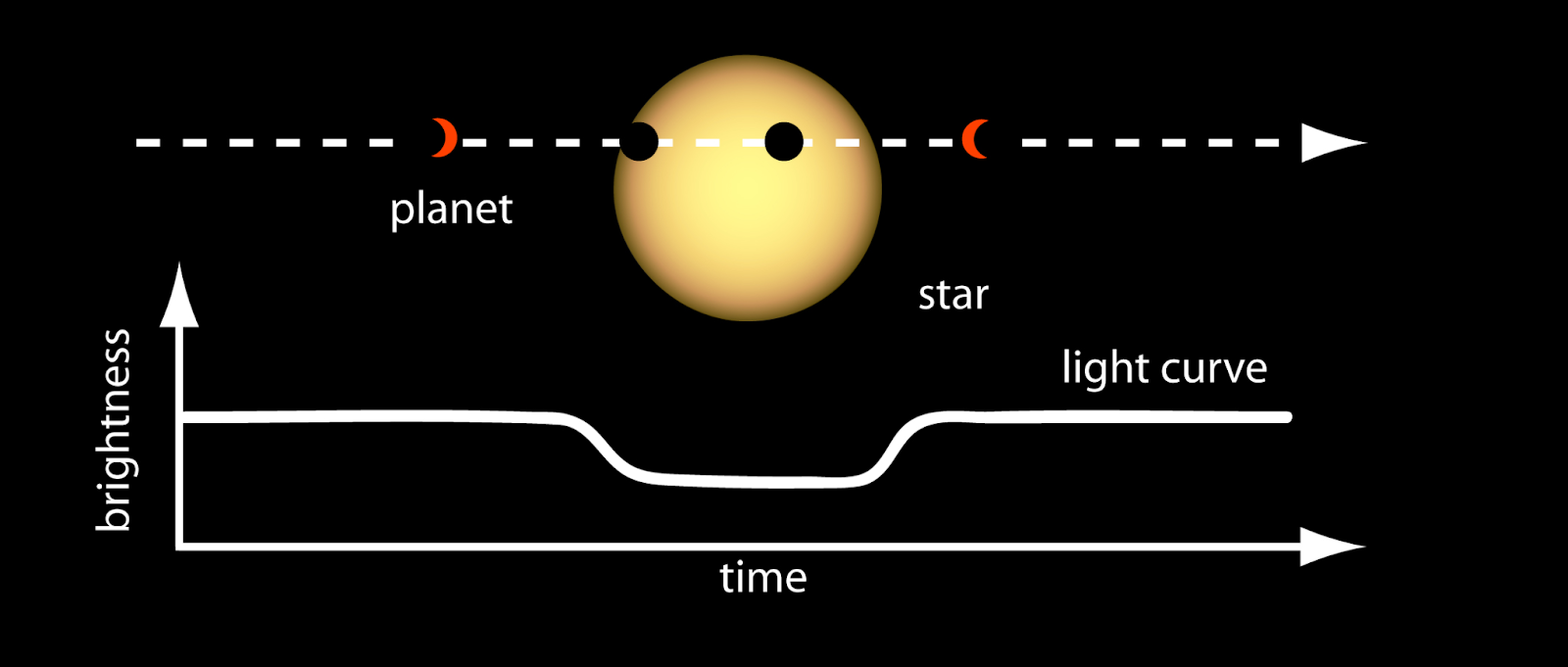
There are multiple methods used by astronomers to discover exoplanets. One of them is called the Transit Method. As planets orbit their stars in a mostly circular way, exoplanets will always pass in front of their own star (at least, to our own perspective). During a planet’s transit around its star, its effects will be somewhat similar to an eclipse. The amount of light given off by the star that is visible from Earth will decrease until the planet completes its transit. Using the data like the drop in the star’s brightness and how long the transit was, astronomers are able to make various calculations. Not only are they informed of the exoplanet’s existence, but they also discover the exoplanet’s distance to its star or how long its orbit takes. More than 3000 exoplanets have been discovered using the Transit Method to this date. 

Still, though, there will always be mistakes in using this method as well as any other methods. There may be unseen details or simply missed periods of light differences by astronomers’ telescopes and graphs. There may always be unobservable celestial objects in our universe that may remain undiscovered. All we can do is try to discover as much of it as we possibly can.

I think it is very important that we discover more about this infinitely large universe we live in before other galactic clusters move out of our observable universe. This will eventually happen, as the universe is constantly expanding at an accelerating rate, moving an increasing amount of celestial objects out of our observable universe every moment.

-Peri A.

Fablehaven: The Grip of the Shadow Plague by Brandon Mull

In the fictional novel The Grip of the Shadow Plague by Brandon Mull, Kendra and Seth Sorenson are back at their grandfather’s house, which is actually a sanctuary for mythical creatures. To begin the story, Seth makes friends with some satyrs, and together they steal some treasure from small, fairy-like creatures called nipsies. Seth and the satyrs notice that some of the nipsies have turned dark, as if they had been infected with some type of evil. It turns out that is the case, and the plague that has been spread is the conflict of the book. 

Although the reading level of this book is comparatively lower, the story, literary elements, and character development are surprisingly advanced. Higher-level readers can find strong themes throughout the pages, and since the story itself is fantastical and enjoyable, The Grip of the Shadow Plague is a very fun read! It is part of a much larger series called Fablehaven, and all of the books of this series are centralized around the mystical adventures of Kendra and Seth. I would give this book a 5/5, and I would recommend it to readers of all ages.

-Ayati M.

Fablehaven: The Grip of the Shadow by Brandon Mull can be downloaded for free from Libby.

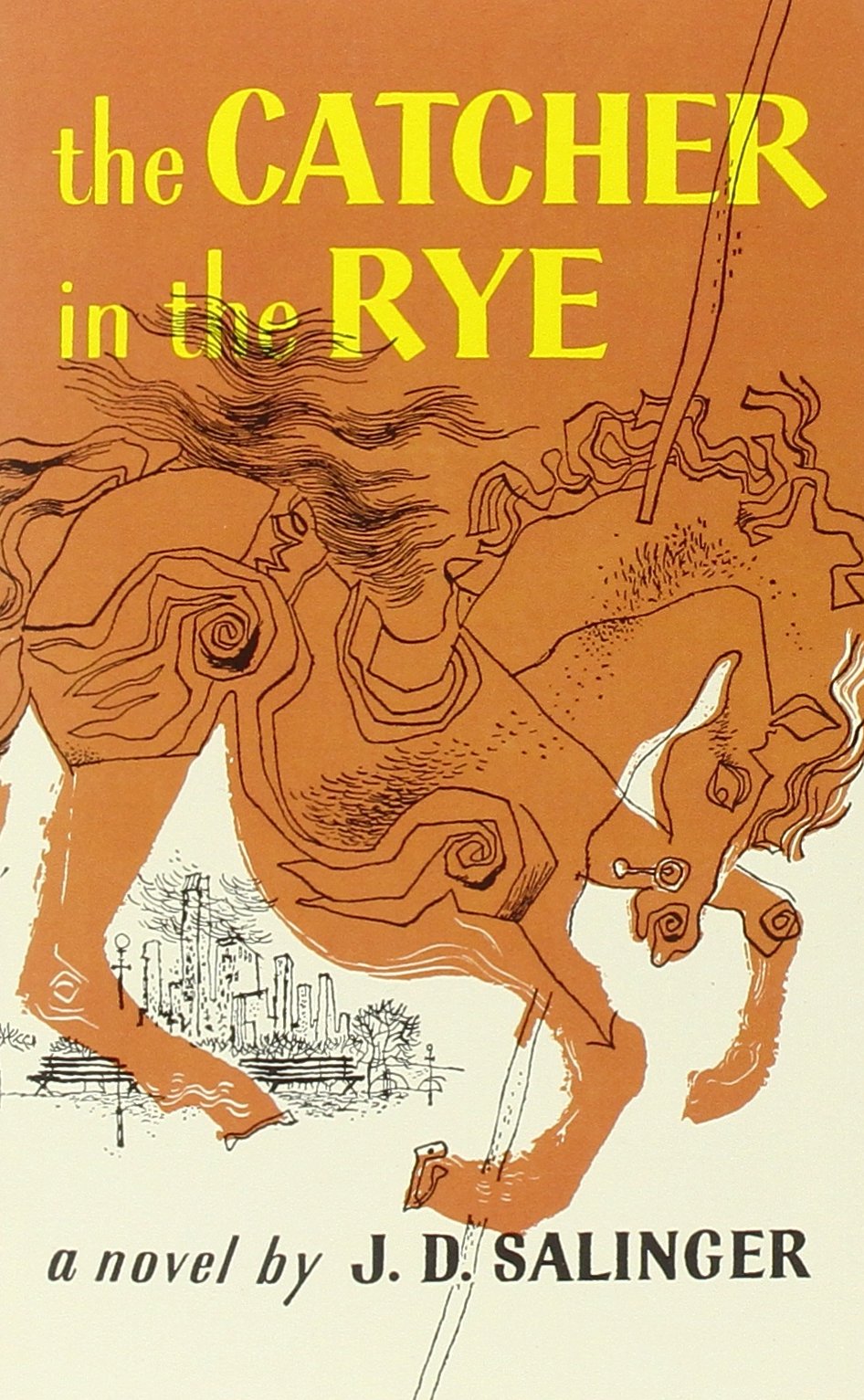
The Catcher in the Rye by J.D. Salinger

The novel, The Catcher in the Rye, is a famous, well-known novel often taught amongst high school English classes. Narrated by a young sixteen year-old and protagonist named Holden Caufield, the novel begins in Pencey prep school of Agerstown, Pennsylvania. Having failed all of his classes except for English, Holden gets expelled from his fourth school and has to return home to Manhattan on Wednesday. He grows afraid of when his parents will find out and decides to leave the campus early and stay in a hotel in New York.

As Holden travels independently for the next few days, he meets different characters ranging from old friends to complete strangers and judges them based on their personalities and sincereness. He gets easily annoyed by those who are “phoney” and struggles with reaching out to those closest to him, even his own family. Throughout the novel, Holden questions his future and clings onto the past before deciding to become a catcher in the rye.

Although the novel was written in the 1950s, it remains a gem because most aspects still relate to young teenagers today—including myself. The book rightfully upholds its reputation as one of the classics. Many aspects of the novel arguably contributes to the authenticity, since it’s difficult to find a book like this one anymore. For instance, the writing style is unique and imitates an individual’s train of thought. Salinger illustrates numerous times in which Holden goes off topic and talks about different random things like the typical human brain.

Salinger also makes the novel as realistic as possible. The characters (especially Holden) and their often spontaneous actions are often relatable to teenagers. Even the plot itself is realistic, as the novel concludes with an open-ending, showing how not all problems are easily nor quickly resolved. It’s fascinating how the author provides such small details that readers may easily overlook.

As a teenager myself, The Catcher in the Rye is an amazing book that should be directed towards more mature, older readers who are willing to understand the book’s true meaning. Although it seems very simple and boring at first, Salinger intentionally wrote the book with room for open interpretation and analysis, diving deep into themes of alienation and the protection of innocence. This story truly reflects the minds of most teenagers and their uncertainty for the future. That being said, I encourage others to read the book, but I cannot promise that everyone will enjoy it.

– Natisha P.

The Catcher in the Rye by J. D. Salinger is available for checkout from the Mission Viejo Library. It can also be downloaded for free from Libby.

Something Dark and Holy Trilogy: Character Analysis

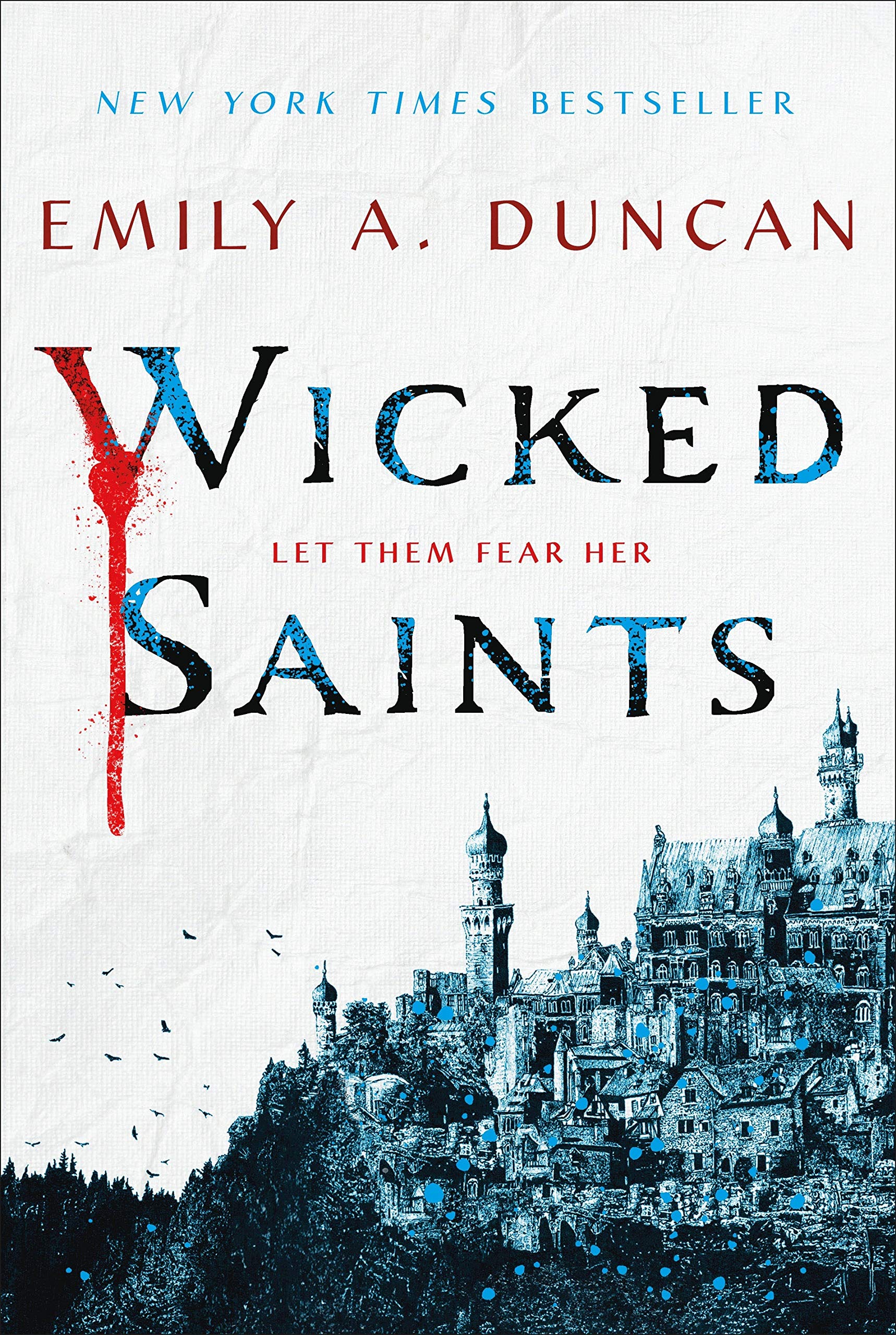
Amazon.com: Wicked Saints: A Novel (Something Dark and Holy, 1):  9781250195661: Duncan, Emily A.: Books

Overview:

The book series, Something Dark and Holy (shortened to SD+H), is a dark fantasy trilogy written by Emily A. Duncan. The whole series revolves around a cleric by the name Nadya Lapteva. Her character is particularly interesting in the way she grows over the course of the series. Here’s some quick background information first. The series takes place in medieval Eastern Europe and follows Slavic mythology. Her country, Kalyazi, has been at war with Tranavia for centuries. The main difference between the two is that Kalyazi has clerics, individuals who can communicate directly with gods, while the Tranavians do not follow the gods and use blood magic. Nadya finds herself as the last remaining Cleric and last remaining hope to end the war. Fair warning, this will contain spoilers.

Wicked Saints:

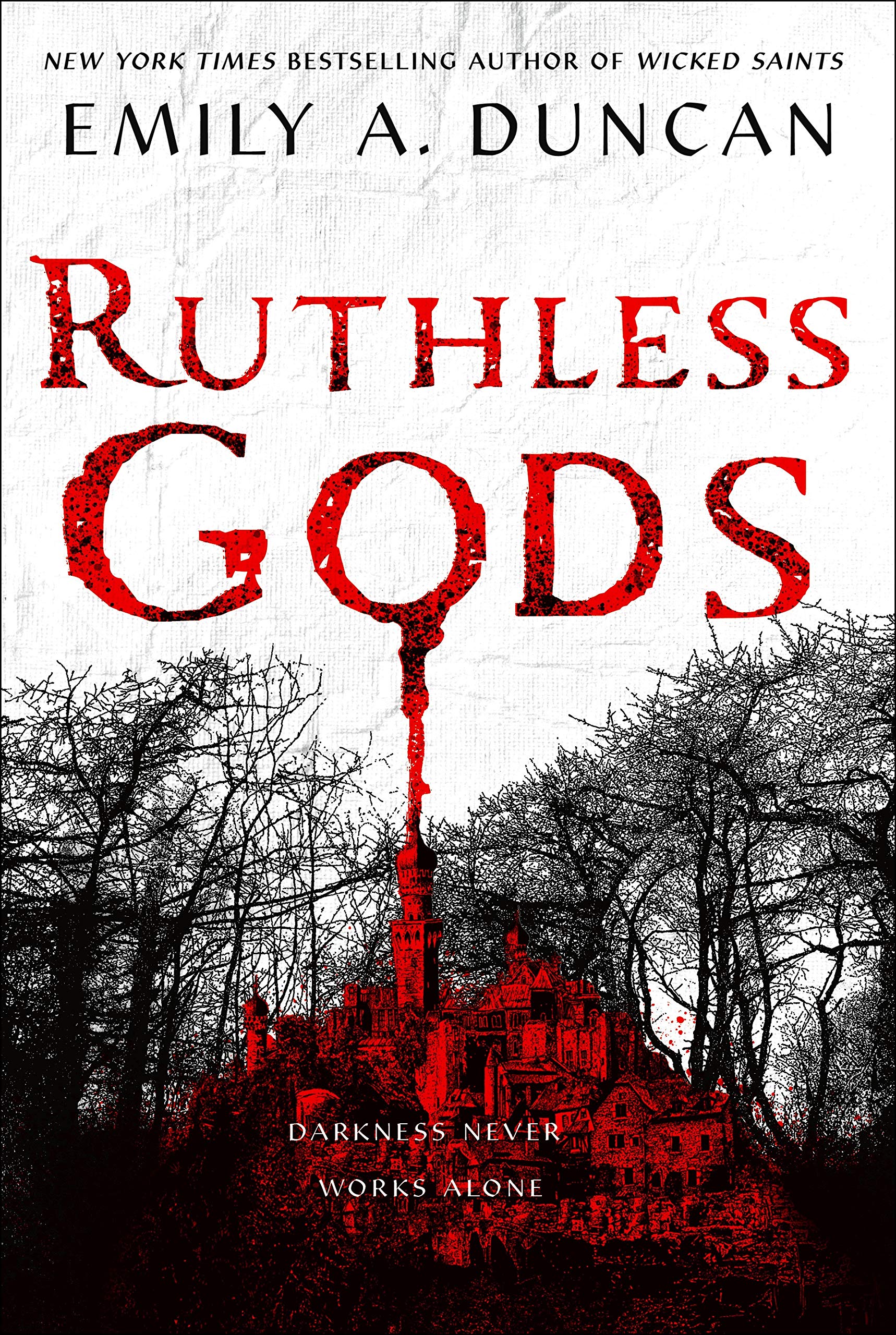
Amazon.com: Ruthless Gods: A Novel (Something Dark and Holy, 2):  9781250195692: Duncan, Emily A.: Books

In the beginning of the first book Nadya is a very timid girl. As the last cleric, she has been constantly protected and on the move. This, of course, leads to problems. In the first half of the book, she is separated from her countrymen and meets Malachiasz. He is a Tranavian who claims he was exiled from his country. Nadya sees him as a lost boy, pities him, and eventually agrees to travel with him. Malachiasz uses this story in order to gain her trust and lead her into the capital of Tranavia. Throughout this part of the novel, Nadya’s gods try to communicate with her and warn her. However, she ignores them. 

Around the middle of the novel, Malachiasz begins to show his true colors. However, Nadya is still too naïve and blindly in love with him. Nadya’s character continues down this path until the final chapter of the novel. In the last half of the book, Malachiasz admits he was never exiled. He only brought Nadya to Tranavia because she contained the power to turn him into a god. Nadya is absolutely torn and heartbroken with this betrayal. She not only lost the only boy she ever loved, but now her gods won’t even speak to her.

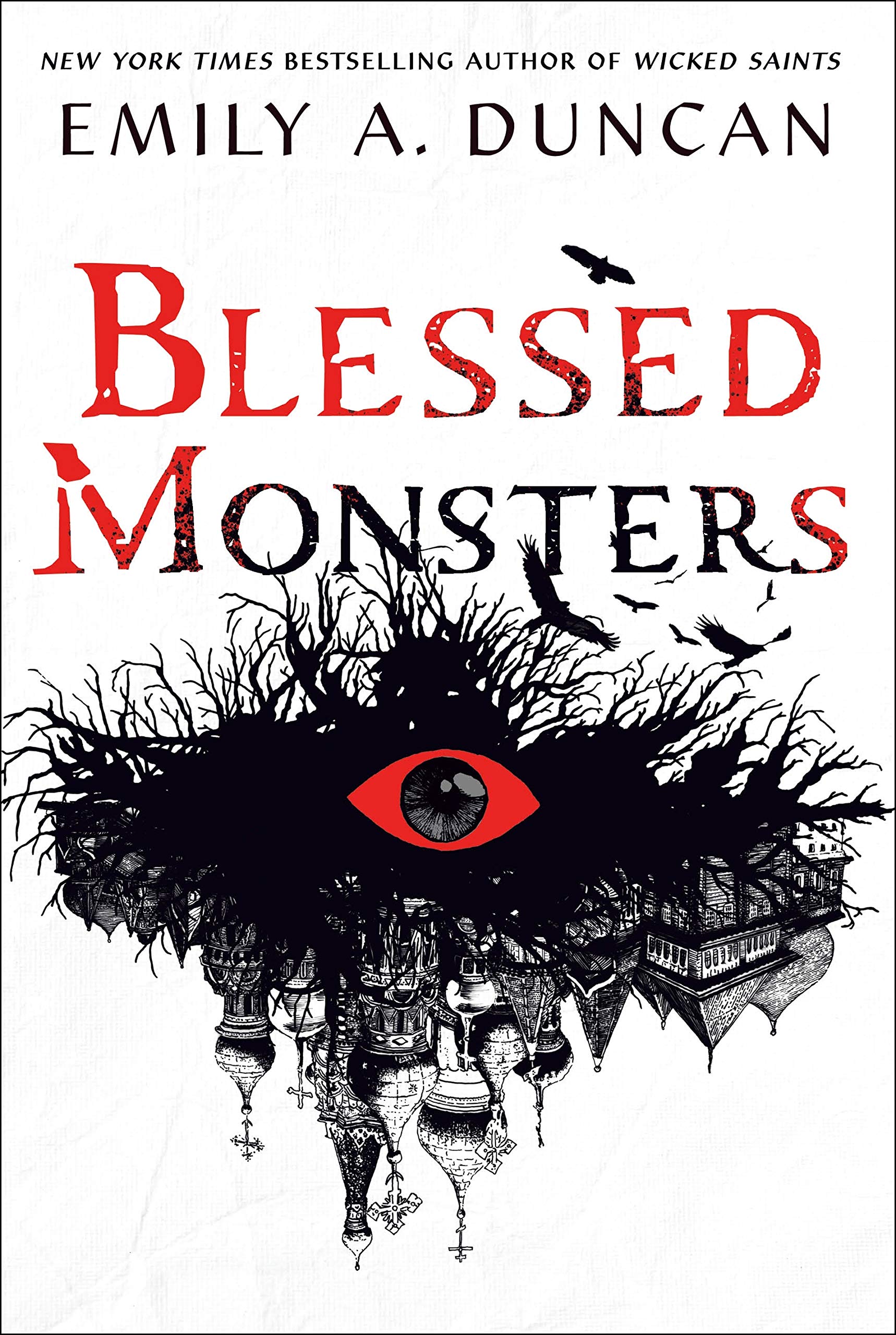
Ruthless Gods and Blessed Monsters

Amazon.com: Blessed Monsters: A Novel (Something Dark and Holy, 3):  9781250195722: Duncan, Emily A.: Books

In the beginning of the second novel, it is revealed that Nadya has fallen into a deep depression. She was in solitude for nearly a year before she decided to try and track down Malachiasz; he now has the power of a god and was terrorizing her home country. Her depression disappears when she finally finds him and tries to work out problems. This is where Nadya’s character truly emerges. She gains strength, bravery and grows in power. She becomes her own character as she makes the discovery that her magic doesn’t come from her gods, but rather herself. By the end of the series her character is nearly unrecognizable from the first novel.

I highly recommend this series if you like a strong female protagonist and lots of character development. 

-Michelle L.

Stroop 1935 Study

Cognitive Psychology is the field of psychology that studies how the human brain works, specifically memory, emotion, and behavior. Within cognitive psychology contains the field of processing, which focuses on how the brain works to produce a response to some situation or dilemma, and interference, what factors may disrupt the ability to process.

A study that explores this is Stroop 1935, and it relates to a theory known as the Stroop Effect. The Stroop Effect relates to how a mismatch between the color of a word and the word itself may lead to a longer time to state the color of the word. For example, if the word “blue” was printed in the color red, it would take longer to identify the color of the word than if it was just printed in the color blue. This theory helps people understand how brain processing works, specifically if words and colors would be processed in different parts of the brain. In Stroop’s study, he aimed at determining whether or not a mismatch of the color of a word and the word itself had any effect in the time it took to determine the color of the word it was printed in. To achieve this, he constructed three lists of words. All of these lists contained words that were colors, but the color that the words were printed in varied. In one of the lists, all the words were printed in black ink, while in the other two lists, the ink color varied. The first of these other two lists contained words that were printed in the color that corresponded to the word. For example, the word “green” would be printed with green ink. The last list contained words that were printed in mismatched colors. For example, the word “Purple” would be printed in red. Once the lists were constructed, the subjects of this experiment, who were 14 males and 56 females, were ordered to either read the word itself (for the list containing only the words printed in black) or state the color of the word that it was printed in (for the other two lists where the words were printed in color) as quickly as they could. From here, the time it took to respond to the lists, whether they were instructed to read the words or state the color of the words, were recorded. The results of the study showed that it took a longer time for the subjects to state the color of the word or read the word when the color printed mismatched the word itself. In addition, the experimenters also observed that there were more errors when the colors were mismatched compared to if they matched. Because of this, the study concluded that the mismatch of the color did indeed have an effect on the time it took to process information about the words, and it also provided evidence that colors and words are processed in different parts of the brain.

-Jeremy L.