Significance behind the Ending of Lady or the Tiger

In 9th grade, I read Frank Stockton’s short story The Lady, or the Tiger? because it was an assignment for English class. The story leaves off with a cliffhanger with two possible outcomes and whatever outcome shows a theme that is inherent in our lives.

From what I remember about the story, the princess was caught being in love with a man who sincerely loves her. However, he has no royal blood, which infuriated her father, the semi-barbaric king. He puts the man through a trial where he would have to choose one of two doors in front of him. One of the doors holds a beautiful lady in which he would have to marry the exact moment he chooses the door, a lady that lives at the palace and the princess hates. The other holds a tiger that has been starved and is looking for a hefty meal. A large audience gathered to witness the man’s fate, the princess forced to watch from her throne above. But she knows exactly what is in which door through bribery. The man she loves turned to her and after some moments of thinking, she flickers her hand to a direction, signalling a door. The man confidently walks up to that door but in the end, it is up to the reader to know which door he actually went into.

But of course the princess told the man to go to the door that held the lady, right? This is the man that she loves and someone she genuinely cared about. The man will be forced to marry this woman she doesn’t like and he won’t love the woman as much as he loves her. But circumstances of that situation would lead to her seeing her lover with another woman at all times. Not only would he be with woman she hates, they would both see each other all the time with the knowledge of the marriage between them. They are in love with each other and there was no doubt about that but they can’t be together because it was forbidden. They are so close to each other, yet so far. Perhaps, he may fall in love with the woman he was tied to be with because all of the private time they have together.

But even with those consequences, she will still rather see her lover everyday than see him eaten alive by a tiger, right? If she signalled for him to be eaten by the tiger, she would be stuck with the knowledge that his death was her doing. The guilt will consume her, she killed the man she loved, and perhaps will turn her into a hollowed version of herself before the trial took place. Though that may be true, the king was said to have semi-barbaric traits. Symbolically, could those traits have passed down to his daughter? Perhaps, she is selfish and she wants all of the man’s love only for her. Perhaps the tiger appealed more to the princess because it ends a cycle of life. Sure, this man is one that she loves but the thought of violence could attract her even more because of her implied barbarism. She has this man’s fate wrapped around his finger and whatever she choose, he will go to confidently because he knows her and trusts her decision, no matter what it is.

There are many themes in this story that could be applied to reality but what I would like to discuss is the theme of fate. The king in his story put this man on trial but even he doesn’t know what is in each door and he doesn’t care what this man gets because in one way or another, it is his punishment. My 9th English teacher called him a symbol of god or the universe in a way, a person who doesn’t care about our meager lives until we have done something that not only affect them but angers them. Ultimately, our fate is decided by them but our will is not. It is decided by ourselves which door we choose to go to, whether we listen to the princess we love on which door to go to or not. The man knows all about his lover’s nature and yet chooses to go into the door she instructs him to go to. He didn’t choose to be on trial but he is going to choose what door he goes into. He is choosing the way he wants the rest of his life to go, though he was put into this predicament that the universe/God/someone else had put him into. We are put into hard situations all the time by someone else but ultimately, it is in our hands the way we decide how we must deal with it. Do we ignore it? Do we push through its obstacles? Do we give up? Whatever occurs next would be our decision, whether we would want to accredit ourselves with this information or not.

(I can’t claim credit for most of the information presented; it came from the knowledge of my 9th English teacher.)

-Saanvi V.

Stoner by John Williams

Stoner, a novel set in the 1920s, is a golden classic hidden beneath time. 

It begins with a slight allusion to the William Stoner’s (our main character) end, citing that he made little to no impression upon his students and colleagues at the University he had attended and worked for. Moreover, he seems to symbolize to these characters the harsh realities that await them (death, of course).

Afterwards, the author (John Williams) slowly appears to construct his life from the start: Stoner was born and raised on a farm with parents that treat him fine. Quite often, he’d help with chores and learn the lifestyle of an average farmer. Therefore, when Stoner was old enough, he was sent to the University of Columbia where he intended to study agriculture. However, these plans were cut short when he fell in love with literature. In turn, his passions for written works (both old and modern alike) seem to act with (or as) the message, for Stoner was willing to cut off his past ties with farm life –  and thus his parents – to study a field he held fondness for. 

In turn, similar elements within the text are brought together to form this wondrous book. For one, the characters and their interactions are so alive, which gives them such a robust roundedness. Furthermore, the plot is pushed onward with descriptions and actions that reek of loss. To illustrate, he loses his parents when he chooses a path towards literature; he loses his sense of importance when he decides not to fight in either war (WWI and WWII); he loses his marriage when he realizes the hard resentment his wife has toward him. Even at its conclusion, Stoner leaves readers empty and restless, perhaps frustrated or confused that he never took the chance to fight against his evident torment. 

Nonetheless, despite these dark matters, Stoner had happier moments to take pride in. For instance, he was able to enjoy a quiet but significant bond with his daughter when she was first born, and also gained some recognition from his students when he decided to integrate new techniques into his classes (much to his colleagues displeasure). 

In this manner, Williams communicates to readers that cold realities have bits of warmth and comfort too. 

What is Happening in Ukraine?

All over the news for the past week, the Russia-Ukraine conflict has been a devastating scene to watch. Currently, Russian troops are flooding through the Ukrainian border. Russia’s leader Vladimir Putin claims that Russia can not feel “safe” as a result of the Ukrainian push to join NATO and become more westernized. For those who are unaware of the term NATO that is being thrown around lately, NATO is the North Atlantic Treaty Organization. Created post-WWII to try and prevent future hostilities, NATO is a military defense alliance that includes 28 European countries and 2 North American countries, including the United States. One of the main points of NATO is that an attack on one is an attack on all. Putin has been very adamant about keeping Ukraine out of NATO. For a geographical reference, Ukraine and Russia share a border. As a result, there are many Russian-Ukrainian ties between the people in both countries. Putin does not want any western influence to disrupt his current dictatorship.

Bomb shelters in Subway Stations

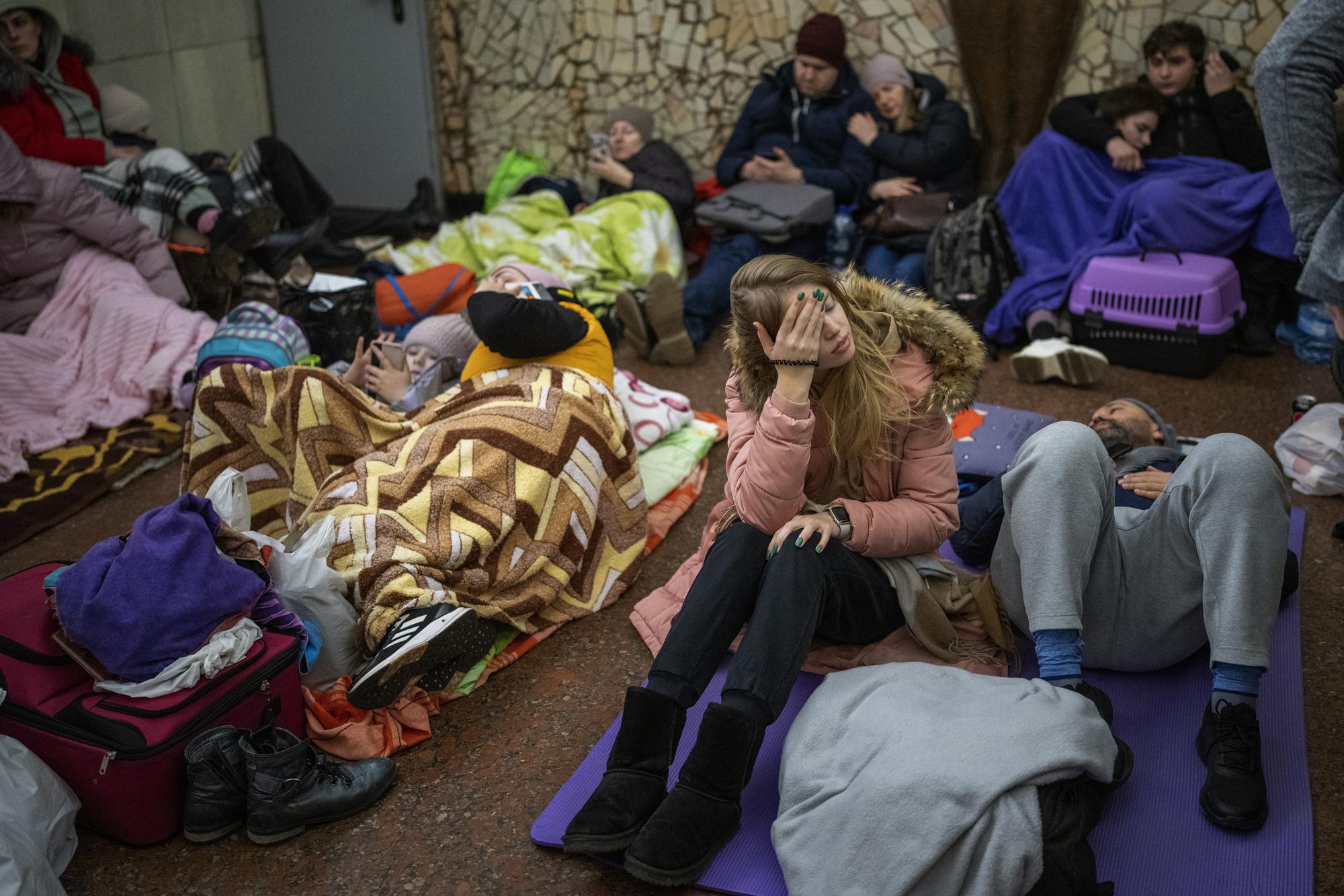
Rockets have been shot in the Ukrainian capital of Kyiv with over 2 million civilians living in the city. Unlike past global conflicts that the newest generation read in textbooks, visuals are not provided. The difference currently is the influence of modernized technology and social media. Through cell phones, people across the globe have seen real time videos or rockets filling the skies and destroying the cities. Over social media Ukrainians have posted video of their bomb shelters inside of the subway stations. Citizens have been recording their current conditions with covered windows and packed bags, waiting for the bomb siren. 

In order to protect the country, all men ages 18-60 have been ordered to remain in Ukraine to protect their land. Families are being separated as the men stay and the woman and children attempt to flee. President of Ukraine Volodymr Zelenskyy has stayed present. He has not been hiding but rather leading his people and fighting alongside them. 

As for external involvement, the U.S has announced sanctions against the Russian Central Bank. Meaning business with Russia has been closed and assets have frozen. Additionally, the U.S and other Allies have taken some of the Russian banks off of the SWIFT financial messaging system. The hope is to put economic pressure onto Russia. The elite wealthy class of Russia will definitely feel the pressure from bank removals which is one of the hopes from these sanctions. The Biden Administration has made it very clear that the United States will not intervene militarily in Ukraine. The main reasoning being it could ignite another World War, the current conflict being regional. The current troops throughout Europe are not present to fight Russians, but to defend NATO allies, which is part of the defense alliance.

-Lilly G.

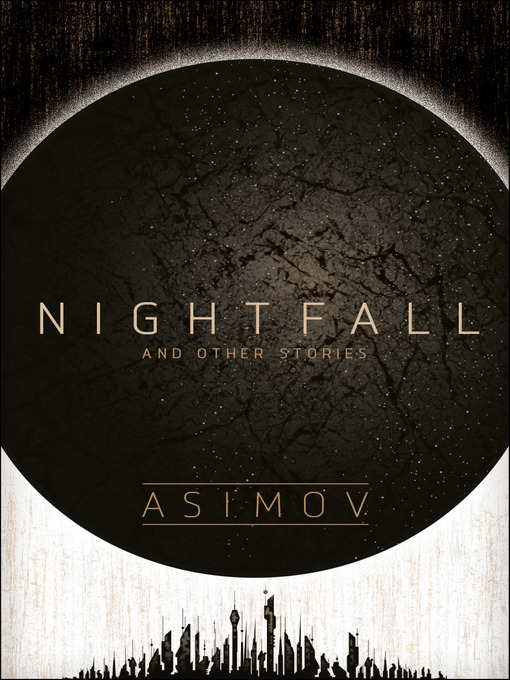
Nightfall and Other Short Stories by Isaac Asimov

Nightfall and Other Stories is a collection of works written and compiled by Isaac Asimov, who was considered a major science fiction writer in the 1900s. Though each narrative is a classic in its own right, I’ve picked out a few that stood out so that I may write a short explanation and/or analysis. Here goes! 

 Nightfall

“Nightfall,” regardless of its age, has certain themes that are quite relatable. For one, its premise  speaks to readers with caution, as it demonstrates our stubbornness and our outright rejection to believe what we cannot see, and so when an outcome occurs the consequences are far more severe. Therefore, despite its shortness in length, Asimov is able to structure his points skillfully. To explain, as his main purpose is to establish the ease at which people lose themselves once shown a foreign situation, he creates a civilization that has never been covered in darkness. In turn, once citizens are able to see their first eclipse, none can take the experience (and go mad as a result). In this manner, Asimov illustrates the importance of balance: we cannot learn to appreciate light (yang) if we’ve never felt our way out of the dark (yin). 

Fun Fact: “Nightfall,” which was published in 1941, was soon voted by the Science Fiction Writers of America as the best science-fiction short story ever written. 

Green Patches

“Green Patches” was an unexpected surprise, as it questions our private values. It asks us whether we could survive as a single “organism” (or consciousness), or if our human instincts for independent growth and movement would smash that chance. In this case, Asimov demonstrates that despite our cries for unity, society thrives on anarchy and thus prefers chaos over peace. 

Fun Fact: “Green Patches,” which was published in 1950, had its title changed to “Misbegotten Missionary” (which was later on changed back to “Green Patches”). 

Eyes Do More than See

In “Eyes Do More than See,” Asimov paints out a distant future in which humans have given up their physical forms (and become energy beams). However, these entities soon realize the repercussions of such a choice, for they can remember memories that spoke of earlier passions, love, and far off adventures. In turn, readers are met with a lesson that hints at appreciation – in other words, we should learn to value our concrete, more tangible lives that we abide to, in which we experience sorrow, passion, and loss. 

Fun Fact: “Eyes Do More than See” was nominated in 1966 for a Nebula Award under ‘Best Short Story.’ 

-Emilia D.

Are Jim and Della from “The Gift of the Magi” richer before or after their gift exchange?

Belonging to the genre of dramatic irony, the short story “The Gift of the Magi” by O’Henry narrates the tale of Della and Jim, who have become richer in affection after their gift exchange. The protagonists choose to give up their most valuable belongings with the intentions to give the perfect gifts to each other, which have been rendered useless. However, Della and Jim gain something more valuable in their relationship than either of their possessions.

When she wants to make more money to buy a nice gift for her husband, Della asks, “‘Will you buy my hair?’” (3). Because Della is willing to give up her most precious possession, the immense love she feels for her husband is depicted. Furthermore, Della’s feelings are mutual as Jim ends up selling his cherished watch to buy combs for Della.

At first glance, the exchange seems to be inconsequential since the gifts are now unusable, but a shift in the conflict is noted when “Of all who give gifts, these two were the most wise. Of all who give and receive gifts, such as they are the most wise” (4). By sacrificing their most precious belongings, Jim and Della prove to each other that they have deep affection for one another, which is why they are referred to as the magi. There is no materialistic gift that would have such great meaning as the gifts of Della and Jim; therefore, they are much richer than they were before the gift exchange.

-Ayati M.

Odysseus: A Character Analysis

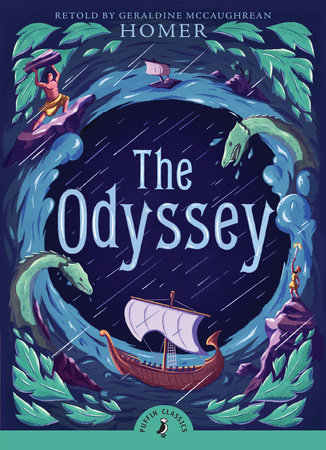
The Odyssey by Homer: 9780140383096 | PenguinRandomHouse.com: Books

Around 750 BCE, at the height of Greek civilization, a blind bard named Homer lived in Ionia, on the western coast of Turkey. Little is known about Homer, but his legacy lives on in his two great works – the Iliad and the Odyssey. While the former is formidable in its own right, it is in its sequel, the Odyssey, that Homer’s incredible craft is showcased. Detailing the adventures of Odysseus, the wily king of Ithaca, and his ten-year-long attempt to return to his country, the Odyssey explores lofty themes of human nature while remaining relatable to readers nearly three thousand years later. 

The poem can generally be split into three parts: immediately post-Trojan War, when Odysseus begins to set sail for home; the true odyssey, in which Odysseus must overcome many obstacles on his way back to his home; and the return to Ithaca, the chronicle of Odysseus regaining his rightful position as king. However, it is not the events of the poem that are worthy of note – instead, it is the behavior of the hero himself. Through the interference of the gods, whether to aid or hinder, Odysseus withstands harrowing experiences, all of which leave him a man and hero changed for the better. 

Odysseus is introduced to the audience as a god among men (in Ithaca, at least). However, this implies that Odysseus has never truly needed to better himself, making him vulnerable to hubris. Odysseus’ pride is justified to an extent, as seen when he and his crew are captured by the Cyclops, but Odysseus manages to trick the Cyclops and engineer their escape. However, just as they are about to sail away, Odysseus arrogantly stokes the rage of the Cyclops, not realising that the Cyclops he insults is the son of Poseidon, who then curses Odysseus. This is the catalyst for the change that Odysseus will undergo for the rest of the poem, because it makes it clear his pride will not serve him well in the future. 

In the ten long years between Odysseus’ departure from Troy and his arrival in Ithaca, Odysseus faces countless struggles that mold him into a character that is capable of overcoming his previously debilitating hubris. He meets characters who are equally as clever and wily as he is, forcing him to recognise people outside of himself. Famous characters who make an appearance during this arc are Circe, the wickedly powerful enchantress of the sea; Scylla and Charybdis, two sea monsters who devastate Odysseus’ crew; and Calypso, who successfully manages to trap Odysseus on her island for seven years. However, these experiences are mitigated by divine interference, notably via Athena and Hermes. 

By the final arc of the story, Odysseus has finally renounced his hubris and bowed to the will of the gods, while also being self-aware enough to understand his own worth. The situation in his country has deteriorated in his absence, and suitors of his wife, Penelope, have overrun the palace. Heeding the lessons of the past decade, Odysseus disguises himself as a poor beggar and wanders to the home of his loyal shepherd, Eumaeus, choosing to keep himself secret until he can determine who in Ithaca is truly loyal to him – a wise move, considering that the very next day, he is accosted by both one of his subjects and a suitor. By this point in his journey, Odysseus has learned how to let go of his pride with the knowledge that he will soon get his revenge. 

It is this that makes Odysseus a revolutionary hero: not that he is strong enough to kill all the suitors, but that he is clever enough to both withstand the abuse directed towards him while betraying nothing, and to trick the suitors into underestimating him until the fatal moment. Because of the way he handles the unfortunate situation he is in, although Odysseus does not fit the usual definition of a Greek hero (that is, all brawn and no brains), throughout his journey, he learns to be a more balanced heroic figure, which undoubtedly cements his status as one of the foremost heroes in literature for all time.

– Mahak M.

Homer’s The Odyssey is available for checkout from the Mission Viejo Library. It can also be downloaded for free from Overdrive.

The American Dream in The Great Gatsby

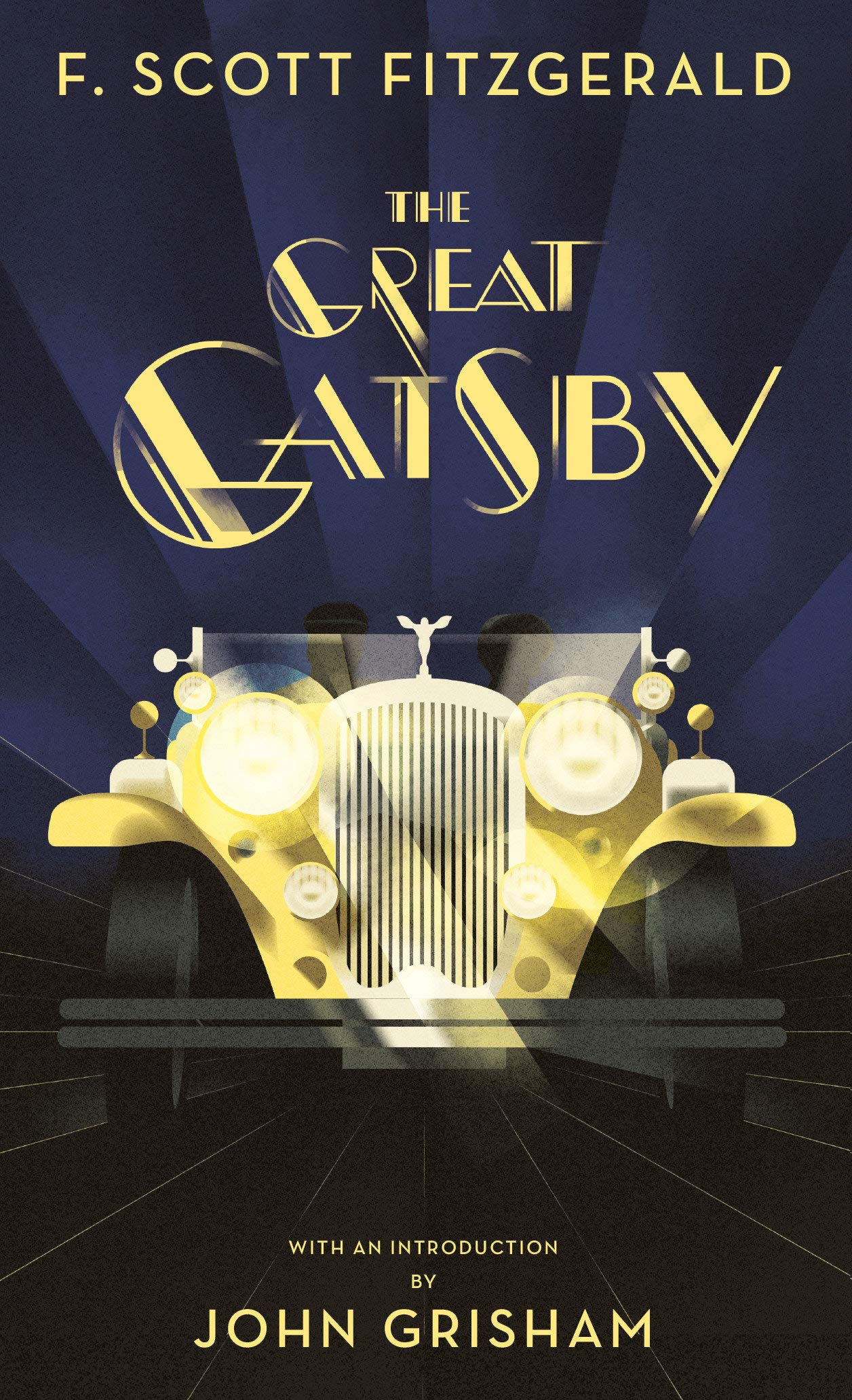
The Great Gatsby (Vintage Classics): Fitzgerald, F. Scott, Grisham, John:  9780593312919: Amazon.com: Books

In the decade after the end of the Great War, the world was in shambles. Though relatively untouched by the devastation, America, along with the rest of the world, experienced a reactionary period against the brutal war, during which materialism flourished alongside the economy. The result was an era known as the Roaring Twenties, a cultural revolution that emphasised entertainment rather than functionality.

However, this veneer of excitement was underscored by the most important idea of the time – the American dream, the idea that all people have equal opportunities in life. Unfortunately, as people soon realised, the American dream was just that – a dream. The following disillusionment with society and life was reflected in the modernist works of the time, arguably the most significant of which was F. Scott Fitzgerald’s The Great Gatsby.

Nick Carraway, a young man from Chicago, moves to the “new-money” district of West Egg in New York, hoping to become a bondsman. Instead, he finds himself reconnecting with his “old-money” cousins in East Egg, Tom and Daisy Buchanan, as well as befriending the mysterious and even wealthier Jay Gatsby. The tale of Gatsby’s fabulous parties on the Long Island Sound is underscored by Gatsby’s obsession with his old love, who turns out to be Daisy Buchanan. Over the course of the novel, Gatsby uses Nick to reconnect with Daisy, but it is when Gatsby is closer than ever to achieving his dream that it is all torn away from him, and Fitzgerald’s message of the unattainability of the American dream shines through. 

This theme appears in various other characters as well, most notably in George and Myrtle Wilson. George, a destitute auto shop owner, dreams of running a successful business and of having a woman who loves him. He is foiled in the former because though he dreams of selling Tom’s blue coupé, Tom’s reluctance to sell it to him leaves him despairing for the future. He is also let down in the latter, considering that his wife, Myrtle, is Tom’s mistress. She, in turn, dreams of marrying Tom and therefore ascending to the upper class, but her hopes are fatally crushed in the novel’s chilling climax.

In The Great Gatsby, Fitzgerald writes his characters to each reflect a different section of society that aspires to achieve the American dream, ultimately concluding that no such thing exists or is attainable. Interestingly, the novel’s focus on the detrimental effects of materialistic culture and the relentless pursuit of the American dream lends itself to foreshadowing the Great Depression, which only proves Fitzgerald’s claim – the American dream is dead.

– Mahak M.

The Great Gatsby by F. Scott Fitzgerald is available for checkout from the Mission Viejo Library. It can also be downloaded for free from Overdrive

How Reliable Is Decision Making?

The coming to decisions based off observed patterns and past experiences is known as a heuristic. On the other hand, algorithms are step by step procedures that guarantee an outcome, and require lots of trial and error. Heuristics are often much more efficient than algorithms, yet they do not always guarantee a solution. For example, in a grocery store setting, an algorithm would be going up and down every single aisle looking for a specific item. Although there will always be a one hundred percent success rate, there is a lack of efficiency and most would not feel this as the best way to look for an item. A heuristic in this situation would be to look in certain labeled aisles that may contain the specific item that is being looked for. One type of heuristic that impacts decision making is the representative heuristic, or the judging of the likelihood of something by intuitively comparing it to particular prototypes. Although the use of this representative heuristic can make decision making quick, it may have a negative effect on the accuracy of such decisions. 

This is shown in the study Khaneman and Tversky 1974. This study attempts to prove the hypothesis that when people evaluate probability by representativeness, prior mathematically probabilities would be neglected. To do this, subjects were told to determine what the likely occupation of a certain person would be (engineer or lawyer?) based off of a description. However, this description would often have little to nothing to do with the occupation at all. To cope for this, the particpants were either told that there were 30 engineers and 70 lawyers, or that there were 30 lawyers and 70 engineers. Theoretically, the ratio of the participants’ guesses should be seventy to thirty because of mathematical probability. However, the study found that the participants of both groups had guesses closer to a ratio of fifty to fifty. Such shows that the subjects used to representative heuristic to make their decisions rather than using the probabilities given to them, causing decision making to become unreliable.

This study is useful in showing how the data does not match what one would expect based off the idea that the subjects were aware of the unequal amount of each profession. However, this does not directly prove that the representative heuristic is responsible for this distortion, as there is lots of room for error in the descriptions that the participants were given for each person. In the end though, the study still supports how decision making can become unreliable and cause errors.

-Jeremy L.

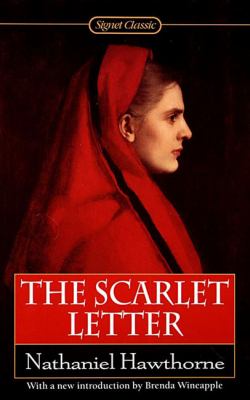
The Scarlet Letter by Nathaniel Hawthorne

The Scarlet Letter, a historical romance written by Nathaniel Hawthorne, is known as an American Classic. 

It begins with a narration to the reader, a token of awareness and readiness to start the tale. In addition, the description of the prison suggests that the exposition will either begin or end with this as its conclusion. Nonetheless, the first few chapters serve to build upon atmosphere, symbolism, and the emergence of theme (which I’ll mention often throughout this review). 

To sum up what first occurs in The Scarlet Letter, Hester, our main character, is accused of adultery and is forced to wear a scarlet “A” on her bosom. As Hester begins to adapt to this reality, she wonders about the value, weight, and depth of sin. In other words, she questions whether she’s the only “sinner” in town, as she concludes that she can’t be the only one to have ever been ungodly. Thus, Hawthorne awakens the need to call out religion’s insincere role and the impact it has on communities. 

Moreover, Hester births a daughter as a result of the affair; Pearl. This newborn, described as “elf-like” by the narrator, is a symbol that takes an important role. As Hester stands charged with an unholy crime, Pearl is hence a product of that “sin.” Therefore, she is another representation of the “A” that is woven into Hester’s clothes, a more intimate, organic consequence derived from Hester’s mistake. Furthermore, Hawthorne points out that though Pearl acts with an appropriate demeanor as anyone her age (rambunctious and childish), her actions are “defiled” by the perspective that she’s a demon, a misdeed due to her mother.  

A quote that carries great elements of figurative language is somewhat in the middle of the rising action, when Hester takes Pearl to the town’s church leaders in order to convince them not to seize her daughter. As she waits for them to address her, the narrator notes that “the shadow of the curtain fell on Hester Prynne, and partially concealed her” (102). It’s implicit to readers that they should be able to make a connection between Hester’s sin and what the “shadow” from the curtain could mean – a form of taint within her, driven by human imperfection and fault. As a result, such examples illuminate Hawthorne’s ability to craft not just specific scenes, but also the smallest details that have a chance to foreshadow what’s to come next. 

I would also like to take a quick note on the language used, which can have an impact on a reader’s perspective of the era. To illustrate, phrases such as “thee” and “thy” hint at old English, those which were common in Shakespeare and in poems similar to Beowulf. Therefore, take the time to make sure this doesn’t make a major difference on your experience; if it does, re-read certain passages or write short annotations as possible interpretations of what’s addressed, said, or argued. 

Thus, The Scarlet Letter’s conclusion, though not the most fortunate, is one of redemption, and demonstrates that characters and readers alike can learn from mistakes within the consequences that impact our futures. Thence, coupled with Hawthorne’s expertise and style, allows this text to serve as a book worth its time. 

-Emilia D.

The Scarlet Letter by Nathaniel Hawthorne is available for checkout from the Mission Viejo Library. It can also be downloaded for free from Overdrive.

TV Review: Cobra Kai

This show really brought back some good childhood memories, as it is the sequel of the famous Karate Kid trilogy, famously known for the bond between Daniel LaRusso (Ralph Macchio) and Mr. Miyagi (Pat Morita) and their rivalry between John Kreese (Martin Kove) and Johnny Lawrence (William Zabka) of the Cobra Kai Karate Dojo. Although Zabka was only casted in the first movie and appeared briefly in the second, the show follows the full trilogy. Zabka and Macchio reprised their roles as we get to see how their lives unfold after the trilogy events.

The show starts off with Daniel enjoying the life he has always dreamed of, owning a fancy dealership, happy family, and seemingly free of problems. On the other hand, Johnny is in a world of anguish, as he has nobody in his life, losing his mother at a young age, his sensei forcefully abandoning him after the tournament, and failing his relationship with his divorced wife and his son, Robby Keene (Tanner Buchanan). However, Johnny’s life changes when he meets his neighbor, Miguel Diaz (Xolo Maridueña), who is struggling to fit into this new city. Johnny later saves Miguel after a group of bullies led by Kyler (Joe Seo) pick on Miguel, leading to Johnny interfering and using karate to defend Miguel. After some convincing by Miguel and a run-in with Daniel at the LaRusso dealership, Johnny decides to reopen the Cobra Kai dojo under his name. Although Johnny is cold at first, he decides to take his relationship with Miguel more seriously and treats Miguel like his son, leading Miguel to be his star pupil and helping Johnny become a better person. However, Daniel later sees Johnny’s dojo open and, out of fear due to past trauma experienced in the trilogy, opens his own dojo, Miyagi Do Karate, and even taking in Robby, Johnny’s son, as his first student. The show follows with classic high school drama and similar patterns in the rivalry between Johnny and Daniel, with characters such as John Kreese coming back later on in the show.

Personally, I believe that the most interesting aspect of the show is how each side believes that they are fighting for a good cause, however each side has their flaws. For example, Johnny wants to teach the kids to defend themselves against their bullies and conquer their fears, however his disconnection with the modern world blinds him to how corrupting Kreese’s style of Cobra Kai is until Miguel wins the All-Valley tournament against Robby dishonorably. After witnessing Miguel’s actions, however, Johnny tries to implement principles of honor into his class, but fails due to Kreese later influencing the kids. On the other hand, Daniel tries to teach his class how to find balance in their lives, fight honorably, and defending others with good intentions, however he often becomes too obsessed with his rivalry with Johnny and goes against his own advice. Finally, Kreese also wants to help the kids in defending themselves, but he has been traumatized by his time in the army and life events to implement restraints in real life situations, causing the kids to become more violent.

Also, another interesting aspect of the show is the personal growth relationships of the show. In the beginning of the series, Johnny only takes Miguel in because he needs a line of work after being fired from his previous job and a stable source of money. However, after failing to repair his relationship with Robby, Johnny later realizes that Miguel still has faith in him and he cannot give up on Miguel like he did with Robby, and begins teaching Miguel seriously while treating Miguel like a son. Alternatively, Daniel only teaches Robby to create a star pupil to combat Cobra Kai, but after realizing Robby is Johnny’s son and making a rash decision to separate himself from Robby, Daniel later comes back to Robby and tries to mentor Robby to a similar path given by his former sensei, Mr. Miyagi. However, Robby seems to get the worst of the relationships, as he feels betrayed by both sides and is sent down the wrong path, finding a new sensei in the corrupting influence, John Kreese.

Overall, this series is worth watching, whether you’re a fan of the Karate Kid trilogy or someone looking for a good show to watch. The numerous references to past movies, growth in relationships, and exploration of each side and going deeper into their motivations and past makes the show an interesting watch. Even the high school rivalries between the students of each dojo allows teenagers currently in high school to relate to the show in a personal way. At the time of writing this review, there are currently only 3 seasons to watch, however there are only 4 days until the premiere of Season 4, which only looks to improve on its previous seasons.

-Lawrence B.