Book Review: In Darkness, by Nick Lake

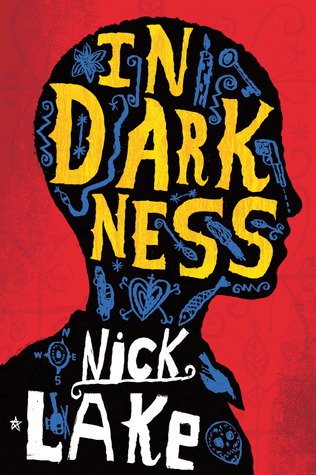
in_darkness_coverIn Darkness is a novel written by Nick Lake that recently won the Michael L. Printz Award for Excellence in Young Adult Literature. This award is the teen literature equivalent of the Newbery award, which honors the most distinguished book written for children each year. Having read this book, I can most certainly testify that this novel is worthy of the award.

This novel is categorized under the genre realistic fiction, but personally, I found it to be more historical fiction. I am not and have never been a fan of historical fiction, but I found myself really touched by this novel. The story follows Shorty, a Haitian boy, trapped underneath a hospital following an earthquake. As he nears death, he ruminates on his life, and all of the things that he has done that he regrets, and all of the things that he will miss if he dies. I found this to be one of the most touching portions of this novel- Shorty is a very relatable character to the teenage audience that Lake writes to. He is angry, passionate, lovable, and honest. He has the same interests most teens have today- music, friendship, family, and school. His life in Haiti is interesting and captivating, and mostly shocking, because it shows the extreme poverty and violence that these Haitians live with.

Shorty’s story is entwined with the story of Toussaint l’Ouverture, the slave who led the rebellion for Haiti’s independence two hundred years prior. Although both of the characters are so different, Lake writes their stories together with shocking ease. Both characters are undergoing a war, l’Ouverture leading Haiti’s independence from France, and Shorty’s involvement in the gang wars. Through their stories, you see how Haiti was shaped, and the similarities between the Haiti of the past, and the Haiti of the present. Many Haitian rituals and phrases are included in the novel, making it seem very authentic and showing Lake’s passion for this subject and his dedication to his novel.

In Darkness was touching and passionate. It took me a while to get used to the switching of the viewpoints from Shorty to l’Ouverture, but I found the exchanging of the viewpoints made me more invested in each story. I couldn’t wait to see what would happen in each of the characters’ lives next. Some readers might find this story desolate and hopeless, but there were various parts of the novel that shined with optimism, most notably Shorty’s angelic lost sister, Marguerite. Other reviewers have said that the novel is inappropriate for younger readers, because of the amount of expletives and violence, but I think that it is truthful and would be a great read for any young adult reader.

I highly recommend this novel overall, and I think it definitely deserves the Michael L. Printz Award.

-Brianna M., 11th grade

A Journey Through English Literature

bookstack2I have long maintained an affinity for words, a love of reading and language itself. To a large degree, my passion has been sponsored by my education in the arts of literature and composition, a trend has persisted even to this, my sophomore year of high school.

Since last September, my classmates and I have chronicled English literature as it has developed throughout the ages. From  a linguistic standpoint, it has been extremely interesting to see the advances of our language in vocabulary and syntax, yet even more so the changes in storytelling and style have enthralled me.

As the year began, we delved into the ever-classic Beowulf. Though not as ancient as The Odyssey or tales of other archaic civilizations, the epic emanates a similar air of inhumanly heroics, which, although often unacceptable to modern audiences for its lack of realism, is enjoyable for its archetypal characteristics. As with many if not all of the works I will discuss, Beowulf is a true portal to another time, imparting on the reader the same awe which the people of old felt in experiencing the tale of this epic hero.

gawainMoving from the Danish isles to those of England, we next read Sir Gawain and the Green Knight. Marking the beginning of the presence of knighthood, the tale is one of many surrounding King Arthur and his Round Table. Exemplary in its symmetrical structure and symbolic usages, Sir Gawain most notably gives insight into the values and beliefs of the time. Yet these are perhaps the most outstanding qualities of the work; in reading Sir Gawain, one comes to understand the values of chivalric times, if not the plot, story, and other thematic elements.

From here we read a few books and the prologue of Chaucer’s immortal Canterbury Tales. As opposed to the anonymous composers of the retrospectively conservative aforementioned tales, Chaucer is revolutionary, a critic of the age’s corrupt church. This quality of subtle rebellion has resounded throughout history in various arts. Furthermore, in addition to providing an accurate representation of the social structure of England at the time, Chaucer’s writings, the Miller’s fabliau, the Pardoner’s allegory, are truly entertaining.

othelloShakespeare furthers the role and characteristics displayed by Chaucer in his tragedy, Othello: Moor of Venice. Novel in its portrayal of an African as its protagonist, the work explores racial and gender themes, and is notable for these characteristics. Yet most riveting is the tragedy’s antagonist, Iago, a deceitful and charismatic villain who, despite leaving his motives unstated, acts solely to rue Othello with such spite and  yet such cunning that the audience is singularly and wholly captivated.

Our penultimate novel then was Jane Eyre. Moving to the near-modern age, Ms. Brontë’s novel is romantic, a true pleasure in which to delve, except for its lengthiness. This faux-autobiography is unique in the lot of works that have been discussed for its first person perspective, which provides a unique look into character not seen previously. In many ways an aspersion of Victorian beliefs and customs, Jane Eyre resembles Jane Austen’s Pride and Prejudice as a tale of true romance, and though occasionally melodramatic, is enjoyable for this purpose.

As we now look to end our year with Darles Chicken’s A Tale of Two Cities, I believe I have come to truly appreciate English literature as a whole. The diversity of the genre’s development has been incredibly interesting to observe, yet textual analyses aside, I have become engaged in the stories and have transported myself to other times. Yes, the texts have been dense and at times dull, but overall this escapade has been well worthwhile.

-Sebastian R., 10th grade

Book Review: The Adventures of Tom Sawyer, by Mark Twain

tom_sawyer_coverThe Adventures of Tom Sawyer is a great book to read for anyone who loves classic stories.  It is about a naughty boy named Tom doing a lot of mischievous tricks and risky adventures. He has a brother named Sid and a sister named Mary. Aunt Polly, who takes care of Tom, loves him even though he is a firebrand. Huckberry Finn, whose nickname is Huck, is Tom’s best friend as well as the partner in all of his adventures.

One of Tom’s crazy adventures is when he and his friend were in a graveyard trying to revive a dead person with a dead cat at midnight. Before they begin their process they see three men, Muff Potter, Dr. Robinson, and Injun Joe in the same graveyard. They quickly hide behind the bushes because they do not want to be seen by the three men. Instead, they witnessed Injun Joe murder Dr. Robinson for revenge, and then Injun Joe accuses Muff Potter for the crime. So scared, Tom and Huck run to a shed and complete a blood oath that they will never talk about the crime scene to anyone or they will die and rot.

Besides going on adventures, Tom also likes to tricks the children to do his white washing (putting new coat of paint on his aunt’s fence) and trade his trinkets for the tickets that can be used to trade in for the Bible to impress the new girl, Becky Thatcher– when a student receives a Bible, it shows others that they had been a good student.

I think teenagers today are going to like The Adventures of Tom Sawyer. Even though this book is a classic, there are still some naughty teenagers and they might want to read about how kids were in the 1800s.

– Samantha S., 6th grade

Book Review: Turnabout, by Margaret Peterson Haddix

turnabout_coverTurnabout, by Margaret Peterson Haddix, is a great book for those who are interested in the idea of living forever.

In 2085, two scientists come up with a way to make people live forever. They give a shot to someone, and it makes the person get younger every year. When they reach a certain age, they give them the cure, so they stay that age forever. The scientists first test it on animals, but then on humans. They inject it into fifty people who are around 100 years old. After they give it to them, they realize the cure will kill them. When two girls, Amelia and Anny Beth, hear the news, they run. Now it’s 2001, Amelia and Anny Beth are teenagers. They still have no idea what will happen when they reach age zero.

I think this book is great. It has something for everyone to enjoy. I would recommend it for people who are ready for a good book that will keep them on the edge of their seats.

– Sabrina C., 7th grade

Book Review: Catherine, Called Birdy, by Karen Cushman

catherine_called_birdy_coverDo you ever feel trapped, like you can’t do anything you want? In Catherine, Called Birdy, this is exactly how the main character, Catherine, felt. The story took place in medieval Europe, where most marriages were arranged by the parents of both sides. However, some peasants were allowed to chose who they married, and Catherine thought that was unfair. Who knows what kind of suitor her beastly father will choose?

Throughout the story, Catherine kept a journal of her daily activities. At one point, she visited her brother in a monastery and was jealous that he was allowed to work away from home while she must stay home and do lady-like tasks. She felt the same way when her uncle visited and told stories about his crusades. But whenever she tried to have an “adventure” or not act like a proper lady, she got punished. What a dilemma…

Things got worse when suitors started visiting their manor to arrange her marriage. During these occurrences, Catherine tried to make herself as unlikable as possible. She seemed to get her wish, because for some reason or another, each marriage proposal didn’t work out. But one day, Catherine’s father decided she must wed. And she must wed the worst of the suitors yet: Shaggy-Beard, or so she called him.

It appeared she was running out of ways to get out of this predicament. By using the silver from his gift to her, she consented to marrying him. Will she succeed in living the life she wants or the life her father wants for her?

I rate this novel a 9 out of 10 and would definitely recommend it to others. It won the 1995 Newbery Honor Award, and I’m not surprised because of the rich details and engaging storyline of medieval life. I am interested in reading other books by Karen Cushman and would suggest others do the same.

-Leila S., 7th Grade

Book Review: Little Blog on the Prairie, by Cathleen Davitt Bell

little_blog_prairie_coverIf you have ever experienced a power outage, or had your phone, laptop, or tablet die on you with no place to recharge, you are familiar with the excruciating torture of being disconnected from technology. How would you cope without smart phones, fridges, microwaves, or flushing toilets?

Meet Gen, an average teenager, who intends to spend her summer relaxing at Club Med and preparing for soccer team try outs in the Fall. Gen, who has been begging to have a cell phone for years, finally convinces her parents to allow her to have one, but there’s a catch. She must join the family at Camp Frontier, a historically themed ten-week “vacation” in the wilderness of Wyoming that promises the ultimate experience of living as an American pioneer of the late 1800s. Gen deals with the harsh reality of wearing petticoats, squatting in uncivilized outhouses, and must find ways to save her sanity in her new life on the prairie. Things may turn out to be OK after all when she manages to sneak in her cell phone to secretly update her friends on the horror stories of living on this (as the book states it) “Little Hell on the Prairie.”

Things continue to look up with the introduction of the cute guy named Caleb, who lives in the next clearing over. Her friends, who she has been regaling with stories through text, have been posting her stories in a highly popular blog on the Internet, gaining her an audience of huge proportions. However, Gen has more important things to worry about like churning butter, pulling weeds, or milking her cow.

Overall, I enjoyed this book, although the plot and character development seemed shallow. It was an easy read with a bit of romance between Gen and Caleb and moments that will leave you giggling. The story is good for a tween and teen girl audience, but more advanced readers may be frustrated. The idea of Camp Frontier seems far-fetched. What family would embark on a ten-week pioneer experience in the middle of nowhere? Also, it’s hard for me to accept how the short texts provided between of the narrative could fill up a whole blog that attracts lots of dedicated followers. The texts provided were amusing, but they didn’t paint the whole picture of pioneer life to the blog audience. I didn’t dislike the book, but many parts of the plot were not credible.

If you read Little Blog on the Prairie without thinking deeply, you’ll find it an entertaining light read. Although Gen may seem shallow at times, her reactions are very amusing and easy to relate to. The book’s content and language level suits readers 11 years old and up. I recommend this book specifically for tweens and teens.

– Sophia U., 10th grade

Book Review: All Quiet on the Western Front, by Erich Maria Remarque

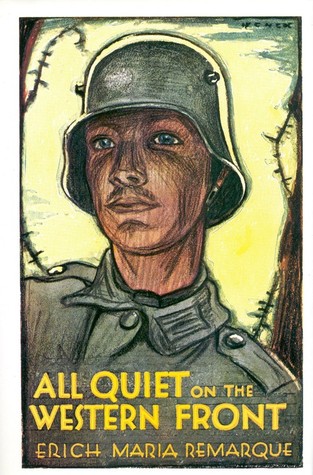
all_quiet_coverAll Quiet on the Western Front is a novel about a young soldier’s life during World War I. Or we can say that this book records how a young man walks toward the battle field with proud and excitement to how he crushes to the ground with a tired heart that is harmed by the crying guns. He does not fight for his country, but for his life and the lives around him. However, just like many soldiers, he cannot and does not have the will to escape from something worse than death.

The novel is by Erich Maria Remarque, a German author who participated in World War I himself. Became a soldier when he was 19, Remarque was sent to the western front to fight with France. There he was wounded and sent to hospital, where he spent the rest of the war. During his time in the hospital, Remarque talked with lots of soldiers that were sent to be cured or to be left to death; his own experience with the stories that he heard from others led to his great works.

Why do people put themselves on the battle field? What is the reality on the front line? What happen to them each and every day? What is the thing everyone faces that is worse than death? What is WAR? From the perspective of the main character Paul Bäumer, Remarque showed the real meaning of war- it is a competition with death and a process of losing everything you had.

“We are forlorn like children, and experienced like old men, we are crude and sorrowful and superficial- I believe we are lost.”

“We are not youth any longer. We don’t want to take the world by storm. We are fleeing. We fly from ourselves. From our life. We were eighteen and had begun to love life and the world; and we had to shoot it to pieces.”

Once All Quiet on the Western Front was published, it sold 2.5 million copies in twenty-five languages in first eighteen months. Although Nazi Germany burned the books before World War II and Remarque was exiled, his works still remained popular in both German and the world.

“He fell in October 1918, on a day that was so quiet and still on the whole front, that the army report confined itself to the single sentence: All quiet on the Western Front.”

– Wenqing Z., 10th grade

Book Review: Divergent, by Veronica Roth

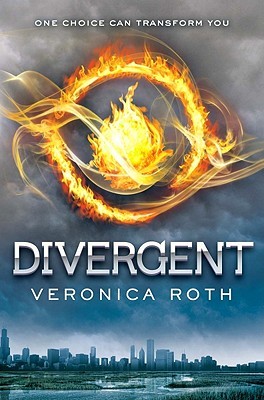
divergent_coverIn a world that has been destroyed by the human nature of greed, ignorance, and cowardice, a new society has emerged. In dystopian Chicago, society is split into five factions that each uphold and live by a single value. The Abnegation are the selfless, the Erudite are the intelligent, the Candor are the honest, the Amity are the peaceful, and the Dauntless faction are the brave. At the age of sixteen, every person is given an aptitude test, which determines the faction that he or she is most suited for. The next day, at the Choosing Ceremony, each person must decide which faction they will reside in for the rest of their lives, under the saying, “Faction Before Blood.”

Born into an Abnegation family, Beatrice “Tris” Prior has lived her life striving to act selfless like her parents. Her aptitude is considered to be inconclusive, because her results show that she displays dominant traits in three factions instead of one: Erudite, Abnegation, and Dauntless. This condition is called Divergent and it is revealed to be extremely dangerous. On Choosing Day, Beatrice follows her heart and abandons her family by choosing Dauntless. With only ten spots available and many more initiates, Beatrice must survive a ruthless initiation trial. Along the way, however, she has to cope with her life-threatening secret. Beatrice discovers what it truly means to be yourself, face your fears, and ultimately be Divergent.

Divergent, written by Veronica Roth is the first book in a trilogy. It was a great read, and I was surprised at how much I actually enjoyed the book. There are times when the author makes Beatrice look a little cold and selfish, and you can see why Abnegation didn’t suit her. But then the next minute, she is putting herself in danger and risking her life for someone else! As she fights for her life to stay in the competition for only ten initiates, I couldn’t help but sympathize and root for her. She learns a lot throughout the book, such as the real meaning of bravery, friendship, and just being yourself. In addition, the novel made me appreciate the world we live in now, unlike Beatrice’s strict society which is ruled by a totalitarian government.

I would rate Divergent a 9.5 out of 10. It’s just one of those novels which keep you in suspense and on-the-edge-of-your-seat constantly. I wholeheartedly recommend this book to anyone over the age of twelve who loves action, a little romance, many twists to the plot, and lots of adventure. If anyone is wondering, the second book in the series, Insurgent, was published in 2012, and the last book will hopefully be out in the Fall of 2013. Divergent will surely have you craving for more, and I am eagerly anticipating the last book!

– Kaylie W., 8th grade