Romeo and Juliet Play

A few days ago, our class just finished reading Romeo and Juliet by William Shakespeare, and watched both movies. It was…an experience.

I have to put it out there, this was definitely one of the more boring sections in our English Curriculum Requirements. Almost everyone has heard the story of Romeo and Juliet: two children from feuding families fall in love, and love brings them both to a terrible end.

At first when we went to check out the play from the library, I flipped through a few of the pages, and to me (and most other people in my class), the language made absolutely NO SENSE. I tried to process what the author was trying to imply, but every interpretation of what I THOUGHT it meant, was actually very different from what the actual translation was.

Throughout the daily reading sessions we had, my mind always drifted. It was almost impossible for me to focus when the language was so confusing! More questions kept popping up in my head as we read, but the most prominent one was: “How did the people during this time period understand Shakespeare’s unique language?” As we read Shakespeare’s works, we can truly see HOW our language has changed throughout several hundred years (461 to be exact!). Of course, I was thinking this while we were reading during class, which made the homework we had after a lot harder for me, but it was worth it.

Okay, on to the movies. The original one that was published in 1968 was a decent movie. It captured a majority of the plot, and the dialogue was almost exactly the same. I can most definitely say that the new version of the Romeo and Juliet movie was NOT what I expected.

For those of you who don’t know, the new version is a spin-off of Romeo and Juliet, where they are (hear me out) part of different mafia gangs. Could they have captured this any worse? Additionally, the ending was a complete shocker. This movie was quite hard to watch for me, as I feel the director lost the true meaning of what William Shakespeare was trying to convey.

Out of 5 stars, I would give the old version a solid 4 out of 5. Pretty good, but not too great. The meaning was there, although they skipped a few parts. The new version? 3 out of 5. Lost the meaning halfway through the show, but they did a decent job on the spin off, I suppose. 

Romeo and Juliet by William Shakespeare is available to check out from the Mission Viejo Library. It is also available to download for free from Libby.

Lessons in Chemistry TV Show VS Book by Bonnie Garmus

Well for starters, this was a great show and an even better book. Although I broke the unspoken rule of watching the TV show first, I loved the show so much I knew I had to read the book too. Let’s just say, it did not disappoint.

In Lessons in Chemistry, the main character is an unsocial chemist named Elizabeth Zott. Sadly, she lives in the 1950s, meaning that she faces extreme sexism in every aspect of her career. Furthermore, Elizabeth is a very attractive woman, so she faces sexual assault and cruelty from the men and jealousy and catiness from the women. Personally, I wonder how her life would have been different if she was not as attractive. Back to the summary, Elizabeth does have a job at a science facility called Hastings in Common, California. There, she meets a man named Calvin Evans. They fall deeply in love and live together happily for about two years. They do not get married at Elizabeth’s request and do not have children, but the couple did have a very intelligent dog named Six-Thirty. 

Unfortunately, Calvin gets hit by a police car and dies. Then, to make matters worse, Elizabeth gets fired because she finds out she is pregnant with Calvin’s baby. In her prematernal rage, Elizabeth returns home and makes a lab inside her house to continue working. She also ergs (which is a rowing machine but on land) to keep healthy. When her daughter, Mad, is born, Elizabeth struggles to be a good mom. Her neighbor, Harriet, hears the screaming child and comes to help take care of her and offer support. Now with a 4 year old in kindergarten, Elizabeth has to find a source of income for her family. She gets a job working as a TV chef. On her show, Supper at Six, Elizabeth cooks while explaining the chemistry behind it. She is a huge hit and her show skyrockets. While her mother is on TV, Mad has a troublesome school project. She ends up talking to a minister for help, and later finds out he was a pen pal of her father. After that, (I’m almost done I swear), Elizabeth quits her job. She returns to Hastings and finds out that her sponsor who has funded her work was actually Calvin’s mother. However, the endings are different between the show and the book.

Ok, now that you have the summary for the idea, let’s get down to the differences between the show and the book.

Elizabeth’s Job at Hastings

Show: Elizabeth is a lab technician, showing sexism.

Book: Elizabeth is a chemist (although not respected).

Rowing

Show: It’s not really a key point or focus. It does appear, but not often.

Book: Calvin and Elizabeth row together often and even row with other men. Elizabeth continues to erg for a long time as it not only connects her with Calvin but makes her tired. 

Harriet Sloane

Show: Harriet is a young Black woman who lives with her loving children, as her husband is a soldier at war. She is also an activist.

Book: Harriet is an older white woman. She lives with her abusive husband and her kids are grown up. She is in a way a nanny for Mad and dedicates her time to the Zotts. 

Civil Rights

Show: Harriet is a huge activist. Elizabeth also lives in a predominantly Black neighborhood. Furthermore, Harriet and Elizabeth had important conversations and went to a protest together.

Book: Not talked about or mentioned at all.

The Ending

Show: Elizabeth becomes a chemistry teacher at a local college. 

Book: Elizabeth (is assumed) to return to Hastings as the Head of Chemistry. 

To sum up this entire article: read or watch Lessons in Chemistry, it’s great. I love it. I think it’s a deeper show, but it has so many light moments that it feels satisfying to watch/read. 10/10 Recommendation. 

Lessons in Chemistry by Bonnie Garmus is available to check out from the Mission Viejo Library. It is also available to download for free from Libby.

Book VS Movie – The Help

The Help is a novel about African American maids working for white families during the 1960s in Jackson, Mississippi. It touches topics on racism, but also newfound open-minded perspectives. It follows Skeeter Phelan, a white resident of Jackson, helping black maids, especially Aibileen and Minny, through their struggles as she writes a controversial book about harsh work environments for the maids

Skeeter and her mom

Book – Illustrates Skeeter’s frustrating experiences with her mom, who has a very old-fashioned mindset.

Movie – especially focuses on the two’s unexceptional love, regardless of different perspectives.

Minny and Leroy

Book – follows Minny’s abusive relationship with Leroy is illustrated in greater detail. In the book, she even eventually runs away from him.

Movie – extremely minimal, only scene is when he throws a plate at the wall, and you can hear him yelling.

Themes 

Book – deep analysis of racism, privilege, and inequality.

Movie – overall lighter tone, despite both the book and movie being for middle schoolers/freshman, the movie is even more on the kid-friendly side.

Ending (Same plot, but..)

Book – more emphasis on Skeeters success from her book and her new career opportunities.. A bit more open ended.

Movie – follows Aibileen after she gets fired, showcases the dependence many white families had on their maids in these times.

Overall :

Book

  • Detailed and serious storytelling. 
  • Character development and societal criticism

Movie

  • Brief, empowering, emotional.
  • Visually captivating and heartfelt adaptation

Personally, I liked the movie better because I was able to follow along the whole time. The book was slightly over-detailed and there are many times when I lost the plot.

The Help book and movie by Kathryn Stockett are available to check out from the Mission Viejo Library. The book is also available to download for free from Libby.

Book vs. TV Series: Percy Jackson

Many Disney and Percy Jackson fans have long awaited the arrival of the TV series Percy Jackson. Having read the series, I immediately watched the first two episodes of the series that Disney launched. The series is chronologically ordered, starting with the first book The Lightning Thief. Episodes 1 & 2 are about Percy’s journey to Camp Half-Blood, the ‘death’ of his mother, and the beginning of his quest.

Overall, I thought that the first two episodes were decent; however, it wasn’t the best. One criticism I have is that some important scenes (and details) were left out. At the beginning of Episode 1, Mr. Brunner hands Percy his sword Riptide. However, in the book, Brunner throws Percy his sword and pretends it never happened. Though this is a tiny detail, I noticed that it was left out. On a larger note, one extremely important scene that was left out was the prophecy of someone dying. In the book, when Percy is on the bus, he looks out of the window and sees 3 women cutting a string–which foreshadows the death of his mother. While there are probably about 10 other scenes that were left out, I think that the show did a mediocre job of embodying the book.

Another small criticism that I have is that the characters from TV series look too young. While Percy is 12 in the book (and the other kid supporting characters are), the actors look way too young. If I did not have any previous knowledge of the TV series/book, I would assume that the characters were between the age of 8-9. Despite the actor’s youthful appearance, I would say Walker Scobell (Percy), is very talented. A final criticism I have is that some of the characters do not match the descriptions of the book. For example, Gabe, Annabeth, Clarisse, and Grover do not have the same characteristics as the characters in the book. Personally, I feel that it takes away from the story; but I’m sure the actors will do a phenomenal job for this series.

After watching the first two episodes of this series, my assessment is that while the series is decent, the book is much better. While I believe that you should watch the series, I would recommend reading the books first.

The Percy Jackson & the Olympians book series by Rick Riordan is available to check out from the Mission Viejo Library. It is also available to download for free from Libby.

Book vs. Movie: All Quiet on The Western Front

Disclaimer: The movie being compared is the newest 2022 movie.

All Quiet On The Western Front is a classic anti-war novel depicting the tragedies of the western front during World War I. Set from the viewpoint of the Germans, it features Paul Baumer and the set of ‘life and death’ colleagues he makes in the army. Rather than a hopeful take on the war, the author takes from his own experience to realistically express the war’s effect on soldiers and its moral implications.

While difficult, the best advice I can give for readers is to not get too close to any character ❤

Book Rating: 10/10 Movie Rating: 8/10

  1. Signing of the Armistice
    • Book: There is no mention of the signing of the armistice and only through a rumor at the end is it known that the war is coming to a close
    • Movie: Slowly throughout the movie, it cuts to the signing of the armistice. Specifically, it details the heavy restrictions the French politicians place on Germany as a clause in the armistice.
  2. Going Back Home
    • Book: There are two scenes in the book where Paul returns home for rest and recuperation before going to war. Mainly depicts how Paul doesn’t fit in and feels like the ‘lost generation.’
    • Movie: There are no scenes where Paul returns home.
  3. Timeline
    • Book: Starts directly at when Paul has already been in the army for more than a year and flashbacks occur to depict the past. The timing is also more spread out, which allows for more events to take place.
    • Movie: Starts from when Paul registers for the war with his friends and then skips to the later years of the war.
  4. Graveyard Battlefield
    • Book: One of the first (and amazing) battlefields that took place at the western front was in a cemetery and it depicts Paul’s use of coffins and corpses as a shield from bombs and guns.
    • Movie: There are no war scenes at a cemetery.
  5. The Main Antagonist
    • Book: Corporal Himmelstoss is a key figure in the book that often gives punishments over the smallest mistakes, symbolizing the power authority figures have over recruits. He has great character development in the later half of the novel when he joins the war at the western front and learns that power is useless when faced with life or death.
    • Movie: There is no mention of Corporal Himmelstoss. Rather than him, Prussian General Friedrich becomes the key figure in the book that symbolizes the hierarchy in the army. There isn’t much character development with him and he is often seen ordering soldiers and doesn’t directly interact with Paul and his friends at all.
  6. Kat’s Death
    • Book: Kat is hit in the head by a stray shard from a bomb and dies.
    • Movie: After stealing a goose from the owner, the owner’s son shoots Kat with a gun.
  7. The Ending
    • Book: Paul dies from a sniper shot one month before the war ends.
    • Movie: Paul dies during a last ditch effort by Prussian General Friedrich to win the war at the western front. He gets shot and dies just hours before the war ends.

General Thoughts: Movie vs. Book

The war scenes in the movie are arguably one of the best war scenes in the film industry. It gives a very accurate and desperate picture of the western front. I love the use of the many common weapons used during that time, such as poison gas, tanks, and flamethrowers. Would definitely recommend if you are interested in really good fight scenes!

Something I didn’t like about the movie was the ending. A big reason about why the novel is titled All Quiet On The Western Front is because Paul dies on a day so unremarkable that the commander just wrote ‘All Quiet.’ It reveals how unsignificant death was in the war, but it was something Paul was fighting against throughout the whole book. However, the movie shows Paul dying in a big fight on the last day of the war, which kind of undermines the whole point of the title and the book.

I do recommend both the book and movie to historical fiction lovers, so you should definetely check it out!

What to compare them for yourself? All Quiet On The Western Front by Erich Maria Remarque is available for checkout from the Mission Viejo Library. The movie All Quiet on the Western Front is also available for checkout from the Mission Viejo Library.

Book vs. Movie: The Giver

The Giver, a novel by Lois Lowry, features Jonas, a boy living in a dystopian society. Jonas is chosen to become the Receiver of Memory, a highly-regarded position, and sets out to learn about society’s forgotten past. While acquiring these memories from The Giver, Jonas learns what it means to be “released” and decides to escape from this corrupted societal hierarchy instead of letting one of his loved ones die.

  1. Jonas’s Age
    • Book: Jonas is twelve when he is assigned as the Receiver of Memory.
    • Movie: Jonas is sixteen when he receives his assignment.
  2. Jonas’s Eyes
    • Book: Jonas has blue eyes, which sets him apart from the other children and is a key indicator that he has the potential to be the next Receiver of memory.
    • Movie: Jonas’s eyes are a brown color.
  3. Fiona’s Assignment
    • Book: Fiona is a Caretaker of the Old and takes care of the elderly before they are released.
    • Movie: Fiona is a Nurterer who looks after newborns and children.
  4. Asher’s Assignment
    • Book: Asher is assigned as the Assistant Recreational Director.
    • Movie: Asher becomes a pilot.
  5. The Chief Elder
    • Book: The Chief Elder is a rather minor and unimportant character who does not play much of a role in the book.
    • Movie: The Chief Elder closely monitors Jonas, The Giver, and the surrounding communities to ensure “peace.”

The Giver by Lois Lowry and the movie adaptation is available for checkout from the Mission Viejo Library. The book can also be downloaded for free from Libby

Book vs. Movie: The Mortal Instruments: City of Bones

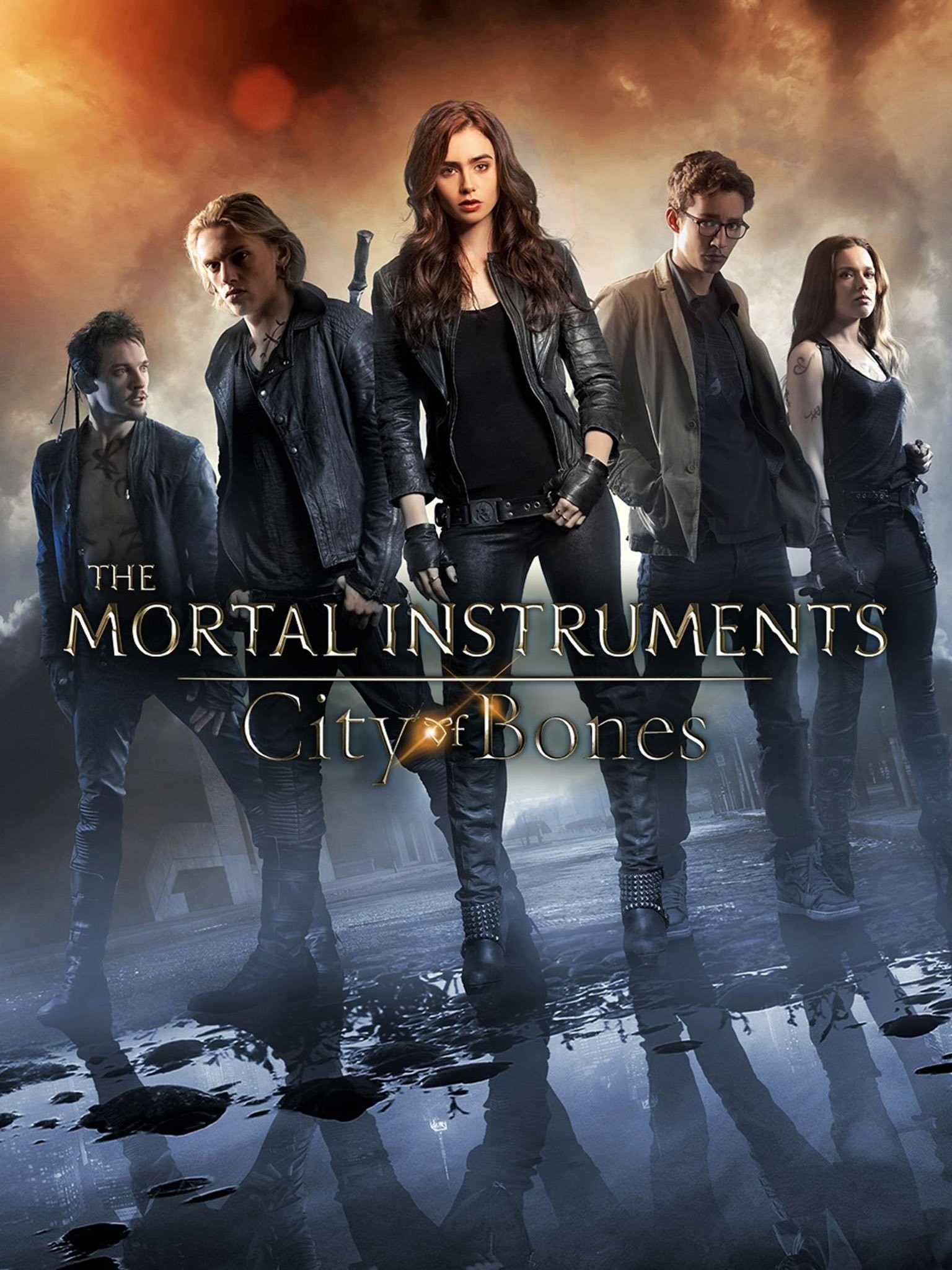
Clary Fray believed she was a human, also known as a mundane, who possessed the unique ability to see Shadowhunters, half-angel warriors who protect humans from evil. However, after her mother is kidnapped, Clary discovers that she is a descendant of past Shadowhunters. Seeking to save her mother and the Cup from a Shadowhunter named Valentine, Clary teams up with Jace, Alec, and Isabelle to enter the Downworld.

  1. The Demon in Clary’s Apartment
    • Book: Clary kills the demon with a Sensor.
    • Movie: Jace kills the demon instead of Clary.
  2. Simon’s Kidnapping
    • Book: Simon drinks a blue cocktail, turning into a rat and accidently being taken away by a vampire
    • Movie: Simon is purposefully kidnapped by the kidnappers to lure Clary into a trap. He is never turned into a rat.
  3. Portals
    • Book: No training is required to use portals.
    • Movie: Shadowhunters must train to use the portals or else they will lose their santiy and be lost in limbo.
  4. Jocelyn’s Pregnancy
    • Book: Valentine was unaware of Jocelyn’s pregnancy for years.
    • Movie: Jocelyn is seen heavily pregnant in a flashback with Valentine and her first child.
  5. The Cup
    • Book: Valentine successfuly steals the Cup.
    • Movie: Clary tricks Valentine with a fake replica and keeps the Cup.

City of Bones by Cassandra Clare and The Mortal Instruments: City of Bones are available to check out from the Mission Viejo Library. City of Bones is also available to download for free from Libby.

The Giver: Book vs. Movie

Recently, I sat down and watched the movie adaptation for The Giver. While I had never watched it before, I have read the book twice. It is one of my favorites. I think the movie is good– but it isn’t as good as the book. There are some differences in the plot and its overall execution. I may be biased, though, since I always seem to prefer books over movies! Anyways, here are the important differences between the two versions of The Giver:

  1. Age of Jonas

Jonas is a new coming Twelve, so he is about twelve years old. This is not expressed in the movie, since Jonas is depicted as sixteen. This alters some aspects of Jonas’s character and actions.

  1. Character and Plot development

Compared to the book, the movie rushes plot and character development. Some characters feel not nearly as fleshed out as they do in the book: I was introduced to many characters and scenes very fast. However, this is expected for movie adaptations since they have less time compared to the book. But it does make enough of a difference to include it in this list.

  1. Receiver of Memory Trait

Jonas’ special ability is identified by his light colored eyes, and is central to the plot development plus the specific abilities. However, in the movie, the characters with special abilities are identified instead by a birthmark on their wrist. This seemed weird to me: they changed a huge part of the plot for almost no reason. I don’t think it would be impossible to give the actors contacts.

  1. Jonas’ and Fiona’s Relationship

This is also another weird change. Since the movie aged up the characters, there is a kissing scene between the two. This did not happen in the book, but there was some romantic connotation involving Jonas and Fiona. 

  1. Stirrings

In the movie, stirrings are not addressed as directly as they are in the book. Also, Jonas is given an injection instead of a daily pill.

  1. Ending (not spoiled)

The ending ended slightly differently from the book, including a major aspect not previously mentioned. I recommend you go watch the movie if you’re interested to see it!

The Giver by Lois Lowry is available for checkout from the Mission Viejo Library. It can also be downloaded for free from Libby

Book vs. TV Series: Percy Jackson

Percy Jackson and the Olympians just wrapped its first season and is renewed for a second. Following the story of Percy Jackson, son of Poseidon, the book and TV show showcase Percy travelling across the US, searching for the real thief of Zeus’s master bolt.

  1. Riptide
    • Book: Percy receives Riptide from Mr. Brunner when Alecto attacks him
    • Series: Mr. Brunner gives Riptide to Percy, encouraging to not let people like Nancy get to him
  2. Alecto Attacks Percy
    • Book: Alecto attacks Percy when they are alone in the Metropolitan Museum of Art
    • Series: Alecto attacks Percy outside in front of a crowd of people
  3. Percy Being Expelled
    • Book: Percy calls Mr. Nicoll an “old sot” and is expelled from Yancy
    • Series: After “pushing” Nancy into the fountain, Percy is expelled from Yancy
  4. Gabe Ugliano
    • Book: Gabe is abusive to both Sally and Percy
    • Series: Gabe is more of a deadbeat “dad” that is mostly just rude to others
  5. The Gateway Arch
    • Book: The trio visits the Gateway Arch due to Annabeth’s love for architecture
    • Series: The trio visits the Gateway Arch, a temple of Athena, searching for protection against Echidna and the Chimera
  6. Ares’s Introduction
    • Book: Ares and the trio meet at a diner
    • Movie: The trio encounters Ares when leaving St. Louis
  7. The Lotus Hotel and Casino
    • Book: The trio visits the Lotus Hotel and Casino after being enticed by a bellhop
    • Series: The trio specifically enters the Lotus Hotel and Casino to search for Hermes and ask for his help
  8. Percy’s Confrontation with Luke
    • Book: Luke sought to get rid of Percy, summoning a Pit Scorpion that later poisons him
    • Series: Luke attempts to recruit Percy for Kronos’s army, resulting in the two sword fighting after Percy refuses

The Percy Jackson & the Olympians book series by Rick Riordan is available to check out from the Mission Viejo Library. It is also available to download for free from Libby.

Book vs. Movie: A Ballad of Songbirds and Snakes

Taking place 64 years before Suzanne Collins’ infamous Hunger Games series, a Ballad of Songbirds and Snakes features a young President Snow as he struggles to maintain his status within the Capitol after the Dark Days. With the goal to secure his future and the Plinth Prize, Coriolanus Snow becomes the mentor for Lucy Gray, a District 12 tribute in the 10th Annual Hunger Games, who he eventually develops feelings for. However, as time goes on, Coriolanus gradually rises to the top, becoming the president of Panem seen in the Hunger Games series.

  1. Crassus Snow’s Death
    • Book: The Snow family receives news at the train station that Crassus Snow was killed by a rebel sniper.
    • Movie: At the Snow’s apartment, Peacekeepers reveal how Crassus Snow was killed by a District 12 rebel.
  2. Jessup’s Rabies Infection
    • Book: Jessup is bitten by a raccoon at the zoo, giving him rabies.
    • Movie: During the train ride, Jessup becomes infected with rabies after being bitten by a bat.
  3. Arachne Crane’s Death
    • Book: Arachne’s throat is slit by her tribute, Brady, and she is given a funeral alongside Diana and Apollo Ring, two other mentors who were killed later on.
    • Movie: Brady stabs Arachne’s throat with a bottle, but she is never given a funeral.
  4. Clemensia’s Fate
    • Book: After being bitten by Dr. Gaul’s snakes, Clemensia develops neurological damage, yellow eyes, a tongue that juts out periodically, twitching, peeling skin, and rainbow scales.
    • Movie: Clemensia is dragged away and never seen again.
  5. The Rat Poison
    • Book: Lucy Gray finds rat poison in the zoo’s monkey enclosure and stores it in a compact mirror that she received from Coriolanus.
    • Movie: Coriolanus supplies both the compact mirror and rat poison.
  6. Lucky Flickerman
    • Book: Lucky, accompanied by his parrot Jubilee, mainly interviews the tributes while Lepidus Malmsey covers the live recordings.
    • Movie: Lucky handles both the interviews and live recordings (without the company of Jubilee).
  7. The Tributes’ Deaths
    • Book: Wovey and Reaper are both killed after drinking poisoned water while Treech is killed by one of Lucy Gray’s snakes. Dill also dies because of tuberculosis.
    • Movie: Dill drinks the poisoned water while Treech inhales rat poison, killing both of them. On the other hand, Reaper and Wovey are killed by Dr. Gaul’s snakes.
  8. Spruce’s Death
    • Book: Spruce is beaten to death by Peacekeepers.
    • Movie: Spruce is hanged alongside Sejanus and Lil.

The Ballad of Songbirds and Snakes by Suzanne Collins is available to check out from the Mission Viejo Library. It is also available to download for free from Libby.