Book vs. Movie: Heaven is For Real

heaven_real_bookvsmovieHeaven is For Real is a book written in 2010 about a little boy named Colton Burpo by his father Todd Burpo. When Colton was almost 4 years old, he became very sick with appendicitis – and almost died. However, he didn’t. All his doctors and nurses thought this was a miracle in itself because he was that sick. Even more miraculous, Colton later told his parents that he went to Heaven during his surgery. That’s right. Colton went to Heaven!

Now one’s reaction at first would be “What? No way! Impossible!” and then be flooded with questions that they just have to ask. Even though Colton’s dad is a pastor, he too felt this way. Mr. Burpo’s book takes you through the impossible yet true journey of his little boy’s experiences as told by Colton to him. It really is extraordinary, and the book itself is definitely worth a read. Especially since it’s a true story about Heaven – a topic many of us wonder about and not many people know much about.

Now recently, the movie based on the book came out. It’s never expected that a book-to-movie-adaption will be exactly the same as the original book (even the Director’s Cut, which is what I saw). But I did love this movie, and it stayed very close to the book! I suggest watching the movie first, as it’s a type of movie that leaves you wanting more, and the book is the perfect solution for that as the book goes into much more detail!

As for the movie itself, I think it’s really good! It seems harder to believe though versus reading the book. Also, some of the special effects are a little cheesy and made the experience harder to believe. The movie makers changed/unincluded some significant things from the book which I think that if they would’ve kept those things the way it had actually happened, it might’ve been more emotional.

I definitely recommend the book over the movie. It comes straight from Colton’s dad, and everything in it is true. But I’m not ruling out the movie, it was very good as well!

-Danielle L., 6th grade

Book vs. Movie: The Fault in Our Stars

fault_bookvsmovieI believe everything wonderful there is to say about John Green’s The Fault in Our Starts has already stated several times over, not only on this site, but everywhere. Although it doesn’t need repeating, this is an incredibly powerful story about the star-crossed love between Hazel Grace and Augustus. The movie had to live up to a bestselling book, not to mention the large dedicated fan base that has high expectations, and it did not disappoint.

How to describe the movie? It was grand. Like a roller coaster that only goes up, the movie will make you feel all the things. Being in a movie theater on opening weekend is a very different experience than reading a book alone at your leisure.The particular theater I was in consisted mainly of teenage girls in blue sweatshirts with the little okay bubbles. The theater was split between the people who screamed at everything from the title to Augustus raising an eyebrow and the people who told the screamers to be quiet so they could watch the movie. Both groups just had different ways of showing their excitement.

For anyone out there who believes that they shouldn’t read/watch The Fault in Our Stars because it’s a cancer story or a stupid romance novel is misinformed. This is a story about love between two teenagers who just happen to have cancer. They both have their own quirks, Augustus looking for metaphors and Hazel using words like harmartia (fatal flaw).

Now to the differences from the book to the movie. They were minor and never took away from the feeling. These details include Augustus telling Hazel she looks like a specific actress (in order for her to come over and see a movie), Augustus telling Hazel he wrote his number in the book he lent her (which I always thought was so cute), Hazel’s friend she met at the mall that one time, Hazel informing Isaac she got super-hot after his procedure, Augustus’s former girlfriend, the naming/selling of the swing set, (and probably several more details I failed to notice). I think I only noticed these things because I was looking for them. Otherwise, all the great quotes to love and the moments that are shared remain the same.

Is the movie or the book better? Usually is a simple answer: the book. But this is not the case. Not that I’m saying that the movie is obviously superior either. Both the movie and the book tell the same story, just through different medias. If at all possible, I’d suggest both reading the book and watching the movie because only doing one is just okay. Okay?

-Nicole G., 10th grade

Book vs. Movie: Divergent

divergent_bookvsmovieThe night Divergent was released, I was there, excited and anxious with anticipation.. I went in with high expectations, as I have been in love with the book series since it was first released in 2011.

So perhaps it was my unrealistically high expectations of a book that I am thoroughly devoted to and invested in that contributed to the fact that I thought the movie was a big disappointment. People who I have talked to that did not read the book first before watching the movie have told me that they thought it was great, and maybe if I’d never read the books before watching the movie, I would have felt the same way.

Let’s start with how startlingly different it was from the book. I know book to movie adaptions are difficult to accomplish, but in this case it was significantly different. First off, they left out very important scenes from the book- scenes that are pivotal and important for the rest of the series. They also changed scenes– and not little scenes. Major scenes that, too, would affect the whole series.

-Edward. He barely has a presence in the movie (I think his name shows up on the scoreboard for a second?) and there is no book scene where he gets stabbed in the eye by Peter.

-Will and Cristina?!! It hardly shows their relationship, they’re pretty much portrayed just as friends, which is problematic, because in the books, it affects the plot and characters (especially Tris and Christina) in major way.

-There’s no Visiting Day in the movie, and some important information is found out from that scene. In the book, Tris never meets her mom in the shipping yard.

-Rachel L., 10th grade

Books and Movies: Watch or Read First?

read_or_watchHave you ever wondered which is better: Read the book and then watch the movie, or watch the movie and then read the book? If you ask your friends, chances are everybody will have a different opinion… unless you have friends like my sister, who would rather just watch the movie and not read the book at all.

When comparing a movie to a book, you notice all of the differences. Considering most movies are about two hours in length, and it usually takes longer than two hours to read a book, I don’t think this is fair. Rather than trying to pick one over the other, I think it’s better to appreciate both of them for their differences. Watching the movie before reading the book that it was based on gives you the opportunity to get interested in reading the book.

Another benefit of watching the movie first is that you can be captivated by the movie without having anything spoiled for you. However, when you read the book first, you can imagine the characters and scenes in your head because you don’t have somebody else interrupting it for you.

An alternative is the movie-book sandwich. You watch the movie, read the book, and then watch the movie again. This works because you can still be captivated by the movie and captivated by the book (because the book usually has more detail and differences), and when you watch the movie again you notice more subtleties and feel more adept. I recently did this with Johnny Tremain.

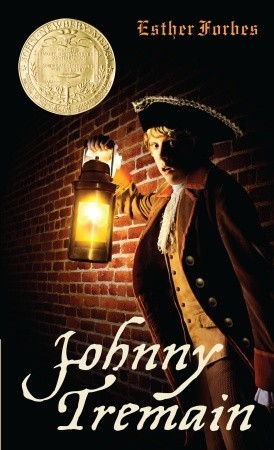
johnny_tremainJohnny Tremain is a historical fiction novel written by Esther Forbes who was awarded the Newbery Medal in 1944. Ms. Forbes’ inspiration to write this novel was to help remind war-torn America during World War II about the principles of freedom that America was first founded on. Walt Disney turned it into a movie in 1957. The fictional character of Johnny Tremain interacts with key people and events of the American Revolutionary War. Ms. Forbes’ message of “so every man can stand up,” is beautifully communicated in her novel.

I watched this movie, read the book, and watched it again. The first time I watched the movie adaption, I thought it was a pretty good movie. The second time I watched it, I noticed some differences. Lots of characters were not included, a song was added, there was a plot change (Johnny does fight with Rab in the movie but not in the book), and a horse (which was a sort of main character) looked very different than its description in the book…But the biggest difference I noticed between the book and the movie is that the movie seems to be the book sped up. You could tell very much so that this movie was based on this book. However, lots of characters and details were left out and/or changed, probably to make the movie adaption shorter.

Overall, the book was very good and educational while still being exciting and entertaining. The movie stuck pretty well to the book, with a bit of Disney added to it, of course. I recommend the book to ages 11 and up, whilst I recommend the movie to ages 8 and up. If you choose to read/watch Johnny Tremain, I hope you enjoy it! (And be sure not to miss the special features on the classic Disney DVD.) Learning can be so fun!

-Danielle L., 6th grade

Book vs. Movie: The Book Thief

book_thief_bookmovie***A few questions and their answer***

Who would steal books before she knew how to read? Whose story caught the interest of Death? Who is Liesel Meminger?

Answer: She is The Book Thief

“She was clutching the book. She was holding desperately on to the words who had saved her life.”

Liesel Meminger is in a new life. Her brother died on the train ride. Her mother disappeared. She never knew her father. Things start looking up when she is adopted by a couple who live on a street called Heaven, both to simply be called Mama and Papa. Her papa plays the accordion and teaches her to read her first stolen book; the one from her brother’s funeral. She befriends her next door neighbor Rudy, a boy with hair the color of lemons, who keeps asking Liesel for a kiss.  It could have been a perfectly happy story if they weren’t in Germany during World War II, hiding a Jew named Max in their basement.

The book itself was beautifully written, although it began a little slow for me. It isn’t a book you want to race through. The movie matched this the heart of the story, even when details such as how Liesel’s papa was drafted, the reason her mama was fired, and which books were stolen changed, but on the whole, I was surprised how close the movie followed the book.

There were a few changes I liked better in the movie, such as Max giving Liesel the diary and Rudy discovering she was hiding Max because it established a closer relationship to these characters that felt less due to some scenes like Max’s handwritten books or Rudy and Liesel stealing things other than books together being cut.

The thing that bothered me the most in the film was the lack of the narrator, Death. He had a prominent part in the book, making side comments and revealing what is yet to come. Although it was nice in the movie to not worry about jumping around in the story, Death barely speaking at all in the movie had an unsettling effect any time he spoke, which may have been what the movie intended.

The movie can stand on its own, but it loses some depth from the elegantly written book. There isn’t as much violence as one might expect from World War II, but that’s not to say it isn’t there. The ending was exactly the same as the book, but I won’t reveal any more. Maybe not being a lighthearted movie is the point, because that is how it becomes that much more powerful.

-Nicole G., 10th grade

Book vs. Movie: The Hobbit

hobbit_bookmovieAs many of you have already, I watched the new Hobbit movie, The Desolation of Smaug, last week. I am a huge Lord of the Rings and Hobbit fan and I was so glad when I found out these movies are based on books, so I went and read them and watched the movies to compare the two.

The movies were all really well done, because I know it is hard to incorporate every little detail from the books. I also read The Hobbit because I thought that a prologue to the story must be very interesting and it was! The Hobbit was, and still is, one of the best books that I have read, and I read a lot. In the book, The Hobbit, as in the other J.R.R. Tolkien books, there is a lot going on. First, the dwarves are travelling to their mountain while Gandalf is searching for the source of darkness in the world while the elves remain fortified and unwilling to help at first and the lake people believe they are saved from the dragon. Sometimes it gets confusing to keep your mind focused. For example, in the movie, when they switch to a different character and a different place, it takes time for your mind to register the fact that it is a different character and a different place. And by the time your mind registers that fact, the different character in the different place starts talking to another different character in the same different place about some different topic that takes a longer time to register in your mind. That’s the only problem with a lot of things going on, but I feel that it is sort of necessary in such a big world that having a lot going on is normal and when there is a lot going on there is more of a wide area to expect plot twists. This keeps the audience on the edge of their seats and wanting to know what happens next. Both the movie and the book kept me on the edge of my seat.

If you haven’t read or watched The Hobbit, I recommend both the book and the movies to you, but there are two different Hobbit movies at the moment and a third one on its way so make sure, if you would like to see them, that you watch The Unexpected Journey first, and then The Desolation of Smaug, so that you get the story going in the right direction and not backwards. Post a comment below if you have seen the movie or read the books, and just say to those around you how epic they are and how both the movie and the book can take your breath away.

-Kyle H., 7th grade

Book vs. Movie: Catching Fire – Further Analysis

catching_fire_book_movieMy family and I saw The Hunger Games: Catching Fire recently and I wanted to compare it to the book.

First of all, the time that they spent in the actual arena in the movie was shortened a lot. It probably consisted of half the time they spent in the arena in the book. Also, the time that they spent in their district was a lot longer than the previous movie. Both movies, it seems, spent more time in the districts than in the arena. Third, as the years go on, book-based movies in general are becoming more and more like the original books. Catching Fire was no exception. I could remember so many things from the book that were put into the movie that I was quite overwhelmed.

Although, in the book –SPOILER ALERT—after Katniss is taken from the arena in a hovercraft containing Finnick, Haymitch, and Gale, they talk a lot more about what has happened while the games were taking place. In the movie, there was just a lot of screaming and not much talking. Katniss is pretty scary when she gets angry. I don’t remember Haymitch –SPOILER ALERT (again)—giving Finnick his gold bracelet or that Effie gives Haymitch one, also. Otherwise, the movie and the book were more alike than I would have thought them to be if I had not watched the movie.

If you have not read the book: read it – your lives will be better, I assure you. And also, watch the movie too. Compare them if you want, and post a comment below about what you thought about them!

-Kyle H., 7th grade

Book vs. Movie: Catching Fire – Another View

catching_fire_book_movieThe movie Catching Fire came out in theaters on November 22, 2013. Being a Hunger Games fanatic, I thought the movie was absolutely phenomenal.

Oftentimes a movie is made about a specific popular series of novels– however, the movie is not always an absolute representation of the novels. This commonly angers the fanatics of certain series, because the movie should and could have been better. For example, many times the film industry skips important scenes or even worse- they add their own scenes in the movie. This is tragic for the series fanatics because we do not get to experience the exciting novels fully with the movie. In most cases, the novel is always better than the movie, due to its abundance of detail.

Keeping this thought in mind, Catching Fire was a fascinating movie. I have never seen a more accurate representation of a novel until this movie got released. Especially since the first movie, The Hunger Games, was great but still excluded some important scenes, I was extremely surprised by Catching Fire.

Catching Fire included all of the important elements of the series, including enough background information so that viewers who had not read the novel understood the movie. This is often a problem that a movie does not provide the viewers with enough background information. However, this is not the case with the hit Suzanne Collins series. The Catching Fire was an absolutely satisfying movie representation of the novel.

-Nirmeet B., 10th grade

Editor’s note: This book-to-movie adaptation is getting so much love on the Mission Viejo Library Teen Voice! There’s plenty to discuss, so check the previous posts here and here for other bloggers’ viewpoints and let us know what you thought of the movie!

Book vs. Movie: Catching Fire – A Different Perspective

catching_fire_book_movieDisclaimer: I know there is already a book vs. movie post about Catching Fire on here.  I just thought it would be nice to give you guys a review from a different perspective.

Attention lovers of the Hunger Games, dystopian fiction, and Josh Hutcherson everywhere!  If you have not seen “Catching Fire” the movie, or read Catching Fire the book, I suggest you run out to your nearest bookstore, and buy this book and a movie ticket to go along with it.  If you have already read the book and are worried that the movie will not live up to your expectations of this literary masterpiece, do not be afraid.  “Catching Fire” the movie was just as good as Catching Fire the book.

Now, I know what you all are thinking. “Books are always better than the movies they are made into.  Why is ‘Catching Fire’ different?”  I’ll tell you why.

#1. The dialogue in “Catching Fire” the movie is almost word-for-word the dialogue in the book.  It was like the scriptwriter had the book open next to him the entire time he was writing the script.  I really appreciated this, as I felt like the writers really took into consideration the fans of the book.

#2. Josh Hutcherson actually has lines.  Now, I know some of you are Liam Hemsworth fans.  Yes, he is attractive, but I prefer Josh Hutcherson. (Don’t judge me.)  In the “Hunger Games” movie, he barely had any lines. This sort of ruined the movie for me.  However, in “Catching Fire” he was able to live up to his full acting potential, and fully embody the character of Peeta.

#3. The arena is flawless.  Without spoiling anything for those who haven’t read the book, let me just say it was exactly how I pictured it.  My friend agrees and she is basically the harshest unpaid movie critic out there, so trust me on this.

#4.  Even if you haven’t read the book, you can still understand the movie.  This was a problem I had with the first “Hunger Games” Movie, as my friends who hadn’t read the book had no idea what was going on and were constantly whispering in my ear the entire time.  Wait, so does Katniss actually like Peeta?  Why are they making such a big deal over this loaf of bread?  Wait, seriously, does she like him or not?  Why is everyone forced to watch the games?  Just tell me already, does she actually love Peeta or not????  Needless to say, I appreciated my friends actually understanding what was going on in “Catching Fire.”

Regardless if you are die-hard fans of the books, or first time viewers, I strongly suggest you get off your butts and take a risk and see this movie!

-Amanda D., 11th grade

Book vs. Movie: Catching Fire

catching_fire_book_movieAfter anxiously awaiting the Catching Fire release for more than a year, my friends and I entered the theatre with impossibly high expectations and suppositions regarding the film interpretation of the story.

I am extremely impressed with the movie adaptation and feel that the director really captured the mood and included all the essential aspects that were required in order to stay true to Collins’ series.

One eminent facet that made for such an unforgettable movie experience is the actors’ unerring ability to flawlessly represent their characters. Jennifer Lawrence was lethal and brilliant. I felt that she portrayed Katniss perfectly and easily managed her vast range of emotions. As for Josh Hutcherson, I felt that he got to demonstrate Peeta’s brave and daring side a bit more than in the first movie, in which I felt he was depicted as too weak and potentially breakable.

As amazing as this movie is, I must say that I am disappointed that one of my favorite quotes didn’t make it into the film.

“I wish I could freeze this moment, right here, right now, and live in it forever.”  -Peeta

“Okay.” -Katniss

Although some of my friends dismissed this as trivial and unimportant, I was sad that it didn’t make the cut. I believe that that day (when they have a picnic on the roof of the training center right before they enter the arena…again) was truly the turning point of their relationship and the beginning of Katniss’ metaphorical fall for Peeta.

For all the Liam Hensworth fans out there, I guarantee you will not be disappointed; Gale’s screen time is nearly equal to Peeta’s. One thing that differs from the book is the cause of the whipping of Gale. In the book, he is discovered by Peacekeepers with a dead wild turkey; in the movie, he attacks Head Peacekeeper Thread in order to protect the life of a Hobber. Even though I greatly favor the book, I believe that this decided change was representative of his character, and displayed his hate, “fire,” and volatility toward the Capitol.

We readers knew they would have to make some alterations when transferring the book to screen, and were frustrated to see Bonnie, Twill, and Darius be among those changes. Although, upon viewing, I agree that it was unnecessary for Katniss to have suspicions about District 13’s existence when nothing happens as a result of her knowledge until she’s told by Plutarch when traveling there. I also understand that introducing a lot of characters without the required back-stories would have made it difficult for nonreaders to understand.

For those of you who haven’t seen it yet and are wondering, cut scenes include when the fence is electrified and Katniss hurts her ankle jumping from a tree, Katniss and Peeta’s day of bonding on the roof, Katniss’s wedding gown photo shoot and on-camera “talent” display, Peeta’s paintings, and the secret bread code.

Plutarch does not have mockingjay watch in the movie, although he does hint that he is loyal to the rebels by saying something along the lines of, “Well perhaps it was you that inspired me to step up [and become Head Gamemaker].”

The addition of the scenes between President Snow and Plutarch were honestly some of my favorites in the film. Because in the book we are limited to viewing only what Katniss does, in the movie we encounter the corrupt leaders discussing their strategies, which added suspense, emotion, and a deeper understanding of the President’s character that will be essential for nonreaders to comprehend Katniss’s reasoning at the resolution of Mockingjay.

In the movie, Effie gets a chance to say goodbye to Katniss and Peeta, whereas in the book, they pass the farewell along through Haymitch.

One addition to the movie that I really liked and appreciated was the incorporation of President Snow’s granddaughter. To me, her lines were the most memorable and emphasize on Katniss’s influence on the Capitol citizens. She is wearing her hair in Katniss’s signature side-Dutch braid when Snow asks her, “When did you start wearing your hair like that?” to which she responds, “Everyone at school wears their hair like this now.” After Peeta hits the force field and is brought back by Finnick, she states, “When I grow older, I want someone to love me like that.” This statement brought Snow to the realization that Katniss really did care about Peeta one way or another, which Katniss later commemorates in Mockingjay by saying something along the lines of, “It seems that I did convince him, and by doing so, I gave him the last tool he needed to break me.”

One factor that was partially included was Snow’s history of coming to power (the story of which could be included in Mockingjay). In the book, Katniss is horrified by the smell of blood on his lips when he whispers to her, “By the way, I know about the kiss,” (something that was omitted and replaced in the film by the use of holographic display). Also in the movie, Snow drinks from a goblet, and then back-washes blood, something I believe to be foreshadowing, an allusion of his death provided to the movie-viewing audience.

Catching Fire was truly unforgettable and I am unable to encompass how relieved I am that the director and producers didn’t abolish such an amazing sci-fi story with another futile attempt to “give the people what they want,” as their brethren have done with so many other incredible books.

In rapid summation, I present Catching Fire with ten stars (out of five…obviously).

I loved the movie but was extremely depressed upon the film’s conclusion and left the theatre sighing and thinking, “Well…only 364 more days until the release of Mockingjay Part 1…” And I continue to count down the days…

Overall, a great book transformed into a great movie.

A must see for both readers and nonreaders alike.

GO WATCH IT NOW.

{I apologize for any quotes that were not exactly spot-on; I was reciting them from memory.}

Did you see it? What did you think?

-Danielle K., 8th grade