AP Classes Review: World Literature

AP Literature is a crucial course most need to take for High school if you’re planning for early college credits. AP classes are rigorous classes, and the workload is heavy. In addition to classes, to get credit for college, students must take an AP exam at the end of the course. 

My experience so far isn’t bad, and I’m learning more while doing it. One of the standout aspects of AP World Literature in 10th grade was the diverse selection of literary works we encountered. Our reading list spanned centuries and genres, and this variety allowed us to explore different writing styles, themes, and cultural contexts, providing a well-rounded literary education. Each work presented its unique challenges, but they all contributed to expanding our academic horizons.

The discussions in this class were vital to getting good grades. Our teacher encouraged us to analyze texts from multiple perspectives and encouraged our critical thinking. These discussions helped us grasp the intricacies of the literature and improved our communication skills. The ability to articulate and defend our interpretations was a valuable skill we will need throughout the year. 

The workload is challenging, but it was worth the effort. Writing essays on complex literary topics is essential. Our teacher provided constructive feedback that will continue to help us grow as writers, and the assignments were created to delve deep into the texts.

One of the most valuable aspects of AP Literature was its ability to teach us to appreciate the subtleties of literature. We learned to uncover symbolism, dissect themes, and recognize the artistry in the writing. AP Literature is a fun but overwhelming course, so prepare for a lot of work if you decide to take it. The benefits here are that these classes prepare you for the workload and develop college-level academic skills. AP classes also look good on your transcript since they boost your GPA and save time and money from taking general college requirements. If you decide to take AP classes and love reading and writing, I highly recommend taking AP World Literature. 

Before deciding, you can also check these sites for the benefits and disadvantages of AP classes. 

examstudyexpert.com/easiest-ap-classes

princetonreview.com/college-advice/ap-classes

https://blog.collegeboard.org/3-reasons-take-ap-exams

Bella H.

AP Human Geography Tips

I know the first semester just finished for high schoolers and college students so I guess I wanted to give some more AP advice, at least for classes I took last year as a freshman.

If you are a freshman taking AP Human Geography like I was last year, here is what you need to know: Be prepared to read more difficult and complex texts and answer college board questions that require much more thinking than middle school social science classes. Additionally, there are also 3 FRQs (Free Response Questions) that you have to answer in one hour and fifteen minutes, which leaves you around 25 minutes give or take per question. You can find samples on the AP college board by searching “AP human geography college board frqs”.

The practice questions on the college board (the ones the teachers assign you) are very helpful. They are AP-style questions with 5 answer choices (A-E) per question. These questions come with two basic styles. One is set-based, usually with a stimulus such as asking you to analyze a map of Africa or a table for developing vs developed countries. The other style is just individual concepts that they can ask you that you would have to pull from your own knowledge, with no additional information.

This class is an introductory class to college geography, so a lot of the units are on the analysis of maps and applying that knowledge to understand how the migration of humans affects our geography. Also something to note: You need to memorize a lot of the key terms! I recommend buying the AP Human Geography Flashcards from the Barron’s company (the one with 250 terms). I reviewed this the night before my AP exam, and it was really helpful with locking in on key concepts one last time.

Although many freshmen say that the class is difficult (this is true as it is indeed your first AP class), however this experience can also be really fun as well. It teaches something you don’t normally learn, and you get to learn about the different countries of the world. I don’t know about you, but I have always found the evolution and migration of humans a very interesting topic.

Don’t worry, you guys will do great! – Aleena

Study Tips for High Schoolers

Finals season is almost here, and tests can be a lot to study for. However, with the right tools, you can make studying and taking tests a breeze. Here are a few helpful study tips and tricks that I learned.

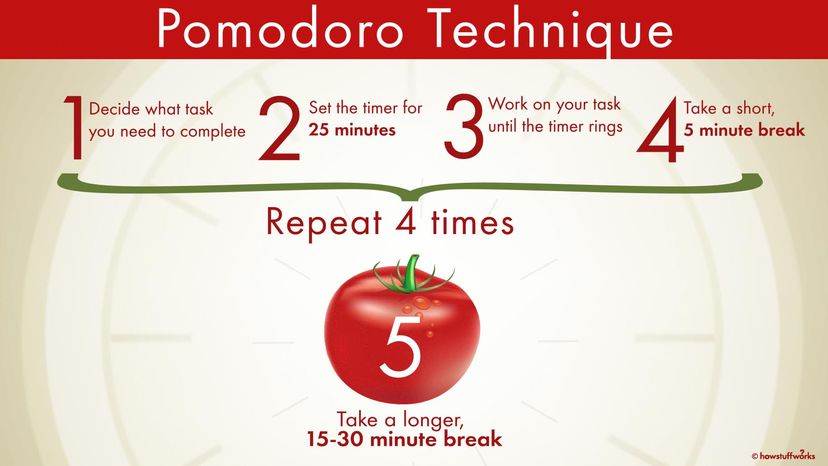
The Pomodoro technique is a great tool to use when studying, and it’s a good way to get more done. First, you pick one task to complete. You next find a timer and set it for 25 minutes and work on the specific task until the timer rings. Next, take a short 5 minute break, and then repeat the process four times. After you have done this, you then take a longer break of 15 to 30 minutes. This process greatly helped me with my studying and with my homework and made my schoolwork much easier in general, so be sure to try this the next time you study.

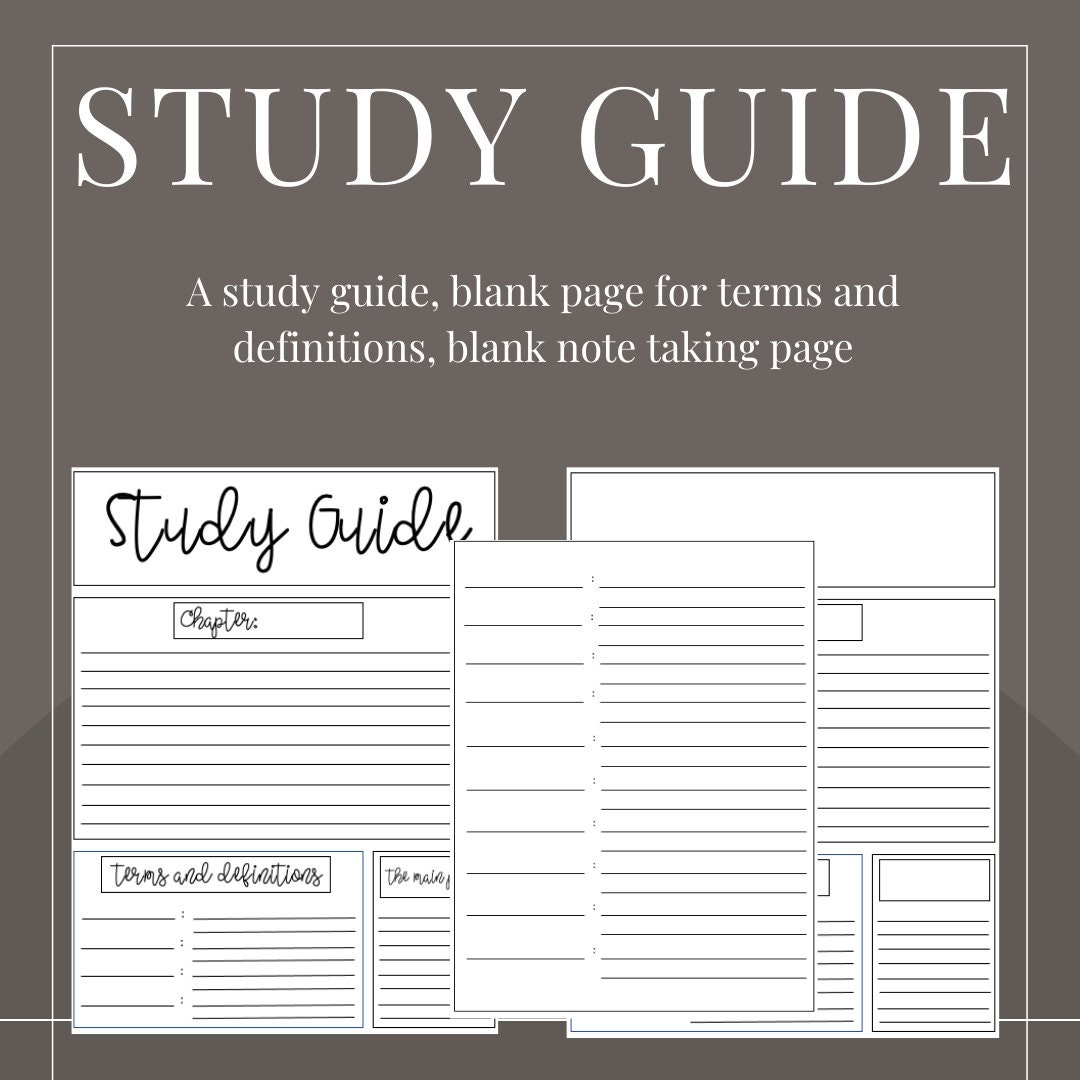
Another studying strategy that I found helpful was to make study guides. I write down the important ideas from a lesson or unit as well as terms and definitions, and then review it before a test so you are familiar with all of the important ideas. If you are given a synopsis for a unit, it will usually give many of the important ideas, so try to write these down on the study guide. Making these study guides made taking tests much easier, and they also make studying for finals easier, as they contain all the important information.

I also found it useful to spread out studying for the period of time before a test. Try to study every day or couple days. I also found it helpful to not cram the night before a test, as it is harder to learn the material and is not very helpful. Also, if you have vocabulary to learn, I would recommend reviewing it by making flash cards by hand or online on sites such as Quizlet.

Finally, I found using a planner or calendar extremely helpful. You can plan assignments and projects and break down your work and studying into manageable blocks, and I found this valuable, especially when working on large projects or assignments. Using a planner or calendar is also helpful for meeting deadlines with assignments, as well as keeping you organized. Overall, all of these study tips were very helpful for me and they’re sure to be useful for you as well, so be sure to use these the next time you’re studying for a test or project!

The Pomodoro Technique: A Time Management Method

With lots of assignments and tests piling up, I as a student have been very stressed out recently. Stressing all the time hasn’t helped my productivity or time management; I think I’ve spent more time worrying about schoolwork than actually completing it. Thus, I’ve been trying new study methods, and one has really worked for me.

The Pomodoro Technique is a study method for time management that breaks long study hours into 25-minute periods of focused work followed by 5-minute breaks. Here are the steps in a more detailed form:

Step 1: Identify the assignments you need to work on.

Step 2: Set a timer for 25 minutes and work on an assignment without getting sidetracked.

Step 3: When the timer goes off, take a 5-minute break.

Step 4: Work for 3 more work intervals, or pomodoros.

Step 5: Take a 30-minute break and begin the study sequence again.

This study technique worked really well for me! I was able to complete many assignments I had been procrastinating on and not get distracted by my phone or other distractions the entire time. Something that helped me was making a to-do list and highlighting the tasks of the highest priority. With my phone as the timer, I found that I was much less distracted by it, because each time I opened my phone, I saw the timer and was reminded to keep working. Using a timer works very well for me, as it motivates me to concentrate and get as much work done as possible before the timer sounds. Also, I think a 5-minute break is a great time frame to get up, stretch, and get a quick snack before getting back to work without getting distracted.

All in all, the Pomodoro Technique was a very helpful and successful study technique in my experience. It allowed me to stay motivated and productive while working for multiple hours and completing many assignments without getting sidetracked. Hopefully, it works for you too! If you’ve been feeling stressed or have trouble managing your time efficiently, give it a try!

Lam T.

Time Management

As finals slowly approach, I have often found myself stressed with school and sports. Balancing school, sports, and extracurriculars has proven to be a struggle in my life and many others. Learning how to manage time has proven to be a beneficial skill in life, but it is challenging to learn. 

Here are two ways you can master time management:

  1. Creating a To-Do List
  • There’s a reason why creating a To-Do list is so popular: using a To-Do list can help you keep track of homework, upcoming projects/tests, and chores around the house. To-Do list lets you plan your study time and mark what you complete. Using a list helps you monitor your assignments. A bonus is that checking off a task is a motivator to finish homework.
  • If you prefer to keep track of your To-Do list online, there are many websites (and apps) to do so. I enjoy Pomofocus; this website has a To-Do list and a Pomodoro timer. This leads me to my second point–use a timing system!
  • Benefits: Checking off tasks creates a sense of accomplishment, limits stress, and lessens procrastination.
  1. Utilizing Timing Techniques
  • A timing system allows for the allotted time of working and breaks. The Pomodoro Strategy arranges 25 minutes of work time and 5-15 minutes of rest time. This enables users to have time for work and breaks. Studies have shown that people with gaps between study sessions are more productive than those without. 
  • The Pomodoro Technique has helped me set realistic goals when studying by creating small steps that gradually build up to my main objective.
  • Benefits: Increases accountability, reduces distractions, and improves productivity.
  • An extra note: Looking ahead in the next week or two is essential when planning your study time. This can help you stay on top of upcoming tests and projects.

Final Notes!

Since I have used these strategies in school, I have never missed an assignment and had time to study for exams. Though these two tips seem like small factors in the large scheme of things, setting a To-Do list and timing techniques significantly improve time management.

Organizing your time is essential to being a successful student, employee, and athlete. Using these methods will help you maximize your productivity in a small amount of time.

Thank you for reading!!

– Gwendy M.

Quick Tips for AP Bio

I know many students nowadays are stacking up on AP courses, especially the AP sciences: AP Bio, AP Chem, AP Environmental Science, and even AP Physics.

There are other AP classes of course, but I guess I just wanted to give some advice if you are taking AP Bio this year as well as how to pass the exam and get good grades in the class. I took AP Bio last year (got an A in both semesters and a 4 on the AP test). Overall, I thought it was a really meaningful class and is something you can learn and use the rest of your life. So, here are some tips:

  1. The most important thing in AP Bio is not actually memorizing material! Yes, there are a lot of processes that you have to remember (Krebs Cycle, DNA replication…etc..), but it’s more important to understand the logical processes. How does this work? How does that work with this system? One process that worked for me was to read through the textbook and then brain dump everything I remembered. Then, for the things you forget, you can go back and fill your notes in! It’s a great way to practice your active memorization skills.
  2. I would say the other important thing is to use your AP Bio Princeton Review Books if you have them. I think there are some used ones in the library that are very cheap! They are great, especially for summarizing the most important materials. I would recommend using your school provided textbook and the AP Bio reviews at the same time, so that you can have 1. double the amount of information 2. It acts as a great review!
  3. The quizlets, Khan Academy videos, as well as some of the online free AP Bio tests are great to use to practice as well. Use the quizlets for the class tests! (p.s some of the questions actually popped up on the exam!) Also, the Khan Academy is great for when you don’t understand a topic since they honestly oversimplify everything. There are good online free AP Bio tests that you can use from Varsity Tutors. Nearing the day of the AP test, there is a public 2013 MCQ and FRQ exam posted from College Board (it was very helpful btw and also contained an answer key!)

To be honest, if you really love science, then you will really have a fun time with this class! The labs were really meticulous, but they are tested on the AP exam, so I would also just recommend looking over those before the exam as well. Good luck!

AP Biology books are available to check out from the Mission Viejo Library.

Back-to-School Jitters? Let’s Crush Those Anxieties!

 It’s that time of year again when summer days turn into school days. For many of us, returning to school can bring excitement and, let’s be honest, a bit of anxiety. But don’t worry; you’ve got this! Let’s dive into those back-to-school butterflies and uncover strategies to conquer them like you’re champs.

Let’s examine what really causes our anxieties:

First off, it’s totally okay to feel a little jittery about returning to school. It’s super common, and almost everyone goes through it. So, what’s causing those butterflies in your stomach? Here are some common back-to-school anxieties:

  1. Meeting New People: Meeting new classmates can be nerve-wracking whether you’re starting a new school or just moving up a grade. Many questions and worries go through your mind- Will they like you? Will you fit in? Everyone’s feeling a bit uncertain, so remember you are not alone.
  2. Academic Pressure: The thought of new subjects, more challenging assignments, and exams can be overwhelming. Be bold and ask questions. Good teachers love students who ask questions and are eager to learn. So ask away! Remember, it’s okay. Learning is a journey.
  3. Social Expectations: The pressure to have the “perfect” social life can be intense. Real friendships take time to develop, and it’s okay to be yourself. No judgement! Usually, we are harder on ourselves than others. Most of the time, friendship comes naturally. 
  4. Organizational Stress: Keeping up with schedules, assignments, and extracurriculars can feel like a juggling act. But guess what? You can become a master organizer with a bit of practice. A schedule app is the best for this. 

Now that we know what are some things that cause our anxieties. Let’s look at some strategies for overcoming them. Let’s kick those anxieties to the curb.

Strategies for Conquering Back-to-School Anxiety:

  1. Prepare Ahead: Knowing what’s coming can be a game-changer. Be organized- Get your school supplies, organize your backpack, and plan your outfits in advance. This will give you one less thing to worry about.
  2. Talk It Out: Don’t keep those feelings inside. Talk to friends, family, or trusted adults about what’s on your mind or what’s bothering you. You’ll be surprised how many people have felt the same way.
  3. Set Achievable Goals: Don’t expect perfection from the start. Set achievable goals, and celebrate your progress along the way. You are more likely to continue when you see progression in your dreams. 
  4. Breathe and Mindfulness: Take some deep breaths when you feel overwhelmed. Stop anxiety before it starts creeping in. Consider practicing mindfulness techniques to help you stay grounded and focused. Taking time to breathe makes you feel less stressed because it gives your mind time to relax and rethink.
  5. Eating well & staying healthy: Eating well, getting enough sleep, and staying active can improve your mood and overall well-being. Take time to eat snacks like fruits or cut-up veggies; eating healthy provides your body the energy to finish what you need that day. 
  6. Stay Positive: Stop overworrying. Instead of worrying about what might go wrong, consider all the exciting things that await you this school year, like making new friends, learning interesting subjects, and remarkable experiences just around the corner! 
  7. You’re Not Alone: Everyone has their version of back-to-school jitters. You’re part of a considerable community of teens going through this together. It’s hard enough to be a person in this decade because of all the changes and uncertainties. Lean on each other for support.
  8. Ask for Help When You Needed: If anxiety becomes too overwhelming, don’t hesitate to talk to your school counselor or a mental health professional. They’re there to help you navigate these feelings. These individuals have training and experiences to help you navigate your uncertainty and bring them into clear focus. So don’t hesitate to ask. 

So there you have it! Back-to-school anxiety is normal, but you have a toolkit with many strategies to handle it like a pro. Remember, you’re stronger and more capable than you think. Embrace the new school year with confidence to be true to yourself and shine! ✨✨

You got this!

Bella H.

AP Human Geography As A Freshman In High School, Is It Worth It?

So, last year I was a freshman at my high school and I took the college level course: AP Human Geography. After taking the national exam at the end of the school year, I remember thinking to myself: “was that year’s hard work all worth it?”

First of all, lets talk about the benifits of taking this rigorous course:

  1. Pushes you to really focus and do work – Due to the pacing and toughness of this course, it really forces you to lock in during class time and also study times because if you don’t, you will be very behind
  2. Develops time management skills – The amount of vocabulary, notes, and concepts that you will have to review constantly is absurd, and it will seem impossible at first, but this allows you to use your time management skills to figure out your priorities.
  3. College credit – If you get a good score on the national exam, It will count as some college credit, letting you skip some classes when you get to college.

Now, for the negatives:

  1. Limits your free time – due to the amount of studying required, you will have decreased free time at home
  2. The class can be very frustrating at times – A lot of times you will not understand or remember the concepts, and it will leave you very angry and frustrated.

After all, is the class worth it? In my opinion, yes, because the all the negative aspects that personally experienced could have been easily solved by better time management skills

-Torres H.

UC Admissions College Planning Seminar- Tonight!

We are hosting another great seminar with Collegewise tonight at the library.

Find out all about UC admissions from a former UC admissions counselor! Ask questions, get answers, and feel more confident about your application.

Meet us in the Storytime Room at 6 pm.

See you there!

Back to School: Tips for Productivity

The school year has just started, and like most high school students, I’m slowly getting used to having homework every night again. Often, I allow myself to get distracted or put off my homework until the last minute. This year, I’m determined to have a successful academic year and a mostly stress-free school life by staying focused and productive. So, for everyone like me out there, here are some of my tips to be productive in school and at home for this coming school year.

1. Work in a distraction-free environment. I prefer to work in a quiet area and put my phone in a different room or on “Do Not Disturb” so that I’m not tempted to check it every time a notification pops up. It’s easy to get distracted and lose track of time when you’re on your phone, so make sure it’s not a distraction when you’re trying to get work done.

2. Keep track of assignments, tests, and deadlines. I recommend having a planner/calendar and writing down your assignments and due dates so you can plan accordingly. This helps me to make progress on my assignments every day instead of letting them pile up. Daily to-do lists also work well for me, and the satisfaction of crossing out tasks after completing them is always great.

3. Get work done at school. To minimize homework, use your study hall/tutorial period as well as class work time wisely, and get as much work done as you can. That way, it won’t become homework and you will have more free time or time to complete other assignments.

4. Take periodic breaks. Working can get tiring after a while, so it’s healthy to take a step back from your assignment and stretch, get a drink of water, and/or have a snack to fuel your study session. Be sure to get back to work afterward!

5. Tackle the most difficult tasks first. Completing your harder assignments first helps you get into the zone and complete your other assignments more efficiently. Personally, completing these assignments gives me a sense of accomplishment that motivates me to continue working.

6. Create a plan for your study sessions. Decide beforehand a window of time to work during (based on what time you feel most productive or when you are free) and which assignments you plan to spend time on. Creating a plan helps you stay organized when working and not wait until the evening to do all your work.

All in all, don’t get sidetracked, and stay organized and focused when you are working. Hopefully, you found these tips helpful and can apply them to your study sessions. Good luck in the upcoming school year!

-Lam T.