The Adventures of Tom Sawyer by Mark Twain

Cover image for The adventures of Tom Sawyer / Mark Twain ; with introduction and notes by H. Daniel Peck.

This year in my English class, we had to read The Adventures of Tom Sawyer, a classic book written by Mark Twain. As you can imagine, we had to analyze it and do all the work alongside reading the book. Although the reading came with work, I ended up enjoying the overall story. Many times, people seem to lose interest in a book when reading it comes with work to complete along with it, but I try not to let that get the better of me and try to do the work after I’ve enjoyed the book. So far, my strategy has worked out well, from The Outsiders, The Giver, and now The Adventures of Tom Sawyer being all books I have now happily completed. 

The book features the fictional main character Tom Sawyer introducing his character as a very mischievous character with a big imagination. He often gets in trouble and loves to make his own fun. I had my own fun reading about his adventures with his friends, mostly Huckleberry Finn. Each of the characters had their own feeling to them that felt familiar to me, almost like I knew them personally. Twain depicts society and people quite well in this book and often satirizes things that happen in the world throughout the story. He creates lifelike characters, those that would act in a way real kids would, while still having parts that would seem unbelievable and unreal in the real world to make the story interesting. The way Twain words things about society shows his views and also the truth about society. 

Tom and Huckleberry Finn are both young boys that come from different parts of society and different lifestyles that yet, love to play and hang out with each other while trying out their superstitions and beliefs. On many of Tom’s adventures, Huckleberry Finn or Huck, is always the one who seems to stick with Tom and his ideas and beliefs. Both go on different adventures throughout the book and work together often. Each adventure leads to another and it all connects together by the end of the story. Despite their adventures starting off childish, it still managed to pull me in, wanting to find out what happens next. 

The Adventures of Tom Sawyer is a great classic that I definitely enjoyed. However, this book does feature a certain dialect and language that would not be acceptable today, so if you ever get the chance to read this book, please keep this in mind. Otherwise, this is a great book and I would recommend it to anyone who is interested. 

-Nicole R.

The Adventures of Tom Sawyer by Mark Twain is available to checkout from the Mission Viejo Library. It is also available to download for free from Libby.


Interesting Sports Podcasts to Try

If you get bored while running, resting, or doing whatever it is that you like to do, you might want to try a podcast. I enjoy listening to sports podcasts to discover the opinions of experts on certain topics, and I’m here to share some of my favorite ones with you. 

There are 3 podcasts that I feel separate themselves from the rest of them and for different reasons. Some of them offer incredible insight on basketball, while others are fun because they have people debating passionately about players and headlines. 

The Draymond Green Show

The host of this show is the man himself, Draymond Green. He breaks down NBA games and talks about how his team, the Golden State Warriors, played and how the other games went down. His podcasts are especially fun to listen to after he has a big game or an important moment in a game, such as an ejection. Sometimes, he’ll have a guest on the show, who might be a fellow NBA player or someone associated with the NBA. His attention to detail really shows in his podcasts, and I recommend his podcast to anyone who wants to learn a bit more about basketball. This is definitely my favorite podcast at the moment. 

First Take:

What’s better in a sports podcast than Stephen A. Smith yelling at Kendrick Perkins or someone else on the show for their “blasphemous” takes? With various guests on the show as well as the usual crew (Molly Qerim, Stephen A. Smith, and sometimes Kendrick Perkins), the podcast can be really entertaining to listen to or also watch on ESPN. On this show, they primarily debate about basketball, but also have some sections that include football or baseball. Although it’s not my favorite podcast, it’s definitely in the top 2 and I love occasionally listening to small segments at a time. 

Skip and Shannon: Undisputed:

If you want a lot of deep analysis about the game of basketball, don’t go to this show. If you want to see Skip Bayless and Shannon Sharpe bickering back and forth for two and a half hours, then this is for you. On Undisputed, the 2 hosts don’t really talk about what teams need to do or what they should have done, but they debate on controversial topics concerning ejections, who’s better than who, and certain plays. However, before listening to this podcast, be aware that a lot of the things Skip and Shannon say are heavily biased, especially the ones from Skip. That being said, this show is still a lot of fun and I definitely recommend you check it out. 

If you’re a basketball (or sports) enthusiast, in summer, you might find yourself bored with nothing to do, and if so, give these podcasts/shows a listen. You probably won’t regret it!

-Mert A.

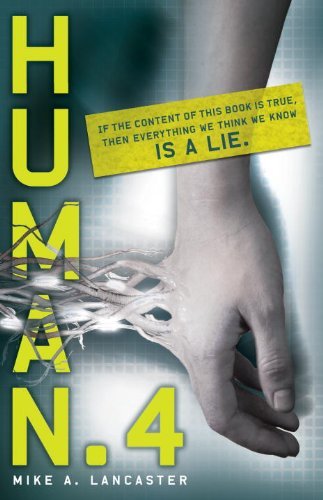
Human.4 by Mike A. Lancaster

When Kyle Straker volunteers to be hypnotized at the annual Millgrove talent show, he expected the usual amateur act – perhaps slight embarrassment from being made to act like a chicken, but nothing more than that. What he wakes up to, though, is a nightmare. Cars and televisions no longer work, townspeople communicate in a strange language, but worst of all, people simply pass by Kyle as if he does not exist.

In an attempt to discover what caused this monumental shift, Kyle teams up with the three other hapless volunteers in order to survive the strange new world they have found themselves in. However, the more they investigate, the more danger they find themselves in as they eventually realize that there is more than just their lives at stake, but also their way of life.

The novel is told through a series of cassette tapes that have subsequently become a historical artifact called the Straker Tapes. Mike Lancaster assumes the position of the historian with editor’s notes to explain parts of the story that would not make sense to the evolved human, which adds both humor and horror to the story. For example, he goes into great detail describing mouths, which, though amusing to the reader, inevitably implies that the future humans depicted in the novel do not have any and are therefore superior, emphasizing the oddness of the new world Kyle and his friends find themselves in.

Overall, I enjoyed Human.4 by Mike Lancaster because it was a unique premise I had never read or considered before. While it is not a conventional dystopian novel, I would recommend it to anyone who enjoys them for a new take on the genre.

– Mahak M.

Keeper of the Lost Cities – Lodestar Book Five – by Shannon Messenger

Cover image for Lodestar / Shannon Messenger.

Sophie Foster is an elf who lives in the Lost Cities and has gone through many particular adventures. In the Lodestar, she feels very betrayed. Her friend Keefe had run away in the previous book. Her parents (Grady and Edaline) don’t trust him, but she still tries to keep her hopes up.


Pretince, a wrongly accused criminal, had just woken up. Sophie’s job was to get into his head and find out what happened. While there, she finds a projection of Jolie, Grady, and Edaline’s biological kid that had died in a fire. Jolie then begins to explain what had happened to Pretince and how he feels. Sophie doesn’t find much, but what she does recover is a symbol. This symbol is later found to be the lodestar symbol, hence the name of the book.


Later on, Sophie and her friends discover that Keefe’s mother had used Lodestar as a plan for his “Legacy” (we still haven’t found out what it is yet and it’s been 8.5 books). Dex, their technopath, also discovers that each piece of the symbol can be used to teleport to a hideout, so they end up visiting one. Nothing eventful happens, so they headed back.
This book is really good and anyone who has read books like The Hobbit, Harry Potter, or Percy Jackson would like it. Just be sure to read the other books first, or you will be lost with the concept of this one.

-Izzy W.

Keeper of the Lost CitiesLodestar by Shannon Messenger is available to checkout from the Mission Viejo Library. It is also available to download for free from Libby.

The Steam Engine

If I were to ask you what the most important invention in human history was, what would you say? The computer, which kickstarted the digital revolution and launched us into the modern age? The lightbulb, which moved humanity out of the darkness and into the literal light? However, to find the invention that truly revolutionized humanity, one must go a few centuries back in time and consider the steam engine.

In 1698, an engineer named Thomas Savery invented the first steam engine, although it certainly was not used for the purposes we consider today. Instead, it was made to draw water out of flooded mines using steam compression. However, the slow heating-cooling process and wastage of steam made this and successive machines, notably the Newcomen engine, largely ineffective, but that changed with James Watt in 1765. Patenting a new, improved steam engine, James Watt was able to harness the power of steam into machines, which led inexorably into the Industrial Revolution.

Like the name suggests, the Industrial Revolution revolutionized industry. More specifically, it shifted the economy from agrarian to industrial, and people moved from working in the home to working for wages in the factories. These factories housed machines that were powered by the steam engine for every industry, from textiles to iron. Without the steam engine, these industries would have never gotten off of the ground.

However, the steam engine did more than impact industries – it revolutionized transportation. In steamboats, like those engineered by Robert Fulton, the steam engine allowed for the shipment of goods both downstream and upstream with ease, lowering costs and travel times. However, the most important impact of the steam engine to consider is the rise of the railroads. In Europe and America, railroads changed the way people lived, worked, and settled. The transcontinental railroad, for example, made moving to other parts of the country easier, since the transportation would cost less and there would be greater access to goods. Not only that, these railroads tied together the countries they were built in in a way that would have been impossible without the steam engine.

So the next time you use a computer or switch on a lightbulb, spare a thought for the oft-overlooked steam engine – it’s quite possible that none of these inventions would exist without it! 

– Mahak M.

A Critique of Eternals (2021)

Cover image for ETERNALS / produced by Kevin Feige, Nate Moore, Juan Cano Nono, Andreas Wentz ; screenplay by Chloae Zhao, Patrick Burleigh, Ryan Firpo, Kaz Firpo ; directed by Chloae Zhao.

Since the dawn of time, an eternal war has been waged across the universe: the Eternals, immortal aliens gifted with abilities to stop the Deviants, monstrous creatures who seek only death and destruction. Earth has been one such battleground for these two groups, and for millennia the Eternals have protected the seeds of humanity and allowed them to flourish into a thriving modern civilization. However, with the return of the Deviants, the Eternals are forced to come out of hiding and into the light to protect the Earth one last time.

This is the premise of Eternals, a 2021 film that is arguably the first film to really be a part of Phase 4 of the Marvel Cinematic Universe (MCU), since it seeks to connect the past with the present, providing a new structure for the MCU as well as teases for future storylines. Unfortunately, it is this emphasis on the future that weakens the present film itself, leaving viewers looking forward to the new additions to the MCU rather than enjoying the film.

This is partly due to the sheer number of characters introduced in the span of a two and a half hour film. There are ten main Eternals in the movie, and it is difficult for the casual viewer to commit to memory each name, face, and power, especially since some of the characters have incredibly similar and trite powers, like lasers or super strength. This endeavor is quickly rendered futile, though, since half of the major characters are killed off within the first hour of the film.

The audience’s inability to connect with the characters on the screen diminishes every aspect of the film. The surprising plot twist would have worked better if it wasn’t shown primarily off-screen. The romantic aspects of the plot were awkward and at some points distasteful to watch. The Deviants, supposedly the big bad villains of the movie, were almost completely written off by the end of it.

All of this is to say that, in my opinion, Eternals was one of more flawed movies of the MCU, rivaling Thor: The Dark World, however strong of a comparison that may be. In the end, the weak plot was spread far too thin, leaving viewers unsatisfied with the entirety of the film. As a dedicated Marvel movie-goer, I hope that future MCU films do not make the same mistakes as Eternals did.

– Mahak M.

Eternals is available to checkout from the Mission Viejo Library.

Magpie Murders by Anthony Horowitz

Cover image for Magpie murders / Anthony Horowitz.

When the brilliant yet mean-spirited author Alan Conway is found to have jumped off of his tower, there is no evidence to suggest that it could have been anything more than suicide. In fact, no one cares to look into it too much, since there were more people who detested Alan Conway the person than who loved Alan Conway the mystery novelist. However, his editor, Susan Ryeland, has her suspicions.

After all, Conway had just submitted to her the manuscript of Magpie Murders, his latest and final novel in his world-famous Atticus Pünd series, but the last chapter is mysteriously missing from the pages. As Susan searches for the missing pages, she comes to the realization that, perhaps, the supposedly “fictional” novel is actually based on real events, and that maybe, just maybe, the murderer in reality caught wind of Conway’s tactics to expose them and took matters into their own hands…

Magpie Murders by Anthony Horowitz is an interesting read because of its story-within-a-story format. On the outside, there is Susan Ryeland’s investigation into Alan Conway’s life, the missing pages, and the murder the novel was based on. Within this framework, however, is the actual Magpie Murders, an Atticus Pünd detective novel written by Alan Conway (without the ending, of course). I enjoyed this format because it almost felt like a two-for-one read, where there were two well written mysteries in the span of one book. 

I would recommend this novel to any fans of Agatha Christie, since there are obviously a lot of similarities between her books and those of “Alan Conway” (compare Hercule Poirot to Atticus Pünd, for starters). However, any and all fans of mystery and adventure will enjoy this novel too.

– Mahak M.

Magpie Murders by Anthony Horowitz is available for checkout from the Mission Viejo Library. It is also available to download for free from Libby.

The House of Mirth by Edith Wharton

Cover image for The house of mirth / Edith Wharton.

Lily Bart: fashionable, socially-adept, and absolutely beautiful. Born and raised in the upper echelons of New York society, she seems the type of woman to immediately wed a wealthy man and secure her position as a rich socialite. However, due to her own warring nature between her material desires and her yearning for true love, Lily finds herself caught in a malicious web of jealousy and deceit that causes her fall from grace and social affluence to poverty and loneliness on the margins of society.

It is this unfortunate journey that Edith Wharton chronicles in her novel The House of Mirth. Although Lily is the protagonist of the novel, Wharton explores the events from other perspectives, notably Laurence Selden, Lily’s true love interest. The greatest irony of the novel is that although Selden openly despises the superficial and gossip-driven high society, when push comes to shove and Lily’s reputation is tarnished by forces outside of her control, Selden has the same prejudices against her, and it is these biases that keep Lily and Selden from their happy ending until it is too late to reach it.

Outside of Lily Bart herself, Wharton uses the novel to criticize the society of which she was a part. The most obvious of these is the disparity between what is expected out of men and women during this time. As Lily herself notes, while men could get away with shabbiness or not marrying, women were forced to always look beautiful and presentable, and had to marry in order to keep this up. Ultimately, Lily’s inability to cope with the demands her society made of her caused her decline into the fringes of society.

Overall, The House of Mirth is in no way a light or funny read as the title suggests. Instead, it represents the depressing struggle between what society has determined for people to be and what those people actually are through Lily Bart’s equally tragic story arc. In the end, The House of Mirth is an interesting read if only to understand the similarities between early twentieth century society and modern life.

– Mahak M.

The House of Mirth by Edith Wharton is available to checkout from the Mission Viejo Library. It is also available to download for free from Libby.
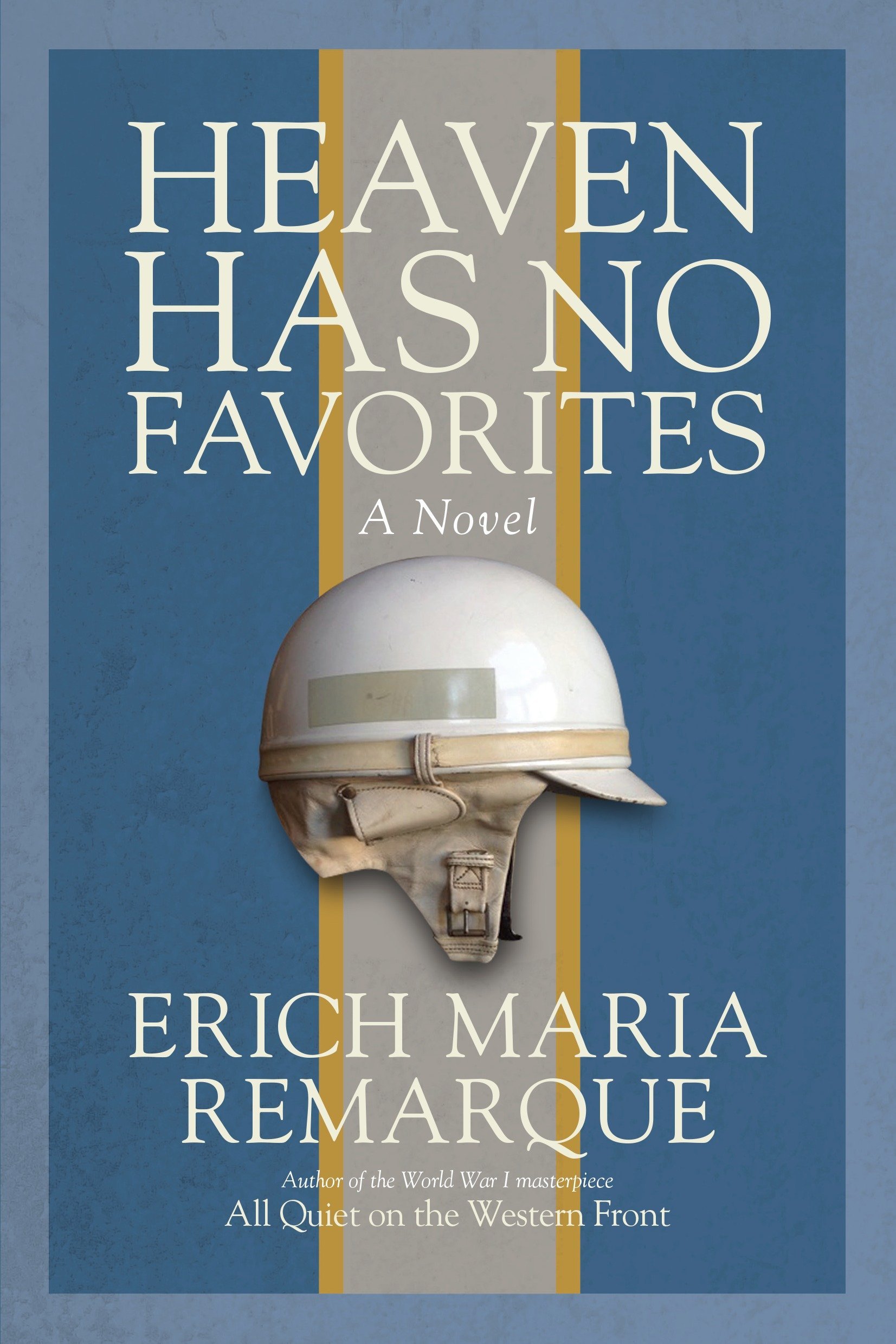
Heaven Has No Favorites: Erich Maria Remarque

Heaven Has No Favorites, written by Erich Maria Remarque, is a (post WWII) love story entwined with an unforeseen twist. 

The premise revolves around two main characters – Lillian and Clerfayt – who experience life with parallel outcomes. For one, Lillian is ill from tuberculosis, while Clerfayt puts himself through danger as a race car driver. Though their livelihoods are different, they have similar beliefs about happiness, and the challenges depression and aftershock war can cause. Likewise, the two form a close friendship. However, as Lillian is dying and would rather live out her last days outside a hospital ward, Clerfayt agrees to drive her around Paris, Venice, and so on. At first, the arrangement works in their favor … until one of them begins to fall in love. 

This novel, despite its basic plot, has a distinct cast – most notably Lillian. Although Remarque was a male writer, he’s able to accomplish what so few have achieved: a strong, unique female character. Despite her illness, she (Lillian) is able to disregard death and simply enjoy the moments that remain. In turn, readers are able to (using her) explore one’s significance, illusion, and reality. Thus, while the book is (more or less) philosophical, it doesn’t overcomplicate the message it tries to achieve. 

By no means will I spoil the twist, although I’d like to put in a quick word about it. The surprise (which is never quite hinted at) made me shed a few tears! Its abrupt nature adds to the initial shock – so make sure you’ve attentive. 🙂

In all, Heaven Has No Favorites is a poignant tale anxious to make one imagine a time outside our own. 

-Emilia D.

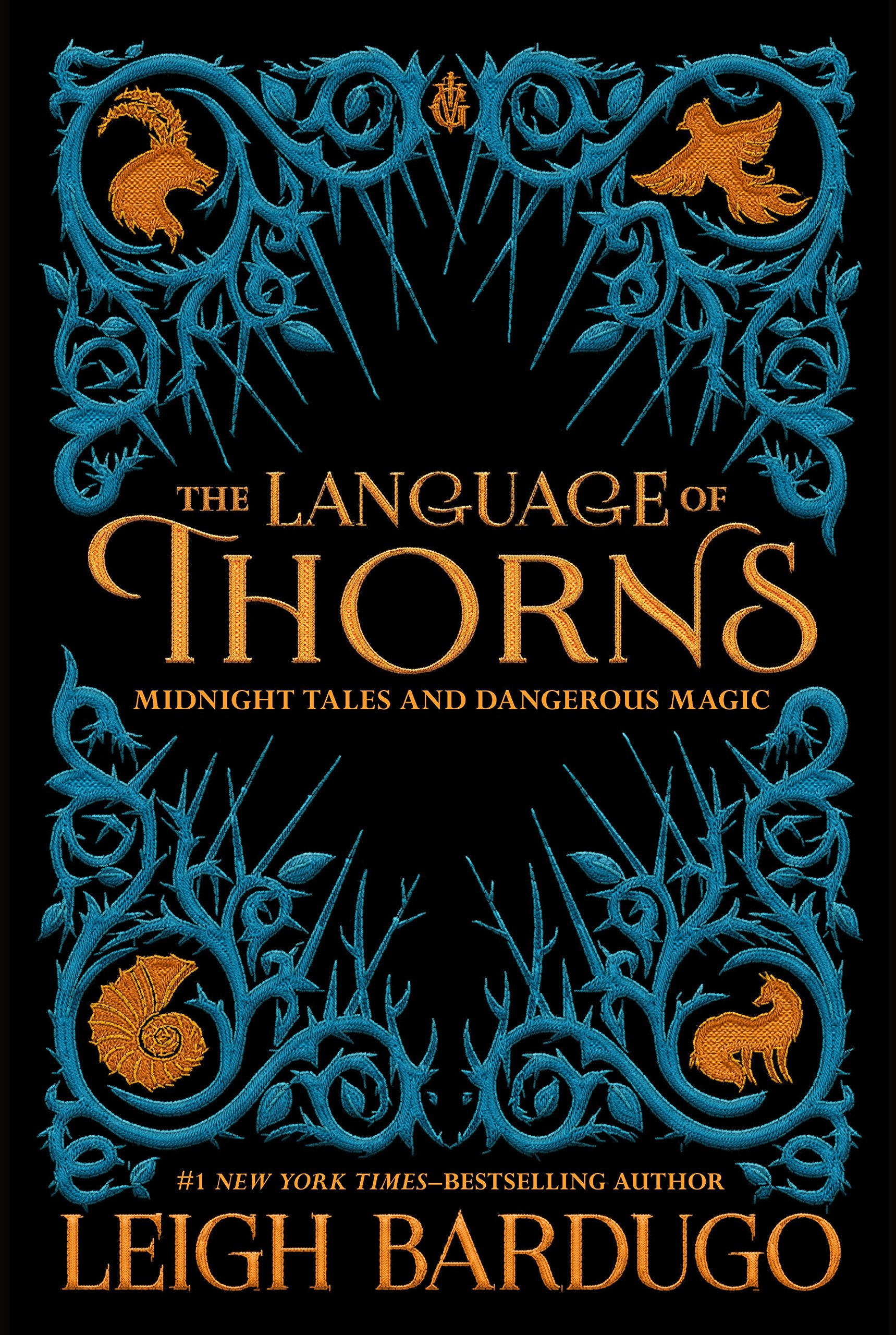
The Language of Thorns by Leigh Bardugo

The Language of Thorns is a collection of fantastical short stories based on various fairy tales, myths, and folklore such as: Hansel and Gretel, The Little Mermaid, The Nutcracker and more. Set in the fictional world of the Grishaverse, Leigh Bardugo puts a darker spin on beloved childhood stories. Ayama and the Thorn Wood, a story based in the fictional country of Zemeni, tells a tale of a girl who saves her village without slaying the terrifying beast. The Too-Clever Fox, based in the Russian inspired country of Ravka, tells a story of a fox who managed to outwit anyone he encountered. The Witch of Duva, a darker take on the classic Hansel and Gretel, tells the narrative of a starving village girl trying to survive her evil stepmother. A shorter tale of an outcast, a beautiful girl, and a river, Little Knife is a refreshing break from the typical prince and princess stories. The Soldier Prince, a story that takes place on the island of Kerch, is an invigorating take on the classic ballet The Nutcracker. When Water Sang Fire, my personal favorite, takes a dark and gritty take on the classic story of The Little Mermaid.

I have reread this book so many times and it’s never gotten old. Reading each story feels like I’m reading it for the first time. It’s genuinely so refreshing to read something inspired by fairytales, myth and folklore, that isn’t repeating something I’ve read a million times before. Each story has plot twists, magic, revenge, love, betrayals, and sacrifice.

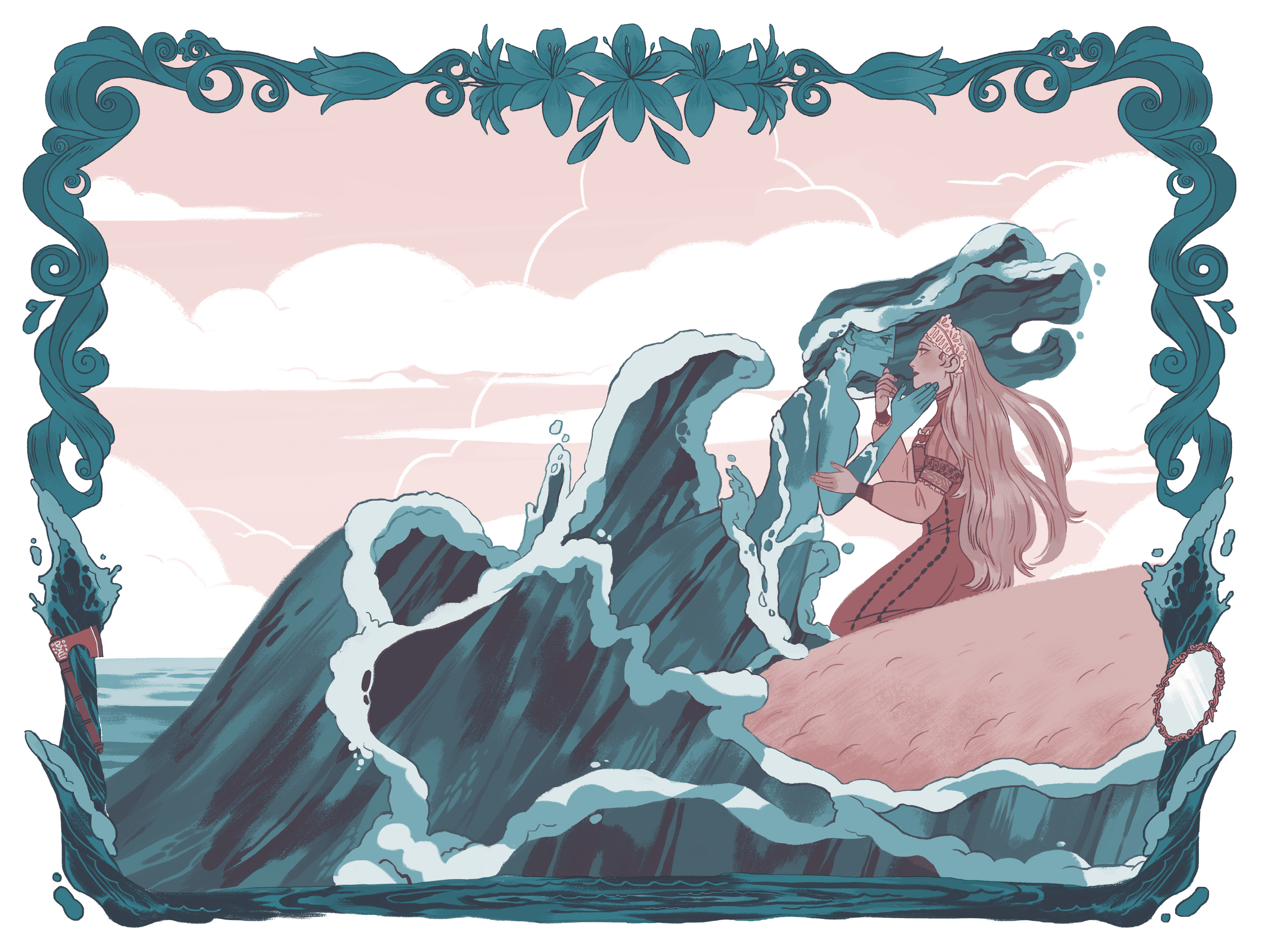
Bardugo’s writing style is another thing I love about this book. Her descriptions, dialogue, and pacing makes me feel like I’m a part of the story. I’d also like to give credit to Sara Kipin who did the illustrations for this book. Her drawings add another level of depth to these stories and help me visualize even further the scenes in the stories. I would recommend this book to anyone looking for a light read that still keeps you interested and engaged.

-Sophia H.

The Language of Thorns by Leigh Bardugo is available for checkout from the Mission Viejo Library. It is also available to download for free from Libby.