Book Review: The War of the Worlds by H. G. Wells

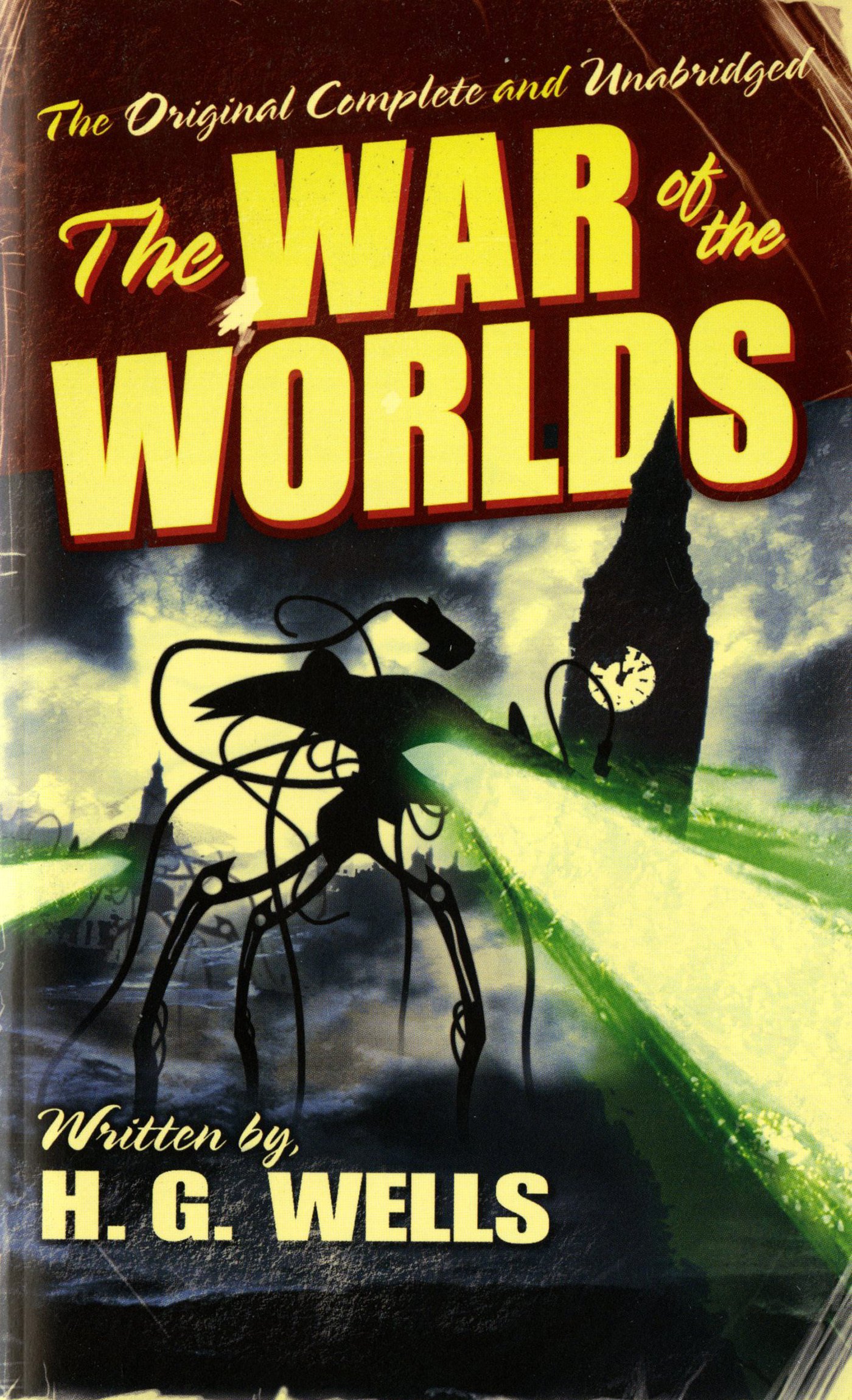
The War of the Worlds is a highly-influential science fiction novel by H. G. Wells.  The story seems to be set around the late 1800s.  When a supposed meteorite crashes near the narrator’s home, little to no suspicion is aroused.  However, on closer inspection, the object appears to be a huge, artificial cylinder.  Ugly, grotesque aliens emerge from the cylinder, only to retreat back inside.  A group of people attempt to greet the Martian visitors, only to be shot down with a heat-ray.  More and more aliens arrive, and it becomes apparent that Mars has plotted an invasion of Earth.

This book is one of the first science fiction stories of its kind.  It seems almost cliche now for a science fiction story to include an alien invasion, but this was one of the first novels to explore that concept.  The story uses many creative elements that seem ahead of its time, such as tripod-like alien fighter machines that shoot heat-rays.  In a strange way, I enjoyed reading about the humans’ pitiful attempts to defend themselves against the Martians.  The Martians possessed highly-advanced technology, which made it extremely difficult for humans to defeat them with traditional weapons.

I would consider this book a must-read for science fiction fans.  It may be one of the most popular and influential books of its kind.  It is written in a way that makes it seem like an actual historical event, which makes it even more thrilling to read.  Like many of H. G. Wells’ novels, the tone of this book feels dark but engrossing at the same time.  Some people may find the book a bit hair-raising and even frightening, but I enjoyed it thoroughly and would highly recommend it.

-Oliver H.

The War of the Worlds by H.G. Wells is available for checkout at the Mission Viejo Library. It can also be downloaded for free from Overdrive.

Book Review: The Serpent’s Secret by Sayantani DasGupta

The fictional novel The Serpent’s Secret by Sayantani DasGupta tells the tale of a sixth grade girl named Kiranmala who is told that she is an Indian princess from another dimension. Readers are introduced to Kiranmala at the beginning of the story when she is complaining about always having to be an Indian princess for Halloween. However, once the Rakkosh demon shreds her home and her parents go missing, Kiranmala is taken back to her “home dimension” by two princes. There, she meets a girl of her age who is supposedly her cousin, winged horses, moving maps, and an irritating talking bird. To Kiranmala’s surprise, everyone helps her throughout her journey to find and save her parents. On her way, she finds out astonishing things about her heritage that had been hidden from her. 

This novel incorporates elements of many different cultures. I think that such novels, although fictional, can teach readers a lot! The story of the main character includes suspense, mystery, adventure, and humor. This novel is a hilarious and emotional rollercoaster, and a story everyone should read.

-Ayati M.

The Serpent’s Secret by Sayantani DasGupta is available for checkout at the Mission Viejo Library. It can also be downloaded for free from Overdrive.
Book Review: Counting by 7s by Holly Goldberg Sloan

Willow Chance is a twelve-year-old genius who loves gardening, diagnosing medical conditions, and most of all, the number 7. Willow is bursting with knowledge and curiosity on the inside, but when she enters middle school, she discovers that the only people she finds comfort in connecting with are her adoptive parents.

Until one seemingly normal day morphs into the tragic disaster that becomes the center of Willow’s world—both her adoptive parents die in a car crash. What are the odds of losing both sets of parents in a lifetime? Apparently, Willow is right on the edge of the graph, in the one percent of the one percent. Twice without parents, she feels more alone than ever, because who is she with no family?

Willow embarks on a journey to find a permanent family to surround her. On her way, she finds her voice and casts herself magically on others. She helps to create an entire garden at a drab apartment building, inspires a taxi driver to continue his education, and makes her mark on everything she is involved in. She discovers herself surrounded by her loved ones, her chosen family, those whom she met on her journey.

Counting by 7s by Holly Goldberg Sloan brings fresh emotion to readers—warmth, tears, and joy. Willow Chance shows readers that family is truly important, but that those you meet on your journey are just as significant as those you have known since you were born. I was thoroughly touched by this unexpectedly beautiful story. Willow may be a genius who makes all her meals with food grown in her backyard garden; but in the end, she’s just a young girl with feelings and emotions who will make readers completely rethink everything they’ve been through and appreciate all they have much, much more. Readers will close Counting by 7s with more than a new story under their wings, because this book is a lot more than that—it’s a whole new understanding of our world.

-Lam T.

Counting by 7s by Holly Goldberg Sloan can be downloaded for free from Overdrive.

Book Review: Frankenstein, or The Modern Prometheus by Mary Shelley

Mary Shelly’s Frankenstein is clever through its attempts to build character, plot, and atmosphere. Though classics are known for their rigorous word choice, Frankenstein is in fact in the middle of this type of spectrum. For the most part, language is simple to grasp, and does not shy away from the necessities of detail and plotline. In other words, it’s easier to follow than most classics you’ll encounter.

The story is set up as though the narrator were the author, recounting a tale a stranger tells him while on an expedition as captain. He, the stranger, is Victor Frankenstein, the inventor who would come to create a monster. This knowledge, coupled with Shelly’s other efforts to foreshadow, attributes to the tension and intrigue the narration creates. It allows for readers to engage thoroughly with the text, as we’re eager to learn the origins behind Frankenstein and his reasons for the creation of the creature. The more you discover about the character, the more you question his morals and decisions throughout the chronicle. 

The establishment of themes early on in the book makes way for their progression and development. For example, the idea of creation and dangerous knowledge is implied early on, and therefore clears a path for further acknowledgement of the main character’s lack of responsibility and recognition of consequences. Another important aspect to take note of is Shelly’s usage of weather. To illustrate, when Frankenstien is at the pinnacle of his misery (I won’t say why – that’d be a spoiler!), the tone/mood shifts to storm grey, which is supported by the thunderstorm that comes soon after. It is reasonable to assume a connection between unhappiness and rain, as such weather is known for its implications. Season, too, has it’s significance. The start of Frankenstien’s biggest woe occurs in spring, which is usually associated with rebirth and renewal. However, the shock of this major contrast between the real situation and the symbolism we come to know of with season leaves room for irony, and possible implications of doom for our “protagonist.” 

Near the resolution of Frankenstein, an important question arises: who is the “hero?” As I went through the plot and reflected afterwards, I came to the result that the answer to this makes Shelly a master of her craft. There is no hero – it’s more of who, or what, is the lesser evil. To explain, Victor is the creator of the monster, and therefore is responsible for the beast’s actions. Thus, his neglect, or lack of management over the creature created a domino effect, which led to Victor’s ruination. The fact that the monster was miserable and melancholy wasn’t exactly his fault. In reality, it can almost be concluded that Victor is more of a monster than the daemon he brought to life … 

-Emilia D.

Mary Shelley’s Frankenstein is available for checkout from the Mission Viejo Library. It can also be downloaded for free from Overdrive.

De-stressing without our phones

As we continue into the school year, things are becoming more and more stressful, we start looking for new ways to take breaks. However, most often that becomes using our phones and going on social media. While this is okay to use, it is not something that should be our first and only resort. With so many other things to do nowadays, we should start spending less time on our phones to take breaks and more time doing other things such as reading.

I have recently started my senior year and with a free period, I find myself often with nothing to do once I get all my homework done. When I am stuck at school, I think that the only thing I can really use is my phone but that is not the case. I often forget that we have other things we can do such as reading. I know that often we think that reading for school is enough, but it is important to take time to read things that interest us personally rather than just for class.

So as we start to learn again, make sure that we are all taking the time we need to not only get everything done, but do things to destress that isn’t just going on our phone every time we get bored or want to procrastinate. So the next time you need a break, try going for a book rather than a phone. 

-Danielle B.

Reading Slumps & Stepping Out of My Comfort Zone

I like to call myself an avid reader. I enjoy reading, I read all the time, and I find a lot of joy out of it! I know some people aren’t like that, but I personally really enjoy it. Sometimes, I find myself getting into a dreaded reading slump. 

A reading slump to me is a period of time where I don’t read because I can’t find any book appealing to me, or when I just can’t bring myself to pick up a book. If there are times I don’t have time to read—I don’t call those slumps. Just times where I don’t feel like reading, most likely because I can’t find a book to read. 

I really hate getting into these slumps. I want to read a book, but I just can’t. Recently, I’ve gotten myself out of a long slump—and I got out of it by reading outside my comfort zone. 

Over the course of quarantine, I didn’t read. I mostly read online—short stories, comics, but not a long novel or a published book. It really confused me, because I had a shelf filled with books I have yet to read, but I couldn’t bring myself to sit down and read. I attempted to sit down and try, but I just couldn’t get into the story. The genre of the book was Young Adult fiction—a genre I always found myself reading. Yet, I just couldn’t get into the story. I wondered why. 

It honestly really concerned me. I feared I lost my love for reading, and that I couldn’t find happiness in it anymore. That was until I found myself reading another genre—poetry and prose. 

Most of my life, I’ve found myself staying in one genre—young adult fiction or children’s fiction. It was the genre that made me the happiest, and one of the easiest genres to read. I never really dabbled in historical fiction, fantasy, non-fiction, or poetry. It wasn’t that I didn’t like reading it, it was just that I didn’t feel comfortable reading those genres. I tend to get confused or bored—and once I get confused and bored, I just never finish the book. 

That was until I discovered The Waves by Virginia Woolf. 

I became very intrigued very quickly—the way Woolf wrote her characters and her style in The Waves was confusing, but I found myself enjoying it! It felt like reading poetry, or really flowery prose. It was beautiful, moving, and I found myself getting teary-eyed throughout. I had never read a book like this before, and it surprised me when I found myself absolutely falling in love with it. 

The Waves is what made me start to branch out of young adult fiction. Don’t get me wrong, I still read a lot of young adult fiction—but now, I feel comfortable reading other genres. After The Waves, I decided to read more older books, which meant I had to try harder at understanding the language. I decided to read Russian classics—Dostoyevsky, Pushkin, Chekhov. It felt good to read those. 

I also started to read plays, like Much Ado About Nothing, As You Like It, Coriolanus, Betrayal. When I found myself understanding the messages and getting really into it, I felt really good. Then, I started branching out into fantasy—Ender’s Game, American Gods, and The Gilded Wolves. 

That is what got me out of my reading slump! After The Waves, I ended up reading eleven books in two weeks. Yeah… it really shocked me how one book can get you out of a year long stump! And a book outside of my comfort zone, nonetheless. 

Reading out of your comfort zone can be daunting, but I promise it reaps so many benefits. You are able to talk to more people about the books you read, expose yourself to new themes and new styles of writing, and you never know—you may be able to expand your comfort zone to a wider range of books.

– Claire C.

Book Review: Lord of the Flies by William Golding

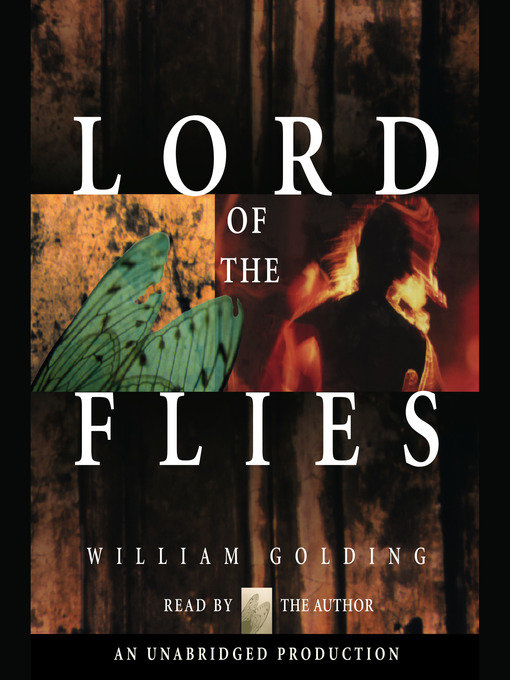
Lord of the Flies is a book authored by Nobel Prize-winner William Golding. It is one of the best novels written in the 20th century. The book focuses on a group of young British boys stranded on an abandoned island. They tried to govern themselves at first but became violent and brutal without any adult guidance.

The story begins in a war. A plane evacuating young boys crashed and landed on a deserted island. Two of the boys, Ralph and Piggy, found a conch shell. They blew the shell to gather everyone on the beach. After the meeting, the group selected Ralph as their chief. Ralph appointed a power-hungry teenager called Jack to lead the boys who will hunt for food.

The boys spent their days playing, building shelters, and gathering edible fruits. But the peacefulness didn’t last long. The boys turned to the darkness. They believe that a beast whom they call “beastie” was watching and waiting to kill them. Out of their fears, they killed a pig and offered its head to the beast. Jack decided to take advantage of the fears and turn against Ralph, he and his hunters formed a tribe and attacked Ralph’s supporters. Later in the story, Jack and his hunters hunted Ralph like an animal.

Lord of the Flies reveals the truth about human nature. Despite that humans appear to be kind and civilized, behind the screen lies evilness and cruelty. Golding shows that humans, especially children, must be ruled with authority in order to avoid violence. If they are ungoverned and undisciplined, they will turn to animal instinct.

-Christine J.

Lord of the Flies by William Golding is available for checkout from the Mission Viejo Library. It can also be downloaded for free as an audiobook from Overdrive.

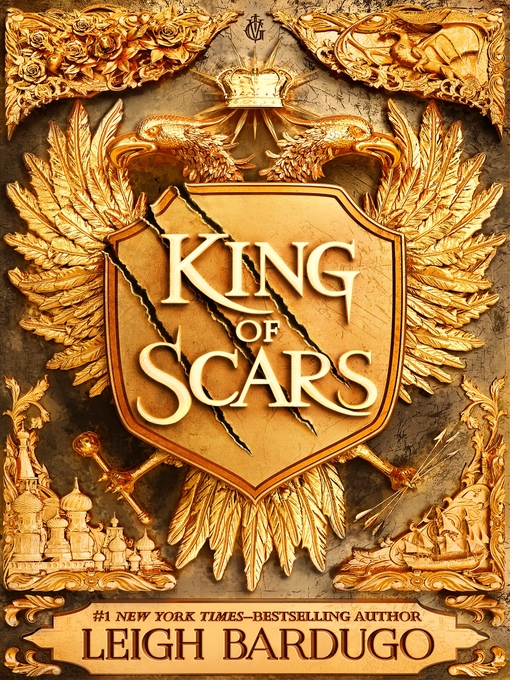
Book Review: King of Scars by Leigh Bardugo

Another break off series from Leigh Bardugo’s Shadow and Bone, this new duology starts off three years after the end of the Grisha Trilogy. King of Scars, an epic fantasy novel, follows the new King of Ravka, Nikolai Lantsov.

After his parents’ and older brother’s death, the weight of his country now lays on his shoulders. Nikolai along with the Triumvirate representing all Grisha take on the burden of keeping Ravka alive and intact. Plagued with the aftermath of the Darkling’s schemes, Nikolai looks to reunite east and west Ravka as well as keep the Shu and Fjerdans happy. Not only this, but every night he fights against the monster dwelling within him; a scar on his soul.

As war brews with Ravka’s northern and southern neighbors, Nina Zenik finds a way to survive behind enemy lines. As she tries to come to terms with a tragic death, she finds herself on a journey that will set the course for Ravka’s future.

To be completely honest, this book is very content heavy. It acts more as a prequel to the next book in the duology, Rule of Wolves, and took me quite a while to read. The first half of the book was interesting, as the reader follows three different characters, but it lacked any page-turning excitement.

By the second half of the book, the largest plot twist occurred and this definitely picked up the pace. With so many events happening, it left the reader wondering why each of them occurred, and Bardugo masterfully answers every one of them.

I really do recommend pushing through this book, especially if you have read the other Grishaverse books, because the ending is so worth it! There is one more book to this duology, one of my favorite out of all of the Grishaverse books, and I hope everyone who wants to read it gets to!

Happy reading!

-Katherine L.

King of Scars by Leigh Bardugo is available for checkout at the Mission Viejo Library. It can also be downloaded for free from Overdrive.
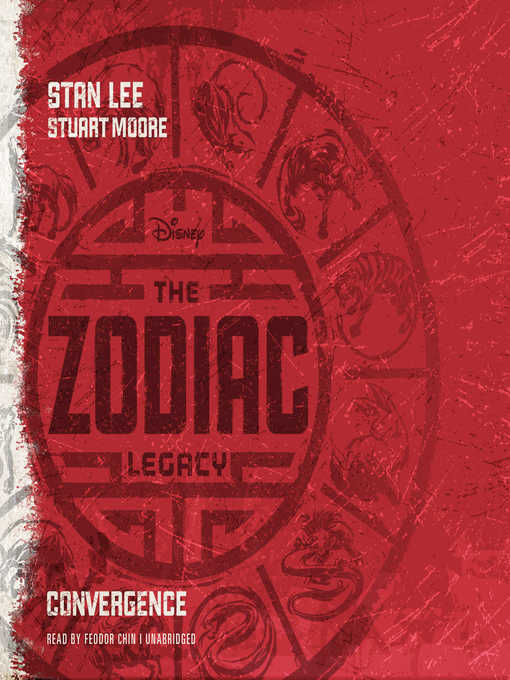
Convergence by Stan Lee and Stuart Moore

Convergence is the first book in the Zodiac Legacy series, and is written in graphic-novel format by Stan Lee, the mind behind Marvel, and Stuart Moore.

In modern-day America, twelve superpowers, each corresponding to a sign in the Chinese Zodiac, are released onto Earth. The protagonist, a Chinese-American teen named Steven, is quickly launched into an epic journey across the world to help find the humans imbued with these powers- befriending the good ones, and bringing the bad ones to justice. Throughout the course of this adventure, he learns to harness his own power- and the mysteries of the Zodiac.

I really enjoyed this book. It was definitely an action-packed thriller that kept me on the edge of my seat, and the ending (hint hint: it’s a cliffhanger!) left my brain reeling! This is a great fantasy novel if you’re looking to diversity your bookshelf as well, and I’d recommend it to everyone.

-Vaidehi B.

Convergence by Stan Lee and Stuart Moore is available for checkout at the Mission Viejo Library. It can also be downloaded for free from Overdrive.
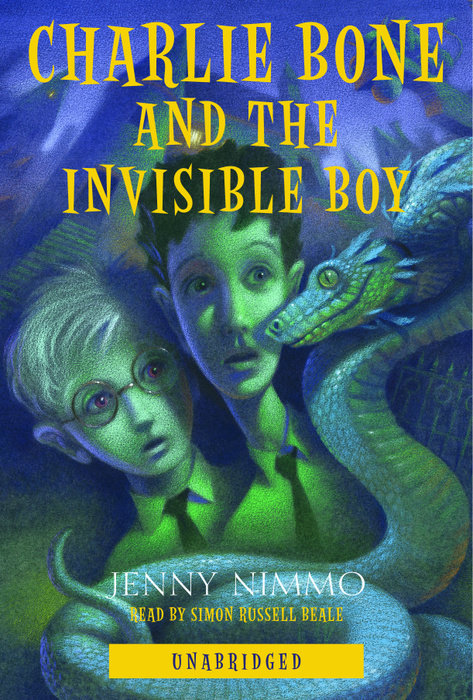
Charlie Bone and the Invisible Boy by Jenny Nimmo

Charlie Bone and the Invisible Boy is the third book in the Children of the Red King series by Jenny Nimmo.  This is my favorite book in the series so far.  These books are about a boy named Charlie Bone, who has a special magical power.  Charlie attends a school called Bloor’s Academy, where other students possess magical powers as well.  In this book, a new semester of school is beginning.  Charlie and his friends discover that a boy named Ollie Sparks has been secretly imprisoned at the school for a while.  Ollie is an “invisible boy,” because he was the victim of a magical snake that can turn its victims invisible.  Charlie and his friends try to save Ollie from his sad and lonely imprisonment.

In addition to Charlie Bone, two of my favorite characters in this book are Lysander Sage and Tancred Torsson.  Lysander is possibly the most powerful character in the book, but he is also very friendly.  Tancred also possesses very powerful abilities, and he is very helpful to Charlie throughout the book.  Charlie has other friends with special powers, and it is interesting to read about their different magical abilities.

My favorite part of the story is when Charlie and his friends help Charlie’s uncle after he was severely injured.  Charlie’s uncle, named Paton Yewbeam, had been away on a long and perilous journey.  He returns with many serious burns, and Charlie learns that he must find a special plant to cure his uncle.  The only place to find the plant is in the garden of one of Charlie’s evil aunts, so Charlie and his friends must risk their own lives to save Uncle Paton.

I enjoyed this book because Charlie and his friends take many risks to help others.  The story is very exciting, and Charlie’s life is in danger many times.  I like reading about the friendship between Charlie and his classmates, as they have many adventures together trying to save their friends and family.  I would recommend this book and the other books in the series to everyone.

-Simon H.

Charlie Bone and the Invisible Boy by Jenny Nimmo is available for checkout from the Mission Viejo Library. It can also be downloaded for free from Overdrive.