Authors We Love: F. Scott Fitzgerald

Fitzgerald was born on September 24, 1896, in st. Paul, Minnesota, to a family of small businessmen. His ancestors, who had once been rich and powerful, have faded down to his parents’ generation. In 1913, supported by relatives, he attended Princeton University, an aristocratic institution of higher learning in the eastern United States. But he had no interest in his studies, often missed classes and failed exams, and focused almost entirely on social activities. He managed to get into the school’s literary group, was invited to the most famous clubs, shook off his country accent, and developed a standard “advanced” English, trying to subtly erase differences of birth. In 1915, when Princeton’s theater troupe toured the United States with his comedy “The Evil Eye,” he was barred from performing with the group because of his grades.

In the spring of 1917, the United States entered World War I, and Fitzgerald joined the army. In late 1918, Fitzgerald left the army and headed to New York, where he found only a job writing the words for a little-known advertising agency. In June 1919, his lover Zelda lost patience and called off the engagement. Early experiences led to Fitzgerald’s lifelong sensitivity to money. In 1919, Fitzgerald returned home with nothing. Published in February 1920, the novel “This Side of Paradise” became an instant hit for its vivid sense of The Times, and the first edition sold out in a few days. Magazines began to scramble for him.

On December 21, 1940, Fitzgerald died of a heart attack caused by alcoholism at the age of 44, leaving behind an unfinished work, “The Last Tycoon”.

He is a legendary author with a flourishing life, but his outstanding literary understanding and writing abilities did not leave him with a glorious ending.

-Coreen C. 

The works of F. Scott Fitzgerald is available for checkout from the Mission Viejo Library. They may also be downloaded for free from Overdrive

The Golden Compass by Philip Pullman

Do you believe in destiny? No matter what your answer is, The Golden Compass by Philip Pullman will cause you to rethink it.

Full of adventure, fantasy, science-fiction and giant talking bears, The Golden Compass details the quest of a little girl named Lyra on a search for her best friend Roger. What she doesn’t know is that the fate of the world as she knows it rests in her hands.

 Throughout her journey to save her friend, Lyra receives help from a myriad of dynamic and likable characters, including a witch named Serefina, the pilot of a hot air balloon, and an armored bear, among others. She is also never without her daemon named Pantelimon, who serves as a companion and protector, and can change into the form of any animal he wants. Every person is born with one, though adult daemons do not change form.

Though the main character of the story is a little girl, it is far from a simple children’s book. The Golden Compass questions compelling topics about humanity, fate, and the possibility of alternate universes that would pique the interest of anyone with an inquisitive and imaginative mind. The book has been described by some as too controversial for the new ideas it presents. However, I believe it is important to educate oneself on the thoughts and ideas of others, even if one does not always agree with them.

All that said, the writing itself is descriptive and filled with detailed and immersive imagery illustrating each scene clearly and artfully. The characters are diverse, interesting and relatable, and if I could sit down and have lunch with all of them I would.

Each page of The Golden Compass was engaging and I thoroughly enjoyed reading it. It is different from any book I have read before and does not fall under one category. Pullman seamlessly combines fantasy, science-fiction, friendship and adventure all into one, and I am looking forward to reading the next book in the series.

-Charlotte H.

The Golden Compass is available for checkout from the Mission Viejo Library. It can also be downloaded for free from Overdrive.

The Coldest Girl in Coldtown by Holly Black

Although the name of this book originally had me skeptical, as soon as I read the first page I couldn’t stop. The Coldest Girl in Coldtown is a novel by Holly Black that was published in 2013. Its genres include Drama, Horror fiction, and Young Adult Fiction.

This novel is about a girl named Tana and her journey to a Coldtown, where she is always one step away from death, or even worse, a vampire. I thoroughly enjoyed this book and thought it was a heart-wrenching novel that was one of the most difficult to put down.

Tana’s world is centered around vampires, who are the apex predators. Without vampires, the news would be ‘boring’ and America, the only place where the spread of the vampires is somewhat contained, would have little to none to pride itself on. Coldtowns are where vampires or humans that are in the process of turning are sent. With boarded-up homes and bloodthirsty vampires rampant, the only way to describe the towns spread across the United States is… cold.

Although our current worries are far from turning into vampires, I find the characters in this book relatable. While trying to contain the virus known to them as vampires, today’s society works hard to contain Covid-19. Tara worries for her sister’s safety more than almost anything else, the same reason why I yell at my sister to put on shoes instead of flip-flops when going outside in the hopes that she doesn’t trip and fall.

As Tara is forced to journey into the deep center of a Coldtown, she makes friends, gets stabbed in the back, loses her sanity, and finds it again through the power of love and the undeniable fact that you are only as strong as you believe yourself to be.

-Apoorvi S.

The Coldest Girl in Coldtown by Holly Black is available for checkout from the Mission Viejo Library.

The Million Pound Note by Mark Twain

Man with a Million (1954) - IMDb

The Million Pound Note is a novella written by American writer Mark Twain and published in 1893. It tells the adventures of Henry Adams, an American boy who is an impoverished clerk in London. Two rich brothers in London made a bet to lend Henry an uncashable million-dollar note to see how he would wind up in a month. Instead of starving or being arrested, Henry became rich and won the heart of a beautiful lady. This article reproduces the satire and humor in the master’s novels with slightly exaggerated artistic techniques and exposes the money-worship ideology in the early 20th century.

At the beginning of the novel, Henry floats too far out to sea in his small sailboat. When he arrived in London, Henry had no one with him. After using up his last dollar, he was left without food and clothing. While Henry loitered hungrily in Portland Square, a child threw a pear with a bite thrown into the gutter. Henry stared hungrily at the muddy treasure, drooling. Just as the reader was nervous that Henry was about to grab the “treasure”, “Please come in” — just five short words, like a bolt from the blue, released the reader’s nerves. Henry’s life changed.

The young man in the novel is a true portrayal of Mark Twain. In Nevada, Mark Twain was a journalist in Virginia City, Nevada’s gold and silver region. Mark Twain was not immune to the gold rush, and he was sensitive to rumors and new opportunities. At that time, many miners who had discovered gold and silver mines were selling their shares in New York City to raise money, and Mark Twain invested all his savings, and even all his royalties, in buying silver mines.

-Coreen C.

TV Show Review: The Office

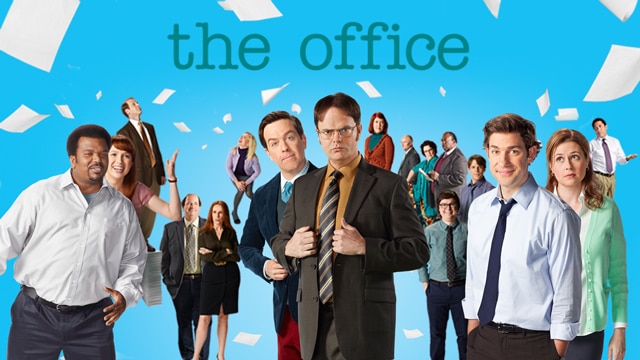
Starring Steve Carell, John Krasinski, and Rainn Wilson, The Office is about a group of staff members who work for a Dunder Mifflin Paper Company branch in Scranton, Pennsylvania. The group is followed around by a documentary crew that is filming them for a PBS special. This series is an adaptation of the show The Office from BBC.

Throughout the show, you will witness the love drama of Jim and Pam, pranks made by Jim and Michael, as well as funny office gossip. Steve Carell plays Michael Scott, the obnoxious boss who rose to the level of incompetence. Michael Scott frustrates anyone he comes in contact with, even his boss Jan Levinson. Meanwhile, Jim (played by John Krasinski) and Dwight (played by Rainn Wilson) have an ongoing battle. Jim is always playing pranks on Dwight, trying to disturb and anger him. You have most likely seen scenes of these famous pranks on social media. Dwight, throughout the whole series, tries to land a Branch Manager job, but Michael demotes him to “Assistant to the regional manager” instead of “Assistant regional manager.” The entire staff makes fun of him for this and brings it up any time they can.

Like in any typical American Office, there is a sales team, which includes Jim and Dwight, an accountant team, who includes Angela, Oscar, and Kevin as well as human resources and costumer service with Toby and Kelley. Later on in the show we meet some new characters like Andy Bernard aka the Nard Dog (played by Ed Helms) and Karen Filippelli (played by Rashida Jones).

I have watched this series many times before and I laugh each time I watch. Especially in these times of uncertainty, people need light, funny shows to keep them sane and have a good laugh, and The Office is no doubt one of those shows. I recommend to watch this show soon because they are taking it off of Netflix on January 1st 2021. However there is talk that The Office might movie to the streaming service Peacock. If you don’t have either of those streaming networks, the series is always playing on comedy central.

-Giovanna S.

Persepolis by Marjane Satrapi

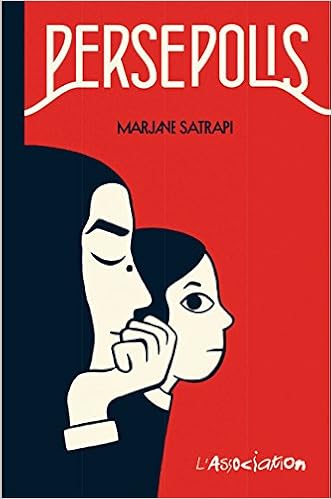
Persepolis is a graphic novel/comic that was adapted into a movie. The novel is an autobiography with true events that happened in the late 1900’s. The black and white panels of the novel can effortlessly grab the attention of any reader and make it entertaining.

Persepolis follows a young girl named Marjane who lives through the revolutionary changes in her home country of Iran during the Islamic Revolution. The most interesting part is that the ongoing crisis and corruption is viewed from a child’s perspective despite how complex it is. In a way, the reader grows and learns more about the government and cultural contexts along with the maturing Marjane.

Satrapi does not fail in grasping the reader’s attention and making them feel the rollercoaster of emotions along with the main characters. The series visits very critical and mature topics during the late 1900s that the Iranians/Marjane face. Thus, more mature readers should be able to handle these topics. 

Satrapi’s series is emotional and very moving. The oppression and government conflicts can be seen as a parallel to our world today. Just like Marjane who speaks up against the corruption of her government to maintain her rights, many of us participate in rallies or protests to uphold our values. 

Similar to Marjane who is facing a revolutionary change in her nation, many of us are currently facing a new change in our nation as well. Before Marjane knew it herself, her world changed for the better! Thus, just like Marjane, we must find the will to stay strong, inspire others, and survive. 

Ultimately, Marjane’s spirit and growing perspective of the world around her is inspiring. This series is not only a best-seller but also studied in academic literature courses all over the world as a work in translation. I highly recommend this novel to anyone who is struggling to pick up a book during quarantine or in their free time (ahem, I know that’s some of us). It also opens up your ideas of Iranian culture and Islamic politics during the 1900s. 

I also recommend it for anyone who wants to try a new format of reading: comic-style. The panels are very easy to read and the black and white colors are used in such a captivating way. In fact, I read this entire novel in one sitting. I definitely hope others feel the same way as well. 

-Zohal N. 

Persepolis by Marjane Satrapi is available for checkout from the Mission Viejo Library

Movie Review: Knives Out

Boy, oh boy, was this a good movie. I wanted to wait until the official end of awards season to write this review, so I could add in any awards it won or was nominated for. It didn’t win any, but I think it deserved far more.

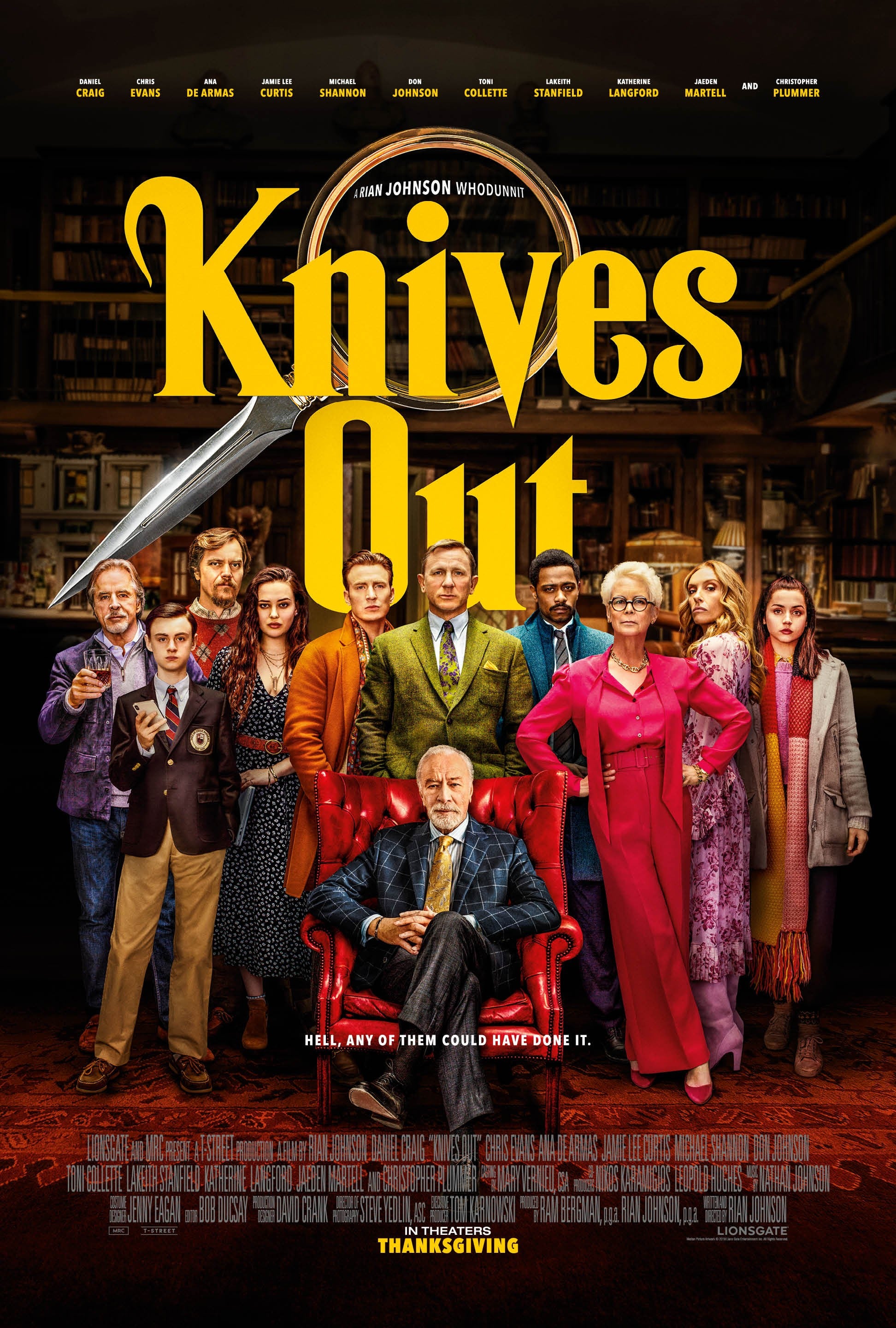
If you weren’t already aware, Knives Out is something of a whodunit film, with innumerable red herrings and so many (and I mean SO many) twists. Due to the mysterious nature of the film, I’m going to refrain from revealing too much of the plot. Plus, the point of this review is to entice you just enough to go see it yourself and spoiling the movie would spoil the effect of that enticement.

So basically, the movie is centered around this extremely wealthy family, and all their wealth comes from their patriarch, mystery author, and owner of a successful publishing company Harlan Thrombey. The morning after his 85th birthday, Harlan is found in his study with a slit throat, and police deem it a suicide; however, an anonymous party calls Benoit Blanc, a renowned private detective, to the scene because they suspect foul play. There definitely was foul play at hand, but the viewer finds that every member of Harlan’s family had a strained relation with him, and so they all had a theoretical motive.

The movie follows Blanc through his case with subplots surrounding Marta, who was Harlan Thrombey’s caretaker. The viewer has no idea what could possibly happen next, right up to the very last scene. The plots take riveting and unexpected turns, and the whole movie is the best kind of roller coaster. I won’t give any explicit spoilers, but the ending of the movie was absolute gold and gave me almost complete close (I am holding out for a sequel!) If you are looking for a movie that will have you glued to your seat and pondering for hours afterward, or even just something to watch on family movie night, Knives Out is definitely a contender.

-Arushi S. 

Knives Out is available for checkout from the Mission Viejo Library

Lolita by Vladimir Nabokov

Lolita: Nabokov, Vladimir: Amazon.com: Books

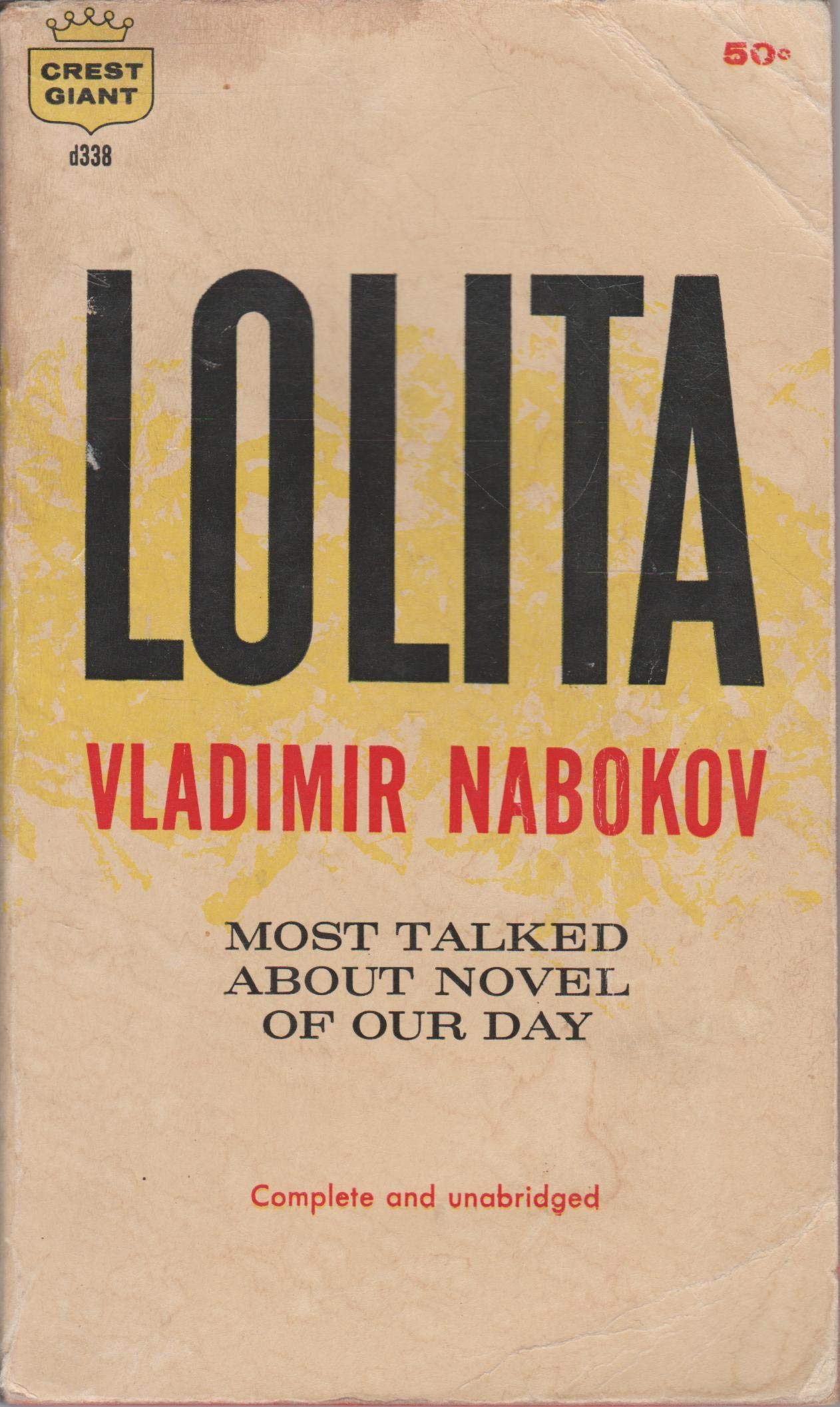
Most of the book is the confession of Humbert, a death-row prisoner, recounting the love story between a middle-aged man and an underage girl. The novel was initially rejected for publication in the United States and was first published in 1955 by Olympia in Paris. Finally published in the US in 1958, the book rocketed to the top of the New York Times best-seller list. Lolita has been adapted into a film.

In the novel, Humbert Humbert, a middle-aged French immigrant to the United States, had a first love affair with a 14-year-old girl Annabel when he was a teenager. In The end, Annabel died early from typhoid fever, which led to Humbert’s transformation to a pedophile. He defined “goblin” as “nine to fourteen years old”. First abandoned by a wealthy widow, Humbert later falls for Lolita, the 12-year-old daughter of landlady Charlotte Haze, calling her a goblin. Unable to break away from Lolita due to the shadow of his childhood, Humbert marries his landlady and becomes Lolita’s stepfather in order to get close to the precocious and passionate little girl. The girl in the novel is Dolores Haze, or Lolita or Lo, as the Spanish-sounding nickname for the book’s title.

The landlady in her husband’s diary later found out his secret and was very angry that he cheated on her. Humbert later picks Lolita up from camp and travels with her, thinking that by drugging her in her drink he can unknowingly molest her. The drug had no effect on Lolita (because it wasn’t really a powerful sleeping pill), and instead, the next morning, Lolita flirted with Humbert and had an incestuous relationship. Humbert then informs Lolita that her mother is dead, and with no choice, Lolita accepts that she must live with her stepfather. Humbert takes Lolita on a father and daughter tour of The United States, using pocket money, beautiful clothes, and delicious food to control Lolita and continues to satisfy his desire for her. As Lolita grows up, she begins to dislike her stepfather and starts dating boys of her own age. She takes the opportunity of a trip to break away from her stepfather. Humbert searched frantically at first, but eventually gave up.

Three years later, Humbert receives a letter from Lolita. It says that she is married, pregnant, and needs financial help from her stepfather. Humbert gave her $400 in cash, a check for $3,600, and a $10,000 deed to the house that he had sold. He asked Lolita who is the man who took her away from, and Lolita told him that the man is Quilty who is a professor of performance at her school. She told him that she ran away from Quilty because she rejected Quilty’s request to her and the other boys for making pornographic films. Humbert begged Lolita to leave her husband and go with him, but she refused, and Humbert was heartbroken. He tracked down and shot Quilty. Humbert died in prison of a blood clot, and Lolita died in childbirth on Christmas Day 1950 at the age of 17.

-Coreen C.

Lolita by Vladimir Nabokov is available for checkout from the Mission Viejo Library. It is also available to download from Overdrive.

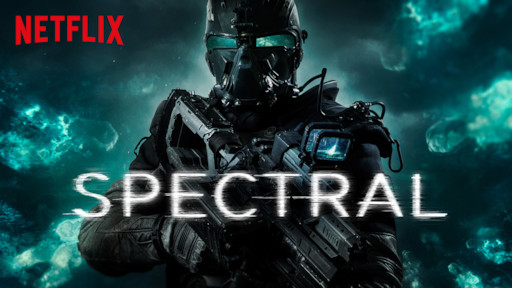
Movie Review: Spectral

If ghost and ghost hunting is your thing, then I recommend the movie Spectral on Netflix. I will firstly say that the movie is PG-13, so please do not watch if violent movies are not your thing (contrary to the previous sentence). 

Basically, researcher Dr. Mark Clyne is approached by a military general, showing him a video from a fallen soldier’s goggles. Visible in the video is a mysterious, almost translucent apparition that had suddenly attacked the soldier, killing almost instantaneously. These “anomalies” were later named as Arratare.

These “ghosts” were invisible to the naked eye and were completely bulletproof, making even the strongest military weapons useless. 

Clyne is sent to Moldova (bordered by Romania and Ukraine), where the US military is currently deployed. Clyne and CIA officer Fran Madison begin to work with the Delta Force in order to come up with a plan to defeat the anomalies with weapons that actually had an effect. 

After further observation and a scary encounter with the Arratare, Clyne realizes that these anomalies are actually man made, meaning that there was a way to stop the anomalies before they kill anymore people. 

This movie has so many unexpected twists and turns (even though I may have given away some crucial information… sorry). 

I give this movie a 8.5/10, and totally recommend watching this movie to chase away the boring days of quarantine. 

-Phoebe L. 

Romeo and Juliet by William Shakespeare

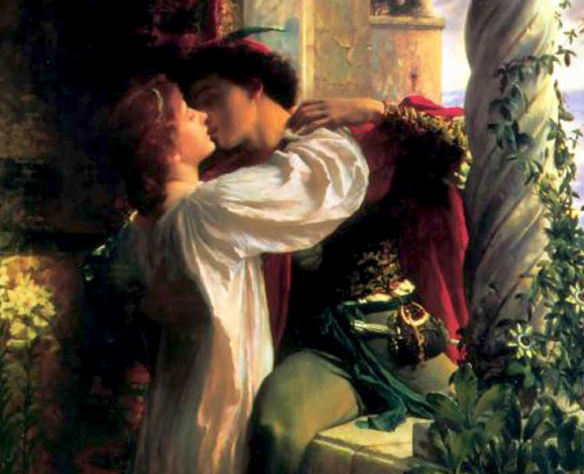
Wait, Romeo and Juliet, that’s the one about love right?  Yes, my friend, that is the one about love, but also it explores so much more.  In the sixteenth century play, two rival clans, the Montagues, and the Capulets has a child, Romeo and Juliet, who fall helplessly in love with each other but are not permitted to be with each other and as a result of this, through an elaborate plan which backfires, ultimately each takes their own lives. 

On a surface level, it is a story about love. But deeper down is the story’s true motifs, rejection of stereotypes.  For example, when Romeo and Juliet come to the conclusion that they are from rival houses, this does not hinder their romance. They put their families’ differences behind them without even a thought. Juliet rebels against her father’s patriarchal control over her by refusing the arranged marriage he attempts to force upon her. Also, she is a renegade in the sense that she was ahead of her time in the ways of intellect. Juliet always thinks things through or has a plan. Her character beats the old fashioned notion of girls being simple creatures that act on a whim and can’t be logical into the ground.  Friar Lawrence breaks the mood by telling Romeo to buy illegal drugs. 

All around in this story, people are rejecting the stereotypes that others represent and rejecting the ones that they represent as well. Today, if we were collectively wise enough as a society to reject stereotypes, think of how much more in unison we would all be. Now, of all times, we should be looking past stereotypes. Over four hundred years ago Shakespeare wrote this revolutionary play about looking past stereotypes and some of us are too ignorant to get it through our skulls. Remember this, a stereotype is merely a figment of one’s imagination. The more you believe it, the more you put it in the forefront of your mind as you go through life, the more prevalent you make it. As the monster you thought was in your closet as a kid, the more you thought about it, the more real it seemed.  The more you see the stereotypes, the more of a monster you become.

In the words of Nelson Mandela, “It is in your hands to create a better world for all those who live in it”

Treat others how you would like to be treated.  Don’t be the monster in the closet that you were scared of as a kid. 

-Ainsley H

Romeo and Juliet, and collective works of William Shakespeare, is available for checkout form the Mission Viejo Library