Authors We Love: Jack London

Jack London - Oakland - LocalWiki

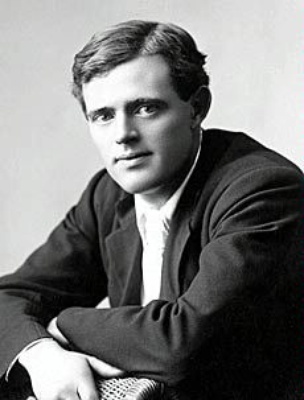
In Jack London’s works, one can often feel the complex of heroism. There is the worship of life itself and the pursuit of primitive form and spiritual freedom for the meaning of life and existence. In Jack London’s work, the protagonist is merged with the harsh wasteland, where life tends to take on a primitive form, releasing a desire that is the opposite of what the vulgar world will never be familiar with, a kind of intense, leaping and even violent emotional anger. The combination of freedom and passion of Dionysus gives out the most primitive call of life — tenacious survival.

Jack London is a writer of very complex ideologies. For many ideas that influenced the social history at that time, London accepted them almost without any choice. Influenced by the social and historical environment at that time, and without any formal and systematic education, London’s ideological beliefs were complicated and contradictory. As a result, many London researchers believe that London’s thinking is chaotic and lawless. His philosophical views, though confounded and discouraged by their many contradictions, should be carefully combed and studied. Jack London, a writer with the ideas of reform and progress, keeps pace with the times and views women from a broader perspective.

Far from being an anticlimatic feminist, However, London advocated women’s independence while also extolling the traditional virtues of women as faithful male partners. London not only expressed her definition of the “perfect woman” but also greatly enriched the female characters in American literature by creating a group of “superwoman” characters who were gentle, submissive, strong, and capable. London and his work provide a case study of American society and culture at the time. The period of childhood and adolescence in London was very miserable. Although London’s works are vast, fragmented and difficult to categorize, it is possible to draw a simple line through the works of early, middle and late London. That is the transition from the male-dominated narrative to the female-dominated narrative, through which is London’s eternal love for life and endless exploration and pursuit of the meaning of life.

-Coreen C.

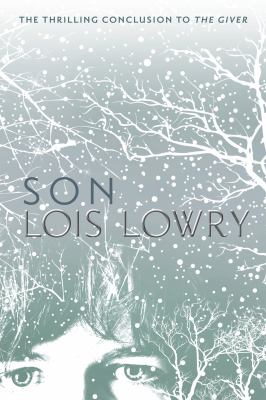
Son by Lois Lowry

When an author can mirror the magnificence of their initial novel with a sequel of equal caliber, it is nothing short of magic. But to do it multiple times over is something that only the likes of Lois Lowry could do. After a sequel and third installment, Lowry does it again with her story, Son. (Please note that I will be building off of concepts already discussed in past reviews. If you are not familiar with the previous stories in The Giver quartet, please read the corresponding reviews)

Back in the good old community, there is a girl called Claire. As a birth mother, she has been artificially inseminated and will have a child, one of the three who she is fated to bear during her few short years before she is subjected to a lifetime of physical labor jobs. Much as the citizens of the community lack knowledge of numerous aspects of life, the birth mothers are oblivious to their pregnancy, and that they will have a child. It’s not like they woke up on e day and where all “What the heck? What’s this bump on my stomach?”. The understand pregnancy but don’t realize that it means they will have a child. They are told that they must carry a “product”, they are blindfolded during the birth, then it happens twice more. Despite being blindfolded, Claire can tell that something is going wrong with her delivery. It is due to this that Claire is given an early leave from her role as birthmother and condemned to work at the fish hatchery. However, she starts to gain knowledge of her child and eventually begins to volunteer at the child care center where she meets him, Gabe. Mind blown! Lowry does it again! Anyway, Claire deepens her and Gabe’s bond while she learns that he is being taken care of by Jonas’s family unit who has a deep affinity for him. BANG! Then, one night the community is all up and out of bed. All of the people are like “What could have disturbed me from my dreamless sleep in my grey Minecraft bed?” (I don’t know, that’s just what I always envisioned). Voices proclaim that Jonas has fled the community with a baby. Claire puts two and two together and goes “Oh shoot”. She runs onto a nearby shipping ship which sets out for the sea and becomes a sunken shipping ship (say that five times fast!).

Breathe, end of part one!

Claire is struggling and half hallucinating in the water because due to the emotional strain and, ‘cause she has like never swam before (reason number #2,567, 898 why the community sucks). She ends up on the shore of a rural town where she is adopted (‘cause like guys, she is still a minor at this point) by a woman called Alys. Alys is like the co-chief of the village and also the nurse and midwife. Under Alys’s guidance, Claire basically goes through preschool (she learns about colors, feelings, trigonometry, rocket science, you know, basic things that they did not have in the community). She also grapples with an immense feeling of loss and she can not understand why. It’s like that feeling when you go to school and your all “I feel like I’m forgetting something” then you sort of forget, but it resurfaces “What was it?”. Then class starts and the teacher’s like “Okay, I’ll collect all your homework” and you just go “Oh shoot”. That’s exactly how Claire felt when she had the consciousness to remember her son.

Then she starts going really mad. Before the news got out to the town, Claire was pretty hot stuff. There was this guy named Andres who was totally into Claire but after the news spreads, he’s like “Nah” ‘cause Andres is a sucky dud like that. Basically, in this little seaside village, premarital sex is a big no no and once you are no longer a virgin you sort of depreciate in value. This town is super traditional like that. Also, ‘cause they are like simple farm people living off of the Earth, they don’t get the concept of artificial insemination and that Claire did not technically hook up with anyone. All the ladies stay at home, silent in the kitchen and all the dudes do stuff like fishing or farming, stuff like that. The whole town is basically a bunch of Baby Boomers if you catch my drift. So, she is reduced to the laughing stalk of the village. The only ones to stick by her are Alys and Einar, a sheep herder.

Einar is such a sweetheart. He is so genuine and kindhearted with everyone, and the sheep which he has memorized all the names of. He is not a “macho man” like all of the other village men. He also has a depressing past. Einar’s mom died in childbirth. Therefore, his “macho man” father who was super upset about losing his wife who was like the best part of his dull “macho man” fisherman life, blamed it on his son and therefor made life sucky for Einar. This dude was a jerk, on steroids. On top of verbal and physical abuse, his father emotionally abused him in a way. Due to a, uh, lack of a female presence, Einar was subjected to fill his mother’s role in a few different ways, i’ll let you fill in the blanks. One day Einar got so fed up with his sucky life that he decided that he was going to scale the massive cliff that loomed behind the village. No one had ever gotten to the top before, some people tried but turned back, others died. Einar did it. But he might as well not have.

One day Claire tells him her story and how she needs to set out to find her son. She does not want to go back to the sea (don’t blame her) so she asks Einar to help her get over the cliff. If you have had visions of scaling Mt. Everest and their is a full camera crew waiting for you at the top and like a ton of money and food and a mansion or something (I don’t know what is in your fantasy!), I don’t think that a creepy dude was part of it. Like, I bet that you wanted anything but a creepy dude. Especially when that creepy dude wants to steal your soul. Putting two and two together, it’s Trademaster, (sarcastic yay!). So when Einar got to the top and was really for the cameras, Trademaster’s all “Hey dude, was there ever anything that you wanted real bad but you just could’nt get it?” and then Einar goes, “Nah brah, I’m good, I’m on top of the world right now, literally”. Then, Trademaster’s like “For realzies?” and Einar’s like “Yah dude, can I get you anything? Like a water or something?” After that Trademaster is like “Skrew you and your niceness!” and attacks Einar’s leg like a big fat jerk face. Then Einar’s like “Uh, I gotta bounce” and shimmy’s back down the cliff.

Now, Einar is crippled for life. When Einar tells Claire this, she agrees that she is willing to under go something of a similar category for the chance of seeing her son again. Einar agree’s to help her train to climb the cliff. After a few years Claire builds up enough endurance and strength to reach the top. Then, before she goes she and Einar kiss, ‘cause like why not and Claire gets to the top. When she gets there, she goes to sleep. You probably think that your alarm clock is a crappy thing to wake up to, waking up to Trademaster is worse. Trademaster’s all, “OMG, your hair is like totally adorbs, what conditioner are you using?”. Then Claire’s like “Oh thanks-wait a sec”. Then Trademaster’s like “What brings you to my neck of the woods?” and Claire goes, “Oh, ya know, stuff” and then Trademaster’s like “I know about the kid from all of the stalking that I’ve done of you on the intedwebs” and Claire’s all “Oh shoot”. Then Trademaster’s like, “Give me your hair, your beauty, your youth and I’ll tell you where he is”. Einar has told Claire that she should make the trade, whatever it was just to get it over with. So, she did it. He told her to go straight through the woods to which she said “It was that simple?” and she turned into an old lady. As she approached a town, she saw a group of boys and felt a connection with one of them, Gabe. She longed to see her sweet child but she realized what a fool she would look like, an old woman emerging from the wood claiming to be his mother. It was then that the full evil of Trademaster’s deal struck her.

Water break, part two!

Now that her plans of reunion with Gabe have been foiled, Claire moves into a quaint little place on the outskirts of the town. This town however, is the town in which Jonas and Gabe ended up at at the end of The Giver and the town in which Seer lived after he was blinded and the town which almost had a complete wall built around it due to the corrupt Trademaster. After Matty died in Messenger, all of Trademaster’s wrongdoing in the town where undone and he fled to the forest. That should be the end of the story, at least many of the citizens of the town thought so… duh, duh, duh. Anywho, Claire sort of stalks Gabe for a little while and begins to assimilate into the town. She starts getting sick and dying because she is now an older woman. She confides in the town leader her story and of her and Gabe’s connection. The town leader is Jonas who also plays somewhat of a father figure roll in Gabe’s life. Don’t get any ideas about him and Claire though because Jonas and Kira are married with two kids name Mathew and Annabelle. At first when Claire tells Jonas her story, he is like “Whatever old lady” but then he realizes, “Oh, shoot. Trademaster must really still be out there!”.

So, because this is the super logical thing to do, Jonas decides, “Yah know what, let’s send Gabe, a little kid, out into the forest to fight this dude”. Also, as Jonas is loosing his abilities to see beyond, Gabe is only discovering his ability of feeling what other people feel, basically sympathy. All the while, Gabe has been working on building a boat. He researched boats in books which he borrows from Jonas’s extensive library. He gets all pumped up about the boat, actually. He gets all his friends to carve their names in the oar that he will use to paddle and everything. But, the boat fails. When he goes into the forest to fight Trademaster though, he brings the oar with him. He finds Trademaster who challenges him to a duel, offering him an assortment of weapons to choose from but Gabe’s all “Nah, I’m good”. Trademaster insults Gabe telling him how he has traded with people far more worth while and how insignificant he is. Gabe refuses to fight Trademaster so, he tries to make a trade with Gabe, who turns it down. Gabe uses his ability to feel on Trademaster. He gets a bunch of hungry vibes back. Gabe then realizes that Trademaster is starving. But not starving like “Bruh, I could eat this whole pizza I’m so hungry” but starving for his victims sadness. He feeds off of their misery. Then Gabe’s all, “Hey, remember Mentor?” and Trademasters like, “Yah, I ruined his life” and then Gabe’s like “No way Jose, he is happy now. He is living every day like a boss”. That was like the equivelent of Gabe punching Trademaster in the stomach. He lurches and is like “Dang, that hurt”.

Then Gabes all “Remember Einar, the one who turned you down?” and Trademaster’s all, “Uh yah, I made him miserable” and Gabe’s like “Nah man, he’s doing great. Plus, this supper hot girl is totally into him”. That was another punch. With each punch Trademaster got more hungry for some kind of crappy ending. Then Gabe was like “And you remember that girl to, that babe in the story was my mom, Claire! She was looking for her son who, by the way, is just as hot! And she found me. You took her youthfulness away but we found each other so it didn’t even matter. You will never love anyone, and I feel bad, but also, screw you, I hope you starve!”. With that, Trademaster turned into a pile of sloppy gush because he was never really human, he was evil. Gabe buried the oar to commemorate the place where evil died and went back to the town where Claire was revived as a young woman and everyone lived happily ever after (for real this time)!

-Ainsley H.

P.S. The book never says anything about this but I am totally curious about it and I think that other people are to: I just really want to assume that this happened and for the sake of putting it out there, in the Ainslican version of the text, Claire and Einar live together in the village where Jonas and Gabe and all them live. That makes the happy ending happier!

Son by Lois Lowry is available for checkout from the Mission Viejo Library. It can also be downloaded for free from Overdrive

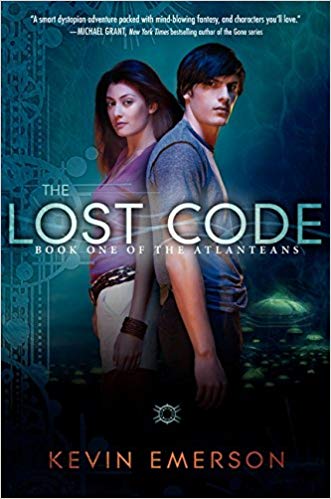
The Lost Code by Kevin Emerson

The Lost Code by Kevin Emerson is a gruesome dystopian book about the cold and calloused scientific curiosity seeping through our world.

The year is 2086. In a bloodstained dystopian world, the ozone layer is gone, making the sun a daily enemy. Antarctica is no more, the ocean having swallowed up its icy coasts. 

Pollution. Radiation. Death.

These are normal words in 18-year old Owen Parker’s vocabulary. Headed to Camp Eden, a safe bio-dome, he worries about normal things a teenager should: how to fit in, and how to impress the cryptic and beautiful lifeguard, Lilly Ishani. But when he nearly drowns in the Eden lake, and somehow grows gills, he realizes that Eden is not what it seems. Along with the rest of the “Gill Gang” including Lilly, he sets out to investigate the mysterious death of a young girl at Eden. As Owen spirals deeper and deeper into a tale of hope and sorrow, of love and hate, of yin and yang itself, what he finds will change him forever.

This book is set in a dark dystopian world of 2086, after the ozone layer is severely depleted and Antarctica has melted, raising the sea level. The world is divided into the American Continent, the Northern Federation, and Eurasia. There is also a literal giant island of floating trash where some of the story takes place, called Floatia. The story mainly takes place inside the giant bio-dome of Eden, which is the polar opposite of the dark polluted world outside.

On a scale of one to ten I would rate The Lost Code a nine out of ten. Overall, it was an amazing, albeit scary book. It was slightly terrifying because our world is well on the way to becoming the shattered, hopeless world described in the book. This book is also for slightly mature audiences as well, which I was not prepared for. It wasn’t necessarily bad, I just wasn’t prepared for it.

-Vaidehi B.

If I Stay by Gayle Forman

Seventeen-year-old Mia Hall has everything other teenagers her age would want; a loving and relaxed family life, great grades, a charming boyfriend, and a supportive best friend. As a cello-prodigy, Mia awaits her soon-to-be acceptance letter to her dream university.

One snowy day, Mia and her family jam to their favorite songs in the car on the road. They had planned the perfect day-off. However, all goes wrong when an incoming car skids and crashes straight towards them. The moment stops and the reader waits eagerly, with palms sweating, to know what happens next through all of the author’s heart-wrenching details.

The novel follows Mia, in an out-of-body experience, as she has flashbacks on her life and loses the ones she loves. Her flashbacks are followed by heart-breaking scenes of her family and friends visiting her in a hospital while she is in a coma. The unspoken love between the Mia and her close ones makes the novel much more emotional.

The author’s style of switching between the past and present unfolds the significant purpose of a human life. The importance of sacrifice, family, love, death, and life all wrap up to tell Mia’s story. The conflict between choosing to fight endlessly to stay alive or fading away to the afterlife remains a mystery until the end.

Overall, this novel really opened my eyes and made me realize that life can change in an instant. No matter who we are, what we are going through in life, or where we are, death can take its toll. The author truly makes an important point about how fast life moves for the youth and the old. We should never take life for granted because this is all we have and there is only one shot at it.

Mia’s story emphasizes the importance of living in the moment. Our problem are just as big as we make them. However, just like Mia, our worldly problems are nothing in the face of death. Not all the readers of this book can realize that, but anyone who can relate will find its meaning. The novel, as well as the movie of If I Stay, moved me to tears and is one that sticks with you forever.

-Zohal N. 

If I Stay by Gayle Forman is available for checkout from the Mission Viejo Library. It can also be downloaded for free from Overdrive

The Hoboken Chicken Emergency by Daniel Pinkwater

The Hoboken Chicken Emergency is a short book of just over one hundred pages.  This is a very funny and quirky book written by Daniel Pinkwater and illustrated by his wife, Jill Pinkwater.

The story is about a giant chicken named Henrietta.  Henrietta is over six-feet tall and weighs 266 pounds.  A young boy named Arthur Bobowicz buys Henrietta while desperately searching for a turkey to eat with his family on Thanksgiving.  Arthur’s family ends up eating meatloaf instead, so his father allows him to keep the colossal bird.

Arthur and Henrietta get along just fine, until Henrietta runs away and causes terror and confusion throughout the city of Hoboken.  The people are shocked to see such a large bird roaming the streets.  They make various attempts to get rid of the bird until finally someone comes up with an idea to put an end to the crisis.

Daniel Pinkwater’s books are all very ridiculous and funny, and this one is no exception.  He has also written two sequels to this book, entitled: Looking for Bobowicz and The Artsy Smartsy Club.  These books are about a group of children living many years after the events of The Hoboken Chicken Emergency.  I enjoyed the sequels very much as well.

The Hoboken Chicken Emergency is quite absurd but enjoyable to read.  I would recommend this book to anyone in the mood for a good laugh.

-Oliver H. 

The Hoboken Chicken Emergency by Daniel Pinkwater is available for checkout from the Mission Viejo Library

Dawn Undercover by Anna Dale

Dawn Undercover by Anna Dale is an intriguing and fun book about the intricacies of being thrust into the spotlight.

Dawn Buckle has one of those faces that you can forget within an hour. So when the wholly unspectacular girl is recruited into S.H.H, (Strictly Hush Hush) a part of P.S.S.T, (Pursuit of Scheming Spies and Traitors) she feels a little… rushed. Soon, she finds herself in the English countryside trying to find spy-gone-bad Murdo Meek. Along with her friends Trudy and Felix, Dawn delves into a riddle far more complicated than anyone here can see at first.

This book is set in London in the twenty-first century. Some of the book is spent in Kent, Dawn’s hometown, but more than half of it is set in Murdo Meek’s village, Cherry Bentley. Some other minor locations include an old abandoned castle, where Dawn and Felix find some incriminating evidence, and Bentley Pond, the scene of the climax.

What mainly motivates Dawn to do what she does is money. She grew up in a poor family. Her mom works all day everyday to provide for her, her dad, and her grandpa. S.H.H promised her a lot of money if she could uncover Murdo Meek, and Dawn wants her family to be able to make ends meet.

On a scale of one to ten, I would rate this story a 10 out of 10. It was well-written, and it had a lot of matter-of-fact humor that I loved. Also, the book contained a lot of puns and plays on words, which also fit in with the theme well.

-Vaidehi B.

Authors We Love: John Steinbeck

John Steinbeck - Wikipedia

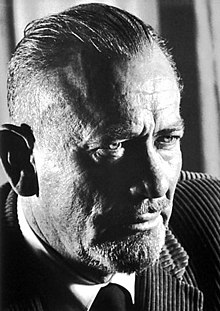
John Steinbeck (February 27, 1902 — December 20, 1968) was an American writer of the 20th century. His representative works include “Of Mice and Men”, “the Grapes of Wrath”, “the Moon Went Down”, “East of Eden”, “Winter of Trouble” and many more great American classics. John Steinbeck was born in Salinas, California, in 1902. His father, John Ernst Steinbeck, moved west after the Civil War to run a flour mill and served as treasurer for the Monterey County government for many years. His mother Olivia Hamilton was an elementary school teacher. Steinbeck read a lot in his childhood. He later graduated from high school in 1919, serving as class President in school. Steinbeck mostly spent his holidays on the nearby ranch as a hired farm hand.

In Steinbeck’s literary world, the observation and description of various living states under the poor material conditions of human beings have a prominent and decisive position. This is a common feature of his novels (including most of his journalistic and documentary works). He contemplates about the essential problem of human existence and even the transcendent dilemmas of society. In Steinbeck’s novel, “poverty” mainly refers to a state of extreme material deprivation. Steinbeck’s characters generally live in a state of considerable material deprivation — or rather, he persists in depicting the conditions of human poverty. In this specific creation, his writing about the causes of poverty directly correlates to the characteristic theme of realism. Steinbeck’s deep obsession with poverty and his discussion of it exemplify his artistic concerns and is reflected through many of his writings.

-Coreen C.

The Works of John Steinbeck are available for checkout from the Mission Viejo Library. They can also be downloaded for free from Overdrive.

Love of Life by Jack London

Love of Life - Jack London for Android - APK Download

A gold prospector in the American West sprained his ankle crossing a small river on his way back. Abandoned by his partner, Bill, he searched the wilderness alone. The foot injury made every step very difficult for him, and what was more terrible was the unbearable hunger. In desperation, he divided his treasure equally into two parts, carefully hid one part of it, and trudged on with the other. To his great joy, he found a wounded grouse on his way. He seemed to see hope, and tried to chase the grouse with great pain in his feet. He got lost. Now he had expended quite a lot of energy, so he chose to divide the rest of the sands into two more portions, but this time he poured one of them down on the ground. Before long, he threw away all the sands. When he was very weak, he met a sick wolf. He found the sick wolf following him, licking his blood. In this way, two dying creatures, dragging their dying bodies, hunt each other across the moor. In order to get back alive, at last the man won battle. He killed the wolf and drank its blood and survived.

In Love of Life, London places the protagonist in the treacherous northern frontier environment, facing the harsh reality: hunger and death, so that he understands the power of nature and his own smallness and vulnerability. London, however, has always been reluctant to conform and confine himself to a strictly defined naturalistic framework. He gave the gold prospectors in Love of Life the courage to face the harsh reality, the will to overcome adversity, and the courage to become superhuman to the strong. Therefore, Love of Life should not be a single pure naturalistic work, but an organic combination of naturalism and romanticism, which is the strength of the novel art and one of the real reasons for its enduring popularity. This plot in the novel also reflects the cancer of the human soul in the modern civilized society. Industrial civilization is advancing by leaps and bounds, science and technology are changing with each passing day, and products and consumer goods are greatly enriched, which arouses the infinite expansion of human desire. All the efforts made by people are ultimately aimed at obtaining material wealth and filling their personal desires. When the worship of money and egoism become the values of the civilized world, the relationship between people is only economic interests in the final analysis. In order to pursue the maximization of economic benefits, mutual use, intrigues, intrigues, extortion are common, spiritual degradation, moral decay is inevitable.

-Coreen C.

Book Review: The Iron Heel by Jack London

The Iron Heel (Penguin Classics): London, Jack, Auerbach, Jonathan ...

The novel “The Iron Heel” is written in the form of a memoir, the author is Avis. The manuscript, which was written by Ives, was hidden in a hole in a dead tree before she died and was only found hundreds of years later. Everhard, a Socialist ideologue turned blacksmith, was a guest of Avis’s father, a liberal professor, whose revelations of the cruel exploitation of the monopoly capitalists interested her, and she went herself to investigate and prove the truth. A worker who had his hand broken trying to protect a machine lost his case in court after being fired without a pension. “The Iron Heel” continues to write about the struggle between the revolution and the counter-revolution, how the counter-revolutionary cultivated the working aristocracy and destroyed the workers’ unity, how the government and army suppressed the people’s unrest, how the revolutionaries carried out open and underground struggles, and how the masses overthrew the American bourgeois oligarchy — “The Iron Heel”.

The author foresees the day when a deadly struggle between the American proletariat and the bourgeoisie, the oligarchy known in the novel as “The Iron Heel”, will break out. Jack London gives readers a great picture of the proletarian revolution through his fictional account of the armed riots that broke out in Chicago in 1917. Such scenes were seen in Paris in 1871 and in Petersburg in 1905. “The Iron Heel” is a political prophetic novel conveying Jack London’s wish for the broad proletariat to unite in the armed revolutionary struggle. “The Iron Heel” depicts the failure of the American workers’ revolutionary uprising and the establishment of bloody rule, but the novel is full of revolutionary optimism. He is convinced of the establishment of a progressive and just social system for human beings, and also believes that the future will not be a society where people oppress and exploit people. Jack London’s moderate socialist stance has been replaced by a radical revolutionary attitude in “The Iron Heel”. He predicted that capitalism would go to extremes, to evils, and advocated its overthrow by violence. “The Iron Heel” is a literary expression of Jack London’s dissatisfaction with the right-leaning revolutionary line of the socialist party members of his day.

The novel’s main story takes place in Chicago, an industrial city that, according to Avis’s manuscript, has been the center of a storm of conflict, with brutal street battles, assassinations, bloodshed, and violence. In writing about the big themes of Chicago, writers often focus on concrete examples to support the macro level of class struggle at the micro level. Jack London focuses on the tragic experience of Jackson, a representative of the ordinary working class. Jack London, through such an example, on the one hand attacked the dehumanized industrial production, which used laborers as slaves. Once the laborers lost their labor value, they were mercilessly abandoned. On the other hand, the writer criticizes the capitalist social system and the superstructure of capitalist economic production, which conspire to protect the interests of the bourgeoisie while maintaining unequal economic distribution.

-Coreen C.

The Sea Wolf by Jack London

The Sea-Wolf - Kindle edition by London, Jack. Literature ...

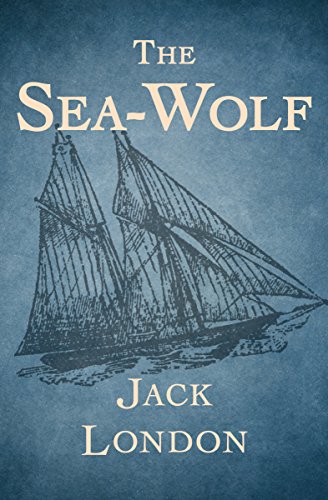
“The Sea Wolf” is a novel written by American writer Jack London. The novel depicts a heart-wrenching battle and an unforgettable love story on board a sealing-hunting sailing ship called the “Ghost”. The “Wolf” in the novel is not only the name of Captain Larsen, but also the synonym of superman for the author. Through the novel, the author leads the readers into the callousness of the wild life and feels the dark side of the brutal human nature and the brightness of the primitive life. At the same time, it also exposes the disadvantages of the capitalist society and shows the praise for the strong will of the working people and the sympathy for the suffering life.

On the “Ghost” , there is no legal order, no distinction between good and evil, no humanity, let alone the most true and most beautiful human emotions. The life of a seaman was like an ant to him, and whoever he wanted to die had to die. Larsen became the most loyal follower and the most powerful enforcer of Darwinism. The crew he recruited on the sea were only salaried slaves. The seal hunter was his accomplice. The shipwrecked people he rescued became his cheap labor force to fill the gap. He not only swore at the death of his former first mate, but roughly buried him and threw him into the sea. When Harrison, a new sailor, got caught by a high mast, his life was in danger; however, Larsen wouldn’t let anyone go up and help him.

To fill the void, he forced Weyden, whom he had rescued from the ship, to come and work for him. Under the tyrant’s rule and influence, the rest of the crew became rough and brutal. Thomas whet his knife at Weyden all day long, but Weyden, not to be outdone, took his knife to the grindstone all day long, and at last won. Johnson was beaten black and blue for saying something that offended Larson, and Leach, the sailor, swore at Larsen and then beat up the good cook. In Larsen’s world, violence against violence is the law of existence.

Many progressive male intellectuals, including the writer Jack London, supported and championed feminism and expressed their desire for social change;however, traditional ideas are in deep ideological conflict and often bring them back to the desire for traditional power relations. In “The Sea Wolf” we can see a certain disharmony: one comes from the writer’s consciously expressed ideas, the other from the writer’s unconscious desires; one is the principle of gender politics, the other is the pragmatism of social life. The two tendencies interweave together, making the novel a contradictory text.

-Coreen C.