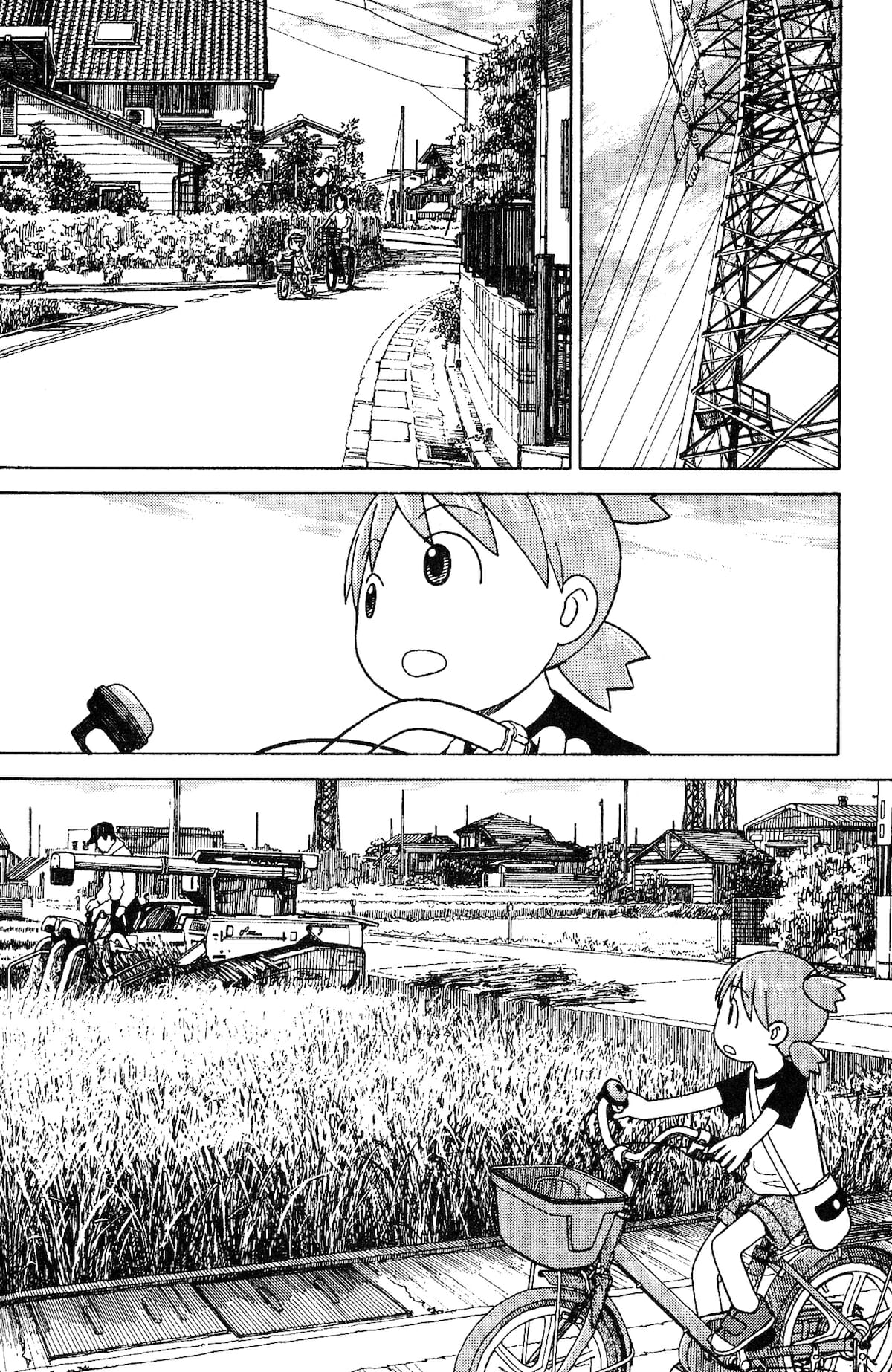
Makeup is Not (Just) Magic: A Manga Guide to Cosmetics and Skincare.

Makeup is Not (Just) Magic: a Manga Guide to Makeup and Skincare, written by Ikumi Rotta, is a delightful informational book.

Written in the style of a manga comic, Rotta, a former makeup consultant, teaches the reader how to up their makeup game. It is an enjoyable read for all people, regardless of makeup expertise. I would say that while it is geared more towards beginners, there is something for everybody in here.

Readers will enjoy learning many things about makeup and skincare, including how to find their skin type, how to use the different skincare products, and the four point method.

The tips in this book transform makeup from a daunting task to a creative outlet! This book truly has the best of both worlds, in both terms of instructional content and art. The author’s playful manga art gets the point across in style! I personally found this a very helpful read! It really helped me up my makeup game, especially in the areas I wasn’t as confident in. Who knew that you were meant to angle your eyelash curler that way? This book did!

In conclusion, if you are looking for a light and fun, yet informative read, consider picking up Makeup is Not (Just) Magic.

Concussions

Concussions can occur anytime, anyplace. They can range from a mild headache and nausea to being severely knocked unconscious for minutes straight.

Some signs of a concussion include headaches, feeling pressure in your head, dizziness, disorientation, nausea, etc. If you recently suffered a sudden jolt to your head and experience these symptoms, seek medical assistance immediately.

Concussions were first separately recognized in the medical field when, in the 900s, Persian physician Abu Bakr al-Razi, made a distinction between concussions and severe traumatic brain injuries. Three hundred years later in the 13th century, Lanfrancus, also known as Lanfranc of Milan, an Italian surgeon, was the first to define this injury as a brain “commotion.” In the 16th century, French physician Ambroise Paré coined the term “commotio cerebri,” which, in Latin, directly translates to “shaking of the brain”. As time passed and medical technology and knowledge advanced, concussions were more studied.

To this day, concussions are still an extremely dominant type of injury in many different medical fields, especially sports medicine. Every year, around 3.8 million concussions occur solely from sports-related injuries. Additionally, an estimated 5-10% of all athletes experience a concussion in any given season of a sport, most of which go undiagnosed without treatment. The most concussion-prone sports include rugby, ice hockey, American football, lacrosse, and soccer.

Books about concussions are available to check out from the Mission Viejo Library.

A Wallflower, Not a Doormat

As a coming-of-age person, fittingly, I’ve always been obsessed with coming-of-age movies. The representation of the teenage experience as a moment in time where any problem appears catastrophic and any personal achievement or bliss appears life-changing correlates with these movies as they accurately show the strength of teenage emotions and how teens resolve to cope with those emotions. The Perks of Being a Wallflower does just this and more.

I’ve been long delayed in watching this movie, but have finally got around to it and I regret not having watched this movie long before. The Perks of Being a Wallflower, directed by Stephen Chbosky, and based on the book also written by Chbosky, follows freshman, Charlie, as he navigates the territory of his high school, counting down the days until he graduates. Charlie displays an outward disinterest in voluntarily engaging in social interactions with his peers, but beneath his outright rejection, Charlie seeks a meaningful friendship with someone who truly understands him.

Throughout the movie, Charlie’s obvious social awkwardness makes it difficult for him to interact with others without feeling self-conscious; however, underlying mental health issues, not clearly stated by Charlie, linger in his behavior. Charlie soon joins a fun and lively friend group with Patrick and Sam. Through an array of days that they spend together, whether studying or going on joy rides, Charlie finally gets to experience what it is to fulfill his teenage experience with real friends. I can relate to this greatly, as during my freshman year of high school, I also felt like a recluse. This caused me to have a negative outlook on my classmates and reject talking to people entirely; however, I soon found the people that I knew I wanted to be surrounded by, which changed my entire outlook on the rest of my teenage years.

By the end of the movie, we find out that Charlie’s Aunt Helen, whom he claimed he was very close to and whom we assumed was a family member he really connected with, actually abused him which led to Charlie’s eventual mental health problems, consisting of emotional explosions followed by blackouts. After a major blackout, Charlie finally receives the help he needs and begins to open up about his Aunt Helen. Overall, Charlie learns to be a wallflower, but not a doormat. He builds the confidence he needs to take control of the reigns of his life and fully participate in the next years of high school.

This message really resonates with me, and most importantly, I believe it resonates with a large population of teens today. The idea that it is a waste to stand by and not do what you want to do with your life is something that I will carry with me throughout the rest of high school and into my future.

The Perks of Being a Wallflower (DVD or book) is available to check out from the Mission Viejo Library. The book is also available to download for free from Libby.

Why You Should Join High School Clubs

As the school year begins, high school students form and join clubs. This phenomenon is called “Club Rush,” which is a week dedicated to students joining clubs. During lunch, there is a craze of students mobbing each club’s stand to see if they’re interested in joining. Clubs are extremely beneficial, as they:

1. Bring People Together: If you want to make new friends or be a part of something that brings likeminded people of your interests together, joining a club is a great way to branch out. Clubs are like gold mines for building social connections with your peers. For example, if you are interested in the debate club, joining will allow you to meet others who are interested in debate, and you can compete with or against each other.

2. Build Your Resume Up: Joining clubs allows you to be involved in your school, especially because they are considered extracurriculars. To preface, the clubs you partake in need to be worthwhile to you, as taking the time and energy towards clubs is what colleges value. Truly being passionate about a club shows that you are dedicated and contribute to the prosperity of your school.

3. Exploring Interests: For underclassmen, specifically freshman, joining clubs allows you to evaluate your passions and interests. You can gain skills that you might have found unimaginable, or you might join clubs that you already have hobbies in. Nonetheless, these clubs give you responsibility that is noteworthy, so being a part of clubs that you are interested in can help you figure out your college major and future job. 

4. Allow Leadership Opportunities: You can gain leadership positions in clubs, making you an experienced individual with managing projects and decisions. The communication skills acquired when running a club are invaluable. Overall, you can become more confident as a person and as a leader with the leadership skills you gain when operating clubs.

I hope my guidance inspires you to explore and join clubs at your high school!

– Sophia B.

Hard Miles

Hard Miles is a PG-13-rated sports movie that came out to the United States on June 13, 2023. The film is based on a true inspirational story based on an unexpected group of juveniles. During the movie, the viewer gets to watch these juvenile convicts go on a long 1,000-mile bike ride to see the Grand Canyon. As you watch it, you will get an urge of motivation to push yourself past your limits.

At the beginning of the movie, the audience is introduced to the main characters. These characters include a social worker named Greg Townsend and four juveniles named Woolbright, Smink, Rice, and Atenico. As the viewer continues through the movie, they connect with the characters and start to understand them more and more. The audience gets to witness each character go through hardships and change for the better. The movie also includes a satisfying ending, which is the characters finally finishing their long journey and reaching the Grand Canyon, giving the viewer great motivation to do greater things.

Watching Hard Miles was a great experience. What intrigued me the most was seeing the character development each one of the characters goes through. It was very exciting to see how some characters went from constant troublemakers to people that you can respect. The movie is created in a way that will get you to really enjoy watching each character, making you want more of the characters once the film ends. I especially enjoyed the rewarding ending, which made me appreciate the memorable events in the movie. Therefore, Hard Miles has great qualities that will make you very fascinated while watching it and even when it is over.

Overall, watching this motivational film will give you the feeling that you can achieve anything. Using an unlikely set of characters, Hard Miles will definitely interest you. On top of that, you will be able to easily see how much the characters change for the better as the movie progresses. I highly enjoyed watching this movie and I urge anyone to watch it in their free time. You will have a great time watching this movie just like I did.

-Matthew R.

Book VS Movie – The Help

The Help is a novel about African American maids working for white families during the 1960s in Jackson, Mississippi. It touches topics on racism, but also newfound open-minded perspectives. It follows Skeeter Phelan, a white resident of Jackson, helping black maids, especially Aibileen and Minny, through their struggles as she writes a controversial book about harsh work environments for the maids

Skeeter and her mom

Book – Illustrates Skeeter’s frustrating experiences with her mom, who has a very old-fashioned mindset.

Movie – especially focuses on the two’s unexceptional love, regardless of different perspectives.

Minny and Leroy

Book – follows Minny’s abusive relationship with Leroy is illustrated in greater detail. In the book, she even eventually runs away from him.

Movie – extremely minimal, only scene is when he throws a plate at the wall, and you can hear him yelling.

Themes 

Book – deep analysis of racism, privilege, and inequality.

Movie – overall lighter tone, despite both the book and movie being for middle schoolers/freshman, the movie is even more on the kid-friendly side.

Ending (Same plot, but..)

Book – more emphasis on Skeeters success from her book and her new career opportunities.. A bit more open ended.

Movie – follows Aibileen after she gets fired, showcases the dependence many white families had on their maids in these times.

Overall :

Book

  • Detailed and serious storytelling. 
  • Character development and societal criticism

Movie

  • Brief, empowering, emotional.
  • Visually captivating and heartfelt adaptation

Personally, I liked the movie better because I was able to follow along the whole time. The book was slightly over-detailed and there are many times when I lost the plot.

The Help book and movie by Kathryn Stockett are available to check out from the Mission Viejo Library. The book is also available to download for free from Libby.

Suspense Journal/ Short Story #2

Okay just for an explanation, my English teacher last year made my class do this game where we wrote a short story in the span of 5 minutes. I liked the game so much I started doing it for fun. I’m starting with the suspense genre. My second suspense tool is a time constraint:

He cursed under his breath as the screen flashed red again. He was down to 3 tries left on the passcode. The ticking seemed to get louder as he hurriedly made another calculation as if it would help him. He typed in another code. The screen flashed red. 

“Callen, we have three minutes.” Alice said nervously behind him. 

“I know, I know, I know.” He muttered. 

“Cal do you know what’s a stake here. You need to speed it up.” Noah said, his voice rising. 

“I know what’s at stake! It’s a literal bomb! Now shut up and let me focus.” He type in the new code. Red. “Shoot,” Callen muttered. 

There was a minute left. He tried to remember anything the stranger had said that could be a code. “30 seconds Callen,” Alice said nervously. 

The words “simple,” echo through his head. It was the last thing the stranger had said to them after he had locked them in.

Quickly he types in the final code, 1234. The count down stops. His heart starts racing, he gets read for the explosion. The screen goes green. He laughs out a breath. “That felt too easy,” Noah whispers.

Book Review: Animal Farm

Animal Farm is a dystopian science fiction novella that draws inspiration from the Russian Revolution. The author George Orwell depicts a world in which the animals on the farm overthrow the farmers. The pigs are the leaders of the “coup” in which they create the Seven Commandments of Animalism, the most crucial being “all animals are equal”.

Life without the humans starts off well, but as the story continues it shows the descent of the original beliefs. The animals build a windmill to create their income and fund the farm. By the end of the story, the pigs are drinking amongst other human farmers. I found this concept very interesting. The idea is that in an attempt to create a better situation, the pigs became just like the people they despised. As even their motto got changed to “All animals are equal, but some animals are more equal than others”.

Orwell perfectly illustrates how as the oldest members of the original coup die, the younger ones begin to abuse their power. The symbolism of animals on a farm representing people in a society is truly brilliant. I read this for the first time in 7th grade. This classic is a 10/10 and I highly recommend it.

Animal Farm by George Orwell is available to check out from the Mission Viejo Library. It is also available to download for free from Libby.

Share this:

Book Review: Wildwood

Be excited! Laika Studios, the same production company that made Coraline and Kubo and the 6 Strings, are turning Wildwood to a movie!

Wildwood is the perfect book to start this fall season if you’re into story building and fantasy worlds like Lord of the Rings but want something more digestible and easier to read. Colin Meloy and Carson Ellis make a wonderful team as husband and wife, the illustrations are beautiful and I love how simple the illustrations are, gently guiding readers to follow the storyline while still leaving more specific details to each reader’s imagination.

Prue loses her little brother to a murder of crows one afternoon, the next morning she leaves early to retrieve him when she finds Curtis, her classmate, following her out of curiosity. Prue and Curtis are classmates in the 7th grade and they end up venturing out together in search for the missing sibling. They discover a troop of disheveled soldiers of coyotes, speaking English, to their surprise and split up while they flee the chasing troop. The story follows the separate adventures of Prue and Curtis until they eventually cross paths once again.

This book is great to unwind after a long day at school or work with a cup of tea and perfect for transitioning from summer to fall.

Wildwood by Colin Meloy is available for checkout from the Mission Viejo Library. It can also be downloaded for free from Libby.

The Fascinating Truth Behind Common Superstitions

From lucky charms and talismans to four-leaf clovers, try your luck with these rational stories and learn the reason why we believe in these superstitions. Irrational as they might be, we all believe at least one or even two superstitions, and some of us even use them daily to avoid bad luck. 

So here we go, why do we have these intriguing superstitions in our daily lives, even if we don’t even think about them. From the common ones we all know about to the unorthodox ones that might surprise you, superstitions are like little rays of unexpected sunshine or folklore passed down through generations, shaping our beliefs and behaviors in ways we might not even realize. Whether you’re a firm believer, a skeptic, or somewhere in between, let’s dive in and explore stories behind these age-old superstitions that continue to sprinkle a bit of magic into our lives.

Have you ever wondered why opening the umbrella inside is considered bad luck? 

 This superstition comes from Egyptian and Roman folklore, where umbrellas were initially used to protect people from the scorching sun. They believed that opening the umbrella indoors was seen as a sign of disrespect to the sun god, Ra.

It’s also practical; opening an umbrella inside could knock over objects or hurt someone because of the small space.

Regardless of its origins, this superstition has persisted through years and generations, with many people still believing it today without even questioning why. Next time you reach for your umbrella inside, consider the superstitions and customs that have led to this interesting tradition.

Another superstition you hear people often say is  “Knocking on wood to avoid jinxing.” This has its roots in ancient pagan beliefs and rituals. The practice originated among ancient European cultures, where trees were considered sacred and believed to be inhabited by spirits or gods. People commonly touch or knock on trees to invoke the protection of spirits or gods, especially when expressing gratitude for good luck or seeking to ward off evil spirits. This superstition is still popular all around the world today. People continue to knock on wood reflexively in moments of optimism or to counteract any perceived negative influence that might jeopardize a positive outcome. 

Another popular superstition is the one about the black cat. This superstition surrounding black cats crossing paths came from various cultural beliefs and historical associations. In ancient Egyptian religion, black cats were considered sacred and believed to bring good luck, but this perception changed over time. During the Middle Ages, the Europeans believed black cats were associated with witchcraft and evil spirits, so encountering one could bring misfortune.

Despite where these folklore and superstition came from, many still believe that crossing paths with a black cat can bring bad luck. This idea has persisted through generations and influences how some perceive these animals. However, it’s essential to remember that superstitions are not based on factual evidence and should not dictate our interactions with animals or choices in life. I personally love cats, so I refused to believe this superstition. It’s essential to appreciate black cats for their beauty and unique qualities rather than fear them based on unfounded beliefs.

What about Lucky charms and talismans? These have a rich history that dates back to ancient civilizations worldwide. From the Egyptian Eye of Horus to the Celtic four-leaf clover, these symbols have been used for centuries to bring luck and ward off evil spirits. People believe in these objects’ power because they offer comfort and control in uncertain situations.

Lucky charms and talismans are rooted in the human desire for protection and positive energy. Whether you want to carry a rabbit’s foot or wear a protective amulet, these items provide a tangible connection to something greater than ourselves. While some may dismiss them as mere superstition, many continue to find comfort in knowing they have their lucky charms by their sides.

Belief in lucky charms and talismans transcends cultural boundaries, highlighting our universal need for faith, positivity, and a higher power. In a world of uncertainty, these symbols remind us of our innate resilience and ability to overcome challenges with grace and strength.

What about the belief that Spilling salt brings bad luck? 

Have you ever hesitated to pass the salt shaker across the table for fear of bringing bad luck upon yourself? This belief has its roots in ancient superstitions and folklore too. The famous origin story dates back to the Last Supper, where Judas Iscariot is said to have spilled salt, leading to his betrayal of Jesus.

Salt holds significant symbolism and is often associated with purity and protection in many cultures worldwide. Salt was a valuable commodity in ancient times, and spilling it was considered wasteful. This idea evolved into believing that spilling salt would anger gods or spirits and attract evil spirits. While many may dismiss this superstition as a myth, some still believe in it. 

Whether you believe in the powers of spilled salt, it’s fascinating how a simple act can carry such significance through history. Next time you spill some salt, take a moment to reflect on its cultural importance and remember that sometimes old superstitions can offer intriguing insights into our collective beliefs and traditions.

What about paraskevidekatriaphobia? The fear of Friday the 13th. This belief has its roots in ancient and modern cultural influences. This fear can be traced back to various cultures and traditions. One was the Last Supper when Judas Iscariot was guest number 13. The number 13 is considered unlucky in numerous cultures, making this Phobia even worse.

People believe in this superstition because it provides a sense of control over unpredictable events. We feel more prepared for potential misfortune on Friday the 13th by associating negative occurrences with a specific date. This belief is maintained through media portrayals as accursed, creating a self-fulfilling prophecy for some who dread its arrival. Despite the irrational reason to continue believing in superstition, this fear persists due to its embedded nature within societal beliefs and traditions. 

Next time, when Friday the 13th comes, remember that it’s just another Friday; luck is what we make of it, and a number does not dictate it.

Finally, the last infamous superstition, Breaking a Mirror, is often associated with seven years of bad luck, but have you ever wondered why seven exactly? Some believe it stems from ancient Rome, where mirrors were rare and costly, so breaking one was seen as a significant loss. This superstition reminds us of the importance of material possessions and how deeply superstitious beliefs can influence our actions. 

Superstitions continue to play a role in our lives that we might not even consider. From harmless rituals or traditions to deeply ingrained beliefs, superstitions add a touch of magic and mystery to our daily routines. These age-old superstitions had withstood the test of time. Next time you catch yourself or someone else crossing your fingers, knocking on wood, or saving a 7-leaf clover, take a moment to appreciate the folklore and magic of the age-old superstitions that have traveled through time. Continue exploring the stories behind these beliefs- you never know what unforeseen circumstances, insights, or connections you might discover!

If you are interested in reading more about this I recommend some books on this subject that are available in the Mission Viejo library below.

Why people believe weird things: pseudoscience, superstition, and other confusions of our time / Michael Shermer; foreword by Stephen Jay Gould.

A magical world: superstition and science from the Renaissance to the Enlightenment / Derek K. Wilson.

Happy Discovering!

Bella H.