Movie review: A Man Called Otto

Trigger warning: mentions of suicide

Before you start reading this, know that there will be spoilers.

I truly hope you have Kleenex on hand. This movie had many amazing themes, like repairing long-lasting friendships as well as forgiveness and redemption but, there are definitely sad scenes where I got teary-eyed. Overall, this movie was excellent, and I highly recommend it.

Otto is initially portrayed as a cantankerous and bitter man. Early on we see his short temper for people who don’t follow the rules of the neighborhood and the evidence of alienated relationships. He has been living in the same townhouse for many years. Otto keeps the blinds closed and lives a rigid life of predictability and isolation. There are flashbacks of Otto’s memories when he was younger meeting the woman he would soon marry. She seemed to be the only thing in his life that he lived for. She is gone when we meet Otto and in an early scene, we see Otto attempting to commit suicide so he could join his beloved wife. Through flashbacks we learn that his wife had been pregnant, and they were in a terrible accident which explains a deep darkness and profound grief that he is experiencing.

He attempts suicide several more times – each attempt is interrupted by someone in the neighborhood that is in need of his help. Otto’s sense of duty causes him to reluctantly pause and assist them. A certain family in particular, who is moving into their neighborhood, stops Otto on multiple occasions. They have two children, and the woman is expecting her third. The parking of their moving truck is one of the first events that interrupts Otto’s attempts to join his wife. He ends up helping them and in return, the woman brings him over some food to thank him for his help. This is the first time we see Otto’s shield begin to weaken.

The arrival of the new neighbors shakes loose the perpetual funk that has taken over his life, and he slowly starts to realize again why life is worth living. He encounters a young man who knew his wife and makes an unlikely friendship with him along the way. We see Otto finally embracing his newly created community, with new and old friends alike, and they become a large part of his life. At the end of the movie, we see Otto forgive his old friend, save a family, become a babysitter and handyman.

For me, this movie is a great example of courage and hope. Over time, Otto demonstrates vulnerability and courage by letting people back into the life he tried so hard to leave behind. Grief and sadness are part of our life experience, but so are hope and joy.

If you or someone you know is experiencing thoughts of suicide, help is available. Call, chat or text the 988 Suicide & Crisis Lifeline at 988 Lifeline.

If you’re thinking about suicide, are worried about a friend or loved one, or would like emotional support, the 988 Lifeline network is available 24/7 across the United States.

A Man Called Otto is available to check out from the Mission Viejo Library.

Best Dystopian Novels

In this trilogy, the Capitol of Panem forces each of the twelve districts to send two tributes, one boy and one girl, to face off in the Hunger Games where only one will survive. During the 74th Hunger Games, Katniss Everdeen, the female tribute from District 12, is faced with the daunting quest of surviving the arena and making it out alive, creating a thrilling series for dystopian and action lovers.

In this world, those with silver blood have supernatural powers, making them part of the elite class. On the other hand, those with normal, red blood are part of the lower class, having no powers and being forced to serve the Silvers. However, Mare Barrow, a Red, discovers that she has electrokinesis powers one day, causing turmoil among the upper class and Silvers. Forced to hide as the long lost daughter of a Silver general and his wife, Mare struggles to survive palace life, trying to figure out her love life and an approaching rebellion.

Lena Haloway lives in a world where falling in love is illegal. When she turns eighteen, she’ll have to undergo a medical procedure to rid her of the ability to feel or exhibit love, allowing the government to match her with what they believe to be a suitable spouse and job. However, once she meets Alex, a boy from the Wilds who managed to escape the procedure, she begins to wonder if falling in love is all that bad and that maybe it’s time to choose her own path in life.

In this dystopian future, a young boy named Jonas is declared the Receiver of Memory, the only person allowed to access the knowledge and memories of the past. In this world, the government chooses everyone’s jobs, parents, spouses, families, and more, giving them no free choice. However, those who are too old to contribute to society or those who were born flawed, are “released” or injected with a lethal serum, ending their lives. Realizing this, Jonas plans to escape the community after becoming attached to a “flawed” infant named Gabriel, seeking to save the baby’s life and evade the Committee of Elders.

The Hunger Games by Suzanne Collins is available to check out from the Mission Viejo Library. It is also available to download for free from Libby.

Red Queen by Victoria Aveyard is available for checkout from the Mission Viejo Library. It can also be downloaded for free from Libby.

Delirium by Lauren Oliver is available to check out from the Mission Viejo Library. It is also available to download for free from Libby.

The Giver by Lois Lowry is available for checkout from the Mission Viejo Library. It can also be downloaded for free from Libby

Improve your Study Planning!

With AP exams a little over two months away, it is never too early to start preparing. Rather than cramming the night before, having an efficient plan may be extremely helpful.

When memorizing vocabulary and key terms, flashcards are a great method. Even though many opt to use online resources such as Quizlet, making physical flashcards may be the better option. While making paper flashcards can be time-consuming, physically writing down the information could help the memorization process. Additionally, you can sort the flashcards into piles based on what you need to work on. 

In addition to the materials you are using to study, the environment in which you work is just as, if not more important. If you are having trouble focusing, consider working in a different place than normal. Also, focus on eliminating possible distractors by keeping your technological devices out of reach. Studying with peers is a personal choice. While some may find it distracting to work with friends, others find that it helps keep them accountable. 

Another important factor in your success is the method you are using to study. While there are many effective ways to work, two popular methods are Pomodoro and the Feynman Technique. 

The Pomodoro method involves creating intervals of focused time to study followed by rest. This method focuses on moderate amounts “deep work” rather than long hours of review. By having rest, students are able to better focus during their study time. However, the break time should be treated as a mental break rather than a moment to use your phone. Using technology during this time could potentially break your focus. 

The Feynman technique emphasizes teaching others to help themselves learn. In order to teach others, you are forced to break down concepts into simple ideas. This could help you better understand the core ideas of what you are studying. Condensing information can help you create your own study guides.

Overall, your materials, environment, and method, are the most important aspects in having a productive study session. Hours of cram sessions may sometimes be helpful, but studying a little each day with these plans can be a great start for anyone. 

Additional Sources:

The Feynman Technique: Master the Art of Learning

Todoist: Pomodoro Method

Authors We Love: Mary Shelley

A contributor to the Gothic and feminist movement, Mary Shelley was an extremely influential author of the 19th century. Shelley’s legacy can still be seen in literature, which is why it’s important to understand her background and what prompted her works.

Shelley’s feminist nature was undeniably a result of the influence of her mother, Mary Wollstonecraft. Wollstonecraft was an extremely radical writer who wrote a Vindication of the Rights of Women, calling for equality for women and trailblazing the empowerment of women in education. 

Another notable figure in Shelley’s life that had a great influence on her writing was her husband, Percy Blysshe Shelley. Percy Shelley was a famous poet who is best known for his poems: Ozymandias, Ode to the West Wind, and Adonais.

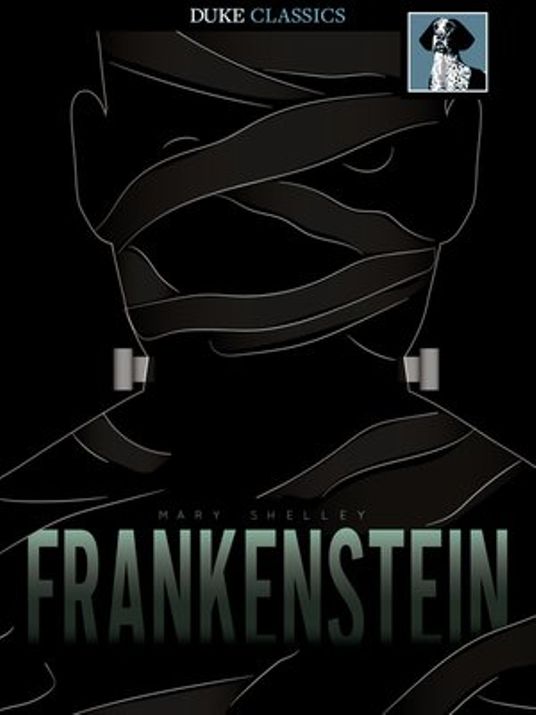
One of the main reasons Mary Shelley’s impact can still be seen today is due to her most famous book: Frankenstein, also known as the Modern Prometheus. In Frankenstein, Shelley explores many themes such as nature vs. nurture, familial responsibility, romanticism, and revenge.

 Frankenstein is still a required read for many middle schools and high schools, which is definitely necessary as it can teach important life lessons to people of all ages. The ideas within Frankenstein such as the danger in pursuing advancements in technology are extremely applicable to today with the developments we are seeing with AI technology.

Mary Shelley was an extremely powerful force in literature during her time as an author, and this legacy has certainly lived on into the 20th and 21st century as we can still see her influence in a variety of artistic works today.

– Taylor O.

Books by Mary Shelley are available to check out from the Mission Viejo Library. They are also available to download for free from Libby.

The Great Fire by Jim Murphy

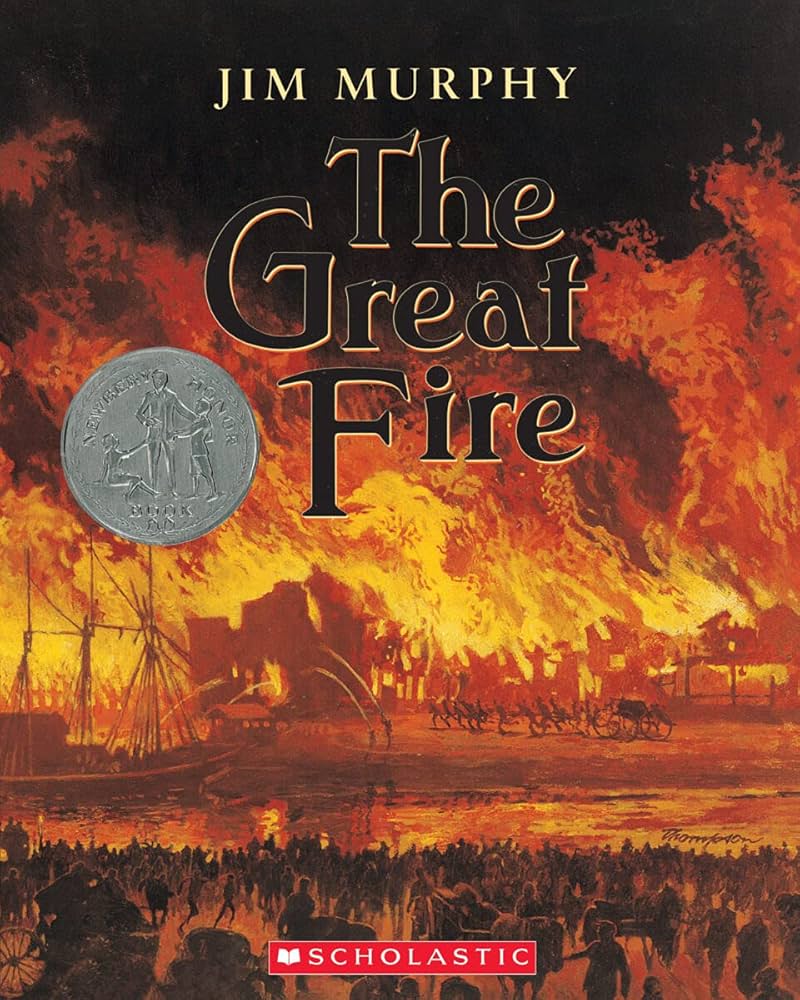
The Great Fire is a novel by Jim Murphy about the Chicago fire of 1871, which destroyed most of the city. The fire was believed to have started in a barn, and eventually spread throughout Chicago. This book describes the fire from several different perspectives. These perspectives enable to reader to learn about the human impact of this devastating tragedy. The book also contains many pictures to help visualize the events.

Before reading this book, I did not know about the Great Chicago Fire. I found this book to be highly informative and engaging. The different human perspectives made it feel very personal. I was especially affected by the perspective of a thirteen-year-old girl named Claire Innes. I felt like I could relate to her because we are close in age. Claire was separated from her family during the fire as the people around her panicked as they tried to escape. Her house was burned down, just like the houses of most of the other residents of Chicago.

The fire caused major destruction, and many people died. After the fire, the people worked to rebuild the city. This book provides a realistic view of what it would be like to deal with such a disaster. The book earned many awards, including a Newbery Honor. I can understand why this book earned so many awards, because it is very well-written and compelling. I would highly recommend it.

The Great Fire by Jim Murphy is available to check out from the Mission Viejo Library. It is also available to download for free from Libby.

FREE Writing Workshop

Have you ever had to write a short bio about yourself? If you haven’t yet, you will!

Join us this Saturday at 1 pm for a free writing workshop led by local author and editor Cassandra Rendon. Learn how to craft an informative and compelling bio that you can use on social media and elsewhere.

If you can’t attend this Saturday, the workshop will be held again on Friday, March 29 at 5:30 pm. Hope to see you there!

The Corn Grows Ripe by Dorothy Rhoads

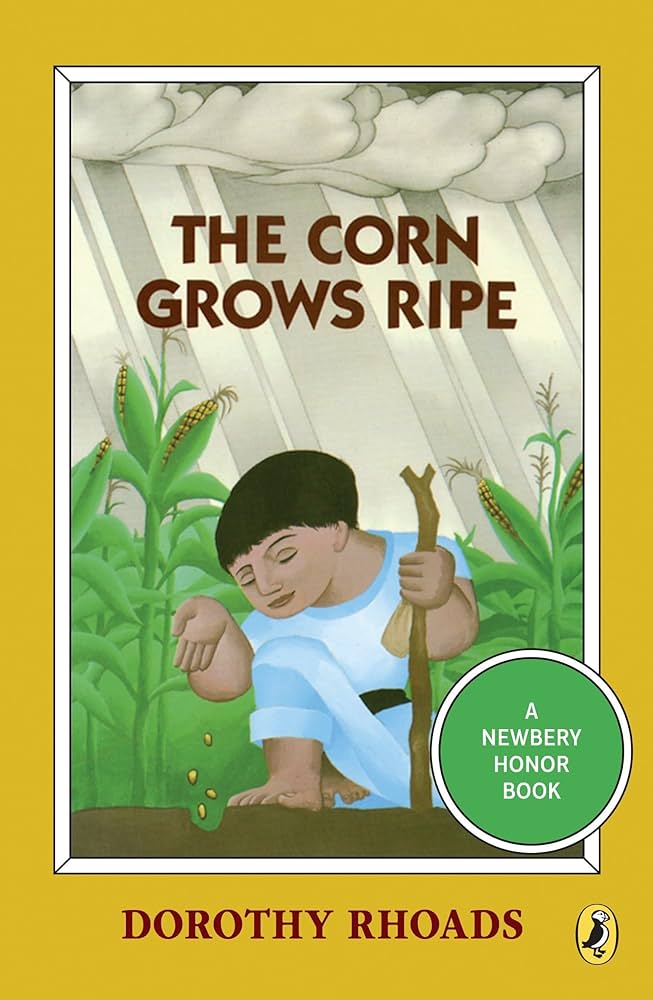
The Corn Grows Ripe is a charming book by Dorothy Rhoads. The story takes place in a Mayan village. The main character is a 12-year-old boy named Dionisio. Everyone calls him by his nickname, “Tigre,” which means jaguar. At the beginning of the story, Tigre often oversleeps and is accused of laziness. One day, his father has an accident and breaks his leg. This is devastating to Tigre’s family, because they depend on his father to plant a cornfield every year for food. Tigre’s father cannot do the work this year because of his injury. Tigre realizes that he may need to find a way to plant the cornfield himself. Tigre has never accomplished such a difficult task before, but he knows that his family is depending on him to rise to the challenge.

This book is quite short, but I enjoyed it. I found it interesting to learn about Mayan culture from this story. The story seemed realistic to me, and I believed that the events could have actually happened. I especially appreciated the family relationships. The story seems to be about a real family struggling with real problems. I also appreciated the moral lessons of this book. Tigre learns to overcome adversity through strength and courage. By working hard, he learns to develop the same attributes as his father.

This is a Newbery Honor award-winning book, and I believe that it deserves that honor. The book flows well and is enjoyable to read. It also teaches many historical facts about Mayan culture. I think that this book is a good way to learn a fascinating culture while also learning about good values, such as courage and hard work. I would recommend this book to anyone interested in a short but enjoyable read.

The Stranger/The Outsider Title Analysis

[Spoilers for The Stranger/The Outsider/L’Étranger]

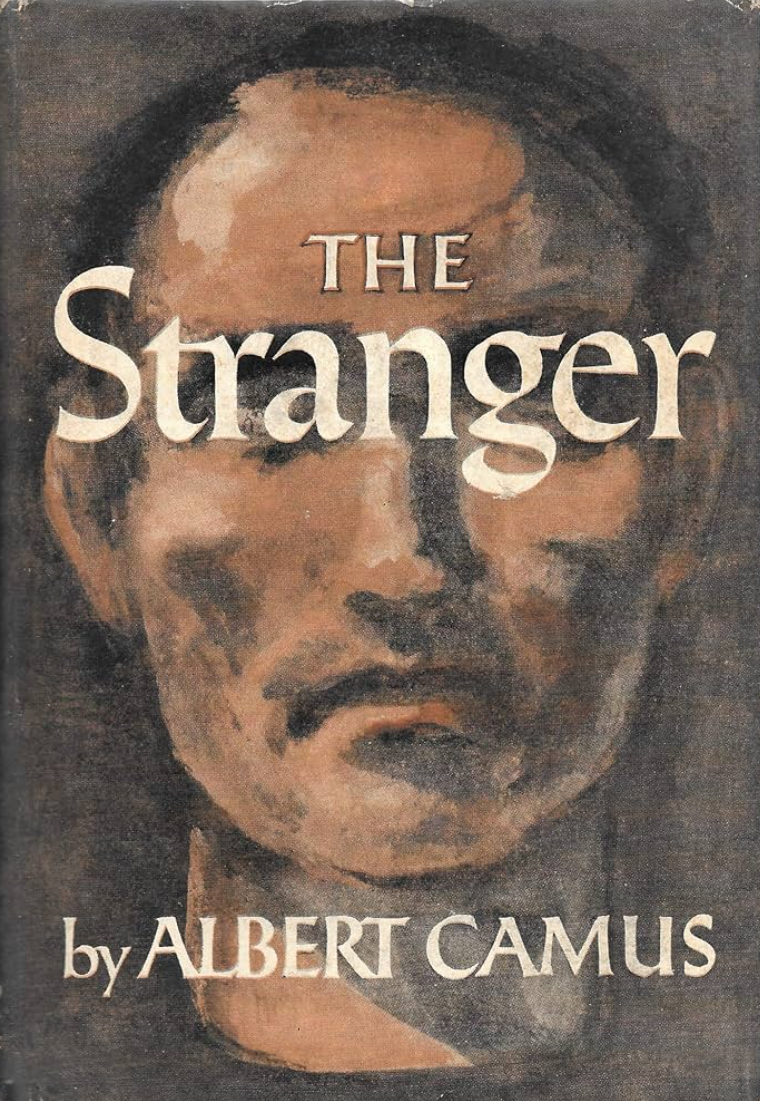
In my English class, we read the famous novella known by some as The Stranger” by Albert Camus. Albert Camus is a famous absurdist and existentialist “philosopher” (although he refused to identify himself as one) who is famous for pioneering the idea that life does not have meaning. While some may consider this to be a pessimistic outlook on the world, a closer inspection of Absurdism reveals quite the opposite; Camus argues that because there is no intrinsic purpose in life, we should not dwell on the unfortunate events that have happened to us. Rather, we should focus on enjoying our lives to the fullest and living as if there is no tomorrow.

In Camus’s novella, The Stranger, he expertly crafts a story about a young man named Meursault, a French-Algerian who embodies the concept of absurdism. When his mother dies, Meursault only states in a matter-of-fact manner that she is dead, referring to her corpse as “a body” and falling asleep at her funeral. He even engages in a relationship with his coworker Marie the day after.

Throughout the novel, Meursault continues to miss important social cues, such as when Marie (whom he later gets engaged to) asks him if he would marry any woman, to which he responds with the affirmative. He turns down a promotion that would relocate him to Paris because “one life is as good as any” and he gives a statement at the police station to protect his mobster acquaintance for the simple reason that he was asked. At the end of the novel, he murders an unnamed Arab man and is found guilty; he spends the remainder of his days in jail awaiting his execution.

There are many translations of this story, such as The Stranger, The Outsider, The Foreigner, The Alien, and Odd Man Out. In my opinion, out of all of these translations, The Outsider serves as the best title for the novella. It established that Meursault is known by his community (given that he grew up in French Algiers and never relocated) but that he is missing out on something that only people on the inside are aware of so to speak. This crucial element, a strong sense of social awareness and a moral compass, prevents him from fitting in, casting him as an outsider in society. While the other titles hold (mostly) the same denotation, they do not convey this critical connotation, which is why The Outsider functions as the best-translated title.

The Stranger by Albert Camus is available to check out from the Mission Viejo Library.

Book Review: The Glass Castle

I recently was given the opportunity in my AP language and Composition class to choose my own independent reading book. Normally, our book is assigned to us and we have no choice in what we are consuming. However this time, we were allowed to select a nonfiction book from a list of options provided. I chose The Glass Castle by Jeannette Walls, and I was not disappointed.

Jeannette Wall’s captivating memoir, The Glass Castle, is a narrative recounting the tumultuous childhood and adventures of the nomadic Walls family. When Rex Walls, Jeannette’s father, is sober he is a charismatic man who creates magical experiences for his children. However, when Rex is intoxicated, neglect is imminent and the Walls are poverty-stricken. This narrative dives deep into obstacles of alcoholism and poverty that plague the Walls children.

I was absolutely hooked throughout the entirety of Walls’ memoir. Every page brought about another crazy situation and adventure the Walls family was undertaking. I felt deeply connected to Jeannette and her siblings, and found myself rooting for their successes. There were many unimaginable scenarios throughout the story and when discussing with classmates, we all found ourselves jaw dropped. Seeing the Walls children be forced to parent themselves, yet still succeed, was a satisfying experience. Their journey shows that adversity can be overcome and one can rise up above the cards they are dealt, no matter the circumstances. This memoir was gripping and inspiring. It’s a great quick read and I would highly recommend it! It’s also great for my fellow AP Lang students to use as evidence for the free response question 3 argument essay!

This book contains imagery and discussion of topics such as alcohol addiction and SA, so please be cautious before reading!

The Glass Castle by Jeannette Walls is available to check out from the Mission Viejo Library. It is also available to download for free from Libby.