From Pen To Paper: An Interview With A Children’s Book Author And Illustrator

This interview dives into the behind the scenes of the writing and illustrating process of creating a book with Cat Wiessbrod. Cat Wiessbrod launched her first children’s book, Honk! in 2020, and from there, she has expanded her brand and created even more children’s books including Honk! In The City, and A Celebration Of Polar Bears. In this interview, Cat will allow us a window into the process of creating as well as self-publishing a book.

Natalie: So, first of all, I was wondering if you could explain what first sparked your interest in writing and illustrating children’s books?

Cat: I’ve always loved writing and drawing ever since I could remember. I also was an avid reader as a kid. I loved studying the illustrations in the books, scouring every detail. I think Cloudy With a Chance of Meatballs was the book that really sparked my interest. That book has so much detail in the illustrations as well as a unique story.

Natalie: I know that inspiration is hard to come by often, and it is difficult to find a good story-line, so, where exactly do you get ideas, and more specifically, where do you get ideas when you are having writer’s block?

Cat: I’m often inspired by what’s going on around me. Honk was a book my husband and I wrote together inspired by our own run-ins with geese. I also wrote What Should We Do based off of activities I did with my own children. When I have writer’s block I like to take a walk. Often, my mind gets cleared when I take a step away from what I’m writing.

Natalie: So, one question that is very popular and that I, too, would like to know the answer to, is, where do you even begin if you are interested in creating and publishing a book?

Cat: I think that the process to publishing a book starts with a story, and those stories come from ideas. My advice is keep a little journal or notebook to jot down your ideas that you can flush out into a story. After writing the story if you are also illustrating the book, you can then storyboard your story where you can conceptualize how to lay out your illustrations and text throughout the book. If you’re working with an illustrator, then you can work together on these storyboards.

Natalie: I know that the writing industry is highly saturated, as there are many people eager to write books that will be seen. How is it possible to stand out a sea of people who are all aiming at the same goal?

Cat: You’re right. This is a challenge to stand out in a sea of choices. I think that in this day and age though, that you can really use social media to get your name out there. Social media is a great way to reach audiences you may not usually come across because of geography. I had a group from Scotland reach out to me if they could use my book for their story time, which was super cool. They found me through social media.

Natalie: I do know that when you wrote your books, you opted to self publish, rather than go through a publishing company. What factors played a part in this decision?

Cat: This was a joint decision between me and my husband since he and I write many books together. We wanted to retain more control over our books and how they get marketed. We wanted decisions such as the layout and size of the book, the cover, etc. to be ours. This is kind of a double edged sword though since being self published means that all of the editing, formatting, and marketing would also be our responsibility.

Natalie: Lastly, do you believe that in the future, authors and illustrators jobs will become irrelevant due to the rapid improvement of artificial intelligence which has the capability to carry out the tasks which authors and illustrators do in a significantly shorter amount of time?

Cat: AI is a tool that many people currently use to make books nowadays. But I think that human creativity is something that AI cannot replace (at least currently). I like to inject a lot of myself into the stories I write and the pictures I draw, so unless the AI algorithm is specifically tweaked to have my set of life experiences, it would be nearly impossible for it to draw or write in the way that I draw and write. And that holds true for all other writers and illustrators. That’s what makes stories so magnetic to people, is the human element and soul behind it, and that’s what will always shine through for writers and illustrators. And that is something that AI cannot replicate.

Natalie: Thank you so much for sharing your writing and illustrating experience and diving deep into the writing process with me! I can assure you that this will prove a captivating interview for many teens or young adults who have aspirations to write or illustrate a book!

Cat: Of course, It was my pleasure! I greatly enjoy seeing people in the next generation who have an interest in writing or drawing, or maybe both!
How to start writing a book – Lancer Spirit Online

Honk! and A Celebration of Polar Bears by Cat Wiessbrod are available to check out from the Mission Viejo Library.

The Unfortunate Decline of Anna Seghers

annaseghersFame. Money. Glory.

For most prominent celebrities, authors, or personalities, the former nouns are essential to their ways of life. However, what happens after a renowned author loses all of their fame and glory?

Anna Seghers, one of the most important German woman writers of the 1900s, definitely knew the answer to that. Before her untimely death, Seghers wrote many outstanding novels during World War II. Her most popular novels included The Excursion of the Dead Girls, Transit, and The Seventh Cross.

Laden with beautifully-developed symbols and leitmotifs, each of her novels condemned Fascism, especially German Fascism under the influence of Adolf Hitler. Although Seghers herself lived in Fascist Germany for a while, she despised any form of Fascist totalitarianism. Her novels are a clear indicator of her anti-Nazi sentiment. Her novels were loved by many people all around the world. Citizens of Allied countries (during and after World War II) read her works fervently as they also fought against Fascism in Europe.

It was near the end of Seghers’ literary career that she started to lose both fame and glory. Although she fought against totalitarianism in Germany, she soon became a part of the Soviet Communist party while in exile. Simultaneously, Seghers condemned Nazism and preached the tenets of Communism.

After Hitler’s death and the end of the war, Seghers resided in the Soviet-controlled part of Germany. She tenaciously stuck to Communist beliefs, even after Stalin’s infamous show trials, where more people were killed than during the Holocaust. Almost immediately, all of her avid readers in the West were lost. Her American and liberal German readers lost interest in any of her other works. Anna Seghers went from a literary “hero” who fought against Fascism to a “traitor” who only carried on totalitarianism.

Seghers became a “spiritual” follower of Communism, taking part in Soviet politics and condoning the deaths of millions of people. Never again were her books ranked as national best-sellers. After her literary decline, Seghers only published two more novels; however, they did not receive any recognition at all. It was not a matter of how well her works were written; rather, it was a matter of what her novels stood for.

Anna Seghers was a phenomenal author; there was no doubt about that. However, it was what her novels preached that led to her gradual decline. Seghers’ unfortunate tale leads us to a very important conclusion: Individuals must always fight against tenets of evil and fight for tenets of good.

-Elaha N.

Event Recap: Jeff Kinney Author Visit

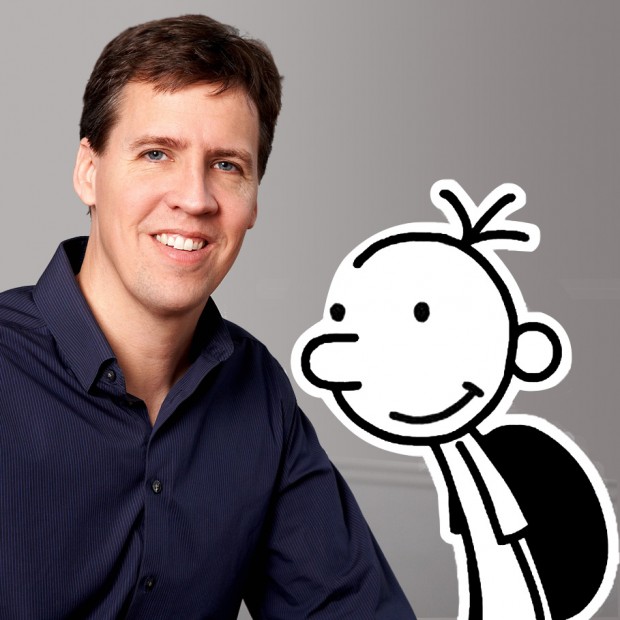
Jeff_greg-620x620The Mission Viejo Library hosts many awesome events and book signings. Last year, I went to a book signing with the author Jeff Kinney.

Jeff Kinney visited Mission Viejo to debut Diary of a Wimpy Kid: Hard Luck. This is the eighth book in the wildly popular series. Diary of a Wimpy Kid: Hard Luck is about a middle school kid named Greg Heffley, who has lately been running into some bad luck. His challenges in middle school are hard to solve, so an unsure Greg turns to a Magic 8 Ball for help. Will this solve all of his problems, or only make his troubles worse? Find out about the ups and downs of Greg’s life in Jeff Kinney’s newest Diary of a Wimpy Kid book.

At the event, instead of running into “hard luck,” I came across good luck. I had the fantastic opportunity to ask Jeff Kinney a few questions. Read below to find out his answers and see if you have the same favorites as he does.

Q: What is your favorite Diary of a Wimpy Kid book?

A: Right now “Hard Luck,” because it’s stuck in my head, but my all time favorite is the first book.

Q: What’s your favorite Diary of a Wimpy Kid movie?

A: The first one.

Q: Which character are you the most like?

A: The bad side of me is most like Greg.

It was amazing to have the chance to meet and interview one of my favorite authors. At the event, they also had hilarious Diary of a Wimpy Kid games and fortunes. It was a blast!

To find out about other cool activities hosted by the Mission Viejo Library, go to their website at http://cityofmissionviejo.org/Library/. I don’t know about you, but I can’t wait to see what new authors and events will be here this year! Please take a moment to post a comment, and list your favorite Jeff Kinney book, and movie, and which character you are the most like!

-Alaina K., 6th grade

Author Interview with Lauren Oliver

teen_bloggersLauren Oliver, author of the New York Times bestelling Delirium series, visited the Mission Viejo Library earlier this year to discuss the finale to her spellbinding dystopian trilogy, Requiem.

Two members of the Teen Blog Team, Mariah and Sonya, sat down with Lauren to chat about her writing, what it was like to wrap up the Delirium series, and what she’s working on next.

Listen to the interview!


File hosting courtesy of archive.org. Intro music by Ukulele Jim

Author Interview: Chad Williams

chadwilliams Author and former Navy SEAL, Chad Williams, visited Mission Viejo in March, and two members of the Mission Viejo Library Teen Voice took the initiative to interview him about his Navy SEAL experiences and the faith journey he shares in his memoir, Seal of God.

Q: Why do you believe that being a Navy SEAL always stood out to you?

A: “Being a Navy SEAL stood out to me because I saw it as the most difficult military training in the world. In my mind, it really was top of the mountain and I see being a Navy SEAL as being a part of the most elite. And that was something I wanted to aim for. I didn’t want to be just mediocre- I wanted to do something really big.”

Q: How did you feel when you were working the gun when your team was ambushed capturing the terrorist in Iraq?

A: “My initial thought was, ‘Wow, this is for real. If I get hit by one of these bullets that are coming at me, it’s not like a training exercise where you are just going to feel a sting from a simulation round. But these bullets are real, and could take an arm off, and in a split second I could be standing before God all of sudden.’ I  do remember thinking about some of the other SEALs that were on the ground, getting shot at, hoping ‘I hope that none of these guys get hit, because I know where I’m going when I die, but for some of them it is kind of uncertain.'”

Q: What are your feelings now toward your team-members of Team 1 who ostracized you?

A: “I have nothing but love for those guys; nothing but forgiveness is what I feel towards them. If  I saw one of them, I’d go running up to them on the street, and just tell them, ‘Hey man, I love you guys and no hard feelings,’ and I would want to share the gospel with them.”

Continue reading