
Steam Stations: Biology Day

Earlier in March, the Teen Advisory Board (TAB), along with other teen volunteers, hosted the final Steam Station out of three. What are STEAM Stations? These Stations have been a series of STEAM based events that the library’s youth team have helped to develop. We based all of our activities on the acronym, STEAM which stands for: Science, Technology, Engineering, Art, and Mathematics. After first hosting Coding Day  and then Engineering Day, we hosted the final event: Biology Day! Biology Day was a fantastic end to the series with various fun activities.

Like our previous events, there were three different stations:
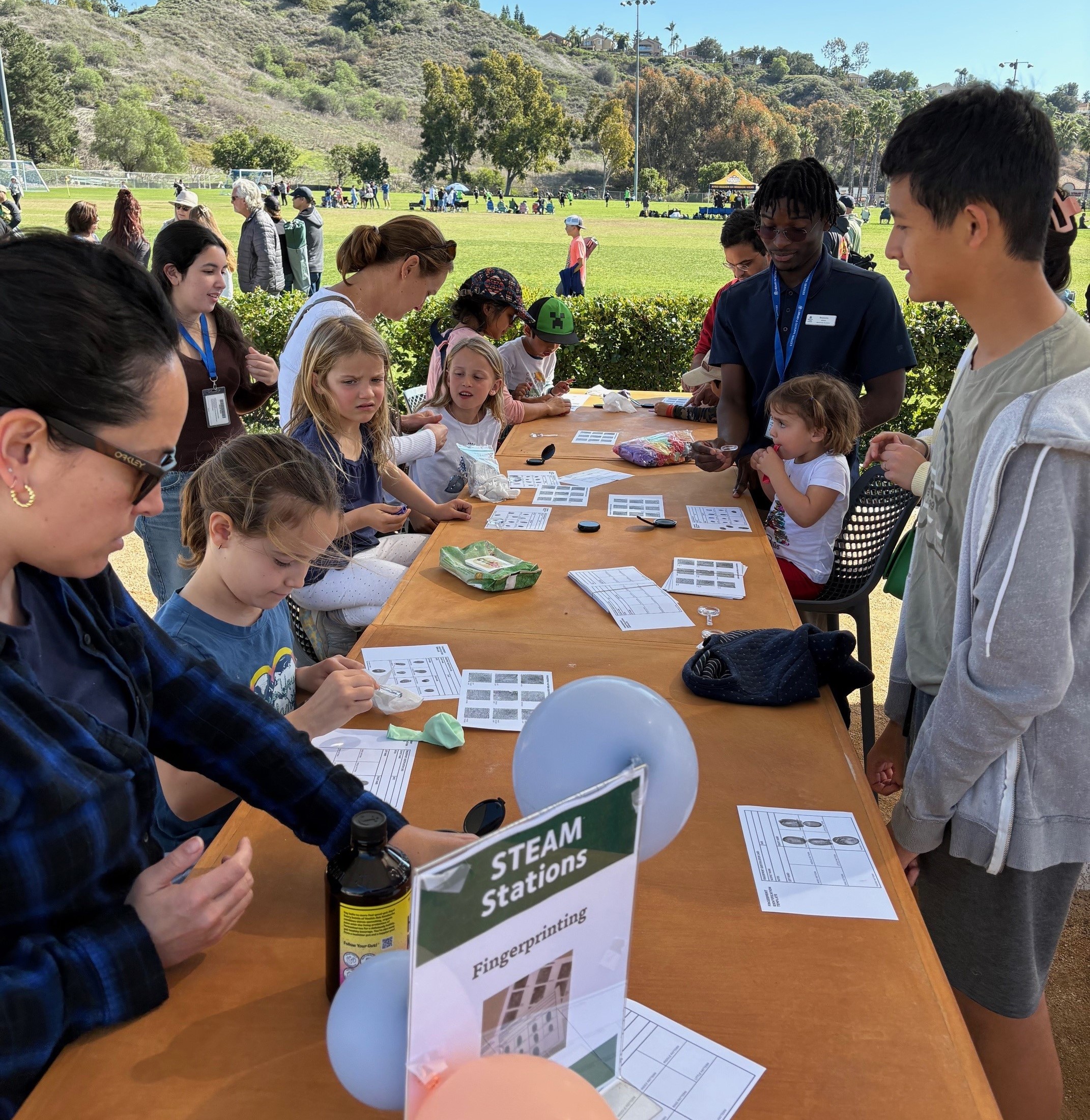
The first station was our fingerprint lab! Participants would be able to use ink pads to cover their fingers which they would then press onto a balloon. In order to magnify their fingerprint, they would blow the balloon up and by using identification sheets, participants could identify which kind of fingerprint they have (Loop, arch, whorl, etc).

At the second station, participants could go and make art with their own fingerprints. Using a variety of colored ink, they would cover their fingers with them just as they did in the last station to press them onto paper to create their own art! 

Finally, participants were given owl pellets, tools, and an identification sheet so they could dissect real owl pellets. As they picked apart the pellets, they could extract small bones and identify what bones they found by using the identification sheet. Both children and adults had a good time extracting bones together, making a fun bonding experience.  

I say this final STEAM Station was a success, just like our previous two Stations. Participants had a lot of fun making their own art and especially discovering bones. It was also nice to go into the community and hold this event at the Potocki Center of the Arts nearby the library; the outside space was warm and sunny, allowing our event-goers to experience a great day in nature which was perfect for Biology Day. 
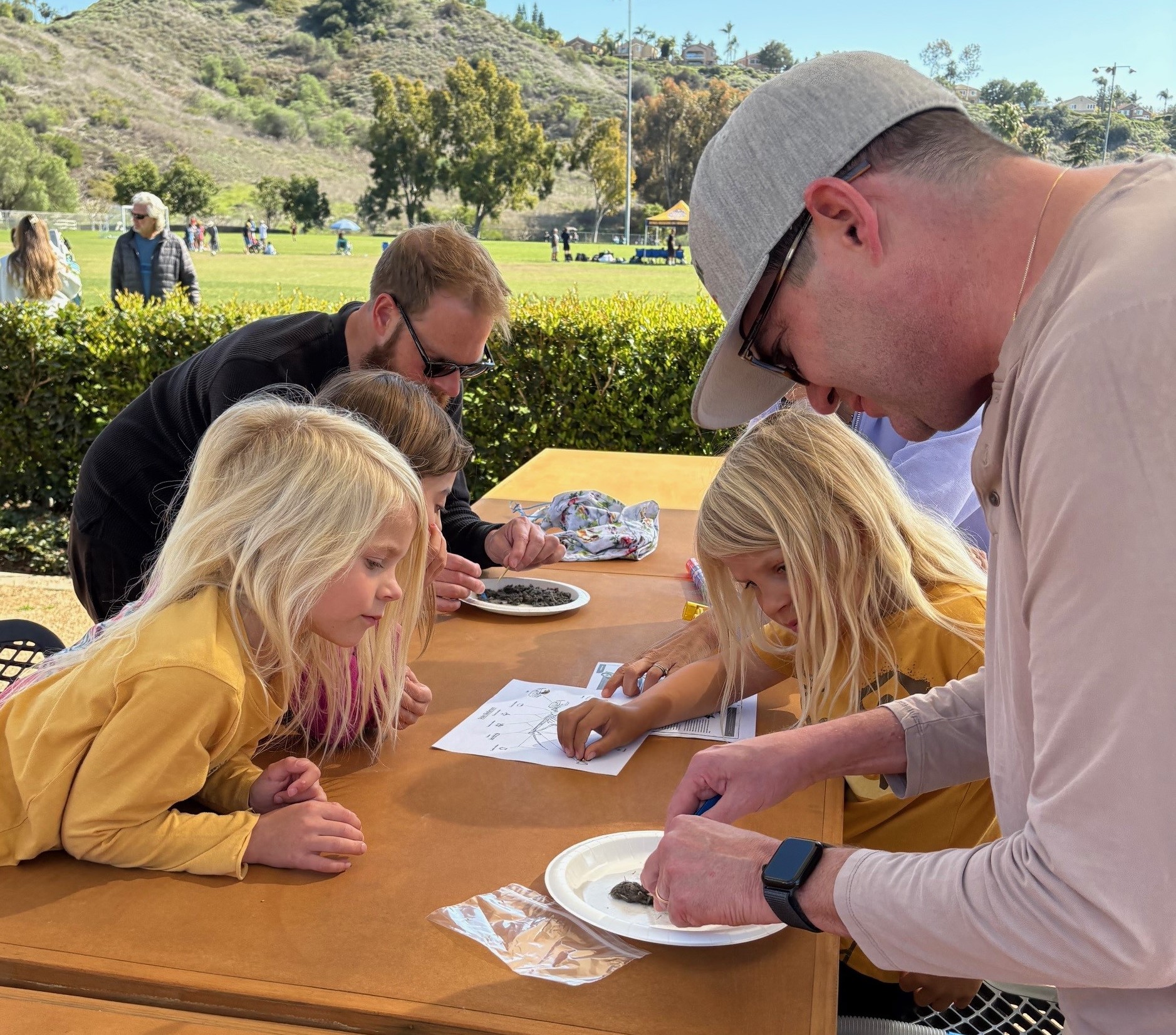
Everyone had a great time out in nature jumping around to each different station. Some stations took longer than others, especially the owl pellet activity, which allowed participants to jump around to different stations in the meantime. It was wonderful to see everyone have fun with their fingerprint balloons and share their fingerprint artwork with each other. It was especially great to see individuals working together to find and identify bones as they dug through owl pellets. All in all, these stations were a fun learning opportunity for everyone. 

This concludes our three STEAM Stations! It was wonderful to host these events and to see new and familiar faces from the library and community who were able to attend and experience these STEAM Stations. I hope that in the future if we ever host these again, that both familiar and new people come to enjoy what we have in store. 

Please look forward to future library events!

-Nicole R.

Two Must-Have Books for Biology-Interested High Schoolers

Over Christmas break, I will spend some extra time studying for USABO, or Biology Olympiad. Even though I am currently taking AP Biology, I quickly realized that AP Curriculums in most schools don’t completely cover the curriculum required for similar competitions for high-school students. After a little research and personal experience, I found the following list of books the most helpful:

Campbell Biology (Any edition after 8th)

This series of textbooks has historically been a must-have if you are studying for USABO or any similar biology-related competition. It is by far one of the most comprehensive and time-saving resources I have found. I currently have the 11th edition, which is not much different from the 10th or 12th editions content-wise. The price of a textbook from this series ranges from 60 dollars to a whopping 300 dollars (if you are considering buying a textbook). Still, many libraries offer this textbook, making it accessible if you would like to use it.

Anatomica: The Complete Home Medical Reference

This book is one of the most comprehensive human anatomy and physiology resources I’ve used. Although not for the faint of heart, with highly detailed diagrams of internal organs and organ systems, I found this book highly helpful for the human A&P class I am currently taking at school. Furthermore, the book contains some more information detailing diseases and disorders affecting each one of the body systems it covers, making this book useful for those who want to learn a bit about medicine.

Overall, if you really love biology or science classes in general, I would recommend both these books as a more comprehensive way to learn at a higher level about biology-related subjects!

Book Review: Immune: A Journey into the Mysterious System That Keeps You Alive by Philipp Dettmer

From the get-go, this book is a must-read for anybody who is interested in the field of biology, or anybody who wants to get to know how the system that keeps them alive works.

This work is divided into several sections, each explaining a specific part or aspect of the immune system. Dettmer first introduces the immune system and how it evolved from around 541 million years ago, when multicellular animal life suddenly exploded, causing bacteria and other microorganisms to become an existential threat, as they could use these ecosystems of organisms as free energy at the detriment of the former. As a result, some organisms such as sponges evolved what would be known as “humoral immunity”, or proteins that would float around and kill microorganisms that were not supposed to be in an animal’s body. This system ended up being so successful that evolution did not phase it out, and rather made it a crucial aspect of an organism’s immune defense.

The book then goes on to explain more aspects of the immune systems, such as different parts of it including the different cells that make it up, including macrophages and neutrophils, which are integral to the functioning of the immune system. After going over these two crucial parts of the immune system, Dettmer then goes on to talk about the process of inflammation and its causes in relation to the immune system.

Although it would be impossible for me to include every single one of this book’s many complex topics in this review, I think that this book was great, and made topics that would otherwise be complicated and tedious to read seem very interesting. The author of this book also has a very well-known science Youtube channel, Kurzgesagt, which I highly recommend checking out.

Immune: A Journey into the Mysterious System That Keeps You Alive by Philipp Dettmer is available to check out from the Mission Viejo Library.

Book Review: Your Inner Fish by Neil Shubin

Recently, I read Your Inner Fish, a book about the evolutionary origins of mankind, as well as talking about the research that the author directly went through in order to gain more information about how humans came to be through evolution, as well as how surprisingly, we share some similarities with prehistoric fish (as the title implies).

The Book starts with Shubin introducing and explaining his experience with using fossil evidence to determine the origin of mankind, travelling around multiple locations in the world and multiple fossil sites looking for clues. The book also goes over the influence of geography on how they look for fossils, with different rock layers signifying older fossils. The author also talks about different traits we have in similarity to other animals throughout the book. Furthermore, the author also goes over the usage of embryology, or the comparison of the embryos of two different species in order to find similarities to prove common ancestry. In his research, the author found that the human embryo had several similar traits with a shark embryo, implying that we are in some way related to a prehistoric fish. The author also covers the fascinating subject of using DNA to determine changes in an animal throughout the world’s long history, and also talks about the degree of similarity human DNA has to other species, as well as more fundamental theories such as the theory that the mitochondria was once its own independent organism, but later combined with others to form the cell structures we know today.

Overall, I think this book was very interesting, because of the fact that the author was able to make otherwise boring and complex topics interesting by explaining it in a simpler way. I would recommend this book for anyone who is interested in learning more about topics in biology.

Your Inner Fish by Neil Shubin is available to download for free from Libby.

Adventures in Biodiversity: Thoughts and Review

You may have heard of the term “biodiversity” before, but what is it and why is it so important? The book, Adventures in Biodiversity by Alexandre Antonelli gives new insight to these questions. Antonelli is a highly experienced and respected plant scientist. He has devoted his career to studying the evolutionary science of tropical plants and habitats. Throughout his book, he applies his knowledge to educate about the loss of biodiversity, and the dangers that come with it. It includes many details about the study of habitats and biology.

Personally, I am interested in biology. This book has furthered my passion for it: I have learned so much! I especially enjoyed reading about the author’s trips to rainforests and endangered ecosystems. I never knew how interconnected and complex nature truly is. Did you know that more than 500 species of flowers rely on bats to pollinate them? I didn’t either!

This book has also educated me on the dangers of endangered species and habitats. Everything needs biodiversity to thrive. All species, from cocoa plants to horseshoe crabs, play a major role in our everyday lives. Although we rely on the unique variety of species to thrive, humans are the leading cause for loss of biodiversity. We destroy rainforests, kill species for their fur, and steal habitats for our own. This decline of biodiversity has rapidly accelerated throughout the years. For example, the Amazon rainforest has already lost 20% of its area due to deforestation. It is projected to lose 7% more by 2027. The book goes into much more detail; there are many specifics on the causes, types, and consequences of the loss of biodiversity. I highly recommend everyone read this book and spread this knowledge to others.

Quick Tips for AP Bio

I know many students nowadays are stacking up on AP courses, especially the AP sciences: AP Bio, AP Chem, AP Environmental Science, and even AP Physics.

There are other AP classes of course, but I guess I just wanted to give some advice if you are taking AP Bio this year as well as how to pass the exam and get good grades in the class. I took AP Bio last year (got an A in both semesters and a 4 on the AP test). Overall, I thought it was a really meaningful class and is something you can learn and use the rest of your life. So, here are some tips:

  1. The most important thing in AP Bio is not actually memorizing material! Yes, there are a lot of processes that you have to remember (Krebs Cycle, DNA replication…etc..), but it’s more important to understand the logical processes. How does this work? How does that work with this system? One process that worked for me was to read through the textbook and then brain dump everything I remembered. Then, for the things you forget, you can go back and fill your notes in! It’s a great way to practice your active memorization skills.
  2. I would say the other important thing is to use your AP Bio Princeton Review Books if you have them. I think there are some used ones in the library that are very cheap! They are great, especially for summarizing the most important materials. I would recommend using your school provided textbook and the AP Bio reviews at the same time, so that you can have 1. double the amount of information 2. It acts as a great review!
  3. The quizlets, Khan Academy videos, as well as some of the online free AP Bio tests are great to use to practice as well. Use the quizlets for the class tests! (p.s some of the questions actually popped up on the exam!) Also, the Khan Academy is great for when you don’t understand a topic since they honestly oversimplify everything. There are good online free AP Bio tests that you can use from Varsity Tutors. Nearing the day of the AP test, there is a public 2013 MCQ and FRQ exam posted from College Board (it was very helpful btw and also contained an answer key!)

To be honest, if you really love science, then you will really have a fun time with this class! The labs were really meticulous, but they are tested on the AP exam, so I would also just recommend looking over those before the exam as well. Good luck!

AP Biology books are available to check out from the Mission Viejo Library.

Biology? What?

Biology, Chemistry, Physics, Environmental Science…. the list continues for a while. As a current high schooler, one of my new interests is learning about biology. When I first signed up for AP biology for the 2021-2022 school year I was not the most excited, to say the least. But, now being 5 months into the course, I am happy to say I made the right decision in choosing which course of the many sciences offered to take. 

Just like most people, when I go through my daily schedule, the interactions inside and outside of my body were not a thought that ever crossed my mind. But now, my perspective has shifted. One of the most interesting aspects of biology is learning how all of those little organelles inside of your body all work together to create specific outcomes that keep you alive. Unlike most other offered courses, normal or AP biology highlights the extreme complexity of organisms and how our bodies have evolved into completing intricate processes such as cellular respiration. If you are a person like me, someone that is always curious about how things we expect in life work, biology is an interest that may be worth picking up. 

For those of you reading this and still not found a spark of interest, you may be more interested in the other parts of biology. Currently, I am learning about genetics, or how organisms inherit distinct traits. If you have ever stared at your family and wondered why you look like none of your siblings even though you come from the same set of parents, it is not just a fluke. Siblings could show traits that even their parents do not have and it is still completely normal! Coming from a big family of 6, I had always wondered why I did not look like a single one of my brothers and sisters. Learning about recessive traits, dominant traits, etc… explains why there is such a low likelihood of you looking like anyone else in the entire world.

Personally, these types of topics are thoughts that have lingered in the back of my mind and now that I am actively learning about the interactions of life, are all answered. So, to any of you still reading this, I encourage you to find an interest that you find curious and interesting so that you want to find out more. Biology is a topic that applies to everyday life and is complex and always offers something new to learn.

-Lilly G.