An Abundance of Katherines – and how it’s so much more than just a road trip

When two genius best friends embark on a road trip, they don’t know they’re choosing a journey that will change, not just the way they think, and the people they are. 

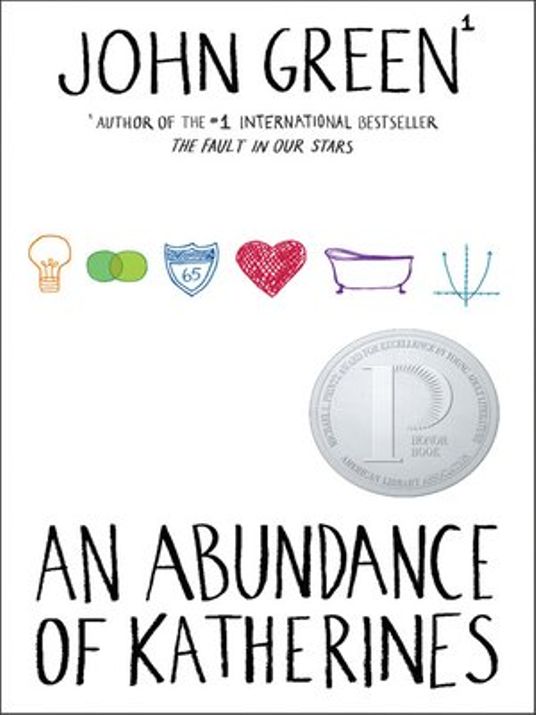
Funny, light-hearted, and ultimately thoughtful, John Green’s 2006 novel, An Abundance of Katherines, follows the story of child prodigy Colin Singleton as he finds himself in the tiny town of Gutshot, Tennessee. Surrounded by strangers (and his best friend Hassan), he discovers a summer job, new friends, and a different way of seeing himself. With his newfound friends, he realizes life doesn’t need to be successful to be satisfying. It’s a light-hearted story that’s fun, silly, and a little romantic. (Side note: Am I the only one that loves the math-y graphs in this story?)

And the questions Colin Singleton grappled with in Gutshot are questions we’ve all struggled with ourselves; Have we wasted our potential? Why does no one like us? Why are we unsuccessful? And where does the future lie? 

We’ve all felt the need – no, the urge – to do something big. We’ve all wanted to be successful, to leave our mark on history. Sometimes, it’s something we owe to the expectations of others, but as often as not, it’s our own desire to leave our mark on history, to live up to the markers we set for ourselves.

In our world today – a world that is more connected than ever – it can be easy to feel overwhelmed by our “inadequacy”. The accomplishments of millions of other strangers are easily accessible at our fingertips; and that can be crushing to our self-confidence and image.

At a time like now, it’s especially important to recognize that our lives should not be defined by measures of conventional “success”. We are not the college we attend (or don’t attend), the house we buy, or the salary we earn. We are real, living people; and people need to take breaks, enjoy ourselves, and ease up a bit sometimes. In the rat race towards some empty title – in Singleton’s case, to fulfill his intellectual potential, and to matter – we forget our original purpose, and waste our lives chasing an empty title because we’ve forgotten what else we can do.

The book isn’t without flaws; the plot is a little predictable, Lindsay’s boyfriend is a little too cliche, and the wild hog is a bit too much of a coincidence. But that’s ok, because it’s still a fun read and the quick, endearing plot will keep you flipping to the next page.

In the words of Lindsay Lee Wells, one of Singleton’s new friends, “It’s so easy to get stuck. You just get caught in being something, being special or cool or whatever, to the point where you don’t even know why you need it; you just think you do.”

Maybe that’s a wake-up call we all need. Not just Colin Singleton, one-of-a-kind child prodigy, but all the people who are stuck to a goal we might need to refresh.

Ultimately, the story ends on a happy note (no spoilers!!!), and his story of self-discovery is one we can all share. Maybe we can all embark on this journey, one that’s so much more than just a road trip.

An Abundance of Katherines by John Green is available to check out from the Mission Viejo Library. It is also available to download for free from Libby.

Glossy by Marisa Meltzer

Glossier is one of the most well-known brands of our generation. It is known for its minimalistic products that prioritize skincare first and makeup second. I love their unique packaging and modern, artistic approach to beauty routines.

When I first saw this book, I worried that I would learn about a dark side of the brand and wouldn’t want to continue to buy their products. Thankfully, the dirt on Glossy is nothing to the extremes I feared. Its purpose is to enlighten readers about the difficulties Glossier endured to rise to the top, stay on top, and ultimately become the name they are today.

Glossy focuses on the founder, Emily Weiss, and the start of her career. Early in her life, she was recognized for her fearless, memorable personality and fashion sense. It was interesting to read about how Weiss went from a Vogue intern, model, and beauty blogger with revered style to the daring founder of a wildly popular “start-up” brand.

The book also talks about another key component of Glossier’s journey: its fall from grace. An Instagram account called Outta The Gloss (a play on Weiss’ Into The Gloss, the blog that started it all) publicized issues of poor work conditions, pay, and inclusivity. Glossier also struggled during the pandemic when other brands posed a threat to their success. Glossy explains how Glossier managed to come out on the other side.

To be honest, while I was reading, my interest would go up and down as I was bored by professional, business terms and excited by each new big event in the plot and mentions of Glossier products. If you’re interested in entrepreneurship or anything in the business realm, I think this book will provide insight into one woman’s experience with creating a sensation—building connections, funding the brand, and advertising through media. Glossy told me about all of these crucial aspects of inventing a revolutionary brand.

The author of this book, Marisa Meltzer, is a journalist who has written for many famous publications. Glossy includes a few interviews with Emily Weiss herself, and hearing the voice of a journalist recount those interviews was entertaining. Meltzer’s writing was factual, but could also be poetic; I admire her writing style and how she makes regular topics fun to read.

Glossy brings up the definition of “girlboss,” the lipstick theory, the iconic millennial pink, and even some politics. Overall, this fresh and honest book is a great read.

Glossy by Marisa Meltzer is available to download for free from Libby.

The Forgotten Bookshop in Paris by Daisy Wood

The story begins in Paris with a man named Jacques and his wife Mathilda, one quiet and nervous to speak out and the other like a short fuse, ready to make herself heard when necessary. Jacques finally achieves his dream of acquiring a small, peaceful bookshop when one day, his life is disrupted and becomes anything but that. He soon learns about the French revolutionaries, whom he despises at first for being so outrightly against the Nazi soldiers, but later understands their reasons and joins them by acting as a safe house for Jewish refugees and Allied soldiers.

80 years later, a woman named Juliette with French ancestry leaves the States for a vacation in Paris to search for a hidden plaza depicted in her late grandmother’s favorite painting. Once there, she finds out her husband was cheating on her, and decides to stay in Paris to start a new life for herself. While searching for an apartment to stay in, she meets many new friends (one of which has an old apartment ready for renting) and slowly adjusts to life in Paris. She soon finds an old bookstore below the old apartment with a secret room and a diary inside, describing people of all ages and backgrounds in its pages…

I really love this book and would most definitely recommend it to a historical fiction enthusiast. The author, Daisy Wood, takes the reader back and forth between the World War 2 time period and “present-day” Paris and effectively shows each character’s way of thinking and their reasoning for acting the way they do. Wood also takes her time to show just how heavy the tension was between some Parisian citizens and German soldiers, while also showing that just because someone is on a “bad” or “good” side, doesn’t mean that they are “evil” or “good”.

The Forgotten Bookshop by Daisy Wood is available to check out from the Mission Viejo Library. It is also available to download for free from Libby.

The Samurai’s Garden – book review

The Samurai’s Garden, written by Gail Tsukiyama, is a novel based on historical fiction during the Sino-Japanese war or also known as pre-WWII. 

The story starts off in the city of Hong Kong, China. Stephen, a young boy of only 20 years had developed tuberculosis. A contagious lung disease that not only pains him when he coughs, sneezes, and laughs, but it also takes away his ability to see his beloved family and friends. 

Unable to recover in the sweltering humidity and stuffy air of his hometown, and in addition to the Japanese army inching their way towards them, he is forced to recuperate alone in Tarumi, a small seaside village located in the rivaling country of Japan. 

However, during his stay, he ends up creating friendships with people he never expected to get along with. There, he meets Matsu, the housekeeper of the home he stays at; Sachi, a woman outcasted in a mountainous village due to contracting leprosy; Kenzo, an owner of a teahouse; and Keiko, a girl he can never love. 

Although Stephen carries something that he can never change, such as his Chinese heritage, it doesn’t stop him from learning about Japanese culture. Given that, the hatred he once developed for the country changes into something else… 

Overall, I believe The Samurai’s Garden is a great book to read, and would especially recommend it for those who are interested in learning the beauty of Japanese culture. And along with that, another great thing I would like to add is that this book contains a lot of soothing, and motivational conversations, which I find very inspirational. Thanks to Tsukiyama’s amazing word choices, the reading experience I’ve had with this novel was very intriguing. 

The Samurai’s Garden by Gail Tsukiyama is available to check out from the Mission Viejo Library

Looking For Alaska

I recently finished reading Looking For Alaska by John Green. This was John Green’s first novel, and probably one of my favorite books of his. One of the things I like the most about John Green’s writing is his portrayal of teenagers. While I cannot always relate to them, he makes them feel real and human, and not like stereotypical teenagers seen in other forms of media. Looking for Alaska came out in 2005, which is presumably when the story takes place, and I love reading books that take place in a setting where the characters don’t interact with any sort of technology. The setting of this novel, taking place in rural Alabama, made me feel like I was reading about summer camp. I recommend reading this book as a Junior in high school. Not that you can’t read it earlier or later, but I felt like I was able to understand the characters on a deeper level since I was reading about people my age. Though I wasn’t able to relate to their struggles or the antics they got up to, I felt like they were just as interesting to read about. 

This novel follows Miles, a teenage boy who is new to a boarding school in Alabama. He doesn’t have many friends in his hometown, but he quickly gets taken in by Chip, his roommate. Chip, nicknamed “The Colonel” leads Miles to all kinds of antics, pranks, and adventures. He introduces Miles to Alaska and Takumi. Alaska, who the book is named for, is quirky and rebellious, and Miles immediately takes a liking to her. Their dynamic is typical of a group of unpopular kids finding each other, and having fun, and sticking together. 

Looking For Alaska is full of both comedy and heartbreak. It is beautifully written, it is witty, and has its deep moments woven throughout the comedy. Each character has their own struggles, backgrounds, and quirks, which are revealed in a scene where they open up to each other. The Colonel, aka Chip, is perceived as tough and scary on the outside, but is intelligent and kind-hearted. He quickly became one of my favorite characters and seeing him express his emotions was one of my favorite parts of the book. I also loved seeing the characters develop. By being around his friends, Miles becomes smarter, and he learns about things that he wouldn’t have learned about in school. Mainly through Alaska and her massive book collection. Miles and Takumi didn’t have much to talk about at first, but as the book progresses, they find themselves in situations where they become closer. 

Because of the setting and the well-developed characters, I felt like I was actually in the book. I felt like I was running around with Alaska and Miles, or sitting with them plotting a prank. And though it takes place in rural Alabama, because John Green writes a boring place so well, I felt immersed in the story through the setting. Not only are the characters quirky, but the school is as well. From its basketball team to its evil swans, the boarding school feels so well thought out. I could say I loved everything about this book. Even the heartbreaking plot twist. I love the references to literature and famous last words, and I walked away from this book feeling like I learned something.

Looking for Alaska by John Green is available to check out from the Mission Viejo Library. It is also available to download for free from Libby.

Twenty and Ten by Claire Huchet Bishop

Twenty and Ten is a short novel written by Claire Huchet Bishop and illustrated by William Pène du Bois. This book is based on a true story. The setting is Beauvallon, Rhône, France, at the time of the Nazi occupation of France during World War II. Twenty children are living in a boarding school in the mountains. The head of the school is a wise and kindhearted nun named Sister Gabriel. One day, a young man arrives at the school and asks Sister Gabriel if she would permit ten additional children to join the school. The man explains that the ten children are Jewish refugees who have been running and hiding from the Nazis. He warns Sister Gabriel and her students that if they take in these ten children and are discovered by the Nazis, they could be killed.

Sister Gabriel explains to her students that they would be obligated to protect the refugees, if they accept this responsibility. She says, “The Nazis are looking for those children. If we take them we must never let on that they are here. Never. Even if we are questioned. We can never betray them, no matter what they do to us. Do you understand?” The children realize that they are taking an extreme risk, but they promise to hide the refugees. When the Nazi soldiers arrive, the courage and loyalty of the children is put to the test.

I knew that I would enjoy this book from the moment I began reading the first chapter. The book is very well-written, and the characters are full of personality and charm. I enjoyed reading about the cunning and creativity of the children as they try to hide the refugees. The story is suspenseful and engaging. I love the themes of this book, which include courage, charity, and faith in God. Also, as always, the illustrations by William Pène Du Bois are excellent. The only thing that disappointed me about this book is that it is quite short. However, this is a very accessible book for young and old readers alike. I would highly recommend it.

How Successful People Think- Summary & Review

I accidentally grabbed this book, but boy was it an amazing read. Its only 125 pages and it truly changes your perspective in thinking. It took me about 2-3 days to read it fully, but if you are dedicated more onto this book it might even take you one.

There are 11 categories, those categories are..

1) Big picture thinking

2) Engaged and focused thinking

3) Harness creative thinking

4) Employ realistic thinking

5) Utilize strategic thinking

6) Explore possibility thinking

7) Learn from reflective thinking

8) Question popular thinking

9) Benefit from shared thinking

10) Practice unselfish thinking

11) Rely on bottom line thinking

John C. Maxwell emphasized that…

Everything you do will begin with thought, What we think determines who we are, and who we are determines what we do (an example is if we think negative we become negative and we wont achieve as much). Our thoughts determine our destiny, and our destiny determines our legacy. People who get to the top think different than others. And the idea that we can’t change the way we think.

After a month of reading this book, I noticed I have been taking more time to think about more abstract, creative, and deeper thoughts, than I would usually. I would also take time to think about different categories and subjects that I never thought were interesting.

I definitely recommend you to go to your nearest library or even book store to get this book.

How Successful People Think by John C. Maxwell is available to check out from the Mission Viejo Library. It is also available to download for free from Libby.

Book Review: The Three-Body Problem by Liu Cixin

A friend of mine recently recommended that I read this book, as he told me it was one of the best science-fiction novels he had ever read. This book is another foreign work I really enjoyed, and it served, in my opinion as a more modern version of War of the Worlds by H.G Wells.

Initially, the story starts in the past, during the Chinese Cultural Revolution during 1967. one of the protagonists, Ye Wenjie, sees the death of her father at the hands of the revolutionaries, and she gets sent to inner Mongolia as part of a labor brigade and later sentenced to prison. However, two military physicists from the government see an opportunity in her and recruit her to conduct secretive research in the Red Coast project, which was intended to develop technologies that could be used to damage spy satellites from rival countries, reminiscent of the Cold War era this part of the story is set in.

However, Wenjie later learns about the truth behind the project, and realizes that the project’s true intention is to attempt to communicate with extraterrestrial life. She inevitably finds evidence of an alien civilization, Trisolaris, and receives a message from a Trisolarian listener to not respond, as their civilization was constantly under the uncertainty that their planet may be engulfed by their sun. However, the specifics behind this is not revealed until much later in the novel.

Meanwhile, in the present, Wang Miao, a scientist in the field of nanotechnology, finds a game named “Three-Body”, played using virtual reality hardware known as V-suits. this game has the users go through a series of eras and challenges. However, a shocking truth is later discovered about the game, which I will not reveal.

Overall, this was a great book in my opinion, and I really liked how unlike a lot of the science-fiction novels I’ve read, a lot of the fictional work is grounded in reality, hence this book being under the genre of hard science-fiction. I really enjoyed reading this book, and I would recommend it to anybody who is interested in physics, or just anybody who just wants to read novel that actually requires a bit of thinking to get.

The Three-Body Problem by Cixin Liu is available to check out from the Mission Viejo Library. It is also available to download for free from Libby.

Story Thieves by James Riley

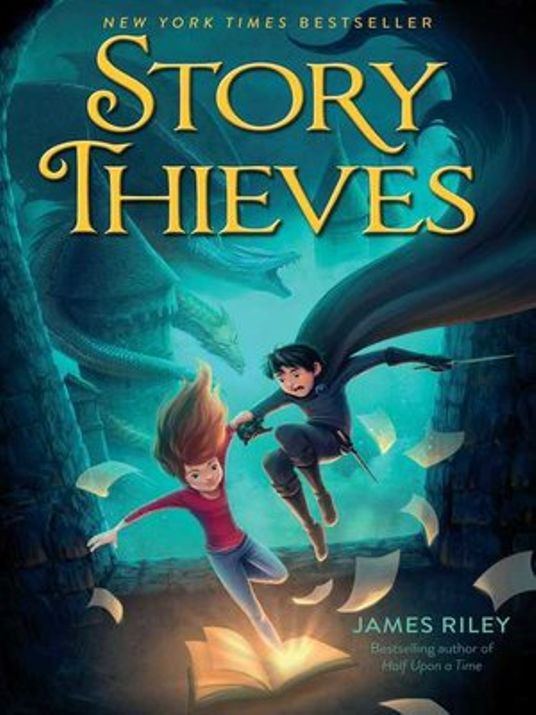
In January I decided to read a book called Story Thieves. Story Thieves is about a boy named Owen who meets a girl named Bethany, who can travel into books. Using Bethany’s power, these two travel between the real world and different fictional worlds. While traveling between worlds, they cause many problems and meet characters that can both help and stop them from fixing problems. While reading this story I found that it had unique and interesting characters and a good plot.

At the start of the book, Owen discovers that Bethany can jump into books by watching her come out of a book in the library. Soon after, the two travel into a book called Keil Gnomenfoot and the End of Everything. In the book, Owen breaks one of the few rules of traveling through books, which is not to interfere with important characters. Because of this, a character named the Magister becomes aware that his entire world is fiction. Later, the Magister travels from his book to the real world. As the book continues, Owen is disguised as a character in a book and continues its story. In the real world, Bethany is trying to send the Magister back to his book.

Story Thieves wasn’t one of my favorite books, but it doesn’t mean it’s bad. The book demonstrates great character development with how we can see Owen mature. I like how he grew to understand Bethany better throughout the book. The story also included an engaging plot with a variety of conflicts, like Owen’s. He ran into many conflicts that were interesting and intense while stuck in books. I was also impressed by how well the book conveys the emotions of the characters by showing how much they regret, sadness, or anger through attentive dialogue. However, while reading the story I was given the impression that its main demographic is kids in elementary school. Since I was a kid in middle school reading this, I didn’t enjoy it much. But if a child from the fifth grade were to read this, I’m sure they would like it very much.

Overall, the novel has some well-written points such as its fun characters and the conflicts. It also had a plot that was unique and intriguing which surprised me while I was reading through it. I found the book too childlike for me to fully enjoy the novel. I do recommend the book to children who are attending elementary school or people who want to have a fun time.

-Matthew R.

Story Thieves by James Riley is available to check out from the Mission Viejo Library.

Frankenstein by Mary Shelley

My final book of the school semester was Frankenstein by Mary Shelley. Coming into this final stretch, I just wanted to get it over with. For years, I thought I knew the story of Frankenstein and that this unit would be a breeze since I knew the basics. I was immediately proven wrong when I learned that the Creation didn’t even have a name and the name Frankenstein was actually the name of his creator. 

The story of Frankenstein follows the telling of Victor Frankenstein’s life. The novel switches between three different narrators, Robert Walton, Victor Frankenstein, and the Creation. It begins with letters by Robert Walton who comes across Victor as he travels. Victor then tells his tale to Robert. Victor goes through his childhood and life, the making of his Creation and why Victor is so obsessed with following and capturing his Creation. Throughout the novel he talks about his tragedies and failures. Most importantly, he laments his mistakes in bringing this Creation into the world and putting mankind in danger. 

As the novel was based on Romantic ideals (written during the Romanticism period), much of the novel involves life and nature. Shelley’s Frankenstein was one of the biggest works that reflected the romantic period through the idea of creating, love (or lack thereof) and the effect society has on life. I enjoyed the idea that Shelley formed that nature was alive and a being not to be altered or tested. Especially how nature messed with Victor as its own warning or revenge against him for trying to defy its laws.

I really liked how I became invested in the book. I don’t think I could have been more infuriated with a character more than the main character, the main storyteller; Victor Frankenstein. This was one character that really made my blood boil. Victor Frankenstein is the kind of guy who only thinks about himself, pays no attention to how his actions could affect those around him, and is one to pin the blame on anyone except himself. I found myself rooting for the Creation despite him also committing major acts of violence. 

That was something I also found interesting. It was hard to pick sides. Both Victor and his Creation could be considered monsters to humanity. Victor for ignoring his entire family to fulfill a goal he ended up scrapping, being so inhumane to his own Creation and not giving his Creation a chance to have a life to enjoy; the Creation for the various crimes he had committed onto humanity such as murder and arson. While I’m obviously biased, others can look at their stories in a completely different way and disagree with my interpretation. A great part of Shelley’s novel is the idea of perspectives and how it is told. She makes this a much more conflicting story due to the different perspectives she created in her characters and their own reasonings and actions.

Overall, Frankenstein was a good book to end the year on. It was an easy, quick read that still was interesting in both its themes and characters. Shelley is a fantastic writer to create such emotion inducing characters. I feel like I could do a character study and discussion for hours from what she has written. I would definitely recommend Frankenstein to others. Despite being such a well known story, there is still much to read and learn from it.

-Nicole R.

Frankenstein by Mary Shelley is available to check out from the Mission Viejo Library. It is also available to download for free from Libby.