Bleach by Tite Kubo: Manga Review

Bleach chapter cover art Kubo,Tite | Bleach manga, Bleach anime art, Bleach  anime

Even though he has the ability to see spirits, Ichigo Kurosaki strives to live as an ordinary high school student in Karakura Town, Japan. His life takes a drastic turn when he must obtain the powers of a Soul Reaper, which he receives from Rukia Kuchiki, to cleanse evil spirits known as Hollows. With these mysterious powers, he embarks on a journey to protect his loved ones and discovers hidden parts of the world and himself.

Characters and Pacing

Each character has unique thematic elements and distinct philosophies which make them stand out to me, although some aren’t obvious at first glance. Also, the character designs are super cool! Bleach is the type of manga where each page must be read carefully while taking the time for reflection, as it may be easy to overlook crucial details that give deeper insight into a character’s actions and agency.

The intense battle scenes and violence aren’t just for hype moments, but reflect conflicting ideals between its participants. Throughout his battles, Ichigo not only forms and strengthens bonds with those around him, but he gradually learns to accept the darkest and most vulnerable parts of himself.

Compared to the anime, the manga’s pacing is faster and much more consistent, though it might make the fighting scenes a little boring and anticlimactic.

Mayuri's speech on perfection, his relationship with Nemu, and the events  of TYBW: what's your take? : r/bleach
In Kurotsuchi Mayuri’s battle with Szayelaporro

Not to mention, there are some amazing antagonists and plot twists! I would’ve liked to include my top favorites in this post, but revealing their existence spoils the surprise.

However, I personally find the emotional development and impact to be lacking, as the series focuses more on presenting ideals and battles.

World Building and Themes

Much of Bleach’s world building and themes are predicated on the concepts of life and death, and encourages the reader to ponder not only the meaning behind the characters’ actions, but how those same ideas exist and can be applied to our modern society. Yes, the existence of multiple supernatural realms is fascinating, but they serve more as narrative mechanisms to demonstrate how the balance between life and death is delicate and how accepting both gives meaning to our existence.

What does white ichigo poem mean? : r/bleach

There are more poems like this at the end of each volume, and they really tie everything together.

Afterword

This is one of my favorite series ever, and I recommend it to older folks. It is highly advised that the manga be read first before watching the anime, as there are pacing issues in the animated version.

If you are planning to watch the anime, it’s okay to only watch the Thousand Year Blood War arc since there’s additional content which wasn’t in the manga.

…That’s it!
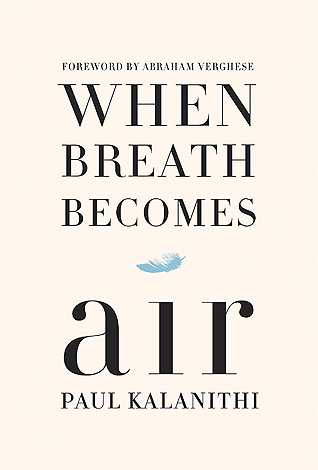
Book Review – When Breath Becomes Air by Paul Kalanithi

Cover of the book 'When Breath Becomes Air' by Paul Kalanithi, featuring a minimalist design with a blue feather.

As a pre-med, I’ve gotten into the habit of reading not just books containing relevant technical knowledge, but also the books that really show the human side of medical careers. This was the book that filled the story-shaped void in my stack of cell biology textbooks.

Dr. Paul Kalanithi, the author of this autobiography, details his journey, starting out with his experience moving to Kingman, Arizona from New York City. He didn’t have much to begin with; at the time, the school district he grew up in didn’t have the best resources, yet he pressed on. Finding solace and meaning in the classics, he built a solid foundation which ultimately got him into Stanford University. After finishing his master’s degree at Cambridge, he found his calling, and went to medical school at Yale.

Yet, the nature of this book wouldn’t be the same if it were just about his successes. The story takes a tragic turn in the middle of his neurosurgery residency. He was diagnosed with stage IV metastatic lung cancer. Reflecting on his mortality as a human, he realized that coming in such close contact with his own mortality had changed both “nothing and everything,” simultaneously realizing that thinking about death all the time was no way to live. Despite being faced this diagnosis, he didn’t stop being himself, continuing his career for as long as he can hold on.

Of all the autobiographies I have read, this one is the memorable, not because it related with a future career trajectory that I’m trying to pursue, but a rare book that addresses human mortality and the nature of life itself in a field that coexists side-by-side with death. It’s for this reason that I believe that this work is a must-read for anyone interested in pursuing a career in medicine. The one part that I simultaneously love and hate about autobiographies is their dual and fickle role— while they chronicle the herculean tasks that their authors had to go through to achieve overwhelming success, loss and sadness bleed through the pages as well. A good autobiography will have moments where one feels like they’re standing at the summit of the mountain with the author, and moments where one is crying alongside them.

Ultimately, my greatest takeaway from the book is this line, which follows me today, and will follow me as I continue to go through my own journey: “even if I’m dying, until I actually die, I am still living”.

Frindle by Andrew Clements

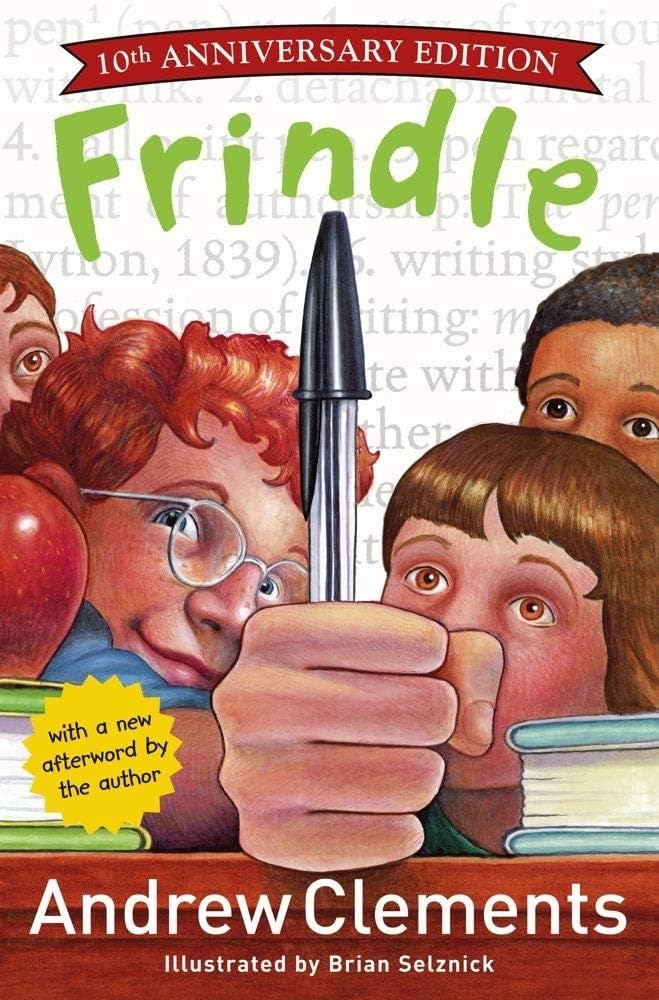
Cover of the 10th anniversary edition of 'Frindle' by Andrew Clements, featuring a group of children with various expressions, holding a pen prominently in the center.

Frindle is a short novel by Andrew Clements.  The story is about a ten-year old boy named Nick Allen who attends Lincoln Elementary School in New Hampshire.  Nick has developed a reputation for being mischievous.  He tries to get away with doing as little homework as possible.  Upon entering the fifth grade, he meets a new teacher named Mrs. Granger who is known for being very strict about using a dictionary and following the rules of the English language. 

Nick tries to challenge Mrs. Granger by inventing a new word.  In front of his teacher, Nick begins to use the word “frindle” to describe a pen.  The other classmates find this amusing, and they start using the word frindle as well.  Mrs. Granger tries to stop them, but it becomes a massive craze.  What started off as a childish prank eventually develops into a nationwide phenomenon, and even Nick can’t stop its momentum.

This book is extremely entertaining.  The characters are very realistic and the book makes it seem like this could have happened in real life.  I enjoyed the fast pace of the story and the many surprises throughout the book.  I read it very quickly because I constantly wanted to know what would happen next.  Not only is the story funny and enjoyable, but it explores interesting themes about the power of language and creativity.  It helped me think about the origin of words and about the beauty of the English language.  I would definitely recommend this book to readers of all ages.

The Hunger Games: Sunrise on the Reaping

The first impression I got from watching the quirky, animated stop-motion film “Fantastic Mr. Fox” is that it’s a fun, lighthearted film about clever animals and the angry, vengeful farmers who seek to harm them. The film follows Mr. Fox, an ex-thief, who cannot help himself from returning to his old ways of stealing food, despite the promises made to his wife that he would try to live a safer, more quiet life. When Mr. Fox does finally give in to his wild nature again, his actions put his family and friends at risk and causes chaos to erupt. Even though the film has many laughs and is action-packed, it also is a thoughtful and emotional film, especially concerning family, identity and growing-up.

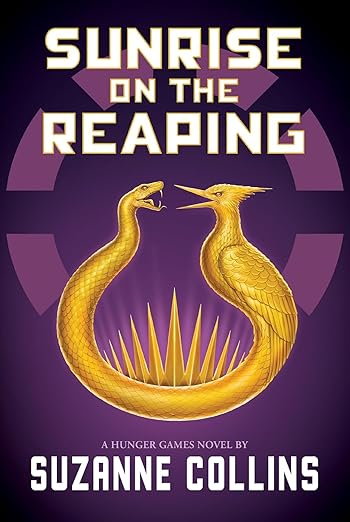
When I first started reading the first few pages of this book, I just could not stop. This book is like my cup of tea, I love dystopian, fantasy novels, and if you are looking for a book in that genre, this is totally the book for you. It is so interesting to follow the journey of Haymitch as a 16 year old boy, because he is so different in his character compared to when he first makes his appearance in the first book of the Hunger Games series. This book is beautifully written with much detail, and action, and is associated with feelings of sadness, and catches your eye throughout the whole book. I am a huge fan of the Hunger Games world, and when I saw that Suzanne Collins was going to release a new book, you have no idea how excited I was, but I also had mixed feelings on if it was going to be as good as the last Hunger Games, the Ballad of Songbirds and Snakes, I was not disappointed at all and love this book.

I would highly recommend this book for action, and adventure seekers, and fans of fantasy and dystopian novels. I would recommend however, reading the first Hunger Games book in the series and continuing through in order, before reading Sunrise on the Reaping, as it better follows through with the story and will allow you to better understand the different characters, and the story. Sunrise on the Reaping is now available to check out at the Mission Viejo Library today! And is going to become a major motion picture in theaters in November!

Fuzz: When Nature Breaks the Law by Mary Roach (Book Review)

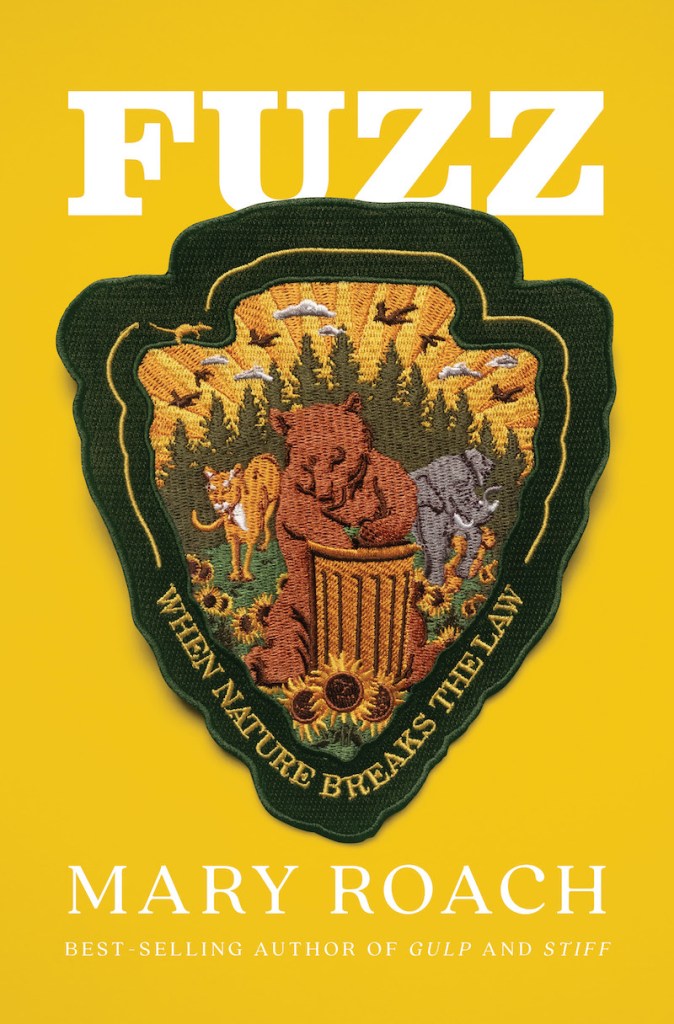
Book cover of 'Fuzz' by Mary Roach featuring an embroidered patch with animals including a bear, a coyote, and a deer, set against a yellow background. The subtitle reads 'When Nature Breaks the Law'.

What does the natural world owe us? Should animals and humans exist as separate entities or be allowed to co-exist? If a bear robs your house, is it a crime? Fuzz by Mary Roach tackles all these questions and more, examining what occurs when nature breaks the laws of human society. 

One such case involves suburbanization and its impact on wildlife. As suburbanization continues, food related bear break-ins have become more prevalent, delivering an interesting moral quandary. In later chapters, I found that this book veers somewhat from its original concept of “Nature Breaking the Law,” instead providing insight into the role of wild animals (and a few plants) in our increasingly less wild world. Roach travels throughout the world to investigate issues at the intersections of Human-animal interactions. One chapter I found very interesting was when Roach travelled to India to investigate elephants and the behaviors that stem from the expansion of agriculture. 

One thing I really love about Roach’s writing is that she always finds a way to include fun little tidbits and facts. Some of my favorites include:

  • Drunk Elephant isn’t just a skincare brand, it’s a phenomenon that occurs relatively often when elephants break into fermenting products.
  • Bears, when hibernating, reabsorb their waste. Bear cubs, however, don’t. They just let their mother eat it later.
  • Mountain lion, cougar, and puma are all just names for the same species.

This book isn’t only about animals though. There are also a few chapters on plants, including one specifically on, of all things, castor beans. Castor beans contain the poison ricin, which is illegal to possess. However, the plant itself is legal to own. I also learnt about the dangers of old, tall trees, which can cause death or injury from falling limbs. 

In general, I found this book highly informative, grappling with serious topics while still maintaining a lighthearted and funny tone. I would recommend this book to anyone interested in nature, or just anyone looking for a nonfiction book that doesn’t read like a textbook.

Book Review: Animal Farm

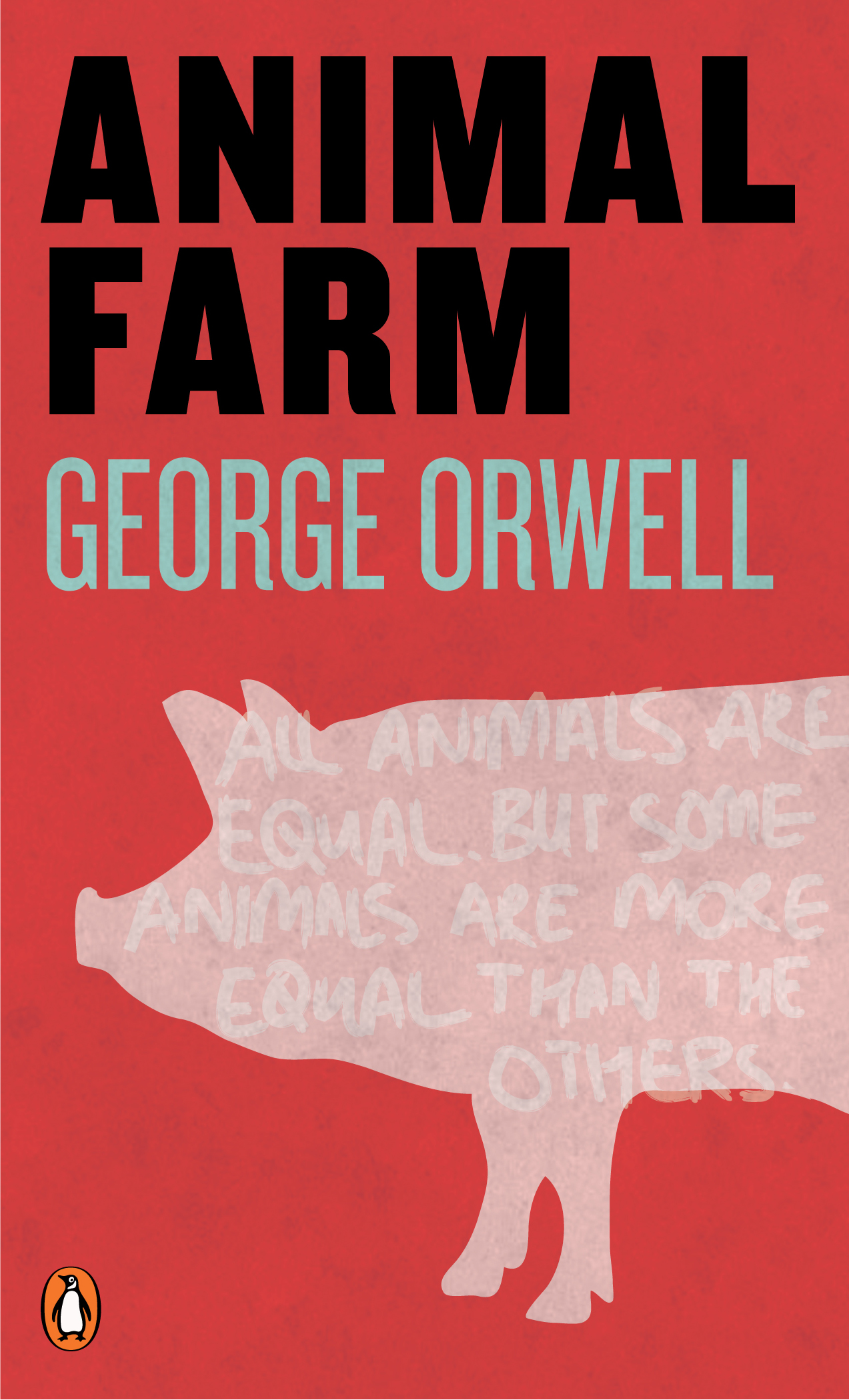
Cover of 'Animal Farm' by George Orwell featuring a silhouette of a pig and the text, 'All animals are equal, but some animals are more equal than others', against a red background.

Animal Farm by George Orwell was one of my first classics, and is one of my favorite pieces of literature. It is a dystopian novella that, despite having complex ideas and themes, is quite easy to understand, making it a great read for beginners. However, it should be noted that this story contains mature themes, such as violence.

Taking place in a mid-20th century English farm named Manor Farm, the book follows farm animals that overthrow their abusive human farmer, Mr. Jones; the animals hope to establish an equal society within the farm. However, the pigs, led by Napolean, take control and tyrannically oppress the other animals.

The plot is interesting, keeping readers engaged the entire time. Orwell’s writing style and language is a bit challenging, but still understandable. The slow build up to the pigs’ corruption is thrilling yet terrifying; the reader slowly begins to understand that the pigs are no better than the humans. Despite being published in 1975, Animal Farm‘s themes are still significant to society today. It criticizes totalitarianism, revealing how power corrupts.

“All animals are equal, but some animals are more equal than others.” This quote by George Orwell is ironic, satirizing tyrannic leaders. It means that ideals of equality can be destroyed by unchecked power. The corrupt pigs of the farm demonstrate this danger.

Perhaps I am a bit biased because it is one of my favorite books, but I cannot provide any criticism when it comes to The Animal Farm. To me, it is an amazing book that challenges readers to contemplate society and its flaws. This novella is powerful, despite its seemingly simple story.

Things Fall Apart by Chinua Achebe

Chinua Achebe’s Things Fall Apart follows a wealthy and respected warrior, Okonkwo, living in a late 1800’s Nigerian tribe. Haunted by the actions that led his father, Unoka, into exile, Okonkwo leads his life by rejecting his father’s feeble and “feminine” demeanor. To fully denounce his father’s scarred reputation, Okonkwo embodies, what he feels, is an ideal warrior to a great extreme. While Okonkwo hopes to gain the respect of his clan, his actions that reflect this warrior construct are interpreted differently by his fellow clansmen.

Achebe immerses readers in pages of pure Igbo culture, bringing readers into a full understanding of the societal customs and government of the Igbo people in Nigeria at this moment in time. However, the end of the novel is met with the growing and consuming influence of British colonial expansion. Through tactics of pacification and outward violence, the colonial missionaries successfully break apart Okonkwo’s tribe. When Okonkwo attempts to resist these abrupt changes, his clan responds indifferently to his ambition. Through this rejection, Okonkwo meets his tragic downfall as a result of his weak collective identity.

Achebe concludes in the novel with a jarring transition into the perspective of a colonial missionary, in which the missionary decides to write a novel, titled The Pacification of the Primitive Tribes of the Lower Niger, that encapsulates Okonkwo’s tragic and complex life into a single paragraph. The demeaning language used in this title, as well as the arrogance and indifference highlighted in the missionary’s brief inclusion of Okonkwo, struck me the hardest. I felt that the most significant moment of the novel occurred at the end, in which Achebe illuminates a major global issue: outsider perspectives, such as that of the missionary, diminish and flatten the depth of insider perspectives.

While insider perspectives show depth and reality, outsider perspectives can misrepresent, simplify, or erase the lived reality of underprivileged groups. The insensitivity of an outsider can strip the dignity and traditions of an insider, creating a contrast between what readers know and what an outsider records. Ultimately, Achebe’s novel presents readers with a universal message: perspective directs our knowledge and only those with first-hand knowledge and experience should have the privilege of telling their story.

Book Review: Things Fall Apart by Chinua Achebe

Last summer, I decided to explore contemporary international literature further when I discovered Chinua Achebe’s African Trilogy, starting with Things Fall Apart, a book about an Igbo warrior’s struggle against British colonialism and the devaluation of his culture. I found this book particularly interesting, as it offered a new, first-person perspective of the effects of European colonialism that no history textbook could really replicate.

The book begins with an introduction to Okonkwo, the main character of this novel, who is a wealthy warrior and a “man of title” in his hometown of Umuofia. From a young age, Okonkwo adopts an opposite view of life to that of his father, Unoka, whom he viewed as weak and “effeminate” due to his laziness and love for the arts. Due to this start, Okonkwo worked as hard as possible to rise above his condition, gaining a rigid worldview as a result.

As the story progresses, Achebe reveals more aspects of pre-colonial Africa through his storytelling. After a funeral ceremony ritual involving a gun salute goes wrong, resulting in the death of a 16-year-old, Okonkwo gets exiled for 7 years to his motherland, Mbanta, as a punishment for his direct involvement. In Mbanta, Okonkwo begins to hear stories from his friend, Obierika, about the arrival of European missionaries. As years pass in exile, Okonkwo witnesses the devaluation of their traditional religious beliefs and values.

Through Okonkwo, Achebe attempts to explore the theme of masculinity as one that is central to the novel, particularly through Okonkwo’s rigid ideals about strength and weakness, which render him stoic to a fault. Okonkwo’s rigid categorization of activities that he considers “feminine” and “masculine,” along with his struggle to remain in control throughout the novel, can ultimately be interpreted as reasons behind his inability to adapt to changing circumstances.

Overall, I found Achebe’s storytelling style, as well as the narrative that this book sends, incredibly powerful. Through his usage of proverbs and an accurate depiction of traditional Igbo culture, Achebe paints a vivid picture of pre-colonial African society and gives the reader a new perspective on the effects of European colonialism. I would recommend this book, as well as the other two books in this trilogy, to anybody who is interested in world history, particularly the history of African literature.

Scorpions by Walter Dean Myers.

Scorpions is a Newbery Honor book by Walter Dean Myers.  This novel tells the story of Jamal Hicks, a twelve-year-old boy living in Harlem.  Growing up in a challenging environment, Jamal faces tough decisions and growing pressure from his peers.  His older brother, Randy, is in jail for murder.  Randy’s absence leaves a void in Jamal’s life that other people seem to be trying to fill.  Jamal is approached by a member of Randy’s gang, the Scorpions.  He wants Jamal to take charge of the gang’s drug dealing business.  Jamal feels torn because he wants to stay out of trouble but he also needs money because his family is struggling financially.  As Jamal’s life becomes increasingly complicated and dangerous, he relies on his friendship with a loyal and thoughtful young man named Tito.  Tito helps Jamal as they navigate through difficult situations.

One of my favorite things about his book is its message about friendship and trust.  I appreciated the loyalty between Jamal and Tito.  They are just young kids trying to do the right thing in a world that keep throwing hardships and challenges at them.  This book shows the importance of having someone who has your back, especially if you are a kid dealing with things that no young person should have to deal with.  I like the way this book teaches to do the right thing even when it seems like the whole world around you is corrupt.  Unfortunately, this book has some inappropriate language and a bit of violence.  The story as a whole is also somewhat frightening and depressing, so I would not recommend this book to children.  However, older readers could benefit from the messages of this insightful book.

Book Review: Little Women

Little Women is a semi-autobiographical novel by Louisa May Alcott that explores themes of family, identity, and the tension between personal ambition and traditional expectations for women, particularly during the Civil War era. The story follows the four March sisters—Meg, Jo, Beth, and Amy—as they navigate growing up, facing hardship, and discovering who they want to become in a world that limits women’s roles and freedoms.

On the surface, Little Women might seem like a sweet, domestic tale, but it goes much deeper. Each sister struggles with her own dreams and limitations: Meg longs for stability and elegance, Jo fights to break free from gender roles to become a writer, Beth seeks peace and home, and Amy wrestles with her ambition and desire for refinement. Their journeys are rich with emotional nuance, and Jo in particular stands out as a deeply relatable character for readers who have ever questioned whether the life expected of them is the one they truly want.

One of the most powerful aspects of the book is how it presents the quiet strength and complexity of women’s lives. Alcott doesn’t dramatize the sisters’ challenges, but she writes them with compassion and clarity. Jo’s struggle with her temper, her ambition, and her resistance to conventional paths like marriage captures a sense of restlessness and yearning that still resonates today.

What makes Little Women stand out is its emphasis on choice and self-discovery within the bounds of family and society. The sisters are constantly making decisions about who they want to be—not just in terms of careers or relationships, but morally and emotionally. Jo’s internal battle between her desire for independence and her love for her family is especially compelling, and Alcott doesn’t offer easy answers.

The novel doesn’t shy away from sadness or loss—Beth’s illness and eventual death are deeply moving—but there’s also a steady current of hope and resilience. The March family endures, grows, and finds joy even in hardship. That balance between hardship and warmth is part of what makes Little Women such a lasting and beloved story.

I found this book emotionally rich and surprisingly modern in its themes. Alcott’s writing is heartfelt and honest, and she gives each sister her own voice and dignity. Little Women might not be fast-paced, but it’s deeply rewarding—especially for anyone interested in stories about women, family, and the lifelong process of becoming yourself. I’d give it a 7/10 for its timeless insight and emotional depth.