Dracula by Bram Stoker

Dracula (Bram Stoker) eBook by Bram Stoker | Rakuten Kobo

The creation of the horror image and the gloomy atmosphere in the novel is realized by spreading the devil world centered on Dracula, making the readers like a horror drama staged in the dark and dirty old castle. At the beginning, the novel presents a series of mysterious and dramatic images, such as a remote old castle, a desolate night, a sudden werewolf, and a strange bat.

The unknown smoke and other images serve as background factors to arouse readers’ memories and impressions of the grim and horrible scenes, so as to present a terrifying world to readers. This technique was also widely used in 19th century Gothic novels. On the one hand, it introduces the characteristics and identity of Dracula, on the other hand, it also employs these images to expand readers’ imagination and enhance their understanding, which sets a tone of terror and panic for the whole novel.

The existence of Dracula and the perception of his image are the self-perception of human eyes or psychology and the vivid description and presentation of the current social mentality. Jonathan’s visit and familiarity with the castle actually started the contest and struggle between good and evil, and at the same time hinted at the subtle relationship of conquest and resistance between the British Empire and the colonized countries at the end of the 19th century. The novel presents the reader with a strange and deviant world. In such a world, the reader is as anxious as the monster is terrifying. Dracula represents a strong possessiveness and a desire for racial invasion. He tried to invade London from far away eastern Europe, and while women were sleeping, he controlled their consciousness and drank their blood to reproduce his own race, expand his territory, and dominate the British Empire.

At the same time, the women who had been sucked into the blood were transformed into social outliers. They broke away from the male authority and were no longer bound by traditional concepts and customs, and freely expressed their likes, dislikes and desires. They possessed the characteristics of the new females emerging in the British society at the end of the 19th century, which was not recognized by the mainstream population at that time. The image of Dracula’s attempt to overturn the harmonious and orthodox order of British society was the accumulation of capital in the British Empire. The shadow of colonial expansion and self-portrait are the reverse of imperial colonial rule. At the same time, Dracula’s whole scheme is a symptom of the waning British empire’s fear of its own political future, a looming fear of the vassal states that are rebelling against colonialism and the rising powers that are gaining momentum.
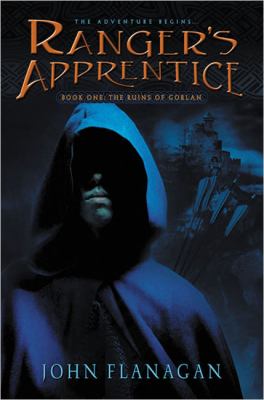
Ranger’s Apprentice: The Ruins of Gorlan by John Flanagan

The Ranger’s Apprentice series revolves around a boy named Will, an orphan taken in as a castle ward at Redmont fief, one of the fifty fiefs in Araluen. This first book follows his acceptance into the respected (and feared) Ranger Corps, the highly capable unseen protectors of the kingdom. As an orphan with no last name or memory of who his parents were, Will is set, along with his fellow wards, to be chosen by one of the Craftmasters and trained in service of the kingdom. 

However, Will’s skill set doesn’t fit any of the apprenticeships that his peers are chosen for. After Will climbs the tower up to the Baron’s office to try and find out his fate and the mysterious Ranger Halt catches him, he’s told that he would be most suitable for Ranger training. He learns to use the Ranger’s choice weapons, the bow, a throwing knife, and the specially made saxe knife, and learns the art of unseen movement, the key to a Ranger’s job in protecting his assigned fief. 

Meanwhile, Morgarath, the lord of the Mountains of Rain and Night, exiled from Araluen, plots his revenge against the kingdom. Having been planning for 15 years, he begins to mobilize his army of monstrous Wargals and unleashes the terrifying Kalkara, huge beasts of war that can freeze a man with their eyes. When word of this gets to Araluen, the Ranger Corps are put on high alert. Will, Halt, and another Ranger, Gilan, set off to track and kill the Kalkara. The book ends with Araluen mobilizing for war with Morgarath.

In addition to Will’s journey towards becoming a Ranger, I was particularly taken with his interaction with Horace, one of the castle wards and one of Will’s long-time bullies. Horace is accepted to Battleschool, training to be a knight; however, since he was alienated as an orphan, many of the other knight apprentices begin to bully him, causing Horace, in turn, to lash out at Will. After Halt gets rid of the Battleschool bullies, the two boys reconcile their differences and become fast friends; they see past their conflict and find a true friend in each other. I learned something crucial from this: that hostility is often rooted in something that can be solved with listening and understanding.

I love this series because it can be enjoyed immensely by anyone of any age; Flanagan transformed stories composed for his son into 12 artfully written novels of heroism, humor, and friendship. I highly recommend this book and this series to anyone in need of a fun and satisfying read.

-Adelle W.

The Ranger’s Apprentice series by John Flanagan is available for checkout from the Mission Viejo Library

Pet Sematary by Stephen King

This chilling horror novel, set in the small town of Ludlow, Maine, captured my attention from the first sentence and kept it until the very end. It tells the story of Dr. Louis Creed and his family when they move from Boston to Maine. Louis, Louis’ wife Rachel, the Creed children, Ellie and Gage, and Ellie’s cat Church, settle into this new environment with mixed feelings.

From the first day they’re there, they experience strange occurrences and frightening events; on Louis’ first week at his new job as director of campus health services at the University of Maine, a student named Victor Pascow is brought in, severely injured. He says his last words to Louis specifically, warning him about the “pet sematary” that the story revolves around. 

Louis’ awareness of the pet cemetery prompts chilling dreams of Victor Pascow and the cemetery. This, combined with Rachel’s severe anxiety about death due to the traumatizing death of her sister as well as the family’s overall discomfort with moving, makes the family dynamic strained, quick to argue. 

The Creed’s neighbor, Jud Crandall, explains, after much prodding, the pet cemetery is known throughout the town to raise pets from the dead. In fact, when Church is hit by a truck speeding on the highway near their home, Jud takes Louis to the cemetery, showing him how to bring the cat back. However, the cat comes back different than he was before; he acts differently, and even his fur is coarser to the touch. 

Months later, when Gage suffers the same fate as Church did, the pet cemetery comes up as an option for Louis to get his son back, despite the horrifying consequences that his actions would bring. Louis comes back again and again to the thought of the cemetery, and he eventually makes a decision that destroys his life forever. 

Stephen King is a master at creating an aura of unease with his storytelling. The “pet sematary’s” involvement in the story builds with every chapter, making the book impossible to put down but also frightening to the core. The depiction of real human relationships and interactions between Louis, Jud, and the other characters are interwoven beautifully with the underlying horror, making it seem like this story could happen to anyone of us, wherever we are. 

Understandably, this book might not be for everyone; it has a tendency to spark nightmares and frightening thoughts for those unaccustomed to thriller novels, and even for those who are. Due to the amount of gore and unforgiving description of the worst parts of life, this book is likely not suitable for younger readers. However, for fans of horror like me, or those readers who are just in the mood to be scared, this novel is, in my opinion, one of the best written novels in the horror genre. 

-Adelle W.

Pet Semetary by Stephen King is available for checkout from the Mission Viejo Library

Gulliver’s Travels by Jonathan Swift

Gulliver's Travels (Classic Starts Series) by Jonathan Swift, Jamel Akib,  Paperback | Barnes & Noble®

Gulliver’s Travels has not only a profound ideological content, but also a relatively perfect art form. First of all, Swift used fictional plots and fantasy techniques to depict the reality of Britain at that time. At the same time, he also created a colorful, fairy-tale fantasy world based on the reality of Britain at that time. Swift’s fantasy world is based on reality, while the contradiction of reality is more prominent in the fantasy world. After the coup d ‘etat of 1688, for example, the Tories and the Whigs fought for power and attacked each other, when in fact they both represented the interests of the aristocracy and the bourgeoisie. Swift captured the essential characteristics of parliamentary party fighting and created the high-heel party and low-heel party in Lilliput.

These fictions make reality stronger, more concentrated, more typical, and more universal. The artistic charm of Gulliver’s Travels is also here. Swift’s fantasy and reality are harmonious and unified. Swift’s fantasy and reality are harmonious and unified, and Gulliver’s experiences are different in Lilliput, Brobdingnag, Laputa and Houyhnhnm. But they were all reasonably arranged without any flaws. Every time he went to a fantasy country, he was treated differently. He made his works have a sense of artistic reality, which has a great appeal, so that satire can achieve a high effect. When the author mercilessly satirizes and criticizes the parliamentary politics and reactionary religious forces in Britain at that time, some of them are straight sarcasm, some use the tongue of foreigners, some are metaphorical sarcasm, some are animal sarcasm, all of which are funny.

The combination of fantasy and reality also adds a unique artistic charm to the novel. Although the author presents a mythical world like a fairy tale, it is based on the reality of social life in Britain at that time. Due to the author’s precise, delicate and apt description, people can not feel that it is a fantasy, as if everything is true. For example, when describing the proportional relationship between small people and adults, and between people and things, the ratio of one to twelve is always reduced or enlarged. The little man of Lilliput is twelve times smaller than Gulliver. And the lords of the Brobdingnag were twelve times larger than Gulliver. One of Gulliver’s handkerchiefs would be a carpet for the Lilliput Palace. Brobdingnag’s peasant’s wife’s handkerchief, draped over Gulliver, became a sheet.

In describing the operation of the flying island of Laputa, the architecture of palaces, and the structure of towns, the author also intentionally uses the knowledge and data of mathematics, physics, chemistry, astronomy, and medicine. In this way, the authenticity, harmony and symmetry of the partial details of the characters are transformed into the reality, harmony and unity of the whole picture and scene, which greatly enhances the sense of reality and appeal of the work. The author’s writing is simple and succinct. In Lilliput, for example, Gulliver transcribes an official proclamation extolling the king as the king of kings, with his feet at the center of the earth and the sun above his head, etc. Gulliver, in brackets, calmly explained that the perimeter was about twelve miles.

With this explanation, the boundless territory that reached the four poles of the earth shrank abruptly to a mere dozen leagues around it. The contrast is hilarious. The words in parentheses reveal the author’s simple and matter-of-fact style, which he does not seem to be commenting on, but rather to explain to us objectively and faithfully the scale of Lilliput. Although the scenes of Lilliput and The Land of The Houyhnhnms vary, as do the circumstances of the heroes, the layout and style of the whole novel are consistent. Every time Gulliver went to sea, the causes and consequences are explained in detail, the complicated plot is described in order of time and space, the text is concise and vivid, and the story is unique.

Golden Son by Pierce Brown

Recently, I read Golden Son written by Pierce Brown. I really enjoyed this book and I am currently reading the third book in the series. The story is set in the future, when mankind has evolved. Now, humans are split into different levels, based off of the color of their skin. The story takes place right after Red Rising and still follows Darrow. He is getting closer and closer to his goal. In this novel, Darrow is having trouble getting the golds to start a civil war.

I chose this excellent book for many reasons. Overall, the book is well written. It has a good mix of action and suspense. One thing I liked about Golden Son was the relationship between Darrow and the Belonna family. Going off of the first book, Darrow and Cassius still have a vendetta.  One of my favorite parts of the book was when Cassius and Darrow finally meet after two years. Darrow challenges Cassius to a duel, and of course Cassius accepts. Cassius is known for being good at dueling, so he is over confident. At first, Darrow acts very bad at dueling, building up Cassius’s confidence. Then, Darrow pulls out all of his tricks. He tells Cassius that he has been training everyday for this moment. He easily beats Cassius, cutting off his arm, and starting a civil war, starting his goal. Overall, I would rate this book nine out of ten, and would recommend this to any middle-schoolers and up.

-Daniel C.

Golden Son by Pierce Brown is available for checkout from the Mission Viejo Library. It can also be downloaded for free from Overdrive

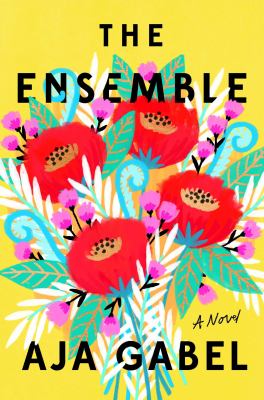
The Ensemble by Aja Gabel

There seldom comes a rare time such as this where I discover a well-executed novel combining the art forms I love the most: writing and music. Author Aja Gabel’s stunning prose collides head-on with the novel’s subject, four entangled musicians in a string quartet who always choose each other despite the warring world each lives in. Featured in this quiet yet nostalgic tale are:

  • Jana, the determined first violinist with a stern face and high ambitions,
  • Brit, the orphaned second violinist whose love for the picturesque transcends all,
  • Henry, the prodigy violist who stays despite growing tendonitis and offers for a light-flooded future,
  • and Daniel, the embittered cellist, whose lack of money is made up for by his dark charisma.

There are times where Gabel’s beautiful wording seems to reverberate with vitality—you are caught up in the swiftness of Brit’s bow, the biting in Daniel’s words, the electricity passed along each measure of music. Without hearing a note, you’ll discover the triumph and the loss that comes with the reward of being in an ensemble.

Each member of the quartet vibrates on their own different frequency, but produce sound waves in the same key. The novel itself, while not full of action or climax, holds in it a quiet strength and the wisdom of its author. The flux of time and gravity on people is captured in such a specific and wondrous way that you cannot help but feel is magic.

You’ll find the way their comradery and friendship morphs over time to be bittersweet. You’ll root for them, cry with them, relate to their struggles. While revolving around adults and therefore carrying some adult themes, it’s a novel most people can find within their own selves: something aching and pulsing, something in the soul.

—Esther H.

The Ensemble by Aja Gabel is available for checkout from the Mission Viejo Library

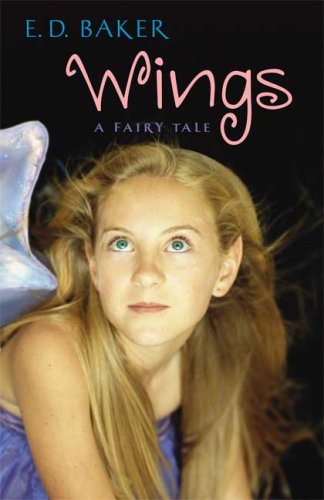
Wings by E.D. Baker

Tamisin Warner was always a bit different from everyone else. She had sparkly freckles that she called spreckles, pointy ears, and always danced outside when the moon was full.  Ever since one fateful Halloween, she had been able to see strange human animal hybrids no one else could.  Jak, a new boy at Tamisin’s high school, seems to realize Tamisin is different and knows more about her than he lets on.

However, when actual fairy wings emerge from her back, Tamisin sets out to find the answers to who she truly is with Jak by her side.  Tamisin encounters many mysterious, magical creatures and strange new places during her journey and isn’t prepared for what the answers to her questions hold…

I enjoyed this book very much because it was set in present day but was still mysterious, magical, and whimsical all at once.  It’s interesting to read from both Tamisin and Jak’s point of views as you get to learn about both characters’ background stories and their seemingly separate worlds that are actually intertwined.  This is another great book that is reminiscent of a fairy tale by E.D. Baker!

-Kaitlyn S.

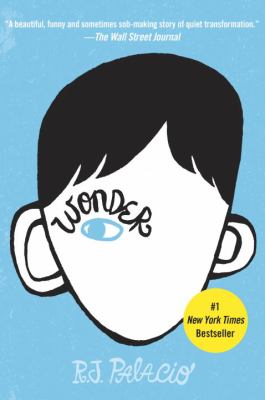
Wonder by R. J. Palacio

Wonder is a book about Auggie Pullman. Auggie was born with Treacher Collins Syndrome which affects bone development.  Because of this, Auggie is always the odd one out. On his first day at Beecher Prep, Auggie’s new middle school he gets a tour of the school with Jack, Julian, and some other kids. Straight away Julian is rude and mean towards Auggie, but Jack is nice. As the year progresses, the students get used to how he looks and befriend Auggie. But shortly after a rumor spreads that touching Auggie will give you the plague. This makes the kids avoid Auggie once again. Then Halloween, Auggie’s favorite holiday, comes around. Auggie decides to dress up as Bloody Scream. As he’s walking into class, he hears Jack say that if he looked like Auggie he would kill himself. Jack had no idea that Auggie heard him. Auggie stops talking to Jack, and so Jack asks Auggie’s new best friend Summer why he’s mad. Summer response is Bloody Scream. Soon Jack realizes that he had seen Auggie in a Bloody Scream costume standing at the door to the class. Jack immediately regrets what he said and apologizes to Auggie. Then one day Julian tells Jack that being friends with Auggie isn’t worth it. This makes Jack angry and so he punches Julian in the face.  Because of that incident, after winter break Julian turns all the boys in their grade against Jack and Auggie, launching some kind of war. After a while however, kids get tired of their little war and become friends with Auggie. The book ends at a three day nature retreat. One day at night Jack and Auggie go into the woods because Jack has to pee. While in the woods, Auggie and Jack run into kids from a different school. The kids make fun of Auggie until three kids from Beecher Prep that normally also make fun of Auggie stand up for him. Then later on back at the school Auggie wins an award for courage and kindness. Everyone wants to be Auggie’s friend now and he’s no longer the odd one out.

– Emilio V.

Wonder by R.J Palacio is available for checkout at the Mission Viejo Libary.

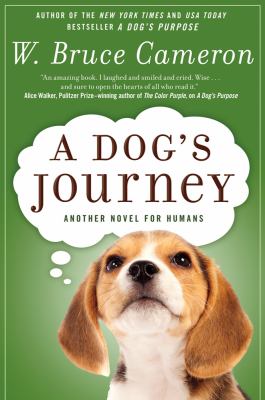
A Dog’s Journey by W. Bruce Cameron

The star of this book is the kind of dog who is so devoted he would follow his person to the ends of the earth.  This story is the sequel to A Dog’s Purpose, in which this dog had many lives caring for his boy, Ethan.  When he is Buddy in his later years of life, he meets Ethan’s granddaughter, a sweet girl named Clarity whom he protects around the Farm.  When he passes and is reborn, he finds Clarity again and works hard to find and be with her each reincarnation. This dog is her constant companion and guardian for her whole life.

I really enjoyed this book because it was very well-written with so much amazing detail.  It’s interesting to read because it is written from the dog’s point of view and helped me see the story in a new perspective.  This book is great for laughs and is heartbreaking every time the dog dies. It shows how incredibly loving, caring, and loyal dogs are to their people.

-Kaitlyn S.

A Dog’s Journey by W. Bruce Campbell is available for checkout from the Mission Viejo Library.

Want by Cindy Pon

Vividly conjured from bestselling author Cindy Pon’s colorful imagination comes an alluringly dark society set in near-future Taipei, where sickness and pollution plague its inhabitants. A thriller spun into sci-fi, the book depicts a story about a group of teens who try their hand at changing their society for the better by toppling the empire of the rich minority.

With stunning prose dripping with imagery so powerful it induces incredibly lifelike images, Pon does a brilliant job highlighting the stark contrast between the privilege of the rich and the scraps the poor pick up behind them, illuminated by its futuristic setting. It’s a story about division, unity, and vigilante justice, highlighted with an ever-so-sweet touch of friendship and romance. The novel does a brilliant job of conveying a message that today in society we like to turn a blind eye to: the manipulating and unorthodox methods used in business to make money. Creating a problem to sell a solution. Eradicating those who try to stand in the way. It’s the harsh truth we always knew existed.

There are so many reasons this novel stands distinctly apart from others for me. For one, it hits close to home: the Taiwanese heritage runs in my veins as potently as it does in the novel, with its allusions to language and culture exposing the often overlooked traditions of the Taiwanese. And then, of course, the characters, so different from one another and yet sharing both a powerful bond and a common goal, become comrades on the way along the journey.

Finally, Zhou, the main character, has a voice that stays with you long after the turn of the last page. “I was going to become what I wanted to destroy,” he says bitterly, of trading his street-rat identity for esteemed upper-class socialite.

Ultimately, Want reflects, in its intrinsic essence, humanity’s inevitable tendency to divide itself, whether by wealth, race, gender, religion, sexuality, or pure hate. It’s a powerful message to recognize those who cannot speak for themselves because we do not listen.

Here’s to hoping that that message is amplified throughout the world, throughout time, and proclaimed as a lasting testament to human nature, so that we ourselves can be bettered.

-Esther H.

Want by Cindy Pon is available for checkout from the Mission Viejo Library. It is also free for download from Overdrive