Book Review: The Lost Hero, by Rick Riordan

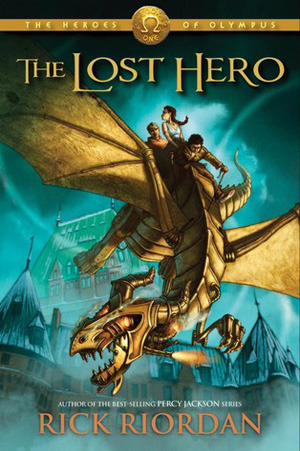
lost_hero_coverIn The Lost Hero by Rick Riordan, a teenage boy named Jason ventures through the USA accompanied by Piper and Leo, his two closest friends. While trying to save the goddess Hera, these children are chased and attacked by a number of monsters and demons who were sent by the earth goddess Gaea. Jason is also on a quest to find his true identity, to find out why he was sent to America, and where he was before. Jason has no recollection of his life before being dumped on a school bus in the middle of a field trip to the Grand Canyon.

In this thrilling tale, secrets will be spilled, narrow escapes will be made, and identities will be told. I give this book a 9.5 out of ten because of its amazing descriptive detail and many “on-the-edge-of-your-seat” moments.

Rick Riordan has written two sequels to this book: The Son of Neptune and The Mark of Athena. The next book in the series, House of Hades, comes out in October. I am currently reading the Son of Neptune which is also a great book that I recommend and I plan to read The Mark of Athena once I am done with this book. Rick Riordan is a great author and I have enjoyed many of his other series, like The Kane Chronicles and The Olympians.

-Kyle H., 7th grade

Book Review: See What I See, by Gloria Whelan

see_what_i_see_coverThis book review is part of series of reviews written by students at St. Margaret’s Episcopal School for their 7th grade English classes.

The amazing story of endurance and troubled relations, See What I See was so very interesting because of the well thought and creative plot. Gloria Whelan, writer of See What I See, brings a lot of feeling to her story and makes it emotionally appealing to everyone.

I found this book even more intriguing because of my favorite character, Kate Tapert. This young girl creates an even more unpredictable set-up and her reactions alone are what I continue to read for. Kate was accepted into an art majoring college, miles away from her trailer home and she needed a place to stay. Her only choice was nothing but to stay with her long-forgotten, divorced dad for the year. As she continues to pursue her dream to be a famous artist, Kate has the attitude of a pickle jar and a heart of gold.

Dalton Quinn, Kate’s father and a very famous painter, is also one of main problem-makers in Kate’s life. After disappearing and falling seriously ill, Dalton falls deep into his hole of miserableness and loss. He receives numerous letters and paintings from his beloved daughter not bothering to write one back. When Kate moves into his house without notice, he becomes even more stubborn and ill. His personality is stubborn and he repeats to Kate, “I don’t need anyone to do things for me, certainly not an amateur artist…” (Page 43). His illness takes over him and leaves Kate to wonder if it was alright to leave her father home alone during the day or continue to attend art school. His attitude is one that stands out and catches my attention.

Ms. Tapert is the mother of Kate and waitress at a hotel restaurant in Connecticut. After her husband left her and ran to another state, she’s been working everyday as a waitress and collecting tips to pay off the rent on their trailer house. She is as stubborn as Dalton and even replies saying, “I’m not going to move into a house paid with Dalton’s money” (Page 16). Even with a chance to receive some of Dalton’s money, Ms. Tapert is too proud to receive any amount. She’s always reluctant and despised even the idea of her daughter moving into Dalton’s house.

The complicated relationships of all these characters make a vivid scene that greatly impacts each other. Gloria Whelan did a wonderful job creating different situations where opposite personalities and ideas combine to create one. As you read on you can figure out the relationship of the family altogether and how Kate would figure out how to manage her life and dreams at once.

Woven throughout the book, Gloria Whelan has added in the idea of pursuing your own passion and finding your own path to complete it. Staying determined and accepting the many challenges is one of the great lessons that I learned from reading this book. Kate Tapert was used as a great example for this and everyone can find some way to relate to her.

Gloria Whelan did a great job explaining each scene and its story really captivated each moment. Read Gloria Whelan’s See What I See to see if Kate really does stick to what she loves, and what her father truly thinks about Kate and her mother. I encourage everyone to read this because it is truly inspiring and has a strong moral in it. See What I See is a great book to read during your own time and to learn more about what your own passion is and seeking it.

-Alice L., 7th grade

Book Review: The Lost Sun, by Tessa Gratton

 Are you interested in the upcoming Thor movie, or any other movies associated with the other Asgardians, such as Odin or Loki? If so, then The Lost Sun by Tessa Gratton is the perfect book for you.This book is the first book of The United States of Asgard series, where the Norse gods rule alongside humans in America. For example, Odin is the vice president–always. However, when the most popular god of them all, Baldur, disappears, Soren, a warrior with an uncontrollable power of strength, and Astrid, a celebrity prophet, go on an expedition to find him. Even so, Soren learns that saving this god could change his destiny, but could also make him lose the things that he loves the most.

In my opinion, I thought that this book was a very great book, with a high rating of 9/10 points. In it, Gratton shows off her excellence by:

  • Retelling the myths for people who don’t know Norse mythology,
  • Doing some clever renamings of American places and times,
  • Describing very good details for each setting,
  • And writing some very surprising twists for the readers, including a very unexpected but satisfying ending.
I would recommend this book to fans of Norse mythology or of any Rick Riordan book, such as Percy Jackson or the Kane chronicles.However, readers should note that since Soren is the narrator of the story, he talks about some things that might be a bit upsetting for others, such as having a power that seems very great, but is actually the world’s worse curse. In the beginning of the book, he says that he and his mother had “both dreaded the day Dad’s curse would flicker to life” (Gratton 1) inside of himself. However, readers should learn now, if they haven’t learned already, that anything you have is a gift, rather than a curse.

Finally, Gratton creates some unforgettable characters whose stories share some key vaules and morals that are important in everyone’s lives.

-Megan V., 8th grade

Book Review: Flowers for Algernon, by Daniel Keyes

flowers_for_algernon_coverThis book review is part of series of reviews written by students at St. Margaret’s Episcopal School for their 7th grade English classes.

Have you ever wondered what it would be like to live in a world where you don’t know how to read, write, talk correctly, and have people stare at you like you’re stupid? Flowers for Algernon is a great book that immerses you in the life of someone who has all of those disabilities. In Flowers for Algernon, our brilliant author Daniel Keyes takes us on an ambitious walk through a disabled persons shoes, all the while trying to incorporate them into everyday society. He first thought of writing this book when he met a challenged young man and thought how good it would be if there were techniques to help him and others like him. Flowers for Algernon visits the point of view of how a disabled person might feel about this transition, rather than just how we might feel about it.

Charlie Gordon is 32 years old and lives by himself in a small New York apartment. All his life he’s struggled with a severe learning disability keeping him stuck at simple, and simultaneously making him a social outcast. Charlie has always desired to be smart to gain his mother’s approval, but he simply couldn’t retain knowledge. Coincidentally he is part of a research study where he takes basic tests and writes progress reports everyday so they can observe his development. “Dr Strauss says I should rite down what I think and remember and every thing that happins to me from now on. I don’t know why but he says its importint so they will see if they can use me. I hope they use me because Miss Kinnian says maybe they can make me smart. I want to be smart” (3).

In the lab, Charlie befriends two key people: Dr. Straus and Alice. Alice is Charlie’s best friend, motivational coach, helper, and first love. She is also Charlie’s first step into having a social relationship. Dr. Straus is the person who takes Charlie’s progress reports and analyzes them. He observes Charlie in therapy and examines his maturity.

One day the lab has Charlie race a mouse called Algernon in a maze. Much to Charlie’s aggravation Algernon beats him every time. The reason for Algernon’s success was entirely due to an operation performed on his brain, which super charged his intelligence and problem solving skills. Realizing Charlie would be a perfect candidate for this surgery, Dr. Straus hoped to test it on him as the first human specimen. Charlie eagerly jumps on this opportunity and the surgery is performed. Afterwards Charlie can’t see much of a difference, but little by little his intellect progresses; so rapidly in fact that he even surpassed his doctor. Unfortunately, our mighty mouse Algernon starts to display signs of digression. “When he found himself moving along the unfamiliar path, he slowed down, and his actions became erratic: start, pause, double back, turn around and then forward again, until finally he was in the cul-de-sac that informed him with a mild shock that he made a mistake. At this point, instead of turning back to find an alternate route, he began to move in circles squeaking like a phonograph needle scratched across the grooves” (212). Charlie fearfully starts to wonder if the same fate is inevitable for him… “What eludes me is the reason for his regression-is it a special case? An isolated reaction? Or is there some general principle of failure basic to the whole procedure? I’ve got to work out the rule” (213).

Flowers for Algernon is cleverly written from the perspective of the writer as though it is the main character’s journal. I really enjoy the fact that I can physically see Charlie’s intellectual progression in writing throughout the book. It really made his character come alive in a way I hadn’t experienced before. Flowers for Algernon also made a bold clarification between social disabilities and mental disabilities, as people sometimes assume they are one and the same. I highly recommend this phenomenal book, as it will give readers a fresh perspective on the true motives behind helping people adapt to our society. Is it really for our benefit, or for theirs?

-Jake K., 7th grade

Book Review: My Sister’s Keeper, by Jodi Picoult

my_sisters_keeper_cover“In my first memory, I am three years old and I am trying to kill my sister.”

The first sentence of My Sister’s Keeper by Jodi Picoult shows how special the book is. The author seems to have a talent on catching the sensitive problems of teenagers. Maybe we should put away all the awards that this book earned first and look at this interesting book itself.

First, the book uses days to separate each chapter, which this book starts on a Monday and ends on a Thursday. In each chapter, different characters tell the story in their prospective and finally connect the whole story. We can see how each character think and change through out the book, which is a very important element of the story. Jodi Picoult didn’t write these characters– she brought them to life and recorded their story.

The main character, Anna, is not born by chance. She is a medicine that is scientifically planned, so she can donate her blood and organs to her sister Kate, who has leukemia. Who is she? The youngest daughter, or just a shadow of Kate?

I think this book is suitable for teenagers around 13 years old and above. I will rate this book 10 out of 10, yes. Every character has their own emotional life that even a single word can touch deeply in your heart, and somehow you will find out that there is a part of you that is similar to them. And together we will see this 13-year-old girl fights her battle for her existence; together we will see how this war ends.

“In the end, though, I did not kill my sister. She did it all on her own.”

“Or at least this is what I tell myself.”

-Wenqing Z., 11th grade

Book Review: Peeled, by Joan Bauer

peeled_coverHildy Biddle is a writer for her high school paper, The Core. Their rival newspaper is the local paper, The Bee. And when the Ludlow house in Banesville, their town in Upstate New York, begins to scare the townspeople, both papers try to get the whole story. The only problem is that the editor of The Bee seems not to be giving the public the truth, and Hildy Biddle is trying to do just that.

A new counselor takes over the high school paper, and the reporters receive advice from a professional journalist. Hildy Biddle learns what a reporter must do: Ask questions and prove everything.

Meanwhile, strange things start happening in the town. Weird signs show up at the Ludlow house. An attempted break-in is suspected, then a possible murder occurs on the property. In addition, a psychic arrives in town and begins putting stories into people’s heads, claiming she was called to the town by the ghosts of the Ludlow house.
In order to find the truth of the whole ordeal, Hildy Biddle starts calling people all over related to the mystery.

The story is both realistically spooky and engaging as Hildy attempts to explain and report about all the strange occurrences. Will she successfully peel back all the false layers to expose the core in Peeled, despite all the challenges thrown her way?

I would recommend this novel to younger teens, but older teens may enjoy the story as well. I would rate this book pretty highly, as I enjoyed the plot twists and the surprise ending.

-Leila S., 8th Grade

Book Review: Star in the Storm, by Joan Hiatt Harlow

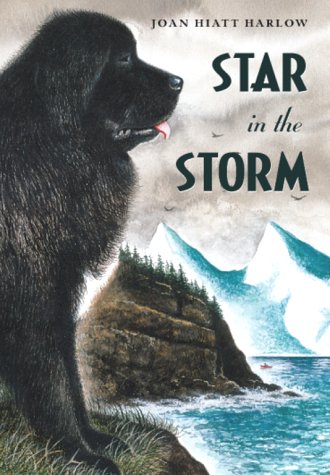
star_in_the_storm_coverA book filled with hope, suspense, and the strength of a relationship between a girl and her dog; Star in the Storm, written by Joan Hiatt Harlow, is by far one of my favorite books.

“One for sadness, two for mirth, three for marriage, four for birth; five for laughing, six for crying; seven for sickness, eight for dying, nine for silver, ten for gold; eleven for a secret that will never be told.”

When all non-sheepherding dogs get outlawed from the coastal village where Maggie lives, she is unwilling to let her Newfoundland, Sirius, go. She hides Sirius away as diseases flood the village. Having nosy neighbors, keeping Sirius hidden is a challenge. But when a violent storm hits, a boat packed with a hundred passengers gets stranded. Maggie knows that Sirius could save the passengers but is bringing him out of hiding worth risking his life. Besides, if anything goes wrong the passengers and Sirius’s life could be in danger.

This is a page-turning book that I had to read several times. This book is an easy read with twists and turns. I have suggested it to many of my friends knowing that whatever their type, Star in the Storm is a book worth reading.

-Danielle T., 7th grade

Book Review: Just Ella, By Margaret Peterson Haddix

just_ella_coverIn the book, Just Ella, Ella (also called “Cinder”) finds her own way to the ball (there was no fairy godmother, despite the rumors) and wins the heart of the prince. But now she is finding that life at the palace as Prince Charming’s betrothed is not as great as she thought it was going to be.

If you’ve heard a fairytale like this: A Glass Slipper, Prince Charming, Happily Ever After… we welcome you to reality: Royal Genealogy Lessons, Needlepoint, acting like “a Proper Lady,” and, worst of all, a Prince who is not the least bit interesting, and certainly not charming.

Well, as soon-to-be Princess Ella deals with her newfound status, she comes to realize she is not princess material. But breaking off a royal engagement is not easy, especially when you’re crushing on another boy in the palace. For Ella to escape, it will take intelligence, determination, and spunk, and no ladylike behavior allowed. Does she escape without getting caught?

When I read the book, the writer, Margaret Peterson Haddix, made you keep reading because it got very interesting! I would let the age 10 and older read it because it would be hard with the words that are hard to pronounce and complicated ones, too. The companion book to Just Ella by the same author is Palace of Mirrors. 

-Kate B., 7th grade

Book Review: The Fault in Our Stars, by John Green

fault_in_our_stars_coverThis book review is part of series of reviews written by students at St. Margaret’s Episcopal School for their 7th grade English classes.

Two sick teenagers, destined to fall in love. Even if love is a powerful force, so is cancer, and in the small amount of time left for the two teens, Hazel and Augustus, love is what is keeping them alive. In The Fault In Our Stars, bestselling novelist John Green illustrates cancer in deeply moving, yet at times light-hearted, words. He mixes young love and the possibility of death into an emotional and memorable novel.

The story of their love is told by Hazel, a sixteen year-old girl with lung cancer, and surviving by luck with Phalanxifor, a drug that is designed to stop the growth of cancer cells, but it doesn’t work with seventy percent of the people who use it.  In Hazel’s life, she sees her job description as “Having Cancer,” but Augustus Waters helps her realize that she can still love without causing pain.

Cancer Kid Support Group is where the sparks fly in this book, and where Augustus and Hazel first meet. Augustus Waters, known to his friends as “Gus,” is a seventeen year-old boy who has cancer in his leg and had to get it amputated years before. Gus walks with a prosthetic leg, but every time someone asks him how he’s doing, he replies “grand,” even when he is stuck inside hospital walls.  Gus is what made this novel the most memorable because of his charm, sense of humor, and absolute compassion towards Hazel.

The Fault In Our Stars is also filled with other characters such as Hazel’s mother and Isaac, who not only help to make the story more real, but also show different types of personalities.  Hazel’s mom is just another one of those protective, caring, and emotional mothers’ who will do anything for her child.  Isaac has eye cancer and struggles with the fact that even people he loves end up betraying him when he is sick or in pain. Isaac is a interesting character and friend to Gus throughout the book.

Hazel admires and even idolizes an author named Peter Van Houten, who wrote a book called An Imperial Affliction. This book that he wrote was about an eight year-old girl with cancer, and has a huge meaning to Hazel’s life.  More importantly, the true significance to the book is that it brings Hazel and Augustus together. Hazel has been wanting to meet him all her life, and when Augustus comes in, her wishes become reality. Only Hazel and Augustus understand the meaning of An Imperial Affliction.  Their discussions of the book add an interesting element, and also develop their passion for each other.

Overall, Augustus Waters is truly the most important part of this novel. Without him, this book would just be another average story about how a teen girl had cancer, but add in Augustus, and not only do you get brilliant thoughts from him, but also a classic love story that will bring you to tears. Even when Hazel is at her worst, Augustus stays in the hospital waiting room for hours because he loves her. Augustus said once to Hazel, “Don’t tell me you’re one of those people who becomes their disease. I know so many people like that. It’s disheartening” (32). Without Augustus, Hazel would have drowned in her own thoughts of living with cancer, and never truly experienced life while she was on Earth.

Despite Hazel having negative emotions towards her disease and her life, she did have her moments, and I found that she was incredibly intelligent and thought-provoking. One day, when Hazel was contemplating her life and the old sad, swing set sitting in her backyard she said, “I tried to tell myself that it could be worse, that the world is not a wish-granting factory, that I was living with cancer not dying of it, that I mustn’t let it kill me before it kills me…” (121). This is a larger theme in the story: you mustn’t let your pain or sickness take your life away before it actually takes your life away; instead, focus on loving other people.

The Fault In Our Stars deserves one of the greatest recommendations I could give about a novel, and I would read this book all over again. The word choice and different, yet intriguing, emotions and interactions with other characters puts you right in the story.  It leaves you with a new outlook on love and your relationships with others.  John Green creates a new form of “forbidden” love in this novel, and Augustus Waters, who feared oblivion said, “That’s what bothers me the most, is being another unremembered casualty in the ancient and inglorious war against disease. I want to leave my mark.”  I strongly recommend that if you want to know what happens in the end with Hazel and Augustus, read this book.  It will leave its mark on you.

-Madeline H., 7th grade

Book Review: My Life in Pink and Green, by Lisa Greenwald

my_life_pink_greenI got this book a couple of years ago, and ever since then, I have been dying to write a book review on it. This book is short and sweet, yet it has an unique plotline. Typically, I do not read novels over and over again; though this is one that I have practiced this on.

A homecoming queen with a beauty crisis comes in a pouting fit to Lucy Desberg’s family’s drugstore. The Desberg family’s drugstore is struggling to stay in business, however Lucy fixes this threating problem-temporarily. Although after the homecoming queen’s “disaster,” the drugstore becomes a center for beauty and makeup tips, Lucy is still not able to restore the drugstore into the state where it is the central hub of the town. Eventually, Lucy finds a solution that will keep the environment green, and ensure the capability of the drugstore. However, Lucy’s family is in a personal crisis themselves, with debt for expenses and a sister in college. Will the drugstore ever become “the place” again? Will Lucy’s family have to leave town?

This debut book is a great one indeed. While showing the usual ups and downs of being a teenager, a sense of responsibility and independence is introduced.

-Nirmeet B., 10th grade