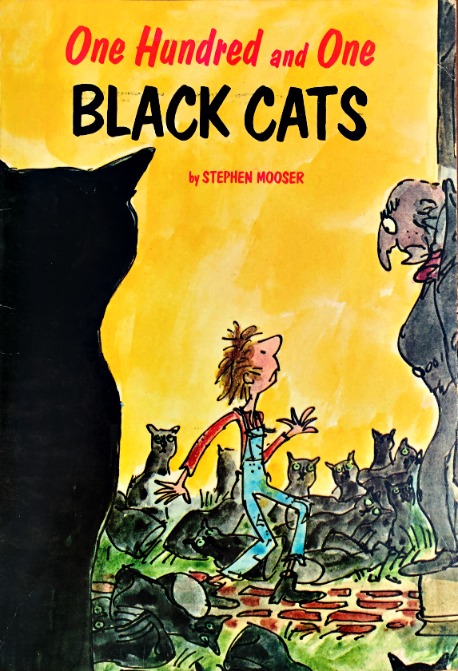
One Hundred and One Black Cats is a short novel by Stephen Mooser, with illustrations by Quentin Blake. Tod is a ten-year-old boy living in an old warehouse with his gout-ridden uncle, Captain Bones, in the harbor town of New Bedford. One day, Captain Bones sends Tod to Fogcutter Inn to pick up a package for him. According to Captain Bones, the package will make him and Tod wealthy enough to live in a big whaling ship. Tod is excited by the thought of finally leaving the dark and moldy warehouse, to go out to sea with his uncle. However, once Tod reaches the inn, a sailor tells him that the package is basically worthless. Tod begins to think that Captain Bones had tricked him, but then he finds out that his uncle has been kidnapped. Tod realizes that the package must be valuable after all.
This book is extremely short, but it is fast-paced and enjoyable to read. I found it very difficult to put this book down once I started reading it. The story is action-packed and engaging, and the characters are entertaining. I am also especially fond of Quentin Blake’s illustrations. I have enjoyed many other books illustrated by Quentin Blake. His illustrations give life and personality to the characters in this book. Some parts of the story seemed a bit rushed, especially toward the end of the book. However, I thought the conclusion was rewarding, and it was very satisfying to find out what happened to Tod and Captain Bones. I would highly recommend this book to anyone looking for a quick and entertaining read.
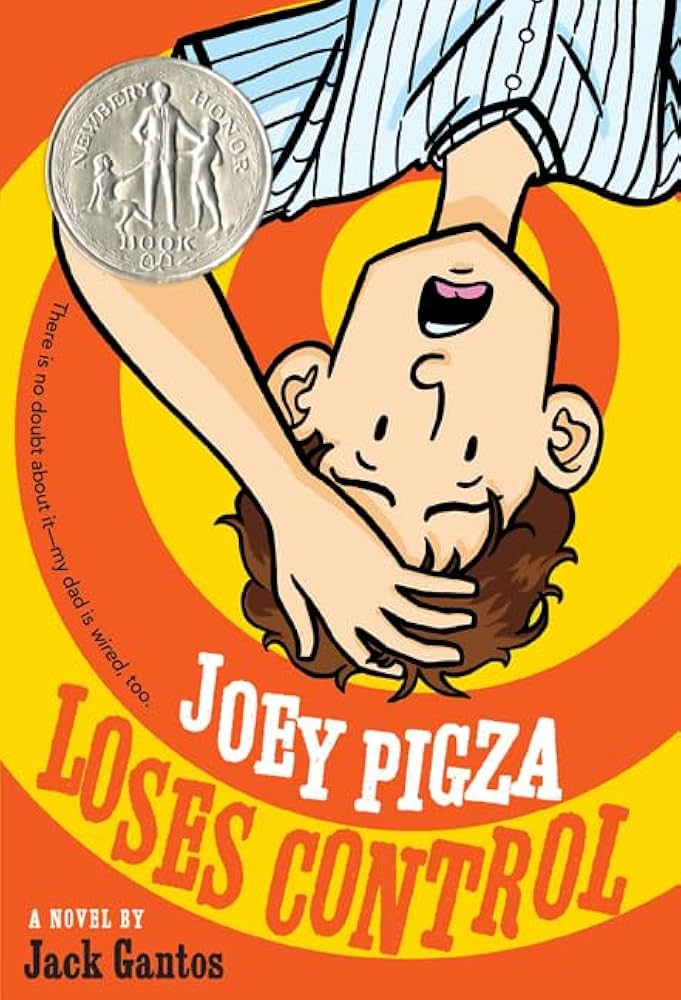
Joey Pigza Loses Control is a short novel by Jack Gantos. This is the second book of a five-book series. Joey Pigza is a young boy with attention deficit hyperactivity disorder (ADHD). Because of this condition, Joey finds it difficult to manage his behavior and feelings. Sometimes he loses control of himself. He was prescribed a patch that provides medication that helps calm his mind so that he can better control his behavior. In the summer, Joey is sent to meet and live with his father and grandma for six weeks. Joey’s mother had told him that he was like his father. Joey soon learns that he shares more in common with his father than he had realized.
Joey’s father also has ADHD. However, he does not believe in using medication. He told Joey’s mother that he stopped drinking, which is why his mother allowed Joey to visit him. However, Joey finds out that his father is still drinking but does not want Joey’s mother to know. Joey’s father takes off Joey’s medicated patch and confiscates the rest of Joey’s medications and destroys them, believing that this will make both of them free. Joey tries to adapt to his new “free” self while trying to avoid falling back into his old self.
I have mixed feelings about this book. On the one hand, Joey’s father wants to teach him valuable lessons about overcoming challenges and gaining control of life. However, Joey’s father also makes risky decisions that put Joey in danger. I appreciate that this book portrays ADHD in a realistic way, but I found Joey’s father to be unlikeable overall. Joey’s grandmother is a more sympathetic character, and she plays an important role as the story develops. For the most part, I felt sorry for the characters in this book. I found it somewhat unpleasant to read about their contentious behavior and disagreements, but I think this book is intended to deal with some difficult subjects that many people can relate to. This seems like a book that some people would appreciate, but I do not think it would appeal to everyone.
Joey Pigza Loses Control by Jack Gantos is available to check out from the Mission Viejo Library.
A Long Walk to Water is a short but inspiring read based on a true story. Set in the country of Sudan during troubling times, the books jumps between the narratives of two different kids, Nya and Salva, both living in different times but still facing hardships at the young age of 11.
Nya, whose story was set in 2008, walked up to 8 hours a day to get water for her family. Making 2 trips to the faraway pond everyday for 7 months a year, after which her family would move to a camp. The camp did not require long walks for water, however living there also contained risks, one of which was coming face to face with the Dinkas, a rival tribe. All was going as usual, till her beloved sister Akeer fell sick, and the problem rooted back to the water.
Salva, a kid driven away from his family and everyone he knew because of war is forced to keep walking. In a group of refuges, consantly running from war, and getting further and further from his family. Facing lions and crocodiles, taking lead of a group of boys for a journey more than a year long, Salva eventually makes it to the United States. The book focuses more on Salva’s long and cruel journey and how he came out with a plan, determined to make a change.
The book ends on a hopeful tone, and demonstrates the power of determination and the power to make change resting in everyone. Overall, it was a short read that could be finished in one sitting but it gives hope and contains the inspirational message that anyone can contribute to a positive change in this world full of negatives.
A Long Walk to Water by Linda Sue Park is available to check out from the Mission Viejo Library. It is also available to download for free from Libby.
We all have our daily highs and lows at home, school, or anywhere, really. But for the enthusiastic and energetic five-year-old Yotsuba, every second of the day is a high!
Yotsuba&! Volume One
After moving to a new city with her earnest yet goofy-at-times adoptive father, Yotsuba approaches the mundane and normal every day with her curious cheerfulness and comedic naivete. She embarks on adventures (walks to the grocery store) with her fellow confederates (her new neighbors: three sisters of different ages who each have their own unique differences), and learns of everything from doorbells to rock-collecting to souvenirs to flower shops to fireworks to policemen to fairies to…
Yotsuba Koiwai and her father, Yousuke Koiwai
Even though most of us aren’t kids anymore, it’s always important to never let go of your inner child. For me, as I read through each of the current 15 volumes, each interaction and problem Yotsuba encounters give me a familiar yet nostalgic sense of child-like wonder. At times, I would catch myself laughing with her (or at her.. haha), nod to agree with her absurd ways of thinking, or sometimes hold back a tear or two at the end of chapters. I surely don’t consider myself a child anymore, but Yotsuba reminded me that we were all children once– children who don’t know a lot, children who are simple and don’t have a care in the world. We all grew up to be the teenagers we are today, but who knows when the line that goes from child to teen blended together, where it started or… ended?
Reading Yotsuba made me realize that we can’t control when we decide to grow up. Even though Yotsuba&! is a light-hearted comedy, a lingering feeling in the depths of my heart tugs every time I flip a page, because each page gone is one page closer to the budding Yotsuba eventually growing up as well.
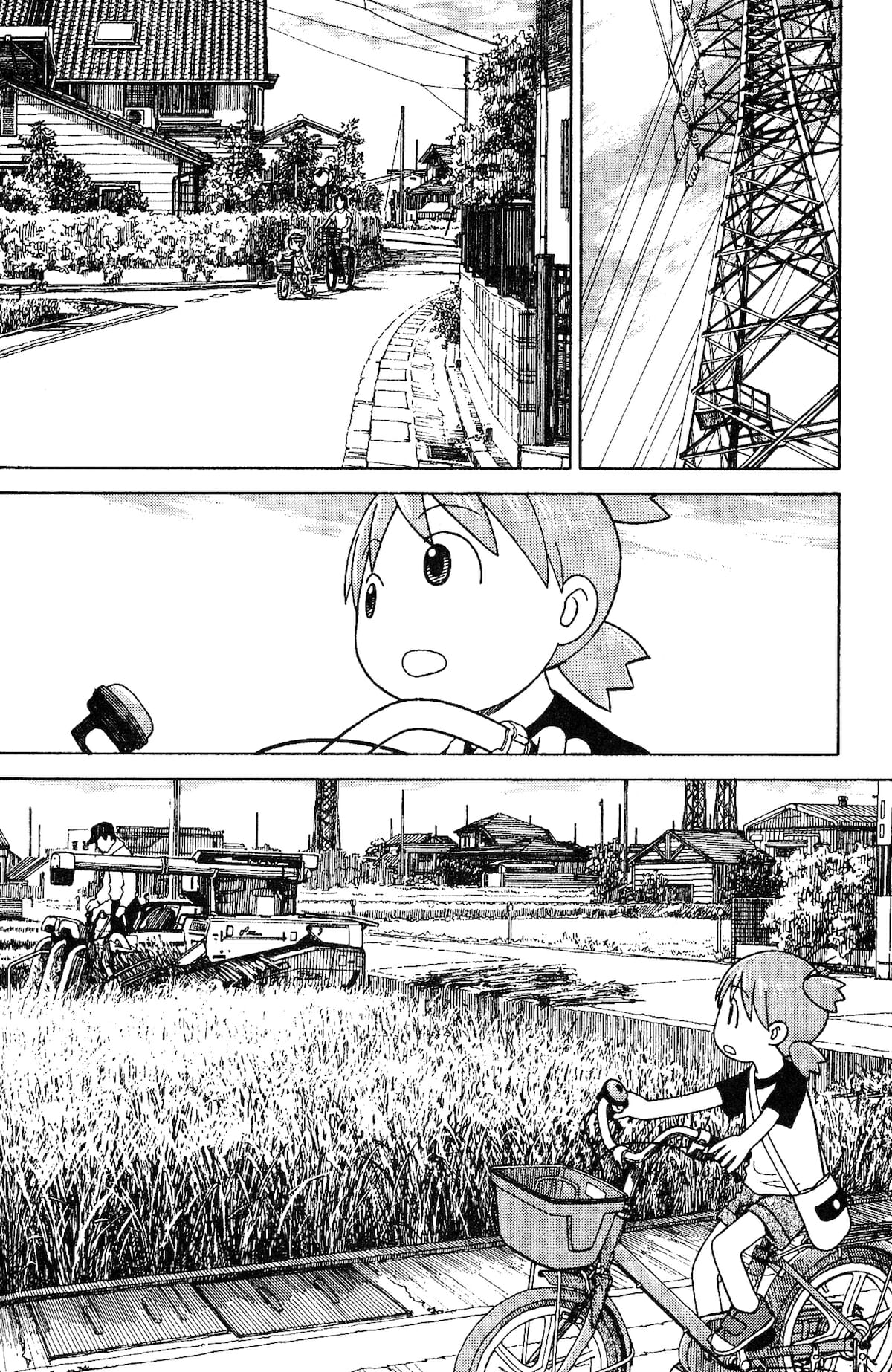
Yotsuba Panel
… But, hey, who has time for those worries!? To a child, the world is their oyster, and to Yotsuba, they’ll stay a child forever! Meet friends everywhere in the city and watch as she changes your view on topics you’d consider to be a part of your daily life–and makes them fun and memorable at the same time. This manga taught me that even something as simple as drinking orange juice could be so much more interesting if you take the time to notice the world through the lense of a child. Every chapter in the volume is titled “Yotsuba & __”, reflecting the creative title of the manga. Yotsuba’s name also directly translates to “four leaves”, which is evident from her four-leaf-clover-shaped hairstyle (she brings you luck!).
So… what now? Well, to that I’d say: “What are you waiting for?”. Yotsuba and her friends are waiting for you to join them on their voyage of discoveries!
So to everyone out there wondering what to read for their next comfort book that will most definitely cheer them up, Yotsuba&! and I will leave you with Yotsuba’s motto phrase: ‘いつでも今日が、いちばん楽しい日’, or in other words, ‘enjoy everything‘!
Ann G.
Yotsuba&! by Kiyohiko Azuma is available to check out from the Mission Viejo Library.
“Nos quisieron enterran pero no sabían que éramos semillas” – They tried to bury us but they didn’t know we were seeds
This famous proverb is the principle of the novel Efrén Divided. Efrén Divided is a story that focuses on the importance of family, friends, and a home. Echoing the experiences of thousands of Mexican-American children, Efrén is faced with the tragedy of his mother’s deportation. As the oldest sibling, he must take care of his siblings while his dad works to bring his mom back home. Efrén must learn how to be a leader, both in his middle school and in his family. Throughout his journey, he not only discovers his power to lead but the importance of teamwork.
This book has taught me multiple important lessons:
It’s ok to rely on people when you’re struggling
You have the power to change your life for the better
Family never gets left behind
Hard work will always pay off
In the novel, Ernesto Cisneros artfully describes the heartrending experience of having a family member taken from you. Balancing the struggles of school, his siblings, and his community, Efrén transforms from an average 12-year-old to a formidable “Soperboy”. Efrén Divided will make you laugh, cry, and crave home-cooked Sopes.
Efrén Divided by Ernesto Cisneros is available to check out from the Mission Viejo Library.
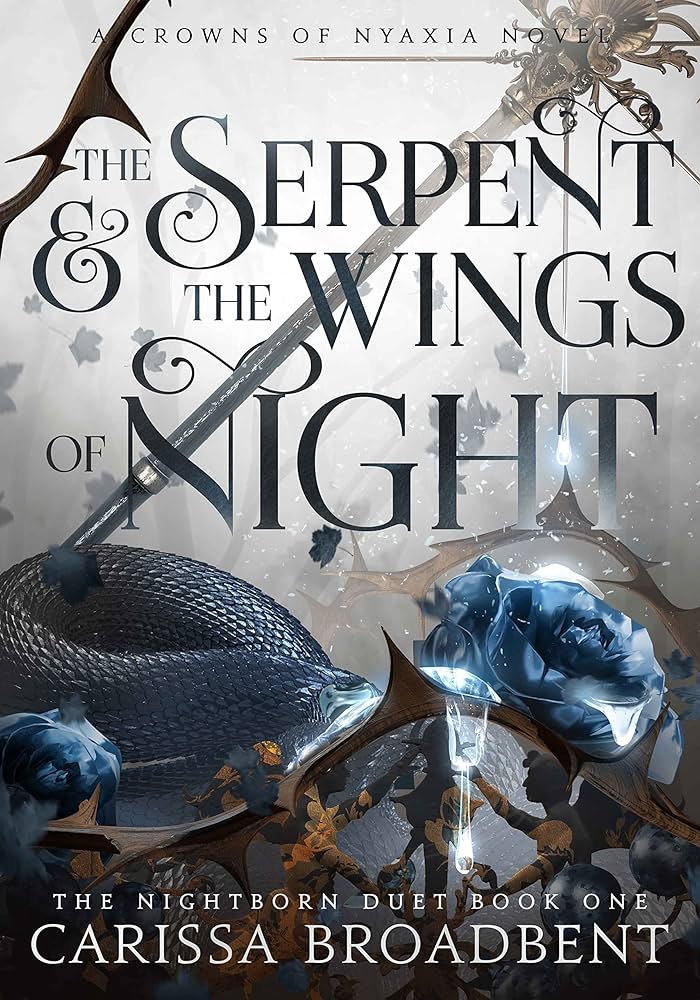
The Serpent & the Wings of Night: Book 1 of the Nightborn Duet –
I give this book a 6.5/10 because I felt like it jumped around a lot. I feel like there were a lot of interesting storyline points, such as the Kejari, but for the main character was a bit too self-deprecating for my taste. I found it repetitive of how many times she would put herself down for being human, but I know specific readers enjoy that trope. At times the book was extremely immersive from how detailed Carissa was in the fight scenes and descriptions of others. I also really enjoyed how it was able to depict healthy, supportive relationships.
The Ashes & the Star-Cursed King: Crowns of Nyaxia- Book 2 of the Nightborn Duet
Out of the two books I give this one a 7.5/10 and prefer this one over the other. The journey of the main character finding herself and her strength through the kindness of her partner supporting her was heartwarming. How she explored her relationship with grief was definitely accurate, but I felt it was annoying that she kept forgiving Raihn for literally killing her father. I loved how they expanded on their relationship and how they explored different parts of him. Thinking on the positive side, it does possibly dip into the concept of not holding grudges and forgiveness. The book is a good slowburn and my ratings are a bit low just because I have oversaturated myself in this genre.
I do recommend this duology for people who are into action, fantasy, and romance.
The Nightborn Duet by Carissa Broadbent is available to check out from the Mission Viejo Library.
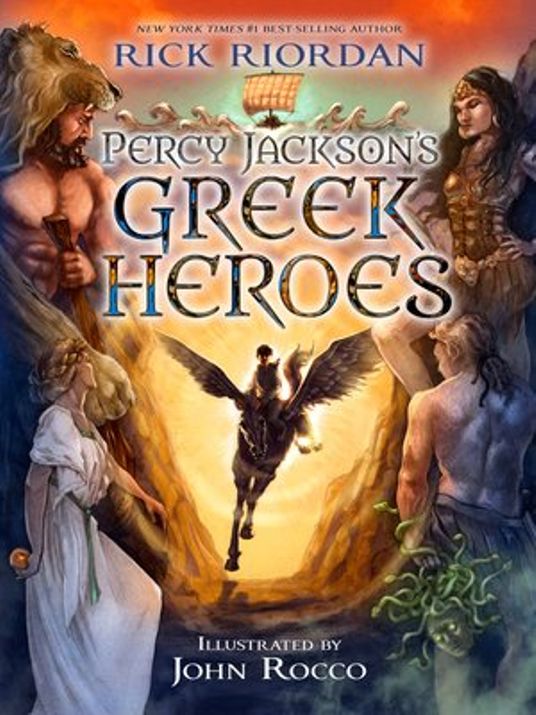
As a newly converted Latin nerd making my first odyssey into the perilous (root word: periculum) land of Roman jargon, I’m deeply appreciative of my 3rd grade obsession with Percy Jackson. Not only am I able to seem even nerdier among my peers, I’m also glad for how Percy Jackson has widely popularized Greek and Roman mythology.
Now, re-reading one of the most information-dense books (Percy Jackson’s Greek Heroes), I’m surprised at how much information is cleverly packaged in Percy Jackson’s sarcasm and humor. It doesn’t feel like reading a textbook, but I’m still gaining an immense amount of information. And that’s the true power of Rick Riordan’s bestselling books: the ability to take something that’s always been more niche and turn it into something fun.
I like the stories themselves too: Rick Riordan tells the classic myths of Heracles, Medusa, and the Minotaur, but also the stories of Otrera, queen of the Amazons, or Atalanta, the great huntress. It’s a snarky, modern take on classical myth that retains their initial meaning.
Take the story of Arachne: an incredibly talented mortal seamstress with skills that rival those of Athena. Her pride got the better of her after she challenged Athena to a weaving competition, and the end is not pretty. But Riordan also points out the other, less-mentioned moral of the story: that the villagers who once worshipped Arachne were just as willing to betray her. Ultimately, the ugliest characters in the story are not the prideful gods in Arachne’s tapestry, or the spider she becomes, but the hypocrisy of Arachne’s own community.
All in all, I still love Percy Jackson, for all of its minor historical inaccuracies. It brought classical mythology into a modern spotlight, and it’s just a truly fun and enjoyable read. You might even pick up a few facts and morals in the process. Just don’t forget to sacrifice a goat after your read.
Percy Jackson’s Greek Heroes by Rick Riordan is available to check out from the Mission Viejo Library. It is also available to download for free from Libby.
The Silence Between Us was one of those books that brought up issues that I would never even think about, even though I took ASL for 2 years. We all know being a teenager is tough enough without extra unforeseen problems. I can relate to some of the issues she experiences in the book.
Warning! Spoiler alert!
Maya, the protagonist, stands at the point in her life where change will happen whether she likes it or not. Transitioning from a world where silence was usual for her to one with voices. She’s transitioning from deaf school to traditional school. Her challenges of assimilation in these two different schools mirror the changes in her identity.
Maya discovers many problems and challenges as she navigates the traditional school; along the way, she learns to embrace her true self amidst society and others’ expectations. The Silence Between Us by Alison Gervais brings readers into an intimate exploration of self-discovery and resilience. It’s a powerful story of a teen finding herself in a world where people often overlook the silence.
As she confronts heartbreak and other hurdles that are adolescence and Deaf culture problems. The author was skillful in showing the emotional layers and experience through words, inviting readers into Maya’s world as she struggles with questions that transcend typical teenage worries.
I can relate to Maya on so many levels. The Silence Between Us, a touching coming-of-age book, differs from most other stories. The book’s raw honesty and unwavering portrayal of human connection make this a book worth reading. It deserves every accolade, including the esteemed Schneider Family Book Award for Best Teen Honor Book 2020. If you need a summer read, I recommend this one. Of course, this book is available in the Mission Viejo Library and audio on Libby.
A friend in AP Psychology recently recommended I read this book, as another one of his classmates recommended it to him, and he really enjoyed it. Personally, I could say the same about my experience with this book, as it really gave me a new perspective on how the human mind works.
Grit starts off by introducing the theory of grit itself, by describing studies by psychologists on West Point candidates. The book starts off by describing the first grueling 6 weeks of what is known as “Beast”, an additional layer of selection that West Point uses to weed out candidates. The author starts by mentioning research done during the 1950s by an earlier psychiatrist who also turned out to be one of Duckworth’s professors during her time at university.
Later in the book, Duckworth goes on to explain the phenomenon of grit by taking a look at people from all walks of life; Whether it be students, business owners, CEOs, or teachers, Duckworth notes that of the people in these fields, the one with grit tend to be the most successful. In looking at a program called Teach for America, Duckworth discovered that the teachers who were grittier were generally more optimistic, which correlated with better student performance and academic gains.
I don’t want to spoil more about the other cases that Duckworth discusses in the book because she can definitely explain it better than I can. I really enjoyed this book because it was life-changing, serving as a more scientific and thorough approach to looking at grit and perseverance as part of the human psyche. I would recommend this book to anybody who is interested in the field of psychology, or anybody who wants to learn more about how their mind works in general.
Grit: The Power of Passion and Perseverance by Angela Duckworth is available to check out from the Mission Viejo Library. It is also available to download for free from Libby.
In the fictional novel Harry Potter and the Chamber of Secrets, the protagonist Harry Potter (who is a wizard) goes to Hogwarts School of Witchcraft and Wizardry. There, everything seemed normal at first, but some strange occurrences started to happen.
There were people being petrified to be as still as a statue. There was also writing on the walls made from blood. The one behind this is Tom Riddle, also known as Lord Voldemort. Harry’s best friend Ron’s sister gets kidnapped by Tom Riddle and used to help him in these mysterious occurrences.
Harry has to fight the Basilisk, the creature that was petrifying students. After defeating the dangerous Basilisk (with the help of Dumbledore’s phoenix, Fawkes) he uses one of the creature’s fangs to stab the diary that allowed Lord Voldemort to come back with his past self, as he was just a memory. We learn that Harry is a true Gryffindor since he was able to wield the sword of Godric Gryffindor.
The novel before this is Harry Potter and the Sorcerer’s Stone, and the one after it is Harry Potter and the Prisoner of Azkaban. I rate this book a 5 out of 5 because it has great characters and an amazing plot. It is by far my favorite in the entire series.
Harry Potter and the Chamber of Secrets by J. K. Rowling is available for checkout from the Mission Viejo Library. It can also be downloaded for free from Libby.








 Mission Viejo Library Teen Voice