New Year’s Around the World

The moment midnight strikes signifies the end of one era and the beginning of a brand new one. New Year’s is a celebrated moment worldwide, with many celebrations and traditions taking place on the memorable night. These activities can differ though, depending on where you are.

One prime New Year’s tradition is the Times Square Ball Drop in New York City. New Year’s is a spectacle to behold in the Big Apple at the end, and also technically the beginning, of every year. The ball begins to fall at 11:59 PM, and settles at the bottom at exactly midnight, signifying the new year. Before the ball drops, famous singers can be seen performing in Times Square to nearly a million people, all packed in tight to witness the celebration.

In addition to New York, many Latin countries have traditions as well. One example is eating twelve grapes on New Year’s Eve. Each grape represents a wish or resolution for the coming year. Different variations exist with this tradition, including eating them under a table or toasting friends and family with them in a cup. Some other traditions include keeping a cup of water at the entrance to the home, throwing water out into the street, and packing a suitcase full of things and walk around the block, said to bring lots of travel into the new year.

Many Asian countries have New Year’s traditions as well. In Japan, people eat soba – which are long noodles made from buckwheat flour. This tradition is said to bring good luck and longevity in the coming year. In addition to this, Joya no Kane is a Buddhist tradition where temples ring their bell 108 times to clear away negative thoughts and feelings from the past year. China celebrates their own new year’s a few weeks later, and the celebrations last typically 16 days. Traditions for the Chinese include red envelopes, lanterns, bright red decorations and clothing, and fireworks and firecrackers.

Europe also has their own various traditions for the coming of the new year. Some countries in Europe wear red underwear to symbolize good luck, the same reason why Asian countries also utilize a lot of red. In Germany, people drink feuerzangenbowle, eat pfannkuchen, which are essentially pancakes, and watching “Dinner for One” has also become a common sight on New Year’s. In Denmark, smashing plates is a way to welcome a new year of luck and good fortune. The Scottish practice a tradition called “first-footing,” where usually a tall, dark-haired man is the first to enter a home after midnight, bringing shortbread, salt, coal, and more.
Book Review: The Art of War by Sun Tzu

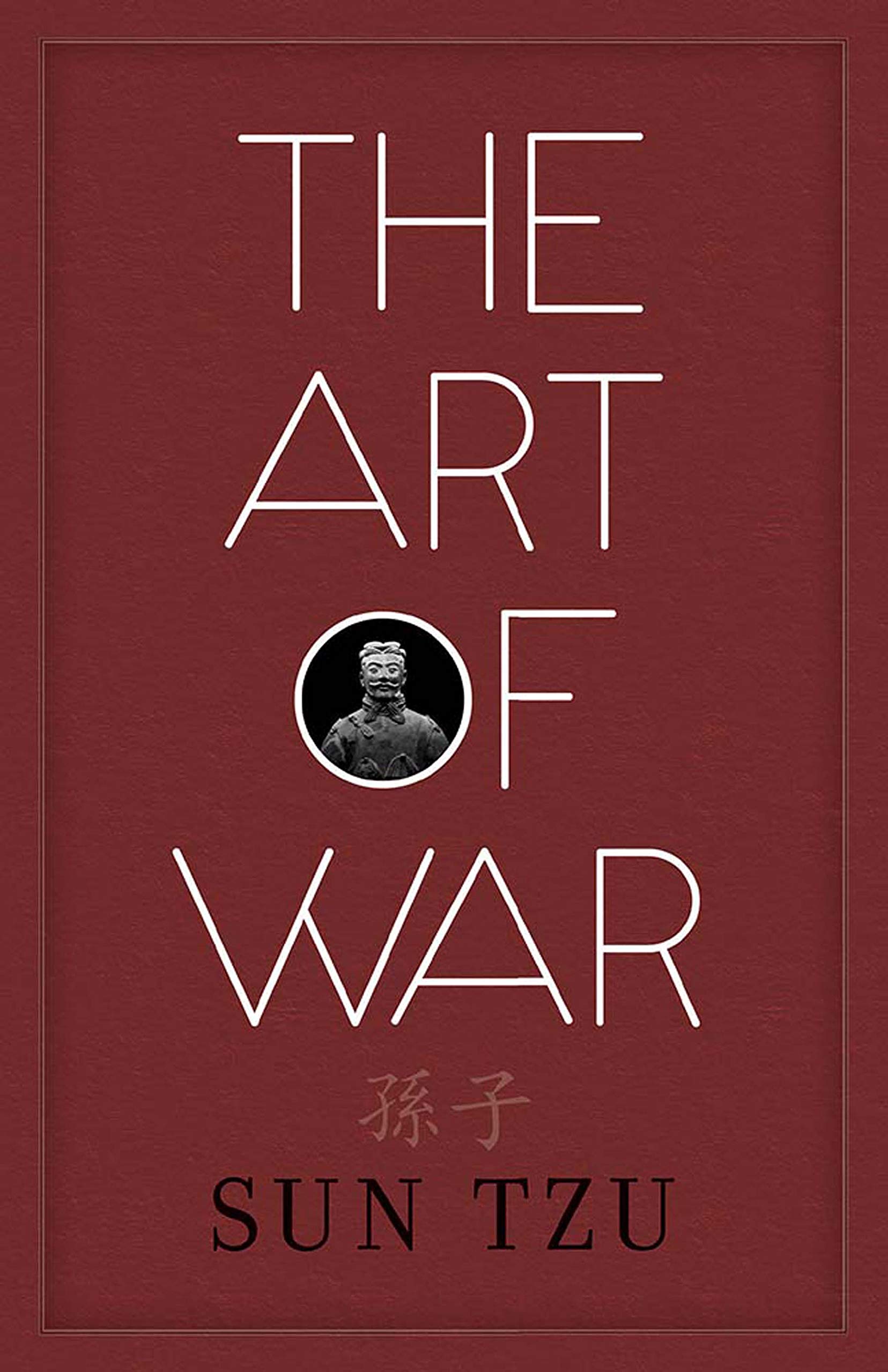
The Art of War: Sun Tzu: 0800759832941: Amazon.com: Books

Written over two thousand years ago in China, The Art of War consists of 13 chapters on “military calculus” written by the famed military strategist of ancient China, Sun Tzu. Within each section, Sun Tzu elaborates on key concepts regarding military strategy that he claims will allow any army to ensure victory if his guidelines are followed. Some examples are the importance of creativity when devising stratagems, the idea of incorporating deception in warfare, the different factors needed while fighting against the enemy, and more. 

While the work is quite old, Sun Tzu’s The Art of War continues to be relevant in contemporary times, not just on the battlefield, but also as it relates to ordinary civilian life. For example, throughout the book, Sun Tzu emphasizes the importance of relying “not on the likelihood of the enemy’s not coming, but on our own readiness to receive him.” Though the average reader will most likely never face a situation where an actual opposing army is attacking them, the idea of an “enemy” can easily be broadened to refer to any challenge faced in life. In this case, Sun Tzu urges the reader to not overly depend on luck, but instead on their own skills and abilities, to achieve their goals through proper planning of every possible scenario.

In addition, the concise language employed by Sun Tzu hints at other truths about life. Although this may not have been Sun Tzu’s original intention, and could possibly have arisen through the multitude of translations of the work, the simplistic structure of the novel itself is undeniable. Rather than pushing the information in large blocks of text, Sun Tzu breaks up his main points into easily digestible statements that serve to stress their importance to the reader. This avoidance of overly convoluted sentence structures also lends itself to the implication that simplicity should be prioritized over complexity, both on the battlefield and in life.

Overall, despite the fact that most of today’s readers of The Art of War are not actually at war, it is an undeniably fascinating look into the thoughts, actions, and habits that can lead to success in any endeavour that one pursues.

-Mahak M.

Sun Tzu’s The Art of War is available for checkout from the Mission Viejo Library.

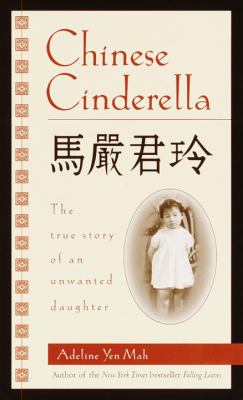
Chinese Cinderella by Adeline Yen Mah

Chinese Cinderella is the story of an unwanted daughter in China during World War II. Adeline Yen Mah was hated by most of her family. Her mom died while giving birth to her, so she is seen as bad luck. Adeline’s father then remarries a horrible stepmother called Niang. Niang always puts her two children above Adeline and her siblings. The people Adeline goes to for comfort are Ye Ye and Aunt Baba. It is apparent that Niang is now the matriarch of the family. Niang frequently gets angry at Adeline and accuses her of multiple things. Adeline is also constantly at war with her older sister. They constantly fight about who gets what room and who sleeps where. Eventually their relationship does get better. Then, on Adeline’s sisters’ wedding, Niang goes through her presents and keeps a jade pendant and keeps it for herself. As Adeline is going to tell her sister about the pendant, Niang tells her to go out to the balcony with her. Adeline then learns that Niang let her sister keep the pendant. Adeline does extremely well in school winning several prizes for writing, but that isn’t enough to please her hateful parents. She then goes on to go to college with her brother and continues writing. Adeline’s life improves very quickly through this and she becomes very happy.

Chinese Cinderella by Adeline Yen Mah is available for checkout from the Mission Viejo Library

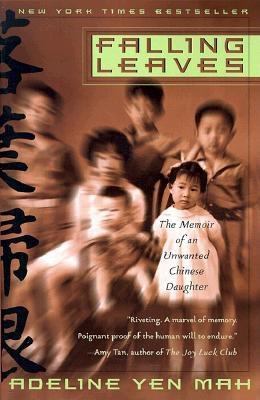
Falling Leaves by Adeline Yen Mah

Upon reading Mah’s Chinese Cinderella and its sequel, I recently was made aware of a precursor and her official autobiography.  Entitled Falling Leaves, the book follows the same plot line as her other two works.  However, what made it different was the voice Mah used as the story of her life progressed.

Little Adeline, originally Mǎ Yán Jūnlíng, was born into a high-class family in Tianjin, China.  Her mother, the light of her father’s life, died shortly after giving birth to Adeline.  This did not raise the youngest child’s status in the family.  From a young age, Adeline received nothing but resentment and mistreatment from her family, with the exception of her kind Aunt Baba.  Under the direction of the late mistress of the Yen household, Aunt Baba became Adeline’s surrogate mother.  But, Adeline was persistent to win her father’s attention, through and through, even to his deathbed.  She consistently was awarded medals and perfect report cards.  On few occasions, her father would notice, but with the addition of a new stepmother, Niang, Mr. Yen sent Adeline to boarding school.  Where, throughout the years she spent there, nobody paid her a single visit.

As Mah takes the reader throughout her painful life, she not only follows her own story, but retells her family’s (if they could ever be called that), so when the story concludes, all the pieces come together.  And, in Adeline’s case, quite heartbreakingly.

What Mah has written truly shows the willpower of human sufferance.  War-torn countries and refugees have stories worth sharing, inspiring the fortunate people of the free world.  However, within what may seem to be a noble Chinese household, the step-children, in particular the youngest girl, find a similar fates.  Though found the library’s adult section as it contains more mature content, I fully recommend Mah’s autobiography.

-Maya S.

The works of Adeline Yen Mah are available for checkout from the Mission Viejo Library.