The Great Gatsby Book Review

So, The Great Gatsby has been sitting in second place on the Top 100 Classic Literature List that all Americans should read, and honestly, there’s a good reason for that. Like Hemingway and other writers of the time, Fitzgerald set his novel in the 1920s—the Jazz Age—where life was all about wild parties, fast money, and a whole lot of disillusionment (also corruption). Basically, it’s The Sun Also Rises but with fancy mansions, bootleg liquor, and a little less bullfighting.

At the center of it all is Jay Gatsby, a self-made millionaire who throws insane parties every weekend, but really, he’s just trying to impress one person: Daisy Buchanan, the love of his life who didn’t wait for him after he came back from the war. The catch? Daisy is already married to Tom Buchanan, an old-money, arrogant guy who has his own side affairs (with Myrtle) and zero remorse. Gatsby, being the hopeless romantic (or maybe just delusional), believes that if he can show Daisy how rich and successful he’s become, she’ll drop everything and run back to him. Spoiler alert: it doesn’t work and he gets killed for his endeavors.

Our narrator, Nick Carraway, moves next door to Gatsby’s mansion and ends up getting sucked into this mess. He watches as Gatsby puts everything on the line for a dream that’s just not realistic, while Tom and Daisy, the ultimate privileged duo, wreck people’s lives and walk away without a scratch. It’s frustrating, but that’s the point.

Gatsby does everything “right” (or at least he thinks he does), but in the end, corrupt money and status can’t fix what’s broken. New money just can’t beat old money I guess. And let’s be real, people are still out here thinking that wealth equals happiness. Fitzgerald was ahead of his time.

Also, can we talk about the writing? Fitzgerald’s style is pure poetry. The green light at the end of Daisy’s dock? A symbol of Gatsby’s unreachable dream. The valley of ashes? A wasteland where all the people society chews up and spits out end up. The whole book feels like a beautiful tragedy wrapped in some of the best prose ever written.

The Great Gatsby by F. Scott Fitzgerald is available to check out from the Mission Viejo Library. It is also available to download for free from Libby.

Pride and Prejudice: A brief summary and review

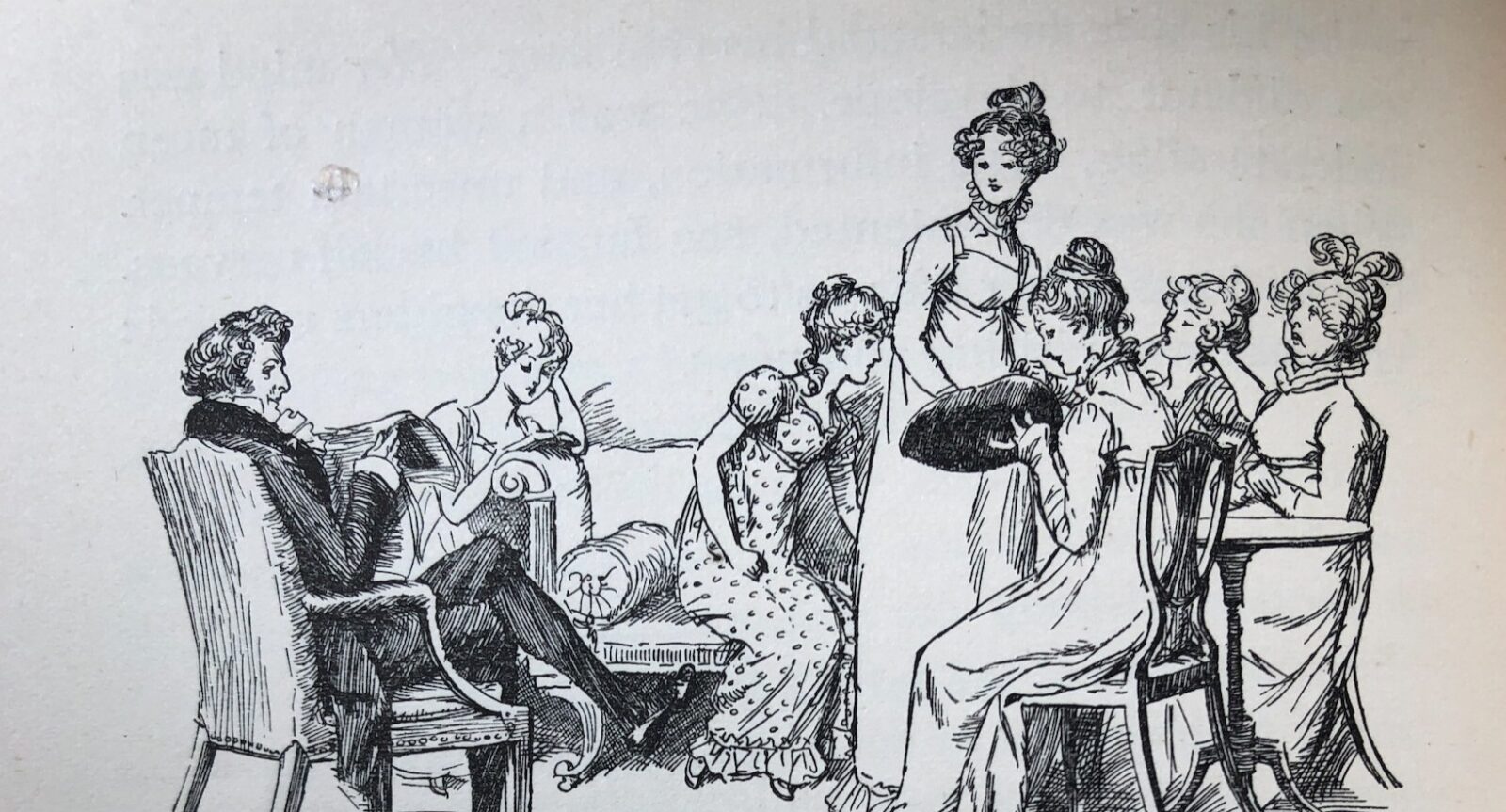
This semester, my English class read a classic British Literature novel called Pride and Prejudice. Jane Austen wrote this book during the 18th century, which was at the tail end of the Enlightenment. In Austen’s novel, she commonly critiques the status of women, social classes, and marriage through the life of the Bennet family, particularly Lizzie and Jane Bennet.

During this time period, the role of women was primarily domestic, and their main purpose was to keep the home. Meaning, that it was essential to be married as a young woman to be a part of society. The Bennet family consists of 7 people; Mr./Mrs. Bennet, Jane (22), Lizzie (20), Mary, Catherine, and Lydia. Since there are no sons in the family, the Bennets have to marry off their daughters.

The book starts off with Mrs. Bennet anouncing that a rich young man named Mr. Bingley has moved to the town that the Bennet family lives in. This is exciting because it provides an opportunity for one of the Bennet girls to be married. In addition to Mr. Bingley moving to his estate called Netherfield, his close friend Mr. Darcy moves along with Bingley’s two sisters.

A couple of days after Mr. Bingley moves, the upperclassmen of Merrytown attend a ball.  Jane immediately catches the interest of Mr. Bingley, whom everyone admires. However, Mr. Darcy is immediately disliked by everyone–especially Lizzie. After the ball, Jane and Bingley become closer, and it looks as if she is going to be proposed to soon. Mr. Darcy also slight interest in Lizzie, who does not notice due to her feelings of pride and prejudice. The situation of Bingley proposing to Jane does not last, and the Bingleys and Darcy leave Merrytown.

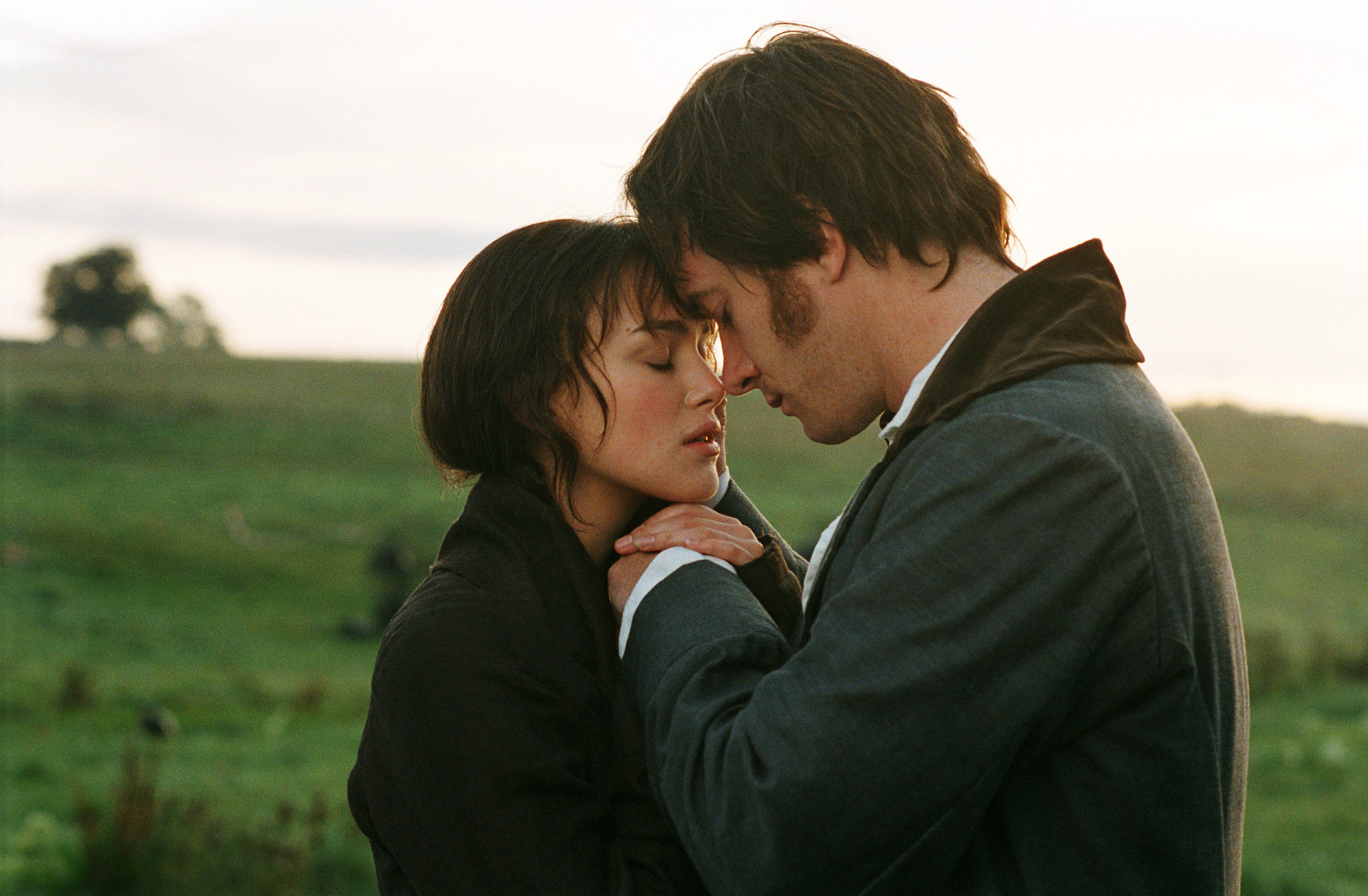
Meanwhile, the Bennet family is visited by Mr. Collins, who will inherit the Bennet’s estate and fortune once Mr. Bennet passes away. Mr. Collins proposes to Lizzie, who rejects him due to numerous reasons. Mrs. Bennet is furious, seeing that the chance of marrying one of her daughters is taken away. Numerous events happen (it would be too much to summarize), but in the end, Lizzie gets over her feelings of prejudice against Darcy and they get married. Jane and Bingley also get married. The story concludes with a satisfying and happy ending.

Personally, I loved this book and found it to be entertaining to read. The hardest part about reading this classic was keeping track of all of the characters because there are many. Despite this, I found Pride and Prejudice humorous. The multiple plot twists helped to make this novel enjoyable to read. Another aspect of this book that I enjoyed was learning about the 18th century; I feel that this book is a good representation of what life was like back then. Overall, this was an excellent novel to read, and I would recommend it to those who want to get out of their comfort zone.

Pride and Prejudice by Jane Austen is available to check out from the Mission Viejo Library. It is also available to download for free from Libby.

The Big Wave by Pearl S. Buck

The Big Wave is a short novel by Pearl S. Buck. Kino is a young Japanese boy who lives on a small farm on the side of a mountain. If he is not at school or working with his father, he is usually with his friend Jiya, who lives in a fishing village just below the mountain. Because he lives so close to the ocean, Jiya often worries that the sea will suddenly become angry and create a phenomenon known as the “big wave,” a huge and destructive wall of water. Kino is aware that the big wave is a real possibility, but he does not consider it likely to actually occur. Unfortunately, the big wave suddenly appears one day and annihilates the entire fishing village, including Jiya’s family. Jiya was with Kino and his family when it happened, so he saw the entire destruction of his village. Kino does not know whether Jiya will be able to endure the emotional shock of this tragedy.

This book is short, but extremely impactful. I have always been fascinated with Japanese culture, and this book provides a great deal of insight into their traditions and way of life. This book is very realistic and meaningful. For example, Kino’s character traits, and specifically his flaws and weaknesses, are described in a very genuine way. Possibly my favorite thing about this book is its overarching message of dealing with grief and hardship. It also teaches about the power of bravery and the human spirit. After the big wave hit the village, I actually felt worried about Jiya and I wondered how he would be able to cope after this traumatizing experience. The way Jiya responds to this event would probably feel very relatable to anyone who has experienced a personal tragedy. I would highly recommend this book to anyone who is looking for a short but poignant read.

The Big Wave by Pearl S. Buck is available for checkout from the Mission Viejo Library. It can also be downloaded from Libby

The Fall of the House of Usher: The Tale of Madness and Decay

Edgar Allan Poe’s The Fall of the House of Usher is a haunting short story that masterfully explores themes of isolation, mental deterioration, and the inescapable grip of family legacy. First published in 1839, the story follows an unnamed narrator who visits his old friend, Roderick Usher, at the Usher family estate. Upon arrival, he is struck by the bleak and decaying atmosphere of the mansion, which seems to mirror the physical and psychological condition of its inhabitants.

Roderick, suffering from a mysterious illness, and his twin sister, Madeline, who is on the brink of death, are the last members of the once-great Usher family. As the story unfolds, the mansion itself begins to embody the psychological torment of its residents. The house seems to crumble under the weight of its own dark history, and its eventual collapse parallels Roderick’s descent into madness.

I personally love the vivid, Gothic imagery Poe uses to enhance the story’s eerie mood. The detailed descriptions of the house’s dark, oppressive environment set the stage for the final, shocking twist, where Madeline, seemingly dead, returns from her tomb to confront her brother. I love the tragic conclusion in which the physical collapse of the House mirrors the emotional breakdown of the entire Usher family. I think Poe created a wonderfully dark story for anyone who loves Gothic, haunting stories.

If you enjoy eerie and chilling stories, Edgar Allen Poe is for you. The suspense leading up to the climax leaves you clinging to your chair and biting your nails which was perfect for Halloween which was when I read this. Ultimately, this timeless exploration of moral decay and inner turmoil is a wonderful read for anyone willing to pick up one of Poe’s horror novels.

Kaiya T.

The Fall of the House of Usher by Edgar Allan Poe is available for checkout from the Mission Viejo Library.

F451 Book Review

There must be something in books, something we can’t imagine, to make a woman stay in a burning house; there must be something there. You don’t stay for nothing” (Bradbury 139).

Fahrenheit 451 made me consider what I take for granted. Books have always been part of my world, but this story made me imagine a world where they were banned — where ideas, history — independent thought — were all erased. story—it’s a challenge. 

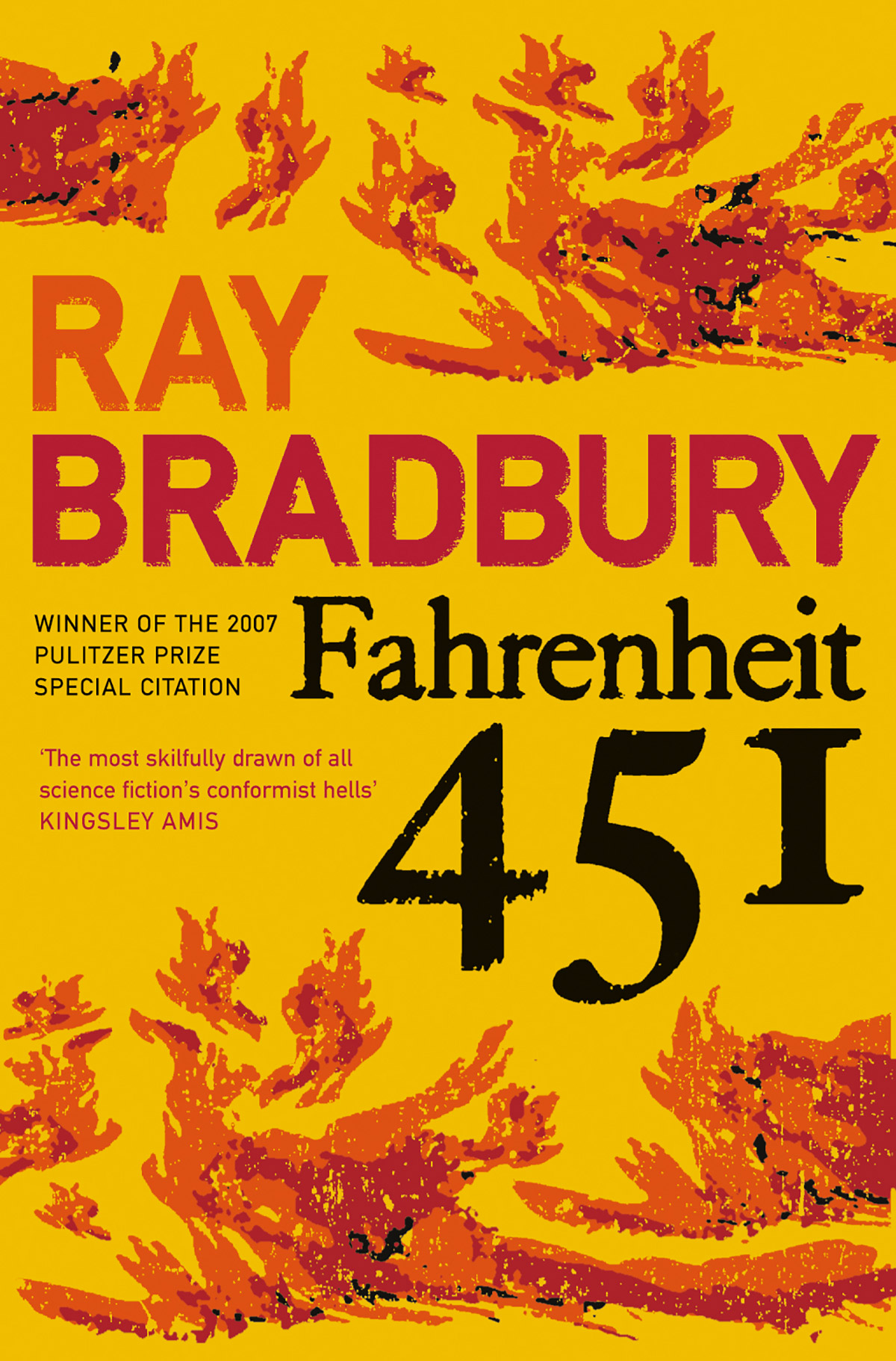
The book Fahrenheit 451 follows Montag, a fireman, but unlike the ones we have in our modern society, burns books and starts fires instead of putting them out. He is content with this job and claims to be happy. But is he really? He starts to ask himself this question when a new neighbor, known as Clarisse McClellan, moves in next door. Slowly, Montag starts to enjoy being in Clarisse’s presence, as she constantly thinks about life, and how the world is supposed to be. This sparks a change in Montag, but he has never taken action to it until one day, the alarm rang for a woman hoarding books. When they threaten to burn her and her books, she tells them that they will never have her books, and she lights a match, burning her house and committing suicide.

That scene haunted me. What could be so potent, so significant, that a person would rather die than live without it? Montag doesn’t know the answer, and neither did I, and that made his quest so gripping.

Bradbury’s world already sounded disturbingly familiar. The people in it are not imprisoned by ignorance; they embrace it. They immerse themselves in mind-numbing distractions, sidestep challenging conversations and recoil from anything that discomforts them. That one hit hard because it didn’t feel like any distant dystopia — it felt like a warning. His writing is dense and poetic, forcing me to slow down and really take in what he was saying. The conclusion left me conflicted.

There is hope, but at what price? The city’s gone, the world is broken, but there’s still a chance to rebuild.

Ultimately, Fahrenheit 451 is about something beyond censorship; it’s about what happens when we stop questioning, stop thinking, and stop feeling. It challenged me in an exquisitely uncomfortable way, addressing issues about the world around us. It’s not merely a story — it’s a provocation.

Fahrenheit 451 by Ray Bradbury is available to check out from the Mission Viejo Library. It is also available to download for free from Libby.

The Sun Also Rises Book Review

The Sun Also Rises is one of Hemingway’s most important contributions of describing life after World War I of the Lost Generation. This was a required book that is read by Juniors at our high school. It discusses themes revolving around the aimlessness of the lost generation, male insecurity, and the destructiveness of sexual tension.

The story follows a couple of main characters, including Jake Barnes, the novel’s protagonist, and Lady Brett Ashley, the woman he loves but can’t be with. Jake, an American journalist living in Paris (also called an expatriate), is left impotent due to a war injury, which adds a layer of emotional frustration to his relationship with Brett. Brett, on the other hand, is beautiful, charismatic, and desired by nearly every man in their social circle—but she’s also emotionally unavailable and constantly searching for something more. She is seen constantly with different men at every single page turn of the book. It is almost as if she is looking for something that she can’t find herself.

The book captures the essence of the “Lost Generation”— which was a term Hemingway popularized to describe the disillusioned and aimless young people who came of age during and after World War I. Jake and his friends: Robert Cohn, Bill Gorton, and Mike Campbell, wander through Paris and Spain, drinking, fighting, and engaging in meaningless affairs, all in an attempt to fill the void left by the war.

One of the most significant parts of the novel takes place in Pamplona, Spain, where the group travels to watch the running of the bulls and the bullfights. One of the characters that you meet here is Pedro Romero, a young, talented bullfighter, who serves as a really big contrast to the insecure and broken men around him—especially Jake and Cohn. Romero is the best bullfighter and youngest in Spain and he seems to have his life all figured out, which Jake admires very much. At the end of the book, we see that Brett eventually goes on to date Romero, only to get dumped and run back to her “husband.”

One of the main themes of The Sun Also Rises is escapism, but it doesn’t provide any real solutions. The characters drink excessively, engage in toxic relationships, and avoid their problems, but in the end, nothing really changes. The novel leaves us with the famous last line between Jake and Brett: “Isn’t it pretty to think so?” which continues to show the aimlessness and the unhappiness of the Lost Generation.

The Sun Also Rises by Ernest Hemingway is available to checkout from the Mission Viejo Library. It is also available to download for free from Libby.

Book review – Lord of The Flies by William Golding

Lord of The Flies is a psychological fiction that follows a large group of British schoolboys, ages 6-12, who end up stranded on an uninhabited island after a plane crash during a fictional worldwide war, likely referencing World War II.

The boys initially attempt to establish a sense of community. Ralph, one of the older boys, is selected as chief of the island, taking responsibility of leadership. He emphasizes the importance of being rescued. However, as time passes, darker truths of human nature get revealed in the book as the boys descend slowly into savagery.

The book has many powerful qualities, I’m excited to share the ones i found the most interesting and meaningful.

Themes and ideas

  • “Humans are Inherently evil”

The book demonstrates how almost every single kid on the island becomes out of touch with sense of civilization, and becomes savage. Without influence, the boys develop an animalistic lust to hunt and kill, which supports this message Golding is believed to have implied.

  • Fear

The boys are consumed with running thoughts that result in the increasing fear of the unknown “beast” which drives the boys to absurd violent behavior. Regardless of being unsure of what the beast is, the boys, especially the younger ones, are kept up at night.

Symbols in characters

  • Ralph

Ralph is one of the most civil boys on the island. He clings on to the hope of being rescued, while other boys cascade into violent savagery. He was a good leader, and therefore symbolizes order and structure.

  • Jack

Jack breaks away from Ralph’s civilized society and forms a violent tribe, therefore he is one of the first to depart from societal culture that everyone is used to. Jack represents savagery, and the supposed truth of human nature.

  • Piggy

Piggy is one of the smartest characters in the book. He is also one of the boys only hope of being rescued or retaining civilization. He has rational thoughts, but not many listen to him. He symbolizes civilization and struggle to maintain intellectualism in the island.

Overall, the book was a very intriguing interpretation of human nature. It has deep themes about survival and instinct. In real life, times of war or poverty can be the cause for many people to resort to similar dynamics, such as violence and power struggles. I would suggest the thought provoking novel to any people who are interested in complexity of human nature. The book is recommended for high school students.

Lord of the Flies by William Golding is available for checkout from the Mission Viejo Library. It can also be downloaded for free as an audiobook from Libby.

The Adventures of Tom Sawyer by Mark Twain

Over the summer, I read a classic, Mark Twain’s The Adventures of Tom Sawyer. It remains a pioneering work in American literature. The story captures the 19th-century era with detailed and rich storytelling, showing Tom’s childhood adventure as a young boy who loves to get into trouble.

As we examine this classic, it’s crucial to recognize the evolving cultural context of the era and how social norms have changed since its publication.

When I read this in class, our teacher asked us to read it out loud, and some of the wording still made me uncomfortable saying it.

The Adventures of Tom Sawyer was published in 1876, and the societal attitudes and values of that time were so different from those of today. Twain’s portrayal of 19th-century American life is charming, engaging, and revealing, a world where language and cultural norms differ from today. He wrote the terms and phrases that might have been commonplace or acceptable then but would be frowned upon if anyone wrote them today. The most memorable part of this book was the terminology and racial references that he used, which were appropriate for then but not today. We counted the racial slurs in the books, which were more than 100 words.

Even though it was a classic, many students in my class weren’t happy to read it. There were many stereotypes and racial prejudices, but if we consider the era or the 19th century in which the book was written, it’s understandable that a good writer would make it very life-like and believable, and Mark Twain is no different. At that time, such language was embedded in our culture’s fabric, and its use was not questioned as it is today.

We have come a long way since then, understanding the harmful effects of stereotyping and racism. Modern readers and critics usually grapple with the discomfort of such languages in classic literature. Still, it is good for us to understand and see the change and growth in our society and what we deem acceptable and not acceptable.

I still like reading Tom Sawyer because it’s a classic, and it shows that our society has evolved and grown into something much better than the classics we read. The discomfort of encountering outdated language shows the positive changes in societal attitudes and how our society has grown and aspect more empathy, respect, and understanding from people.
Despite the controversial language, this book offers a human experience and captures youth’s essence. Tom, with his mischievous personality and also his struggles to do what’s right even though he seems to attract trouble.

Finally, while The Adventures of Tom Sawyer provides a snapshot of a 19th-century era, it is a reminder of the ongoing journey toward cultural sensitivity and social justice. So, the next time you read a classic, examine it critically and see how societal norms and language use differ and evolve from one century to the next.

Happy Reading!

Bella H.

The Adventures of Tom Sawyer by Mark Twain is available to check out from the Mission Viejo Library. It is also available to download for free from Libby.

The Great Gatsby by F. Scott Fitzgerald

Recently, after watching the movie, I began The Great Gatsby. Considered by many to be the “quintessential American novel,” The Great Gatsby was one of the great books of its generation. While I initially felt ambivalent towards the modernist genre of novel in general, This novel changed my mind; I found this book very interesting and relevant to today’s world.

The novel starts with an introduction from Nick Carraway, the main protagonist and the narrator of the story. Nick introduces the line that divides the two cities, East and West Egg, as well as the lower-middle class industrial area known as the Valley of Ashes that splits the two districts. Nick lives in East Egg, even though he has the connections and family wealth typically associated with the “Old-Money” class of West Egg. At the same time, Fitzgerald also introduces one of Nick’s old acquaintances, Tom Buchanan, a temperamental, dishonest character who used to be one of Nick’s classmates at Yale. Nick also introduces Tom’s wife, Daisy, who will later be important to the plot of the book.

Nick first meets Gatsby through one of his lavish parties, which he throws weekly at his large mansion in East Egg. It is revealed that Nick had served with Gatsby in the WW1, fitting of the post-war setting of the book during the Roaring ’20s. Nick finds Gatsby’s parties shallow and garish, reflecting the West Egg sentiment about East Egg. Nick later uncovers that Gatsby’s parties were a futile attempt to win back Daisy, with whom he was deeply in love.

As the story progresses, the rivalry between Gatsby and Tom deepens, and the reader is also introduced to the lesser-known, shadier side of Gatsby. Fitzgerald includes several references to prohibition-era legislation and politics, including references to bootlegging and the 1919 Black Sox gambling scandal, using the character of Meyer Wolfsheim, one of Gatsby’s shady contacts, as an allusion for Arnold Rothstein.

I won’t spoil the rest of this story, but this book is definitely a classic that is worth reading. I really like how Fitzgerald is able to make his message about the American Dream and his overall Modernist sentiments about the meaning of life very clear to the reader, allowing them to create their own interpretation of the novel. I would recommend this novel to anybody who is interested in reading about life during the Jazz Age, or in general, anybody hoping to add a new piece to the puzzle that is the American story.

The Great Gatsby by F. Scott Fitzgerald is available to check out from the Mission Viejo Library. It is also available to download for free from Libby.

To Kill A Mockingbird

It’s that wonderful time of year again… the end of first semester freshman year and the beginning of the enduring English 1 ritual: To Kill a Mockingbird.

I’ve heard a lot of complaints about TKaM, usually about how boring it is and how no one can understand what the heck is going on. But I beg to digress, because though it’s one of the most commonly read books in the high school curriculum, ever, I really enjoyed reading this book.

Obviously, the story of TKaM is pretty famous already, and I think it’s important that high schoolers are forced to read a book that confronts issues still relevant in our society today. Especially in a time when books are being banned and voices are being silenced, it’s important to have this classic in our schools and education system.

There have been concerns about the prevalence of the n-word, about ideas of white saviorhood in the book, and also opposition from others who want to suppress this unsavory part of American history. But the tragic story of Tom Robinson is an important lesson, and despite some valid concerns, I think To Kill a Mockingbird fittingly and engagingly introduces an idea and a time period that shouldn’t be erased from our school books.

Moreover, I think it’s just a well-written story and an enjoyable read. Maybe it’s time we stop complaining about the “weird” wording and appreciate it for what it truly is.

To Kill a Mockingbird by Harper Lee is available to check out from the Mission Viejo Library. It is also available to download for free from Libby.