A Look at A Christmas Carol, by Charles Dickens

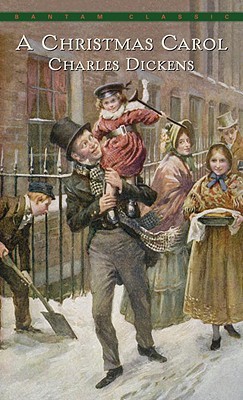
christmas_carol_coverThe following essay was originally written for a 7th grade English class.

Can one person hate so many things? Well, if know a man named Ebenezer Scrooge, you would have found out that he is that kind of person. In Charles Dickens’s play, “A Christmas Carol,” Ebenezer Scrooge finds a chance to change. During the play you are taken to the past, present, and future Scrooge. Also, Marley gives some key advice to Scrooge that helps him to turn into a genuine man. Slowly, through the conflicts of the play Scrooge realizes the error of his ways on Christmas Day. Dickens points out to the audience that the message is, be happy no matter what, because goods shouldn’t bring you happiness, love should.

“‘But nonetheless they do sing….. Fifteen shillings a week and they do sing.’” (p.635)
This quote represents the message of the whole play, be happy with what you have and don’t be greedy. Money shouldn’t bring you happiness, love should. When this quote occurs in the play, Present is telling Scrooge how thankful the Cratchits are for what they have, which isn’t much. This next quotes represents how ungrateful Scrooge is, of course before he transforms. “‘You will be wanting the whole day tomorrow?……. It’s not convenient, and it’s not fair.’” (p. 607) In this quote Scrooge is talking to Cratchit, he is giving his opinion on how much he wants Cratchit to come the next day and how much he opposes him not choosing to doing that. This last quote represents the change of Scrooge’s personality by the end of the play. “‘I’ll raise your salary…. to assist your struggling family’”(p.653) This quote represents the change of Scrooge’s personality. The message is clearly evident by these quotes.

Dickens’s play “A Christmas Carol” is about how Scrooge massively changes by the end of the play. He turns into a genuine man from a man who couldn’t care less. The message is very clear from this play. It is to be thankful for what you have and not always be wanting more. Dickens’s play send the message that being bad is never good, which should affect the whole world. Because it’s true.

-Satej B., 7th grade

Book Review: The Death of Ivan Ilych, by Leo Tolstoy

ivan_ilych“Can it be that I have not lived as one ought?” suddenly came into his head. “But how not so, when I’ve done everything as it should be done?”

All humans who were, who are, and who will be have existed, exist, and will exist, respectively, as unique entities, each discrete and different from every other. In our vast variety, it is peculiar to think that all of us, collectively, could find anything of commonality. Indeed, our discrepancies are often cited as the sources of our social and cultural distinctions, our conflicts, and even our wars. Nonetheless, as human beings we do truly share something, or perhaps a few things, that constitutes the essence of our existence. Possibly the most important of these constituent parts, or, as some may perceive, an equivalent of this essence, is human life itself, its progressions and turbulences, its peaks and nadirs.

It is this very concept, life in its truest form, that Leo Tolstoy, in his novella, The Death of Ivan Ilych, seeks to explore. Tolstoy’s work is a summation of the life of a judge in mid-19th century Russia, focusing in particular on his final days of life. As an audience, we are first introduced to Ivan Ilych through the perspective of his colleagues, who, in regards to their fellow official’s death, are most interest in the fate of his position and estate. With this introduction, the remainder of the novella chronicles the passage of years in Ivan Ilych’s life. He appears to live comfortably, dedicated to his career, and exists happily, despite the mounting pangs of a loveless marriage. Ilych, with wife and children, lives awhile in the exile of a peasant village with his wife’s family, but soon he is returned to a more honorable post in his old line of work, affording him the opportunity to begin a good life anew. Yet in the excitement of a new home all his own, Ilych’s life begins to run downhill after he contracts an internal injury whilst decorating the new residence he so cherishes. Ever quickening, his dying days pose for him an existential crisis, causing him to question the value of his life and how his once ubiquitous comfortableness has been lost.

In regards to its plot and subject matter, there is nothing extravagant or instantly engrossing about The Death of Ivan Ilych. To the contrary, the work is defined by and truly is bold for its simplicity. Indeed, Ivan Ilych himself is a simple man, a highly physical being who seeks only to live and to live well. Perhaps this is why his death, as opposed to that of a more prominent figure, is so significantly tragic. Ivan Ilych is an everyman, and thus his sufferings, those of a man who sought only to do what is good and right, become frighteningly familiar and immediately applicable to our own lives. Even with its brevity, The Death of Ivan Ilych has much insight to offer on this human experience we all share.

-Sebastian R., 11th grade

Book Review: The Adventures of Tom Sawyer, by Mark Twain

tom_sawyer_coverIn the classic novel The Adventures of Tom Sawyer, by Mark Twain, you learn a valuable lesson about always valuing the people you love.

Tom Sawyer has many adventures along the Mississippi River! In this book, you see the life of a school boy he lives with his aunt. Tom is always getting beaten both in school and out of school so he decides to run away. He runs away with his friends Huck Finn and Joe Harper and they arrive back home just in time for their own funeral! In addition to that, they witness a murder and discover treasure that nobody could even imagine at that time! Tom also falls in love with a girl named Becky Thatcher. Although she plays a minority in the story compared to Tom, she takes up a very big part in Tom’s heart.

I would personally recommend this book to advanced readers or people that are the age fourteen and up, and students that are in eighth grade or ninth grade. There are some parts they may be a bit confusing because of the slang they used back in that time period. The Adventures of Tom Sawyer is a classic and it has to be on your must read list!

-Melika R., 8th grade

Book Review: The Hobbit, by J.R.R. Tolkien

hobbit_cover“In a hole in the ground there lived a hobbit.” And from this hole came my new favorite fictional character, Bilbo Baggins, the central protagonist in The Hobbit. With the release of the new Lord of the Rings movie, I decided to start reading the famous book. I had high expectations after I found it as number 3 on a list of books to read before dying, and I wasn’t disappointed in the least.

The Hobbit takes place in Middle Earth, a fictional world that contains wizards, elves, dwarves, goblins, and hobbits. Hobbits are small people who love peace and quiet, food, farming, and parties. They live in a land they call The Shire and most of them dislike adventure.

This prelude to the Lord of the Rings trilogy centers around a peaceful hobbit named Bilbo Baggins who has adventurous ancestors and lives in a lovely underground home called Bag End. The book begins as a wizard named Gandalf visits Bilbo and invites him to join an adventure he is arranging. Bilbo refuses immediately. The following morning, Gandalf visits Bilbo again, this time with thirteen dwarves. The dwarves believe that Bilbo can help them in their journey to the Lonely Mountain to gain back their ancestral treasure from a vicious dragon named Smaug. Bilbo is extremely reluctant to leave his cozy home and join them, but Gandalf manages to convince him to accompany them. The Hobbit follows their adventures as they head to the Lonely Mountain and confront the great dragon Smaug.

I found The Hobbit to be an extremely interesting book. J.R.R. Tolkien uses a conversational, light-hearted tone and uses humor to hook the reader.  The book doesn’t have much detail, and the ending is very abrupt. The author does not spend much time describing anything, which is really different from most fictional books I’ve read. However, I enjoyed The Hobbit immensely and I’m definitely going to see the second part of the film adaptation, The Hobbit: The Desolation of Smaug, when it’s released in movie theaters next week!

-Rabani S., 9th grade

The Fantasy Genre: Helpful or Not?

harry_potter_kazu_kibuishi

Cover art by Kazu Kibuishi for the 15th anniversary edition of J.K. Rowling’s Harry Potter and the Half-Blood Prince

In an article published last month in The Telegraph, author Joanna Trollope declares the fantasy genre to be less “helpful” than the classics. I disagree with her assertion but I understand why she finds the fantasy genre to be less helpful than classic novels. A quote by another author, Neil Gaiman, summarizes what I learned from the article:

“Well-meaning adults can easily destroy a child’s love of reading: stop them reading what they enjoy, or give them worthy-but-dull books that you like, the 21st-century equivalents of Victorian “improving” literature. You’ll wind up with a generation convinced that reading is uncool and worse, unpleasant.”

This quote reveals the possible consequences of dragging children away from the fantasy genre. I believe that Trollope means well by wanting children to challenge themselves with classic novels, but forcing children away from the fantasy genre will only hurt them. Readers of all ages, especially children need the fantasy genre to show them that there is so much more to our world than it appears. However, regardless of what children choose to read, is important to encourage them to continue to read.

Yet, I believe that the fantasy genre can facilitate much more imagination and intelligence than classic novels are able to. I believe that the fantasy genre is, in fact, more helpful than the classics. While I love both classic novels and fantasy novels, I find that fantasy novels are much more helpful to me than classics are. To me, they are more relatable and frankly much more interesting.

A fantasy title that has helped me grow and learn is the Harry Potter series by J.K. Rowling. These novels have left such a profound impression upon me and they have become a part of me. They offered me an entire universe to explore and escape to. They have shown me love, hope, and even death. They have done more for me than any other novel of any other genres have.

The fantasy genre is quite commonly dismissed like the way we see in this article, but those who read the genre know that it is so much more than escapism. It allows the reader to see the world in a different way. A quote that exemplifies this is:

“Fairy tales are more than true: not because they tell us that dragons exist, but because they tell us that dragons can be beaten” – G.K. Chesterton

This quote is important because it emphasizes the very essence of fairy tales and the fantasy genre as a whole. They inspire and give hope to the reader. They make them believe in not only magic or monsters but in themselves. The fantasy genre provides a whole new world for readers of all ages. Through fantastical lands and creatures, they are exposed to new points of view and experiences that they are not able to gain from any other genre. The fantasy genre is essential for readers because it shows them that there is more to life than their own life.

-Sarah B., 12th grade

Transitioning from Young Adult Novels to the Classics

bookstack2The transition from young adult novels to classic novels can be difficult. I started reading classic novels when I was in eighth grade. However, I still read young adult novels. I love both genres!

The key to transitioning from reading young adult novels to reading classic novels lies in the plot. Many young adult novels are affiliated with the supernatural, be it vampires, werewolves, zombies, or magic. The common factor is an element of fantasy. Most teens dismiss classic literature as boring but what they might not know is that classic novels were catalysts for contemporary young adult novels. Examples include Dracula by, Bram Stoker and Frankenstein by, Mary Shelley. Dracula and Frankenstein are two of the oldest fantasy novels. Frankenstein is considered by some to be the first science-fiction novel and Dracula, of course, was the first novel to debut vampires. They are also two of the most famous classic novels– cult classics, even.

dracula_coverDracula was written in 1897 and Frankenstein was written in 1818. Dracula is the story of a vampire who moves from England to Romania. Jonathan Harker is in charge of Dracula’s move but after spending time in his castle, he starts to suspect that Dracula is a vampire. Once he comes to this realization, he also realizes that he’s trapped in the castle and barely escapes with his life. He makes his way back home but little does he know that Dracula is now terrorizing his fiancee Mina and her friend Lucy by drinking their blood. Lucy begins to become very sick and Mina calls Dr. Van Helsing for help and he realizes what is happening to her but does not reveal it. Mina then becomes sick herself and it is then when Van Helsing and others try and put a stop to Dracula and they follow him back to Transylvania for a final battle.

frankenstein_coverFrankenstein is the story of a mad scientist named Victor Frankenstein who creates a creature. Frankenstein is commonly mistaken as the monster when in fact, Frankenstein is the creator of the monster. Victor has been passionate about science since he was a child and gets the idea of reanimation from watching lighting strike a tree. He reanimates a creature with expectations of beauty and is disappointed with how the creature turns out and rejects him, so the creature flees. Victor sees his creature again framed for his brother’s death. The creature explains his innocence and says that if Victor would make him a female companion, he would leave him alone forever. Victor agrees and makes him a companion but kills her out of fear of them breeding and creating a race. The creature sees Victor kill his companion-to-be and the two fight for the last time.

While it is true that classic novels start off slow, it is worth it to read them until the end. It is easier to ease into classic literature with novels that include aspects of what you’re already used to reading. The familiarity is essential in transitioning!

-Sarah B., 12th grade

Book Review: Little Women, by Louisa May Alcott

little_women_coverLittle Women, a classic which was first published in 1868, is about four sisters–Meg, Jo, Beth, and Amy–who learn, with their mother’s guidance, to overcome the many obstacles that come their way.

As the first scene opens, all the girls are complaining about the coming Christmas, for which their mother said no gifts would be purchased or exchanged due to the hard winter ahead of them, and the fact that their father was off fighting in the war. By the end of the book, however, all of the girls’ lives have changed drastically. Years older, and some of them married, they now are gracious and giving women, who have learned many life lessons.

While reading this book, I felt that the sisterly bond between all the girls was very strong. Jo and Beth have a special bond that is tested to the highest extent at one point in the story. This sisterly bond is not always perfect, however. Jo’s quick temper causes a fight between her and Amy, which leads to more issues. Their mother, like she does so many times in the novel, gives the girls advice to resolve the issue.

My favorite character or sister in the book is Jo. I found her to be a funny character, and I also liked how she acts like a tomboy when she is expected to act like a girl. It causes her to have a unique character and entertaining spirit. Jo reminds me of my own sister who can always find a way to make others laugh.

My favorite part of this book was seeing how the then young, selfish girls changed during the course of the book and how different their lives are at the end of the novel.
I believe this book has a right to be considered a classic because the plot and the book altogether are extremely well written and have scenes that may interest a variety of age groups. I would rate this book a 9 out of 10, because a few parts did not catch my attention as much as others. I would definitely recommend this novel to others who are interested in a realistic fictional read.

– Leila S., 8th grade

Book Review: The Awakening, by Kate Chopin

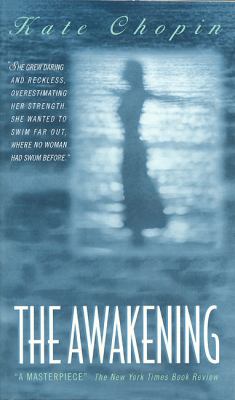
awakening_coverAt the turn of the 20th century, the western world, emerging from a long period of industrialization and cultural change, finally began to recognize its mothers, its wives, and its daughters. In the early years of this new century, the fledgling feminist movement reached its pinnacle, achieving suffrage for womankind in the United Kingdom in 1918 and the United States in 1920.

Nonetheless, this insatiable drive to achieve equality did not merely appear from nothingness; rather, the feminist movement had been growing for years beforehand. Perhaps a precursor to the cause was Kate Chopin and her greatest novel, The Awakening. Relating the tale of a young woman, Edna Pontellier, and her development from a subordinate wife and mother to an independent member of society, Chopin’s tale strikes the feminist tone as Edna’s dissatisfaction with her social and familial current status, which reflects the status of all woman at that time.

As the novel begins, Edna and her family are on vacation in the removed vacationland of Grande Isle. Here Edna begins to realize her boredom with the maternal society that is embodied in the protagonist’s peer, Adéle Ratignolle. Increasingly severing her ties with this cult of mothers, Edna finds satisfaction in her relationship with the young man, the son of the proprietor of Grande Isle, Robert Lebrun. Unlike her dominating husband, Leonce, Robert is engaging and treats her as an equal, or so she thinks at the time.

Soon the dreamy stay at Grande Isle comes to an end, and the Pontellier family returns to its bourgeois home in New Orleans. Now set in her recalcitrant ideology, Edna begins to distance herself from her previous life. She finds a new friend in the brilliant pianist, Madamoiselle Reisz, and elderly widow whom she first met on her summer holiday. Edna tries her hand at art, in an effort to support her own living, and begins to find new companions, a number of them men with whom she seemingly has affection. At her dinner party, Edna seems to become a queen, a powerful and respectable sovereign. But that old ennui, the feeling of boredom and discontent lingers. And amongst all this, Edna longs for Robert, who is away in Mexico. But even when he returns, Edna recognizes that he is the same, paternalistic man as her husband, the very threat from which she was trying to escape. The novel’s end is gripping, tragically so, but you must pick up the novel yourself, for I shall not discuss it here.

Overall, The Awakening is not for every reader. Some of its content is rather adult, as are its themes. But I found in Chopin’s magnum opus an inspiring spirit of contrariness. I found inspiration in Edna’s unwillingness to accept the norms of a repressive society. I think The Awakening is worth the read not only for the burgeoning feminist, but for anyone who has aspirations, anyone who has that determination to rise against injustice and enslavement of any sort.

-Sebastian R., 11th grade

Book Review: Fahrenheit 451, by Ray Bradbury

fahrenheit451_coverIn Fahrenheit 451 by Ray Bradbury, the main character, Guy Montag, is a firefighter. However, he is not a firefighter in the traditional sense of the word.  Instead of putting out fires, his job is to set them.

In the future that this novel is set in, millions of books are banned and the only way people are allowed to learn is through television and radio programs, comics, and other forms of entertainment that make people “happy.” In this society, making people happy and equal to one another intellectually is the main goal. It is believed that higher forms of learning, such as the knowledge gained from most books, would be detrimental to this objective. In order to keep this objective, books are banned and burned when found in people’s possessions.  That is where Guy Montag’s job comes in. However, when he meets a curious girl named Clarisse, who, unlike the rest of society, likes asking questions, he begins to ask some questions of his own.

The tone of this novel is a dark one. It deals with the main character discovering a new, not necessarily good outlook on the world he accepted before. It also features many issues that could occur if society could not advance due to lack of knowledge. The idea of censorship that is addressed in this novel is a difficult one, and that is proven when the main character himself goes against his societal rules, his job, and his family values to experience what it is like to read books.

Ray Bradbury seems to want the reader to feel like a world without books would be unexceptional and monotonous. Without the knowledge and expertise that can be gained from reading, society could never advance and people would be stuck in the same rut that Guy Montag realizes he is in when he talks to Clarisse.  At one point in the book, Clarisse says to Guy “It’s a lot of funnels and a lot of water poured down the spout and out the bottom, and them telling us it’s wine when it’s not” (33).  This quote shows how their society is full of dreariness and lies in order for them to feel “happy” and “equal”. In reading this book, I have fully realized that I never want to experience a life without books. Overall, I think that Ray Bradbury was successful in making his readers feel a connection to Fahrenheit 451’s world that is lacking knowledge and advancement.

While this book was a bit tedious to read due to the author’s style of writing, which is so unlike current writing styles, I still am walking away from this novel with a new understanding of how important books are to society. Readers definitely need to read between the lines in order to fully understand both the underlying meaning and what is occurring. It reads more like rambling thoughts, which in a way tells the story better than any structured writing style would. Bradbury started and completed this novel in nine days on a rented typewriter that he payed for per half hour, which I personally find extremely impressive. While I was not the biggest fan of this book, I still feel like I have learned a lot from Fahrenheit 451 and I recommend it to both teens and adults alike.

-Kaelyn L., 10th grade

Book Review: Atlas Shrugged, by Ayn Rand

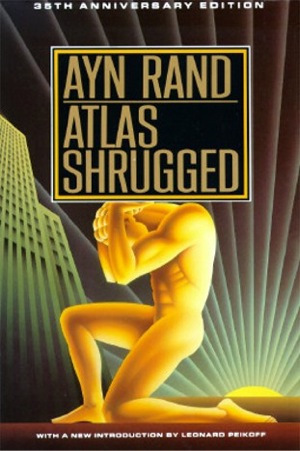
atlas_shrugged_coverIn this great nation of the United States, we have long maintained our democracy on a strict, two-party platform. In more recent times, these two positions have been filled by the left-leaning Democrats and right-leaning Republicans, but, aspiring to exercise to the fullest their rights as participants in the democratic process, smaller third parties have always managed to remain in existence. Among these more peripheral groups, one of the most prominent has long been the Libertarians who, in the opinion of this writer, offer a captivatingly stringent ideological adherence to the fundamental principles of liberty and small government.

Today’s brand of Libertarian represents a diverse membership, but many holding such a political ideology often cite in their political development one common influence. A Russian immigrant to the United States in the early 1900s, Ayn Rand, ceaselessly propagating her philosophy of objectivism, would later write one of the century’s most influential novels, an ideologically dense yet invigorating tale she named Atlas Shrugged, which appears to have become the gospel of the contemporary libertarian movement.

Set an ulterior, dystopian United States, in a world that is increasingly Marxist, the novel follows the events that surround Dagny Taggart, an executive of her family’s transcontinental railroad company. As her brother, James, the president of the corporation, increasingly engages in reckless and destructive business choices, seemingly sympathizing with the notion and proponents of a totalitarian state, Dagny becomes the real director of the company, attempting to extend its longevity to the greatest extent possible. Our protagonist finds solidarity with another rational man of business, Hank Rearden, president of Rearden Metal, whose innovative steel, the strongest and most durable of its kind, she utilizes for the construction of a new section of the Taggart rail network. Time progresses, and a trend of successful businessman leaving their corporations to fall into despair exponentially develops, yet Dagny and Hank fight on in their endeavor to merely remain above water.

While the world around them continues to grow grimmer and increasingly less hopeful, Dagny and Hank find one spark of hope in an abandon factory: a revolutionary engine that possesses the capacity to transform static electricity from the atmosphere into the energy needed to power a locomotive. Unaware of but desperate to discover the inventor of this engine, they embark on a quest that takes them to various places in a now hellish American country. Eventually, miraculously they find themselves in Galt’s Gulch, where they become acquainted with various figures, from business, medicine, art, and other important social spheres, including the aforementioned businessmen, all who have left their respective trades to join John Galt, with whom the reader, at this point in the story, is already somewhat familiar as the result of the novel’s widespread street phrase, “Who is John Galt?”

As the novel closes, the storyline wraps the mystery and uncertainty of why these people are present in Galt’s Gulch and what the future of the nation, and indeed the world, will be all together into a coherent, revelatory, and gripping ending, but that, as well as the answer to the question of Mr. Galt’s identity, is for you, reader, to discover for yourself.

In all verity, Atlas Shrugged is not an easy read. Its length alone might frighten some readers, but requiring even more mental faculty than that necessary to trudge through the nearly thousand pages is that required to pore the dense philosophical dogma that lies therein. Why, then, do I still maintain a positive opinion of and recommend this novel? The story is one that, though gripping, is even more so absorbing for its excellent use and conveyance of Rand’s beliefs. As it has affected countless others, Atlas Shrugged has similarly influenced my philosophical outlook and beliefs.

There will be those who will wholeheartedly disagree with Ms. Rand and her writings, yet the novel discussed here is worth the read even for the mental debate it will inevitably spark. If you are up for the challenge, as any good reader should be, and are open to intellectual growth, give Atlas Shrugged a shot.

-Sebastian R., 11th grade