Love, Magic, and Dreams: An analysis of Shakespeare’s “A Midsummer Night’s Dream”

An entertaining and humorous read, the play “A Midsummer Night’s Dream” by William Shakespeare incorporates a variety of figurative language to demonstrate a number of concepts, ideas, and opinions.

To begin with, Shakespeare skillfully develops the timeless aspect of love. In the very first scene, readers are introduced to Theseus and Hippolyta planning their wedding, as Hippolyta expresses that “Four days will quickly steep themselves in night; / Four nights will quickly dream away the time” (1.1.7-8). The story of Theseus of Hippolyta is quite unique: at first, Theseus kidnapped and beat Hippolyta in battle. By introducing these enemies-turned-lovers at the beginning of the play, Shakespeare foreshadows love issues and complexes, but also suggests a happy ending. Moments later, readers learn about Hermia and Lysander’s love, despite Hermia’s father Egeus’s desire that Hermia marry Demetrius. Hermia’s friend, Helena, is already in love with Demetrius, but as Helena explains, “The more I love, the more [Demetrius] hateth me” (1.1.204). The play is mostly centralized around the loves of Demetrius, Hermia, Helena, and Lysander. Love is universal and timeless–someone from ancient Egypt would feel the same butterflies as someone in 2050. The same applies to sadness, betrayal, and jealousy, all of which are prevalent in the play. In Demetrius, Hermia, Helena, and Lysander, readers understand the timeless complicated and uncontrollable nature of love. Cleverly, Shakespeare further expands on uncontrollability when the fairy king, Oberon, sends Puck to retrieve a flower, whose juice “[w]ill make or man or woman madly dote / Upon the next live creature that it sees” (2.1.177). For the audience, the flower challenges the uncontrollability of love. Demetrius and Lysander are both affected by a simple thing as flower juice, causing them to completely change their views, dispositions, and opinions. Upon analysis, Shakespeare’s incorporation of such a magic flower, which terribly exacerbates the love complex between the characters, represents the irrational, yet consuming aspect of love. 

In addition, magic is a significant element of “A Midsummer Night’s Dream”, and it is not too different from love. Once again, the magical flower is a crucial symbol. Magic is often understood as the ability to do and control virtually arbitrary actions and events. As already discussed, love is a prime example of uncontrollability. With the magic flower, the fairy king and Puck are given greater power over the rest of the characters. They have a greater influence on the events that will ensue in the play. Magic’s influence is further exemplified by Puck, who turns Bottom’s head into a donkey’s head during rehearsal. Unluckily, Titania (who has been spelled with the magic flower) wakes up and instantly falls in love with Puck (3.1.131-164). This situation is especially significant in the theme of magic since it is a magical being herself (Titania, the Fairy Queen) who has fallen under a spell. First of all, the overtaking influence of magic is apparent; moreover, the influence of love is also portrayed. It can be argued that Shakespeare incorporates magic into the play to accentuate its likeness to love. Both magic and love cause troubles, yet they can both completely dominate a person’s actions and way of life.

Finally, the significance of the title  “A Midsummer Night’s Dream” must be recognized. Dreams are random, irrational, and absolutely overtake one’s mind, very similarly to love. Moreover, dreams are repeatedly mentioned throughout the play. For example, Hippolyta expresses that “Four nights will quickly dream away the time” (1.1.8). Referring to the day of her wedding, Hippolyta uses “dreams” to describe her wait. The word “dreams” has a very positive connotation. In this manner, “dreams” recur to represent fantastic events, situations, and emotions.

Clearly, Shakespeare’s “A Midsummer Night’s Dream” well incorporates figurative language to develop a multitude of themes, lessons, and ideas.

-Ayati M.

William Shakespeare’s A Midsummer Night’s Dream is available for checkout from the Mission Viejo Library. It can also be downloaded for free from Overdrive.

Writing Tips: Fantasy Worldbuilding

How Does Freelance Writing Work?

Genre: The most important part when you begin writing a novel is picking a genre. Think of all your favorite books or movies and take inspiration from all of them. Is your novel going to be set in a medieval world? Space? A dystopian civilization? Apocalyptic world? Once you decide it will be a lot easier to write out a plot and the details of your world.

Setting: The second most important part of writing a fantasy novel is choosing the setting. Typically, most fantasy novels take influence from medieval Europe, but it doesn’t always have to be that. What does the environment look like? Is it set in a cold environment, hot environment, desert, space, mountains, coastline? All of these are factors to consider when creating your world.

Plot: Typically fantasy novels follow a plot where the main character has to go on an adventure or quest to complete a task. However, this plot can have a lot of variation and provide a unique story. Some ideas to consider when working out a plot are the tools you will use to advance your plot. This could be magic, a character with a very specific skill, or any other unique additions to your book. This could also be influenced by the setting, perhaps the world is set in a dystopian setting where there are tensions between the rulers and their citizens. Maybe the main character has to go on a quest to find something. The possibilities are endless.

Characters: People like to read about relatable characters. When creating a main character it’s important to make them believable. Many times, new writers create a character that only reflects positive traits, when in reality, everyone has negative traits they’re not proud of. Insecurities and mistakes in a character give the reader an emotional attachment to said character. When writing side characters, make sure they exist to further the plot. Also try to give them their own personality to engage the reader.

-Michelle L.

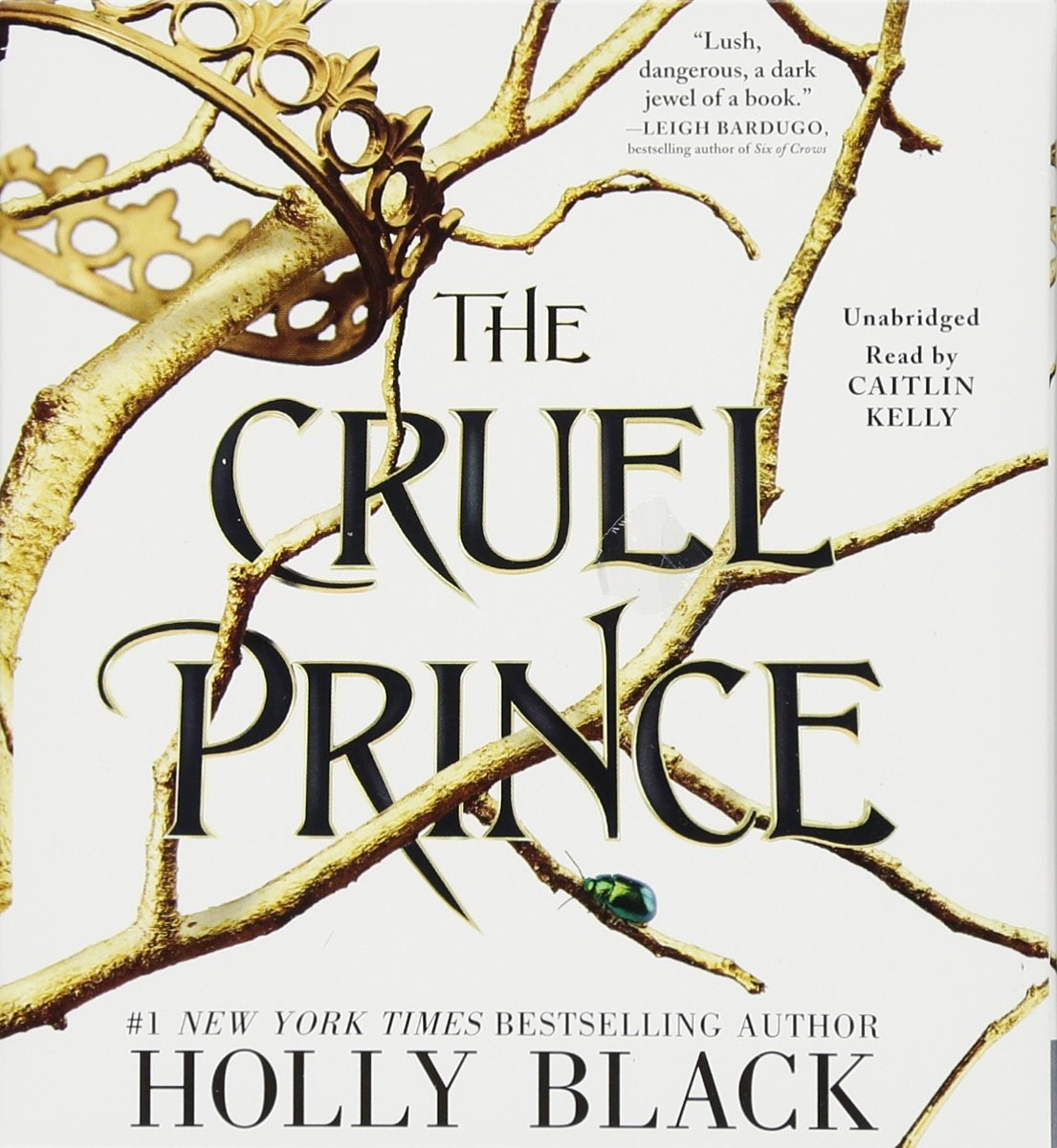
Social Parallels in Holly Black’s The Cruel Prince

In The Cruel Prince by Holly Black, protagonist Jude Duarte is one of the few humans living in the world of Faerie after being taken from her home in the mortal world. The book (and the whole trilogy, which I highly recommend), follows Jude as she navigates the complicated politics of the Faerie realm and tries to prove that she can be extremely powerful despite her being a human.

The challenges that Jude faces due to her being human clearly reflects social issues in the real world regarding discrimination, even if it sometimes gets lost in the magical world of the book. Many fantasy novels and worlds have discriminatory elements between different magical beings (i.e. “mudbloods” versus “purebloods” in Harry Potter, and humans versus elves in The Witcher).

While these instances may not be direct commentaries on social issues, we can use them as a new lens in which to view these problems and how they compare to the real-world thing.

Amazon.com: The Cruel Prince (The Folk of the Air, 1): 9781478923732:  Black, Holly, Kelly, Caitlin: Books

In The Cruel Prince, Jude is considered lucky to be living the life she lives. Because her father is of high ranking, she and her sister are able to attend one of the best schools and live in an extravagant house. While this would be a blessing for anyone, a fortunate life for a human in Elfhame has even slimmer chances. Because of their short lifespans and susceptibility to “Glamour” – the Faerie ability to basically control minds – humans are most often used as brain-numb servants.

Even in the best case, such as Jude’s life, humans face harsh criticism and mockery from the other inhabitants of Elfhame. Throughout the series, Jude is very often treated as a waste of space.

Obviously, nobody in the real world is facing discrimination based on the fact that they’re human. However, the relationship between humans and Faeries in The Cruel Prince parallels many struggles that religious, racial, and sexual minorities face today. It can be harder to gain powerful positions and to be seen as equal for both Jude and these minorities.

It’s important for authors to make these parallels, even if not completely intentionally, so we as readers can learn and empathize with these issues.

-Luxy B.

The Cruel Prince by Holly Black is available for checkout from the Mission Viejo Library. It can also be downloaded for free from Libby.

The Knight’s Ransom by Jeff Wheele

The Knight’s Ransom by Jeff Wheeler is the first book in the First Argentines series. The book is 433 pages long. The First Argentines series is currently made up of three books with a fourth to come. The whole series is a prequel to the six-book series the Kingfountain series. The book Knight’s Ransom is relatively new as it was only published on January 26, 2021.

The book follows Marshall Barton nicknamed Ransom, by his childhood friend and main female character Claire de Murrow. The book starts in a civil war over succession for the throne. It starts with young Ransom being abducted by the original king, and to make his noble father stay loyal an attempted hanging of Ransom takes place. However, ultimately the king doesn’t hang him. The story is then mainly about Ransom’s journey through knighthood as he looks to find who he is and what he wants. We see him growing up as it has multiple time skips allowing us to see Ransom get into his teens and twenties. One of the more enjoyable parts is the diary entries by Claire de Murrow as it talks about what’s happening to her and what her point of view is of the events that are happening.

This is a book I would highly recommend to people who like a fantasy about swords and magic as while as books set in the medieval era. The Knight’s Ransom has character development and has some mystery such as when Ransom hears rushing water in his ears. This book doesn’t always show a plain black and white picture allowing the reader to decide what is right. The book has fights and war, where blood is spilled and there is the point where characters drink alcohol. However, I did quite enjoy this book as it gets you intrigued into what’s going to happen.

-Luke G.

The Tale of Despereaux by Kate DiCamillo

The Tale of Despereaux is a novel by Kate DiCamillo, and winner of the Newberry Award.  The setting is in a medieval era, and most of the events take place in a large castle.  The main plot revolves around an undersized mouse with large ears named Despereaux.  Despereaux is considered strange and eccentric compared to the other mice in the castle.  For one thing, he enjoys reading books rather than nibbling on its pages.  One of his favorite books is about a knight rescuing a princess.  Another important character is a spiteful rat named Chiaroscuro, who is called Roscuro for short.  Roscuro is unlike other rats, because he desires to leave the darkness in which rats are accustomed to living.  Roscuro decides to visit a royal banquet, but he falls from a chandelier into the soup.  This angers the princess of the castle, named Princess Pea, and she gives Roscuro a scornful look.  Roscuro’s feelings are hurt by the incident, and he plots to get revenge against the princess.  He convinces an unfortunate peasant girl name Miggery Sow to help him kidnap Princess Pea, promising the girl that she could become the princess instead.  Despereaux learns of the plan, and sets out on a quest to rescue the princess.

This book is actually divided into four books.  The first book focuses on Despereaux.  The second book focuses on Roscuro.  The third book focuses on Miggery Sow.  The fourth book ties all of the main characters together.  I think the organization of this book is very clever.  I enjoyed the way the story shifted focus from one character to another, and finally brought them all together.  I especially enjoyed the intertwining of events as the book drew toward its conclusion.

Overall, I think this book is very charming and entertaining.  The story is filled with adventure and excitement.  The characters are simple, but memorable.  The narrator presents the story in a way that seems almost interactive with the reader.  I felt like the narrator was speaking directly to me, which made this book very engaging.  I was drawn in by the binding of the book itself, which describes it as “being the story of a mouse, a princess, some soup, and a spool of thread.”  It was very satisfying to read about how these elements all came together to make a unique and enjoyable story.  This book is one of my favorites and I think just about anyone would enjoy reading it.

-Oliver H.

The Tale of Despereaux by Kate DiCamillo is available for checkout from the Mission Viejo Library. It can also be downloaded for free from Overdrive.

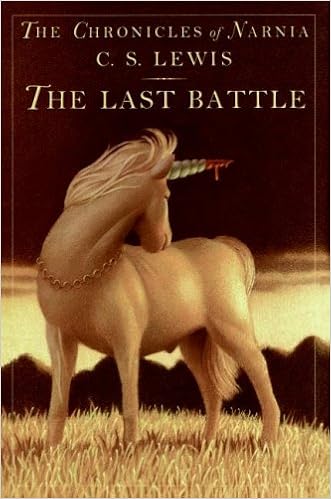
The Last Battle by C.S. Lewis

The Last Battle, by C.S. Lewis, is the final book in The Chronicles of Narnia series.  This is my favorite of the seven books in this fantasy series.  The world of Narnia is in danger because of evil characters roaming the land.  The most important character is Aslan, the lion.  Aslan is the true king of Narnia, but he does not appear for much of the book.  A wicked ape named Shift and his followers plan to use an imposter Aslan to gain power and control over the world.  They use the name of Aslan to convince people in Narnia to serve Shift.  For much of the book, there is a battle between people who believe in the real Aslan and people who are deceived by Shift and his followers.  Later in the story, the real Aslan appears and helps the people in Narnia who believe in him.  Finally, Aslan reveals his true identity and leads his people to his country.

Aslan is my favorite character in the series, and I really like this book because we learn more about his true identity.  I also enjoy this book because of all the action, as good characters battle against evil characters throughout the story.  This book is very exciting and filled with suspense.  There are many villains in this story, which made it very interesting.  I was surprised by the ending, but it was a rewarding conclusion to the series.  I would highly recommend reading the other books in the series before reading this book.  The Chronicles of Narnia is one of my favorite series of books and I would recommend them to everyone.

-Simon H.

The Last Battle by C. S. Lewis is available for checkout from the Mission Viejo Library. It can also be downloaded for free from Overdrive.

Keeper of the Lost Cities: Everblaze by Shannon Messenger

Everblaze, the third book Shannon Messenger wrote for this series (and the first one with a heart-wrenching cliffhanger, might I add), was the book Sophie found out her enemies were closer than they seemed. It begins with Sophie getting a request from the Council to heal Fintan, the leader of the now-named Neverseen. Fintan used to be on the Council, but after the Pyrokisis “incident”( involving 5 Pyrokinetics and some Everblaze), he was banned. Sophie and Keefe then go to check on Silveny, the sparkly alicorn.

They happen upon a tracker in her tail and immediately rush back home. A few days after, Sophie’s Linguistics Mentor Lady Cadence figures out that the tracker had Arrowmark on it. Arrowmark is an ogre technology/bacteria that is a homing device for their weapons. All of the school had to then be tested, and Sophie’s hand skin needed to be melted off (very gross, sadly it happens more than once).

With the 9th/10th book (Stellarlune) coming out in November, I re-read this series a lot. Each time, a find more details and funny moments I never knew were there. I recommend everyone to start reading this series, it is great fun and a good way to spend your spare time.

-Izzy W.

Keeper of the Lost Cities: Everblaze by Shannon Messenger is available for checkout from the Mission Viejo Library. It can also be downloaded for free from Libby.

Magnus Chase and the Gods of Asgard: The Sword of Summer

Magnus Chase and the Gods of Asgard: The Sword of Summer by Rick Riordan, is the first book in the Magnus Chase series. The book is connected to and placed in the same world Rick Riordan’s other popular mythological series Percy Jackson, Kane Chronicles, Trials of Apollo, Heroes of Olympus, and a few other books.

You might see some similar names in this book if you’re familiar with the Percy Jackson series. The Sword of Summer as you might expect is another mythological fantasy book this time about the Nine realms and the Norse Gods.

The book starts off with the main character Magnus Chase as a homeless guy, who dies. No, that is not a spoiler and is actually part of the title of the first chapter. By the way, The chapter titles can be very hilarious in my opinion at times. Anyways back to how the book goes. You have Magnus Chase who is a homeless orphan and ends up meeting his uncle. His uncle tells him of his godly heritage as Magnus is about to reach the age where monsters will start going after him. To not spoil the book that is as far as will go. I would recommend this book to any fantasy and mythology book lovers. It’s filled with action and world-building, however, be warned that it might take a while as it’s a 498 paged book.

-Luke G.

Magnus Chase and the Gods of Asgard: The Sword of Summer by Rick Riordan is available for checkout from the Mission Viejo Library. It can also be downloaded for free from Overdrive/Libby.

The School for Good and Evil by Soman Chainani

Best friends to enemies, learning to adapt to new environments, and creating characters with unique personalities are concepts Soman Chainani effectively intertwined throughout his series, The School for Good and Evil. Sophie, a perfect young girl, and her best friend Agatha, the gloomy lone wolf, are brought into a world much different than their own. They find their fortunes reversed as they land in schools opposite of their personalities.

This series brings much thrill and excitement. Chainani takes you on an adventure full of twists and turns while creating a plot that is both complex and exhilarating. Personally, I enjoyed the different characters and how they were based off of popular fairytales. The description of each individual develops a unique image of them, and their actions throughout the story make them even more enjoyable to read. I also enjoyed the many details that Chainani included in his writing; it always made his work fun to read and easy to picture in your mind.

I would highly recommend this series to anyone who enjoys plot twists, meaningful themes, and a hint of drama and romance. It’s perfect for those who love fairytales and using their imagination. It’s always been one of my favorite series to read, so I would most definitely recommend it to anyone looking for a new book to read.

-Kaiya T.

The School for Good and Evil is available for checkout from the Mission Viejo Library. It is also available to download from Libby.

The Mark of the Thief by Jennifer A. Nielsen

Mark of the Thief (Mark of the Thief, Book 1) (1): Nielsen, Jennifer A.:  9780545561556: Amazon.com: Books

Knocking other people backward, disappearing and appearing out of nowhere, and protecting yourself and your friends with an invisible shield are all things that magic can do! So, when Radulf, the Roman general, comes around to the mines where slaves work, one naughty slave is told to fetch Caesar’s Bulla from a cave. Who is that slave? Nicolas Calva, who will not back down from anyone. Not even his masters! 

After Nicolas is let down into the cave where he needs to grab Caesar’s Bulla, he meets a griffin. This griffin is not an ordinary griffin, though. It is the griffin who guards the Bulla! As Nic tries to grab the bulla, he has to fend off the half-lion, half-eagle magical creature. 

Following his successful attempt of obtaining the bulla, Nic endures many struggles. Radulf, the general, is after him and he wants the bulla for himself. Roman soldiers are ready to capture him at every cost! 

This book is a thrilling ride that does not disappoint. Nic learns about friendship and trust throughout this novel, and a lot of the lessons that he learns can be used in our lives, too. 

Throughout his encounters with Caela the griffin, Nic learns how to care for someone else other than himself or his sister. After living in the mines for 5 years and not knowing life other than difficult days and starving stomachs, Nic was able to understand that there are things in life that are enjoyable, too. The bulla helped Nic get out of the mines, and as a result, Nic learned about the lives of the Romans. 

This novel is the first of a 3 book trilogy, so Nic’s journey is longer than just one book!

The author, Jennifer A. Nielsen did a great job making these stories really intriguing and exhilarating. This book is definitely one of my favorite books that I have read this year and I recommend it to anyone interested in stories about magic.

I would give this novel a 10/10 rating because of how the author added important lessons using events and characters. She did a great job of including plot twists to create excitement for the reader just as the story started to slow down. 

-Mert A.

The Mark of the Thief by Jennifer A. Nielsen is available from the Mission Viejo Library. It can also be downloaded for free from Overdrive.