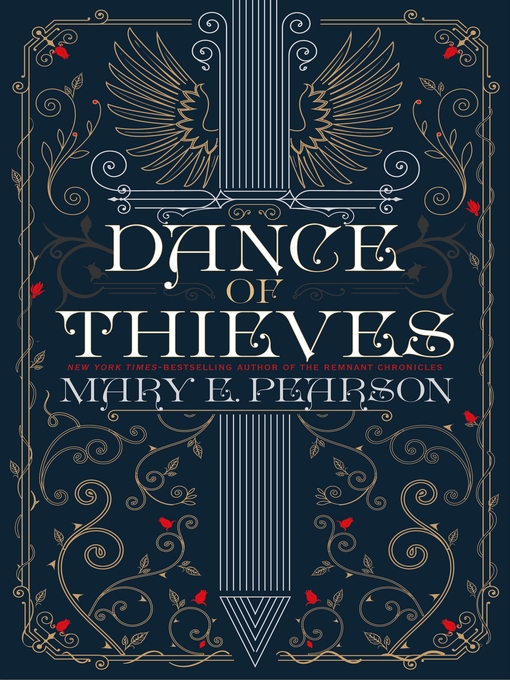
Dance of Thieves by Mary E. Pearson

This captivating fantasy novel follows Kazi Brightmist, also known as the notorious pickpocket “Ten,” and her fellow members of the Queen’s elite guard to venture to neighboring settlements on orders to investigate disturbances in these areas. Upon reaching their destination, Kazi discovers Jase Ballenger, the newly crowned lord of the land after his father’s untimely death. Each suspicious of each other, they quickly become enemies but are forced to work together when they are captured by slave traders and chained at the ankle. Worried about his city and determined to complete her assignment, the two make the long journey back, finding themselves attached at the hip by the end of their adventure (or leg 😉). However, trials await the pair when their secrets threaten to uncover. Trying to outwit each other, they enter an exchange of ploys and tactics to each secure what they desire. They dance the dance of thieves.

This book is such a fun read. You are enveloped in the beautiful world of Venda and the Ballenger Empire with its endless deserts and colorful bizarres. Kazi is a strong, witty warrior who, despite all her hardships has become a member of the Queen’s personal guard. Jase is very clever and the leader of his large family and city. I really enjoyed the two protagonists’ banter and outwit each other in a constant battle to determine who was more clever. This book quickly became one of my favorites and I highly recommend you read it so it can become your favorite as well.

-Gia S.

Dance of Thieves by Mary E. Pearson is available for checkout from the Mission Viejo Library. It is also available for download for free from Libby.

Writing Tips: How to Create A Main Character

500+ Writer Pictures | Download Free Images on Unsplash

Purpose: This should be the first part to consider when you create your protagonist. The purpose is how the character creates the plot of the book. What is the character trying to accomplish? What obstacles is your protagonist facing and why are they doing it? These are things to consider before fleshing out your main character. The plot will help you decide what traits to give your character.

Personality: This is arguably the most important part of creating your character because this is what will make the reader either put down the book or continue reading. When giving your character personality traits, make sure to give them traits that are relevant to the story and further the plot. The protagonist’s personality should be relatable and realistic. Everybody wants to read about positive traits and unique skills, but they also want to see flaws. We all have flaws, and sometimes the flaws in protagonists help to advance the plot of the story. How about a knight who is extremely timid? Mixing stereotypes with unique flaws and traits is the ideal way to create your protagonist.

Physical Traits: While personality is most important, the physical traits of your main character can also help draw in readers. For example, this could be race, gender, or physique. Especially nowadays, there is a lot of diversity within books regarding gender and race. This broadens the audience and allows certain readers to connect deeper with your character. Gender plays an important role in modern books because typically, girls read more than boys (not to say boys don’t read or there aren’t amazing male protagonists.) Finally, the physique of your character is important for two reasons: it helps draw in certain groups of readers, and it should reflect your plot. A character who has to carry a broadsword and armor, should have muscle. A character who spends a lot of time inside with little sleep, should appear ghastly. These are all simple ideas that could help you with creating your protagonist. 

-Michelle L.

The Iron Trial by Holly Black and Cassandra Clare

The Iron Trial by Holly Black and Cassandra Clare is the first installment of the Magisterium Series. The Iron Trials story introduces the main character, Callum Hunt. Throughout his whole life, he has been told the magic is bad and to stay away from it, despite his father being a mage. So when it’s time for Call to take the Iron Trials test to see if he can get into the magic school; the Magisterium, he tries to fail the test. And even though he does his best at failing, he still gets admitted to the Magisterium. Now the Magisterium is awaiting for him and he has to find his way through it. With the two other apprentices in Call’s group, Aaron and Tamara, they go through magic lessons, tests, and many different hardships throughout their first year at the Magisterium. 

The Iron Trial was an interesting and intriguing book. The three main characters in the book all had their own sets of personalities and different lives. Call was sarcastic and liked to talk back. He was always alone but liked being with friends. Aaron was kind and always tried to be the equal ground between everyone. He was loyal to his friends and stood up for them. Tamara was the smart one who knew more about magic than Aaron and Call did. She was independent and at first, very serious. As I read, I learned more about the characters and the different lives they live in. They were all very unique and great characters. Even the side characters were important to the story and stood out. Many of the characters had character development throughout the story which I really liked. There were a couple of plot twists in the story which were very relevant to the plot and changed a lot in the story. 

The Iron Trial is a fantasy book that wasn’t super long. The chapters were a good length and the book itself was a good length as well. At first, my expectations weren’t set very high and I thought it would be a normal magic book and that it wasn’t anything special. As I read, I found myself pulled into the story, wanting to find out what happens next. I finished the book in a few days and ended up enjoying the book more than I thought I would. The Iron Trial is only the first book out of five in the Magisterium Series. I enjoyed this book and I would definitely recommend this book to anyone who enjoys a good fantasy novel. 

-Nicole R. 

Iron Trials by Holly Black and Cassandra Clare is available to check out from the Mission Viejo Library. It can also be downloaded for free from Overdrive.

Best of: Fantasy Romance

These are some of my favorite young adult romance novels/series. I have read way more than the ones listed, but these are the ones that stand out the most.

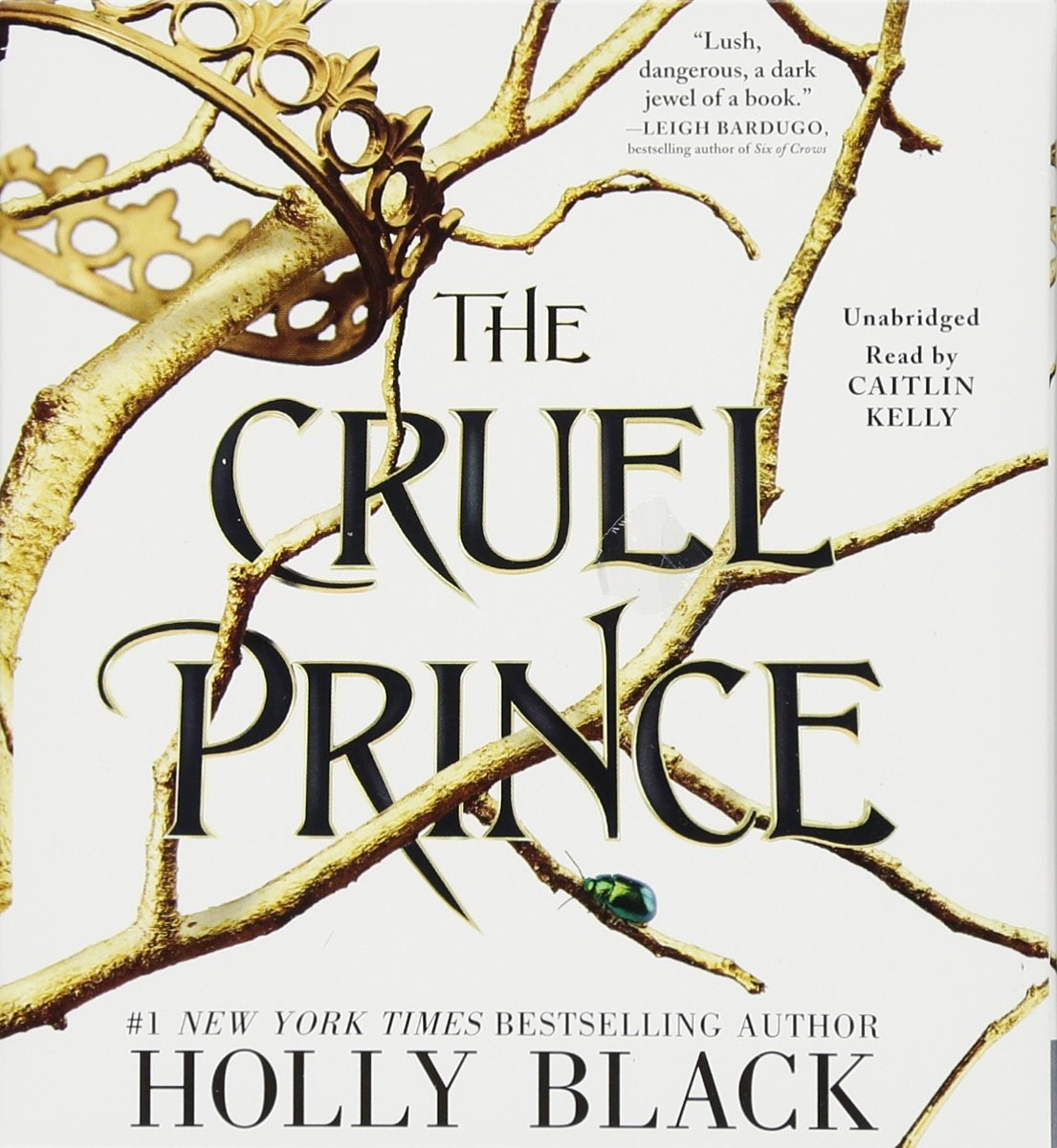
  1. The Cruel Prince (Folk of The Air series) by Holly Black
The Cruel Prince (The Folk of the Air, #1) by Holly Black

This would be my top recommendation if you are just getting into this genre. The series follows an enemies to lovers trope and is what I consider the best of the trope. The series follows a girl named Jude, who is one of the only humans living in the land of Faerie. Her arch enemy is none other than the handsome, Prince Cardan. In an attempt to gain support and power in the strange immortal land, Jude works against the throne. However, betrayal works both ways and she soon finds herself having to work with Cardan to save the land of Faerie.

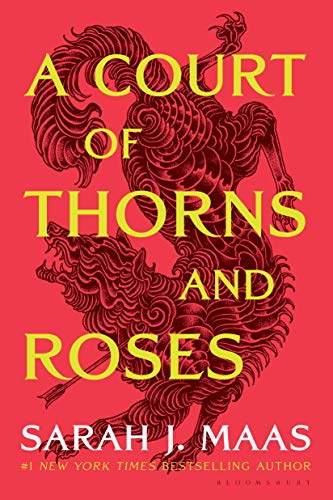
  1. A Court of Thorns and Roses Series by Sarah J. Maas 
Amazon.com: A Court of Thorns and Roses eBook : Maas, Sarah J.: Kindle Store

If you’re someone who enjoys reading book series this is just the one for you. A Court of Thorns and Roses follows the tale of Beauty and The Beast but with a twist. Feyre is the main protagonist of the series and her family’s only hope in surviving a particularly tough winter. Desperate to feed her family, she ventures far out into the woods in search of deer, but instead shoots a wolf. Her entire life is changed as she is dragged into a magical kingdom for murdering a faerie. She now has to live in the land and becomes close to the High Fae of the Spring Court. 

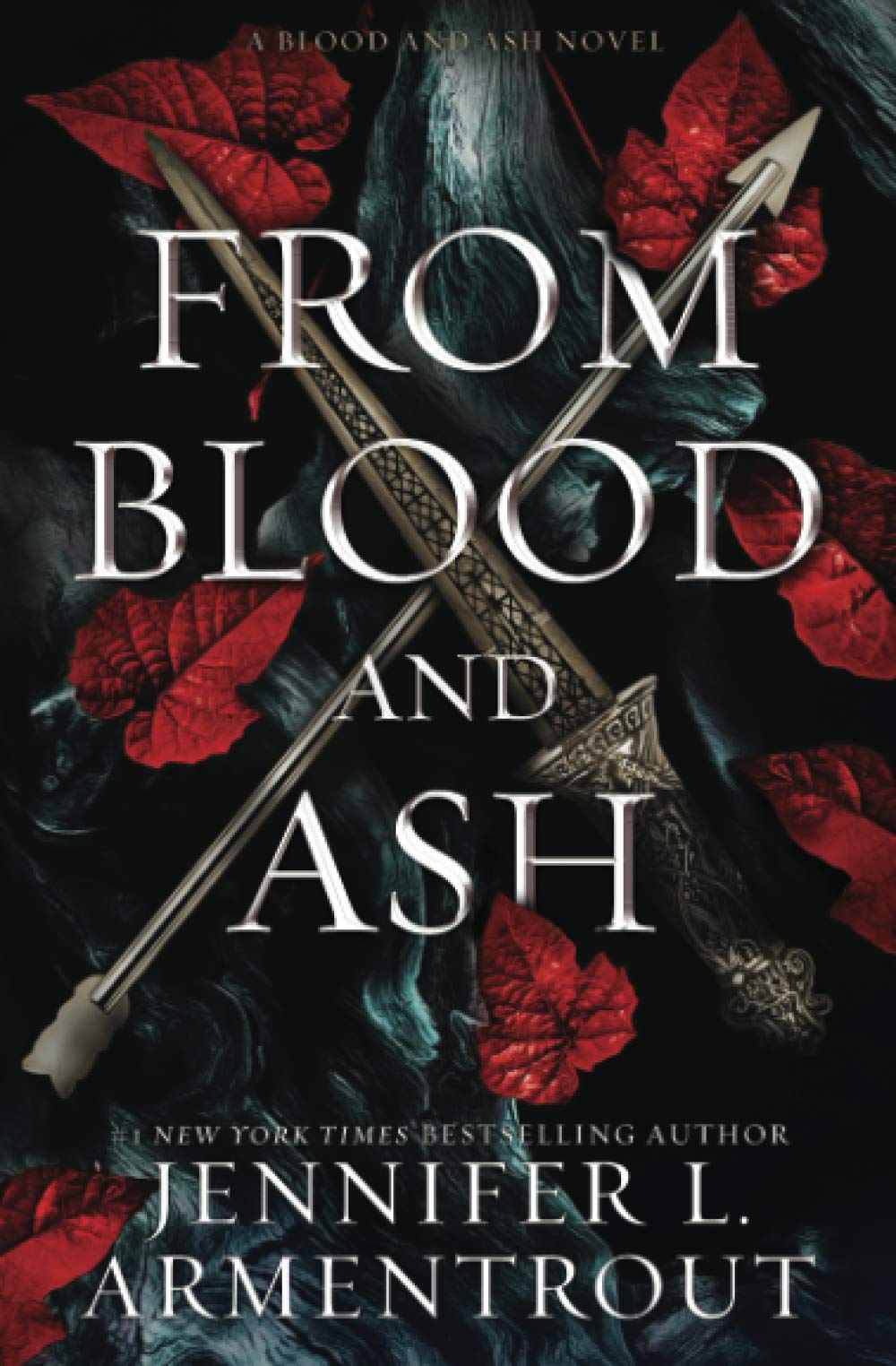
  1. From Blood and Ash by Jennifer L. Armentrout
From Blood and Ash (Blood And Ash Series): Armentrout, Jennifer L.:  9781952457005: Amazon.com: Books

I saved the best for last, this is my personal favorite of the three because of the worldbuilding and chemistry involved in the series. Although there are only three books in the trilogy, each is close to 1000 pages, so they’re a good read. The series follows a girl named Poppy, who is a maiden – meaning she is forbidden to interact or talk to anyone. However, she is also very rebellious and constantly finds ways to sneak out of her quarters. This goes well until she meets a guy and instantly falls for him. He turns out to be her new personal guard. This is truly an amazing series full of both sweet moments and angst. 

-Michelle L.

Neverseen – Keeper of the Lost Cities by Shannon Messenger

In the fourth book of this series, our main character Sophie and her friends escape to the Black Swan, having just figured out that there is a second rebel group (aka the Neverseen). To keep their families safe and avoid the Council’s punishment, they leave. Upon getting to the Black Swan’s hideout, they meet an old gnome named Calla. She tells Sophie that she helped make her during the experimental stage of her creation. She also talks about a plague that has been killing gnomes. Sophie, (being the curious girl she is), decided to do some research. Mr. Forkle has other plans. He wants to only use this time to read and research. Nobody liked that idea (especially Dex and Keefe)!


This is one of my favorites in the series. It has the best ending so far, and it is tense (but still exciting). I can see major character development within all of the characters, and it is when many memorable actions happen. Some of which are Fitzphie jokes, meeting the twins Tam and Linh, plus some miniature showdowns with various different people. I very highly recommend reading this series, you can get very invested in the series quite quickly.

-Izzy W.

Neverseen by Shannon Messenger is available for checkout from the Mission Viejo Library. It can also be downloaded for free from Libby.

Love, Magic, and Dreams: An analysis of Shakespeare’s “A Midsummer Night’s Dream”

An entertaining and humorous read, the play “A Midsummer Night’s Dream” by William Shakespeare incorporates a variety of figurative language to demonstrate a number of concepts, ideas, and opinions.

To begin with, Shakespeare skillfully develops the timeless aspect of love. In the very first scene, readers are introduced to Theseus and Hippolyta planning their wedding, as Hippolyta expresses that “Four days will quickly steep themselves in night; / Four nights will quickly dream away the time” (1.1.7-8). The story of Theseus of Hippolyta is quite unique: at first, Theseus kidnapped and beat Hippolyta in battle. By introducing these enemies-turned-lovers at the beginning of the play, Shakespeare foreshadows love issues and complexes, but also suggests a happy ending. Moments later, readers learn about Hermia and Lysander’s love, despite Hermia’s father Egeus’s desire that Hermia marry Demetrius. Hermia’s friend, Helena, is already in love with Demetrius, but as Helena explains, “The more I love, the more [Demetrius] hateth me” (1.1.204). The play is mostly centralized around the loves of Demetrius, Hermia, Helena, and Lysander. Love is universal and timeless–someone from ancient Egypt would feel the same butterflies as someone in 2050. The same applies to sadness, betrayal, and jealousy, all of which are prevalent in the play. In Demetrius, Hermia, Helena, and Lysander, readers understand the timeless complicated and uncontrollable nature of love. Cleverly, Shakespeare further expands on uncontrollability when the fairy king, Oberon, sends Puck to retrieve a flower, whose juice “[w]ill make or man or woman madly dote / Upon the next live creature that it sees” (2.1.177). For the audience, the flower challenges the uncontrollability of love. Demetrius and Lysander are both affected by a simple thing as flower juice, causing them to completely change their views, dispositions, and opinions. Upon analysis, Shakespeare’s incorporation of such a magic flower, which terribly exacerbates the love complex between the characters, represents the irrational, yet consuming aspect of love. 

In addition, magic is a significant element of “A Midsummer Night’s Dream”, and it is not too different from love. Once again, the magical flower is a crucial symbol. Magic is often understood as the ability to do and control virtually arbitrary actions and events. As already discussed, love is a prime example of uncontrollability. With the magic flower, the fairy king and Puck are given greater power over the rest of the characters. They have a greater influence on the events that will ensue in the play. Magic’s influence is further exemplified by Puck, who turns Bottom’s head into a donkey’s head during rehearsal. Unluckily, Titania (who has been spelled with the magic flower) wakes up and instantly falls in love with Puck (3.1.131-164). This situation is especially significant in the theme of magic since it is a magical being herself (Titania, the Fairy Queen) who has fallen under a spell. First of all, the overtaking influence of magic is apparent; moreover, the influence of love is also portrayed. It can be argued that Shakespeare incorporates magic into the play to accentuate its likeness to love. Both magic and love cause troubles, yet they can both completely dominate a person’s actions and way of life.

Finally, the significance of the title  “A Midsummer Night’s Dream” must be recognized. Dreams are random, irrational, and absolutely overtake one’s mind, very similarly to love. Moreover, dreams are repeatedly mentioned throughout the play. For example, Hippolyta expresses that “Four nights will quickly dream away the time” (1.1.8). Referring to the day of her wedding, Hippolyta uses “dreams” to describe her wait. The word “dreams” has a very positive connotation. In this manner, “dreams” recur to represent fantastic events, situations, and emotions.

Clearly, Shakespeare’s “A Midsummer Night’s Dream” well incorporates figurative language to develop a multitude of themes, lessons, and ideas.

-Ayati M.

William Shakespeare’s A Midsummer Night’s Dream is available for checkout from the Mission Viejo Library. It can also be downloaded for free from Overdrive.

Writing Tips: Fantasy Worldbuilding

How Does Freelance Writing Work?

Genre: The most important part when you begin writing a novel is picking a genre. Think of all your favorite books or movies and take inspiration from all of them. Is your novel going to be set in a medieval world? Space? A dystopian civilization? Apocalyptic world? Once you decide it will be a lot easier to write out a plot and the details of your world.

Setting: The second most important part of writing a fantasy novel is choosing the setting. Typically, most fantasy novels take influence from medieval Europe, but it doesn’t always have to be that. What does the environment look like? Is it set in a cold environment, hot environment, desert, space, mountains, coastline? All of these are factors to consider when creating your world.

Plot: Typically fantasy novels follow a plot where the main character has to go on an adventure or quest to complete a task. However, this plot can have a lot of variation and provide a unique story. Some ideas to consider when working out a plot are the tools you will use to advance your plot. This could be magic, a character with a very specific skill, or any other unique additions to your book. This could also be influenced by the setting, perhaps the world is set in a dystopian setting where there are tensions between the rulers and their citizens. Maybe the main character has to go on a quest to find something. The possibilities are endless.

Characters: People like to read about relatable characters. When creating a main character it’s important to make them believable. Many times, new writers create a character that only reflects positive traits, when in reality, everyone has negative traits they’re not proud of. Insecurities and mistakes in a character give the reader an emotional attachment to said character. When writing side characters, make sure they exist to further the plot. Also try to give them their own personality to engage the reader.

-Michelle L.

Social Parallels in Holly Black’s The Cruel Prince

In The Cruel Prince by Holly Black, protagonist Jude Duarte is one of the few humans living in the world of Faerie after being taken from her home in the mortal world. The book (and the whole trilogy, which I highly recommend), follows Jude as she navigates the complicated politics of the Faerie realm and tries to prove that she can be extremely powerful despite her being a human.

The challenges that Jude faces due to her being human clearly reflects social issues in the real world regarding discrimination, even if it sometimes gets lost in the magical world of the book. Many fantasy novels and worlds have discriminatory elements between different magical beings (i.e. “mudbloods” versus “purebloods” in Harry Potter, and humans versus elves in The Witcher).

While these instances may not be direct commentaries on social issues, we can use them as a new lens in which to view these problems and how they compare to the real-world thing.

Amazon.com: The Cruel Prince (The Folk of the Air, 1): 9781478923732:  Black, Holly, Kelly, Caitlin: Books

In The Cruel Prince, Jude is considered lucky to be living the life she lives. Because her father is of high ranking, she and her sister are able to attend one of the best schools and live in an extravagant house. While this would be a blessing for anyone, a fortunate life for a human in Elfhame has even slimmer chances. Because of their short lifespans and susceptibility to “Glamour” – the Faerie ability to basically control minds – humans are most often used as brain-numb servants.

Even in the best case, such as Jude’s life, humans face harsh criticism and mockery from the other inhabitants of Elfhame. Throughout the series, Jude is very often treated as a waste of space.

Obviously, nobody in the real world is facing discrimination based on the fact that they’re human. However, the relationship between humans and Faeries in The Cruel Prince parallels many struggles that religious, racial, and sexual minorities face today. It can be harder to gain powerful positions and to be seen as equal for both Jude and these minorities.

It’s important for authors to make these parallels, even if not completely intentionally, so we as readers can learn and empathize with these issues.

-Luxy B.

The Cruel Prince by Holly Black is available for checkout from the Mission Viejo Library. It can also be downloaded for free from Libby.

The Knight’s Ransom by Jeff Wheele

The Knight’s Ransom by Jeff Wheeler is the first book in the First Argentines series. The book is 433 pages long. The First Argentines series is currently made up of three books with a fourth to come. The whole series is a prequel to the six-book series the Kingfountain series. The book Knight’s Ransom is relatively new as it was only published on January 26, 2021.

The book follows Marshall Barton nicknamed Ransom, by his childhood friend and main female character Claire de Murrow. The book starts in a civil war over succession for the throne. It starts with young Ransom being abducted by the original king, and to make his noble father stay loyal an attempted hanging of Ransom takes place. However, ultimately the king doesn’t hang him. The story is then mainly about Ransom’s journey through knighthood as he looks to find who he is and what he wants. We see him growing up as it has multiple time skips allowing us to see Ransom get into his teens and twenties. One of the more enjoyable parts is the diary entries by Claire de Murrow as it talks about what’s happening to her and what her point of view is of the events that are happening.

This is a book I would highly recommend to people who like a fantasy about swords and magic as while as books set in the medieval era. The Knight’s Ransom has character development and has some mystery such as when Ransom hears rushing water in his ears. This book doesn’t always show a plain black and white picture allowing the reader to decide what is right. The book has fights and war, where blood is spilled and there is the point where characters drink alcohol. However, I did quite enjoy this book as it gets you intrigued into what’s going to happen.

-Luke G.

The Tale of Despereaux by Kate DiCamillo

The Tale of Despereaux is a novel by Kate DiCamillo, and winner of the Newberry Award.  The setting is in a medieval era, and most of the events take place in a large castle.  The main plot revolves around an undersized mouse with large ears named Despereaux.  Despereaux is considered strange and eccentric compared to the other mice in the castle.  For one thing, he enjoys reading books rather than nibbling on its pages.  One of his favorite books is about a knight rescuing a princess.  Another important character is a spiteful rat named Chiaroscuro, who is called Roscuro for short.  Roscuro is unlike other rats, because he desires to leave the darkness in which rats are accustomed to living.  Roscuro decides to visit a royal banquet, but he falls from a chandelier into the soup.  This angers the princess of the castle, named Princess Pea, and she gives Roscuro a scornful look.  Roscuro’s feelings are hurt by the incident, and he plots to get revenge against the princess.  He convinces an unfortunate peasant girl name Miggery Sow to help him kidnap Princess Pea, promising the girl that she could become the princess instead.  Despereaux learns of the plan, and sets out on a quest to rescue the princess.

This book is actually divided into four books.  The first book focuses on Despereaux.  The second book focuses on Roscuro.  The third book focuses on Miggery Sow.  The fourth book ties all of the main characters together.  I think the organization of this book is very clever.  I enjoyed the way the story shifted focus from one character to another, and finally brought them all together.  I especially enjoyed the intertwining of events as the book drew toward its conclusion.

Overall, I think this book is very charming and entertaining.  The story is filled with adventure and excitement.  The characters are simple, but memorable.  The narrator presents the story in a way that seems almost interactive with the reader.  I felt like the narrator was speaking directly to me, which made this book very engaging.  I was drawn in by the binding of the book itself, which describes it as “being the story of a mouse, a princess, some soup, and a spool of thread.”  It was very satisfying to read about how these elements all came together to make a unique and enjoyable story.  This book is one of my favorites and I think just about anyone would enjoy reading it.

-Oliver H.

The Tale of Despereaux by Kate DiCamillo is available for checkout from the Mission Viejo Library. It can also be downloaded for free from Overdrive.