Why Ending a Friendship Should Not Be Villainized

Ending a friendship with someone is often treated like a horrible thing to do, something cruel and morally wrong. But these ideas are ignorant to the truth: some friendships simply do not last forever. Leaving a friendship in the past is not an action that automatically makes one dramatic, selfish, or in the wrong.

Everyone grows and changes as a person; values shift, priorities change, interests fade away… All of that is a normal, inevitable thing. Unfortunately, these changes can also lead to friendships becoming weaker. The person you once promised to be friends with forever may suddenly feel like a stranger. Maybe there was a change in personalities, or you realized that you two do not really agree with each other. In situations like these, it is better to just let the friendship go, rather than to hold onto it and hope it rebuilds itself. Staying in a friendship out of guilt or fear does not make you loyal, it just makes you stuck.

We villainize individuals that leave relationships because we fear endings. Humans fear the unknown and are uncomfortable with the idea of losing something that was once a comfort. Endings also indicate a loss of control, and control is something that we are naturally drawn to. Another thing is that ends force us to mature and move on, which is something that is difficult for many. Most people find themselves stuck in friendships, simply because they are not willing to step out of comfort zones. But time keeps on moving, and we are the only ones that can decide who we spend our lives with.

Of course, ending a relationship should not be careless and harsh. The most important thing is that you are honest, take accountability, and are kind about it overall.

Ending a friendship does not erase the previous memories. It does not mean that the relationship was fake. It just means that you are letting go of a fading connection, and that should not make you a villain.
Why Rewatching Movies Hit Different As You Grow Up

As a kid, watching movies is usually only a source of entertainment. You’re just glad to be with your parents in a movie theater munching on some popcorn. You’re not wondering what that joke one of the characters said really meant under the surface or why there’s certain conflicts throughout the movie. As you get older, you have different experiences that teach you why some things are the way they are. This makes watching a movie you found on Netflix that you saw as a kid hit differently. There are two different perspectives watching the same movie. One is a six- year-old viewing the movie with rose colored glasses and with a brain that doesn’t quite understand how the world works yet. The other is a sixteen year old watching with her prescription glasses and the emotional intelligence of a wrinkly old woman. Both watching with a sense of wonder and thrill. It’s just that one version of you is better at looking out for the emotional state of the characters and the message behind the movie. For example, I remember watching my favorite Christmas movie, Home Alone, when I was a little kid. I wasn’t too focused on the plot, rather I was more into the cozy and cheerful vibes from the movie. Yes, I did understand the plot and was on the edge of my seat throughout the movie, but that wasn’t the main thing I was interested in. Recently, I’ve rewatched the movie out of nostalgia. Looking back on the movie, I’ve come to the realization that Kevin’s mother was terrible. It didn’t really click to me how outrageous it is to forget your kid before going on a trip miles from home. As a kid, I thought Kevin simply had his wish come true, to make his family disappear. I didn’t really understand what a hazard it must’ve been to have an 8 year old kid home alone. It truly was a hazard, considering the house got broken into. Kevin’s parents were just lucky enough he was a clever kid and didn’t end up seriously hurt. This isn’t the only movie that feels like this. There are so many more that hit just as hard. It’s like an aha moment. When something didn’t click as a kid, it definitely clicked now. In a way, it’s like connecting with that younger version of yourself. It feels nice remembering the silly thoughts you used to have watching something you didn’t understand. That’s the best part about rewatching old movies. Movies stay the same, but we don’t. That’s the beauty of growing up and becoming your own person.

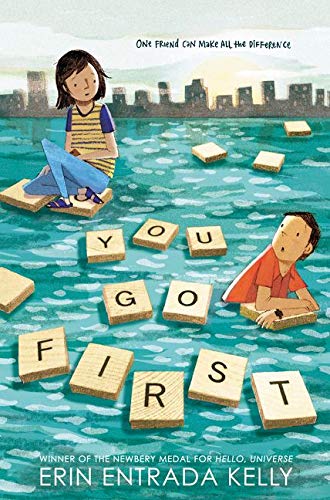
You Go First by Erin Entrada Kelly

In a city near Philadelphia, Pennsylvania, lives a twelve-year-old girl named Charlotte. Over a thousand miles away, in the small town of Lanester, Louisiana, lives an eleven-year-old boy named Ben.

Charlotte’s and Ben’s lives intersect through only an online Scrabble game. At first glance, they seem drastically different—Charlotte possesses a rock collection and aspires to be a geologist, while Ben loves anything related to presidential history, recycling, and Harry Potter.

Yet somehow, as the story escalates, Charlotte’s and Ben’s lives begin to tie together in completely unexpected ways. Throughout their journeys, similarities between the two rise to visibility. Charlotte and Ben learn more about each other, and even more consequentially, themselves, as they figure out the obstacles and challenges thrown into their lives.

You Go First by Erin Entrada Kelly is a truly touching, inspiring, and reflective novel. The parallels drawn between the two main characters’ lives are skillfully crafted, and it is even more so when it is considered how different they really are. You Go First truly impressed me, and I’m sure I’ll be rereading this story countless more times, as readers may if they decide to give this one a try.

I would definitely recommend You Go First, especially for younger teenage readers. I absolutely fell in love with this book, and I’m sure you will too! Hopefully, you will enjoy this tale spun of friendship and family, humor and grief, growing up and breaking down, and finding one’s true identity. Happy reading!

-Lam T.

You Go First by Erin Entrada Kelly is available for checkout from the Mission Viejo Library.

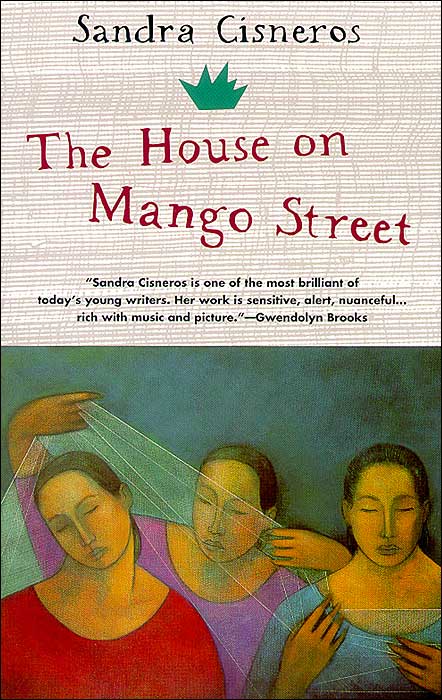
The House on Mango Street by Sandra Cisneros

Six Traits Blog - Word Choice: An Excerpt from The House ...

The House on Mango Street by Sandra Cisneros is a poignant coming-of-age book centered around a young Latina girl, Esperanza, in 1960s Chicago.

In a series of vignettes, or short stories, Cisneros examines themes of maturity, belonging, poverty, and femininity. The vignettes are told from Esperanza’s point of view, laden with rich imagery and symbolism, and hazy- like they are being told in a dream. Each vignette focuses on small events in Esperanza’s day to day life, and provides insight into her thoughts and desires.

Cisneros skillfully presents the dichotomy of Esperanza and her family’s life- many of the vignettes center around happy moments in their lives, like playing outside with friends, getting a first job, or going to a neighbor’s party, but even so, the abject hopelessness and desperation of their situation lurks just below the surface. The entire book is a masterful study of not only Esperanza’s situation, but the human condition- a careful examination of ritualistic maturity, traditions, gender norms, and youth. 

Cisneros writes in a simple, easily understandable vernacular, complete with sentence fragments and a lack of quotation marks that makes each vignette easy to read. Nonetheless, the book contains a depth of emotion and, often, desperation that was immensely heart-wrenching to witness. I grew up in circumstances close to those of Esperanza’s, so reading about her experiences took me back to my own childhood, to times when I felt the same way she did. Personally, I would rate this book a 10/10. 

This book contains some mature themes.

-Vaidehi B.

The House on Mango Street by Sandra Cisneros is available for checkout from the Mission Viejo Library. It can also be downloaded for free from Overdrive.

The Goldfinch by Donna Tartt

Extraordinarily crafted and presented, Donna Tartt’s 2013 novel The Goldfinch tells the story of Theodore Decker, a young man plagued by memories of his experiences in an act of terrorism, the loss of his mother, and one piece of artwork that alters his life — and history — forever.

Deemed a Dickensian-style coming of age novel, for its poetic air and substantial length (771 pages, beginning to end), “The Goldfinch” recounts a large sequence of Theodore’s life from his point of view, as he moves from New York to Las Vegas and back again, and ages from thirteen to mid-twenties. The novel stretches broadly across a grand array of emotions, written in descriptive and illustrious sentences: orchestrations of edge and tension, raw reflection and self-discovery, dreamy chains of events.

Tartt presents a diverse and complex cast of characters accompanying Theo in his spiraling search for answers, including his informal guardian and (eventual) business partner Hobie and his risk-taking Ukrainian friend Boris. Each character — individual in their own stories, mannerisms, beauty — pulls new aspects into the course of Theo’s life and leads to the ultimate fate of the story.

Theo’s desire for control and hunt for resolutions to his long-standing questions remains central to the heart of “The Goldfinch.” Still utterly infatuated with Carel Fabritius’s painting, the namesake of the novel, Theo expresses his connection to the painting and the fact that it acted as a piece of joy, a piece of history that he had an impact on: “And I add my own love to the history of people who have loved beautiful things, and looked out for them, and pulled them from the fire, and sought them when they were lost…” (Tartt 771).

The Goldfinch is brought to a close in the midst of loose ends; what happens between the characters is still unclear, left at the hands of the audience to decide the character’s stories. And, after pages and pages of Tartt’s beautifully written masterwork, we can’t help but imagine our very own endings for the characters we’ve grown so fond of.

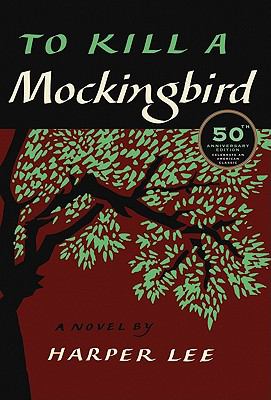
To Kill a Mockingbird by Harper Lee

This month, I read To Kill a Mockingbird, written by Harper Lee. The story follows Jean Louise (Scout), a young girl who loves to explore the world and her town, Maycomb. She also has an older brother named Jem Finch and a father, Atticus Finch, who is an attorney. The story follows Jean Louise’s daily life, leading up to a big case her father is working on defending Tom Robinson, who was accused of a crime he did not do.

This story takes place in the 1930 during the Great Depression. Racial tensions also ran high in the South during this time, which added to the story. During Atticus’ closing statement to the courtroom, the story becomes very intense. Atticus is by far the most convincing lawyer in Maycomb but he is defending an African American against a white person. Back then, colored people were thought of as property, not people, and they did not command any respect. Atticus’ client loses the battle, and the reader really feels how biased the court, and the South, was during that time

This part of the book was my favorite, because even though Atticus knew his chances of winning were slim, he still gave it his best effort. I also liked the segment just before the defense was presented, when a group of men were about to kill Tom. Before they have a chance to do it, Scout stops them. As the fight is about to start, Scout recognizes one of the men. She introduces herself and tells the man to say “Hi” to his son, Scout’s friend. After that, the man calls off his friends and they leave. This scene really moved me. It represents how everyone is human and shares common ground. When Scout asks the man to say “Hi” to his son, the man realizes that he has a family, just like Atticus or Tom. If he killed Tom, he would never be the same, and his family would always look at him differently.

Overall, I thought this book was very moving. It had a great mix of comedy, suspense, and dramatic impact. I would definitely recommend this to eighth graders and up.

-Daniel C.

To Kill A Mockingbird by Harper Lee is available for checkout from the Mission Viejo Library

The Little Prince by Antoine de Saint-Exupery

To touch, to see, to hear, are all senses given to us. What is not given to us, through birth, is the power to feel. Feeling is something humans pick up on through their surroundings and their journey through life. Being 15 years old, I have not begun to feel, until I had read The Little Prince.

Teaching us the lessons of ignorance through adults and helping us understand that keeping some part of an inner child is valid to survive through life, this story by the talented Antoine de Saint-Exupery, opens with a pilot who crashes into the middle of the desert and soon meets a blonde-headed boy, with eyes filled not with tears, but of innocence.

Realizing, he is stuck and has nothing better to do, the pilot begins to ask questions about this strange young boy, until it is revealed that this boy is from a planet far from here and is the prince of that planet (hence the title). As I read further into this book, I had realized that to repel misery from looking for you for company, that you should have a heart. Though some may argue that having a heart makes one more vulnerable, it also makes one get out of bed every morning, smile, and most of all find purpose in life.

As I have stated earlier, this book does teach to keep some part of your inner child, what I mean is that children normally have fuller, more giving hearts than adults, which is why they are so much happier. All in all, to live is to be happy and to be happy you need a heart, which is why I love this book so much, because I now know how to fully live my life.

-Kimi M.

The Little Prince by Antoine de Saint-Exupery is available for checkout from the Mission Viejo Library