Women In Science

Women are typically overlooked in STEM subjects, even though they contribute heavily to research and innovations. It is now time to recognize the significant achievements women have made. Here are just some women who don’t get the attention they deserve.

  1. Margarethe Hilferding

Hilferding grew up among liberal and Jewish women; she contributed a lot of her knowledge to the field of psychoanalysis, and medicine while also advocating for women’s rights to contraception. She knew as a young kid that she wanted to study medicine, and was one of three female students to be accepted into a university to study physics and math. Many professors made fun of her for taking such rigorous courses as during this time women typically didn’t study these courses. Hilferding was the first Austrian woman to receive a medical degree from the University of Vienna. She produced a theory on maternal instinct, which is seen as controversial, and died in the Holocaust on September 23, 1942.

Aus den medizinhistorischen Beständen der Ub MedUni Wien [132]: Zum 150.  Geburtstag von: Hilferding-Hönigsberg, Margarethe: Zur Behandlung der  Schwangerschaftsbeschwerden. Vortrag, gehalten in der Gesellschaft für  innere Medizin in Wien. | VAN SWIETEN

2. Dr. Dorothy Andersen

Dorothy Andersen was a physician and pathologist who discovered cystic fibrosis in 1983, a heretical condition that impacts the pancreas and lungs. She identified how to look for acute lung and gastrointestinal problems in children. Her first task as a pathologist was to dissect a young child’s organs who was deemed to have celiac disease. As she was examining the organs she noticed some differences in the child’s lungs and pancreas and decided to look at other patients’ autopsies to identify the problem. She wrote a 50-page paper called, “Cystic Fibrosis of the Pancreas and its Relation to Celiac Disease: A Clinical and Pathological Study” and was the first to diagnose this disease in a living patient.

3. Dora Richardson

Dora Richardson was a chemist who invented a breast cancer treatment, tamoxifen. She became a chemist after visiting her sick grandmother in the hospital and worked alongside Arthur Walpole, another chemist. She worked to create compounds, and one day she developed a base for the drug, tamoxifen. Walpole and Richardson discovered it could be an effective drug to prevent breast cancer. A pharmacologist named Craig Jordan selfishly took the title of the “Father of Tamoxifen,” and is now associated with this drug.

Many women are undervalued for their contributions to science. These are just some of many women in the world who are unforgotten for their life-changing discoveries.

The Secret History – Donna Tartt (SPOILER FREE)

For fans of the aesthetic of upper-class academic settings or those drawn to the darker, more morose themes of literature (or both), Donna Tartt’s The Secret History offers a captivating and chilling experience.

Set at Hampden College in Vermont, the novel follows 20-year-old Richard Papen, who joins an elite, selective Ancient Greek class taught by a brilliant but detached professor. Richard finds himself having to assimilate with the foreign ways of his intellectually and socially superior classmates, who harbor secrets that lead to a series of tragic, life-altering events.

What I found to be most interesting in The Secret History was its exploration of themes like the corrupting impact of economic privilege, the conflict between morality and loyalty, and the weight that guilt carries on one’s consciousness. The novel is full of introspective, philosophical reflections and literary references, which may appeal to readers who enjoy deep character studies, thoughtful commentary on day-to-day life, and stories that stick with you long after the final page.

If you are unsure whether or not you’d enjoy the book, here are a few similar ones that you could compare it to:

Dead Poets Society, N.H. Kleinbaum: Academic settings that are a breeding ground for free intellectual thought that take a turn towards darker themes

The Picture Of Dorian Gray, Oscar Wilde: Captures the psychological and moral downfall of a member of the intellectually and economically privileged class

Brideshead Revisited, Evelyn Waugh: Shows the nostalgia, beauty, and eventual downward spiral of a set of elites through the eyes of an outsider.

Happy reading!

The Secret History by Donna Tartt is available to check out from the Mission Viejo Library. It is also available to download for free from Libby.

The Origin of Volleyball

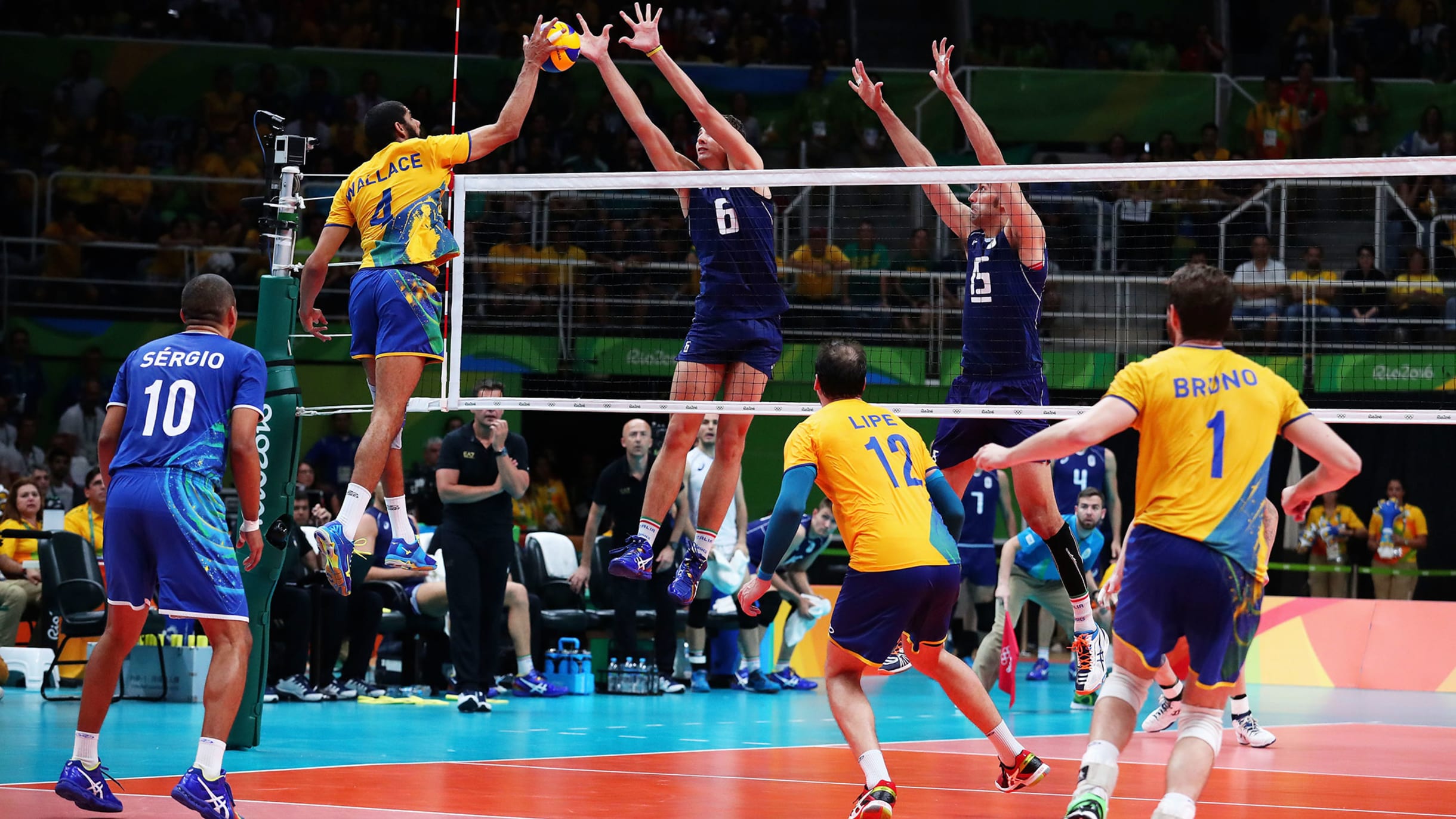
Men’s volleyball is one of the fastest-growing sports in the United States, having increased by 40% since 2017. This fun and easy-to-learn sport has a rich and interesting beginning, and it all started in 1895, at a YMCA in Holyoke, Massachusetts.

William George Morgan was born on January 23, 1870, in the town of Lockport, New York. Morgan attended the Northfield Mount Hermon Preparatory School, where he met James Naismith, the future inventor of basketball. After that, he attended the International Young Men’s Christian Association Training School (now known as Springfield College) in Massachusetts, where he and Naismith both pursued careers in physical education. In 1895, Morgan moved to Holyoke, Massachusetts, where he became the Director of Physical Education at the local YMCA.

Morgan noticed that while playing basketball, the non-athletic/older men playing would have a hard time keeping up with the strenuous physical activity involved. He decided that he wanted to make a different game, similar to basketball, but more inclusive and easier to play. Morgan used ideas from handball, tennis, badminton, and his own experience to develop his new game.

The game would feature:

  • A 30 feet wide, 60 feet long playing area
  • A 6-foot, 6-inch net in the middle, separating the play area into two halves
  • 5 people on each side of the court, making a total of 10 players
  • A ball, which would be sent over the net in a “volley”
  • Innings (inspired from baseball), later called “sets,” to add a competitive tone to the game

A problem that Morgan had was finding a ball to use for his new game. A basketball was too heavy and hard, and just the bladder of the basketball itself was too light, so he contacted A.G. Spalding & Bros to make him a custom ball. They created a leather ball, around 26 inches in circumference, and was the perfect weight for his sport, 9-12 ounces. Finally, all the new sport needed was a name, and Morgan named it “Mintonette,” a word derived from badminton.

In 1896, William Morgan first presented his sport at the to the YMCA Directors of Physical Education at the YMCA in Springfield. The object of the game was to keep the ball off the floor as it went from one side of the net to the other. One person that was especially intrigued was Professor Alfred T. Halsted, who was the first person to suggest naming the sport “Volley ball,” later formed into one word, volleyball.

As the years went by, many major things happened:

  • 1900 – Spalding starts to produce the volleyball
  • 1920s – First beach volleyball courts are created in Santa Monica, California
  • 1922 – First YMCA volleyball national championships held in Brooklyn; 27 teams appeared
  • 1928 – the United States Volleyball Association (USVBA) was created, which made rules and held tournaments (now known as USA Volleyball)
  • 1937 – USAV recognized as the national governing body for the sport
  • 1947 – FIVB (The Federation Internationale De Volleyball) was founded
  • 1964 – Volleyball was introduced to the Olympic games in Tokyo, Japan
  • 1983 – The Association of Volleyball Professionals (AVP) is formed
  • 1996 – Two-man beach volleyball becomes an Olympic sport

The First Flight Around The World

I was researching historical events that happened on my birthday when I came across an interesting one. The first around the world flight landed on September 28, my birthday. It took 175 days to complete it. But how did it happen? 

First up was the preparation. The U.S. Army Air Service, Coast Guard, Bureau of Fisheries, and Navy all donated fuel, oil, engines, and spare parts. There were going to be four airplanes; Boston, New Orleans, Seattle, and Chicago. As you can tell, they were all named after American cities. 

The objective of this treacherous journey was to display to the world that airplanes were a valid transportation method for all to use, and to advertise the new Douglas World Cruisers. Each plane could only take 300 pounds worth of supplies, meaning they couldn’t afford to take parachutes or life preservers. 

The four planes took off on April 6, 1924, in Seattle, Washington, heading west. They flew up the coast of Canada through Alaska. Alaska had freezing temperatures, thick fog, and violent, unpredictable storms. While traveling through, Seattle crashed. Fortunately, both the pilot and the mechanic were saved, but it was so early in the journey and they had already lost a plane. Luckily, the rest of them made it through Alaska. 

In May and June, they started venturing into Asia. Asia had typhoons, humid weather, and extreme heat. Japan was excited about aviation, but also suspicious of the planes provided by the military. They gave the pilots a harder route, in order to keep their military secrets hidden. Even with the harder route, they were able to make it through southeast Asia. 

In June and July, they started across India. Instead of fog and rain, they now had the humid tropical jungles and sandy winds of what is now Iraq and Jordan. 

At last, they made it to the edge of Europe in August. Now they had the daunting task of crossing the Atlantic Ocean. Keep in mind, these were old planes, and therefore needed to stop very often. The Navy stationed large ships along the route for when they needed to land. The journey to Iceland seriously tested the pilots’ skill. Heavy fog forced them to fly close to the wild waves. They were going 90 miles per hour with very little visibility. On top of that, towering icebergs floated in the sea, the pilots just narrowly avoiding them. They made it to Iceland, and from there went to Greenland. The conditions were the same, foggy and violent. From Greenland, only Chicago and New Orleans could make the trip to Labrador, Canada. Boston suffered serious damage, and couldn’t continue the journey. 

Once they entered the US, the pilots were crowded with fans at every stop. They flew down the east coast of America.

At last, they reached their final miles. The World Flight center was overflowing with eager crowds, waiting to see the latest American aviators. They crossed the desert to San Diego, and went up the west coast. Chicago and New Orleans landed successfully at the World Flight center in Seattle on September 28, 1924. They took 74 stops, and covered about 27,550 miles.

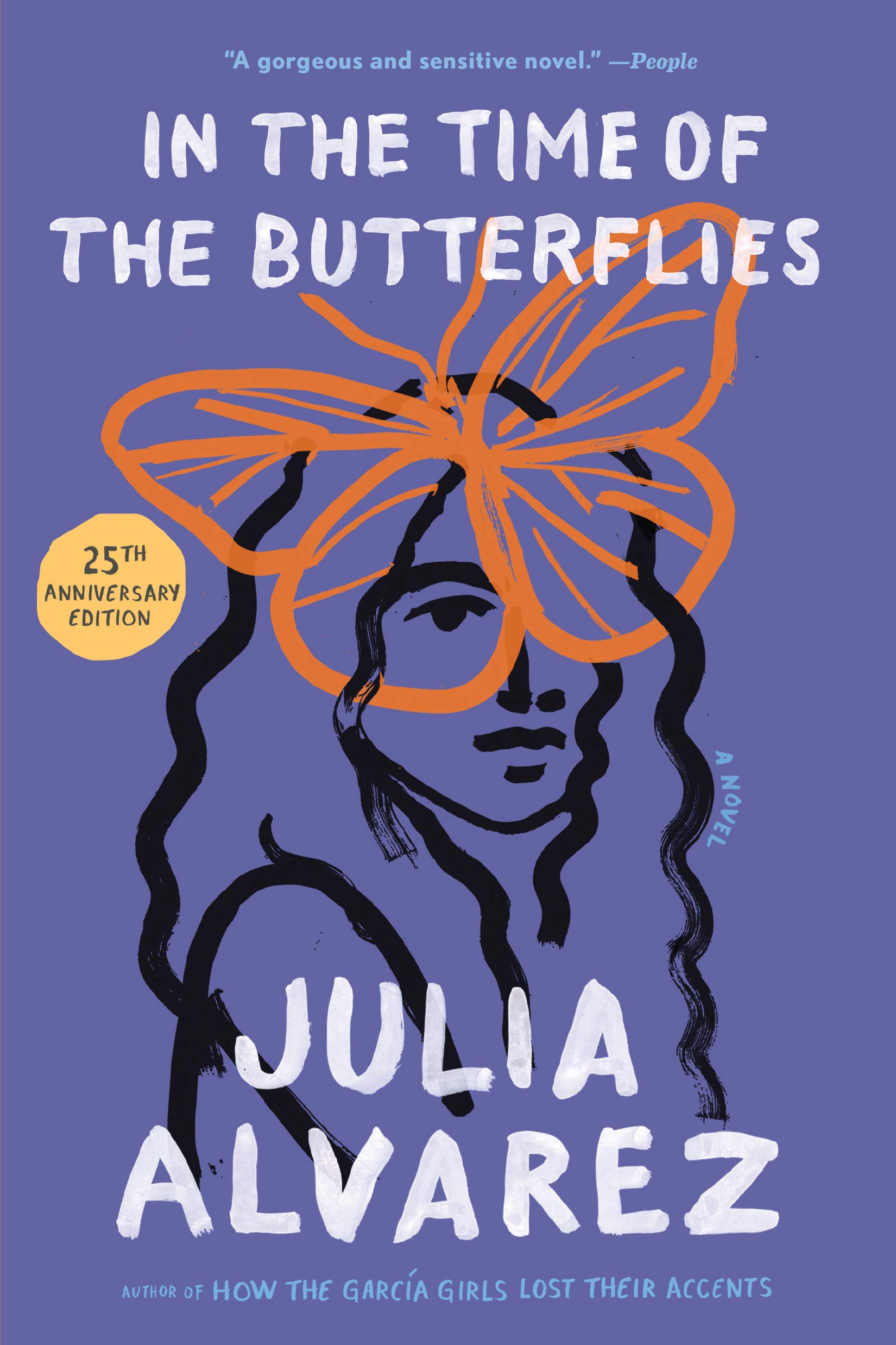
In the Time of the Butterflies by Julia Alvarez

In the Time of the Butterflies is one of many novels written by Julia Alvarez. Although it’s not as well known, the book serves as an impactful demonstration of woman empowerment and fighting for justice in an unjust government. All of the characters have their own unique personalities, a connection between fiction and history.

The novel is a work of historical fiction, therefore most of the characters are actually real people. Taking place in the 1960s, three sisters have been reported dead at the bottom of a cliff. The fourth sister, Dedé Mirabal, lives to tell the tale of the three heroic activists. Based on Dedé’s story, the sisters who passed were the primary opponents of General Rafael Leonidas Trujillo, a dictator of the Dominican Republic at the time. Throughout the novel, the perspectives of all four Mirabal sisters are portrayed as they grow older. From secret crushes to stashing guns in their own homes, the sisters depict the horrors of living under Trujillo’s oppressive regime, but also their interpersonal conflicts with the people they love.

There are multiple themes within this novel, such as racial, gender, and economic injustices, political conflicts, and finding courage in the face of adversity. As a woman myself, it’s always fascinating to see literature with underlying tones of a fight for gender equity and equality. Considering that the books I’ve read throughout my entire life were primarily written by male authors, this was definitely a breath of fresh air. It’s even more inspiring when readers realize that this novel is a work of historical fiction, that these characters have actually faced similar abhorrent situations in their lives. I applaud Julia Alvarez for being able to turn a book filled with many heavy themes and subjects, into a novel that’s light and heartfelt for young adult readers.

There’s a perfect balance between the plot and various themes of the novel, therefore the content is not too heavy for readers to understand. The only thing the book truly lacks would be plot twists and events that would drag the reader into the novel itself. Nonetheless, I highly recommend others to read this book, especially if they’re interested in historical political conflicts or female activism.

-Natasha P.

In the Time of Butterflies by Julia Alvarez is available for checkout from the Mission Viejo Library. It can also be downloaded for free from Overdrive.

The Origins of Thanksgiving

Thanksgiving is a widely celebrated holiday in the U.S. taking place every year on the fourth Thursday of November. In fact, 62% of Americans celebrate Thanksgiving at home with their loved ones each year. But are we celebrating something that we don’t really know the full meaning behind? Thanksgiving is a time that most Americans can agree is spent being thankful, which is true. But the story of Thanksgiving involves much more than being thankful for all that we are given.

The story of Thanksgiving first begins in 1620, when a group of 102 religious separatists left their home in search of religious freedom. The pilgrims finally settled in Massachusetts Bay after 66 days on a ship named the Mayflower. From there, the pilgrims began to cultivate and establish the town of Plymouth. The first winter in America was brutal, and many pilgrims suffered from diseases such as scurvy. By March however, they were greeted by an English- speaking tribe of Indians known as the Abenakis. A member of one the native tribes, Squanto, taught the pilgrims how to use and respect the land. In November of 1621, the pilgrims had their first successful harvest and called for a celebration that included their native allies.

This celebration- now referred to as “Thanksgiving”- lasted for three days. Much of the menu of the first Thanksgiving is unknown, but historians rationalize that many of the sweet treats we enjoy at the table today- 400 years after the first Thanksgiving- were most likely not present in November of 1621. Most of the sugar necessary in making these sweets would have been in short supply after months on the Mayflower. Much of the meal, however, was made using native spices that local tribes had used for years before.

So the next time you are sitting around the dinner table with your loved ones enjoying turkey and stuffing, remember the first Thanksgiving, one of harvest and harmony.

-Roma L.

“Ohio” by Neil Young: The Greatest Protest Song

Tin soldiers and Nixon’s coming

We’re finally on our own

This Summer I hear the drumming

Four dead in Ohio

This is the introduction and hook of Ohio by legendary musician Neil Young. It was released a month after the Kent State massacre, an event in which the Ohio National Gaurd opened fire on a group of anti-war protestors. It tragically killed 4 of the protestors, paralyzed one, and wounded 8 others (History Channel, 2021). The event cause mass outrage and there were many responses, the greatest was from Neil Young. 

Young starts the song by referencing Tin soldiers and Nixon, the men who carried out and allow the attack. But there’s more to the ‘Tin soldiers”, firstly Young is calling them out for being pawns to their masters, following orders without any empathy. But he’s also calling out the fact that many in the national guard were young, inexperienced, fake soldiers parading as real ones. Next Neil explains the feeling of his generation, on their own, the older generation and the government have abandoned them. They spend their summers hearing the drumming of marches, and the drumming of guns. Which eventually culminated in four dead in Ohio. This leads into the verse,

Gotta get down to it

Soldiers are cutting us down

Should have been done long ago

What if you knew her

And found her dead on the ground

How can you run when you know?

This of course describes the event more, but it also pleads for empathy. Neil wants the soldiers and those in charge of the war in Vietnam to imagine if they knew one of the victims. He accuses them of cowardice, running away from something that should have never occurred. He also informers them of the protestors’ message, that the war in Vietnam should have been done long ago. 

The bridge of the song is a repetitive chant of “na na na na na na na”, which allowed the song to easily sang at protests. The recording of the song itself uses multiple voices for this portion of the song. The ending is also repetitive, with Young sounding more and more desperate as he echos out

Four dead in Ohio

-Parker K.

Bibliography:

History Channel Article https://www.history.com/this-day-in-history/national-guard-kills-four-at-kent-state

Everything You Need to Ace World History in One Big Fat Notebook

This book covers the social studies units from 6th to 8th grade. It starts off with 6th grade, covering prehistory and the Paleolithic era. It overviews hunter-gathers, early society, and the beginning of the domestication of plants and animals. Then we move onto the Neolithic era, where hunter-gatherers slowly become unnomadic. They begin to live in villages and alter land to their needs. This becomes the Iron Age when people started to smelt iron, copper, gold, and other ores. The Iron Age is also when early civilizations spring up like Mesopotamia (Sumerians, Akkadia, and Babylon), Ancient Egypt, Bantu, Kush, Phoenicia, Israel, Jerusalem, The Indus River Valley, Maurya Empire, Ancient China, Ancient Greece (Athens, Sparta), and Ancient Rome. The book intricately explains how each civilization had its own impact on everyday culture. Next, the book covers the Middle Ages (including the Byzantine Empire, Islam, Aztecs, Mayans, Medieval India, China, Medieval Japan, Middle Age Europe, and the European Crusades). The Middle Ages goes from 400 CE to 1500 CE. Next comes the Renaissance and Reformation (1350-1650) and the Age of Exploration (1400-1800). 

The Age of Exploration was when Columbus discovered America, and this lead to the Revolution and Enlightenment in Europe (1500-1865). This is included revolutions in science, math, monarchies rising and falling, the U.S revolution, the French revolution, the U.S civil war, the industrial revolution, and the Women’s Rights Movement. Next comes the Era of Imperialism (1800-1914). This was when Africa became a popular colonization spot, when Japan modernized, and the Spanish-American War. That leads to world conflict including WWI, The Great Depression, Political Shifts, and WWII. Finally, we have Post WWII – Today. This final unit covers the changes in Europe, The Cold War, Independence Movements, and Global events. 

This book has helped me a lot during essays and narratives we have to make in class. It is a great read, despite essentially being a glorified notebook. This book also has definitions, diagrams, drawings, and vocab words you might need to know. To sum it up, the book Everything You Need to Ace World History in One Big Fat Notebook (by the people who made Brain Quest) is an amazing history study guide from grades 6th-8th. Whether it is for fun, or if this book sounds like it would be helpful, I recommend reading this book.

-Izzy W.

Hiroshima By John Hersey

As a lover of fantasy, mystery, and thriller novels, reading a nonfiction book comprised of a newspaper report doesn’t necessarily appeal to me. However, Hiroshima was surprisingly different compared to other historical novels. Obviously, it’s based on a journal excerpt, but John Hersey managed to create a book from real-life situations of different survivors–all from a story-telling and personalized perspective. To say that the book was eye-opening or underrated would still be an understatement.

Published by The New Yorker, Hiroshima takes place in 1945 during World War II, with intricate descriptions of the Hiroshima atomic bombing and multiple remarks from traumatized survivors. Hersey focuses on six people specifically, recording what happened and how they felt both before and after the explosion. His writing was very smooth for a journal report; he wrote about completely different lifestyles diminished into pure survival to make each more comparable, almost like fictional characters.

As a forewarning, this book can get gruesomely detailed and saddening. Death lurks everywhere as the main character and it can become suffocating to read at times because it’s so overwhelming, especially when you know that this information isn’t fiction. Nonetheless, this novel holds such a big impact on its readers to this today, even when it seems so depressing.

I will admit that there are some parts where the book can drag in change in regards to the plot, albeit this book is genuine, not sugar-coated to make America look like the heroes compared to Japan. It wasn’t made to entertain, it was made to inform. John Hersey, an American journalist, managed to expose America’s wrongdoings and use his own experience of witnessing the aftermath as a lesson for future generations of our society.

Initially, the United States kept the Hiroshima bombing as a secret from the public, so it essentially revealed the horror and consequences of violence as a whole. The idea of innocent people wrongfully suffering from the hands of political views and ideology proves that the truth is much more terrible than fiction, but also much more valuable. This was a mistake in our history that Hersey wrote about to prevent such a thing from happening again–to look towards basic human decency instead of who’s right and who’s wrong.

No matter what genre one may interest in, this book is definitely worth reading. It stems from much more than a plot or pages of information, helping readers understand the heavy reality of our world.

– Natisha P.

Hiroshima by John Hersey is available for checkout from the Mission Viejo Library.

My Brother Sam is Dead by James Lincoln Collier and Christopher Collier

My Brother Sam Is Dead by Christopher CollierJames Lincoln Collier |  Scholastic
This is the cover of the book My Brother Sam is Dead

My Brother Sam is Dead is a historical fiction novel that takes place from 1775 to 1779. This book is all about the Revolutionary War and how it impacted the daily lives of those living in the Colonies. The story revolves around a young boy named Tim Meeker, and his brother Sam. Sam believes in the Patriots and longs for freedom from England, while Tim, being the ripe age of 12, is not quite so sure.

As the story progresses, It becomes painstakingly clear how difficult war makes life for the innocent. With the growing gap between Tim’s father and brother and Tim’s growing curiosity, this gorgeous tale evolves into something deeper than just a book. As the economy falls and hardship after hardship is forced upon the Meeker family, Collier and Collier make it apparent as to how they feel about war.

This story touched me deeply. After I finished, my whole perspective on the war changed, which is what I think the authors wanted. I recommend this book to anyone who is looking for a short but deep read. It is truly astonishing how much a book can impact us.

– Apoorvi S:)

My Brother Sam is Dead by James Lincoln Collier and Christopher Collier is available for checkout from the Mission Viejo Library. It can also be downloaded from Overdrive.