Book Review: A Commonplace Book of the Weird, edited by Joseph Fink

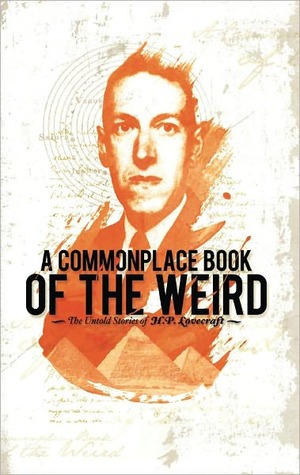
commonplaceThough H. P. Lovecraft is today considered one of the most influential writers of the 20th century, during his life his stories were mainly published in pulp magazines and he died in poverty in the 1930s.

Lovecraft is credited with creating the genre of cosmic horror, which emphasizes the idea that humans are insignificant and helpless in a universe of unknowably powerful beings over the gore and suspense elements of the usual horror story. He often missed school due to illness and led a reclusive adult life, never knowing his father who was placed in a psychiatric institution when Lovecraft was three, influencing the often friendless and mentally unstable protagonists he wrote.

A Commonplace Book of the Weird is a collection of short stories by twenty modern authors, each randomly assigned a prompt from Lovecraft’s book of unfinished story ideas. Some are full plot outlines, others as simple as “Dream of flying over city.”

My favorite story in this collection is “Relative Damnation” by Joseph Fink, which tells the story of a teenage boy who can save his father from going to hell after a deal with the devil, but only by giving up all of his possessions, education, relationship with his girlfriend, and chance at a happy future. It raises the question of whether successful people should feel they owe their happiness to the suffering of others, even if they didn’t ask for it.

Some more of my favorites are “Dissipation” by Daniel McCoy, a series of seemingly random scenes that come together to tell the story of a future apocalypse, and “The Impossible” by Will Hartwell and Christopher Scheer, an account of the supernatural incident that made a Victorian gentleman unwilling to leave his home, with a twist introduction of another famous mythos.

I think that the book’s weakest points are the stories that rely too heavily on surrealism and have no clear plot. Though the intent may be to make the reader feel as unsettled as the characters, the narratives sometimes come off as series of disjointed imagery rather than cohesive worldbuilding or plot. “Levittown” by Mark Farr has a promising start with an alternate history in which an astronaut from the 1800s attempts to go to the moon in a steampunk rocket, but ends up switching between the astronaut’s story and unrelated scenes of angels, modern-day children, a mysterious old man, and quotes from Lovecraft himself. Though it has excellent imagery and concepts, the story eventually becomes too muddled for the reader to follow.

As is usually the case with anthologies by multiple authors, I found this book to be a mixed bag with several outstandingly imaginative stories and others of varying quality. I would recommend A Commonplace Book of the Weird to anyone 14+ (for thematic elements) who enjoys horror, science fiction, or the Welcome to Night Vale podcast, which is written by two of the contributors.

-Miranda C., 12th grade
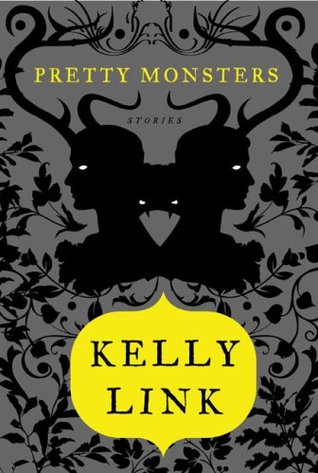
Book Review: Pretty Monsters, by Kelly Link

pretty_monsters_coverThis collection of short stories spans the genres of fantasy, horror, and sci-fi. Some stories are established as supernatural from the first sentence, while others are seemingly normal until the twist ending. The stories make use of the Magical Realism genre, in which magical elements are present, but treated as a normal part of the characters’ world, and often not the main focus of the story. Magical realism stories are often intentionally ambiguous and leave it up to the reader whether the events were real or imagined, or never give an explanation of the existence of paranormal forces.

One story I particularly liked was “Magic For Beginners,” which follows teenager Jeremy through his parents’ divorce and discovery of family secrets. Jeremy and his friends were brought together by being avid fans of a television show called “The Library.” The show is brought up in several conversations, with the characters derailing uncomfortable topics by talking instead about the most recent episode. Gradually, the reader learns that “The Library” airs at random times on random channels, with commercials for nonexistent products and actors no one can identify, although the characters aren’t overly concerned by this. The abnormality culminates in “The Library’s” main character Fox, thought to be fictional, calling Jeremy and asking him to steal books for her so that she won’t die in the next episode. Jeremy completes his instructed mission but never talks face-to-face with Fox, and so the true origin of the phone calls and the possibility of her existence is never resolved.

Another one of my favorites was “The Surfer,” in which the adolescent protagonist’s father takes him to Costa Rica to escape a viral pandemic in the near future. They share a quarantine shelter with cult members who are waiting for the return of aliens that briefly visited their leader years ago. The reader sees that one confirmed visit from aliens has not changed the future world much, and the characters’ conversations about world politics, books, soccer, and the virus take up most of the story.

Overall, I liked this book. Some stories were confusing or too open-ended, but in others the minimalist ambiguity allowed by the short story format contributed to the narrative. The author’s descriptions are concise and vivid, and the existence of ghosts, aliens, or werewolves often takes a backseat to the characters’ coming-of-age stories. I would recommend this book to anyone who enjoys surreal fantasy and speculative fiction.

-Miranda C., 12th grade

Book Review: Rot and Ruin, by Jonathan Maberry

rot_ruinFourteen years after the First Night of the zombie apocalypse, humanity is reduced to scattered towns protected by fences and bounty hunters. At age fifteen, Benny Imura must find a job or have his rations cut in half, and after failing to find any other work, he is forced to join his stuffy older brother Tom as a zombie hunter. Benny is unimpressed by his brother’s tedious approach to training and aversion to violence, especially in comparison to the more adventurous hunters who are town heroes– but after firsthand experience of the “Rot and Ruin” outside the town gates he starts to see the undead in a different way.

I was impressed with the way the author balanced action and worldbuilding (it is a zombie apocalypse story) with the stories and motivations of the human characters. The reader, like Benny, learns that fighting the undead isn’t a heroic adventure or a video game-like massacre, but a duty of euthanizing infected people who are survived by their grieving families and friends. The book also explores how less compassionate characters deal with the task– maiming zombies to take their limbs as trophies, fighting them against each other, and even setting up illegal games where participants can win money by surviving a zombie pit.

Another plot thread deals with Benny learning about his parents’ deaths on First Night, of which he has few memories. The surviving humans’ society seems like a realistic response to their apocalyptic situation: in it, they find art, celebrity, job opportunities, and moral conundrums.

I recommend Rot and Ruin to anyone 12 and up (for violence mostly) who likes futuristic books, action, and suspense.

-Miranda C., 12th grade

Graphic Novel Review: The Walking Dead, vol. 1, by Robert Kirkman & Tony Moore

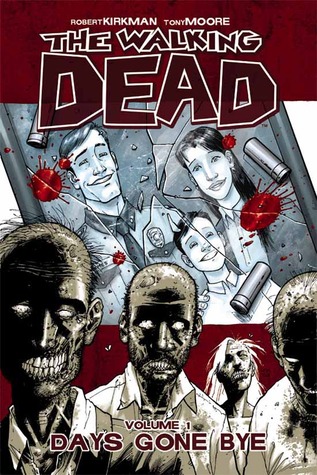
walkingdead1This has to be one of the best comics I have ever read, just based on the fact that it’s such a good story. I should say I am a huge fan of the Walking Dead TV series, so finally reading the first comic in the series that started it all made me really excited. I was not disappointed, except for two major story parts: (SPOILERS!) Shane’s death and how it happens, and Laurie’s past before rick comes back.

The story is a very interesting kind of zombie story; a really good way is to call it a soap opera with zombies. The characters work in new ways and show emotion, stress and how life can be in a zombie apocalypse world when you’re not a total commando using every gun possible and ripping through zombies. Part of what got me into The Walking Dead is that they never heard of zombies before this. They are entirely new to this scenario. The title even has one of the biggest changes to the idea of zombies; instead of zombies, they are called walkers, dead heads or biters. Tons of variety and it ads that aspect of confusion and truly can show how little these characters know.

The Walking Dead comic is vastly different than the show, do not expect the same thing from the show because it changes drastically. They didn’t just make a show based on the comic, they took the basic ideas of everything and they changed how it works and added new events along with taking some out. Overall, I think the comic is happier than the show so far.

I love The Walking Dead and in my mind, this lived up to the hype big-time. I give it a 9/10. If you have ever heard your friends talking about it or you ever thought, :Hey that looks cool,” go read it. It will be totally worth it, and frankly I think they are going to keep making this for a long time. So check it out now before it gets to book number 600.

-Cameron S., 12th grade

Introducing the Goosebumps Series, by R.L. Stine

The Goosebumps series has been extremely popular with many kids. I personally did not read them until very recently. I have read thereof,The Horror at Camp Jellyjam, The Curse of the Mummy’s Tomb, and Monster Blood III and I was expecting them all to be the same. I was wrong! Each of them had their own unique plot. I started one, and when I stopped, I realized I was already on page 56! Then I discovered that Goosebumps was a great series I could read over the summer.

H243_SCH_GB33HorrorCamp_0.tifThe Horror at Camp Jellyjam is a book about two siblings named Wendy and Elliot. They are on a road trip with their parents and they are in their trailer, which is connected to the back of their parents’ car. After a while they realize that they became unattached from their car. Their trailer rolls down a hill into the woods and in the woods, and in the woods Wendy and Elliot discover a sports camp. After a while in camp, Wendy gets suspicious of the weird behavior of the camp counselors. She notices kids disappearing around camp. Wendy realizes she needs to find her parents and read the book to find out the REAL secret of Camp Jellyjam.

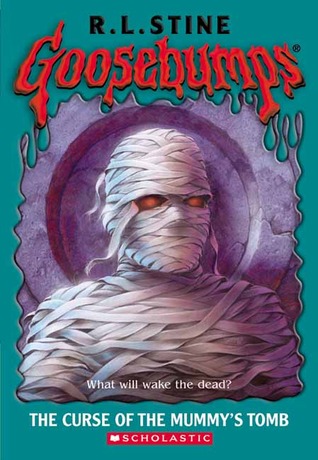
H225_SCH_GB5Mummys_0.tifThe least favorite book I read in the series was The Curse of the Mummy’s Tomb. It is about a boy named Gabe and he is spending his winter vacation in Egypt, visiting the Pyramids. He is with his annoying cousin and his uncle, Ben, who is a famous archeologist. Gabe’s uncle has recently discovered something new in a pyramid. When Gabe comes with him and his cousin, he gets lost and discovers a weird room with many mummies. Then Gabe hears something and realizes he is not alone. I did not like it very much because the plot was a bit boring and predicable, but the beginning was okay.

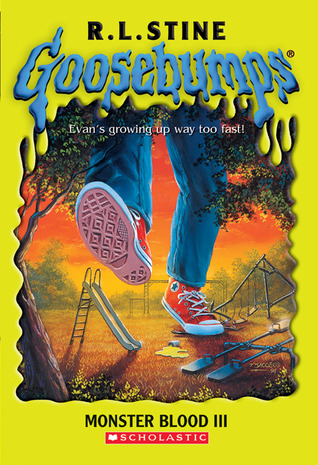
monster_bloodMy favorite book of the three was Monster Blood III. The main character of the story is Evan. Evan has the job of babysitting his younger cousin, Kermit after school. Kermit is an unusual kid who likes to lock himself in the basement and do weird science experiments. Kermit loves to play mean jokes on Evan and his best friend Andy. He and Andy decide to use monster blood. Monster blood is a dangerous substance that makes the consumer bigger and bigger. Evan has had a horrible experience with monster blood and is reluctant to use it at first, but gives in later. The “revenge” for Kermit turns out all wrong and Evan accidently eats monster blood.  He is terrified and… well, read the rest of the book to find out if he is okay (or not).

-Anmol K., 7th grade