Stroop 1935 Study

Cognitive Psychology is the field of psychology that studies how the human brain works, specifically memory, emotion, and behavior. Within cognitive psychology contains the field of processing, which focuses on how the brain works to produce a response to some situation or dilemma, and interference, what factors may disrupt the ability to process.

A study that explores this is Stroop 1935, and it relates to a theory known as the Stroop Effect. The Stroop Effect relates to how a mismatch between the color of a word and the word itself may lead to a longer time to state the color of the word. For example, if the word “blue” was printed in the color red, it would take longer to identify the color of the word than if it was just printed in the color blue. This theory helps people understand how brain processing works, specifically if words and colors would be processed in different parts of the brain. In Stroop’s study, he aimed at determining whether or not a mismatch of the color of a word and the word itself had any effect in the time it took to determine the color of the word it was printed in. To achieve this, he constructed three lists of words. All of these lists contained words that were colors, but the color that the words were printed in varied. In one of the lists, all the words were printed in black ink, while in the other two lists, the ink color varied. The first of these other two lists contained words that were printed in the color that corresponded to the word. For example, the word “green” would be printed with green ink. The last list contained words that were printed in mismatched colors. For example, the word “Purple” would be printed in red. Once the lists were constructed, the subjects of this experiment, who were 14 males and 56 females, were ordered to either read the word itself (for the list containing only the words printed in black) or state the color of the word that it was printed in (for the other two lists where the words were printed in color) as quickly as they could. From here, the time it took to respond to the lists, whether they were instructed to read the words or state the color of the words, were recorded. The results of the study showed that it took a longer time for the subjects to state the color of the word or read the word when the color printed mismatched the word itself. In addition, the experimenters also observed that there were more errors when the colors were mismatched compared to if they matched. Because of this, the study concluded that the mismatch of the color did indeed have an effect on the time it took to process information about the words, and it also provided evidence that colors and words are processed in different parts of the brain.

-Jeremy L.
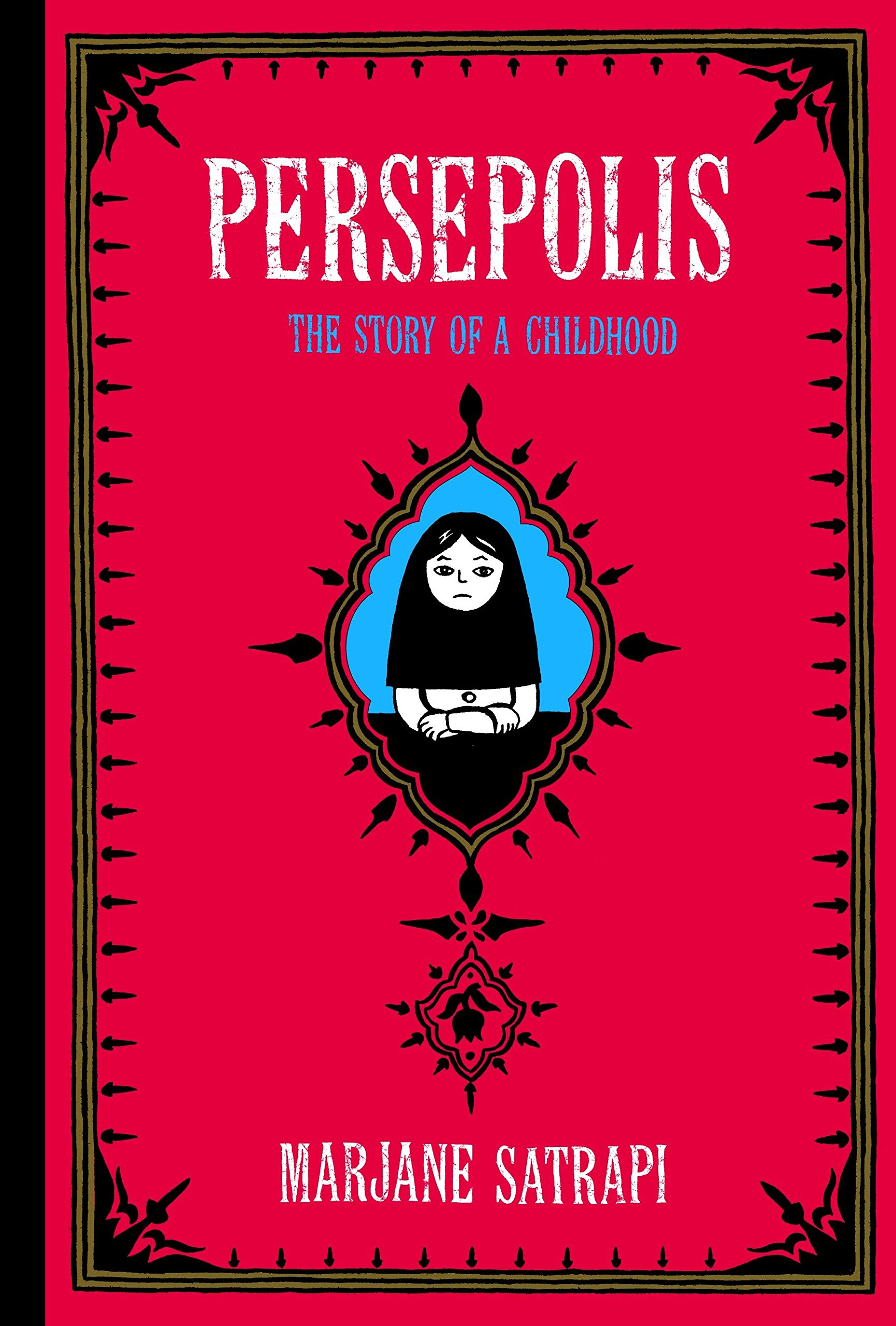
Persepolis by Marjane Satrapi

Disclaimer: There are two versions of Persepolis: the graphic memoir version and the literary memoir. The graphic memoir version is divided into two parts. I have only read the first graphic memoir book of Persepolis, not the actual memoir. Therefore, there’s still some of Satrapi’s writing that I haven’t been exposed to (yet). I will definitely try to find the second graphic memoir or the actual memoir soon, but for now, this review is based solely on the first graphic memoir.

Persepolis is both a graphic memoir and autobiography published in 2000. With the memoir originally written in French, Satrapi has received numerous awards for her work including the Cannes Jury Prize and the César Award for Best Writing.

The narration is written through the eyes of the main characterMarjane “Marji” Satrapi, the author herselfduring her childhood at the time of the Iranian Revolution. A series of small stories are written in the memoir based on her own experiences, portraying political upheaval and how her own family was affected by the Iranian Revolution, Iraq’s oppressive regime, and the Iran-Iraq War. Marji’s accounts mainly focus on her and her family who live in Tehran, as well as how they attempt to rebel against the regime and take part in Iranian history.

As a daughter of immigrant parents but of non-Middle Eastern descent, I felt like I could connect with aspects of this memoir all while still learning more about Iran’s history. The memoir is a beautiful representation of Islamic and Iranian culture from the first-hand perspective of an Iranian citizen. The illustrations themselves are unique and drawn to perfectly fit the memoir, making Satrapi’s experiences seem more significant.

Although it’s a graphic memoir, I highly recommend Persepolis to high schoolers more than elementary or even middle schoolers. Some topics and drawings can be graphic, making the memoir a difficult read, and there are often parts that simply cannot be taken lightly. However, the book itself is unique at being able to broaden readers’ perspectives on other cultures as a memoir, historical account, and comic book all at once.

– Natisha P.

Persepolis by Marjane Satrapi is available for checkout from the Mission Viejo Library.

Messenger by Lois Lowry

Cover image for Messenger / Lois Lowry.

Messenger, the third installment of The Giver Quartet by Lois Lowry, was a great book. Like The Giver and Gathering Blue, Messenger does not follow the previous protagonists but instead follows a past character in Gathering Blue. Messenger ties in the previous books by incorporating the past characters from The Giver and Gathering Blue

Messenger follows Matt or now known as Matty. Matty had first appeared in Gathering Blue and now lives in a village that he discovered while on his first adventure trying to find something for Kira in Gathering Blue. He lives with The Seer, a blind man who was found out to be Kira’s biological father. These two live in the village Jonah, from The Giver, had created. In the new village, everyone is equal no matter the disabilities they have or injuries they come with. Soon, the village changes due to something unseen and they now want to close the village off from outsiders. Before that can happen, The Seer wants to bring Kira to the village to live with him and Matty. Jonah, also known as Leader, does not want to send anyone into the Forest since it had recently become too dangerous. Matty convinces Leader to send him despite it being dangerous and in the end, Matty goes into the Forest to bring Kira to the village. Going through the Forest the first time was alright, but once he began to head back with Kira, things became more dangerous, threatening their lives. 

Throughout the story, we learn the true powers of Jonah, Kira, and Matty. Jonah can “see beyond” allowing him to sense the dangers and view particular things. Kira can weave her threads into predicting the future, and Matty has the power of healing. Messenger ties in the past books of The Giver Quartet and creates more depth to the characters and introduces more lore to the series. 

This book was more enjoyable than Gathering Blue and is on par with The Giver. Messenger introduces more lore and gives more depth to new and previous characters. It has a good balance of excitement and calm sections. Through the calm sections, it builds and introduces characters to see and understand who they are now. Within the more exciting sections, it shows what the characters can do and what they have grown to be. It shows their struggles and what they must go through. When the book finishes, Matty is the hero, healing the area around him and the people around him and is named The Healer. This book shows the true character growth of Matty, Kira and Jonah from how they were in their previous books to what they are now. 

I enjoyed Messenger. The new characters and brought back characters were important to the plot and each had their own personalities and stories. The events in the story were intriguing and exciting. Once again, this book ended in a cliffhanger, but soon I will read the last installment of The Giver Quartet, Son. Lois Lowry has done a great job with this book and I thoroughly enjoyed it. 

-Nicole R. 

Messenger by Lois Lowry is available for checkout from the Mission Viejo Library. It is also available to download for free from Libby.

The Scourge by Jennifer A. Nielsen

My Mom found this book in a book shop a little while ago. I had just finished reading the False Prince that was also by Jennifer A. Nielsen and I had been looking for another book in the same series. Since I enjoyed the False Prince, my Mom had given me this book and I had decided to read it. 

In The Scourge, by Jennifer A. Nielsen, Ani Mells has gotten herself in trouble and is encountering a series of problems. Ani is a River Person who is less better off than what their people would call, the “pinch worms”. Ani seems to have caught the Scourge; the sickness that has spread across the country of Keldan. It is highly contagious and supposedly incurable. Ani is sent to the Colony, where all the Scourge victims are put and to be left for their demise. Weevil, Ani’s best friend, and Della, a pinch worm, are all on the Colony together. During her time on the island, Ani finds something suspicious going on on the island, and she plans to get to the end of it and make everything better. 

This book was wonderful. At first, I was reminded of COVID since a big part of the plot was about a virus that was hard to cure. The farther I read, however, I realized that that wasn’t the case. The story had a huge twist at the end of the book that had a great build up. And throughout the story, there were more surprising events. They were definitely unexpected to me. There was great character development; especially from Ani. Ani’s confidence levels grew, and so did her leadership. But all characters had character development. Even the smallest of side characters had character development. 

I believe that this book was the second Jennifer Nielsen book I’ve read and it definitely didn’t disappoint me. It’s an enjoyable book that isn’t super long, so you can finish it quickly. I would definitely recommend this book to other readers.

-Nicole R. 

The Scourge by Jennifer Nielsen is available for checkout from the Mission Viejo Library.

This Is Where It Ends, by Marieke Nijkamp

Cover image for This is where it ends / Marieke Nijkamp.

Sylvia and Autumn were in the auditorium with most of the school. Claire was running with her track team; they were excused from the assembly to practice. Tomás and his best friend (other than his twin sister Sylvia) sneaked into the principal’s office to look at a file.

Then someone pulled out a gun.

Although his attack only lasted fifty-four minutes, the boy with the gun would haunt them forever… This is Where It Ends is the terrifying tale of Autumn, Sylvia, Tomás, and Claire’s desperate attempts to survive a former student’s revenge on those who wronged him.

I would highly recommend This Is Where It Ends to anyone who loves suspense or thrillers. It’s told from four points of view, and all four had a reason to be afraid. It had a very satisfying ending, and while it didn’t end with everyone living happily, it was very believable and heartwarming. Marieke Nijkamp did an amazing job describing the relationships between family, friends, and more-than-friends. The fear people felt for their loved ones and the sacrifices they made were fantastic. And when each chapter only covers the span of a few of the fifty-four minutes, it’s incredibly hard to stop reading!

Overall, This Is Where It Ends was a very good book, and I would not hesitate to give it 10 out of 10 stars!

-Caitlyn O.

This Is Where It Ends by Marieke Nijkamp is available for checkout from the Mission Viejo Library. It is also available to download for free from Libby.

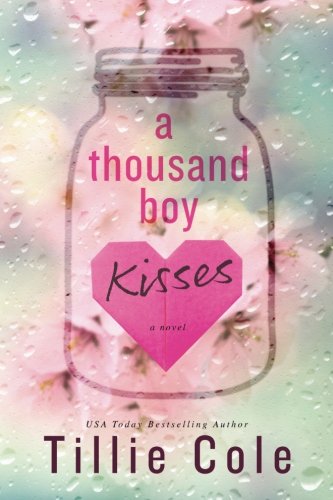
Book Review: A Thousand Boy Kisses by Tillie Cole

This book was the most devastating masterpiece I’ve ever read. The story starts off in the POV of one of the main characters, Rune, as a child. He just moved to Georgia from his home town in Norway because of his father’s job. He met Poppy, his next door neighbor. Rune called her Poppymin which meant “My Poppy.” They instantly became best friends, creating a bond that could never be broken, or so they thought.

*This review contains spoilers.*

The next chapter was in the POV of Poppy as a child where her Grandma she called Mamaw died. Her dying wish was for Poppy to fill up a jar with pieces of paper in the shape of a heart and on each heart she had to explain every one of her boy kisses. Her Mamaw wanted Poppy to fill the jar with a thousand boy kisses because one of her favorite memories were the kisses that her greatest love gave her. She wanted the same for Poppy so gave her this task as her last adventure.

Years later, Poppy and Rune are together fulfilling Poppy’s Mamaw’s last wish. But an unexpected roadblock gets in their way. Rune had to move back to Norway for his father’s job, leaving his greatest love behind. They were of course devastated and a few months later after Rune moved back to Norway, Poppy dropped all communication with him, leaving them broken up for 2 years.

Rune moved back to Georgia 2 years later as a different person. Dark, sad, and alone. Little did he know the real reason why Poppy cut off communication with him was because she was trying to save him from the burden of her terminal cancer.

I was crying throughout every chapter in this book, It completely broke me. Poppy and Rune rekindled their relationship even though Poppy had months to live. They stayed together throughout those last few months of her life trying to make those months happy for Poppy.

Toward the end of Poppy’s journey, she and Rune completed Mamaw’s wish by completing the thousand boy kisses jar. The thousandth kiss was the one Rune gave her as she passed to the other side. Rune filled out the last paper heart for Poppy.

“Kiss 1000. With Poppymin. When she returned home. My heart completely burst.”

This book was the saddest, most devastating thing I’ve ever read in my whole life. Poppy and Rune’s connection was so pure and they deserved the world. I loved this book with everything in me. 5/5 stars. Read if you want to cry but also read if you want to read a masterpiece at the same time.

-Kaitlyn D.

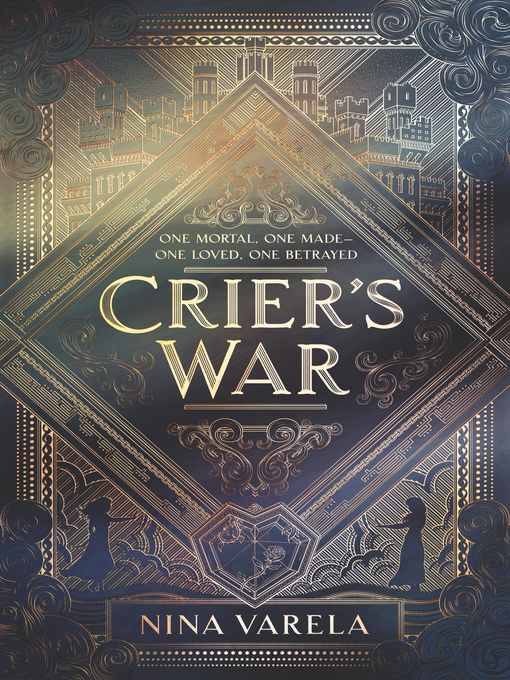
Crier’s War by Nina Varela

The War of Kinds had brought destruction upon the human race and prosperity to the Automa. Because of this war, resentment spread across the races, both knowing their loathing for each other but never explicitly stating it to one another. But their beliefs and actions have proved they consider each other enemies.

The Automa sovereign’s daughter, Lady Crier, had no idea of this destruction. And she never really had no clear idea until she met Kinok and Ayla. Kinok is her soon-to-be husband who she is forced to marry for the betterment of her kingdom. Her father felt that the only way to subdue Kinok’s influences was to extinguish the threat of power he felt from recent times. But would this action create a difference?

Ayla is a human servant girl who wishes for nothing more than Crier’s immediate death. She believes wholeheartedly in the saying “An eye for an eye” and after the death of her family order by the sovereign himself, she thought to act upon this ideology. But as the book continues, Ayla begins to realize the true nature of Lady Crier and separate some Automa from others. And Lady Crier also begins to realize the true connection between the Automa and humans and how her father isn’t exactly who she thought he was.

From the way this book was written to the path of the plot, I couldn’t stop thinking about the book even when I wasn’t reading it. So many little things in the plot occur in the story that seem to have no meaning until it creates meaning into the story altogether. When reading, one wouldn’t see major plot twists coming until they approach it and read back on all of the clues Nina Varela left for them in obscured areas. The imagery was beautiful, unfolding the story in my eyes with vivid scenes and intense dialogues. And the symbolism wrapped the entire story together and the fates of the characters in the book. The story is also an enemies-to-lovers book so if you like that, you should definitely check it out!

-Saanvi V.

Crier’s War by Nina Varela is available for checkout from the Mission Viejo Library.

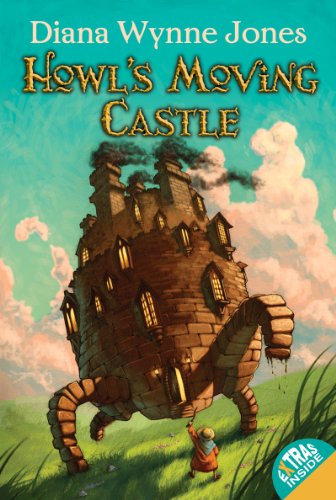
Book vs. Movie: Howl’s Moving Castle

Howl's Moving Castle (Howl's Castle Book 1) - Kindle edition by Jones,  Diana Wynne. Children Kindle eBooks @ Amazon.com.

Sophie Hatter is the eldest of three daughters, which is deemed as “most unlucky”. Over the years, she’s accepted that she won’t have a fun, lavish future like her younger sisters, so she becomes content with being holed up in her family’s hat shop, trimming lace and styling bonnets.

However, everything changes when the Witch of the Waste visits the shop and curses her to become an old lady. Desperate for a solution, she hikes her way to the infamous “moving castle”-belonging to no other than the soul-eating wizard Howl. Here, she strikes a deal with Calcifier- an evil fire demon- hoping he can lift her curse.

Along the way, Sophie discovers that the wizard is not all he’s said to be and that maybe there’s more to herself than she thought.

I discovered the book Howl’s Moving Castle shortly after I watched the movie adaptation by Studio Ghibli, and neither disappoint. They both capture the essence of a world that’s both modern and magical in their own ways.

The main difference between the two is that the Studio Ghibli movie follows a slightly different plot, as do most movie adaptations. The concept of Sophie being the eldest-and therefore, prone to failure-is almost completely eradicated, focusing more on how her looks are subpar and modest compared to her sister. Although, this ends up tying in well with the movie’s altered story, as it is a story of self-acceptance, I was sad that this major plot point didn’t get included.

Howl's Moving Castle by Hayao Miyazaki, Hayao Miyazaki, Chieko Baisho,  Emily Mortimer, Christian Bale | DVD | Barnes & Noble®

There were also characters that didn’t make it into the movie, such as Sophie’s sister Martha and Howl’s family that resides in the mortal realm. While I was disappointed to find this out, Studio Ghibli makes their adaptation work in it’s own way, using their staple “ghibli-magic” to create a version of the story that’s lovable and great to watch, preferably on a rainy day. And of course, as always, the animation is stunning.

Despite their differences and minor plot changes-and the watering down of Howl’s oddly lovable snootiness- the movie adaptation does an excellent job of capturing the story that Wynne-Jones wrote so magnificently.

-Luxy B

Howl’s Moving Castle by Dianne Wynne Jones is available for checkout from the Mission Viejo Library. It can also be downloaded for free from Overdrive. The Miyazaki animated film can also be checked out from the library.

All Quiet on the Western Front: Erich Maria Remarque

Cover image for All quiet on the western front / Erich Maria Remarque.

All Quiet on the Western Front, written by Erich Maria Remarque, is regarded to be the finest war novel ever written. 

It starts (and ends) on Germany’s frontlines amid World War I. In this, context and atmosphere are revealed through description (at times quite graphic). However, since the story is told in first person, the most significant soldier is Paul Baumer – a young German who offers his services to his country and the Kaiser. Though most authors choose a main character to narrate their experiences to demonstrate war’s horrors, Remarque does notably well in its execution. This is likely due to the fact that his stories have a touch of personal truth – he was a reluctant participant in both wars, and had to face the cruelties and destruction head on. Thus, the terrors he witnessed (though vile), give new life and unexpected curiosity to his work. To put it simply: to get the full message, every page must be read twice. 

Now, to the plot: it’s fairly simple. Paul and his friends have entered a war in which, without regard to survival, they have been physically and mentally scared beyond recovery. In other words, they can no longer return to innocence and the foolish years they spent as children – they’ve grown old faster in a three to four year span than for most. As such, Remarque is able to illustrate and weave themes still relevant to our time. For one, war’s terrible brutalities. As most novels tend to romanticize war and demonstrate honor and adventure, All Quiet does quite the opposite. To explain, the scenes that aren’t dedicated to hunger and filth depict even harsher conditions – corpses, lice infestation, mice, loss, and so on. Therefore, a more realistic ‘picture’ is represented, which clarifies to readers that war is indeed, not a matter to trifle with. 

Moreover, the message above ties in with yet another lesson: its effect on soldiers. For instance, Remarque illustrates (I won’t spoil though!) war’s overall impact as “ruinous” and “severe.” In turn, his characters (such as Paul) must face emotion suppression and disconnection from reality in order to last the battles. To be entirely aware, Paul claims, would be impossible – there’d be too much to bear and fight through on a physiologic degree. 

In short, All Quiet on the Western Front is, at most, a must read. 

-Emilia D.

All Quiet on the Western Front by Erich Maria Remarque is available for checkout from the Mission Viejo Library.

The Rose That Grew from Concrete by Tupac Shakur

SHAKUR,TUPAC & VARIOUS ARTISTS - The Rose That Grew From Concrete -  Amazon.com Music

Released three years after Tupac’s murder in 1996, The Rose That Grew from Concrete is his writings from the time he was nineteen to just a few months before his passing. The poems are simple and concise, written in rhyme and Tupac’s loving shorthand.

Again, I tend to shy away from celebrity poetry and posthumous collections/albums- both of those labels usually hint at money grabs. However, I decided to make an exception for Tupac- and I’m very glad I did.

Tupac is an almost mythical character in the American psyche. He was a pioneer of hip-hop, of rap, of social justice in a way that is often downplayed. He knew it too- his writings hint that he always knew he was destined for great things. Still, these poems serve to humanize Tupac in a way that has never been presented before. Although the poems are a little clunky at times, they speak of a person– of a human being who fell in love, fell out of it, wanted better for himself, had hopes, had dreams. The poems being presented in his handwriting, as written, only adds to this. They prove that, at the end of the day, Tupac was just as human as the rest of us- just as pained and angry and lovelorn and real as anyone else. And this is the true essence of this book- far beyond the words on the page.

-Vaidehi B.