Running for Governor by Mark Twain

Running for Governor: Twain, Mark: 9781523289370: Amazon.com: Books

“Running for Governor” is a unique artistic work, a special genre between satire and short story. While a novel should be about character and plot, “Running for Governor” doesn’t focus on character or plot, but describes a bunch of cleverly arranged news stories and interspersed commentary. In that sense, it’s like a funny story, or a satirical essay. However, it is different from the general satirical sketch, because although it does not focus on depicting the character, it cannot be said that it does not show the character at all. It runs through the process of the emotional change and awakening of a character “I”.

Aesthetically, humor and satire belong to comedy. When something that is intrinsically ugly takes the form of something that is good and just; or, on the other hand, when something essentially good is expressed in some harmless form which is not in harmony with its essence, it tends to have a comedic effect — the former may be satirical and ridiculous, the latter humorous and ridiculous. “Running for Governor” is based on this contradictory principle of content and form, and adopts hyperbole to create a comic effect.

As a master of critical realism, the artistic feature of Mark Twain’s writing is based on his profound insight into the various social conditions and human affairs of capitalism. The sharp point of criticism directly points to the hypocrisy and ugly soul of capitalism. The irony in language is the most outstanding feature of “Running for Governor”. As for the use of language, Mark Twain is not impatient, but slowly, through vivid and delicate brushwork to show the subtle changes and contrasts in the text incisively and vividly.

-Coreen C.

Light In August by William Faulkner

This is perhaps my favorite writing so far done by Faulkner. In this novel, he explores the prejudice Americans have against each other. Diversity in this country oftentimes is merely seen as a glorification of racism. Back in the days when this book was written, southerners didn’t like northerners which is why Miss Burden had to suffer so much. Not that she was a huge advocate of the north, but that her attempt to live a peaceful and honorable life at the south was denied because of her heritage. Residents in Mississippi, a typical southern state, are not willing to give her a second chance at life merely because of her heritage, instead of other wrongdoings she has committed before, reflecting the deep-rooted bigotry people used to have and still remain today.

Joe Christmas, my favorite character in this novel, is no different. His cold and even brutal personality is a product of his upbringing in an orphanage. When he once caught the dietician making love to a male doctor while vomiting because of eating too much toothpaste, he denied the bribery which the dietitian offered—one dollar. Later on, because of his biracial ethnicity, he was sent to a black orphanage by the janitor who always watched him but later recalled by the matron. Christmas was adopted and got his name changed to McEachern because his father, a religious man thought the name represented sacrilege.

Joe Christmas’s life reminded me of his sense of repugnance for this world when he didn’t belong anywhere. Since he never received love, he didn’t have much to give. He has no fear in life and fears himself to some degree. His mixed-race endowed him with endless audacity but also imposed extremely low self-esteem upon him. In modern days, perhaps the reason why there are so fewer personages who are not white is not because of their inability to do well and contribute to the country, but because they felt disparagement and disenfranchisement from white supremacists who might be discouraging from having confidence and speaking for what they believe in.

-Coreen C. 

Light In August by William Faulkner is available for checkout from the Mission Viejo Library


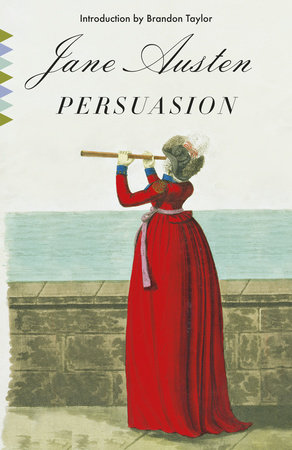
Persuasion by Jane Austen

Persuasion by Jane Austen: 9780307386854 | PenguinRandomHouse.com: Books

In the book, Austen spends much of her time describing the years of pain that “prudence” brings to the heroine, Anne. She wants young people to look to the future with confidence, without undue worry and caution. When Anne was young, she had to be careful that she did not know what romance was until she was old — the inevitable consequence of a deformed beginning. If in Sense and Sensibility, Austen emphasizes the triumph of reason over emotion and believes that only in this way can people achieve happiness, then in her last novel, Austen spends much of her time describing the years of pain caused by prudence to the heroine.

Persuasion affirms the evolution of characters from cautious to romantic, which undoubtedly reflects the change of the author’s own creative thinking. It was also a challenge to the traditional ideas of the time. While choosing women and women’s lives as the main themes of Persuasion, Austen also succeeded in portraying positive female images. Through the description of these female images, she protested against the distortion and degradation of women in male literature and corrected and subverted the model of male superiority and female inferiority. It is worth noting that Austen’s men, who had always been regarded as noble gentlemen, were often cast as villains and ridiculed, such as Sir Walter, who was conceited but foolish and incompetent, and Mr. Elliot, Anne’s mean-hearted cousin.

In Persuasion, Austen puts men and women on an equal footing in marriage, just as men like the beauty and kindness of women, Anne likes Wentworth not because of his male power and money (Wentworth was not born rich, but rose all the way through his own efforts, representing the emerging class). Although at the end of the novel, Austen still insisted that the heroine was married off according to the stipulations of the patriarchal society, but her marriage was no longer a Cinderella model and no longer depended on the charity of the patriarchy, but had the germination of the women’s liberation movement.

Soldiers’ Pay by William Faulkner

Soldiers' Pay by William Faulkner · OverDrive: eBooks, audiobooks and videos for libraries

Soldiers’ Pay is the first book written by William Faulkner in 1926. The story revolves around Margaret Powers, a widow whose husband died in World War I. She met Joe Gilligan, a discharged soldier who was on his way to home. Together, they decided to send Donald Mahon, an aviator who was released from a British hospital because he was not only going blind but was also going to die soon. Sympathetic about his experience, the two decided that they were going to send him home and spend his last time with his father.

Donald’s father is a pastor. Originally, Donald was actually engaged to Cecily Saunders, a voluptuous girl who can’t accept Donald’s injury and scars when he came back to her. She secretly has a lover named George Farr, who is crazy about her, but Cecily merely treats him like a toy. Not remembering anyone, Margaret and Joe were the only people who could take care of him besides Emmy, the housemaid whom Donald took her virginity.

Eventually, Cecily broke the engagement and eloped with George. Margaret, seeing that Cecily never loved Donald, decided to marry him herself. In the end, after he died, Joe told Margaret that he has loved her all the time. Before Margaret left, she asked him if he will go with her and he said no due to his religion. Changing his mind shortly after, Joe did not pursue Margaret but decided to stay in the pastor’s house while thinking about his future.

-Coreen C. 

Northanger Abbey by Jane Austen

Northanger Abbey (Barnes & Noble Classics Series) by Jane Austen, Paperback  | Barnes & Noble®

The most common setting in 17th century Gothic fiction is the conflict between female desire and family tradition: the object of a daughter’s love contradicts the orders of her in-laws, and the father is determined to bring about the marriage. Conflict between an overbearing father and his daughter over marriage is a prominent feature of Gothic novels. The father wants to be in the right family, the daughter wants to be in love. This prominent feature exists objectively in Northanger Abbey. It should be said that there is some kind of Gothic reality that Catherine encounters, that she gets caught up in, that her marriage is blocked. Now, of course, it could be argued that the marriage conventions of the time made the novel merely a reflection of social reality.

However, gothic novels also reflect the social reality in their own unique way. There is no essential difference between them. As far as marriage is concerned, they are both Gothic marriages. For example, it features smart, beautiful young women who have to go through some kind of hardship to get their way and end up marrying a rich young man. Gothic fiction often takes place in gothic castles or monasteries, emphasizing mysterious and terrifying rooms, staircases full of ghosts, dark and hidden passages, and so on. The setting of the novel is taken from the heroine Catherine’s first impression of Northanger Abbey. Catherine was an innocent and kind woman.

In her eyes, this place was full of mystery, the small windows, the melancholy architecture, the colorful glass, and the cobweb walls all inspired her infinite imagination. Because at the beginning of her visit to Northanger Abbey, the protagonist Catherine was deeply influenced by gothic novels. So even the normal environment of things in her eyes will produce a magical color. Northanger Abbey is partly constructed from the gothic style of language. It comes from the popular gothic novel and social trend at that time.

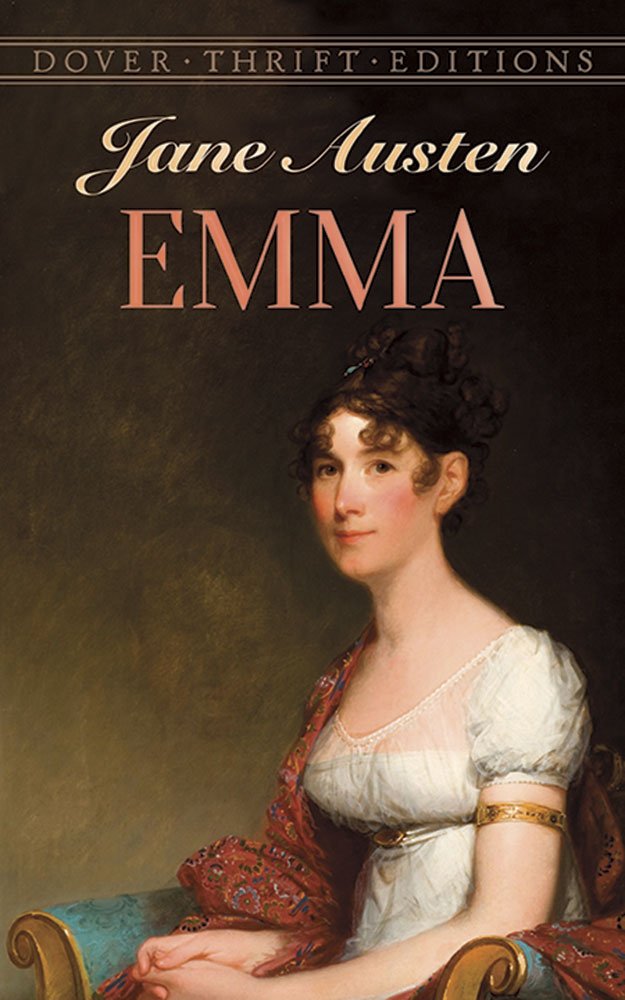
Emma by Jane Austen

Amazon.com: Emma (Dover Thrift Editions) (0800759406487): Jane Austen: Books

Emma’s control of Harriet’s marriage cannot be said to be selfish. She did care and love Harriet, and throughout much of the book she is seen worrying about Harriet’s marriage and drawing inspiration from it herself. Out of an intolerable conceit, she fancied she knew the secrets of every man’s affections. As it turned out, she did it all wrong. But when she learned that Harriet was in love with Knightley, she suddenly discovered that she had always been in love with him. In a sharp turn of events, she and Knightley become husband and wife. She had objected to Harriet’s marrying Martin, and was glad that they were at last united. In Emma’s opinion, Martin was as unfit to be Harriet’s husband as Harriet was unfit to be Knightley’s wife.

Marriage should be matched by family, which was exactly the marriage relationship in the society at that time. The solution to women’s problems (including marriage problems naturally) put forward by Austen was serious, but her works added comedy color. At the beginning of the 19th century, sentimental novels were popular in England, and Austen’s realistic novels gave readers a fresh breath.

In her novel Emma, Austen tells most of the family trifles in ordinary life, and the author creates a female image with intelligence and independent thinking. Emma, the protagonist, demands the equality of men and women in the patriarchal society, and has her own clear views and values on marriage. It also reflects the feminist views of Austen to some extent. With her unique perspective of supporting women, Austen profoundly cut through the reality of the society controlled by men and the situation of women in social life. The author criticizes the unfair phenomenon of male superiority and female inferiority while affirming the social status of women. Therefore, to a certain extent, this novel has far-reaching social practical significance.

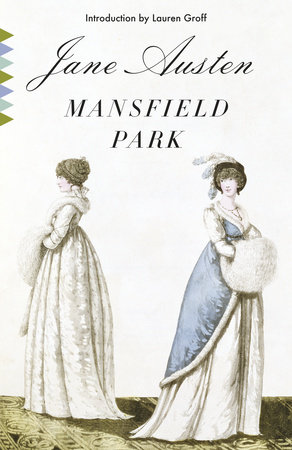
Mansfield Park by Jane Austen

Mansfield Park by Jane Austen: 9780307386885 | PenguinRandomHouse.com: Books

In Mansfield Park, Jane Austen skillfully combined the Cinderella theme with the fairy tale of the abandoned princess. Cinderella Fanny was brought up by an unworthy father, but without losing her natural goodness and gentleness. Fanny’s good qualities were in stark contrast to her shabby and dirty home in Puss. In Austen’s first several novels, the heroine’s moral standard is always higher than the traditional social concept, so that she can marry a good man. It is a reward for their good qualities, or compensation for their troubles and sufferings, and such heroines themselves are the yardstick of good judgment and good feelings. But Fanny Price, the heroine of Mansfield Park, succumbed to the virtues of those around her, such as Sir Thomas, the only father of Austen’s novels to be praised, and Edmund.

Fanny sought the traditional virtues of good manners and religious feeling, and she became an ardent supporter of the traditional moral standards. The book also catered to the praise of many traditionalist critics at the time. In the novel, Austen used the gentle words and deeds of Fanny to express her moral educator’s idea that moral perfection is difficult to achieve and needs to be achieved at the cost of self-restraint and sacrifice. The female voice is required to be static, so her eyes become the most effective agent. Because in the spiritual life of England in the 19th century, the moral sense was very strong. The church and its moral precepts, which dominated people’s lives, evoked not a desire to save souls but a sense of duty.

Therefore, in Mansfield Park, Austen strictly rejected the vigorous spirit of the immoral Mary Crawford, and blindly affirmed the weakness of the holy Fanny who believed in Christianity. This strange and abnormal likes and dislikes are the core of the intention of this novel. Austen made this frightened little daughter from a poor family conquer all people with virtue and finally became the mistress of Mansfield Manor. It shows holiness and greatness, emphasizes the close connection between happiness and virtue, and firmly believes that a good person has the right to develop and fulfill herself according to her own nature and good deeds.

Pride and Prejudice by Jane Austen

In this novel, through the different treatment of Bennett’s five daughters to life events, Austen shows the different attitudes of the girls from bourgeois families in the villages to marriage and love, thus reflecting the author’s own views on marriage. It is wrong to marry for property, money and status. It would also be foolish to marry without considering these factors. Therefore, she was against marrying for money and against treating marriage as a joke. She emphasized the importance of the ideal marriage, and made the feelings of both the man and the woman the cornerstone of the ideal marriage. Elizabeth, the heroine of the book, was born in a family of small landowners and loved by Darcy, the son of a rich man. Darcy, regardless of family and wealth gap, proposed to her, but was rejected. Elizabeth hated his arrogance.

Darcy’s hubris is actually a reflection of status differences. As long as such pride existed, he and Elizabeth could not have the same thoughts and feelings, and the ideal marriage. Later, Elizabeth observed Darcy’s behavior and a series of actions with her own eyes, especially saw that he had changed his proud and conceited manner in the past, eliminated his misunderstanding and prejudice, and thus concluded a happy marriage with him. Elizabeth’s different attitudes towards Darcy’s two marriage proposals actually reflect women’s pursuit of personality independence and equal rights. This is the progressive significance of the figure of Elizabeth.

From the novel, Elizabeth is intelligent, resourceful, courageous, visionary, has a strong self-esteem, and is good at thinking. Just because of this quality, she has an independent mind on the issue of love, making her and Darcy constitute a happy family. In Pride and Prejudice, Austen also writes about the marriages of Elizabeth’s sisters and girlfriends, which serve as a foil to the heroine’s ideal marriage. For example, although Charlotte and Collins live a comfortable material life after marriage, but there is no love between them. This kind of marriage is actually a social tragedy under the cloak of finery.

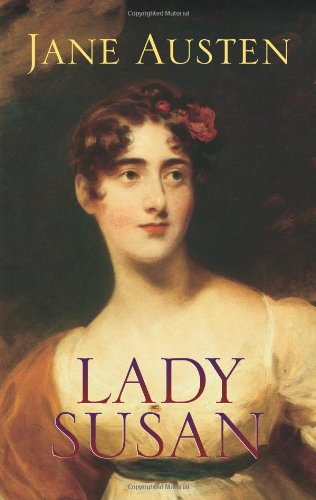
Lady Susan by Jane Austen

Amazon.com: Lady Susan (9780486444079): Austen, Jane, Chapman, R. W.: Books

An evil mother tries to force her daughter into a harmful marriage. Mrs. Susan was selfish, cruel and manipulative. She abused her children, betrayed her friends, and threw her weight around in horrible ways. Her original marriage plot fails, and Jane Austen fails to punish her for the shame and self-knowledge that the reader expects until the end of the novel. This may be because she is a bit of a fan of this deceitful and dour-headed character herself. After all, Lady Susan wielded power primarily to destroy other people’s homes and to try to torture her own daughter. In this work, Austen seems to divide herself into two parts. On the one hand, she delightedly displays the vital energy of a gifted, Bohemian lady, while at the same time rejecting the sexiness and selfish desires of her heroine’s story.

Mrs. Susan hopes to find another school for her daughter unless she gets married soon. Sympathetic Aunt Catherine had no idea of Mrs. Susan’s intentions, but she suspected that Frederica had had other reasons for dropping out of school than, as her mother claimed, an impatient attempt to escape the teacher’s education. And she believes that if you neglect early education, it will be difficult for children to make up for it when they grow up. Frederica stayed. She had a piano to play, but her aunt seldom heard her play. Similarly, there are many books in her room. But, she says, as a girl who has been running wild for the past 15 years, she can’t read them and won’t. Of course, what she said might be true, and Jane would probably agree with that. However, in this novel, Jane Austen’s purpose is not to talk about educational theory, but to expose the cruelty and hypocrisy of Lady Susan.

From the perspectives of Mrs. Susan, Mrs. Vernon, Mrs. Johnson, Master Reginald and other protagonists, the novel reveals the characters’ relations and ugliness, good and evil, and embodies the writing characteristics of the coexistence of multiple morality and the echo of narrators and their voices.

Book Review: Sense and Sensibility by Jane Austen

Sense and Sensibility by Jane Austen: 9780307386878 |  PenguinRandomHouse.com: Books

Austen made a highly realistic discussion of women’s issues at that time. She examines the heroines in the patriarchal society at that time. In that society, the value of a person is based on the ownership of property. Since generations of property went to male heirs, they were at a disadvantage from the start and could only be subordinated to men. As a result, these types of characters appear again and again in Austen’s writings: the assertive father; a mother who is obsessed with her social status and does everything possible to marry off her daughter, well-equipped young men, whose cynicism reflects their superior social position, and marriageable daughters, from the elegant headless girl to the sensible or emotional young woman.

How can a heroine achieve personal happiness through marriage in such a stern, demanding and often hostile world? Austen’s admonition was to use reason to control emotion She argues that emotions are often a dangerous guide to female behaviour. If a man of superior condition, but not of unrequited affections, is to be wooed, the consequences are often disastrous. Either because of his personal preference or because of parental disapproval, the man chooses a better match. These views of Austen are most evident in this first novel. The whole beginning of Sense and Sensibility revolved around the question of fortune in Dashwood’s will, and the want of avarice of Mrs. John Dashwood, who had an annual income of ten thousand pounds.

In the process of dividing up the estate, Austen makes no bones about the opposite characteristics of the two Dashwood sisters. Elinor was a very sensible, calm woman who, though only nineteen, was a good mother’s adviser. She was wonderfully kind and affectionate, but she knew how to hold back her feelings. It was a subject which her mother had yet to learn, and which one of her sisters had stubbornly refused to learn. Her sister Marianne’s talent was in many respects equal to her sister’s. She was inordinate in sorrow or joy. All is well but no discretion. That is to say, Marianne allowed her feelings to dominate her actions, while Elinor would not be swayed by such impulses.

Austen’s intention is very clear. She simply changed the original title of Elinor and Marianne to Sense and Sensibility to emphasize her theme. In this book, Austen shows the contrast between the characters of the two sisters. She narrates most of the stories from the perspective of Elinor’s outlook on life, ethics and social society, thus shaping a reasonable mortal. This is her ideal woman. When they learned that Willoughby had made full use of his superior social position, played with Marianne’s earnest love, abandoned the poor girl Eliza, and finally married the rich Miss Gray, Marianne was fully convinced of her folly, and her mother admitted that her admiration of Willoughby had been imprudent. Reason thus prevailed in both sisters. Austen arranged a happy ending for them. The book begins with comedy, and there is a disturbance in the middle. Marian almost becomes a tragedy, which ends in comedy.