Authors We Love: Saul Bellow

Saul Bellow was born on June 10, 1915, and passed away on April 5, 2005. He was born in Lachine, a small village located in Quebec, Canada and immigrated with his parents to Chicago, United States with he was eight. Due to this reason, Hyde Park, Chicago was the backdrop of a lot of his famous works because he was the most familiar with it.

Both of his parents were from Russia and were very strict Jews. They wished Saul Bellow could be a rabbi or a violinist playing in church when he grows up. However, he couldn’t overcome his passion for writing and therefore did not relinquish to these two occupations even when his mother passed away. He went to Chicago University and later switched to Northwestern University because he felt the former disliked Jews and therefore mistreated them. Bellow did his graduate studies at the University of Wisconsin.

As a Novel Prize Literature winner, Pulitzer Prize fiction winner, and the only writer to win the National Medal of arts three times, Bellow in his entire life has composed a lot of works. These include Dangling Man, The Victim, The Adventures of Augie March, Seize the Day, Henderson the Rain King, Herzog, Mr.Sammler’s Planet, Humboldt’s Gift, The Dean’s December, More Die of Heartbreak, A Theft, The Bellarose Collection, The Actual, and Ravelstein. He also wrote a lot of plays and some nonfiction as well.

One thing which marks his unique style is his philosophical views embedded amongst the paragraphs and in characters’ dialogues. It provides on his insight of life, death, marriage and other themes which he values as important. Although some critics argue that this style of approach can be very elusive and a form of digression, I thought if sociology and anthropology are vital in Bellow’s life, he should put it down to let people who he really is.

-Coreen C. 

The works of Saul Bellow are available for checkout from the Mission Viejo Library.

Jennie Gerhardt by Theodore Dreiser

See the source image

This is a relatively long novel written by the all-known American author Theodore Dreiser. It talks about Jennie Gerhardt, a poor but strikingly pretty girl who fell in love twice with two men and their story from thereon. At first, because Jennie and her mother were working at a luxurious hotel, she was working there as a laundry washer and there met the brilliant Senator Brander who fell in love with her gradually over a short period of time. Despite the huge age gap between the two of them, they got along fine and it was Senator Brander who assisted this starving family living in Ohio after witnessing the condition of their life and home. Although Jennie’s father, Mr. Gerhardt strongly expostulated against this man who is old enough to be his own brother, his daughter did not listen and thus she was pregnant when Senator Brander died after promising to marry her.

Thus Jennie met another man named Lester Kane who came from a very rich family of carriage business based in Cincinnati. Due to her pulchritude and intelligence, Lester Kane quickly fell in love with Jennie. They lived together for a short period of time before Kane knew Jennie’s daughter, Vesta’s existence. He really wanted to give up Jennie at this point but found her too attractive to do so. Moreover, their relationship at first was gossiped by the neighbors who discovered that they weren’t married after all. What’s worse, when Lester’s sister Louise found out about all of these, she spilled this all to Lester Kane’s father, Archibald, who forced Lester to leave Jennie, but to no avail and thus passed away with a small will left to Lester for his punishment.

Overall, I think this book stuns me as the social gap between the rich and poor widens in America over the years and still remains unchanged. It’s so miserable how the children cannot choose their own course of marriage and HAVE to marry into their own level. So slowly, the conception of social status is imbued in their minds and they themselves can’t even seem to persuade themselves that this person is whom they really love but that they don’t have enough money, therefore, should be relinquished as a potential spouse.

-Coreen C.

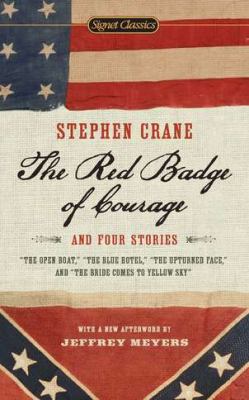
The Red Badge of Courage by Stephen Crane

Another classic I checked out from the library this summer. This book for sure is the most well-known piece of work of Stephen Crane. It talks about Henry Fleming, a soldier fighting in the Civil War in the Union side.

Unlike some of the other war novels, this book employed succinct and vivid language to portray the brutality, fear, cowardice, and bravery in wars. It explored the main character Henry’s flight from the war, the despicable excuse he found for himself, his gradual awakening of conscience, and finally his change into a courageous soldier who transformed into an unselfish and devotional citizen willing to die for his country.

Although it was relatively short, but every detail in a battle was explained. Such as the way how the soldiers fire using their rifles, how they travel on foot from one regiment to another, how they charge forward reluctantly and in horror when their lieutenant orders them to. It doesn’t really name any battles specifically, but it does a fantastic job of expatiating everything that could occur in a battle. My favorite character is surprisingly not Henry Fleming, the main character but his friend Wilson, who was a minor character without too much of a dimensional personality. But I was deeply touched when Wilson was willing to share his bed with Henry and feed him when he fled from the battle and came back later. There was a possibility that Wilson knew Henry was lying when he said he got shot in the head, and yet his altruism melted my heart. I believe that we all need a friend like this who understands our mistakes and forgives us silently whether we admit it or not.

-Coreen C. 

The Red Badge of Courage by Stephen Crane is available for checkout from the Mission Viejo Library

Robinson Crusoe by Daniel Defoe

The islands in the book are really England in the author’s heart. Before the Renaissance, the environment of the British Isles was so free and fascinating that with the advent of industry, the island’s calm was broken, with the clanging of machines and the clanging of men. Therefore, in addition to Robinson’s enterprising spirit, another factor that attracts readers to this novel is the free environment of the island — the independent space away from the hustle and bustle and industrial civilization.

Robinson’s experience on the island represents the dream in people’s hearts — that people can create their own ideal paradise on earth with their own hands. The author not only gives a gripping description of Robinson’s adventures and hardships, but also, more importantly, as a typical writer with emerging bourgeois consciousness, he raises people’s diligence, courage, wisdom and creative ability to an unprecedented height in his works, affirming the value of human beings.

He firmly believes that, as the spirit of all things, human beings have the ability to overcome difficulties, conquer nature, and finally reach the shore of victory. From the perspective of post-colonial criticism, the interpretation of colonial literature to the outside world is often narrated through the identities of colonists and explorers, among which Daniel Defoe’s novel is a typical example.

In the form of allegory, this book reproduces the process of colonial development and construction of colonial empire by the early British colonialism and imperialism in their overseas expansion. This novel is a classic text that adapts to the new development trend of western history and culture. From the creative labor of human beings, the great role of human ability is further seen, so as to promote human intelligence and labor creativity, and deny the absurd theory that God is omnipotent and that God creates everything.

Through 27 years of arduous experience in Robinson Crusoe, the work symbolically shows the basic trajectory of human development, thus putting forward the theme of the times that labor creates history. On the face of it, this is an adventure novel, with a simple plot. However, if the theory of post-colonial criticism is used to interpret, this novel reflects the thoughts of colonialism. The protagonist of this novel is a typical bourgeois colonialist who settles on a desert island and colonizes it. He not only controlled the whole island, but also conquered his companions. This novel calls for the study of the colonial content, in fact, from every aspect of this novel colonial tendency can be seen.

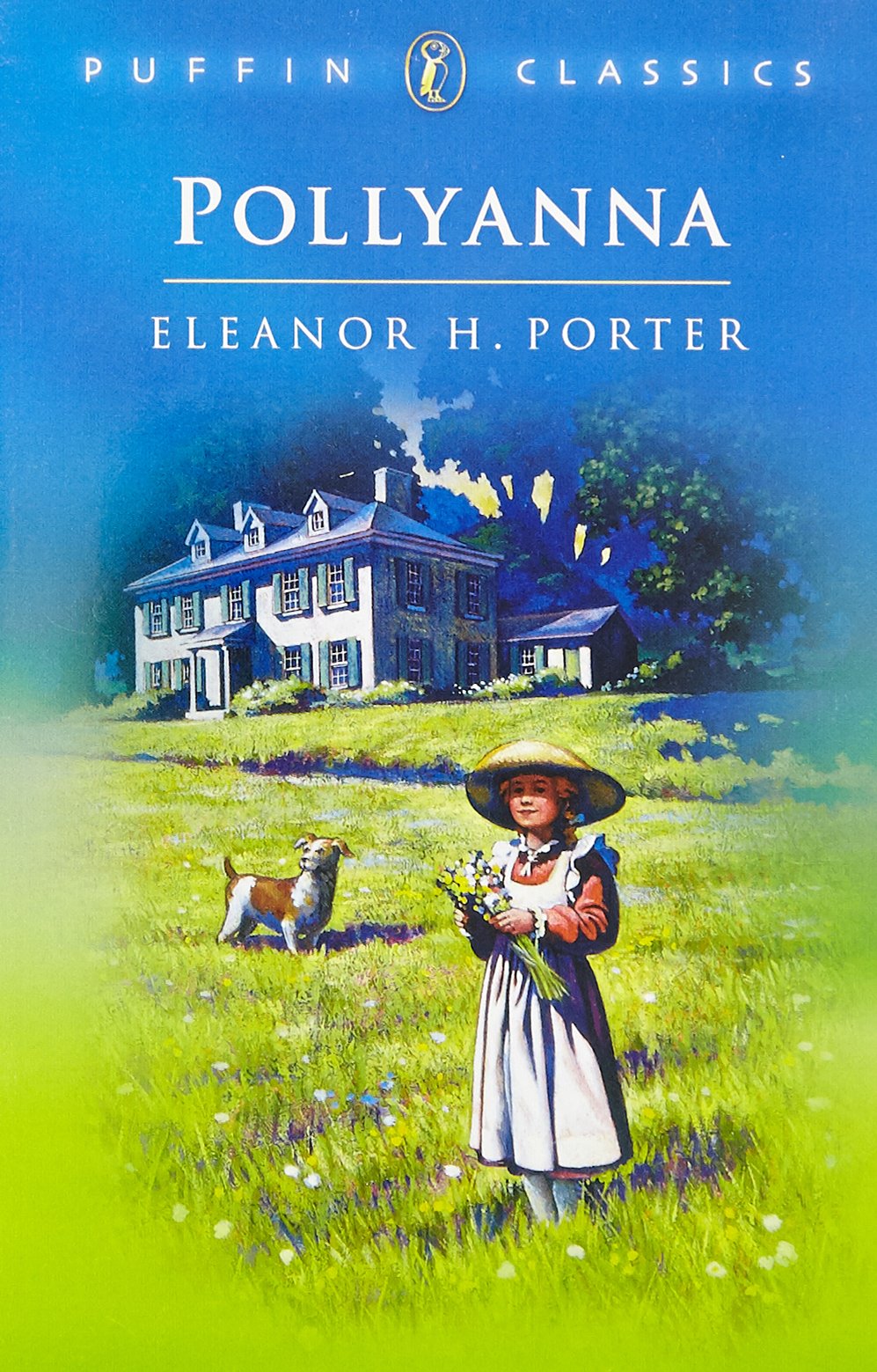
Pollyanna by Eleanor H. Porter

In this work, Porter tells us the story of an eleven-year-old girl. The child lost her mother at an early age, experienced poverty and hardship in life, and then lost her father. As a penniless orphan, she was sent to live with her rich aunt. But the rich, eccentric aunt Polly, who lived alone in a large house, did not welcome her niece. She did not even go to the station to meet her. Instead, she sent a maid, Nancy, so that the little girl mistaken her maid for her aunt.

The little girl cried after knowing this, but she immediately found a reason to be happy and turned tears into laughter. Pollyanna had told many, many people in this town about her theory of happiness, and she thought she was playing a happy game. The child’s happy theory and happy games keep divorcing people from getting divorced, make eccentric Pendleton adopt the orphan Jimmy, make the priest change his foolish ideas, and make the town and the world have an amazing change.

As she lay in her hospital bed after the accident, visitors came in droves. This child loves life and everything beautiful. From her father, a pastor, she learned to see life with a unique eye. The secret to happiness is always to explore and find the love and beauty in life and to pass it on to everyone around her. She had told many people in the town of her happy games, which had brought great changes to the indifferent Aunt Polly, Nancy, Mr. Pendleton, Dr. Chilton, and so on, and had brought about amazing changes in the town.

This work is very different from other works of children’s literature. While Pollyanna is physically and mentally healthy and full of life, the adults around her are sickly and twisted. Like the silver lining on the cloud, in this little girl looking for happiness and beauty, those self-righteous adults are just wasting their lives in a dark world. They have forgotten the essence and meaning of life, so they often create a trap for themselves, which seems ridiculous, even hypocritical.

This little girl, adept at finding joy in misfortune, epitomized the modern American spirit of believing, no matter what the circumstances, that everything would be all right. This optimism may seem naive and blind. But when we read this work carefully, when we see the changes of those who were deeply influenced by Pollyanna, we may realize that it is precisely because life is full of hardship and pain that people need to maintain a happy attitude to meet the unavoidable suffering in life. Never complain about the hard things in life, but learn to face them with tolerance, because as Pollyanna said — if you are willing to look for the good things in life, you will find them.

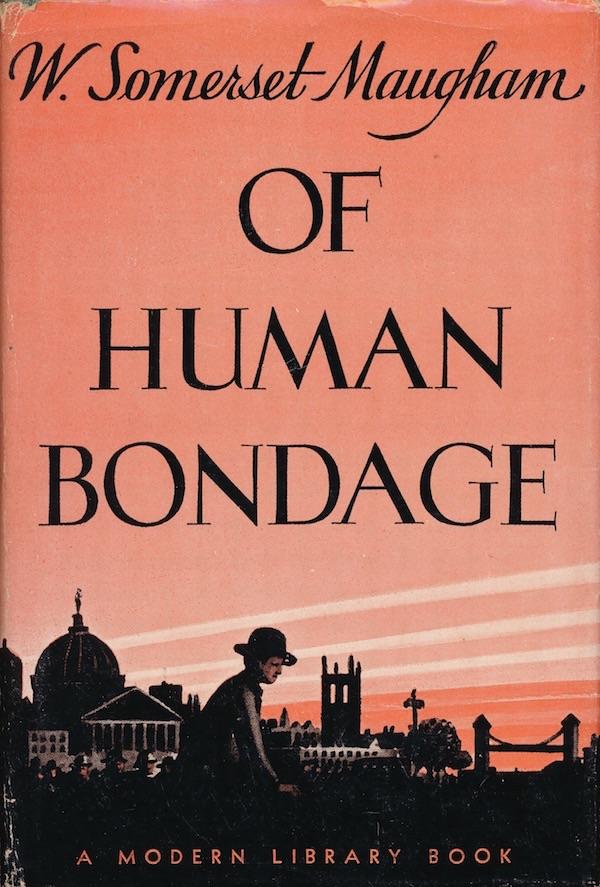
Of Human Bondage by William Somerset Maugham

Of Human Bondage by W. Somerset Maugham: Very Good Hardcover (1942) |  Randall's Books

“Of Human Bondage” aims to show the reader that once one is born, one has to go through all kinds of hardships — especially in youth — and is bound by all kinds of constraints of life, such as family, religion, school, society, love (including sex), money and so on. The novel shows the dark side of a terrifying real world. All kinds of characters in the picture, driven by the god of fate, drift in the endless dark abyss. The tone of the novel is low and the conclusion is that life has no meaning and death has no significance. Nevertheless, “Of Human Bondage” is positive in its objective effect, for Philip’s personal experience has a considerable degree of social typification.

At the end of the 19th century and the beginning of the 20th century, western capitalist society fell into a comprehensive crisis in politics, economy, culture and other aspects; market depression, social unrest and war are all at hand. Traditional religion, morality, culture and philosophy are showing the tendency of disintegration. In Britain, the false optimism of the Victorian era is long gone, and this novel presents a bleak picture of the real world full of horror. It is a scene in which many characters drift in the endless dark abyss, at the mercy of the gods of fate, neither knowing why nor whither they are to be cast.

The difference between Philip and these characters was that he still wanted to fight against fate, that he tried to throw off his chains. Here, in addition to the shackles he fought against, he also represented a large number of young people who were unwilling to go along with the tide and unable to join in the social reform movement. Although the result of his struggle is only a personal enlightenment, the enlightenment itself is also an indictment and a denial of the society, or at least an expression of a yearning for real humanity and a perfect life. In this sense, “Of Human Bondage” is not only realistic, but also makes a profound criticism of society and life from a special angle.

Philip Galli was a thoughtful, personable young man, crippled by congenital disabilities, solitary, sensitive, and obstinate. His parents died and he spent his childhood in a cold and strange environment. After going to boarding school, he was blighted by an unreasonable educational system. But when he stepped into the society, he was brutally beaten in love. The rough road of his life was full of thorns, and every step he took was tormented by pain and left a wound in his body and heart that could not be healed. All the sufferings in the world are caused by this broken-hearted society. In the novel, the protagonist Philip finally realized the truth of life, in fact, is the author’s own view of life and society after the conclusion: life is meaningless, and can not be changed into another.

It is obvious that this is why Maugham chose “Of Human Bondage” as the title of his novel. Artistically, “Of Human Bondage” fully embodies Maugham’s writing style. First of all, there is a very moving story in the novel. Although the protagonist’s experience has many twists and turns, it is written in a concentrated way without too many clues. Secondly, there is no abstract psychological description in the novel, but all descriptions are very specific. The motivations of the characters are expressed through specific behaviors, thus having a strong sensory effect. Finally, the novel’s style is lucid and unpretentious. The language of his novels aims at fluency, clarity, conciseness and harmony, so he uses colloquial language in both narrative and dialogue, which is refreshing and pleasing to the eye.

Howards End by E. M. Forster

Howards End - (Illustrated) - Kindle edition by Forster, E. M.. Literature  & Fiction Kindle eBooks @ Amazon.com.

Howards End is a humanist work with female protagonists to explore the themes of connection and freedom. It explores the political, economic, class, gender and cultural issues of British society in the early 20th century. It has its specific character depiction, besides paying attention to the emotions of the Schlegel sisters, it pays more attention to the family and the view of money and interests, revealing the huge social inequality caused by the widening gap between the rich and the poor. This novel describes the relationships and entanglements between three families from different social levels, showing the status of class struggle in Britain at that time.

The Schlegel sisters, who represent the spirit and culture of the upper middle class in Britain, and the Wilcox family, who represent the same class in their practical, imaginative and arrogant ways, as well as the complex relationship between the upper middle class and the lower middle class in Britain. No matter the main characters’ detailed psychological narration or the few words of minor characters, Forster vividly depicts the mentality of all kinds of characters under the social conditions at that time. The Wilkes family from the upper classes was cold and hypocritical; the Bast family from the lower classes struggled to make ends meet and could not pursue their own ideals.

The middle class Schlegel sisters were privileged, but were deeply influenced by the democratic and liberal ideas of the time. Among them, the elder Margaret hoped that understanding and tolerance would bring people from all walks of life together. Her sister Helen, on the other hand, was full of sympathy for the lower classes and made no secret of her disdain for the upper classes. Howards End is the country home of Henry Wilcox, the hero of the novel. Henry’s ex-wife, Ruth, often talks about the home she loves to Margaret Schlegel, their accidental friend.

She even wrote a note to give it to Margaret before she died, and the Henry family, surprised and hurt by this, tore it up. Margaret then missed out on Howards End several times. Helen had an affair with Leonard Bast, and the children of a man and woman from different classes, equally despised by the upper classes, inherited Howards End and represented a new force in England. In Howards End, the protagonist Margaret reflects the social ideal of the author Forster. By means of symbolism, the author proposes that spiritual and material things should be connected.

Only by joining together, the symbol of The United Kingdom, “Howards End” can be saved. Howards End is a symbol of family, and Margaret’s visit to Howards end is also a cultural journey to find her roots. Howards End presents all kinds of social contradictions faced by the British society under the impact of industrialization and mechanical civilization in the early 20th century. The novel revolves around the complex relationship between the Howard manor and three characters of different classes, realizing the unity of material ecology and spiritual ecology.

In his novels, Forster praised nature, reflected on the relationship between man and nature, and expressed the survival thoughts of integrating into nature and returning to nature. This reflects the author’s creative and forward-looking green thinking, humanistic spirit and modernist spirit, and has some enlightening significance to the goal of building a harmonious society. The narrative modes and techniques used in the novel also influenced the modernist novels and inspired the writers of modernist novels to continue their pursuit and exploration of artistic truth. Through Howards End, Forster arouses the British people’s thinking about modern civilization and traditional culture, and urges them to re-examine the conflict and integration of different cultural identities and different classes.

Gulliver’s Travels by Jonathan Swift

Gulliver's Travels (Classic Starts Series) by Jonathan Swift, Jamel Akib,  Paperback | Barnes & Noble®

Gulliver’s Travels has not only a profound ideological content, but also a relatively perfect art form. First of all, Swift used fictional plots and fantasy techniques to depict the reality of Britain at that time. At the same time, he also created a colorful, fairy-tale fantasy world based on the reality of Britain at that time. Swift’s fantasy world is based on reality, while the contradiction of reality is more prominent in the fantasy world. After the coup d ‘etat of 1688, for example, the Tories and the Whigs fought for power and attacked each other, when in fact they both represented the interests of the aristocracy and the bourgeoisie. Swift captured the essential characteristics of parliamentary party fighting and created the high-heel party and low-heel party in Lilliput.

These fictions make reality stronger, more concentrated, more typical, and more universal. The artistic charm of Gulliver’s Travels is also here. Swift’s fantasy and reality are harmonious and unified. Swift’s fantasy and reality are harmonious and unified, and Gulliver’s experiences are different in Lilliput, Brobdingnag, Laputa and Houyhnhnm. But they were all reasonably arranged without any flaws. Every time he went to a fantasy country, he was treated differently. He made his works have a sense of artistic reality, which has a great appeal, so that satire can achieve a high effect. When the author mercilessly satirizes and criticizes the parliamentary politics and reactionary religious forces in Britain at that time, some of them are straight sarcasm, some use the tongue of foreigners, some are metaphorical sarcasm, some are animal sarcasm, all of which are funny.

The combination of fantasy and reality also adds a unique artistic charm to the novel. Although the author presents a mythical world like a fairy tale, it is based on the reality of social life in Britain at that time. Due to the author’s precise, delicate and apt description, people can not feel that it is a fantasy, as if everything is true. For example, when describing the proportional relationship between small people and adults, and between people and things, the ratio of one to twelve is always reduced or enlarged. The little man of Lilliput is twelve times smaller than Gulliver. And the lords of the Brobdingnag were twelve times larger than Gulliver. One of Gulliver’s handkerchiefs would be a carpet for the Lilliput Palace. Brobdingnag’s peasant’s wife’s handkerchief, draped over Gulliver, became a sheet.

In describing the operation of the flying island of Laputa, the architecture of palaces, and the structure of towns, the author also intentionally uses the knowledge and data of mathematics, physics, chemistry, astronomy, and medicine. In this way, the authenticity, harmony and symmetry of the partial details of the characters are transformed into the reality, harmony and unity of the whole picture and scene, which greatly enhances the sense of reality and appeal of the work. The author’s writing is simple and succinct. In Lilliput, for example, Gulliver transcribes an official proclamation extolling the king as the king of kings, with his feet at the center of the earth and the sun above his head, etc. Gulliver, in brackets, calmly explained that the perimeter was about twelve miles.

With this explanation, the boundless territory that reached the four poles of the earth shrank abruptly to a mere dozen leagues around it. The contrast is hilarious. The words in parentheses reveal the author’s simple and matter-of-fact style, which he does not seem to be commenting on, but rather to explain to us objectively and faithfully the scale of Lilliput. Although the scenes of Lilliput and The Land of The Houyhnhnms vary, as do the circumstances of the heroes, the layout and style of the whole novel are consistent. Every time Gulliver went to sea, the causes and consequences are explained in detail, the complicated plot is described in order of time and space, the text is concise and vivid, and the story is unique.

Maggie: A Girl of the Streets by Stephen Crane

See the source image

This is perhaps my favorite story written by the short-lived but legendary author so far. It even surpasses his most well-known novel The Red Badge of Courage. Maybe because despite my great interest in the Civil War, the main character in this story touches me the most: Maggie Johnson.

Unlike her common name, Maggie is not a common girl. Just by reading the description of her family, it was pretty easy enough to tell that she detested her family. Her mother, father, and brother Jimmy all had their own life going on. They blame the obstacles in life on her. Mary Johnson, her mother drinks and fights and curses after their father passed away. Jimmy seemed unwilling to acknowledge his family as he thought it as a burden and a disgrace to his life. And Maggie was no different. Since from a young age, her violent reactions including how she trembles and hides under the table show her extreme fear for the people she’s supposed to love the most-her parents. Everything changed when Pete came.

Because of her childhood trauma, Maggie craved more than ever to find a man who is well educated and rich, mainly to save her from her diabolical family. Pete was Jimmy’s friend, I could tell he was being like a casual friend to Maggie by taking her to see plays and eat at luxurious restaurants since he owned a saloon. However, Pete was not a person who holds a serious attitude toward love or relationship, he was simply a player. And this is when Maggie gets really hurt by his rudeness later on when they met Nell, Pete’s old sweetheart. From this point on, Maggie’s imagined glorious life starts to deteriorate.

Moreover, Mary Johnson couldn’t forgive Maggie’s not coming home every night since Pete came along. In my opinion, Mary is very absurd for her requirement for Maggie as a pious daughter when she doesn’t even qualify a single bit to be a mother. Her daughter is an adult, so it’s her right to stay wherever she wants if she doesn’t feel like going home today. Besides, the wrecked condition of the house and her manner toward Maggie, of course, disengages her desire to return home after a grueling day at the clothing factory she works at.

Lastly, this story mainly just reflects how the death of our protagonist at the end proves parental failure to be a severe issue a lot of the children face even in our present society.

-Coreen C. 

Maggie: A Girl of the Streets by Stephen Crane is available for checkout from the Mission Viejo Library

Five Weeks in a Balloon by Jules Verne

Five Weeks in a Balloon eBook by Jules Verne - 9781775452614 | Rakuten Kobo  United States

The friendship and care between people are reflected in the book. Three travelers once risked their lives to save a French missionary. When the balloon was about to fall into Lake Chad, in order to make it rise again, Joe jumped into the lake and saved the lives of his two companions. As Joe fled the Sahara for his life, a shot from Kennedy saved Joe from the barbarians. This spirit of mutual love and mutual assistance in the era of personality publicity is very worthy of readers to cherish and carry forward. In order to show the wonderful scenery in Africa, this novel introduces the rich geographical knowledge. Through the image of the hero Fergusson in the novel, the author fully shows a scientist’s loyalty to the cause of human progress, praises his courage and strength, and shows the great power of modern science and technology.

However, when the novel describes the African native people, the racial prejudice reveals inevitably the era and history of the limitations. Five Weeks in a Balloon, by Jules Verne, describes the journey of Dr. Fergusson and his companions across the African continent, in which the admiration for European civilization, as well as the disgust and disdain for backward civilization, is evident. From the perspective of orientalism, Five Weeks on a Balloon shows a strong national character and the resulting Eurocentrism, which is mainly reflected in its description of the African environment. More than that, Jules Verne wants to show the excellence of his own nation in this process. To highlight this, the typical environment in his works is the desert, which means to raise thirst, desolation, loneliness and death, which must be overcome when crossing the desert.

The success of Mr. Fergusson’s entourage is the author’s affirmation of westerners and western civilization. But the whole work, from the point of view of orientalism, this affirmation is also based on a kind of dislocation between Europe and Africa. They thought of themselves as the most civilized people, looking down on others, and orientalism retained a more or less European-centered consciousness even in their later reflections. It is difficult to avoid this phenomenon, which requires that people should treat the East objectively and not overnight. However, in the analysis and criticism of people, they should at least be conscious of preventing them from being brought into the theory of Eurocentrism. When they look at problems, they should always make clear their position as an Oriental.

The African landscape is described in vivid detail, with mountains and seas, swamps and depressions, desert rivers and volcanoes all covered in the novel. The baobabs, fig trees, acacia trees, tamarind trees and other tropical plants are very strange. Elephants, hippos, crocodiles, vultures, leopards, hyenas and other tropical animals, as well as the thrilling battle of wits with savages and monkeys, all inspire the imagination to travel to Africa in an adventure. The hydrogen balloon was their vehicle, a relatively unknown object even to today’s readers, and the hero of the book had thought of it as a tool for exploration in the first half of the 19th century. What is more interesting is that the author even introduces the complex structure of the balloon to the readers in detail through the protagonist, which shows the author’s extensive knowledge and extremely rich imagination.