The Story of an Hour by Kate Chopin

This story discusses the oppressive nature of marriage, which I think is still very relevant even in today’s society. The United States alone has a divorce rate of 50 percent. The characters in this story think that marriage has stripped them of their individuality and independence. Personally, I don’t deny this argument, but I don’t completely agree with it either. Marriage is the bonding of two people together. Being married means that it is no longer simply a relationship that you are sharing with your spouse, but that there is heavy responsibility associated with that relationship. For a lot of families, women give their careers up to rear the children, which can be a huge sacrifice. I think this type of sacrifice eventually if not alleviated would lead to breakups and divorces.

On the other hand, this story also made me realize how the men in the family should take responsibility as well. The male character’s death not only did not traumatize his wife in the story but also made her feel a sense of relief. A lot of times the breadwinner of the house may feel exhausted after work, therefore demanding that his wife meets all of his needs voluntarily and mandatorily. Nevertheless, he is omitting all the house chores and child-caring the mother or females of the house have undertaken during the period when he’s gone to work. Hence, this story tells us that it is important for every family member to take a share of responsibilities and duties.

-Coreen C. 

Jane Eyre by Charlotte Bronte

The reason why I began reading this novel was because of school requirements. Contrary to what I imagined as a typical romance genre, Jane Eyre incorporates elements of horror, fantasy, and even gothic. Jane Eyre actually has a similar background as Cinderella. Her parents died. Their marriage was not supported by her mother’s family because her father’s social status did not match her mother’s. However, even after being disowned by her family and friends, Jane Eyre’s mother did not give up on her family. Jane Eyre was actually raised by her aunt along with her cousins. But because everybody except for a governess treated her so horribly, Jane Eyre decided to leave for a boarding school built just for orphaned girls.

After years of learning and eventually becoming a teacher there, Jane Eyre was bored with her repeating life. Hence, after much effort, she received a recruitment letter from an old mistress at a mansion to be the governess of Adele, an 8-year-old French girl who barely speaks English. And it was from here that Jane Eyre met Mr. Rochester, a very serious and reticent man. Nonetheless, they fell in love shortly and were at the point to be married when Jane Eyre found that Mr. Rochester was married to a crazy woman. She ran away from him and eventually was taken in by a preacher’s family in a faraway village. Jane Eyre was eventually able to unite with Mr. Rochester even after he has gone blind due to a fire. She not only denied the pastor’s wish to marry her and make her a missionary’s wife in India, but she gave birth to a boy with Mr. Rochester.

Although this book has a happy ending, the plot and characters are fickle and unpredictable. I recommend this book to readers who like romance but are tired of the traditional plot and setting.

-Coreen C. 

Jane Eyre by Charlotte Bronte is available for checkout from the Mission Viejo Library.

A Portrait of the Artist as a Young Man by James Joyce

A Portrait of the Artist as a Young Man - Kindle edition by Joyce, James.  Literature & Fiction Kindle eBooks @ Amazon.com.

As a coming-of-age novel, A Portrait of the Artist as a Young Man depicts the growth of the protagonist Stephen from childhood to adolescence. It tells the story of a child growing up in an Irish Catholic family. It is both an autobiographical novel and a work of fiction. This novel mainly describes how a young Dubliner Stephen Dedalus tries to get rid of all kinds of influences that hinder his development — family constraints, religious traditions, and narrow nationalist sentiments, and pursue the true meaning of art and beauty.

The novel is mainly composed of two narrative clues, one is the growing process of the hero Stephen, the other is Stephen’s psychological activities. The first chapter of the novel describes the birth and growth of Stephen, and the second chapter describes his experiences as a teenager and his budding pursuit of women that lead him to the brothels for pleasure. The third chapter mainly describes that Stephen frequented brothels and his sexual hunger was satisfied, but the contradictions in his heart became more acute.

He proudly refused to repent, knowing full well his guilt. One day he heard the sermon of the Father Arnall on death, judgment, hell, and heaven, and he began to hate himself and to loathe himself exceedingly. After much mental struggle, he went to the chapel to confess his sins to the priest, and at last found peace of mind. The last chapter is about Stephen’s hard works, which were appreciated by the church who gave him a glorious opportunity to enter the ministry.

Many of the details in A Portrait of the Artist as a Young Man are based on Joyce’s early life, and the novel’s protagonist, Stephan Dedalus, has much in common with Joyce. This autobiographical novel portrays the image of a young artist from childhood to maturity and expresses a flying theme. Joyce describes Stephen’s experiences at different stages of life in children’s style, youth’s style, and adult’s style, and demonstrates Stephen’s inner feelings and ideology by means of spiritual insight and stream of consciousness.

As a coming-of-age novel that describes the inner process of young people, Joyce’s A Portrait of the Artist as a Young Man profoundly describes the psychological growth process of Stephen, a young artist, from his baby’s hazy period to his youth’s mature period. A Portrait of the Artist as a Young Man is arguably the most profound novel that traces the inner workings of young people in the 20th century. Each chapter of the novel revolves around a major event in Stephen’s formative years. The parts are linked to each other and follow the course of events step by step. Readers can clearly see Stephen’s growth path from a child to a young artist, and truly feel his pain and joy.

-Coreen C.

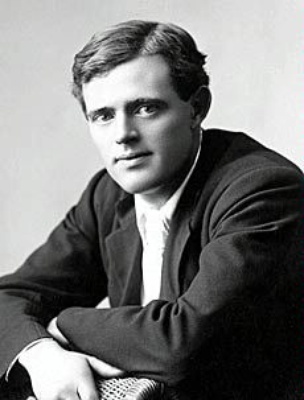
Authors We Love: Jack London

Jack London - Oakland - LocalWiki

In Jack London’s works, one can often feel the complex of heroism. There is the worship of life itself and the pursuit of primitive form and spiritual freedom for the meaning of life and existence. In Jack London’s work, the protagonist is merged with the harsh wasteland, where life tends to take on a primitive form, releasing a desire that is the opposite of what the vulgar world will never be familiar with, a kind of intense, leaping and even violent emotional anger. The combination of freedom and passion of Dionysus gives out the most primitive call of life — tenacious survival.

Jack London is a writer of very complex ideologies. For many ideas that influenced the social history at that time, London accepted them almost without any choice. Influenced by the social and historical environment at that time, and without any formal and systematic education, London’s ideological beliefs were complicated and contradictory. As a result, many London researchers believe that London’s thinking is chaotic and lawless. His philosophical views, though confounded and discouraged by their many contradictions, should be carefully combed and studied. Jack London, a writer with the ideas of reform and progress, keeps pace with the times and views women from a broader perspective.

Far from being an anticlimatic feminist, However, London advocated women’s independence while also extolling the traditional virtues of women as faithful male partners. London not only expressed her definition of the “perfect woman” but also greatly enriched the female characters in American literature by creating a group of “superwoman” characters who were gentle, submissive, strong, and capable. London and his work provide a case study of American society and culture at the time. The period of childhood and adolescence in London was very miserable. Although London’s works are vast, fragmented and difficult to categorize, it is possible to draw a simple line through the works of early, middle and late London. That is the transition from the male-dominated narrative to the female-dominated narrative, through which is London’s eternal love for life and endless exploration and pursuit of the meaning of life.

-Coreen C.

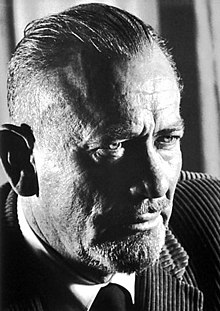
Authors We Love: John Steinbeck

John Steinbeck - Wikipedia

John Steinbeck (February 27, 1902 — December 20, 1968) was an American writer of the 20th century. His representative works include “Of Mice and Men”, “the Grapes of Wrath”, “the Moon Went Down”, “East of Eden”, “Winter of Trouble” and many more great American classics. John Steinbeck was born in Salinas, California, in 1902. His father, John Ernst Steinbeck, moved west after the Civil War to run a flour mill and served as treasurer for the Monterey County government for many years. His mother Olivia Hamilton was an elementary school teacher. Steinbeck read a lot in his childhood. He later graduated from high school in 1919, serving as class President in school. Steinbeck mostly spent his holidays on the nearby ranch as a hired farm hand.

In Steinbeck’s literary world, the observation and description of various living states under the poor material conditions of human beings have a prominent and decisive position. This is a common feature of his novels (including most of his journalistic and documentary works). He contemplates about the essential problem of human existence and even the transcendent dilemmas of society. In Steinbeck’s novel, “poverty” mainly refers to a state of extreme material deprivation. Steinbeck’s characters generally live in a state of considerable material deprivation — or rather, he persists in depicting the conditions of human poverty. In this specific creation, his writing about the causes of poverty directly correlates to the characteristic theme of realism. Steinbeck’s deep obsession with poverty and his discussion of it exemplify his artistic concerns and is reflected through many of his writings.

-Coreen C.

The Works of John Steinbeck are available for checkout from the Mission Viejo Library. They can also be downloaded for free from Overdrive.

Love of Life by Jack London

Love of Life - Jack London for Android - APK Download

A gold prospector in the American West sprained his ankle crossing a small river on his way back. Abandoned by his partner, Bill, he searched the wilderness alone. The foot injury made every step very difficult for him, and what was more terrible was the unbearable hunger. In desperation, he divided his treasure equally into two parts, carefully hid one part of it, and trudged on with the other. To his great joy, he found a wounded grouse on his way. He seemed to see hope, and tried to chase the grouse with great pain in his feet. He got lost. Now he had expended quite a lot of energy, so he chose to divide the rest of the sands into two more portions, but this time he poured one of them down on the ground. Before long, he threw away all the sands. When he was very weak, he met a sick wolf. He found the sick wolf following him, licking his blood. In this way, two dying creatures, dragging their dying bodies, hunt each other across the moor. In order to get back alive, at last the man won battle. He killed the wolf and drank its blood and survived.

In Love of Life, London places the protagonist in the treacherous northern frontier environment, facing the harsh reality: hunger and death, so that he understands the power of nature and his own smallness and vulnerability. London, however, has always been reluctant to conform and confine himself to a strictly defined naturalistic framework. He gave the gold prospectors in Love of Life the courage to face the harsh reality, the will to overcome adversity, and the courage to become superhuman to the strong. Therefore, Love of Life should not be a single pure naturalistic work, but an organic combination of naturalism and romanticism, which is the strength of the novel art and one of the real reasons for its enduring popularity. This plot in the novel also reflects the cancer of the human soul in the modern civilized society. Industrial civilization is advancing by leaps and bounds, science and technology are changing with each passing day, and products and consumer goods are greatly enriched, which arouses the infinite expansion of human desire. All the efforts made by people are ultimately aimed at obtaining material wealth and filling their personal desires. When the worship of money and egoism become the values of the civilized world, the relationship between people is only economic interests in the final analysis. In order to pursue the maximization of economic benefits, mutual use, intrigues, intrigues, extortion are common, spiritual degradation, moral decay is inevitable.

-Coreen C.

Book Review: The Iron Heel by Jack London

The Iron Heel (Penguin Classics): London, Jack, Auerbach, Jonathan ...

The novel “The Iron Heel” is written in the form of a memoir, the author is Avis. The manuscript, which was written by Ives, was hidden in a hole in a dead tree before she died and was only found hundreds of years later. Everhard, a Socialist ideologue turned blacksmith, was a guest of Avis’s father, a liberal professor, whose revelations of the cruel exploitation of the monopoly capitalists interested her, and she went herself to investigate and prove the truth. A worker who had his hand broken trying to protect a machine lost his case in court after being fired without a pension. “The Iron Heel” continues to write about the struggle between the revolution and the counter-revolution, how the counter-revolutionary cultivated the working aristocracy and destroyed the workers’ unity, how the government and army suppressed the people’s unrest, how the revolutionaries carried out open and underground struggles, and how the masses overthrew the American bourgeois oligarchy — “The Iron Heel”.

The author foresees the day when a deadly struggle between the American proletariat and the bourgeoisie, the oligarchy known in the novel as “The Iron Heel”, will break out. Jack London gives readers a great picture of the proletarian revolution through his fictional account of the armed riots that broke out in Chicago in 1917. Such scenes were seen in Paris in 1871 and in Petersburg in 1905. “The Iron Heel” is a political prophetic novel conveying Jack London’s wish for the broad proletariat to unite in the armed revolutionary struggle. “The Iron Heel” depicts the failure of the American workers’ revolutionary uprising and the establishment of bloody rule, but the novel is full of revolutionary optimism. He is convinced of the establishment of a progressive and just social system for human beings, and also believes that the future will not be a society where people oppress and exploit people. Jack London’s moderate socialist stance has been replaced by a radical revolutionary attitude in “The Iron Heel”. He predicted that capitalism would go to extremes, to evils, and advocated its overthrow by violence. “The Iron Heel” is a literary expression of Jack London’s dissatisfaction with the right-leaning revolutionary line of the socialist party members of his day.

The novel’s main story takes place in Chicago, an industrial city that, according to Avis’s manuscript, has been the center of a storm of conflict, with brutal street battles, assassinations, bloodshed, and violence. In writing about the big themes of Chicago, writers often focus on concrete examples to support the macro level of class struggle at the micro level. Jack London focuses on the tragic experience of Jackson, a representative of the ordinary working class. Jack London, through such an example, on the one hand attacked the dehumanized industrial production, which used laborers as slaves. Once the laborers lost their labor value, they were mercilessly abandoned. On the other hand, the writer criticizes the capitalist social system and the superstructure of capitalist economic production, which conspire to protect the interests of the bourgeoisie while maintaining unequal economic distribution.

-Coreen C.

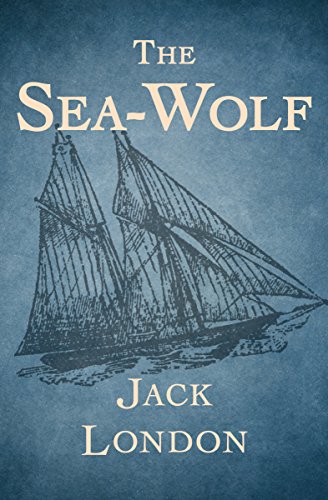
The Sea Wolf by Jack London

The Sea-Wolf - Kindle edition by London, Jack. Literature ...

“The Sea Wolf” is a novel written by American writer Jack London. The novel depicts a heart-wrenching battle and an unforgettable love story on board a sealing-hunting sailing ship called the “Ghost”. The “Wolf” in the novel is not only the name of Captain Larsen, but also the synonym of superman for the author. Through the novel, the author leads the readers into the callousness of the wild life and feels the dark side of the brutal human nature and the brightness of the primitive life. At the same time, it also exposes the disadvantages of the capitalist society and shows the praise for the strong will of the working people and the sympathy for the suffering life.

On the “Ghost” , there is no legal order, no distinction between good and evil, no humanity, let alone the most true and most beautiful human emotions. The life of a seaman was like an ant to him, and whoever he wanted to die had to die. Larsen became the most loyal follower and the most powerful enforcer of Darwinism. The crew he recruited on the sea were only salaried slaves. The seal hunter was his accomplice. The shipwrecked people he rescued became his cheap labor force to fill the gap. He not only swore at the death of his former first mate, but roughly buried him and threw him into the sea. When Harrison, a new sailor, got caught by a high mast, his life was in danger; however, Larsen wouldn’t let anyone go up and help him.

To fill the void, he forced Weyden, whom he had rescued from the ship, to come and work for him. Under the tyrant’s rule and influence, the rest of the crew became rough and brutal. Thomas whet his knife at Weyden all day long, but Weyden, not to be outdone, took his knife to the grindstone all day long, and at last won. Johnson was beaten black and blue for saying something that offended Larson, and Leach, the sailor, swore at Larsen and then beat up the good cook. In Larsen’s world, violence against violence is the law of existence.

Many progressive male intellectuals, including the writer Jack London, supported and championed feminism and expressed their desire for social change;however, traditional ideas are in deep ideological conflict and often bring them back to the desire for traditional power relations. In “The Sea Wolf” we can see a certain disharmony: one comes from the writer’s consciously expressed ideas, the other from the writer’s unconscious desires; one is the principle of gender politics, the other is the pragmatism of social life. The two tendencies interweave together, making the novel a contradictory text.

-Coreen C.

The Call of the Wild by Jack London

The Call of the Wild: Jack London: 8580001049755: Amazon.com: Books

The work tells the story of Buck, a pet dog of Judge Miller’s family, who has been living in a warm valley in southern California after being civilized. He was sold to the cold, remote, gold-rich northern state of Alaska as a sled dog. The dog who should represent the civilized world as a dog is forced to return to barbarism by his master. Growing up in a greenhouse, Buck was stolen and sold to the wild as a sled dog. The cruel reality touched Buck’s instinct and consciousness of returning to nature due to the long influence of human civilization. Buck was trained by the harsh living conditions, and he grew through them. In the end, he won the first place in the sled dog pack by defeating the king Spitz. When the cruel Hal had beaten Buck black and blue and was almost dead, John Thornton’s rescue made Buck feel warm and decided to pledge his loyalty to his patron to the end. However, the death of the benefactor completely broke Buck’s attachment to human society, so Buck was determined to go to the wilderness and return to nature.

First of all, the image of the dog in the novel is in sharp contrast to the image of the human. Dogs (Buck) are brave, kind, loyal, grateful, highly adaptable, and have excellent leadership skills, while humans are mostly hypocritical and tyrants. Buck was sold to a dog dealer and moved from the comfort of Judge Miller’s home to the rigors of northern life, but he soon adapted to the rules of existence. Even if there were no foreboding in the air, he could dig a hole by a tree or a bank, and hide safely from the strong wind. Buck used the best of management to keep the dogs in order. It pulled up a thousand pounds of flour and won the bet. Humans, on the other hand, still treat dogs with ropes, cages, and sticks. To satisfy their own desires, they do not care about the fate of other creatures. Man thinks he has the right to truth, and he thinks he is the supreme master of the dog. It is just because of a series of selfish behaviors of human beings that lead to the tragic fate of the dogs, and at the same time, human beings also suffer bad consequences. Hal and his family are buried in the White River, and Buck finally returns to the wilderness.

-Coreen C.

A Time to Kill by John Grisham

This is a legal thriller written by former criminal defense attorney John Grisham. The reason I thought that the first novel written by him is awesome is because it not only penetrates deep into the entrenched system of racism in America, it also describes the love and duty of a father. Carl Lee Bailey murdered brutally the rapists who harmed his twelve year old daughter teaches me how much a father can do to protect his little girl. Moreover, it also tells me how unfair the justice system was to blacks in general compared to whites. I was also very shocked at the Ku Klux Klan and how cruel they can be in terms of killing innocent African Americans and burning any traitors at the cross.

This novel serves as a reminder to people working in the legal professions today on how our justice system should conform with the foundation of democracy—racial equality. It also delivers a message to its readers in that laws can be interpreted in different ways and we should have sympathy for each other. Supposedly, Carl Lee Bailey should be charged with capital punishment, but because he killed the two rapists for the sake of his daughter, he was released at last. The jurors knew that every father would perhaps do the same for their own daughter, which is the reason they decided that Bailey was not guilty.

-Coreen C. 

A Time to Kill by John Grisham is available for checkout from the Mission Viejo Library. It can also be downloaded for free from Overdrive