Book Review: Confessions of A Murder Suspect, by James Patterson

confessions_murder_suspectJames Patterson is one of my favorite authors, and since he’s also one of the world’s highest paid authors, clearly others share this opinion.  When I saw his latest collaboration with Maxine Paetro, Confessions of A Murder Suspect, I knew I had to read it.

The basic premise of the story is the investigation of the apparent murders of Malcolm and Maud Angel. The Angels are a very powerful family, heading up a huge pharmaceutical company and hedge funds, and it would seem that the list of suspects would be huge. The cops however, narrow the list done to one of the couple’s children given that their deaths occurred in a locked, extremely secure and exclusive apparent complex. Tandy Angel, one of the couple’s children, is not going to sit around and wait for the cops to conduct their investigation so she starts one of her own. Throughout the book family secrets and conspiracies arise and nothing is as it first seems. “Confession” chapters break up the main story and give us more insight into the lives of the Angels.

I personally have mixed feelings about this book. When I was reading it, I was fully engrossed and it kept me turning pages… after I had finished, however, I wasn’t quite so sure anymore. A lot of what makes the story so interesting is the many mysteries that the plot centers on, and once the secrets are revealed, the story loses something. It’s not that the answers to the many questions are underwhelming or unbelievable exactly– they just weren’t what I thought, and a lot of it wasn’t really justified in my mind.

The thing that I had the biggest problem with in this book was the final “who done it” explanation. Without giving anything away, suffice it to say that knowing all of the information about Malcom and Maud that is revealed by that point in the book, it doesn’t seem well justified that their deaths occurred in the way that they did. It was mainly the way that Malcom’s death occurred that bothered me- Maud’s was fairly well explained- but I just can’t fathom why Malcom’s death occurred the way that it did, knowing all of the information about Maud.

On the flip side, I think that the book’s strongest point is the careful balancing of several plots lines. While the main focus is the murder investigation, there are several other mysterious that are expertly tied into the main plot. I loved the many family secrets that the Angel family contained and never felt bored.

Another of the book’s strong features are the “Confession” chapters. They’re a unique way to add more information to the story that wouldn’t have necessarily been easily tied into the story if it was written in the traditional chapter format. There are just enough of these to add something extra to the plot without drowning it out.

When the book ended I was mostly satisfied with the way that things were wrapped up and most of my questions had been put to rest. That being said, room was left open for a sequel, which will hopefully fill in any reaming gaps and extend the story of the Angel family.

-Angela J., 12th grade

Fictional Worlds I’m Glad are Fictional

Books have a way of taking us to new and exciting places, and a lot of times those are places we wish we could go visit. Places like Hogwarts and Camp Half Blood are places that captures a reader’s heart and make you wish you could just jump through the pages and join in the adventure– and yet there a few fictional worlds that I am very glad are just that… fictional.

hunger_games_coverPanem – The Hunger Games series by Suzanne Collins

While the The Hunger Games is a great trilogy full of action and excitement, the country of Panem is one I’m glad exists only on paper. The thought of being entered into a drawing and forced to fight to the death at such young ages is something that I am glad I don’t have to worry about. Even though the concept that drives the story is something that I’m sure almost everyone would be against if it was implemented in society, there is something that makes it incredibly alluring to read about. The huge disconnect between the Capitol and the districts is something that in a way is reflective of our own government, and I think this is part of why readers are drawn to strongly to the story. This draw is further enhanced by Katniss’s incredible drive to protect those she loves, something which also aids in making the story relatable. Overall, the world of Panem is one that we can love to hate.

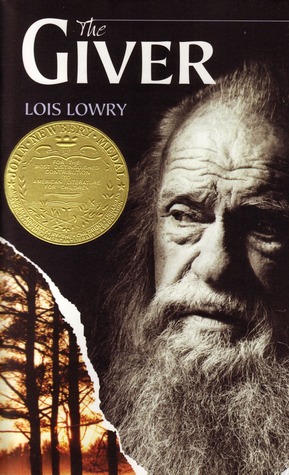
giver_coverThe Giver by Lois Lowry

The Giver takes place in an unnamed, futuristic society that at first glance is a utopia. Everything in this world is designed to make life as pleasant and convenient as possible; everyone is always polite, there is no war, no sickness, essentially everything unpleasant about life has been eliminated. Through reading the book and following the story of Jonas, the child who has been given the job of the Receiver of Memory at the Ceremony of Twelve (12 is the age at which children get their assignments, or roles they will play in the society), the reader begins to see that this utopia comes with a price. By eliminating all negatives aspects of life the society has really eliminated what makes people, people, something that Jonas learns while receiving the society’s collective memory. The Giver is a great reminder that even though life can be painful and unpleasant at times, it is these struggles that make life great in the long run.

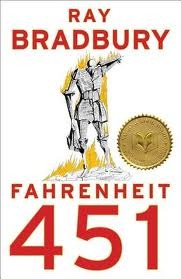
fahrenheit451_coverFuturistic America – Fahrenheit 451 by Ray Bradbury

The world of Fahrenheit 451 is another world that could be considered a utopia, however its flaws are more readily visible than other stories that feature utopia societies that dissolve into a dystopian society as the story progresses. In the society portrayed in the book people lives are all about quick gratification and easy living, they don’t think for themselves or having meaningful conversations, rather they settle for cheap thrills like driving their cars far too fast and letting technology essentially brainwash them into confirmatory. The biggest thing that sets the world of Fahrenheit 451 apart from our world is that books are illegal and fireman start fires, not stop them. Books are burned to prevent the spread of ideas and keep society uniform. With this restriction of thought it’s easy to see why that is a world better left on paper.

Overall, while there are many great fictional worlds that I would love to visit there are some that I am certainty glad are safely contained on the pages of books.

-Angela J., 12th grade

Thoughts on Book Banning

banned_booksIn a country founded on the ideas of freedom and the idea of self expression is encouraged, it’s hard to imagine that books, of all things, are sometimes banned. Personally, book banning wasn’t really something I had thought about until Ellen Hopkins and Sonya Sones came to the library for a visit back in September. Sure, I had heard of books being banned– but I had never really thought that it was still something that was going on, and more importantly, what the effects of it are.

In this country, books get banned mostly because of complaints steaming from a small group of people; parents who aren’t pleased with what their children are reading in school, small communities who don’t think a book should be in their local library, and other similar cases and effect only a certain place or school. Book banning isn’t necessarily on a huge scale, this isn’t really a case of the government trying to control what people think, this is a matter of people trying to control other people. Still, book banning is a huge problem.

Most books that get banned are children’s or young adult books. The process of banning books starts with a challenge: a group of people don’t like the content, so they bring it up with someone who can do something about it. For example, a class is reading something that a group of parents don’t feel is acceptable for their children to be reading, and so they bring it up with the school board. From there, the school board can decide to ban the book, which basically makes it disappear from the curriculum. It’s not that someone who wants to read the book can’t get a copy of it anywhere, it’s just that they are going to have to look a little harder for it. On a basic level, these challenges usually come from a well-meaning place- parents wanting to “protect” their children from ideas they view unfit for them- but that is really where the trouble comes in.

The main problem with banning books is that when you ban a book, you are sending a clear message that an idea that the book is conveying is wrong and forcing your ideas onto someone else. Books can open up someone’s mind to all kinds of possibilities- that is what makes them so amazing. But when you are preventing people from reading them, you are closing off ideas. It’s understandable that some parents may not want children, especially younger ones, reading books that contain tough subject like suicide, drug use, and so on, or excessive use of language or sexual content, but banning books takes away the book from everyone. It is completely understandable for parents to filter their children’s reading, but it needs to be on a one-on-one basis without affecting any one else’s ability to read the book. Furthermore, regardless of what content the book may contain that makes it “unsuitable” for children, that content is rarely the entire point of a book and rather is being used to somehow enhance the story.

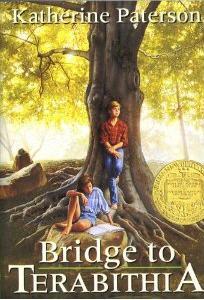
bridgeA final note on book banning is that this isn’t a problem that is limited to a certain era or genre of books but includes a vast array of books, including several which I have personally read in school. Some of the books that I was most shocked to find that were banned were: The Adventures of Huckleberry Finn by Mark Twain, Bridge to Terabithia by Katherine Paterson, and Flowers for Algernon by Daniel Keyes– although there are many, many more books that I have read that are included on lists of banned books.

Books banning can cause all kinds of problems, even if the intentions are good. At the end of the day, I really feel that it is up to the reader to decide what makes them uncomfortable and to have the choice to read whatever they want.

-Angela J., 12th grade

Print Book vs Ebooks: Pros and Cons

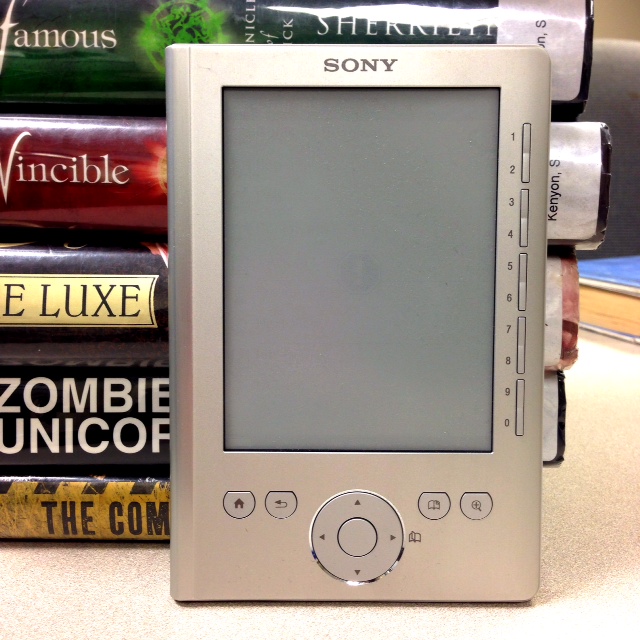
ereader_picBack in June, another blogger, Sarah B., wrote this wonderful post about the debate over ebooks which included some great information on the history of ebooks, and most recently Leila S. made great visual representation of the differences between the two. Today, I would like to talk more about the pros and cons of each.

Ebooks have more concrete pros and cons than print books do, a lot of the things that make print books great have more to do with preferences, while ebooks are more about convenience. First off, let’s take a look at the pros of ebooks.

  • Size: For me this is one of the greatest things about ebooks– you can fit hundreds on one small device, which- when you love reading- is an amazing thing. This small size is also great for traveling.
  • Font Options: Most ebooks let you adjust the font size to your liking, you can have anything from huge and easy to read to super small which lead to less “page turning”. This is a great feature especially if reading small print is difficult for you. Some e-readers also let you change the color and font type to make the font easier on the eyes.
  • Brightness: Many ereaders have either the ability to change the screen brightness or come with a built in light which makes it easier to read in any lighting condition, from dark nights to bright days outside.
  • Cost: Often times ebooks are cheaper than there print counterparts, and many classics are even offered for free. This is great for saving money.

And now onto the cons of ebooks…

  • Start-up Cost: To read ebooks you will need to get an e-reader, and even though there are e-readers priced at every budget level it can still be an investment, especially if you’re not totally sold on the idea.
  • Needs to be Charged: For light day to day reading at home battery life shouldn’t be a problem, but for long car trips or camping then having to have an electrical outlet can be a problem.
  • Hard to Lend Books: While there are some programs, like the Amazon Kindle Owners Lending Library, that allow ebooks to be lent to friends and family, it can be a hassle to figure out the system,not to mention all parties involved would need a device.
  • Digital Feel: For me part of the joy of reading is the book itself, the texture, the smell, the weight, and with ereaders, you just don’t get that.

Next I would like to talk about the pros of print books.

  • Easy to Share: Lending print books couldn’t be easier– just grab the book and pass it along; no set-up or hassle involved.
  • The Whole Experience: There is just something about print books that ebook can’t compete with, the way the spine cracks the fist time it’s open, the way the pages feel in your hands, the rich scent of paper, the way they wear over time and gain character.
  • Sentimental Value: While ebooks are probably going to be around for quite a while, there is something really special about being able to hold something in your hands that your parents, grandparents, and other family members had when they were young.
  • No Battery Required: With print books it’s grab and go– no need to worry about being miles away from electricity.

And finally, onto the cons of print books.

  • Size: The fact is print books take up space, and a lot of it. For avid readers it’s only a matter of time before the books move from the bookshelf onto tables, chairs, the floor, and anywhere that they will fit.
  • Cost: Print books, especially hardcovers, can add up fast. Although buying used or checking free carts at libraries can help, that can be a gamble and pursuing the newest book will usually result in a trip to the store.
  • Reading Conditions: Print books need light, and sometimes that can be a problem, especially if you’re a fan of reading at night before bed or on long night car trips.
  • Durability: Paper degrades over time, and while this won’t typically be a huge problem, it can be a hindrance if you like to travel with books or plan on passing them down to future generations. The plus side is this wear is usually just something that gives the book character and not a deal breaker.

Overall, both ebooks and print books have many advantages and disadvantages and when it comes down to it, it’s all about preference. Whatever you choose– read on!

-Angela J., 12th grade

Event Recap: Ellen Hopkins and Sonya Sones Author Visit

ellen_hopkins_sonya_sonesLast month, Ellen Hopkins and Sonya Sones visited the Mission Viejo Library. They are two of my favorite authors so I was extremely excited to get to meet them. The event was held in the library’s Heritage Room and was very cozy. Several comfortable chairs were arranged around the room in a circle with Ellen Hopkins and Sonya Sones seated in the front. The night began with Sonya doing a spin to show off her skirt and then brief introductions.

Once introductions were taken care of, both authors read the beginnings of their new novels, Smoke and To Be Perfectly Honest: A Novel Based on an Untrue Story, respectively. Both did an excellent job reading and really created an engaging experience. I had already read Smoke at the time of the event but hearing Ellen Hopkins read it out loud made me want to read it again. Sonya Sones really drew me into her story as well and I am looking forward to reading it.

Once the readings were done they spoke about book banning and also why they write. Both of them emphasized that while they never set out to write a book that would get challenged or even banned. However, they take the fact that they did get challenged as a bit of a compliment. Sonya Sones had an interesting viewpoint on the whole matter when she brought up that her books are on lists that include books by authors like John Steinbeck, F. Scott Fitzgerald, and Ernest Hemingway; when else is that going to happen? They view the banning of their books as something that shows that people are thinking about issues which they may not want to face, which is something they view positively. Both of the authors shared stories about getting letters from people who had read their books and really been touched by what they read.

The first portion of the night ended with a question and answer session. Some topics discussed were: the fact that the Crank trilogy was based on true experiences of Ellen Hopkins’s daughter; some memorable encounters with fans, Sonya once saw a kid reading one of her books in a store and had to prove to them she really wrote it, Ellen one sat next to a girl on a plane reading one of her books; and their view on book bannings.

The night ended with a chance to get books singed, buy books, and take pictures with them. They were both extremely kind and Ellen Hopkins even put up with signing seven of my books.  Overall it was a great experience to get to meet two of my favorite authors and even get some books signed, not to mention getting my picture taken with them!

-Angela J., 12th grade

Book Review: Smoke

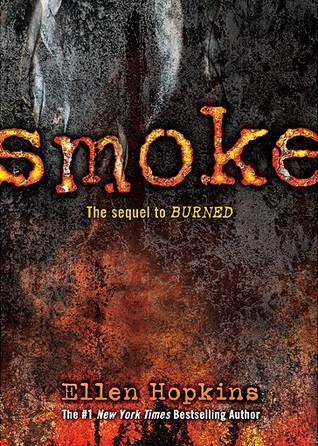
smoke_coverEllen Hopkins is one of my favorite authors so when I got a chance to read an advance copy of Smoke I knew I was in for a treat. Smoke is the squeal to Burned, which was published in 2006. Smoke continues the storyline of Burned in much the same format as the first, the one main difference being that  Smoke alternates viewpoints between Pattyn Scarlet Von Stratten, the protagonist of the first book, and her younger sister, Jackie.

For me the alternating viewpoints was the strongest point of the book. While Pattyn’s storyline does continue nicely from the first book I don’t think that the squeal would have worked as well as it did if it had been told strictly from her point of view. While the two sisters’ stories are separate in the sense that they are taking place in different parts of the country, they are still very much connected. I felt that Smoke really gave Jackie a chance to shine and be her own person as opposed to just a supporting character for Pattyn. It’s interesting to see how each sister responds to both being away from each other and dealing with the new lives they are forced to live because of the events that occurred in Burned.

The new characters introduced in Pattyn’s story line and well developed and it’s enjoying to follow Adriana, as well as the other new characters, as they spend time with Pattyn. Pattyn’s story line feels like a trip back in time in a way because of the migrant worker lifestyle she is living. This was one of my favorite aspects of the book because it’s not something that I typically associate with 2013 so it was interesting to see how it is still present today.

One thing that I think could have been better was that the story picked up very quickly, which while good in some aspects, left me a little lost for a while. The two books have a several year publishing gap between them which meant that as much as I loved Burned, some of its details had been forgotten by the time I got to read Smoke. Still this is a very minor thing that can easily be remedied by re-reading Burned before picking up Smoke.

Overall Smoke is an extremely strong squeal and I would highly recommend it to any fans of Ellen Hopkins. As with all Ellen Hopkins’s book this Smoke is best suited for older teens.

-Angela J., 12th grade

Authors We Love: Ellen Hopkins

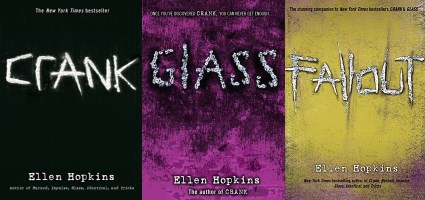
ellen_hopkins_coversEllen Hopkins is by far one of my all-time favorite authors. Her novels, which are written as free verse poetry, deal with very real, very difficult, issues faces by teenagers. While she is primarily known for her Young Adult novels which include: Crank, Glass, Fallout, Burned, Impulse, Perfect, Tilt, Identical, and Tricks, with a sequel to to Burned (Smoke) planned to be released in September of this year, she has also written two books for adults: Triangles and Collateral. She has won several awards for her novels, including multiple awards for the Crank trilogy.

Ellen Hopkins’s novels often take readers to a darker side of human nature, dealing with topics such as teen drinking, drug use, suicide, and sexual content, and as such make her novels are a best fit for high-school aged readers. That being said she handles these issues with a great deal of poise and insight. Her books take a look at not only the issues, but the underlying causes of them. Hopkins raises some tough questions and really causes the reader to think.

Even though her novels deal with some heavy topics, they are very captivating to read. Her novels feature strong characterizations and engaging plot lines. Even if the reader had never had to deal with the issues being presented there is a strong sense of connection between the character and the reader. Hopkins avoids writing stereotype heavy teenage characters and really creates a believable person. The adult characters (mainly parents and other family members) are also very well developed, something I feel most YA novels fail to do.

While her novels tend to be on the longer side, typically well over 400 pages, the story lines move quickly because of the free verse style that they are written in. The formatting itself adds a lot to the story, sometimes the words of a poem forms pictures, other times certain  words are set apart from the rest of the poem for added impact. This is also true of the dialogue which makes it easy to follow something I think most novels composed in a free verse format don’t do well.

Hopkins’s first YA novel, Crank, was published in 2004. Crank tells a fast-paced story about a young girl named Kristina Georgia and what happens when her alter-ego “Bree” takes over and she finds herself spiraling into addiction of crystal meth. I found this novel to be very intriguing and very believable, part of which probably has to do with the fact that is it based on the addiction of Hopkins’ own daughter.

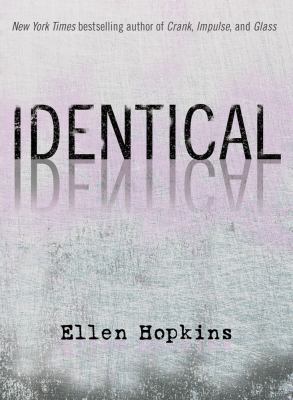
identical_coverMy favorite novel by Hopkins is a tie between Identical, which drew me in quickly and continues to demand my attention all the way through to the final shocking plot twist, and Burned, which deals with abuse and left me wanting more to know what happens next.

Ellen Hopkins is an amazing author and her novels are truly a must-read for anyone looking for a captivating preservative on tough issues.

-Angela J., 12th grade