New England Clam Chowder

The creamy soup in this New England Clam Chowder dish is infused with flavorful bacon, succulent clams, basic spices, and perfectly cooked potatoes. You’ll believe that this is restaurant quality!

  • Ingredients:
  • ▢ 6 strips thick-cut bacon
  • ▢ 2 tablespoons butter
  • ▢ 1 medium yellow onion
  • ▢ 2 ribs celery
  • ▢ 3 cloves garlic
  • ▢ 1 teaspoon hot sauce
  • ▢ 1 teaspoon Worcestershire sauce
  • ▢ 1/3 cup flour
  • ▢ 1 cup chicken broth
  • ▢ 3 cups Half and Half
  • ▢ 8 oz. clam juice
  • ▢ 1 chicken bouillon cube
  • ▢ 1 bay leaf
  • ▢ 1 ¼ lbs. potatoes, see notes
  • ▢ 3 (6.5 oz. cans) chopped clams, juices reserved
  • ▢ Fresh parsley & Freshly cracked pepper, for serving
  • ▢ ½ teaspoon each: dried oregano, dried parsley
  • ▢ ¼ teaspoon each: dried thyme, salt
  • ▢ 1/8 teaspoon each: smoked paprika, pepper
  • Directions:
  • 1. Cook the bacon in a 4.5-quart soup pot slowly over low heat. While the bacon cooks, measure out the remaining ingredients. Once the bacon is cooked, set it aside on a paper towel-lined plate. Chop once cooled and reserve 2 tablespoons of bacon drippings.
  • 2. Wipe any dark spots from the pot but leave as many bacon remnants as possible, adding flavor to the soup.
  • 3. Add reserved bacon drippings and butter to the pot over medium heat. Add the diced onions and celery. Toss to coat and soften for 5-6 minutes. Add the garlic, hot sauce, Worcestershire sauce, and seasonings. Cook for 1 minute.
  • 4. Add the flour and cook for 2 minutes stirring continuously, until the raw flour smell is gone.
  • 5. Add the chicken broth, stirring continuously, and add the half and half in the same manner.
  • 6. Stir in the chicken bouillon- and add the bay leaf. Add the juice from the canned clams to the soup, but don’t add the clams yet. Stir in the additional clam juice.
  • 7. Bring the soup to a gentle boil, then reduce it to a simmer, so that it’s just gently bubbling. Simmer for 20 minutes, partially covered. Stir occasionally as it cooks.
  • 8. Peel and dice the potatoes and add them to the soup. Bring back to a very gentle bubble and let the potatoes cook through for 20-25 minutes, until fork tender. Reduce heat to low.
  • 9. Stir in the clams and let them heat through for about 5 minutes. Remove the bay leaf.
  • 10. Ladle soup into serving bowls and garnish with roughly chopped parsley, fresh pepper, and chopped bacon.

Enjoy!

The Best Chocolate Chip Cookies Ever

Anyone who stays at the DoubleTree knows that the best part is the warm welcoming cookies homemade by the hotel. If you are opposed to making a reservation just for the famous cookies, this recipe is just for you.

Ingredient List:

Chocolate Chip Cookies

  • ▢ 1/2 pound of softened butter (2 sticks)
  • ▢ ¾ cup + 1 tablespoon granulated sugar
  • ▢ ¾ cup packed light brown sugar
  • ▢ 2 large eggs
  • ▢ 1 ¼ teaspoons vanilla extract
  • ▢ ¼ teaspoon freshly squeezed lemon juice
  • ▢ 2 ¼ cups flour
  • ▢ 1/2 cup rolled oats
  • ▢ 1 teaspoon baking soda
  • ▢ 1 teaspoon salt
  • ▢ A pinch of cinnamon
  • ▢ 1 3/4 cups chopped walnuts (optional) 
  • ▢ 3 cups semi-sweet chocolate chip
  • 1. Preheat the oven to 300°F
  • 2. Cream butter, sugar, and brown sugar in the bowl of a stand mixer on medium speed for about 2 minutes.
  • 3. Add eggs, vanilla, and lemon juice, blending with a mixer on low speed for 30 seconds, then medium speed for about 2 minutes, or until light and fluffy, scraping down the bowl.
  • 4. With the mixer on low speed, add flour, oats, baking soda, salt, and cinnamon, blending for about 45 seconds. Make sure not to overmix.
  • 5. Remove bowl from mixer and stir in chocolate chips and walnuts.
  • 6. Portion dough with a scoop (about 3 tablespoons) onto a baking sheet lined with parchment paper about 2 inches apart.
  • 7. Optional: Sprinkle a pinch of salt on top of each cookie to create a salty and sweet masterpiece.
  • 8. Bake for 20 to 23 minutes, or until the edges are golden brown and the center is still soft.
  • 9. Remove from the oven and cool on a baking sheet.

Enjoy!

-Harrison S.

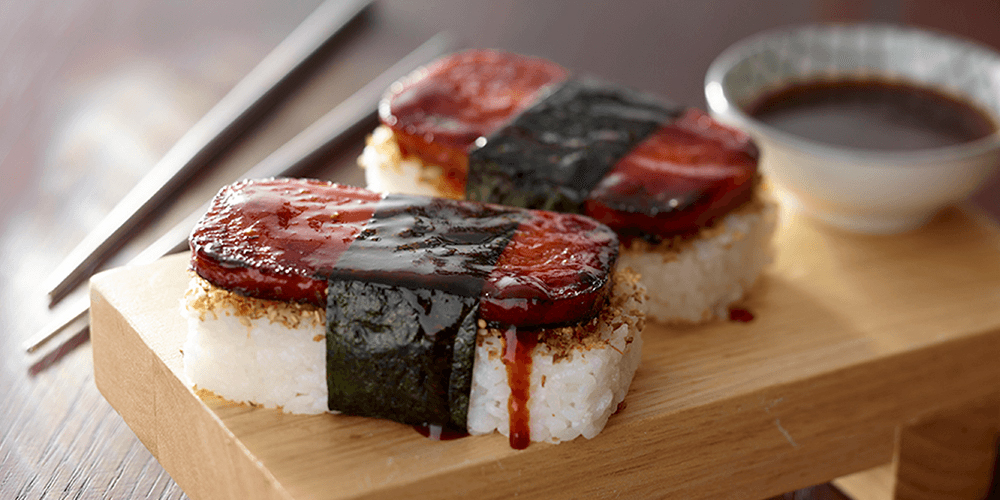
How to Make Spam Musubi

Spam musubi is one of my personal favorite snacks to make whenever I have free time. Its a very simple dish to create using only a few ingredients.

Ingredient List:

Spam Musubi

  • ▢ 1.5 cup/310g Rice (uncooked)
  • ▢ 1 tbsp Toasted sesame seeds
  • ▢ 1 Nori seaweed sheet 
  • ▢ 1 can of small Spam 7oz(200g)
  • ▢ 2 tsp vegetable oil

Spam Sauce 

  • ▢ 1 tbsp soy sauce
  • ▢ 1 tbsp sake
  • ▢ 1 tbsp rice vinegar
  • ▢ 1 tbsp sugar
  • ▢ 2 tsp Katakuriko (potato starch)
  • ▢ 1 tbsp water
  • 1. Cook rice by the instructions listed on your rice cooker.
  • 2. Once the rice been cooked, sprinkle toasted sesame seeds into the rice.
  • 3. Slice the spam ham into 6 even slices.
  • 4. Heat a frying pan over medium heat with vegetable oil
  • 5. Add Spam. Cook and brown each side for about 2-3 min.
  • 6. Set aside the cooked spam slices. Then place all ingredients into the pan and reduce the heat to low.
  • 7. Stir continuously until thick, put the Spam slices back into the frying pan and coat the spam with the sauce. Turn the heat off.
  • 8. Next is to assemble the Spam. I like to use a specific mold for Spam, but if you don’t have one there is a very easy alternative. Line a washed spam tin with cling wrap and put 1/6 of the cooked rice into the tin.
  • 9. Press the rice down with your hand. Add a piece of spam on top and press.
  • 10. Remove the spam and rice, place the nori strip over on the centre of the spam and wrap over the musubi.

Enjoy!

-Harrison Schreiman

Authors We Love: J. D. Salinger

J. D. Salinger, or Jerome David Salinger, was a famous American writer whos works are most notably known in the hit novel Catcher in the Rye and “A Perfect Day for Bananafish.”

Similar to Holden Caufield, Salinger was also raised in New York, attending New York and Columbia University. Salinger shortly after chose to stick with writing, and began having his work published in news articles and magazines in the 1940s.

In 1942, Salinger was drafted into the U.S. army. He was an interrogator, and questioned prisoners of war on the Italian and French side. Salinger was also deployed on D-Day, and continued to fight in the Battle of the Bulge.

Throughout this tough time in his life, Salinger was known to even keep his writings with him while in battle. He witnessed German concentration camps firsthand, and saw the many horrors of WWll with his own eyes. Salinger was shortly after hospitalized for post-traumatic stress.

After his return from the Army, Salinger continued to focus on his writing. His first book that gained a substantial amount of traction was “A Perfect Day for Bananafish.” The book includes a character named Seymour Glass, who spends an afternoon on the beach with a little girl he meets, before taking his own life soon after.

His work had even grown so popular, Salinger’s story of “Uncle Wiggily in Connecticut” was made into a movie titled “My Foolish Heart.” The movie had been adapted so poorly that Salinger refused to ever sell the rights of his story to a production studio again. Even the record breaking novel ‘Catcher in the Rye’ has yet to be adapted into film because of Salinger’s disappointment.

Salinger’s first and only full-length novel was published as of July 16 1951. Catcher in the Rye took the world by storm when released, and is still seen being taught in the high school curriculum. The novel starring Holden Caufield was a Fiction Finalist for the National Book Award, but has surprisingly never received an official award.

Salinger was known to live in solitude, settling in a 90-acre chunk of land in Cornish, New Hampshire. Salinger stated that this secluded life was to not be interrupted during his important working years.

Salinger published his last works in 1963, having the collection take up almost the entire magazine. After this, his life was primarily filled with love affairs and family complications, never able to return to writing. Salinger had made it clear that he still continued to write, but that none of his works would be published until after his death.

Up until the day he died, Salinger continued to live in Cornish. His work is still unpublished as of writing this blog, and fans of Salinger’s work have been speculating the reason for this since his death in 2010. Salinger’s son had stated that the family is doing everything they can to get the posthumous book published as soon as possible.

Salinger set the stage for many upcoming writers to have confidence in their work, and was an example that many looked up to. His work continues to inspire readers like me to this day, and will be an unforgettable figure in novels.

-Harrison S

Several titles by J. D. Salinger are available to check out from the Mission Viejo Library. Some titles are also available to download for free from Libby.