All the Light We Cannot See by Anthony Doerr

allthelightwecannotsee_anthonydoerrNormally, books about World War II are excruciatingly sad, desperate, and hopeless. Yet All the Light We Cannot See comes a hopeful theme and relief from the classic WWII historical fiction novel. Told in a series of sections from different parts of the war, switching between the past and the present, this novel tells the story of Marie-Laure and Werner and the people they encounter throughout the years.

Marie-Laure, a young French girl, lived with her father, the locksmith of the Natural History Museum in Paris. At a young age, she lost her vision, so her life was completely dependent upon her father. Her father took this to heart, building a mini scale model of their city for Marie-Laure to memorize, to the point that she could get around the city unaided.  She even counted storm drains as she walked the museum every day. When the war started, Marie-Laure and her father evacuated, bringing them closer to the action of the novel.

Werner, on the other hand, grew up an orphan in the Zollverein, having the whole responsibility for his younger sister. In order to prevent his future being consumed by working in the coal mine, he applied and received acceptance into one of the government’s schools on account of his extraordinary talent for working with radios. The novel tracks how Werner felt and reacted to what the Nazi party committed during the war, providing a unique perspective on Nazi life.

The novel’s plot is thick with questions, as the novel follows many characters other than Marie-Laure and Werner. With stories about Marie-Laure’s father, a German Sergeant, Werner’s friend from school, and the infamous Sea of Flames diamond, the novel is crafted in an original way that carries the story forward but provides enough details to immerse the reader into the action.

This is certainly a book that is difficult to put down. With so much going on, it was hard to leave one character’s story for a chapter to catch up with the other characters. I would definitely recommend this novel though there are some parts that are sentimental.

– Leila S., 11th grade

All The Light We Cannot See is available for checkout from the Mission Viejo Library. It is also available for download from Overdrive.

Jane Eyre by Charlotte Bronte

janeeyre_charlottebronteAs it seemed to Jane Eyre, she would never be equal to her cousins, neither in status nor in physical appearance. From all angles, she was just a plain orphan, whom Mrs. Reed kept under her care only at the request of her late husband, Jane’s uncle. Constantly chided, blamed for things outside of her control, or treated like a pest, Jane’s early life was not easy.

Before long, she was sent to Lowood, a boarding school for orphaned girls, where she experienced a whole new life, though not necessarily better than her former years. She no longer had any sort of family to return home and the living conditions at Lowood were not any to be rewarded. Her eight years as a pupil did not end, however, as she continued on to become a teacher, and eventually sought a governess position elsewhere in England.

That brings Jane to the center of her story: Rochester Hall, with the stern-faced master, elderly housekeeper, spoiled French pupil, and the mystery within plaguing its halls. Before long, Jane’s governess position becomes more complicated, as she deals with Mr. Rochester. To tell you what happens from there, I would be ruining the story. But this is not even half of the story yet, as Jane embarks on a sort of journey that changes her life. That sounds extremely cliché, but it’s what happens. The events Jane experiences are so extraordinary that they do not seem realistic, but at the same time, I loved the ending.

My favorite part of this novel was the blunt way everything was depicted. Though disguised in flowery, 19th century English, Jane is quite to the point about everything she notices, and Bronte’s storytelling truly draws the reader in. Admittedly, it took me a while to read the novel because adjusting to the older style of English was difficult, but I could not have been happier to finish the book!

– Leila S., 11th grade

Jane Eyre, both the novel and its numerous television and film adaptations, is available for checkout from the Mission Viejo Library

Pride and Prejudice by Jane Austen

prideandprejudice_janeaustenWhat has made Pride and Prejudice, Jane Austen’s 19th century book, so timeless? We no longer live in an era where the only way to do well is to marry well. But, as it turns out, not much is different.

People today hold prejudices, albeit of different scales. What makes this an issue is if a person acts on those prejudices, without getting to know the truth. For example, I don’t like papaya or kiwi. I don’t remember if I actually tried the fruit when I was younger, but to this day, I refuse to eat the fruit. Maybe I had tried one bad kiwi, or had been influenced when my sister got sick after eating papaya. either way, I never tried it again. My pride comes into play, because I never want to be proven wrong. What if I ate a kiwi and loved it? Then I would be embarrassed for my embargo that has lasted my whole life so far. So to me, it’s best to never risk it.

Thinking about it now, this is definitely the wrong way to go about things. It may not seem serious, but this issue becomes serious in other circumstances. What if, instead of hating a type of fruit, someone hated a group of people? Maybe this was only because of one bad experience they had (or even heard about). Sometimes this hate can even be unfounded. People constantly make generalizations about people, which add bias to their actions, and they forget the most important virtue: to understand.

People need to understand why another person might have acted a certain way. It’s unfair to make judgments about a person without actually getting to know them. Elizabeth, in Pride and Prejudice, proved this. She was cold toward Mr. Darcy the entire book, thinking him a stuck-up, unfeeling man, and she was content in thinking this. But she soon found how much she was missing, finding out what Mr. Darcy had actually done (rather than hearing it in rumors from Mr. Darcy’s “enemy”) and seeing how kind and good-hearted Mr. Darcy had been to help Lizzy’s sister. (Spoiler alert!) Once she got to know him, her opinion widely changed.

Before long, her prejudices were broken, though perhaps not entirely gone. Before, she was too proud to admit that she could be wrong, but by the end, she realized her mistake. She then had to convince others of her feelings, since her previous prejudices had rubbed off on the rest of her family. Long story short, she had a lot to learn by getting to know another person. Just by giving him a chance to explain himself, Elizabeth radically changed her (and Mr. Darcy’s) life.

Thus, a lot can be learned from Jane Austen’s novel. I mean, for me, I’m definitely going to try kiwi this weekend. But for the rest of my life, the message of Pride and Prejudice will stay with me. I hope that those of you who have read this classic will keep the message in mind. For those of you who haven’t read the book, I truly recommend it.

-Leila S., 11th grade

Pride and Prejudice is available for checkout from the Mission Viejo Library.

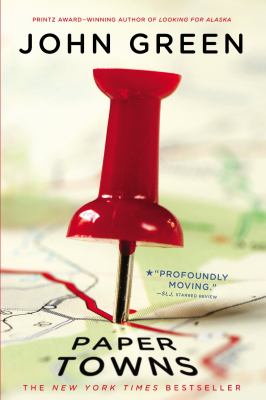
Paper Towns by John Green

papertowns_johngreenWhen I first saw this book, I thought it was kind of weird. I didn’t suspect that the title actually meant something. But after reading other well-known John Green books, I decided to read it. I had heard a lot about the novel—it’s one of my friend’s all-time favorite books—but it was only recently that I gave it a chance.
To be technical, paper towns are “created to protect against copyright infringement” (307). Essentially, they are just made-up towns put on a map by cartographers who wanted to make sure no one plagiarized their design. An interesting idea, but it sounded fake to me. How wrong I was. In “Fun With Copyright Traps: 10 Hoax Definitions, Paper Towns, and Other Things that Don’t Exist,” Crezo pointed out that on the border between Ohio and Michigan, two cities were inserted: Beatosu (Beat OSU) and Goblu (Go Blue), both of which were made up to support the University of Michigan teams and later found out and forcibly removed!

Margo, and in turn Quentin and his friends, develop a fascination with these towns which leads them to leave their high school graduation for a wild adventure in search of Margo. Through all this, the reader learns subtle lessons about life–even if that sounds cliché, that is exactly what someone is left with after reading the book.

This book was fantastic. It’s one of those books that requires your attention. You can’t just read it and forget about it after. Compared to John Green’s other novels, this book certainly dealt with larger issues, but it was still touching in the way all good novels should be. This is the type of book I would love to read again in 10 years, just to see how I have changed and if I can find new meaning in the book. Overall, though, this is a 9 out of 10!

-Leila S., 10th grade

Paper Towns and its feature film adaptation is available for checkout from the Mission Viejo Library. It can also be downloaded from Overdrive

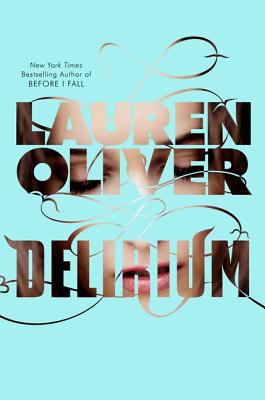
Delirium by Lauren Oliver

delirium_laurenoliverWhat would happen if love were outlawed? If it were eradicated from society, with all teenagers given a “procedure” which prevented them from feeling strong emotions?

This is the basis around the life Lena lives. Her mom committed suicide after Lena’s father died because she loved him, unlike the other couples who learned to live with one another. Lena’s older sister was also in love and had to be dragged to her procedure. Now, everywhere Lena goes, the story follows her, words of suicide and diseased.

But everyone claims the procedure is the cure. After that, people can live normal lives, go to college, get paired and married, and have the exact number of children the government requires. All the “cureds” are protected from the Invalids, those who are diseased with amor deliria nervosa, by barbed wire fences and guards. Regulators within the city keep everyone in line, at home before curfew and safe from the sympathizers who might pose a threat to their fragile society.

Sounds perfect, right?

Not quite.

All this supposed safety comes with a price. No one can be seen in public expressing any sort of strong feelings. Even parental love, such as between Lena and her mom before the suicide, had to be hidden. No loud music can be played; the only music even allowed is on the government’s list of approved songs. The same goes for books.

Lena had been living a normal life, looking forward to her cure and the chance to forget the pain associated with her mother’s death. She spends every second with her best friend, Hana. Yet at her evaluation, which rates her to be paired with a suitable future husband, something happens. It is quickly covered up with a lie from the government, but knowing the truth changes her view of her life.

And then there’s the boy who was standing on the observation deck throughout the whole thing, laughing…

I thoroughly enjoyed this novel. So many things which seemed predictable at first actually took me by surprise. I truly couldn’t put down this book and I finished it in less than two days, though I could have read it faster if I didn’t have an appointment. I recommend this book to anyone, though younger audiences might struggle with some of the content. Plus, like any good book, it also made me cry, but in a good way.

– Leila S., 10th grade

Delirium is available to check out from the Mission Viejo Library

Enrique’s Journey: The True Story of a Boy Determined to Reunite with His Mother by Sonia Nazario

enriquesjourney_sonianazarioTo be honest, this book had been sitting on my shelf for a while before I thought to read it. To me, it seemed interesting, but I wasn’t so sure. I was used to fast-paced, dystopian novels, not true accounts. So when I picked it up and saw a map on the first page, I was skeptical.

But of anything that I’ve read recently has a deep meaning, it’s this. This story follows Enrique, a young teen from Tegucigalpa, Honduras. When he was five years old, his mother, Lourdes, left him to go to the United States, in hopes of getting a job and helping the financial situation of her family. Her plan was to be gone for only a short time, an idea which was further fomented by pictures of rich cities in the United States. So when she arrived in the US, her plan did not go as she expected.

For young Enrique and his sister, Belky, it was hard to see their mother so far away. They could not imagine why she would want to leave them. Added to that was years of false promises of her return, and the children were not happy. Enrique was affected most of all. His life became difficult in the Honduras. He decided not to go to school anymore. He sniffed glue and was high more often than not. His family, and his girlfriend, worried about him.

At this point, Enrique cannot be stopped. He has decided to hitch-hike his way all the way to the United States, on top of trains and through the countryside. This is an extremely dangerous undertaking, because of the threat of gangs and migrant police and general disdain for migrants, not to mention that riding atop a moving train is not exactly the safest way to travel. This story follows Enrique as he makes not one but eight trips to try to get to the Mexican-American border, and the hardships and joys he experiences along the way.

It was truly eye-opening to read this story. In light of political comments about immigration in the United States, it was interesting to see the argument from the other side. I never knew it was this difficult for people to come to the US, where they aren’t even welcomed half the time. It was honestly depressing to see how cold and selfish people can be towards other people, especially after seeing how difficult life was for people in these situations. It certainly puts my experiences into perspective.

On a related note, the author of this account, Sonia Nazario, actually made this trip herself, so she could make the story more realistic, which shows a lot of dedication to her job. So not only am I in awe of Enrique’s courage, but also of Nazario’s selflessness and willingness to do anything in order to share such an important story.

– Leila S., 10th grade

Enrique’s Journey is available for checkout from the Mission Viejo Library. It is also available to download from Overdrive

The Program by Suzanne Young

theprogram_suzanneyoung“But the psychologists say that suicide is a behavioral contagion. It’s the old adage ‘If all your friends jumped off a bridge, would you, too?’ Apparently the answer is yes” (9).

In Sloane’s world, nothing is as it seems. Any sign of depression, even just crying in public, and a teenager risks being sent to The Program, a “solution” to the suicide epidemic. Here, teenagers’ minds are wiped clean so they can start their lives again. The handlers medicate them to erase all their pain and memories, leaving all the returners “empty,” as Sloane might say.

Sloane, her boyfriend James, and their friend Miller do not agree. They would prefer to die than be sent to The Program, which makes things slightly more complicated.

Overall, I found this book to be a compelling read. I would definitely recommend it, yet keep in mind that it discusses a sensitive topic. For that reason, I would recommend this book for a slightly older audience. Even at my age, I was a disturbed by the repetition of suicide in the novel.

On a brighter note, however, the narrative was sentimental. The Program is definitely one of those books where you sympathize with the characters. From the perspective of a critic, the storytelling leaves readers with questions which are left unanswered until the very end, which makes me want to read the rest of the series.

– Leila S., 10th grade

The Program is available for check out from the Mission Viejo Library

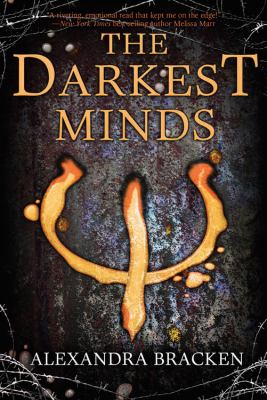
The Darkest Minds by Alexandra Bracken

thedarkestminds_alexandrabrackenHave you ever read a book that you had never seen before but upon finishing it, you wondered how it stayed out of your life? If not, you haven’t read The Darkest Minds.

In an imaginary, futuristic world, the adolescents of America and many other countries have been afflicted with IAAN, Idiopathic Adolescent Acute Neurodegeneration. Sounds scary, right? To many, yes. This disease gives the kids of the Psi generation “abilities” to see in another’s mind, to move things with a flick of their hands, to short circuit a car, the list goes on and on. The government issued a list of warning signs for parents to look for to “protect” their children, so that they can be “reformed.” So when Ruby was sent away to Thurmond, one of the government’s “rehabilitation camps” to be sorted, she was scared like any 10-year-old would be. But she had a secret to keep. One that made her more dangerous than she could imagine.

Truthfully, I was rather confused at the beginning of the novel, as I wasn’t sure where the story was going. But the mismatched events worked themselves out quickly, and now this book has made it near the top of my list of favorite books.

My favorite part was that I couldn’t put the book down. Though I had other things to be doing with my time, the book demanded my attention. I love when a book is able to make me laugh out loud one moment and make me cry the next, and this novel definitely fulfilled that requirement. I also loved that in the book, one of the characters, for more complex reasons, wrote a mini blog post, as a means of communicating with his mom. It contained a secret message only his mom could find.

But with any book, I do have a least favorite part. Little did I know, The Darkest Minds has a major spoiler for William Golding’s Lord of the Flies, which I have not finished reading for my English class! But oh well… If that’s the only complaint I have about the book, then it must be a great read! I highly recommend checking it out!

– Leila S., 10th grade

The Darkest Minds is available for check out from the Mission Viejo Public Library.

Romeo and Juliet, A Theatre Review

Recently, I sat in the audience of the Laguna Playhouse Youth Theatre in Laguna Beach as I watched actors both young and old act out Shakespeare’s famous play, The Tragedy of Romeo and Juliet. To be honest, I had no complaints about the play itself. The actors were all very well rehearsed and the performance was very polished, a difficult feat given how hard it is to read Shakespearean dialect, let alone memorize and perform it.

romeo and juliet

“Romeo and Juliet” by Frank Dicksee

Many parts which I remember from reading the play itself were identical in the stage adaption. A couple scenes were edited, but only slightly. Additionally, a few scenes were different than what I had pictured as well as from what the movie versions of the play depicts. A main example of this is the fight that the Capulet and Montague families have in the middle of the market in the beginning of the play. I imagined there to be more characters on each side while the Laguna Playhouse adaption maintained a smaller crowd. Regardless, these slight differences did not necessarily take away from the overall play. It was still very enjoyable.

If you are someone who enjoys watching student theatre productions, I would definitely recommend looking into the Laguna Playhouse productions. I have watched a variety of productions there, from Tom Sawyer to an adaption of Lois Lowry’s The Giver to The Legend of Sleepy Hollow. I have always been extremely impressed by the performances because these students are all able to produce a polished and entertaining performance in addition to handling the stress of school.

– Leila S., 10th grade

Teen Read Week: The Rites and Wrongs of Janice Wills by Joanna Pearson

ritesandwrongs_joannapearsonHave you ever watched Mean Girls? Or read anything pertaining to the stereotypical cliques found in modern high schools?

Well, that is exactly what Janice Wills, an amateur anthropologist describes in this thought-provoking novel. Janice is a self-taught anthropologist, who is conducting research on the students and people in the Southern town of Melva, North Carolina. She became an anthropologist to distance herself from others, but this has led her to become a person she doesn’t want to be, someone who makes fun of the flaws of other people. But through the events leading up to the Melva Miss Livermush Pageant, the rite of passage for all girls in the town, Janice experiences a welcome change in attitude.

This change was my favorite part of the novel. Often, it is hard to see how we appear to other people. In Janice’s mind, everything she said was from the point of view of “anthropology research.” But as her friends point out, her words are hostile. These comments give Janice an opportunity to reflect on who she is and who she wants to be, ultimately causing her to change. I loved the description of how she viewed other people after she changed, because it made me feel optimistic about the world.

Though this novel was a very simple read, it did make me think. A lot of points that Janice makes are very accurate. For instance, the way that people from different levels in the hierarchy treat each other not only connects to other literature on the topic, but also to some of my own experiences. If you’re looking for a short book to read, I definitely recommend checking this out. Though the pages fly by, the themes remain relevant long after the book ends.

– Leila S., 10th grade

The Rites and Wrongs of Janice Wills is available to checkout from the Mission Viejo Public Library.