Book Review: Double Helix, by Nancy Werlin

double_helix_coverThis book review is part of series of reviews written by students at St. Margaret’s Episcopal School for their 7th grade English classes.

I had never heard of Huntington’s Disease until Nancy Werlin introduced me to a young man named Eli Samuels, who’s mother was on the brink of death due to an incurable disease. Although she wasn’t “conscious” for years, Eli still feels it in his heart when the former Harvard professor passes away. But hope comes along in Double Helix, when a famous geneticist named Quincy Wyatt gives Eli a job at his company, Wyatt Transgenics.

The only problem with Eli’s new job is that his father, Jonathan Samuels, dislikes Dr. Quincy Wyatt. Eager to find out why, he ignores his father’s warnings and keeps working for Dr. Wyatt. This thrilling novel takes place in Massachusetts, near Cambridge. You’ll keep turing the pages to find out what happens next.

In the beginning of the book, Eli has a girlfriend named Vivian Fadiman. Eli doesn’t share much with her, like his mother and her disease. This shows a lot about Eli’s identity and how much it changes over the course of the story. The author describes Eli well in this quote, “I was consumed by curiosity… and anxiety. I’d wait all afternoon if I had to” (page 3). Near the beginning of the book, he was anxious to meet the famed geneticist and was very curious of his summoning. Later in the book, his view on things change and became more broad.

One of the major themes in the book Double Helix is that suffering should not be avoided. Sometimes suffering happens, and you have to accept it, not change it. If you pick up this book, you can figure out the mystery of Eli’s parents and Dr. Quincy. Additionally, another theme is that sometime secrecy can be bad. Although you might want to keep secrets to keep one safe, all secrets have faults and eventually will be found out and maybe even result in trust issues.

Another thing I liked about Double Helix was the writing approach that Nancy Werlin took towards this book. She uses many scientific words and terms that are real. One time in the book, Dr. Wyatt and Eli even have a long debate about the world and the way it works. They talked about human choices and free will. Some of their dialogue was like this, “…said Dr. Wyatt. ‘I concede that most humans like to believe in free will. Or call it a soul, is you must’…” (page 52-53). Nancy Werlin uses a wide range of vocabulary, but still gives each character a different personality.

Nancy Werlin’s book Double Helix is an intriguing novel with even more interesting characters. the themes are solid, and the intellectual side of the book is clear. The resolution of the story will keep you wanting more. This is a truly great book, and I recommend for a wide range of readers to read this.

-Andy S., 7th grade

Book Review: Hoot, by Carl Hiaasen

hoot_coverThis book review is part of series of reviews written by students at St. Margaret’s Episcopal School for their 7th grade English classes.

Should helpless owls die just because nobody knows about them? In the book Hoot, by Carl Hiaasen, the author took me to Florida where the main character has moved. This is a story about a boy and his friends trying to save owls and their dens that will be destroyed if construction is not stopped. These kids are determined to be the ones who stop it.

Roy Eberhart has moved to Florida because of his father’s job. Prior to this move, Roy became the new kid at his school. Naturally, a bully named Dana Matherson starts to pick on him. Roy hates everything about Florida, the bullies, and the fact that it is so flat. However, this makes biking easier than in the mountains. Roy later befriends Beatrice Leep who helps him with his bully problem. Beatrice is a strong girl that no one dares to get in her way. Mullet Fingers is fixed on saving the owls. He is so steadfast about saving the owls, that he will do anything. The last important character is Officer Delinko. He is an officer that is trying to figure out the person that is vandalizing the construction site.  Officer Delinko is determined to find the vandal in order to clear his name.

Mullet Fingers is the reason that I loved this book. His dedication to the saving the owls is so touching. I thought it was good the way that the author made him so selfless. He doesn’t care what condition he is in; he will do anything in his power to save the owls. He is the reason that there is so much suspense in the book. You will just want to keep on reading the book because of him. “There’s only one way to find out.” (179) Mullet Fingers leaves you hanging so you just have to continue on.

The idea of owls being killed is absurd. However, that is what is going to happen if Roy, Mullet Fingers, and Beatrice don’t stop the people from proceeding with construction. Roy is struggling to find ways that he can save the owls while struggling with Dana Matherson.

One of the major themes in this book is never give up. Don’t let someone tell you that you can’t do it. Mullet Fingers never let anyone stop him when they thought that it was dangerous.  The last obvious theme was curiosity could get you involved with things. Roy’s life would have been normal if he hadn’t been curious. “The running boy was way ahead of him, but Roy figured he could stay close enough to keep him in sight.” (15) If Roy doesn’t continue on being curious, who knows what might happen to those owls.

Hoot made me sympathize with characters. It made me feel like I should make a difference. Anyone can make a difference. Even students in middle school can change the outcome of something. In this way it inspired me. Not only did it make you feel like you can make a difference, it showed me that bullying is a real problem. It made me feel sad for Roy because he is being bullied. I think that this was a good way to capture the reader’s attention a little more.

One thing that I did not like about this book was the word choice. I think in some places of the book, the author shouldn’t have used some words. Also, one thing that I think this book lacked of was suspense. Mullet Fingers was the only character that I felt added suspense to the book. Other than him, the book was very straightforward.

Innocent owls shouldn’t be killed just because they can’t fend for themselves. If you want to know what the fate of these owls are and what Roy did about Dana Matherson, you’ll just have to read the book.

-Grace M., 7th grade

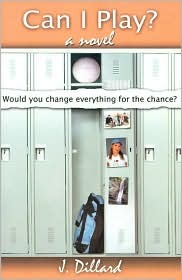
Book Review: Can I Play?, by J. Dillard

can_i_play_coverThis book review is part of series of reviews written by students at St. Margaret’s Episcopal School for their 7th grade English classes.

Would you change everything for the chance?  In Can I Play?,  that is exactly what Keli Stennes does when she moves from small town girl to big time reality.

J. Dillard created Keli with a rare desire for volleyball, meaning she will do anything she can to reach her goal: a volleyball scholarship. This novel captures Keli’s journey as she meets decisions and bumps into problems, that involve people surrounding her in her life.

I have never read a more inspiring and motivational book. Not only has it taught me more about volleyball, but the desire and motivation from Keli, the main character, is unreal.

This story takes place near the Cascade Mountains, where there are school rivalries between small towns and big cities. Two schools, the Falls City Mountaineers and Dallas Dragons are rivalries in almost all sports. Falls City is the small town in which Keli exchanges for the Dallas school. Keli still lives in Falls City, but drives to Dallas everyday for school. This new city is a big step up for a small town girl.

Keli Stennes is a whole-hearted girl who has volleyball written all over her. She is the Queen of the Jumps, meaning she can jump higher than anyone else on blocking. She is an aggressive 5’11” outside hitter who can hammer the ball almost straight down during games. “She fed her the ball every moment she could with the same results… kill after kill”(pg.191). She is a loving girl who supports her single mother and grandfather since her father’s death. Keli also has respect for everyone around her. She is very friendly to her old and new classmates and teammates. Keli’s mom, Cindy, helps her make the right decisions to guide her life in the right direction. Cindy is always right by Keli’s side with love and support as she goes through her journey, becoming a fonomanal volleyball player. Growing up in Falls City, Cindy is used to the “tight population of 800” (9),  but when Keli changes schools, it opens a whole new world she’s never been in, pushing her to meet new people. Being a widow, Cindy tended to feel lonely at times but started to find love again after reuniting with an old friend.

Ashley is the best setter in the state, and also Keli’s best friend. Ashley faces some difficulties of her own and thankfully has Keli to catch her when she falls. Like Keli, one of Ashleys parents pasted away when she was a little girl. But her dad and Keli’s mom oddly enough became an item. Ashley has always been a Dallas Dragon. When she and Keli met each other at summer camp, they instantly became close and she is the one who convinced Keli to change schools. All is well when they both get on varsity until Ashley’s cousin becomes very sick and ill due to bad decisions with dangerous people.

Back at Falls City, Kelli was the celebrity star of the team. After being convinced by her best friend to change schools, her “old” friends turn on her and she makes new ones. But then she is stuck with the terrifying decision to choose between two boys,  one “she knew her whole life (and) a true real friend”? (242). As Keli makes her way onto the Dallas varsity team she goes to  the coaches office every day after school to receive advice and knowledge to improve her game. She also even takes instruction from Ashley, her best friend who is the setter on the varsity team as well. Suddenly Ashley’s cousin Greta becomes sick due to fooling around with a boy she was forbidden to see. But after she heals, all is good, there is peace between schools, but now there is a new problem. A BIG one.

Through my eyes, the theme of the story was to never be afraid of failure. I think this an important theme because a lot of us are always afraid to either be ourselves, put ourselves out there, or take risks because we don’t know what the outcome will be. Life is about being yourself and letting others put themselves out there and not to judge them back. This captures the story through my perspective.

Personally, I really enjoyed reading this book. I like how it is about my passion volleyball. Keli is a girl who has an incredibly rare desire for the game. It is truly an inspiration. The way the varsity girls played the game in the novel made me think I can do anything if I set my mind to it! I would recommend this book to anyone who is passionate about volleyball. Reading this book reminded me why I love the game so much.

-Nia M., 7th grade

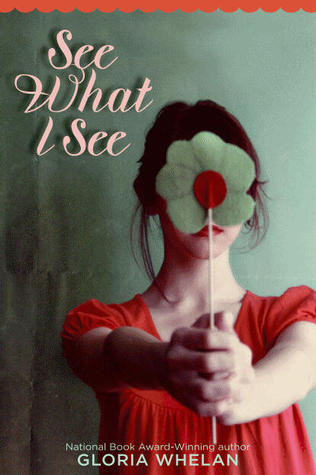
Book Review: See What I See, by Gloria Whelan

see_what_i_see_coverThis book review is part of series of reviews written by students at St. Margaret’s Episcopal School for their 7th grade English classes.

The amazing story of endurance and troubled relations, See What I See was so very interesting because of the well thought and creative plot. Gloria Whelan, writer of See What I See, brings a lot of feeling to her story and makes it emotionally appealing to everyone.

I found this book even more intriguing because of my favorite character, Kate Tapert. This young girl creates an even more unpredictable set-up and her reactions alone are what I continue to read for. Kate was accepted into an art majoring college, miles away from her trailer home and she needed a place to stay. Her only choice was nothing but to stay with her long-forgotten, divorced dad for the year. As she continues to pursue her dream to be a famous artist, Kate has the attitude of a pickle jar and a heart of gold.

Dalton Quinn, Kate’s father and a very famous painter, is also one of main problem-makers in Kate’s life. After disappearing and falling seriously ill, Dalton falls deep into his hole of miserableness and loss. He receives numerous letters and paintings from his beloved daughter not bothering to write one back. When Kate moves into his house without notice, he becomes even more stubborn and ill. His personality is stubborn and he repeats to Kate, “I don’t need anyone to do things for me, certainly not an amateur artist…” (Page 43). His illness takes over him and leaves Kate to wonder if it was alright to leave her father home alone during the day or continue to attend art school. His attitude is one that stands out and catches my attention.

Ms. Tapert is the mother of Kate and waitress at a hotel restaurant in Connecticut. After her husband left her and ran to another state, she’s been working everyday as a waitress and collecting tips to pay off the rent on their trailer house. She is as stubborn as Dalton and even replies saying, “I’m not going to move into a house paid with Dalton’s money” (Page 16). Even with a chance to receive some of Dalton’s money, Ms. Tapert is too proud to receive any amount. She’s always reluctant and despised even the idea of her daughter moving into Dalton’s house.

The complicated relationships of all these characters make a vivid scene that greatly impacts each other. Gloria Whelan did a wonderful job creating different situations where opposite personalities and ideas combine to create one. As you read on you can figure out the relationship of the family altogether and how Kate would figure out how to manage her life and dreams at once.

Woven throughout the book, Gloria Whelan has added in the idea of pursuing your own passion and finding your own path to complete it. Staying determined and accepting the many challenges is one of the great lessons that I learned from reading this book. Kate Tapert was used as a great example for this and everyone can find some way to relate to her.

Gloria Whelan did a great job explaining each scene and its story really captivated each moment. Read Gloria Whelan’s See What I See to see if Kate really does stick to what she loves, and what her father truly thinks about Kate and her mother. I encourage everyone to read this because it is truly inspiring and has a strong moral in it. See What I See is a great book to read during your own time and to learn more about what your own passion is and seeking it.

-Alice L., 7th grade

Book Review: Flowers for Algernon, by Daniel Keyes

flowers_for_algernon_coverThis book review is part of series of reviews written by students at St. Margaret’s Episcopal School for their 7th grade English classes.

Have you ever wondered what it would be like to live in a world where you don’t know how to read, write, talk correctly, and have people stare at you like you’re stupid? Flowers for Algernon is a great book that immerses you in the life of someone who has all of those disabilities. In Flowers for Algernon, our brilliant author Daniel Keyes takes us on an ambitious walk through a disabled persons shoes, all the while trying to incorporate them into everyday society. He first thought of writing this book when he met a challenged young man and thought how good it would be if there were techniques to help him and others like him. Flowers for Algernon visits the point of view of how a disabled person might feel about this transition, rather than just how we might feel about it.

Charlie Gordon is 32 years old and lives by himself in a small New York apartment. All his life he’s struggled with a severe learning disability keeping him stuck at simple, and simultaneously making him a social outcast. Charlie has always desired to be smart to gain his mother’s approval, but he simply couldn’t retain knowledge. Coincidentally he is part of a research study where he takes basic tests and writes progress reports everyday so they can observe his development. “Dr Strauss says I should rite down what I think and remember and every thing that happins to me from now on. I don’t know why but he says its importint so they will see if they can use me. I hope they use me because Miss Kinnian says maybe they can make me smart. I want to be smart” (3).

In the lab, Charlie befriends two key people: Dr. Straus and Alice. Alice is Charlie’s best friend, motivational coach, helper, and first love. She is also Charlie’s first step into having a social relationship. Dr. Straus is the person who takes Charlie’s progress reports and analyzes them. He observes Charlie in therapy and examines his maturity.

One day the lab has Charlie race a mouse called Algernon in a maze. Much to Charlie’s aggravation Algernon beats him every time. The reason for Algernon’s success was entirely due to an operation performed on his brain, which super charged his intelligence and problem solving skills. Realizing Charlie would be a perfect candidate for this surgery, Dr. Straus hoped to test it on him as the first human specimen. Charlie eagerly jumps on this opportunity and the surgery is performed. Afterwards Charlie can’t see much of a difference, but little by little his intellect progresses; so rapidly in fact that he even surpassed his doctor. Unfortunately, our mighty mouse Algernon starts to display signs of digression. “When he found himself moving along the unfamiliar path, he slowed down, and his actions became erratic: start, pause, double back, turn around and then forward again, until finally he was in the cul-de-sac that informed him with a mild shock that he made a mistake. At this point, instead of turning back to find an alternate route, he began to move in circles squeaking like a phonograph needle scratched across the grooves” (212). Charlie fearfully starts to wonder if the same fate is inevitable for him… “What eludes me is the reason for his regression-is it a special case? An isolated reaction? Or is there some general principle of failure basic to the whole procedure? I’ve got to work out the rule” (213).

Flowers for Algernon is cleverly written from the perspective of the writer as though it is the main character’s journal. I really enjoy the fact that I can physically see Charlie’s intellectual progression in writing throughout the book. It really made his character come alive in a way I hadn’t experienced before. Flowers for Algernon also made a bold clarification between social disabilities and mental disabilities, as people sometimes assume they are one and the same. I highly recommend this phenomenal book, as it will give readers a fresh perspective on the true motives behind helping people adapt to our society. Is it really for our benefit, or for theirs?

-Jake K., 7th grade

Book Review: The Fault in Our Stars, by John Green

fault_in_our_stars_coverThis book review is part of series of reviews written by students at St. Margaret’s Episcopal School for their 7th grade English classes.

Two sick teenagers, destined to fall in love. Even if love is a powerful force, so is cancer, and in the small amount of time left for the two teens, Hazel and Augustus, love is what is keeping them alive. In The Fault In Our Stars, bestselling novelist John Green illustrates cancer in deeply moving, yet at times light-hearted, words. He mixes young love and the possibility of death into an emotional and memorable novel.

The story of their love is told by Hazel, a sixteen year-old girl with lung cancer, and surviving by luck with Phalanxifor, a drug that is designed to stop the growth of cancer cells, but it doesn’t work with seventy percent of the people who use it.  In Hazel’s life, she sees her job description as “Having Cancer,” but Augustus Waters helps her realize that she can still love without causing pain.

Cancer Kid Support Group is where the sparks fly in this book, and where Augustus and Hazel first meet. Augustus Waters, known to his friends as “Gus,” is a seventeen year-old boy who has cancer in his leg and had to get it amputated years before. Gus walks with a prosthetic leg, but every time someone asks him how he’s doing, he replies “grand,” even when he is stuck inside hospital walls.  Gus is what made this novel the most memorable because of his charm, sense of humor, and absolute compassion towards Hazel.

The Fault In Our Stars is also filled with other characters such as Hazel’s mother and Isaac, who not only help to make the story more real, but also show different types of personalities.  Hazel’s mom is just another one of those protective, caring, and emotional mothers’ who will do anything for her child.  Isaac has eye cancer and struggles with the fact that even people he loves end up betraying him when he is sick or in pain. Isaac is a interesting character and friend to Gus throughout the book.

Hazel admires and even idolizes an author named Peter Van Houten, who wrote a book called An Imperial Affliction. This book that he wrote was about an eight year-old girl with cancer, and has a huge meaning to Hazel’s life.  More importantly, the true significance to the book is that it brings Hazel and Augustus together. Hazel has been wanting to meet him all her life, and when Augustus comes in, her wishes become reality. Only Hazel and Augustus understand the meaning of An Imperial Affliction.  Their discussions of the book add an interesting element, and also develop their passion for each other.

Overall, Augustus Waters is truly the most important part of this novel. Without him, this book would just be another average story about how a teen girl had cancer, but add in Augustus, and not only do you get brilliant thoughts from him, but also a classic love story that will bring you to tears. Even when Hazel is at her worst, Augustus stays in the hospital waiting room for hours because he loves her. Augustus said once to Hazel, “Don’t tell me you’re one of those people who becomes their disease. I know so many people like that. It’s disheartening” (32). Without Augustus, Hazel would have drowned in her own thoughts of living with cancer, and never truly experienced life while she was on Earth.

Despite Hazel having negative emotions towards her disease and her life, she did have her moments, and I found that she was incredibly intelligent and thought-provoking. One day, when Hazel was contemplating her life and the old sad, swing set sitting in her backyard she said, “I tried to tell myself that it could be worse, that the world is not a wish-granting factory, that I was living with cancer not dying of it, that I mustn’t let it kill me before it kills me…” (121). This is a larger theme in the story: you mustn’t let your pain or sickness take your life away before it actually takes your life away; instead, focus on loving other people.

The Fault In Our Stars deserves one of the greatest recommendations I could give about a novel, and I would read this book all over again. The word choice and different, yet intriguing, emotions and interactions with other characters puts you right in the story.  It leaves you with a new outlook on love and your relationships with others.  John Green creates a new form of “forbidden” love in this novel, and Augustus Waters, who feared oblivion said, “That’s what bothers me the most, is being another unremembered casualty in the ancient and inglorious war against disease. I want to leave my mark.”  I strongly recommend that if you want to know what happens in the end with Hazel and Augustus, read this book.  It will leave its mark on you.

-Madeline H., 7th grade

Book Review: Someday Dancer, by Sarah Rubin

someday_dancer_coverThis book review is part of series of reviews written by students at St. Margaret’s Episcopal School for their 7th grade English classes.

Everyone agrees “that Casey Quinn is an unfortunate child: no money, no father, no nothing” (9). Yes, it is true Casey has nothing… but Casey’s love and passion for dance is stronger than anything else.

In the first book Sarah Rubin wrote, Someday Dancer, “it’s true Casey’s nose is too wide, she’s freckled from head to toe, and her ears even stick out like two mug handles” (4), but she does have grace. She “has more grace in her left little fingernail than new-to-school Miss Priss Ann-Lee and all those pinky-pink ballet girls put together” (4).  Will Casey’s grace, determination, and love of dance be enough to lead her to the Big Apple someday?

It is 1959 in Warren, South Carolina. Sarah Rubin’s bonny legged Casey Quinn, is dancing in the hot dry sun where the parched grass is sprouting up through the cracks, and crunches on every turn she makes. Casey Quinn is a long legged scrawny armed girl who is freckled from head to toe. She lives with her cakewalk Queen Gran and artistic Mama who both work at the hospital as cleaning ladies. They both inspire Casey because of their strong will and strength. Casey’s family does not have much money, especially after her father died in the war a few years before. Although she has never had dance lessons before, her dream is to someday become a dancer in New York City. But she doesn’t want to become any dancer; she wants to become a “real star” (6).

One day Priss Ann-Lee, a girl who just moved to Warren who is a bully and thinks she’s the better than everyone, told Casey about an audition for the School of American Ballet in New York City. Casey is determined to find some way to make it to that audition so she can dance in New York City. It will take all of Casey’s concentration and determination in order to reach her goal.

Someday Dancer is one of the only novels that has made me want to get up and dance and inspired me to reach my goals. Sarah Rubin makes great descriptions on the setting from Casey’s point of view. For example when describing New York City Casey assumes, “There are whole states between South Carolina and New York. I’ll bet New York City makes Warren look like an anthill. In a city like that, no one would know where you came from, no one would know you were poor or your father was dead. In a city like that, I could be anyone I wanted to be and no one would laugh at me for trying” (10).

Although the setting description is amazing, Casey is the main reason I love this novel so much. Her voice and determination ring clearly and made me connect with her even more. Rubin’s detail of Casey and the others around her was so descriptive; it felt as if I was right there with them and made them seem completely real with their actions and different personalities. At one point in the book I was so connected to Casey and her personality that I started crying. Casey persevered through anything that got in her way, and I think that is a true quality that lots aspire to get.

The most important theme in the story is to not let road blocks get in the way of your dreams. Casey demonstrated this by thinking about how important her dream was, and by having the strength to persevere through anything or anyone that got in her way no matter what. She won’t even let the priss stand in her way: “I don’t care. Priss Ann-Lee laughs like an ugly monkey, so who cares if she’s laughing at me” (3)? In order to fulfill her dream, though, Casey will need to drop all of her thoughts and emotions and put them into her dance.

Although the book takes place many years ago in 1959, the same circumstances of people trying to pursue their dreams still happen today. Additionally, since the book took place years ago Casey is able to meet important people in dance history in the book.

Someday Dancer is an amazing book of assiduity, and I would recommend it to anyone who enjoys dance or who likes a thrilling adventure on perseverance. It is a great fiction book and is a surprising story about following your dreams. If you would like to find out what happens to Casey and her dream, you will have to read the rest of the book, and be prepared for a shocking modern twist.

-Skyler C., 7th grade

Book Review: Fly On the Wall, by E. Lockhart

fly_wall_coverThis book review is part of series of reviews written by students at St. Margaret’s Episcopal School for their 7th grade English classes.

Have you ever been transformed into an insect in a sticky situation? In E. Lockhart’s book Fly on the Wall, the main character Gretchen Yee is accidentally turned into a fly and is trapped in a locker room at Ma-ha, the Manhattan school for art. I have never been to Manhattan, but the E. Lockhart makes me feel like I was whisked away through her book that I could not put down. I really liked the book because of Gretchen Yee, because we both have similar interests and similar problems. One of the themes I noticed was ‘draw how you want to,’ like how Gretchen’s teacher would rather her draw in a different style than her current style.

Gretchen Yee stands by the trains conversing with her friend Katya, when suddenly she comes to a realization. Then she says to Katya, “‘I wish I was a fly on the wall of the boys’ locker room,’ I say” (66). The next day, she somehow magically transforms into a fly exactly how she wished it. Now, Gretchen has to spend possibly forever as a fly in the boys’ locker room!

Mainly in human form, Gretchen is my favorite character because she and I both like to draw and both of us would rather draw the way we want to instead of having people change our technique because they think their style is right. My mother always wants me to paint landscape pictures of the ocean or mountains, and Gretchen’s teacher wants her to draw with soft lines instead of comic-book style.

One of the things that I thought about in this book was a person who was given all the tools necessary to do whatever they wanted to do, but was not allowed to use those tools. She wants to draw how she feels she should, but is restricted by her art teacher. “‘Gretchen,’ she goes on, ‘I thought I made it clear that I can’t judge your progress if you continue to draw in this stylized manner. It’s been obvious since the beginning that you’ve got an admirable command of human musculature’ -another laugh- ‘but you’re not going to develop your own style if you keep imitating the hacks who draw for the Marvel Corporation.'” (45-46). Another thing was she wants to do is get into a relationship with someone named Titus, but feels nervous when another boy by the name of Shane hangs around. The book bombards Gretchen with conflict after conflict which keeps the story moving.

One of the main problems I had with this book was the language. This book may have been captivating, but the swearing level was too great for my preference. There was also in-depth detailed verbal description of male body parts I shouldn’t mention. Lastly, there were a lot of insults to those in a homosexual relationship. I did not find this insulting because I am not homosexual, but it was distasteful. These three issues were the main problems with this book. Others may find the book reasonable, but be aware of distasteful parts.

Overall, the book was captivating and relatable because of the problems and hobbies of Gretchen Yee. Although there was some swearing and some other problems like that, I still enjoyed the book and I still believe that you should draw your own style. I would rate this book four stars and recommend it to anyone who likes to draw, is comfortable with swearing and mature topics, and especially to anyone who wants to find out if Gretchen becomes a human or must stay as a fly forever.

-Blake S., 7th grade

Book Review: Accidentally Fabulous, by Lisa Barham

0-545-04667-XThis book review is part of series of reviews written by students at St. Margaret’s Episcopal School for their 7th grade English classes.

Although I have never had an opportunity to star in a movie about me, author Lisa Barham made me feel like I was born a movie star. Accidentally Fabulous is an exhilarating page-turner, and it teaches great moral lessons.

I felt really excited when Imogene and Evie, the inseparable main characters, reached “Fashion Fantasy Camp” in Hollywood, California. There plans to go to the spa and run a fashion show together really put me in their shoes. When I discovered that Imogene was world famous for being THE  “Hautelawgirl,” I was breathless! This meant that Imogene, ordinary New York Girl, was about to become an International Movie Star!

I liked how there were many obstacles between Imogene and Evie, and Imogene’s movie because it made the book come alive.

You can really learn a lot about friendship by reading this book because Imogene and Evie were were facing everyday friendship problems that you can probably relate to. Imogene finally realizes how much she needs her best friend when she says, “We’ll never be able to realize our dreams without each other.” This book really teaches you a lot about the value of having a friend, and how much you need each other, especially when you’re working on a major fashion project that can get you any scholarship you want in the fashion world!

This book does not only teach you about friendship, but betrayal too. Imogene can never know who she can trust with Shiela Hicks representing her, as well as her arch nemesis, Brooke! Imogene finds herself realizing this a lot, “I should have known better than to tell her anything!” After several scripts written in preparation for the movie, Imogene’s so called “friend,” Mia, decides to stab her in the back by copying her life and stealing her movie.Plus, movie star Dustin is “in love” with Imogene, just to get the juicy feed about her boyfriend, Paolo, so he can accurately play the role of him in her movie. Poor Imogene, faced with the curse of so much betrayal! If you want to find out how Imogene hurdles over these many obstacles, you”ll have to read this book!

You will  learn a lot from this book, and you”ll really enjoy it! Accidentally Fabulous is a phenomenal novel that you should definitely read!

-Rhea S., 7th grade

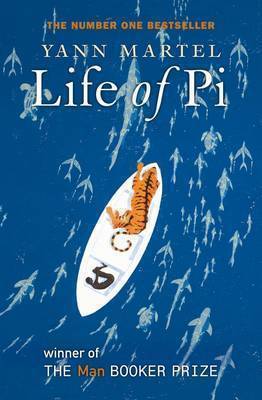
Book Review: Life of Pi, by Yann Martel

life_of_pi_coverThis book review is part of series of reviews written by students at St. Margaret’s Episcopal School for their 7th grade English classes.

The book I am reviewing is the book “Life Of Pi” by Yann Martel. You may recognize this book from the popular 2012 movie based after this novel. You also may recognize Yann Martel from other Canadian books that he has authored, such as “Self”. At any rate, Yann outdid himself with this book. Not many people could take the life of a young Indian man and make it into a compelling epic filled with conflict, hope, & promise.

This 537 page novel is divided into three main parts. The first is told from the point of view of Piscine Molitor Patel. His father owns a zoo in Pondicherry, India. He talks about his young life and the lessons he learned. Two really important things happen in this section. Firstly, after receiving the nickname “Pissing Patel,” he makes a new nickname for himself as “Pi Patel.” You get the idea that Pi is just a normal Hindu boy living in India. Secondly, Piscine “Pi” is born Hindu, but at the age of fourteen he starts practicing Christianity and Islam as well. He claims his reasoning as “I just want to love god,” (pgs 129-130). If I were Pi, I would have prayed to God more because Pi was about to have some bad luck.

The second is also told from Pi’s point of view. Surprising to me and unlike most book protagonists, Pi does not search for adventure. Instead it is forced upon him. His parents decide to move from India to Canada. After traveling with the animals on a ship so they can be sold elsewhere, Pi and the Patel family are thrown into danger. Their boat suddenly capsizes. Pi saves himself by climbing into a lifeboat but he is stuck with 3 (later 4) of the animals from his zoo. These animals are: a hyena, a zebra, an orangutan named Orange Juice, and a Bengal tiger named Richard Parker (RP). Eventually, only RP is left. Pi and RP learn to cope with each other in the boat for 227 days, most of which are spent describing the sea, stars, and his situation. Unlike most other stories, this story seems natural as if it was authored by Pi himself. Pi must remind himself continually of his family and realizes that life is only good if enjoyed, a continual reference through the rest of the book. If not for RP, Pi would have given up and died. Will Pi ever make it back? You’ll have to read the book to see what happens.

During the final part of the novel, years later, a much older Pi Patel is being interviewed by two reporters who are looking for info about the ship he was on. When they do not believe the story he tells them with the animals, he tells them another story in which Pi, his mother, the ship’s cook, and one of the sailors are on the lifeboat instead. The reporters have a mixed review to this story as well. Because neither of the stories have anything to do with the ship, they choose one of the stories. Pi’s response is simply “Thank you. And so it goes with God,” (pg. 531). You’ll have to read to find out which story they chose.

Overall, I would give this novel about 3.5/5 stars, because of two reasons. The book uses complicating word choice and if you prefer short books, this book is not for you. Also, the book does drag on in the middle while describing the few things Pi sees in the ocean in great detail. This leads to a slightly stretched out conflict and even some redundancy, but if you can make it past this part of the book, it is well worth it to see the end of Pi’s journey. Condensed into about 250-300 pages, this book would have been flawless, but now it is forced to depend on a simple plot and pure curiosity to keep the reader going. The only reason I did not stop is because I had to know how Pi’s life ended in the end.

-Tejav N., 7th grade