Book Review: Martin Eden by Jack London

Martin Eden - Jack London | Feedbooks

Martin Eden is a semi-autobiographical novel written by American writer Jack London. The story tells about young sailor Martin Eden to get acquainted with Miss Rose of high society by chance, be inspired by her, and began his hard creation career. Despite all the setbacks, he still refused to obey Rose’s arrangement to enter her father’s office and become a promising young man. Then his fortune suddenly changed, and manuscripts that had previously been rejected were published and he became a popular writer. Friends and relatives who despised him before fell over each other to invite him to dinner, and Miss Rose who had broken up with him also came to throw herself on him. This makes him see clearly this world as a cold society; the wonderful illusion that holds him to love also is also disillusioned thoroughly.

In the real American society where Jack London lives, the United States has entered the period of monopoly capitalism. The bourgeoisie not only monopolizes the material wealth of society but also monopolizes the spiritual wealth. The bourgeoisie believes that all good things in the society belong to them, no matter in material life or in spiritual life. In the face of the underclass they turned their noses up. Therefore, in Jack London’s novel Martin Eden, the criticism and accusation of the corruption of the capitalist system, the hypocrisy of the bourgeoisie, and the inequality of class hierarchy can be seen everywhere. Through the description of the text, the reader can see different faces of the characters in the novel and feel the resistance behind feelings of the hero and heroine, their irreconcilable differences in values, and the nature each class in the capitalist society.

-Coreen C.
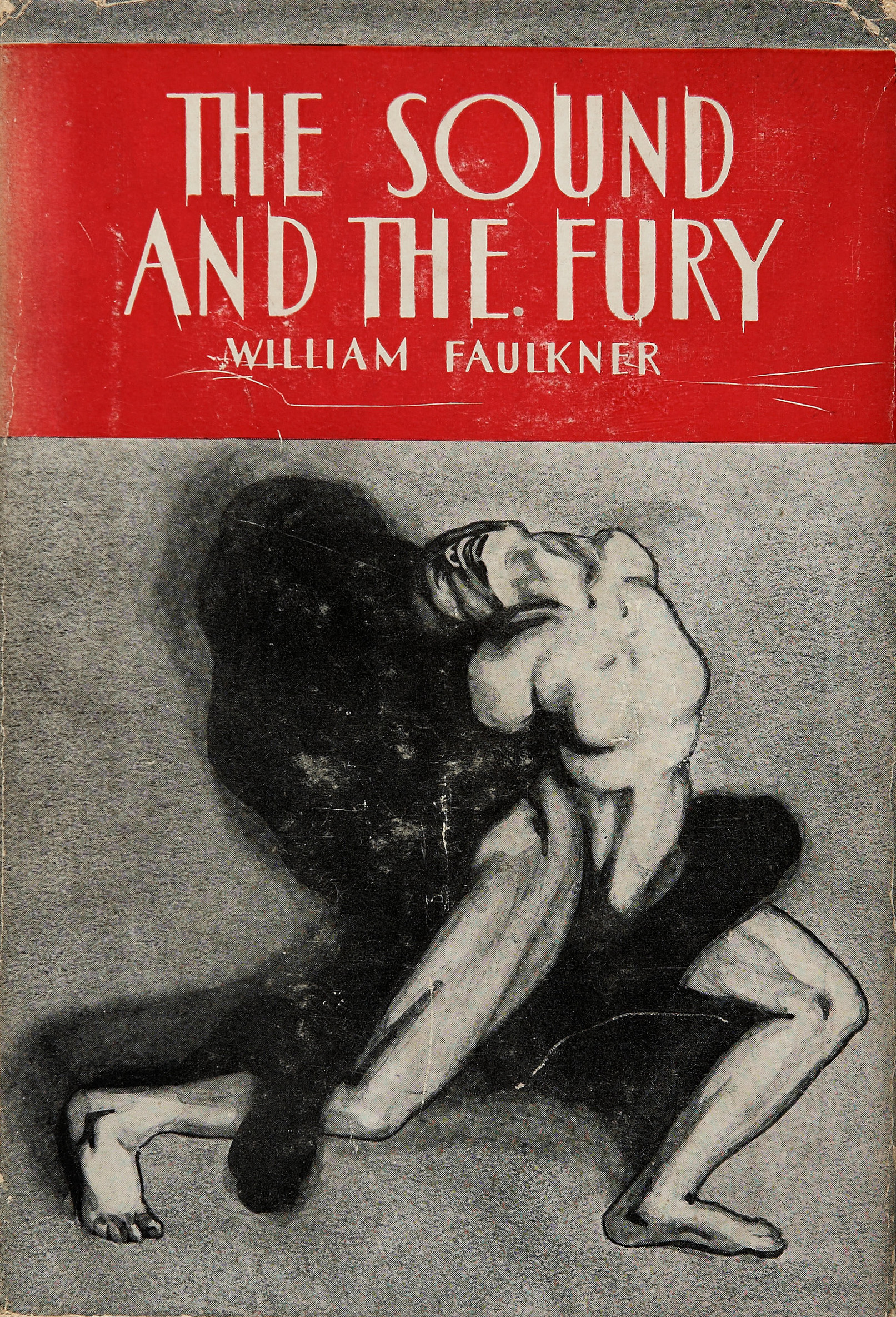
Book Review: The Sound and the Fury by William Faulkner

The Sound and the Fury - Wikipedia

The Sound and the Fury follows the family tragedy of fallen landowners the Compson family in the South. Old Compson loafed and drank too much. His wife is selfish and cruel and complains about everything. The eldest son Quentin desperately clings to the so-called old traditions of the South because his sister Caddy’s liberal approach to sex is seen as a disgrace to the identity of a southern lady. The second son Jason is cold and greedy. The third son Benji is mentally disabled he has the intelligence of a three year-old at age thirty-three. Through the inner monologue of the three sons, the whole novel starts around Caddy’s depravity, and finally it is supplemented by the limited perspective of the black maid Dilcey Gibson. Faulkner adopts a multi-angle narrative approach in this book.

The relationship between children who live without love and warmth in a family is full of contradictions and discord. Jason was a victim of his parents’ cold war. His mother’s preference for Jason caused him to be isolated from the other children. While in childhood Caddy, Quentin, and Benji played together, Jason was far away alone. In order to protect the interests of Benji, Caddy rankled Jason. Growing up in isolation, Jason lacks a sense of security and trust in others and becomes callous and cynical. After taking charge of family affairs as an adult, Jason curses, sneers, and blackmails Katie as a kind of revenge. In the absence of maternal love in the family, all these problems potentially led to the decline of the Compsons.

As for Benji, Mr. Compson showed no love and care because of his mental deficiency. With Jason, Mr. Compson took a cold and dismissive attitude. Mr. Compson was partial to his daughter Caddy but neglected her proper guidance, letting her go as she pleased. Mrs. Compson as a mother exhibited the least care and love for her children and never thought of their welfare. She saw her mentally retarded son as a punishment from God, believed that Caddy had been hostile to her since childhood, and that Quentin’s suicide was an act of revenge against her. From The Sound and the Fury, we can also see Faulkner’s high level of understanding and summarizing ability of life and history. Although his work is confusing and sometimes dreamlike, it actually presents a side of historic change in the American South through the disintegration and dying of an old family. As you can see, the old South has indeed collapsed irretrievably. Its economic base has long since deteriorated, and its remaining superstructure is crumbling. Caddy’s fall implies the downfall of the Southern code of ethics. Benji had limbs but no ability to think, while Quentin had complicated thoughts but lost the ability to act. The other brother Jason saw only money in his eyes and simply abandoned his old values.

-Coreen C.

Book Review: Leaves of Grass by Walt Whitman

Leaves of Grass by Walt Whitman: 9780451419170 ...

Leaves of Grass is a collection of romantic poems with more than 300 poems. The collection of Leaves of Grass is the representative work of the American poet Walt Whitman and the first collection of poetry with the national style in the history of American literature. It has created a generation of poetry style and has had a great impact on American poetry.

Leaves of Grass also has a major innovation in artistic form, the poet broke the long-standing format of American poetry and created a “free style” poetry form. In terms of the structure of the poem, the poet adopts a large number of forms such as refrain, row, long sentence and parallel structure. Whitman also resorted to the usage of symbols and metaphors. The collection is characterized by colloquialism, with a rich expressive force and eloquent style. The poetry is sincere and fervent. The style is bold and fresh, making one one feel sick after reading it.

Leaves of Grass plays a very important role in the history of American poetry and even in the history of literature. It is a world-renowned masterpiece that ushered in a new era of American national poetry and its influence on even the English language as a whole can be described as revolutionary. Whitman’s collection of leaves of Grass was first published in 1855 with only twelve poems. By the time of his death, the last edition contained nearly four hundred poems. He named his collection Leaves of Grass because they represented the most ordinary Americans at the bottom of our society.

-Coreen C.

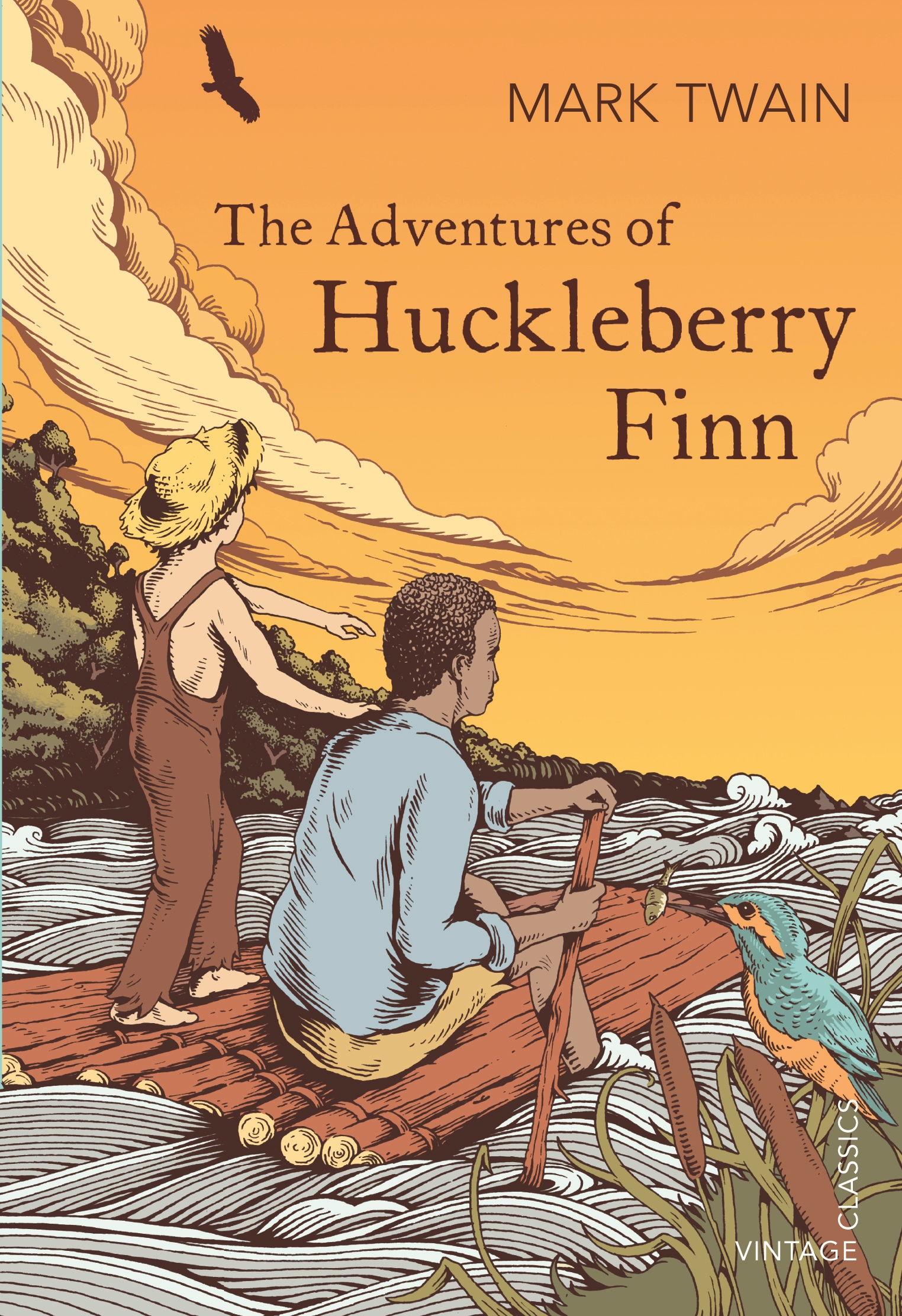
Book Review: The Adventures of Huckleberry Finn by Mark Twain

The Adventures of Huckleberry Finn by Mark Twain - Penguin Books ...

The Adventures of Huckleberry Finn is a novel by American writer Mark Twain. It is a sequel to the novel The Adventures of Tom Sawyer, first published in 1885. The hero of the story is Huckleberry Finn, who met the reader in the Adventures of Tom Sawyer. Huckleberry Finn was a bright, kind, and brave white boy. He fled to the Mississippi River in pursuit of a free life. On the run, he meets Jim, a slave. Jim is a hard-working, simple, warm, honest, and loyal slave. He fled from his master’s house in order to escape the fate of being sold again by the master. The two went through various adventures. The novel praised the boy Huckleberry’s wit and kindness, condemned the hypocrisy of religion and the ignorance of believers, and created the image of a dignified slave.

The Adventures of Huckleberry Finn is a masterpiece because Mark Twain took the literary traditions of the American frontier west and expanded them beyond the narrow confines of such humorous literature. There are many readers who, after reading this novel, admire the consistency, perfection, and appropriateness of the various dialects used by the author — it is hard to find a word in this book that is not closely tailored for Huckleberry or Jim.

As a classic work in American literature, The Adventures of Huckleberry Finn written by Mark Twain has its unique linguistic art, namely the use of colloquial language. The language of the protagonist narrator often breaks grammatical conventions, matches with the narrator’s child-like thinking, and changes verb tenses at will. In addition, the language of other characters is mostly dialect, including slang. The colloquial language of Huckleberry Finn created a new style of literary language, creating a profound influence on American writers later.

-Coreen C.

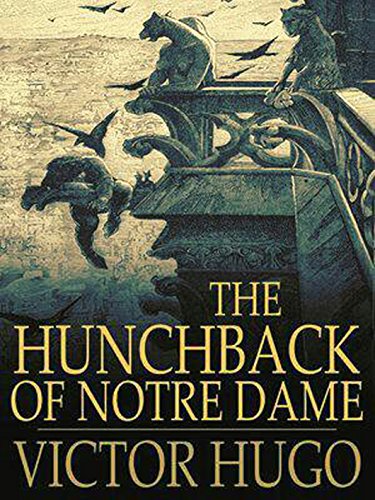
Book Review: The Hunchback of Notre-Dame by Victor Hugo

The Hunchback of Notre Dame - Kindle edition by Hugo, Victor ...

“The Hunchback of Notre-Dame” is a story set in 15th century France with a quirky and contrasting approach. The novel exposes the hypocrisy of religion, declares the bankruptcy of asceticism, praises kindness, love and self-sacrifice of the lower working people, and reflects Hugo’s humanitarian thoughts. “The Hunchback of Notre-Dame” is a tragedy in which the good innocent people were tortured and persecuted under the autocratic system. The heroine Esmeralda is a kind and pure young girl.

When the peddler poet, Granger, strayed late at night into a gathering place for vagabonds and beggars in Paris, and was about to be killed, she came forward and offered to marry him, taking him under her protection, though she did not love him. When Quasimodo was whipped in the blazing sun and cried out in pain of thirst, she was the only one who sympathized with the hideous bell-ringer who had hijacked her in the middle of the night. She thought the world was as pure as her, and she died in passionate love with the heartless Phoebus. She was steadfast in character, willing to die before Claude’s insolence. She was the darling of the vagabonds and beggars of Paris, but self-supporting and undefiled.

Hugo put such a bright image in the dark background of the Middle Ages, describing how the society ruled by despotism and rampant with the power of the church threatened her and persecuted her like a huge net, strangling her by horrible means. The religious fanaticism of Bohemian maidens, the vicious plots of church figures to satisfy their vile and animal desires, the brutality of the despotic state regime… all of these are described by Hugo in a romantic way as terrible as a nightmare.

Through this description, the author shows the darkness of the feudal autocratic society and highlights an anti-feudal theme of the work. Whether it’s Crowder or Quasimodo, they’re people of society at the end of the day. The division and conflict in their hearts reflected the division and conflict between theocracy and human rights, ignorance and knowledge seeking in their time, between the huge and heavy dark system and the struggling of vulnerable individuals, which finally led to the tragic end of all the characters.The literary value and social significance of “The Hunchback of Notre-Dame” have a far-reaching influence. This novel, breaking the shackles of classicism, is a milestone in romantic works. Since its release, the novel has been adapted into numerous films, cartoons and plays.

-Coreen C.

Book Review: The Adventures of Tom Sawyer by Mark Twain

The Adventures of Tom Sawyer (Dover Children's Evergreen Classics ...

The novel takes place in the first half of the 19th century in a small town on the banks of the Mississippi River. The hero Tom Sawyer is innocent and lively, dares to explore, pursues freedom avidly,but cannot bear to restrain his individuality and endure boring life. In the antebellum period of the novel, the small town of St. Petersburg is in some ways a microcosm of American society. Through the adventures of the protagonist, the novel satirizes and criticizes vulgar social customs, hypocritical religious rituals and stereotyped school education in The United States, and describes the free and lively hearts of children with cheerful writing.

Tom lost his mother in infancy and was adopted by his aunt. Clever and naughty Tom could not stand the control of his aunt and school teacher. Late one night, while playing in a cemetery with his good friend Huckleberry Finn, he happened to witness a murder. For fear of being discovered by the murderer they know this matter, Tom, Huckleberry and another small friend together fled to a desert island to become “pirate”. Their family thought they were drowned, but they turned up at their own “funeral”. After a fierce ideological struggle, Tom finally stood up and testified against the murderer. Soon after during a picnic, he and his sweetheart Betsy got lost in a cave and faced death for three days and nights. After he manages to escape danger later, Tom Sawyer found the treasure that the murderer buried together with his good friend Huckleberry Finn.

The Adventures of Tom Sawyer marks further development of Mark Twain’s realistic creation. This book describes the free and lively psychology of children, and in contrast exposes the vulgar conservative life of small town citizens, highlighting their dull and dreary lifestyle. Mischievous and lively, full of fantasy and justice, Tom planned to go out for adventures in order to get rid of the shackles of reality and enjoy the full pleasure of freedom. All of this contradicts the capitalist living environment and is not allowed by secular morality and church precepts. Generally speaking, criticizing stagnation, vulgarity and religious hypocrisy of American local life can be seen as the main content of the novel.

-Coreen C.

Light In August by William Faulkner

This is perhaps my favorite writing so far done by Faulkner. In this novel, he explores the prejudice Americans have against each other. Diversity in this country oftentimes is merely seen as a glorification of racism. Back in the days when this book was written, southerners didn’t like northerners which is why Miss Burden had to suffer so much. Not that she was a huge advocate of the north, but that her attempt to live a peaceful and honorable life at the south was denied because of her heritage. Residents in Mississippi, a typical southern state, are not willing to give her a second chance at life merely because of her heritage, instead of other wrongdoings she has committed before, reflecting the deep-rooted bigotry people used to have and still remain today.

Joe Christmas, my favorite character in this novel, is no different. His cold and even brutal personality is a product of his upbringing in an orphanage. When he once caught the dietician making love to a male doctor while vomiting because of eating too much toothpaste, he denied the bribery which the dietitian offered—one dollar. Later on, because of his biracial ethnicity, he was sent to a black orphanage by the janitor who always watched him but later recalled by the matron. Christmas was adopted and got his name changed to McEachern because his father, a religious man thought the name represented sacrilege.

Joe Christmas’s life reminded me of his sense of repugnance for this world when he didn’t belong anywhere. Since he never received love, he didn’t have much to give. He has no fear in life and fears himself to some degree. His mixed-race endowed him with endless audacity but also imposed extremely low self-esteem upon him. In modern days, perhaps the reason why there are so fewer personages who are not white is not because of their inability to do well and contribute to the country, but because they felt disparagement and disenfranchisement from white supremacists who might be discouraging from having confidence and speaking for what they believe in.

-Coreen C. 

Light In August by William Faulkner is available for checkout from the Mission Viejo Library


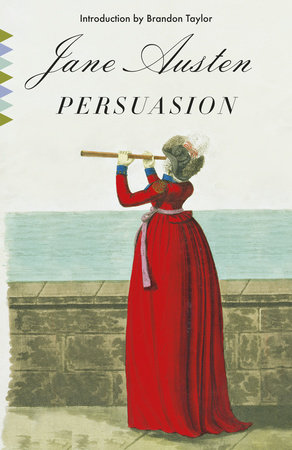
Persuasion by Jane Austen

Persuasion by Jane Austen: 9780307386854 | PenguinRandomHouse.com: Books

In the book, Austen spends much of her time describing the years of pain that “prudence” brings to the heroine, Anne. She wants young people to look to the future with confidence, without undue worry and caution. When Anne was young, she had to be careful that she did not know what romance was until she was old — the inevitable consequence of a deformed beginning. If in Sense and Sensibility, Austen emphasizes the triumph of reason over emotion and believes that only in this way can people achieve happiness, then in her last novel, Austen spends much of her time describing the years of pain caused by prudence to the heroine.

Persuasion affirms the evolution of characters from cautious to romantic, which undoubtedly reflects the change of the author’s own creative thinking. It was also a challenge to the traditional ideas of the time. While choosing women and women’s lives as the main themes of Persuasion, Austen also succeeded in portraying positive female images. Through the description of these female images, she protested against the distortion and degradation of women in male literature and corrected and subverted the model of male superiority and female inferiority. It is worth noting that Austen’s men, who had always been regarded as noble gentlemen, were often cast as villains and ridiculed, such as Sir Walter, who was conceited but foolish and incompetent, and Mr. Elliot, Anne’s mean-hearted cousin.

In Persuasion, Austen puts men and women on an equal footing in marriage, just as men like the beauty and kindness of women, Anne likes Wentworth not because of his male power and money (Wentworth was not born rich, but rose all the way through his own efforts, representing the emerging class). Although at the end of the novel, Austen still insisted that the heroine was married off according to the stipulations of the patriarchal society, but her marriage was no longer a Cinderella model and no longer depended on the charity of the patriarchy, but had the germination of the women’s liberation movement.

Northanger Abbey by Jane Austen

Northanger Abbey (Barnes & Noble Classics Series) by Jane Austen, Paperback  | Barnes & Noble®

The most common setting in 17th century Gothic fiction is the conflict between female desire and family tradition: the object of a daughter’s love contradicts the orders of her in-laws, and the father is determined to bring about the marriage. Conflict between an overbearing father and his daughter over marriage is a prominent feature of Gothic novels. The father wants to be in the right family, the daughter wants to be in love. This prominent feature exists objectively in Northanger Abbey. It should be said that there is some kind of Gothic reality that Catherine encounters, that she gets caught up in, that her marriage is blocked. Now, of course, it could be argued that the marriage conventions of the time made the novel merely a reflection of social reality.

However, gothic novels also reflect the social reality in their own unique way. There is no essential difference between them. As far as marriage is concerned, they are both Gothic marriages. For example, it features smart, beautiful young women who have to go through some kind of hardship to get their way and end up marrying a rich young man. Gothic fiction often takes place in gothic castles or monasteries, emphasizing mysterious and terrifying rooms, staircases full of ghosts, dark and hidden passages, and so on. The setting of the novel is taken from the heroine Catherine’s first impression of Northanger Abbey. Catherine was an innocent and kind woman.

In her eyes, this place was full of mystery, the small windows, the melancholy architecture, the colorful glass, and the cobweb walls all inspired her infinite imagination. Because at the beginning of her visit to Northanger Abbey, the protagonist Catherine was deeply influenced by gothic novels. So even the normal environment of things in her eyes will produce a magical color. Northanger Abbey is partly constructed from the gothic style of language. It comes from the popular gothic novel and social trend at that time.

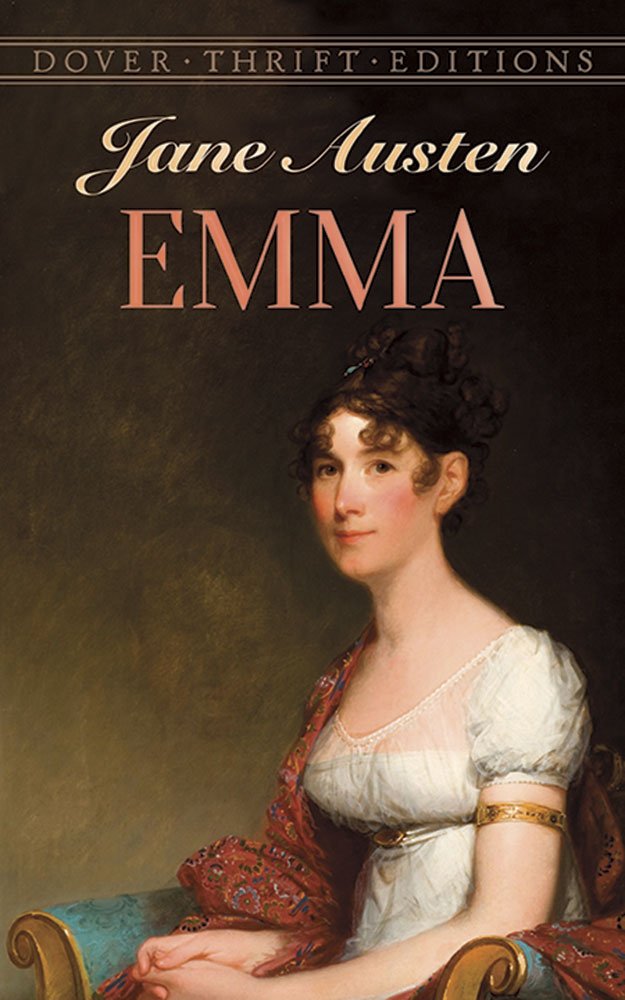
Emma by Jane Austen

Amazon.com: Emma (Dover Thrift Editions) (0800759406487): Jane Austen: Books

Emma’s control of Harriet’s marriage cannot be said to be selfish. She did care and love Harriet, and throughout much of the book she is seen worrying about Harriet’s marriage and drawing inspiration from it herself. Out of an intolerable conceit, she fancied she knew the secrets of every man’s affections. As it turned out, she did it all wrong. But when she learned that Harriet was in love with Knightley, she suddenly discovered that she had always been in love with him. In a sharp turn of events, she and Knightley become husband and wife. She had objected to Harriet’s marrying Martin, and was glad that they were at last united. In Emma’s opinion, Martin was as unfit to be Harriet’s husband as Harriet was unfit to be Knightley’s wife.

Marriage should be matched by family, which was exactly the marriage relationship in the society at that time. The solution to women’s problems (including marriage problems naturally) put forward by Austen was serious, but her works added comedy color. At the beginning of the 19th century, sentimental novels were popular in England, and Austen’s realistic novels gave readers a fresh breath.

In her novel Emma, Austen tells most of the family trifles in ordinary life, and the author creates a female image with intelligence and independent thinking. Emma, the protagonist, demands the equality of men and women in the patriarchal society, and has her own clear views and values on marriage. It also reflects the feminist views of Austen to some extent. With her unique perspective of supporting women, Austen profoundly cut through the reality of the society controlled by men and the situation of women in social life. The author criticizes the unfair phenomenon of male superiority and female inferiority while affirming the social status of women. Therefore, to a certain extent, this novel has far-reaching social practical significance.