The Darkest Hour by Caroline Tung Richmond

Image result for the darkest hour caroline tung richmondI’m normally not a huge fan of historical fiction. Although, I am okay with reading a few alternate histories, but not constantly. Caroline Tung Richmond is also the author of The Only Thing To Fear, about the present day world under Hitler’s control. Even though this book isn’t an alternate history, it is still about World War II.

The year is 1943, in France, and Lucie Blaise is a part of Covert Ops, a group of female spies. They are willing to do anything to take down Hitler. After her older brother dies in combat, Lucie wants to avenge his death and try in any way possible to defeat Hitler. She didn’t want a boring desk job, and wanted to be an actual spy. Even with her training, she is unprepared for the real world. She almost gets caught, but luckily the Nazis barely buy her cover. Also, she didn’t remember her training exactly when she had her job to do, and she almost was fired because of it. I can’t describe what her job was, because it be too much of a spoiler.

This is a really interesting book about female spies in World War II. I felt that the scenes with Dorner could have been written differently, like maybe Lucie could have been starting to fall in love with Dorner, and the book would have been longer as a result. But nothing happened between them, there was no love story for Lucie, and I feel the book would have been more interesting if something did happen. After reading this book, I wondered if some of the events mentioned were true, and reading the Author’s Note explained it. The Operation Zerfall is fiction, but I was shocked to read that the Wunderwaffe program existed.

So if you’re into World War II, spies, or historical fiction, this book is for you! If you like this book, I strongly recommend reading Richmond’s other book, The Only Thing To Fear. This book isn’t mean for younger audiences.

-Rebecca V. 8th grade

The Darkest Hour by Caroline Tung Richmond is available for checkout from the Mission Viejo Library

Book Review: Farewell to Manzanar by Jeanne Wakatsuki Houston

Farewell to Manzanar is Jeanne Wakatsuki Houston’s personal, non-fiction account of life inside the Japanese internment camps that the US government put in place during World War ΙΙ. Although many Americans acknowledge the injustice that was done to Japanese Americans during the period that they were relocated to camps along the western interior of the US, less Americans understand the full truth of what life was like inside these war relocation camps. In Farewell to Manzanar, Wakatsuki tells the story of her family’s time in Manzanar, their assigned camp, as well as detailing the repercussions that this experience had on her family.

One of the most interesting parts about Wakatsuki’s story is that she puts a great deal of focus on her life pre and post war. She does not talk only about her family’s incarceration, but also of their home before the turmoil of the war. She laces the chapters with memories from before her time in Manzanar. Wakatsuki also taps into the memories of her family in chapters where she is not the narrator. This story is not simply one about war; it also talks about a young girl growing up and discovering her interests in a place far from her home.

-Mirabella S.


Farewell to Manzanar is available for checkout from the Mission Viejo Library.


Life and Society in The Great Gatsby

The Great Gatsby was written by F. Scott Fitzgerald and published in 1925. I liked the fact that this novel accurately depicts what life was like in the 1920’s, and the types of people who lived it. The setting of this novel takes place in New York, and the area in which the main character, Nick, lives is set in West Egg and East Egg. Both of these cities are considered to be wealthy cities. West Egg, where Nick has a home, is considered to be “new money,” while East Egg, where his cousin, Daisy and her husband Tom Buchannan live, is thought to be “old money.”

West Egg is the type of city in which people have earned their money and East Egg is where people have inherited their money from older generations. However, Nick’s neighbor, Jay Gatsby, is known to be the wealthiest of them all. He lives in a humongous mansion and throws parties almost every weekend where anyone is free to attend.  An example of how this novel reflects the conventions of the time period, the 1920’s was known as the “Roaring Twenties,” and the types of parties held signified how careless people were about spending money and that they did not care about ruthless behaviors.

Another example would be that one of the important characters in this novel, George Wilson, lives in an area known as the “Valley of Ashes,” a place where the poor working class live. In the Valley of Ashes, the eyes on a billboard of one of the wealthiest citizens, Dr. T.J. Eckleburg, seems to always watching the entire city. George Wilson believes that Eckleburg is a God after stating “God sees everything” while looking at the billboard. This signifies that the national religion of the United States during the twenties was business and wealth instead of God Himself.

Overall, I enjoyed this novel as this precisely described how life was like in the “Roaring Twenties” with many people becoming wealthy due to the economic boost and how those people were being careless with their money and behaviors. Also, George Wilson believing that the wealthiest are like Gods was also interesting and accurate. However, due to many careless spending, this would ultimately lead to the crash of the stock market and the rise of the Great Depression starting in the 1930’s. I would recommend this book because of how it relates to the accurate history in the United States that occurred and the outcome.

-Matt J

The Great Gatsby is available for checkout from the Mission Viejo Library. It is also available to download from Overdrive and Hoopla

Ashfall by Mike Mullin

Image result for AshfallAshfall, by Mike Mullin, is about life after a supervolcano erupts in Yellowstone. Alex is a normal teenage guy. He’s a sophomore, plays video games, has a black belt in tae kwon do, and wishes he could go on a date with a cute girl. His family is on their way to visit his uncle’s family, and he didn’t want to go.

Even though he survived the explosion, it’s only the beginning. His family isn’t with him, he doesn’t know who to trust, and traveling through the ash is exhausting.  Alex knows that he should try to track down his family, but did they even survive? But traveling to Warren, Illinois, where his Uncle’s farm is, is 140 miles away. What if his parents never even arrived at Warren? When Alex attempts to travel to Warren, some people are friendly, while others are as dangerous as the ash filled terrain. Is this new world the survival of the fittest?

Life after a volcano eruption is already scary, but a supervolcano eruption could ruin the entire world. In Ashfall, the eruption affects the whole world, not just America because of food shortages. This book also gets you thinking about a different way that the world can end because of nature, instead of disease, zombies, or other ways.

I thought that this was a well-written book, because Mullin makes it seem real. I wish I hadn’t read this book in one sitting though, because it is 450 pages long! I do recommend this book to anyone who likes any type of science fiction, or volcano eruptions. Also, this is a trilogy, with the second book titled Ashen Winter, and the third book called Sunrise. This book isn’t meant for younger audiences.

-Rebecca V. 8th grade

Ashfall by Mike Mullin is available for checkout from the Mission Viejo Library. It can also be downloaded from Overdrive

Animal Farm by George Orwell

Animal Farm is an allegorical novel by George Orwell that tells the story of the Russian Revolution through farm animals. At first glance, the book is nothing more than a fairy tail, but behind this façade is the barely concealed rage from Orwell, who grew disillusioned with the ideals of communism after watching how its system of government played out for Russia. The book follows Joseph Stalin’s rise to power as a dictator in a society that, in theory, was supposed to be shared among all of the working class. In spite of the cruel treatment that the ruling class dishes out to them, the working class remains oblivious of the freedoms being stripped from them until it is too late to fight back against it.

As I mentioned before, the book is about Stalin’s rise to power. However, the story is about animals. So, which animal represents Stalin? Finding out is half of the fun of reading the book. With minimal knowledge about the Russian Revolution, you can deduce which animal represents each political figure or societal class, as well as which events in the book represent major turning points in Russia’s history.

When reading Animal Farm, I could not help but be in awe of how flawlessly Orwell seamed each historical event into the book. Every turn of the page brings new excitement, and I found myself actually getting emotional throughout some points in the story. It is a strange experience to watch as a group of people, or “animals”, slowly become oppressed by a government that they thought would save them from their oppressors. Whether this cycle of power is told through the eyes of animals or humans, the disturbances that it can cause can shape the course of history, as we have seen it do time and time again. I would strongly recommend this book to anyone that enjoys history, or simply wants a read that will make them think.

-Mirabella S., 9th grade

Animal Farm by George Orwell is available for checkout from the Mission Viejo Library. It is also available for download from Hoopla.

Lord of Shadows (The Dark Artifices Book 2) by Cassandra Clare

Image result for lord of shadows

TMI fans, here is the next book in the installment!

Emma is struggling with her love for Julian, and so, unknown to him, has begun a fake relationship with Mark. Mark himself is struggling whether to love his past, Kiernan, or his future, Christina. Christina is struggling with Diego and Mark. Diana finds a love interest of her own. Kit “Herondale” is struggling with his new name and the legacy of it, while also finding some new friends with the twins. We also see some TMI characters like what we saw with Lady Midnight– Clary is unsure of whether to marry Jace or not, and Alec and Magnus play a big role in helping Julian, Emma, and the gang with issues such as the concern of Downworlders with the Clave. The Clave itself is being as stupid as always, as there are many Downworlder haters there. Oh, and did I mention that we haven’t seen the last of Malcolm?

Of course, Cassandra Clare still works her comedy within the story, as shown when Ty is amazed that Kit knew about Sherlock Holmes and John Watson, even though Kit laughs at how did no one in the Shadowhunters knew who they were.

Additionally, there are, of course, secrets providing twists and turns to the plot, especially when the Blackthorn family finds out a secret of Julian’s.

However, despite all of the positives and the things I was happy with in the sequel, I was quite disappointed with a few things. First of all, Magnus and Alec appear a little too much in the book, making the spotlight go to them instead of the Blackthorns. Secondly, one can’t read the book without reading the TMI series. Robert Lightwood references what happened with Michael Wayland, making the context only relevant if one read what happened to him back in The Mortal Instruments. Additionally, the issue of Malec, one making immortal and the other not, is referenced too, making it necessary to read The City of Heavenly Fire. It is also required to have read The Infernal Devices. Kit is asked whether he is going to be a Jace, Will, Stephen, or a Tobias, requiring the necessary background information in order to understand. Additionally, we meet a ghost named Jessamine Lovelace, and if one hasn’t read The Infernal Devices, one does not know what she is all about.

However, despite all of these negatives, it is quite an enjoyable  book, one worth reading.

Megan V. Eleventh Grade

Lord of Shadows by Cassandra Clare is available for checkout from the Mission Viejo Library. It is also available for download from Overdrive.

The Symphony for the City of the Dead: Dmitri Shostakovich and the Siege of Leningrad by M.T. Anderson

Winner of the 2015 National Book Award Longlist, for Young People’s Literature, M.T. Anderson has created a story worth telling.  It is the unfortunate, yet true, biography of Dmitri Shostakovich.  

Growing up in a harsh life as a result of Communist Russian leaders, Shostakovich soon discovered his interest for music.  While his life in the world of the arts was beginning, however, so was the air of terror from Adolf Hitler.  Anderson takes the reader through the cold winters of Leningrad, the warm home of Shostakovich, and of course, the sweet melodies of Dmitri Shostakovich.

I really enjoyed Anderson’s writing style throughout the course of this book.  He told the story of Shostakovich truthfully and full-heartedly.  Anderson must also be a musician himself, as his insight and musical knowledge is vast. I picked up this book, as it was marked new in the Young Adult section, and I was intrigued.  The most interesting topics in nonfiction to me are WWII and music.  I had heard of Shostakovich before reading the biography, but never realized the story behind his masterpiece, Symphony No. 7.  

Anderson brought the reader back in time, into the early 1900s.  Shostakovich, born in 1906, grew up among a family of three children in St. Petersburg, Russia.  As he transitioned from a young scholar enrolled in a music school into a renowned composer, Shostakovich started a family of his own.  However, around him, the people of Leningrad were starving, caused by an unfortunate siege by the Germans.  Their food supply had been bombed.  Their leader had fled.  Citizens were trying to escape the city as fast as possible.  But not Shostakovich.  His pride and honor for the beloved city kept him there, even through the starvation.  Many high-ranking officials tried their hardest to relieve the Shostakovich’s, by bringing them to Moscow.  But, Dmitri insisted on staying in Leningrad to finish his symphony.

 
Later revealed at its debut in Leningrad, Shostakovich had written his masterpiece for the city of his home, the city of the dead.  For young musicians who may want to learn more about some of the greatest composers of the last few centuries, please check this out.  While the book is lengthy, I would recommend it, as it is a 10/10.

Maya S.

The Symphony for the City of the Dead: Dmitri Shostakovich and the Siege of Leningrad by M.T. Anderson is available for checkout from the Mission Viejo Library.

Good Omens by Neil Gaiman and Terry Pratchett

Good Omens is a novel co-written by Neil Gaiman and the late, great Terry Pratchett. The combination of their unique styles creates an incredible story that is extremely difficult to follow. This is one of those books that can only get better with each reading, because the first time you pick it up, you have no idea what’s going on.

It follows about six distinct storylines, all of which interact throughout the story. The best of these is the tale of Crowley and Aziraphale, a demon and angel (respectively) who have been on earth together since the Beginning. Literally, biblically, the Beginning.

Other characters include Adam, the antichrist; Dog, the aptly named Hellhound; a 1921 Bentley in perfect condition, a witch-hunter with a fondness for condensed milk, and a group of intelligent ducks.

Despite the fact that the book is nearly twenty years old, it has a really awesome cult following. There have been innumerable attempts to create movies, TV shows, mini-series, etc. about Good Omens, none of which have taken off. Aside from a podcast adaptation currently running on the BBC, the novel remains the only canon content in its universe.

There is something very special about this book. It’s funny and thought-provoking and a tongue-twister at times. It is definitely a Must Read, if only for the sake of enjoying a book that was written by two authors on different continents snail-mailing floppy discs across the Atlantic ocean because e-mail wasn’t fast enough yet.

-Zoe K., 11th grade

Good Omens by Terry Pratchett and Neil Gaiman is available for checkout from the Mission Viejo Library. It is also available for download from Overdrive and Hoopla.

The Handmaid’s Tale by Margaret Atwood

As a rule, I don’t like dystopian fiction. 1984 was a slog, and The Hunger Games never felt real to me. So it was very strange to find myself picking up Margaret Atwood’s The Handmaid’s Tale, and being completely engrossed by it.

This novel is one read by practically every junior in high school for the last twenty years. Despite the amount of times it’s been run through the curriculum, the story holds up.

The society, called Gilead, through the eyes of the narrator is intense and fearful. It’s one of those stories that you have to pull yourself out of every once in awhile, just to stay sane. I would read through a particularly striking passage, only to realize that I had been holding my breath through the whole thing. That right there is something magical.

It’s not for the fainthearted, though. This book is a rough one to read, loaded with social commentary that feels just as relevant as it was at its publishing in 1985. Atwood manages to discuss up complex issues like abortion and freedom of religion without ever feeling heavy-handed.

This is one of the few books I’ve ever been assigned to read that I could honestly recommend to others, and the first dystopian literature I have enjoyed in a long time.

-Zoe K., 11th Grade

The Handmaid’s Tale by Margaret Atwood is available for checkout from the Mission Viejo Library. It is also available for download from Overdrive

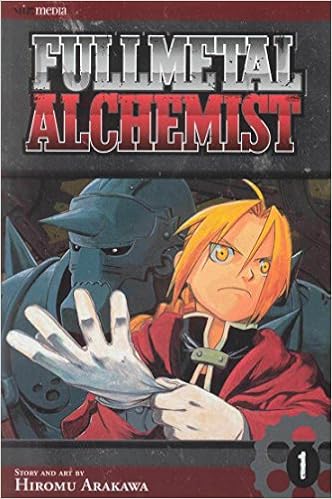
Fullmetal Alchemist by Hiromu Arakawa

What is your wish? Gold? Immortality? Fame? Whatever it might be, you can have it!

So long as you’re willing to pay the price for it. How about sacrificing your first born son to get gold? Dying every time you got hurt in exchange for almost immortal like powers? Or even killing a whole town to gain fame!

You see, with alchemy, you can gain anything you want, but the rule of alchemy is that for everything made there is an equal amount that must be given back. Water is needed to instantly make ice, trees in order to make paper. And brothers Edward and Alphonse Elric have just learned the hard way that in order to bring their dead mother back to life, Edward must sacrifice a leg and Alphonse his whole body. And then, Edward sacrificed his arm to put his brother’s soul upon a suit of armor.

Now, Edward and Alphonse have vowed to get their bodies back, or at least Al’s trying to get his back, as Ed wants to keep his leg as a reminder. They travel the world as “dogs of the military”, Ed with a fullmetal arm and leg, and Al in his armor body. Of course, they have heard of the Philosopher’s stone, the stone that defies the rules of alchemy, but they vowed never to use it. And it was good that they did so, as some evil is distributing fake Philosopher’s stones.

This manga is legendary, and deserves the credit it has. It has been rated by many manga sites as one of the top three mangas ever, and, although it is not the best art, the story is amazing. Not only does the manga have some high depth philosophical elements, but it also has some very good tragic and comedy moments, including the most well known death scene in anime and a ferocious mini panda that considers weak humans worse than food.

Additionally, I love that while it goes over how far one is willing to pay for their wishes, it also gets into immortality. For example, the story gets into how two different people crossed a huge desert just to get immortality. Furthermore, there is even one guy who has immortality, though never really wanted and is now faced with the burden of people calling him a monster, seeing people he loves die before him, and the great sin of what he did to gain immortality.

Not only is this manga well known, it was made by a woman. It is extremely rare for action manga to be created by a women, and I can only think of seven other women who can say that they have written a famous action manga, with only two of those rivaling this amazing woman. So, feminists, rejoice by reading a manga that is not only made by a woman, but features a female role model who is in the military and the other women in the manga are not content with just “waiting”.

Finally, the spacing and ending for this manga is incredible! This manga ended a while ago, but I can think of no better way to end the story. I did read Beezelbub, which ran shorter than Fullmetal Alchemist and had a pretty good ending, but I finished reading it feeling that there could have been more the author could have touched on. I have also read Bleach and Naruto, both longer than Fullmetal Alchemist, but Naruto had an okay ending and Bleach had an ending that is to not be spoken of. However, Fullmetal Alchemist was perfect in this regard. Not only did it tie in stuff from the first chapters, such as us meeting the same characters from chapter one near the end, but Ed and Al get their bodies in a way that best suited the characters. The villains died in such a way that the reader feels satisfied, and everyone gets an ending that not only shows what they’re doing in the future, but also shows so much hope for them in the future. This way was really perfect, and I can see no flaws (other than the fact that I felt that one of the very good villains died way earlier than the rest of the very good villains, but that was it).

Once I again, even for non manga lovers, if there is any manga you should read before you die, it is this one.

Megan V,