Book Review: The Maze Runner, by James Dashner

maze_runner_coverIn celebration of the upcoming movie adaption of this exciting novel, I thought I would review the first book in this trilogy.

This dsytopian adventure is full of mystery and suspense, set in a chilling sort of “captivity” where young boys (and boys only) live in the middle of a dangerous maze that no one’s escaped or survived. The protagonist, Thomas arrives one day in “The Box” with no memory of anything and is immediately puzzled and disturbed by this place.

The boys live a puzzling life of trying to survive and attempting to make it out of the maze, with no idea of anything at all or who they are. The maze, which several of the boys try to brave but never make it out alive, holds terrifying creatures called Grievers.

One day, the disturbing cycle of everyday life is interrupted by the shocking arrival of- a girl. She brings a strange cryptic message before passing out. With her arrival, everything is shaken up. What happens then… you’ll have to read the book to find out.

This novel, although a bit slow at times, was a generally thrilling book that will keep you on the edge of your seat with a thousand questions running through your mind. Unfortunately, these questions are barely or not even answered in the first book, but the second and third ones do address them, and let me tell you – they will shock and excite and are not to be missed.

If you are a fan of dystopian stories like The Hunger Games or Divergent, I highly recommend this book (as well as the rest of the trilogy) for an entertaining suspense-filled read. Plus, you’ll be prepared for the upcoming movie, in theaters everywhere this September!

-Rachel L.,10th grade

Manga Review: Nura: Rise of the Yokai Clan, Vol. 1, by Hiroshi Shiibashi

yokai_clan1Rikuo Nura is an ordinary eight-year old, except for one thing. His grandfather is Nurarihyon, the supreme commander of all yokai (a Japanese kind of monster). So, he’s an average kid until night falls, and then he transforms and leads an army of yokai.

Since he’s the supreme commander’s grandson, many of the yokai in his clan expect him to take up the title of third supreme commander. However, there are others in the clan that aren’t so happy about him possibly becoming “the third,” especially Gagoze, a child-eating yokai.

The one day Rikuo doesn’t take the bus to school, Gagoze tries and fails to kill Rikuo by causing rocks to fall onto the school bus that normally took Rikuo to school. When Rikuo learns that his bus was hit by rocks, he transforms, and leads the main house of the Nura clan to rescue his friends. Once he gets there, and Gagoze realizes that he had failed to kill him, Gagoze decides just to kill all of Rikuo’s friends. However, Rikuo succeeds in rescuing his friends and defeating Gagoze. Then he declares that he will become the third.

Unfortunately, the daytime or human Rikuo has no intentions of becoming the third, and has no memories of when he transforms into his yokai form. Four years later, the Nura clan still cannot make the decision of naming twelve-year old Rikuo as the third, because he continues to live a human life. And all of this happened in just the first chapter!

I loved this manga series from the moment I picked it up and started reading. It contains two of my favorite things in a book: comedy and action. One part that I think is really funny is that one of the minor characters in the story is named Natto-Kozo, and for those that don’t know, “natto” means fermented soybeans. On a scale from 1 to 10, I would give it a ten. Great storyline, fantastic art, everything about this series is awesome. I can’t wait until I get my hands on the rest of the books.

-Linna C., 7th grade

Book Review: Anna Karenina by Leo Tolstoy

anna_kareninaFrom the retrospective view that we as readers have today, it makes sense that much 19th century literature deals with love and romance of the aristocratic sort. The presence of Victorianism in the English-speaking world and largely congruous social standards in the rest of Europe provided for strict gender roles and behaviors, to which all members of the elite echelons especially were expected to adhere. In protest of the aforementioned values or perhaps simply in pursuit of a gripping narrative, many authors of the age told stories of characters who challenged the accepted marital and social expectations of their time. Leo Tolstoy’s greatest work, Anna Karenina, is such a tale.

Set amongst the parties and offices and residences of the highest members of society in both Moscow and St. Petersburg, the novel follows the character from which it gains its name, the wife of a prominent Russian politician who has engaged in a passionate affair with Vronsky, a respected military officer. Concerned exclusively with the interactions between characters and the events that develop among them, in the eves of the contemporary reader for whom magical or action-packed narratives are the norm, Anna Karenina, especially considering its voluminous length, may seem difficult to stomach. Nonetheless, its subject matter and its nine hundred or so pages are two of the qualities that make the novel great.

Indeed, no matter what language in which it is read, Anna Karenina is masterful. It is a romance, yes, but the realism with which Tolstoy writes is unlike any other author. His simplistic yet grand portrayals of a conversation between two lovers at a party, of the farm life and labors of the peasant population, of a suitor’s gallant horse race, of Russian life in its entirety, among a panoply of other scenes, make the read worthwhile. It is not possible to do justice to such an important and wonderful novel in a review such as this.

-Sebastian R., 11th grade

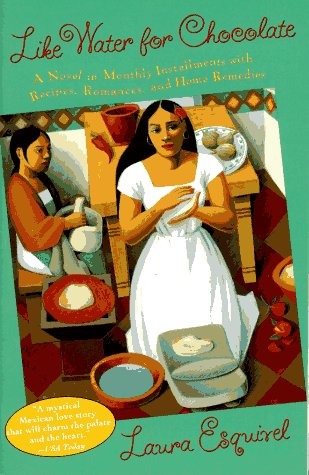
Book Review: Like Water for Chocolate, by Laura Esquivel

water_chocolate“A novel in Monthly Installments with recipes, romances, and home remedies”

As soon as one steps into the story of Tita, the youngest daughter in an intimidating Mexican family living in the late 1800s, one is literally swept off their feet into the world of Latin magical realism.

Following the story of Tita over the expanse of many years crammed into the divisions of twelve months of a year, the storyline defies time going forward, backwards, and sometimes seemingly sideways, all stories, tangents, and anecdotes falling into place with the conclusion of the novel.

The plot follows the love life of Tita, each month of the year in its division of the novel, preceded by a recipe, and each recipe offering valuable foresight into the misadventures of her life. The novel rotates around food, so it isn’t irrational that food should begin to take on a magical quality of its own.  It becomes undeniable that the preparation of the food isn’t just seasoning; it makes a home for Tita.

In January, the story goes back in time to tell of Tita being introduced into the world while being swept up on a wave of tears, being formed from when she first felt the stung of onions as her mother was chopping them in the kitchen. The novel picks up and what follows is a love story, but the heated career of her life is set against the backdrop of cooking, the food taking on magical alchemical properties of its own and helping to mold the story. Tita falls in love with a man who she cannot marry due to the archaic rule of her household; the youngest daughter must live and care for her mother until the mother’s death. She is set in tragic twist of fate, her older sister being married off to the man she loves.

The food comes into play with magic as she cooks her way through the kitchen. In February she makes a wedding cake for her sister’s wedding to the man she loves and accidentally cries into the batter, making all who consume become both sick in the heart and within their stomachs. A quail in rose sauce that she creates from a lovingly given bouquet of roses given to her by her lover makes the other sister of the family run off in love and passion with another man.

Overall, I thought it was a spectacular introduction to the world of magical realism, and reading it left me “hungry” for more. One should read perhaps though with a grain of salt, but still play along, you must accept the magic woven into the story as the characters do in their own lives for it to make sense and for the wonder to take a hold of you as well.

As a word of warning: this should be read by ages 15 and up. As it follows an intense impassioned love story there are minor bits of sexual imagery that should not be read by the wrong audience. Proceed with caution and eat all you’d like, for the story will take you on the ride of your life.

-Sophia U., 11th grade

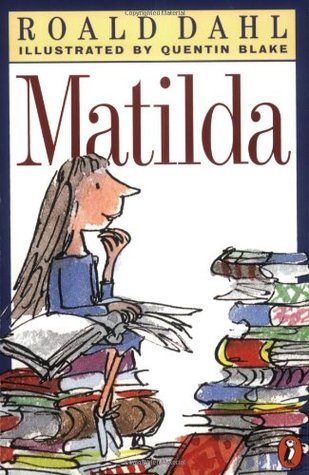
Book Review: Matilda, by Roald Dahl

matildaIf you were a super genius with super dumb parents, how would you deal with it? The book Matilda by Roald Dahl is all about how five year old Matilda deals with all the adults in her life that underestimate her and her amazing superpowers, and one adult who becomes her helpmeet.

As a general rule I LOVE Roald Dahl. His witty and creative writing always evokes a laugh out loud response. I find myself genuinely adoring the main character, detesting the notorious villain, and overall loving the world that Dahl creates. It’s a place I hate to leave when the book is over and excitedly anticipate when I crack open one of his books for at least the fifteenth time.

There have been movies and even Broadway musicals based on Matilda, the girl genius, but to me the book will always be magical. Just because it is there that I first envisioned the characters, the very world, that I could not visit myself and I’m sorry but movies will never do that for me. So read this book– and if you’ve read this book, read another Dahl book. If you haven’t read anything by Roald Dahl, I want you to head down to Barnes and Nobles and buy as many Roald Dahl books as possible. Now.

-Becka O., 8th grade

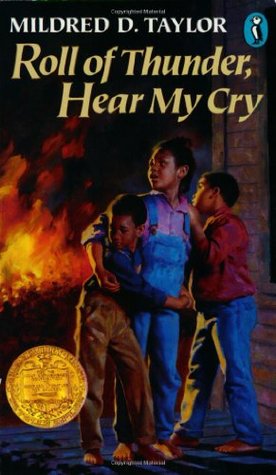
Book Review: Roll of Thunder, Hear My Cry, by Mildred Taylor

roll_thunderRoll of Thunder, Hear My Cry is a historical fiction novel set during the Great Depression when the South was still enduring damage from the Reconstruction of the Civil War– a time when African Americans suffered discrimination and segregation.

When first starting the novel, which was a required book for my English class, I was not that intrigued. It just seemed to me like a bunch of unrelated stories. But after finishing the book, I have to say, it was very beneficial for me to read it. A few chapters in, a complex plot line develops and made the book more captivating than I ever would have thought possible. I certainly changed my opinion about this novel between the first and last pages, and thoroughly enjoyed it. What other required reading books have you read that your reluctance to read was unwarranted?

This novel is told from Cassie Logan’s perspective, so she is the main character. Her family, different than the other African American families living in that part of Mississippi, owns their own land which comprises hundreds of acres. That land causes conflict during the story, since one of the white men in the town has desired that land for years, but the Logans have refused to sell it. Other conflicts during the story include the discrimination Cassie and her siblings encounter based on the color of their skin, starting with the first day of school and escalating from there. These instances lead to the concept that white people at the time did not see African Americans as equal, even though they truly were.

Since the book surprisingly didn’t have any chapters, my assignment for English class was to create a potential title for each chapter. Hopefully these chapter titles interest you and encourage you to read the book.
1. “New” Books
2. The “Giant”
3. Avenging the White Bus
4. The Wallace Store
5. A Visit to Strawberry
6. Their Rightful Place
7. Papa’s Home
8. An Unfortunate Turn of Events
9. Vicksburg Trouble
10 Heat and Hard Times
11. Trouble With T.J.
12. Crying for the Land and T.J.

In conclusion, this book handles the topic of discrimination well and teaches very important lessons. I recommend this book to others. I would give it a rating of 4 stars (out of 5).

– Leila S., 8th grade

Book Review: Ink, by Amanda Sun

inkI know I shouldn’t judge a book by its cover, but I couldn’t help it when I saw Ink. The cover was gorgeous as well as the story within about an American girl in Japan who sees a mysterious boy’s sketches move and discovers that she too is connected to the ink.

Meet Katie Greene: your average American teenager. Except she’s living in Japan with her aunt after her mother’s death. Struggling to learn the language and customs, Katie forgets to change out of her school sandals. When retrieving the correct shoes, she overhears a breakup where a boy is accused of cheating with another girl, a sketch of her as proof. It isn’t merely his deep eyes or that he lied when her told his soon-to-be ex that she meant nothing to him that has Katie fascinated. It’s the part where she saw his sketch move and look straight at her.

Katie learns more about the boy, Tomohiro (through various means of stalking), but the more she knows, the more secrets he seems to be hiding. Why did he quit Calligraphy if he is so talented? Why does he pretend to be cold and continually warn her away from him? Why does it look like his sketches are moving? And why, despite all this, is she (possibly) falling for him?

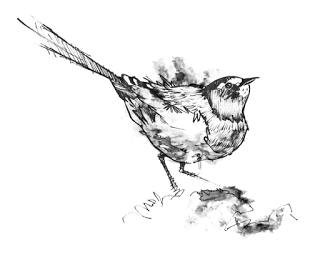
I loved the little sketches within the book. Some were little animations in the corner from turning the pages, while others were full page masterpieces that all tied into the plot. Just look at this.

bird_sketch_ink_amanda_sun

Another part I enjoyed was the overwhelming amount of Japanese culture. From the integrated language to just their way of life is so different from my own. The romance part is nice, but is seen too often with the “dark mysterious stranger who believes no one will ever love him because he is a monster but then the main character is the only one to get through because she is special” cliche. Even so, the twist at the end more than makes up for it. Overall, it is a great book that will leave you waiting for the sequel, Rain, that comes out on June 24th. Hope you enjoy.

– Nicole G., 10th grade

Book Review: A Single Shard, by Linda Sue Park

single_shard“He would make replicas, dozens if needed, until the glaze was like jade and water. And the vase would be carefully inlaided, with a design of-of…” – An excerpt from A Single Shard by Linda Sue Park

A Single Shard is the story of an orphan, Tree-ear, in a potter’s village in Korea during the twelfth century. It was written by Linda Sue Park, who weaves a artful story of the orphan’s life and pottery.This is a fantastic book that won the 2002 Newbery Award.

Tree-ear is a 12-year-old boy who lives with a crippled man named Crane-man. They live together under a bridge in the small Korean potter’s village of Ch’ulp’o. They both scavenge and hunt for food to live. Living in such a town, Tree-ear naturally becomes attracted to the art of making pottery. Ch’ulp’o was one of many villages that were known for a be able to create beautiful pots of a rare celadon green color. Tree-ear likes especially to watch a potter named Min. Min is known to create some of the best pieces in the village, but is incredibly slow. Tree-ear by accident damages one of Min’s pieces and does work for Min to repay for the lost time. This eventually become a sort of apprenticeship. Even so, Tree-ear has to deal with Min dissatisfaction and refusals to teach him to shape a pot.   When the news of a royal commission reaches Ch’ulp’o, Tree-ears hopes to finally gain Min approval and respect. 

A Single Shard is a incredible book. This has been a favorite of mine ever since I read it several years ago– a tale that good for any age. This is a historical fiction that shows a peek into the history, art, and culture of ancient Korea. This story is also about the importance of family, and how it can change a person in both a good and bad way. Not much action or adventure, but a great book to read as a family. Read it for yourself and decide.

– Sarah J., 8th grade

Book Review: Gone With the Wind, by Margaret Mitchell

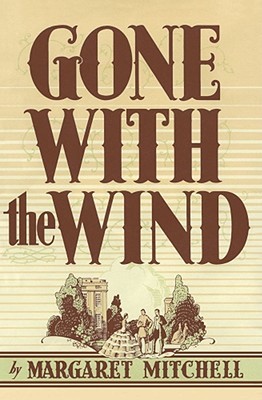
gone_with_the_windHistorical fiction, the fabled nightmare of our literature! So they say, but most are quite gripping once you’ve delved in. This was the case for me with Gone With the Wind by Margaret Mitchell.

I admit, I started this classic for my social studies class. However, once I got past the first few chapters, the rest of the pages blew by quickly.
Setting the scene during the civil war, this story tells of Scarlett O’Hara, daughter of rich Southern plantation owners. Flirty and frivolous, she spends her early life attending parties and breaking boys’ hearts. There is small talk of civil war, but she pays no heed. When her “true love” turns her down, a series of events places her in Atlanta. Suddenly, the war is much more realistic and closer to home. Thousands enlist to join the Confederate army, and hospitals begin working overtime. With a harsh blockade, life within the city becomes stricter, but she manages. Finally, the Union breaks through the last defenses, and storms the city. Fleeing to her old ransacked home, Scarlett struggles to hold together the family and rebuild her life. Gradually, she raises her social status, recovering along with the rest of the world.

This historical fiction gives detailed descriptions of Civil War era life. From the daily life in the city to the social hierarchy, nothing is left out. What makes it so interesting is that Mitchell tells the story from a Southerner’s point of view. Usually the South is portrayed as a single-faced bad guy, but Gone With the Wind gives us two viewpoints. Many average people were just defending their homeland rather than preserving slavery. It really sheds a new light on Union General Sherman’s March to the Sea, in which thousands of homes and towns were pillaged. The history in this book makes it especially interesting, as it places everything in context of real events.

Gone With the Wind gained most of its fame as an acclaimed love story. Sadly, I just don’t see it. I feel like it wasn’t really romantic at all until near the very end of the book. Even then, it seemed like Scarlett and her lover, Rhett Butler, weren’t truly in love. Her first failed marriages were purely out of self interest, and her original love never returned any feelings. I think there are probably lots of better love stories out there. But don’t take my word for it, read it yourself! This timeless classic is a must for any avid reader. Soon, you won’t even mind the history part. Enjoy!

-Phillip X., 8th grade

Book Review: The Shadow Throne, by Jennifer A. Nielsen

shadow_throneI was really excited for the release of the final book in the Ascendance trilogy. In it, Imogen is kidnapped AGAIN, King Vargan of Mendanwal (remember him?) launches an attack on Carthya, and ***spoiler alert*** Imogen dies.

I appreciated the fact that there was a lot of battle scenes, but, in a way, it was a bit of a let down, being of the action-adventure genre, and you’d expect a lot more of the “action” part. However, there is a little bit of romance in it as well, and that was one of the things that I didn’t really like about it; for others it may be just the thing that makes the book one of their favorites.

I had expected a lot more from the “thrilling” conclusion to the Ascendance trilogy, but if there’s nothing else to read, I say go for it. Who knows? It may be just the right thing for the reader. Appropriate for all ages, like the two books before it, it was good in some parts, and just meh in others. Overall, I wouldn’t go out of my way to get it, but it’s an okay read. I would probably rate this a 7 out of 10, while the others before it were a lot better. In my opinion, after having great expectations for this book, I consider it to be a bit of a let-down.

-Linna C., 7th grade