Book Review: Shadow and Bone by Leigh Bardugo

A fast-paced novel, Shadow and Bone by Leigh Bardugo is a young adult fantasy novel that is the first book in the Shadow and Bone trilogy. Creating a whole universe, Bardugo immerses her reader into the Grishaverse, a world where some have powers that allow them to practice the Small Sciences.

Those who possess powers are called Grisha, and they are split further into orders: Corporalki, Etherealki, and Materialki. The Corporalki can manipulate the human body. Because of their power, Corporalkis are the most feared type of Grisha even though they can both help and harm a person. Mainly known as summoners, the Etherealki can manipulate natural elements. Being able to manipulate wind, air, and fire, these Grisha are crucial in any fight. Lastly are the Materialki, or Fabrikators. These Grisha can manipulate materials like metal, glass, and chemicals.

So, in Shadow and Bone, the majority of the events happen in the war-torn Ravka. Ravka has been plagued with war for years suffering the loss of citizens and patriotism. However, this war with their northern and southern countries is not their biggest problem. Long ago, an ancient Grisha Shadow Summoner ripped a gap in the center of Ravka, thus creating the Shadow Fold.

The Shadow Fold stretches from the northern to southern borders of Ravka, splitting Ravka into west and east Ravka. An ugly scar on the map, the Shadow Fold is pitch-black and filled with lethal monsters called volcra. When the Fold was first created, a prophecy mentioned the only thing that will destroy the Fold is a Sun Summoner. More detrimental than the war, the Shadow Fold prevents the full might of Ravka from coming together to restore power, peace, and patriotism.

With all of the background information covered, the main character can now come into play. Drafted into the military, Alina Starkov is a cartographer at the beginning of the novel. Along with her life-long best friend Malyen “Mal” Oretsev, they both plan to make a crossing through the Shadow Fold. However, when they enter the Fold and a volcra attacks Mal, Alina lets her true light shine, literally. To save her friend, light explodes out of her, burning away the volcra. Stunned at what just happened, the Etherealki bring the skiff back to east Ravka and take Alina to the Darkling.

Hearing of this impossible light, the Darkling drags Alina to his tent to receive an explanation. A descendant of the Shadow Summoner who created the Shadow Fold, the Darkling commands all Grisha. When the Darkling coaxes the light out of Alina once more, Alina, the Darkling, and Mal realize that they have the prophesized Sun Summoner in their midsts. From this event, the rest of the trilogy kicks into gear, and Alina’s adventure never stops.

Even though this fantasy world seems complex, Bardugo’s ability to simplify and condense information allowed me to fly through these books in a couple of days. This trilogy leaned more towards the easier side of reading, but the plot lacked no excitement or surprises. I would most definitely recommend this book series, along with her other Grishaverse books, Six of Crows duology and King of Scars series. These books provided me with some of my favorite characters to date, and I hope people at least try them out! Happy reading!

(Only if you’ve read the series) Which team are you on, the Darkling, Mal, or Nikolai?

-Katherine L.

Shadow and Bone by Leigh Bardugo is available for checkout from the Mission Viejo Library. It can also be downloaded for free from Overdrive.

Book Review: Candide by Voltaire

Comedic. Sarcastic. Dark. What is not to love about the classic novella by Voltaire? It integrates comedy with a whole lot of skepticism, and mocking of the wealthy…quite a unique take indeed! 

The story of Candide follows Candide himself, the main protagonist, who resides in his comfortable abode in Germany. The Baron Thunder-ten-Tronckh owns the property which Candide resides in, along with the Barons daughter Cunégonde and the philosopher, Pangloss.

The Baron, catches him kissing his daughter and subsequently kicks Candide out of his home. Almost immediately, Candide is forced to enlist in the army, yet returns home to find that it was invaded by the enemy, and his beloved Cunégonde was killed in the aftermath. However, luckily for Candide as he travels to other parts of the Europe, he encounters people who help him navigate his life once more… 

After finding out that his precious Cunégonde is alive, Candide sets out on a series of endeavors in order to find her. He encounters people of all faiths, backgrounds, nationalities, and demeanors.

All of these help Candide oppose the idea constantly reinstated by Pangloss, the all-knowing philosopher, that “all is for the best”. However, contrary to his belief in his teacher, Candide begins to form his own perception of the world around him and towards the end of the book realizes that all is not for the best. 

The novella is extremely fast-paced. It is good for individuals who like a quick, fast read. I loved it because I was never bored, and the story was always straight to the point. Voltaire does a good job at employing sarcastic bits here and there and constantly uses Candide and Pangloss to mock the status quo present during his time.

-Haana F.

Candide by Voltaire is available for checkout at the Mission Viejo Library.

Book Review: To Kill a Mockingbird by Harper Lee

To Kill a Mockingbird by Harper Lee is a classic of American literature, dealing with the silent and prevalent plague of racism in the Great-Depression-era Deep South. Told through the eyes of young Scout and Jem, the novel created one of America’s most respectable fictional heroes- Atticus Finch, the upstanding, intelligent, and determined lawyer, dedicated to righting the wrongs of the South.

This novel deals with many complex themes- especially the theme of morality. Atticus Finch, the single father of Scout and Jem, is an upstanding, respectable, and almost irritatingly moral figure in his community. He is seen as a lone beacon of justice and light in his community because of his values. Another theme in the novel is that of humanity’s base instinct of right and wrong- beyond what is outlined in the law. This is clearly shown when Atticus chooses to defend Tom, the black man accused of raping a white woman.

Even though this book is highly lauded on many different platforms, I would not give it an incredible rating. First of all, I was not a big fan of Atticus- even though every single townsperson in the novel gushed about how Scout and Jem were so incredibly lucky to have such a moral, upstanding, and intelligent father, I did not concur. Sure, Atticus was most definitely all of those things- but he seemed more like the idea of a father rather than a real father: he was a personality before he was a person, so to speak. He was cold and aloof towards his children- he did not seem to provide Scout or Jem any real love or guidance through the novel outside of faux-profound moral platitudes. In addition, the book overall had an undertone of condescension and white saviorism that I really did not appreciate. However, this book was written in the 1960s- so it is understandably less progressive than what we would expect today. Even though I didn’t much enjoy this book, I would definitely recommend that you read it- it is still a window to not-so-past times, and can help us better understand what we need to do to confront racism in our world today.

-Vaidehi B.

To Kill a Mockingbird by Harper Lee is available for checkout at Mission Viejo Library. It can also be downloaded for free on Overdrive.

Book Review: The Screwtape Letters by C. S. Lewis

The Screwtape Letters, by C. S. Lewis, is a collection of letters written by a “devil” named Screwtape.  Screwtape is an important official in Satan’s realm, who refers to himself as “His Infernal Excellency, Mr. Screwtape.”  The letters are addressed to Screwtape’s young nephew, Wormwood.  Wormwood is a “junior devil” on earth, who is trying to tempt his “patient” into committing sin.  Each chapter is a letter of advice to Wormwood from his “affectionate uncle,” Screwtape.

I found this book to be very insightful and amusing.  I think it was very clever to imagine what words of advice one devil might give to another, as to how one might properly tempt a human into committing sin.  As it becomes clear that Wormwood’s patient is in danger of choosing good over evil, we see that the devil will stop at nothing to lead his patient astray.  We gain many insights into the devils’ tactics and methods of attack.  At the same time, I was amused by the dignified and affectionate tone of Screwtape’s letters, despite his evil intentions.  I also found it funny that one devil would have seniority over another, as though they aspire to positions of high status within their evil realm.

This book is a short read, but full of profound insights and witty observations.  From the devil’s perspective, we can learn a lot about human nature and frailties.  We can also learn about how to overcome evil tendencies.  This book offers a very unique and imaginative portrayal of the battle between good and evil.  I highly recommend it.

-Oliver H.

The Screwtape Letters by C. S. Lewis is available for checkout from the Mission Viejo Library. It can also be downloaded for free from Overdrive.

Book Review: Fahrenheit 451 by Ray Bradbury

Fahrenheit 451 by Ray Bradbury is an incredibly interesting and, at times, deeply unsettling novel on just how far humanity will go to suppress what it doesn’t understand.

The book is set in a dystopian future- the United States has become a massively powerful republic, and all news coverage and media are centered around a single event: the “War,” which the Republic is winning. It centers around a seemingly ordinary firefighter named Montag- but in this universe, firefighters do not put out fires. They light them, burning down houses which contain contraband items, usually books.

On one such night, Montag witnesses one woman refuse to leave her house, choosing to burn with her books- and is unsettled. How important must books be if she is willing to die with them? From the smoldering wreckage of the house, Montag takes a single book home with him. On his way home, he meets a teenager named Clarisse, who is out alone, walking in the night. Clarisse expresses the beauty of the night, and how the fallen autumn leaves “smell like cinnamon.” Montag is again deeply uncomfortable- primarily because he himself never thought to look up at the night sky or focus on the smell of fallen leaves. Soon, wracked with guilt about his crime of taking a book, Montag decides he will simply read a few pages to satisfy his curiosity, and then burn the book. But what he finds will change his life forever….

I, personally, have a love-hate relationship with this book. The dialogue is clumsy, the expositions are vague, and the setup and lead-ins for the plot are often simply nonexistent. However, what makes Fahrenheit 451 so memorable is the ideology rather than the imagery. There are indeed some beautifully-written passages where Bradbury fully lives up to the term “author” and beyond- but the idea that the slow eradication of culture and eccentricity is the individual citizen’s fault as much as it is the government’s really rings true in today’s society especially.

-Vaidehi B.

Fahrenheit 451 is available for checkout at Mission Viejo Library. It is can also be downloaded for free on Overdrive.

What effects do the children’s perspectives have on the novel To Kill a Mockingbird by Harper Lee?

**This post assumes that you have already read the novel**

Children are often considered inferior to adults, yet they have so many positive and beneficial qualities that adults have unfortunately lost, resulting in the development of many negative aspects in society. The realistic fiction novel To Kill a Mockingbird by Harper Lee narrates the trial of Tom Robinson. The speaker, Scout Finch, recounts the events preceding the trial, the trial itself, as well as what happens after the trial. Although the central event is the trial of Tom Robinson and the injustice faced by colored people in America, Harper Lee cleverly implements the themes of courage, coming of age, and perspective. Specifically, the voice of young Scout Finch and the actions and dialogue of the rest of the children provide perspectives of innocence and impartiality, as well as a strong moral compass to portray societal aspects in a unique way.

Scout’s naive mindset allows readers to understand the events of the novel as they are, without the influence of prior biases. This genuinity enables readers to have a clear understanding of the unjust actions in Maycomb’s society. One such example is provided when Scout recognizes Mr. Cunningham in the group of people who arrive at the jail where Tom Robinson is being kept. Although she provides some background facts on Mr. Cunningham, Scout does not state her specific opinions or thoughts about him. She does not describe the group’s intentions, nor does she explicitly say that they are a mob–she simply describes what is happening. Harper Lee created the character of Scout as an honest young girl. With Scout’s unbiased account of events, readers are able to use their prior knowledge and develop their own opinions and understandings on the intentions and morals of the group. Many works addressing the topic of stereotypes and prejudice have authors writing with an argumentative tone, so the open-mindedness of Scout’s narration provides a sincere perspective, allowing readers to evaluate the negatively segregating aspect of society in a new way.

In addition to Scout, the rest of the children’s actions are highly notable. They place strong emphasis on morals and ethical behavior. Arguably, one of the most momentous examples of children displaying ethical behavior in the novel is woven in Dill’s disappointed and angry reaction with the way Mr. Gilmer is talking during the trial. Dill is not quite as young and naive as Scout, nor is he as understanding and observant as Jem, so his behavior during the trial is very significant to the theme of justice. On the other hand, Jem is a character whose growth and increasing comprehension is a major part of the novel, yet he is still young enough to not have caught “Maycomb’s usual disease”: the racial prejudice in Maycomb. His earnestness is seen in his reaction to Tom Robinson’s verdict: he starts to cry, and says that it is very wrong. With his comparatively higher level of maturity and understanding, Jem’s behavior again depicts the immorality of Tom Robinson’s case. In turn, it depicts the immorality of many aspects of society, especially the aspect of racism, stereotypes, and assumptions. 

Children are considered the epitome of innocence, kindness, morality, and ethics. The use of children in To Kill A Mockingbird unveils an aspect of society otherwise obscured by prior judgements, influence, stereotypes, expectations, prejudice, and much more. A youthful voice allows for readers to evaluate multiple aspects of society in a new way, and it also ensures a strong sense of morality throughout the novel. The use of children’s perspectives in Harper Lee’s work help to emphasize the just and unjust aspects of society, and readers also acquire significant insight into these aspects. Memories and qualities may fade away, but insight is never lost, and people will be able to adopt habits to improve their ways. After all, if children’s qualities are so admired, it only makes sense to make an effort to eradicate the negative effects the absence of these qualities have on society.

-Ayati M.

To Kill A Mockingbird by Harper Lee is available for checkout from the Mission Viejo Library. It can also be downloaded for free from Overdrive

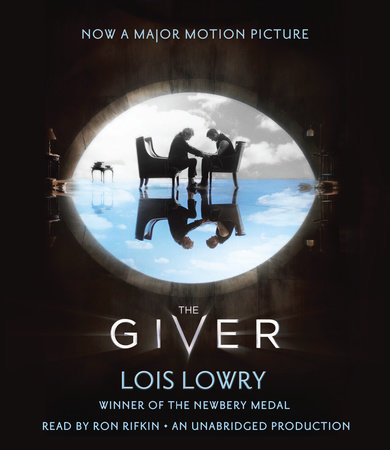
Book Review: The Giver by Lois Lowry

Imagine a community where life is idyllic: Citizens are assigned their partners, jobs, and family units. Everyone, being the same, obeys the laws. Those who are slightly imperfect are released from the community. Aforementioned community is one relieved of conflict, inequality, divorce, unemployment, injustice, poverty, disappointment, and pain—but all the same, deprived of true joy, color, music, sunshine, choice, and love.

Jonas, an incoming twelve-year-old, is of course extremely eager to determine his predetermined Life Assignment, just as the other soon-to-be Twelves are. However, during the long-awaited Ceremony of Twelve, Jonas is completely skipped over. The Elders, who assign jobs to the incoming Twelves, have carefully studied the children for years—yet Jonas has been skipped over.

And here, he learns that he was not assigned, but selected—for the most honored job in the community. Jonas was selected to become the next Receiver of Memory.

Jonas enters a new life, one where he is entitled to rudeness, questioning, and lying. He is also prohibited from discussing his training, dream-telling, applying for medication, and applying for release.

In training, a mysterious man called the Giver—the last Receiver before Jonas—begins to transmit memories to Jonas. Memories of the entire world, memories no one else in the community has experienced before. With these memories, Jonas is able to experience sledding downhill in snow, sunshine, rainbows, holidays, and family. On the other hand, he has also transferred memories of sunburn, fire, vomit, war, and other sources and results of pain. As the days go by, the burden of the memories Jonas carries transforms him into a much wiser person. He often becomes aggravated with his friends, as they do not understand him—they know nothing and feel nothing of what Jonas does.

The Giver, a tale of a utopia and its downsides, is unforgettable. In the part it plays in telling readers how important the little things in life are, I’ve realized how much we take for granted. Maybe those things won’t ever be taken away from us, but that’s no reason not to appreciate them. One part of the story that truly shocked me was the aspect of family—assigned Birthmothers would give birth to children, and two would be assigned to a couple to take care of. Citizens have no way of knowing their blood-related siblings, cousins, parents, aunts and uncles, and grandparents. Also, citizens are so shielded from pain and conflict that all seem to know nothing—all but the Receiver. Imagine!

Do not miss reading The Giver by Lois Lowry. This exceptionally perceptive novel tells of an unimaginable lifestyle in an unimaginable community through Lois Lowry’s powerful words, which craft a descriptive tale of law against love and safety against choice.

-Lam T.

The Giver by Lois Lowry is available for checkout from the Mission Viejo Library. It can also be downloaded for free from Overdrive

Book Review: Daisy Jones & The Six by Taylor Jenkins Reid

I recently finished the book Daisy Jones & The Six by Taylor Jenkins Reid and fell in love with Reid’s writing. The book tells the story of first, a band called The Six and a girl by the name of Daisy Jones. Living separate lives trying to make it on the music scene in Hollywood during the 60s, the two groups collide to create a joint band.

The story is told in the format of an interview that takes place long after the band has split due to circumstances you find out as you continue reading. As you read the book, you get to hear about the beginning, middle, and end of the band from their own perspective. The story dives into issues of the 60s and how they impacted the band on their way to success. 

Reid is very good at putting you into the book. She is able to create a space where readers can become one with the band and the way they write, and oftentimes why they write the music in the novel. One of my favorite parts is the end of the book, after the last chapter and epilogue, shares the lyrics for a multitude of the songs that are sung by the band on tours. 

Reid also writes the characters very real. They’re not written like many books or TV shows where the characters are perfect and can do no wrong. In Daisy Jones & The Six, the characters make mistakes and own up to them. This was one of my favorite aspects of the book. I recommend this book to anyone who loves music, or wants to dive into an entirely different world. The interview format that this book takes allows people to feel almost like they’re watching a documentary about these fictional characters. Reid with Daisy Jones & The Six is able to create a beautiful story about the struggles of making it in the music industry when you don’t always take the easy path.

-Danielle B.

Daisy Jones & The Six by Taylor Jenkins Reid is available for checkout from the Mission Viejo Library. It can also be downloaded for free from Overdrive.
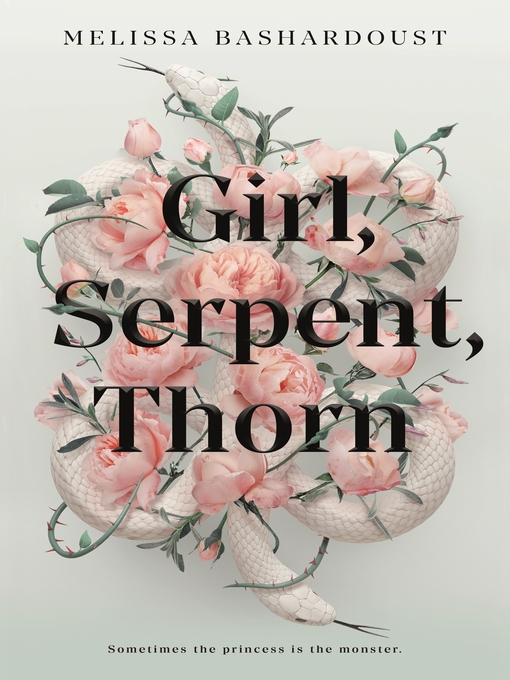
Book Review: Girl, Serpent, Thorn by Melissa Bashardoust

In the vast city of Golvahar resides a princess named Soraya, forced to be hidden away from the public eye. Cursed, she was born with the ability to kill any living being with a mere touch. Her yearning to be a part of her family and society flourishes with the years she stayed concealed in the gardens, watching everyone’s lives from a far distance. But all changes when a demon creature (div) who holds the knowledge to break her curse is captured and being held in the palace dungeon. A beau who perceives her past the poison running through her veins vows to help her but to what extent will she go to get what she desires? And will the choices she makes conform her into the monster she always tried not to become?

This enthralling tale of self-discovery and will power kept me hooked from the very beginning. Melissa Bashardoust takes stories from Persian mythology and makes a fascinating queer fairytale with many elements from Sleeping Beauty. The secrets told in the most unexpected times compels the readers to think deeper into the true meaning of “monster” and what it takes to be a hero. Told in the perspective of Soraya herself, we see the loneliness she had been through firsthand, allowing us to relate to and perhaps find ourselves in her story.

-Saanvi V.

Girl, Serpent, Thorn by Melissa Bashardoust is available for checkout from the Mission Viejo Library. It can also be downloaded for free from Overdrive.

Book Review: The Art of War by Sun Tzu

The Art of War: Sun Tzu: 0800759832941: Amazon.com: Books

Written over two thousand years ago in China, The Art of War consists of 13 chapters on “military calculus” written by the famed military strategist of ancient China, Sun Tzu. Within each section, Sun Tzu elaborates on key concepts regarding military strategy that he claims will allow any army to ensure victory if his guidelines are followed. Some examples are the importance of creativity when devising stratagems, the idea of incorporating deception in warfare, the different factors needed while fighting against the enemy, and more. 

While the work is quite old, Sun Tzu’s The Art of War continues to be relevant in contemporary times, not just on the battlefield, but also as it relates to ordinary civilian life. For example, throughout the book, Sun Tzu emphasizes the importance of relying “not on the likelihood of the enemy’s not coming, but on our own readiness to receive him.” Though the average reader will most likely never face a situation where an actual opposing army is attacking them, the idea of an “enemy” can easily be broadened to refer to any challenge faced in life. In this case, Sun Tzu urges the reader to not overly depend on luck, but instead on their own skills and abilities, to achieve their goals through proper planning of every possible scenario.

In addition, the concise language employed by Sun Tzu hints at other truths about life. Although this may not have been Sun Tzu’s original intention, and could possibly have arisen through the multitude of translations of the work, the simplistic structure of the novel itself is undeniable. Rather than pushing the information in large blocks of text, Sun Tzu breaks up his main points into easily digestible statements that serve to stress their importance to the reader. This avoidance of overly convoluted sentence structures also lends itself to the implication that simplicity should be prioritized over complexity, both on the battlefield and in life.

Overall, despite the fact that most of today’s readers of The Art of War are not actually at war, it is an undeniably fascinating look into the thoughts, actions, and habits that can lead to success in any endeavour that one pursues.

-Mahak M.

Sun Tzu’s The Art of War is available for checkout from the Mission Viejo Library.