The Idiot by Fyodor Dostoevsky

The Idiot by Fyodor Dostoyevsky: 9780451531520 | PenguinRandomHouse.com:  Books

Like most of Dostoyevsky’s novels, “The Idiot” has a tragic ending, but that doesn’t make “The Idiot” a work of pessimism. The tragic ending of the protagonists reflects the author’s pain caused by the yearning for a better future. The positive ideal put forward by Dostoevsky has been bankrupted, but the ardent yearning for the good ideal is forever shining with the radiance of humanism. The novel gives a broad description of the Russian upper class after the reform of serfdom, involving complex psychological and moral issues. The good, tolerant Prince Myshkin is powerless to influence or benefit those around him, a Quixotic figure whose futile efforts show the disillusionment of the author’s attempt to save the world through faith and love.

“The Idiot” develops themes of indignity and victimization. The strong rebelliousness of the heroine Nastasya Filippovna and the kindness and purity of the positive character Prince Myshkin give the novel a bright tone. But some nihilistic images used to attack revolutionaries have weakened the novel’s revealing power. The development of bourgeois social relations and the disintegration of old social relations are observed and expressed from the perspective of moral psychology. The plot of the novel takes the emotional entanglement of the hero Prince Myshkin, Nastasya Filippovna and Aglaya Yepanchina as the second main line of humanitarianism about kindness and love.

Although he was clearly called an idiot by many people around him at that time, people close to him showed to him that in the social environment at that time, people were ashamed to show their love and supreme trust and their sincere yearning for truth, goodness and beauty under the cover of false and vain appearance. The main idea of a novel is to portray an absolutely beautiful character, and there is nothing more difficult than that, especially now. All writers, not only In Russia, but all over Europe, feel powerless if they wish to depict absolute beauty. Because it’s an incredibly difficult task. Beauty is the ideal, and the ideal, whether for us or for civilized Europe, is far from being formed. There is only one absolutely wonderful person in the world – Christ. Therefore, the appearance of this incomparable and infinitely beautiful figure is certainly a permanent miracle. That’s what the Gospel of John means. He sees miracles as mere manifestations of beauty. The author modeled Prince Myshkin according to the image of Christ in his mind. He was the spokesman of Christ and the embodiment of moral beauty. As an image of pure moral beauty, Prince Myshkin embodies all the virtues of Christ — love, humility, obedience, patience, open-mindedness, selflessness, repaying good for evil, faith, keeping the suffering of mankind in one’s own heart, always ready to sacrifice for others. In Prince Myshkin, morality is religiously incarnated, that is to say, morality finds its home in faith in Christ.

The implementation of morality is guaranteed by religious belief and its system. The life brought about by the moral efforts of the inner self is also the sublimation of the soul brought about by salvation. Only the moral binding force of religion can bring people from vulgarity to sanctity, from humble to sublime. Therefore, “The Idiot” reveals that moral belief and sanctification are the only way to play the role and function of society, and the moral destination is religious faith, the Russian Orthodox Christ. The so-called “beauty” refers to the personality and moral beauty embodied in Christ, and the spirit of Christ’s beauty is the only power to save the world from suffering. Christ is the ideal entity of moral perfection, and man’s redemption in this world is Christ who is the symbol of moral perfection after the baptism of suffering, the purification of love, the removal of evil from good. In fact, the religious belief in “The Idiot” is rooted in moral necessity. Thus, on the surface, the work is a loud call for the return of religious belief and a repeated argument for the existence of God, while the real concern is that without the shadow of religious belief, morality will become homeless. If there is no God, everyone can do as he pleases. Therefore, God is needed to restrain people to realize the perfection of people and the ideal harmony of society.

At the same time, for individuals in the real society, the practice of morality should be reflected as a kind of behavior of consciously obeying the teachings and strictly complying with the moral laws of religion in the world. The core of Christ’s beauty is love, and love is the eternal content of moral law. A man should be an enhancement of Christ’s virtue. The moral concept of “The Idiot” reflects a moral ideal, which in real life is more reflected as a man-made act of peace, and becomes the state of personal cultivation and pursuit to achieve. In this state, it is assumed that being is realized in love and that the development of being is accomplished in love. Love first, regardless of logic, only then can you grasp the meaning of life. If you love life, half the battle is yours. In a society where everyone loves each other, the world is becoming more and more beautiful, and all human beings are marching towards messiah and universal harmony. This is the beauty of Prince Myshkin to save the world, and this is the heaven on earth that Prince Myshkin wants to create. “The Idiot” ends with Parfyon Semyonovich Rogozhin killing Nastasya Filippovna, thus pushing human sin to an extreme. This destructive act means salvation for both Parfyon Semyonovich Rogozhin and Nastasya Filippovna. The scene of Nastasya Filippovna’s death was somewhat similar to the crucifixion of Christ in Golgotha; her body bore a striking resemblance to the image of the dead Christ hanging in Luo’s room. Nastasya Filippovna takes her name from the Greek word Anastasius, meaning resurrection, and receives death with equanimity, exactly like Christ. To her soul, death meant resurrection. She sacrificed her life to atone for her sins and overcome her spiritual death. In addition, Parfyon Semyonovich Rogozhin’s name is most likely borrowed from Moscow Rogozhkoe cemetery where he is on the verge of death, signifying the possibility of a new life.

-Coreen C.

The Hound of the Baskervilles by Arthur Conan Doyle

The Hound of the Baskervilles - Kindle edition by Conan Doyle, Arthur .  Literature & Fiction Kindle eBooks @ Amazon.com.

As in Doyle’s previous work, the narrator of The Hound of the Baskervilles is Watson, who, as Holmes’s close companion, becomes an important participant in the case. Most of the novel is presented in the form of Watson’s memoirs, which also means that Watson belongs to the narrator outside the story, that is, has a higher level of authority over the story he narrates. It’s not the equivalent of an omniscient narrative, but when he tells a story, he knows the ins and outs of events. The narrator knows everything, but in telling the story he deliberately hides some of the facts until the end. Watson, for example, knew that the hound’s legend had been deliberately distorted by Stapleton, but he did not reveal this until the climax of the novel.

By setting up suspense, this design delays the satisfaction that readers get from knowing the truth and encourages them to continue reading. Watson was involved in the investigation of the whole affair. The first-person narration can increase the reader’s sense of identity and feel the development of the story from the perspective of the narrator. As the previous narration has laid the foundation for this inexplicable fear, it is easier for the reader to identify with the narrator and feel the great pressure from unknown dangers. Although the reader believes that the novel will follow the usual formula of the detective and that the danger will be relieved at the last moment, the tension caused by the text will not be lessened due to the strong emotional identity between the narrator and the reader.

On the one hand, it is convenient for the author to hide important information so as to attract readers. At the same time, it makes readers identify with emotions, and then reaches the purpose of attracting readers by setting suspense. Rather than telling the story chronologically, Doyle reshuffles the events to give the text a variety of features. For example, when Watson and his party are about to leave for Dartmoor, Holmes compares the moor to a stage where a tragedy is about to take place. He was clearly referring to something that had not yet happened, a statement that could be called a flashback. In this way, Doyle tells the reader that a play is about to begin.

Prenarration is rarely seen in western narrative texts, but Doyle is adept at it and draws the reader’s attention to the upcoming story. In addition to a few previews, the novel also contains long flashback. One function of flashbacks is to provide context for current events, such as when Dr. Mortimer talks to Dr. Watson about a woman whose initials are L. L., and Mortimer tells him the woman’s identity and recounts her harrowing experience. This background can give the reader a clue to the truth. However, due to the disordered timing of narration, it is also a challenge for the reader to piece together the information scattered throughout the text. But it is this non-linear narrative that makes the story confusing and adds to the sense of suspense.

Flashbacks also delay the revelation of the truth, allowing the reader to keep curiosity to the last minute. In this case, although the criminal has been punished, the motive of the crime remains unknown. It is not until the last chapter that Holmes reveals Stapleton’s plot in his Baker Street flat. Such flashbacks fill in the information gap in the previous text and maintain the tension of the text to the maximum extent. It can be said that the use of foretelling and flashbacks makes the novel more attractive.

-Coreen C.

The Age of Innocence by Edith Wharton

Amazon.com: The Age of Innocence: Romance Novel eBook: Wharton, Edith:  Kindle Store

Edith Wharton gives an accurate picture of the society and customs of New York. The dullness of the characters in their absolute captivity, the artificial and false standards, the drudgery of routine, the gradual rigidity of passion, the numbness of feeling, the loss of life — these are all perfectly relevant. She calls it a kind of symbolic universe, where real things are never said, never done, never even thought about, but simply represented by symbols that are always at will. Wharton’s contradiction of her upper-class society is fully explained in The Age of Innocence, which is both negative and positive. The themes of The Age of Innocence are intriguing. Wharton mercilessly mocks the high society and its conservative and ludicrous moralism with which she grew up, but she also affirms some of the values in such a society. These values include decency, honesty, responsibility, and so on.

Wharton’s affirmation of the real society is actually a kind of submission to the huge pressure of the society, a kind of helplessness, inability to solve, and nowhere to breakthrough. Thus, in such a contradictory society, the fate of the individual is doomed to tragedy. In a sense, Wharton extends from the helpless real world to the ideal spiritual world. The real world is full of limits and contradictions, but the spiritual world she created has infinite possibilities. But in her spiritual world, The Age of Innocence, everything returns to vanity. The fortunes of the Beauforts in the novel epitomize the alternation of old and new In New York. He had no noble blood, and at first, he rose to the upper classes by the strength of his fortune. But his position was untenable, and he was mercilessly exterminated when he violated the established business principles of New York society. The ebb and flow of Beaufort’s personal fortunes represented the constraint of social morality and family values on commerce. At the end of the novel, Beaufort’s daughter Fanny returns to the group and is welcomed and loved. The marriage between Dallas Archer and Fanny at the end of the novel represents the way of life of the new generation at the turn of the century, and also shows the inexorable advance of society, with the former firmly gaining the upper hand in the battle between business and family. The enormous influence of commerce permeates into every aspect of society, promotes and speeds up the development and fission of society, and also reformulates social ethics.

-Coreen C.

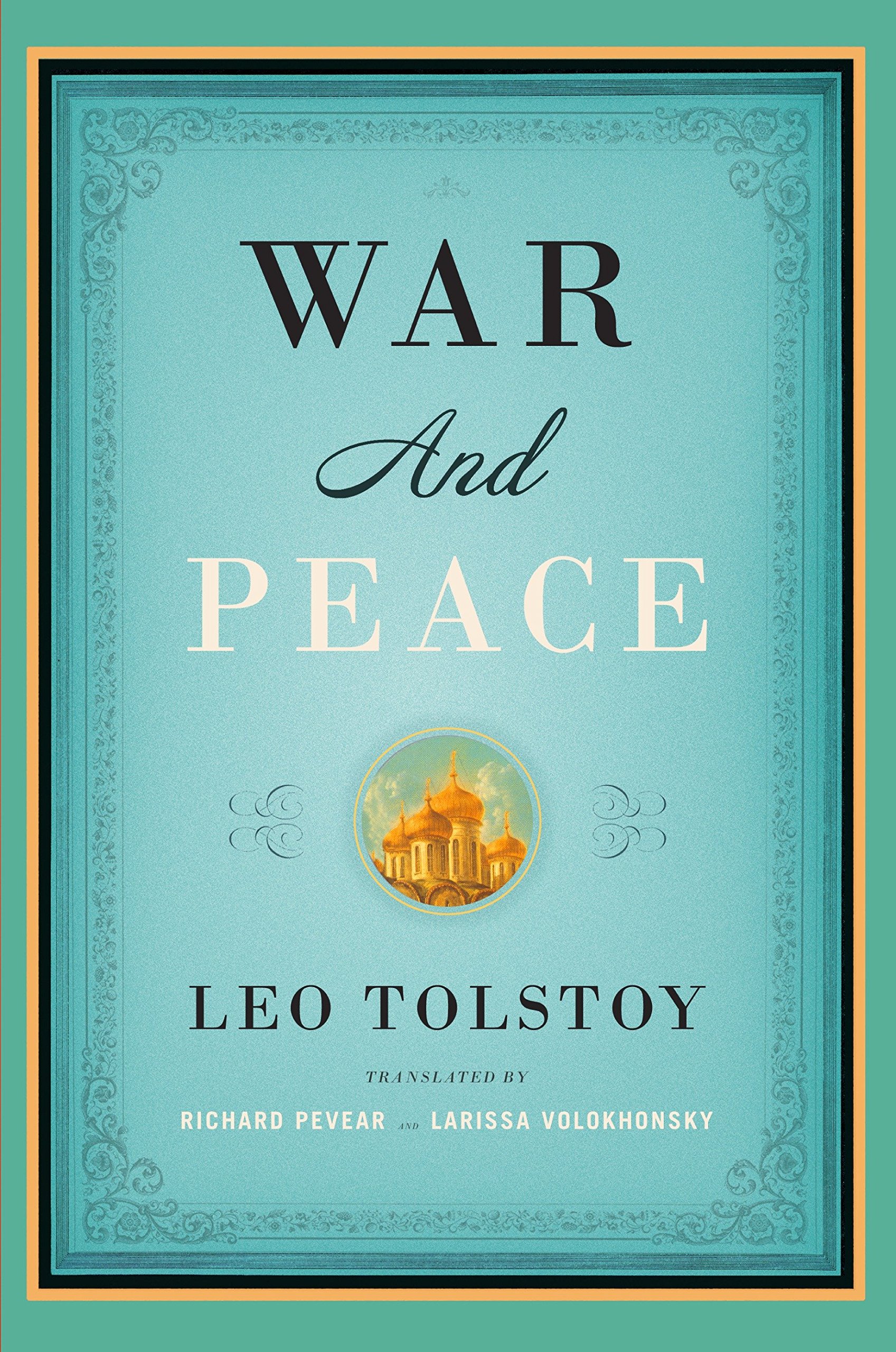
War and Peace by Leo Tolstoy

Amazon.com: War and Peace (Vintage Classics) (9781400079988 ...

This book centers on the Great Patriotic War of 1812 and reflects major historical events from 1805 to 1820. Taking the experience of Bezuhov, Rostov, and Kuragin as the mainline, it connects many events and characters in the alternating description of war and peace. The author cross-described the two lives and two threads of “war” and “peace”, forming an encyclopedic magnificent epic. The basic theme of “War and Peace” is to recognize the just resistance actions of the Russian people during the war, and to praise the patriotic enthusiasm and heroism of the Russian people during the war. But the tone of his work is one of religious benevolence and humanitarianism. He opposes war and sympathizes deeply with the suffering of all sides.

Andrei, Pierre, and others have experienced a tortuous and dialectical development process in their pursuit of ideals and truth. The different mental manifestations of the Russian troops in different battles, such as panic, calmness, and passion, combined with the distinctive individual psychological motivations of each bearing in the specific war, melted and formed the spiritual atmosphere in every corner of the battlefield. Morale is the key to win or lose in a war. The novel War and Peace has both the magnificent color of epic novels and the depth of expression in its insight into the psychology of characters and even the entire nation. The work focuses on a panoramic overview of social life, realizing the epic aesthetic ideal of the creative subject and transcending the work itself. War and Peace powerfully exposes and criticizes the decadence of the upper-class society. In the critical autumn of their motherland, they are still fighting for power and wealth, leading a life of luxury and dissipation and shamelessness.

-Coreen C.

In 27 Days by Alison Gervais

The novel is about a young teenager who goes back 27 days in time to save a classmate from committing suicide. The teenage girl named Hadley never knew the boy named Archer who took his own life but felt compelled to help save his life. She goes through a lot in order to get closer to this boy. She uncovers secrets about him and learns more about herself.

I love this novel for multiple reasons. The first is that the story is very compelling and the characters are relatable. Many people have been through traumatic experiences and would probably feel the pain Archer was going through. People are lonely all of the time and no one seems to notice. I relate to Hadley, the girl who tries to stop the boy from committing suicide. She is a very compassionate character who goes out of her way to help this classmate that was a stranger not too long ago. I truly felt like I understood her feeling of emptiness when he was gone, guilt for not trying to talk to his freshman year and dedication to saving him from taking his own life where people cared about him and needed him.

The second reason is because suicide is a prevalent issue that needs to be addressed in 2020. This novel shows the importance of looking for suicidal signs and the possible ways people can help prevent others from taking their own life. Many people are very lonely and need to have someone to talk to. I think that this novel is an example of what could happen if we as a society were more inclusive.

-Ellie B.

If you or someone you know has discussed or thought about suicide, call the National Suicide Prevention Lifeline at 1-800-273-8255.

The Westing Game by Ellen Raskin

The Westing Game is a short novel by Ellen Raskin.  This book has won several awards, including the Newberry Medal.  The story is about a millionaire named Samuel W. Westing.  Sam Westing was known as an eccentric man who loved games.  He left behind a very strange will.  According to the will, his vast fortune would be inherited by the person who could win a perplexing game he had devised before his death.

The will only allowed certain people to play the Westing game.  They were not the kind of heirs typically included in a will.  The game participants seemed to have no relation to each other, but they all had some kind of connection to Sam Westing.  According to the will, he had actually been murdered by one of his heirs.

The people all seem confused that they were selected to play this game, but each of them wants to win the Westing fortune.  The game involves various clues that arouse suspicion in each other.  As the game unfolds, the heirs discover many surprises, and realize that Sam Westing’s game is more dangerous than they had supposed.

I have read this book several times, even though I have already learned the surprise ending.  I still enjoy reading this book for its suspense and humor.  I also like reading about all the different characters, and their unique personalities.  The story is very clever and full of surprises.  This book is very engaging and I think you will have a hard time putting it down once you start reading it.

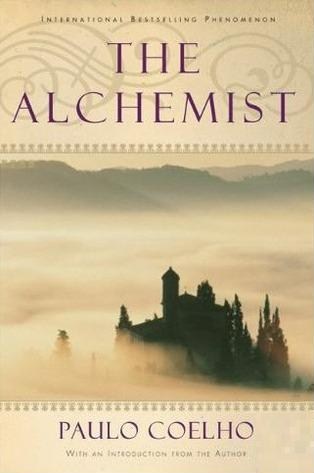
The Alchemist by Paulo Coelho

This award-winning book, The Alchemist, by Paulo Coelho, guides readers through a dangerous yet exciting journey of finding what is important in one’s life and to never lose hope to accomplish any dreams.

The main character, Santiago is a confident, shepherd boy that is known to be curious about the world and to believe in what he wants to believe in. In the book, he travels to many places but his destination is the Egyptian pyramids where he hopes to find treasure. Throughout the story, he receives advice from many mentors about finding his “Personal Legend”. He is taught to never lose hope and to follow his dreams which is what Santiago does. Being beat up after every obstacle Santiago has to face, by the end, he is a powerful and gritty young boy who realizes that he has the ability to accomplish any of his dreams. Join Santiago through his long journey, battling difficult circumstances and ultimately reaching his goal. With helpful advice from many individuals Santiago meets through his trip, there is valuable information that is important for the reader to also take in.

Though the book is not very long and not very hard, it is important to not speed through it but to understand The Alchemist is trying to teach us. I really liked it and if you decide to read this book too, I think you will like it as well.

– Amandine K.

The Alchemist by Paulo Coelho is available for checkout from the Mission Viejo Library. It is also available for download from Overdrive

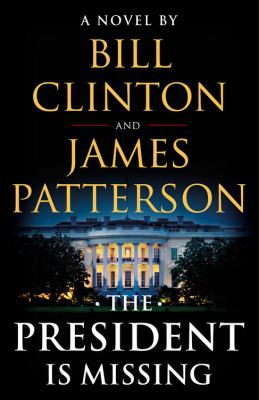
The President is Missing by Bill Clinton and James Patterson

During quarantine, many of us have been searching for ways to distract ourselves from all the issues going on in the world right now. For me, the best distraction has been reading. I have always had a list of books that I am going to read “at some point,” but never actually got around to reading until now. One of those books was a friend’s recommendation: Bill Clinton and James Pattersons’ The President is Missing.

The President is Missing tells the story of a fictional President Jonathan Duncan, and his attempts to stop a cyber-terrorist attack from fictional terrorist leader Suliman Cindoruk. Duncan had attempted to negotiate with Cindoruk in order to make peace but later faced impeachment trials because of this collusion and its implications. Duncan meets two informants from Cindoruk’s group, but one of them is assassinated during the meeting. Duncan is forced to flee with the remaining informant, Auggie, to a safe house. There, he learns that Auggie and his colleague Nina created an extremely dangerous computer virus called Dark Ages for Cindoruk, but later fled to the US to help halt its use in cyber warfare. The virus is released the next day and the Los Angeles water treatment plant is sabotaged, thus contaminating all the water in the area. This is when Duncan and his staff find out that the true function of the Dark Ages is to contaminate all food and water supply in the US and use technology to sabotage everyday society. Duncan and his colleagues at the Pentagon race to figure out the disable code for Dark Ages, and his vice president is suspected of leaking the confidential information used for the virus. At the last minute, Duncan’s chief of staff correctly guesses the code word and the country is saved from Dark Ages and the impending cyber-terror attack. The person who leaked the confidential information and helped orchestrate the terrorist attack with Cindoruk is caught (no spoilers!) and the country is saved. 

This story is an epic work of fiction and is a perfect book to read during isolation. The story is incredibly intriguing and will keep you guessing until the very final page. Stay safe and keep reading!

-Katie A. 

The President Is Missing by Bill Clinton and James Patterson is available for checkout from the Mission Viejo Library. It can also be downloaded for free from Overdrive

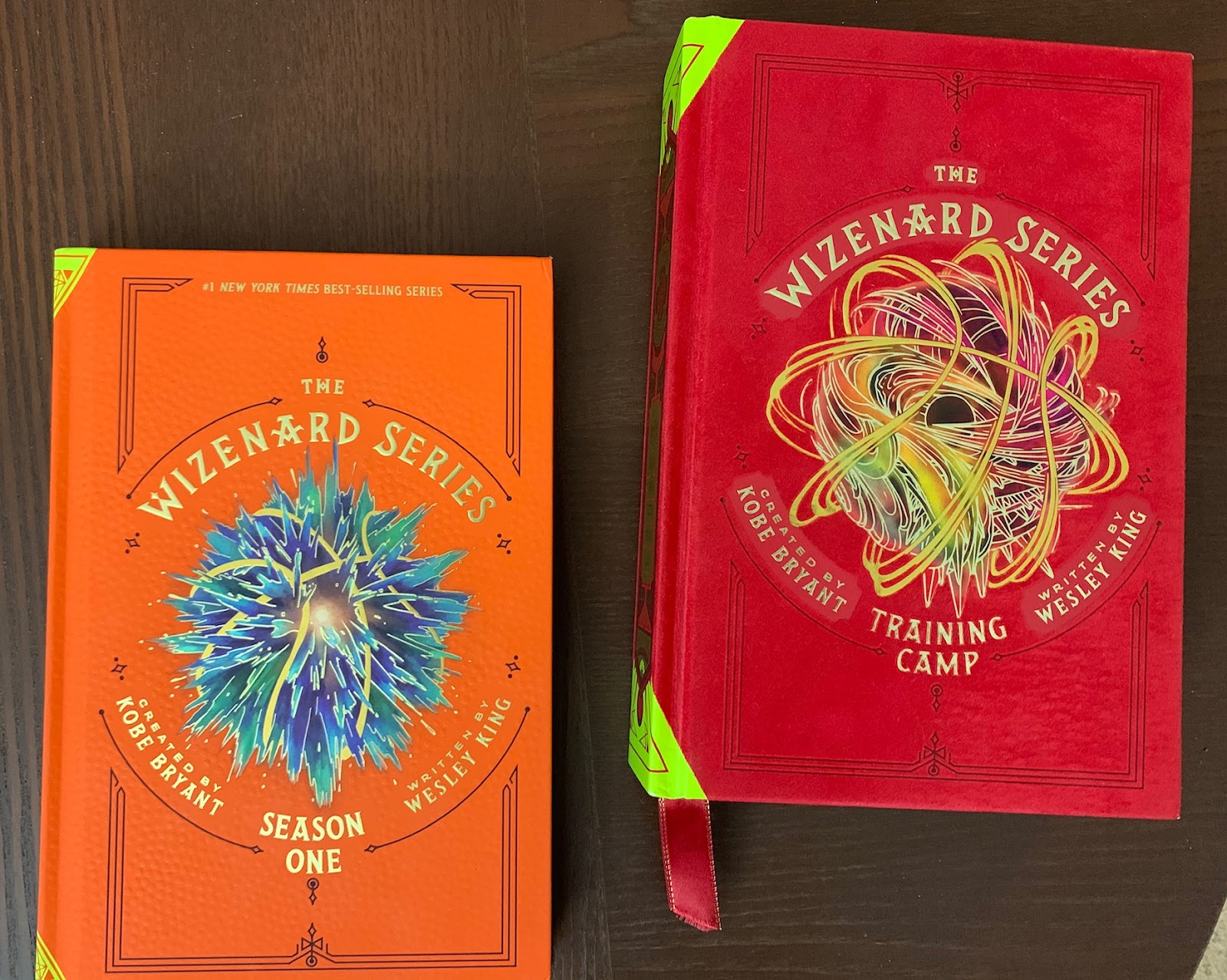
The Wizenard Series by Kobe Bryant and Wesley King

When did magic and basketball meet? Floors moving uphill and downhill, mysterious writing on the wall, each person seeing a different vision than the next in the same place! Is there anything Rolabi Wizenard can’t change? Well, as Rolabi Wizenard tests a struggling basketball team’s commitment and desire, they find out how to handle fear and learn to overcome the biggest challenges! A team determined to win, The West Bottom Badgers start an incredibly long journey to the title, with Rolabi Wizenard as their coach! 

As each player faces their own challenges, they all have to find a way to come together as a team and compete for a championship! A team from The Bottom part of Dren is starting their adventure now. They have no time to waste, they just need to work hard everyday, and play while controlling their fears. Everyone comes from struggling parents, who can’t pay all their bills, but their hearts are bigger. Their desire to win is stronger! The main question is: Will all their hard work be enough?

As the West Bottom Badgers learn to work and hard and fight through fear, they start to unlock their true potential. Former bench players become stars and the whole team starts to look up. That is until they start the season. The season starts off very rough as they start off with 5 straight losses without a single win. Their hopes to win the championship, once as high as a mountain, start to plummet as each loss comes and goes. 

The Wizenard Series is a 2 book series with the first book being the same story in all the different parts of it, just from different perspectives. You get 5 different angles of the story with Rain, Twig, Cash, Peno, and Lab. The 2nd book is with Reggie, where you get a view of the first season with Rolabi Wizenard as head coach from the eyes of Reggie.

As everyone faces problems and challenges on the court, most of the kids also face problems off the court. Some sleep on the ground, some have to work hard into the night to earn the money their family needs, and some have lost family members. Well, after all, this is The Bottom. Once someone comes to The Bottom, they have a hard time leaving, and that is just like the situation everyone on this basketball team is in. Professor Rolabi Wizenard not only teaches these kids basketball, but he also teaches them life. Will they be able to apply what they have learned from him into their daily lives as they get older and try to get out of The Bottom with basketball?

I enjoyed reading this fabulous book, and I would rate it a 10/10. It is one of the best books I have ever read.

The first book: The Wizenard Series: Training Camp, the second book: The Wizenard Series: Season One

-Mert A.

The One by Kiera Cass

Caution: May contain spoilers from The Selection and The Elite.

While I would consider The Selection series to be more lighthearted than other dystopian YA novels, the third book, The One, certainly introduces more darkness to America’s tale. Nevertheless, it still possesses Kiera Cass’s quirky and imaginative flair that pervades the first and second books.

As both the Selection within the castle walls and the rebel situation outside escalates, they seem to blend together into a far more complex issue than America had imagined possible. Rebel attacks increase as protest rages against the Selection and the continuation of the monarchy and Maxon struggles as his decision grows closer–a decision through which he may not be able to please both his father and his heart.

It seems that as the books have progressed the characters of the Selected have been able to grow more detailed. While America’s character bursts from the pages of the first book, many of the Selected were not as openly described, and understandably so–imagine describing and reading about 35 different characters who might not all play a large role in the story!

However, since only 6 of the Selected remain, we get to explore these characters in more depth, which I found interesting and enriching to the story. By explaining their motives and backgrounds, Kiera Cass allowed the other 5 girls to become more than just America’s competition. I particularly enjoyed a scene where the remaining Selected talk in America’s room without enmity.  With the escalation of the dangerous situation, they are able to look beyond their more frivolous squabbles.

One aspect I admire about America is that true to her decision in the first book, she remains true to herself. Though she wavers at times, especially as the competition becomes intense and when she is intimidated by the king, she consistently chooses what she feels is true to her values and herself, even if by doing so she could diminish her chances of being the One.

The One, full of romance and action; rebellion and choices; politics, love, friendship, fear, and humor, pulls the Selection and the first half of the series into a dazzling, glittering finale.

– Mia T.

The One (and the rest of The Selection series) by Kiera Cass is available for checkout at the Mission Viejo Library. It can also be downloaded for free from Overdrive