For fans of the aesthetic of upper-class academic settings or those drawn to the darker, more morose themes of literature (or both), Donna Tartt’s The Secret History offers a captivating and chilling experience.
Set at Hampden College in Vermont, the novel follows 20-year-old Richard Papen, who joins an elite, selective Ancient Greek class taught by a brilliant but detached professor. Richard finds himself having to assimilate with the foreign ways of his intellectually and socially superior classmates, who harbor secrets that lead to a series of tragic, life-altering events.
What I found to be most interesting in The Secret History was its exploration of themes like the corrupting impact of economic privilege, the conflict between morality and loyalty, and the weight that guilt carries on one’s consciousness. The novel is full of introspective, philosophical reflections and literary references, which may appeal to readers who enjoy deep character studies, thoughtful commentary on day-to-day life, and stories that stick with you long after the final page.
If you are unsure whether or not you’d enjoy the book, here are a few similar ones that you could compare it to:
–Dead Poets Society, N.H. Kleinbaum: Academic settings that are a breeding ground for free intellectual thought that take a turn towards darker themes
–The Picture Of Dorian Gray, Oscar Wilde: Captures the psychological and moral downfall of a member of the intellectually and economically privileged class
–Brideshead Revisited, Evelyn Waugh: Shows the nostalgia, beauty, and eventual downward spiral of a set of elites through the eyes of an outsider.
Happy reading!
The Secret History by Donna Tartt is available to check out from the Mission Viejo Library. It is also available to download for free from Libby.
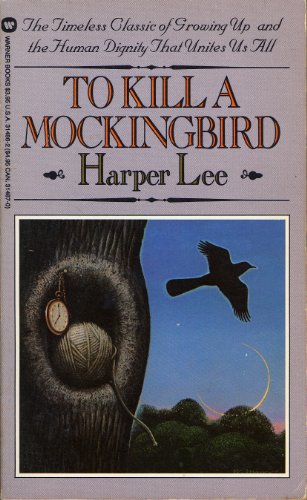
It’s that wonderful time of year again… the end of first semester freshman year and the beginning of the enduring English 1 ritual: To Kill a Mockingbird.
I’ve heard a lot of complaints about TKaM, usually about how boring it is and how no one can understand what the heck is going on. But I beg to digress, because though it’s one of the most commonly read books in the high school curriculum, ever, I really enjoyed reading this book.
Obviously, the story of TKaM is pretty famous already, and I think it’s important that high schoolers are forced to read a book that confronts issues still relevant in our society today. Especially in a time when books are being banned and voices are being silenced, it’s important to have this classic in our schools and education system.
There have been concerns about the prevalence of the n-word, about ideas of white saviorhood in the book, and also opposition from others who want to suppress this unsavory part of American history. But the tragic story of Tom Robinson is an important lesson, and despite some valid concerns, I think To Kill a Mockingbird fittingly and engagingly introduces an idea and a time period that shouldn’t be erased from our school books.
Moreover, I think it’s just a well-written story and an enjoyable read. Maybe it’s time we stop complaining about the “weird” wording and appreciate it for what it truly is.
To Kill a Mockingbirdby Harper Lee is available to check out from the Mission Viejo Library. It is also available to download for free from Libby.
The commonly used phrase “Re” in anime actually stands for the word “again”. Re:Re (Again:Again) also just so happens to be the opening song for in my opinion, one of the greatest works of fiction to exist: Erased. The name Re:Re is a perfect way to pave an introduction to this classic, science-fiction mystery, as not only does the main character go through the same intense, thriller-filled experiences over and over again, but Erased itself also made me read and watch the story more times than I can count.
Erased begins by narrating the pathetic, hollow life of 29-year-old failed manga artist Satoru Fujinuma in 2006. Due to this, Satoru works as a pizza delivery driver to make ends meet. Unexpectedly, after a singular life-changing encounter while delivering pizzas, Satoru awakens a special power that he calls “Revival”, an unexplained, supernatural ability that transports him (however many minutes he needs) back in time to “fix” a tragedy that is about to occur. For the next couple of weeks, “Revival” happens to Satoru almost every day, giving him the hero-like chance to save the lives of many strangers around him.
However, after an uneventful day out and coming home from work, Satoru is met with the horrifying, startling murder scene of his dear mother. To make matters worse, the neighbors come in at that exact moment, pinning Satoru as the suspected killer. In this hell-like scenario while running away and hiding from the police, “Revival” suddenly occurs once more, except this time, instead of time-traveling 1 minute, 5 minutes back in time, Satoru opens his eyes to find himself in the body of his 11-year-old self. He had traveled back in time all the way to 1988. Watch Satoru find his hero within as he tries to save the lives of three fifth-grade classmates who were kidnapped and killed in his past while also trying to identify the person behind murdering his mother in the future.
Satoru Fujinuma, 2006, Age 29
I watched Erased (anime) for the first time many, many years ago. For the record, I had been an avid fan of mystery-genre fiction for a while, yet still, the emotional thrill while binging all 12 episodes in one day was ingrained in my memories and left an indelible mark in my heart for the rest of my life, all up until now. While the plot as described sounds very action-packed, in my opinion, Erased is much more like a reflective commentary on society, problems within households, friendships, the importance of believing others, love, and creating your role, your hero, no matter what it takes. The anime not only gave me the rush of intense drama, but also made me cry and wail, cheer for the friendships and progress made for Satoru and his peers, and even pause the show entirely to digest the weight of its emotions and ideas.
I thoroughly enjoyed the low-key tenseness of the tone throughout the show, as my interpretation of it is that it’s a reflection of Satoru’s inner turmoil. That being said, all the characters are all very well-developed, complex, and gain a better understanding of themselves as the show progresses as well.
Now here comes my opinion on the manga, which I have to say, is at least 100x better than the anime adaptation.
Erased Manga ; Volume 1
Yes, you heard me right: anime adaptation. As what happens with most animes, Erased is yet another unfortunate victim of an animation production team taking the original manga and cutting out parts of the storyline to fit the budget. Except in this case, the anime not only cut out supplementary enjoyable moments but also a big, important chunk of the storyline and even the entire ending. You heard me right again– the entire ending of the Erased anime was in fact not the original ending.
This is also a reason why many viewers were split in their opinions on the show. While very few people say that the whole anime was bad, lots of reviewers on either side (positive and negative reviews) can agree that the ending for the show was, in fact…pretty bad. Personally, when I saw the anime, I felt indifferent to the ending overall, yet can agree it lacked so much potential impact. When I read the manga with the original ending (that the anime should’ve gotten), however, I realized just how perfect this work of fiction actually was. I am a firm believer that the unanimous critique of Erased being “bad” solely because of its ending can easily be revoked if everyone had just read the manga after, or even before.
“The town where only I am missing is my treasure!”
The manga goes much deeper into the psyche of all the characters, their motivations, backstories, and thinking. In fact, the entire last volume of the series (Volume 5), is literally the narration of Erased in the perspective of all major characters. Not only does the anime lack the depth in characters that is characterized in the manga, but it also barely clears up confusing plot points– or even covers them at all!
If you’re thinking about picking up Erased, your question would probably then be: Should I read the manga or watch the anime first? My honest answer would be that it depends on what you’re looking for. And I’m going to be honest: while I do definitely recommend to both read and watch Erased, doing one or the other first could impact your experience/impression of it. I personally watched and then read, but for others, watching the anime ending of Erased first might make them drop the manga. I’m telling you (if you decide to watch the anime first) to trust me on how the manga is worth the read (even if the anime made it seem like that isn’t the case). On the other hand, if you choose to read the manga first, watching the anime after will feel like a waste of time and even a disappointment. Either way, Erased itself as a work of fiction is absolutely phenomenal and worth the tears.
“…”
“I always believed.”
This post has been NECcesarily long (haha), but I would like to end with just another fun point. In the original manga and anime release in Japan, Erased is actually called “Boku dake ga Inai Machi”, which directly translates to “The Town Where Only I Am Missing”. Only upon its English release did that name somehow turn into Erased. This sudden change of a name is particularly startling for me, as the original Japanese title makes much more sense and is directly correlated to the storyline. The name Erased, however, is only a name and title without any further meaning.
The name The Town Where Only I Am Missing seems really dark. But after watching the show, maybe then you’ll realize that such isn’t the case.
“A guy needs somebody—to be near him. A guy goes nuts if he ain’t got nobody…”(Steinbeck 108).
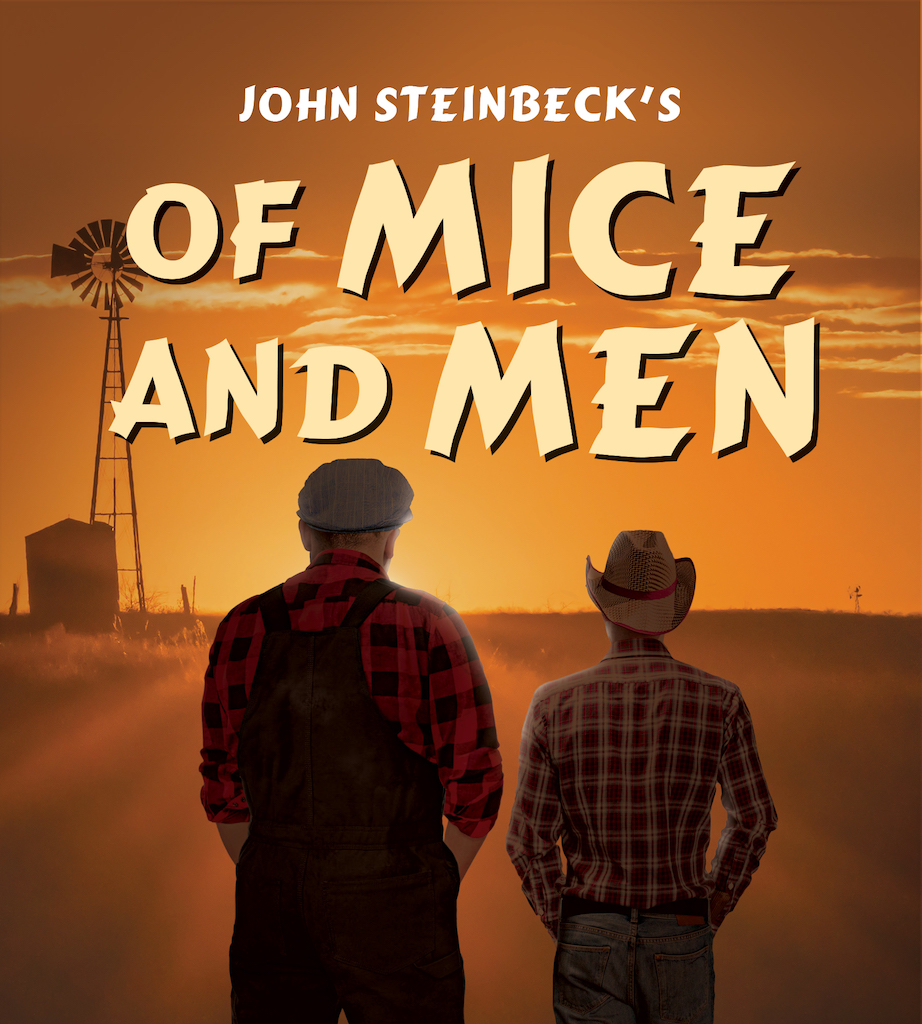
Out of the many books I read in class my freshman year, I enjoyed reading Of Mice and Men by John Steinbeck the most!
What I love most about this book is the bond between the two main characters: George and Lennie. I love their relationship. George cares about Lennie, but finds him tiresome and a lot of work to take care of, but would never abandon him. Lennie, in turn, sticks with George and looks up to him.
In my opinion, Steinbeck did an amazing job at designing the side characters! My favorite characters would be Slim and Candy, because I feel that those characters were developed the most. Another detail I liked was how Steinbeck constantly dropped hints in the text that most readers would overlook. For example, when we first met Candy as a character, he was described as an old handyman who is missing his hand, and has an old dog that he raised since it was a pup. When I read this in class, my mind immediately drifted off to “Why did he lose his hand?” or “How did he lose his hand?”.
The ending completely tore me apart, however. I know what George did wasn’t the best idea at the moment, but he did it out of his love for Lennie, believing that if the gang caught him, they would torture him before killing him. I wondered however, if there were more possibilities? For example, couldn’t he have helped him escape? There was a cave at the beginning of the story…couldn’t he have gone there instead? However, I do understand. With the gang approaching rapidly, there probably wasn’t enough time. Out of 5 stars, I’d give this book a 4.7. I recommend this book to adults who need a reminder of the good in life.
Of Mice and Men by John Steinbeck is available for checkout from the Mission Viejo Library. It can also be downloaded from Libby.
The Egypt Game, by Zilpha Keatley Snyder, is the story of a young girl named April Hall. April’s mother is an actress in Hollywood, but she sends April away to live with her grandmother in Berkeley, California. April makes friends with a girl named Melanie and her younger brother Marshall. Together, they come up a game that they play behind an old antique store run by a strange man known as the Professor. They call it the “Egypt Game.” As the days go on, the game grows to six members as they make new friends. They wear Egyptian costumes and pretend to have ancient Egyptian ceremonies. It all seems like a fun and imaginary game about Ancient Egypt. However, strange and mysterious things begin to happen to the children, causing them to feel that they are in serious danger.
This book received a Newbery Honor award. I think that it deserves this honor because it is very well-written and engaging. The characters are realistic and the story moves along at a good pace. The story is also very suspenseful, which made it difficult for me to stop reading once I started. Overall, this book definitely exceeded my expectations. I expected it to be a typical book targeted to young people, but it had more depth and originality than I expected. I enjoyed the way this book blended imaginary game playing with real-life action. These imaginative children are very lifelike characters, and their adventures are exciting with many unexpected twists. I was pleasantly surprised that I enjoyed this book as much as I did and I would highly recommend it to everyone.
The Egypt Game by Zilpha Keatley Snyder is available to check out from the Mission Viejo Library.
The White Stag is a short novel written and illustrated by Kate Seredy. This book is a mythical retelling of the journeys of the Huns and Magyars as they migrated across Asia and into Europe. The story begins after the fall of the Tower of Babel. The great hunter Nimrod is waiting for his sons, Hunor and Magyar, to return from chasing after a mysterious white stag. Nimrod had been leading his people to a bountiful land promised to them by their god, Hadur. Now stricken with old age, Nimrod is unsure about who will lead his people. He believes that he must sacrifice his war horse, Taltos, to gain further direction from Hadur. After the performance of this sacrifice, Hadur communicates to Nimrod through symbols. These symbols are interpreted to mean that Nimrod will soon die, and that his sons will become the new leaders of his people. Hadur’s message concludes with a prophecy that a strong and mighty man named Attila would ultimately take Nimrod’s people to their promised land.
I found this book to be very compelling because I had expected it to be totally fictional, but as I read it I realized that it includes actual historical and religious elements. Nimrod and the Tower of Babel are ancient biblical references, and Attila the Hun is a major historical figure. The story of Attila was my favorite part of this book, because I enjoyed reading about his incredible strength and rise to power. I also enjoyed reading about the adventures of these people as they followed the white stag toward the promised land. Even though this is a relatively short book, it feels like an epic legend. This book is like an origin story of the modern-day nation of Hungary. The author is Hungarian, so I can understand why she would choose to write this. I appreciated the religious themes throughout the book, and I enjoyed imagining that this was the story of Nimrod from the Bible. This book deservedly won the Newbery Medal in 1938, and I would recommend it to anyone.
The White Stag by Kate Seredy is available to check out from the Mission Viejo Library.
Julia Armfield’s Our Wives Under the Sea explores a dream-like meditation of the grief and loss brought on by loving someone so much. Though this was a lot to swallow, Armfield’s use of an overarching metaphor and loose threads within the plot captures the yearning for the person one loves while they slowly, and inevitably, slip from one’s grasp.
Miri, one of the novels’ main narrator, struggles to see her wife, Leah, drift further and further away from reality, as she paces their apartment and deteriorates physically and mentally. Leah, a marine biologist, had undergone a month’s-long deep sea expedition that ultimately left her and her team stranded thousands of feet under the sea with no communication. The novel takes place after Leah resurfaces and gradually unfolds her experience in a submarine encapsulated by darkness.
Miri watches as Leah submerges herself day after day in the bathtub, filled with salty water. Her skin begins to resemble that of a fish, iridescent and nearly transparent. She bleeds from her pores and drowns in the water that excretes from her skin. These elements of eeriness and unsettling imagery that Armfield embeds in Leah’s physical appearance express the intimate nature of loss and Miri’s uncertainty about what is happening to her partner, creating significant mental distress in her.
While unfolding Leah’s progression into the embodiment of the sea, Armfield also captures Miri’s unraveling grief of not knowing whether her marriage will stay alive. Finding no comfort in talking to her friends or the relatives of Leah’s old team, Miri begins to seek comfort in online chats amongst women, but finds that to be a failure as well.
Ultimately, Miri finds the strength to let go of Leah. She embraces her grief and accepts that her marriage with Leah is over, as Leah’s spongy and slippery skin, sinks from Miri’s arms and into the ocean’s depths. This bittersweet ending, though heartbreaking, was greatly nuanced as it embraced what love looks like when the reality that surrounds it is painful and unfulfilling. Though Leah had lost her sense of humanity, she never lost her peace.
This novel was definitely a hard read, but I appreciated this very different perspective on what grief and loss can look like and the horror of the unknown. I would definitely recommend this novel to anyone who is looking to steer away from predictable literature or a fan of slow-burn novels.
Our Wives Under the Sea by Julia Armfield is available to download for free from Libby.
Lessons in Chemistry is set in the early 1960s and follows Elizabeth Zott, a female chemist who fought against great odds to obtain her degree and position. Zott works at the Hastings Research Institute, where she meets Calvin Evans, a Nobel Prize-nominated chemist. Their relationship cultivates quickly, and their rivalry with the rest of the staff continues to grow.
Years later, Zott is a single mother after a tragic accident. After meeting a parent of one of her daughter’s friends, Zott receives an offer to be the host of a nationally broadcasted cooking show called “Supper at Six.” Although hesitant at first, Zott in need of a job accepts, hoping that this could give her the credibility she needs to reenter the chemistry world. Her approach to cooking regarding her chemistry background intrigues viewers, and the show quickly becomes a hit. Zott soon becomes a national icon, inspiring women to do more than be housewives, breaking stereotypes for women on TV often fighting against her producer and even the head of the studio.
I enjoyed this book because it displays a unique perspective on women in STEM-based fields in the 1960s. This tale of feminism during this period is almost an untouched topic, so this book feels like something very new and exciting for those who enjoy tales of feminism. It also greatly addresses the risks to women and the adversity they had to overcome to become successful or even respected in their field. It being a historical fiction novel was ultimately one of the reasons I picked it up. If you’re not interested in reading all 390 pages, there is also a new series on Apple TV that is based on this book. That I feel was a decent interpretation of the book, as many typically fail in this realm.
Lessons in Chemistry by Bonnie Garmus is available to check out from the Mission Viejo Library. It is also available to download for free from Libby.
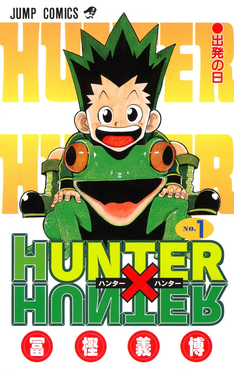
Hunter X Hunter is an iconic manga published in 1998 by its author, Yoshihiro Togashi. Following Gon, Killua, Kurapika, and Leorio’s adventures, it includes a variety of arcs, including the first Hunter Exam arc, but its well-written characters make up the most compelling part of the series.
Gon Freecs, the more outgoing of the dual protagonists, is 12 years old at the start of the series. Highly tuned to nature due to his upbringing on an island, he also appears to have learned most of his morals by observing nature, though also taught by his dear Aunt Mito. Though often seen as a “ball of sunshine” by readers, he has been said to have dubious morality by others within the book, merely following a “good” path because that’s where life led him. This may also be the reason why he can be so “selfish” but is still fine with how his dad left him as a baby. Overall, he is a good-plot driver with a strong will as well as an interesting personality.
No less important is “Gon’s best friend,” another 12 year old known as Killua Zoldyck. Abused and trained to become an assassin by his family since childhood, he beat up his mom and one of his older brothers to escape before taking the Hunter Exam on a whim. Unlike Gon, Killua was raised by a strict structure and saw following someone he cares about instead of obeying his family as an act of defiance. However, Killua’s close friendship with Gon made them sometimes unhealthily co-dependent. The manga explores his friendship with Gon, growth from his initial self-deprecation, and how he learns to feel things through his own heart.
Kurapika of the Kurta clan, a 17 year old in the first volume, had his entire clan killed by the Phantom Troupe while a child. To avenge his clan, he became a Hunter to seek out and kill all the members, or Spiders, of the Phantom Troupe. Though he first appears in the series as someone with a noble goal, this quest also leads him to venture into the shadier parts of society. His development centers around the reasons for his choice to suffer.
The final of the main 4, Leorio Paladiknight, age 19, is unfortunately played off as comedic relief for most of the story. He aspires to become a doctor to save those who would otherwise die of diseases akin to the one his childhood friend suffered from. Differing from Gon and Killua, who end up different mostly because of their upbringings, Kurapika and Leorio both were deeply affected by how loved ones died during their childhood. I found it interesting how Kurapika had the motto of “they made my kin suffer, so I will make them suffer,” while Leorio stood by “it hurt my friend, so I’ll make sure no one else hurts in such a way ever again.” In conclusion, Hunter X Hunter contains amazing protagonists with inspiring character arcs and unique backstories.
Hunter X Hunter by Yoshihiro Togashi is available to check out from the Mission Viejo Library.
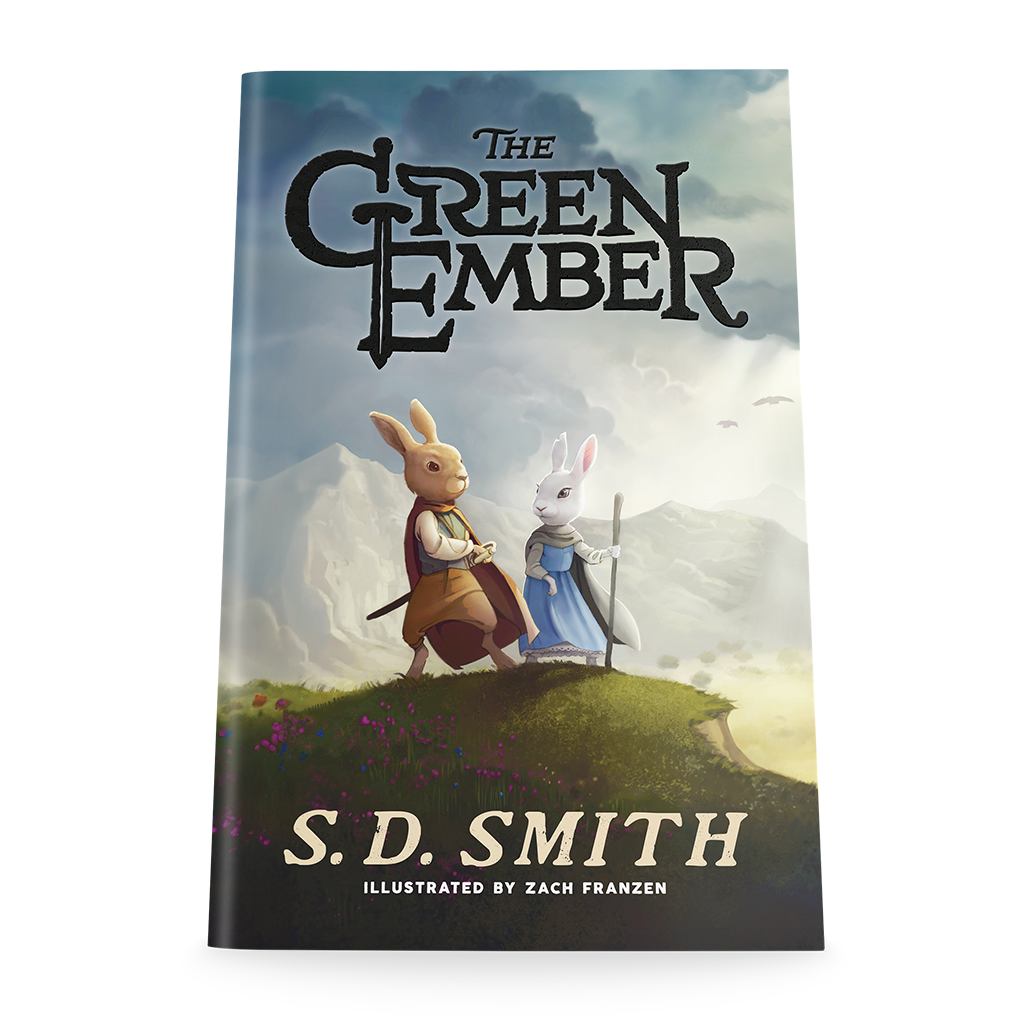
The Green Ember by S. D. Smith is about two rabbits called Heather and Picket and their journey to escape and conquer the wolves led by an evil bird named Morbin. Driven away from their home, Heather and Picket must escape the wolves, find a new home, and keep moving forward.
I really liked how descriptive the book was on the characters’ feelings, and it made them more lovable as well. Heather and Picket eventually stumble upon their secret uncle and their adopted cousin, which then lead them to a secret village called Mended Woods. This is a community full of hope and prosperity, determined to take back their land from Morbin’s rule.
Heather and Picket must then learn about their ancestry and the past before turning to face the world at its present. They must endure the hardship of their missing family, and must overcome their grief to follow their calling. Once befriending a nurse in training named Emma, Heather and Picket fit right at home in their new community, until they learn secrets on their family’s past that were better left uncovered.
Overall, I really liked the book and the suspense. (FYI: many chapters end in cliffhangers!) It is kind of like a good vs. bad kind of book, but also talks about hope during hardships and endurance. No matter how hard the challenge, the characters seem to overcome it, even when facing tremendous suffering. The book is sometimes too descriptive, and goes on and on with details, but is also really engaging at times.
I think this is a good book that has a message to have hope and overcome adversity no matter how hard your challenge is. There are many more books in the series, and I am excited to read more! I would recommend this book to others who like to read about adventure and a little suspense. Overall, I really liked The Green Ember and would recommend reading it.
The Green Ember by S. D. Smith is available to download for free from Libby.



![US] Erased (2016) - Satoru is sent 18 years into the past to prevent his mothers murder. By becoming friends with his shy classmate Kayo, Satoru hopes he can stop a series](https://external-preview.redd.it/BWdAJeQPHjEXKae8Ame6ERf7J7BAtBaOwJtd75zd1-U.jpg?auto=webp&s=75b51885ffb4163e9691e2e54ac45fa88bbda55d)




 Mission Viejo Library Teen Voice