The Book Without Words by Avi

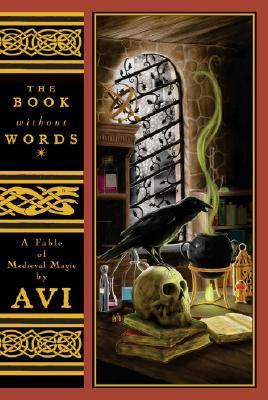
The Book Without Words by Avi is a strange, chaotic novella set in a medieval and gothic time period in an alternate universe.

An eccentric old man named Thorston has devoted his entire life to look for the two greatest secrets of life- the making of gold and immortality. Seconds away from a breakthrough, he keels over, dead. His servant, Sybil, and talking pet raven, Odo, decide that their only hope is to discover the two secrets and build a better life for themselves.

The ultimate theme of this book plays on human nature itself, as the two secrets themselves represent man’s greatest flaws- greed and the desire for immortality. 

This morally-charged storyline coupled with Avi’s odd, emotionless, and almost creepy narrating style makes for an intriguingly gruesome novella that turns the happy-go-lucky magic of youth into something curiously corrupted and cruel.

-Vaidehi B.

The Book Without Words by Avi is available for checkout from the Mission Viejo Library.

The Goldfinch by Donna Tartt

Extraordinarily crafted and presented, Donna Tartt’s 2013 novel The Goldfinch tells the story of Theodore Decker, a young man plagued by memories of his experiences in an act of terrorism, the loss of his mother, and one piece of artwork that alters his life — and history — forever.

Deemed a Dickensian-style coming of age novel, for its poetic air and substantial length (771 pages, beginning to end), “The Goldfinch” recounts a large sequence of Theodore’s life from his point of view, as he moves from New York to Las Vegas and back again, and ages from thirteen to mid-twenties. The novel stretches broadly across a grand array of emotions, written in descriptive and illustrious sentences: orchestrations of edge and tension, raw reflection and self-discovery, dreamy chains of events.

Tartt presents a diverse and complex cast of characters accompanying Theo in his spiraling search for answers, including his informal guardian and (eventual) business partner Hobie and his risk-taking Ukrainian friend Boris. Each character — individual in their own stories, mannerisms, beauty — pulls new aspects into the course of Theo’s life and leads to the ultimate fate of the story.

Theo’s desire for control and hunt for resolutions to his long-standing questions remains central to the heart of “The Goldfinch.” Still utterly infatuated with Carel Fabritius’s painting, the namesake of the novel, Theo expresses his connection to the painting and the fact that it acted as a piece of joy, a piece of history that he had an impact on: “And I add my own love to the history of people who have loved beautiful things, and looked out for them, and pulled them from the fire, and sought them when they were lost…” (Tartt 771).

The Goldfinch is brought to a close in the midst of loose ends; what happens between the characters is still unclear, left at the hands of the audience to decide the character’s stories. And, after pages and pages of Tartt’s beautifully written masterwork, we can’t help but imagine our very own endings for the characters we’ve grown so fond of.

The Great Gatsby by F. Scott Fitzgerald

The Great Gatsby is truly a conundrum. It is a story with intricately woven twists and turns. It is one of those novels where the true meaning of the plot is invigorating and the comments that Fitzgerald makes about the society in the 1920s are astounding. It was the first book I was glad to have read in an English class and not on my own. The nuance in the text adds to the story and having a teacher there to explain it all made the book more intriguing.

This is a book to delve into the world of the roaring 20s and for one to get lost in the madness of the time. It is one of those novels that is so exquisitely that it feels as if one is living in the story. Every minute detail of the picture is painted allowing one to see the world Fitzgerald is commenting on. One of the best parts of this book is how easy it is to lose one’s self in it. Reading this book feels like being transported back into time which is not only educational but also a great time passer. Reading this book feels as if no time is passed at all because it is so easy to start reading and then look up at the clock and see that hours have passed.

This story, focusing on a man Jay Gatsby and his extravagant lifestyle sorts through the lies, mistruths, and rumors that are constantly thrown around about him. Gatsby’s confidant, Nick Carraway helps balance the story showing the difference between the honest truthful citizen and the corrupt misleading money-hungry rich. Through these, to characters and the people that surround them, Fitzgerald tells his story. However, his story is a criticism of society more than anything. He portrays the disparity between the rich and poor.

The comments on society are the most interesting part of the book. It is so elaborate yet truthful that it makes one wonder. This wonder keeps one coming back to the story until the end. This story is one I would recommend to someone who wants an interesting read. I read that is for more than just fluff but instead has true meaning.

-Ava G.

The Great Gatsby by F. Scott Fitzgerald is available for checkout from the Mission Viejo Library. It can also be downloaded for free from Overdrive

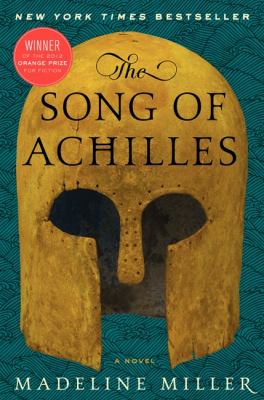
Song of Achilles by Madeline Miller

The Song of Achilles is a modern re-telling of The Iliad through the eyes of Achilles’ closest companion, Patroclus. After being exiled to Phthia, Patroclus, an awkward boy of a prince, finds his place living in the shadow of Achilles: “the best of the Greeks”. Achilles is strong, beautiful, destined to be a god. Together they make the most incongruent pair. Despite this, they form a steadfast friendship that grows into something much deeper, much to Achilles’ mother, Thetis’ dismay, who will do anything to ensure her son achieves his destiny of becoming a god.

Achilles and Patroclus grow into strong young men, masters of war and medicine under the watchful eye of their teacher, Chiron. News of the Trojan War forces the companions to return to Phthia where they learn of a terrible prophecy foretelling Achilles’ death in battle. Achilles, drawn by honor and glory heads to the war. Fearing the plans Fate has lain for his friend, Patroclus follows. Together they join the fight, waiting for the day Patroclus must surrender his friend to his destiny, never once questioning what Fate might have in store for him.

A devastatingly beautiful, painfully moving, tale of romance, war, and the whims of gods and Fate that explores what Patroclus really meant to Achilles, and the battle between immortal fame and the wants of the human heart.

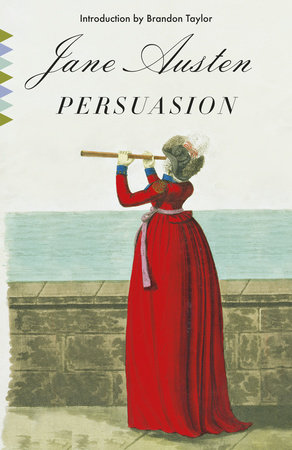
Persuasion by Jane Austen

Persuasion by Jane Austen: 9780307386854 | PenguinRandomHouse.com: Books

In the book, Austen spends much of her time describing the years of pain that “prudence” brings to the heroine, Anne. She wants young people to look to the future with confidence, without undue worry and caution. When Anne was young, she had to be careful that she did not know what romance was until she was old — the inevitable consequence of a deformed beginning. If in Sense and Sensibility, Austen emphasizes the triumph of reason over emotion and believes that only in this way can people achieve happiness, then in her last novel, Austen spends much of her time describing the years of pain caused by prudence to the heroine.

Persuasion affirms the evolution of characters from cautious to romantic, which undoubtedly reflects the change of the author’s own creative thinking. It was also a challenge to the traditional ideas of the time. While choosing women and women’s lives as the main themes of Persuasion, Austen also succeeded in portraying positive female images. Through the description of these female images, she protested against the distortion and degradation of women in male literature and corrected and subverted the model of male superiority and female inferiority. It is worth noting that Austen’s men, who had always been regarded as noble gentlemen, were often cast as villains and ridiculed, such as Sir Walter, who was conceited but foolish and incompetent, and Mr. Elliot, Anne’s mean-hearted cousin.

In Persuasion, Austen puts men and women on an equal footing in marriage, just as men like the beauty and kindness of women, Anne likes Wentworth not because of his male power and money (Wentworth was not born rich, but rose all the way through his own efforts, representing the emerging class). Although at the end of the novel, Austen still insisted that the heroine was married off according to the stipulations of the patriarchal society, but her marriage was no longer a Cinderella model and no longer depended on the charity of the patriarchy, but had the germination of the women’s liberation movement.

Soldiers’ Pay by William Faulkner

Soldiers' Pay by William Faulkner · OverDrive: eBooks, audiobooks and videos for libraries

Soldiers’ Pay is the first book written by William Faulkner in 1926. The story revolves around Margaret Powers, a widow whose husband died in World War I. She met Joe Gilligan, a discharged soldier who was on his way to home. Together, they decided to send Donald Mahon, an aviator who was released from a British hospital because he was not only going blind but was also going to die soon. Sympathetic about his experience, the two decided that they were going to send him home and spend his last time with his father.

Donald’s father is a pastor. Originally, Donald was actually engaged to Cecily Saunders, a voluptuous girl who can’t accept Donald’s injury and scars when he came back to her. She secretly has a lover named George Farr, who is crazy about her, but Cecily merely treats him like a toy. Not remembering anyone, Margaret and Joe were the only people who could take care of him besides Emmy, the housemaid whom Donald took her virginity.

Eventually, Cecily broke the engagement and eloped with George. Margaret, seeing that Cecily never loved Donald, decided to marry him herself. In the end, after he died, Joe told Margaret that he has loved her all the time. Before Margaret left, she asked him if he will go with her and he said no due to his religion. Changing his mind shortly after, Joe did not pursue Margaret but decided to stay in the pastor’s house while thinking about his future.

-Coreen C. 

Northanger Abbey by Jane Austen

Northanger Abbey (Barnes & Noble Classics Series) by Jane Austen, Paperback  | Barnes & Noble®

The most common setting in 17th century Gothic fiction is the conflict between female desire and family tradition: the object of a daughter’s love contradicts the orders of her in-laws, and the father is determined to bring about the marriage. Conflict between an overbearing father and his daughter over marriage is a prominent feature of Gothic novels. The father wants to be in the right family, the daughter wants to be in love. This prominent feature exists objectively in Northanger Abbey. It should be said that there is some kind of Gothic reality that Catherine encounters, that she gets caught up in, that her marriage is blocked. Now, of course, it could be argued that the marriage conventions of the time made the novel merely a reflection of social reality.

However, gothic novels also reflect the social reality in their own unique way. There is no essential difference between them. As far as marriage is concerned, they are both Gothic marriages. For example, it features smart, beautiful young women who have to go through some kind of hardship to get their way and end up marrying a rich young man. Gothic fiction often takes place in gothic castles or monasteries, emphasizing mysterious and terrifying rooms, staircases full of ghosts, dark and hidden passages, and so on. The setting of the novel is taken from the heroine Catherine’s first impression of Northanger Abbey. Catherine was an innocent and kind woman.

In her eyes, this place was full of mystery, the small windows, the melancholy architecture, the colorful glass, and the cobweb walls all inspired her infinite imagination. Because at the beginning of her visit to Northanger Abbey, the protagonist Catherine was deeply influenced by gothic novels. So even the normal environment of things in her eyes will produce a magical color. Northanger Abbey is partly constructed from the gothic style of language. It comes from the popular gothic novel and social trend at that time.

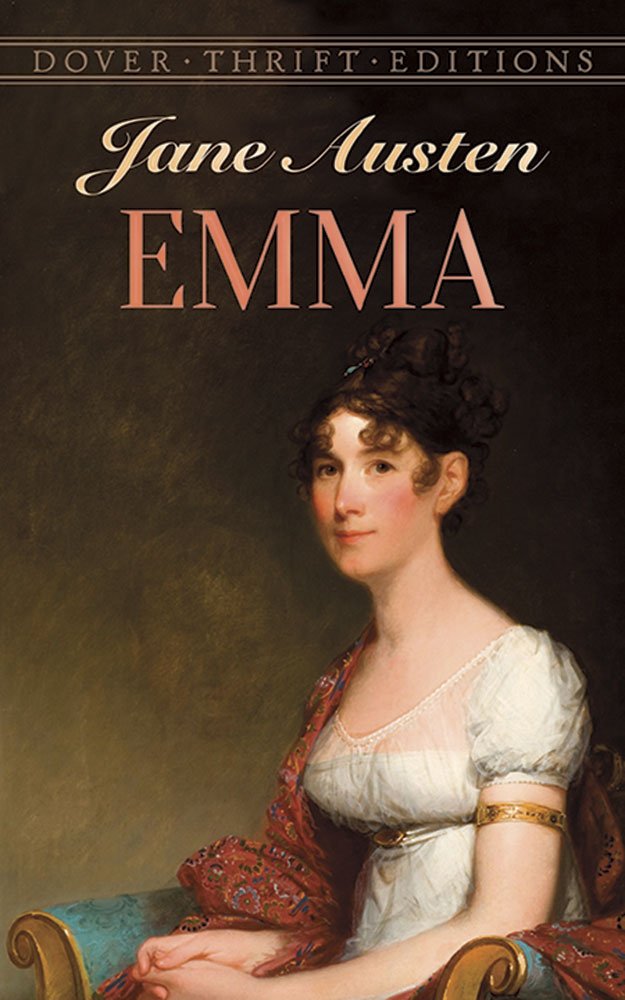
Emma by Jane Austen

Amazon.com: Emma (Dover Thrift Editions) (0800759406487): Jane Austen: Books

Emma’s control of Harriet’s marriage cannot be said to be selfish. She did care and love Harriet, and throughout much of the book she is seen worrying about Harriet’s marriage and drawing inspiration from it herself. Out of an intolerable conceit, she fancied she knew the secrets of every man’s affections. As it turned out, she did it all wrong. But when she learned that Harriet was in love with Knightley, she suddenly discovered that she had always been in love with him. In a sharp turn of events, she and Knightley become husband and wife. She had objected to Harriet’s marrying Martin, and was glad that they were at last united. In Emma’s opinion, Martin was as unfit to be Harriet’s husband as Harriet was unfit to be Knightley’s wife.

Marriage should be matched by family, which was exactly the marriage relationship in the society at that time. The solution to women’s problems (including marriage problems naturally) put forward by Austen was serious, but her works added comedy color. At the beginning of the 19th century, sentimental novels were popular in England, and Austen’s realistic novels gave readers a fresh breath.

In her novel Emma, Austen tells most of the family trifles in ordinary life, and the author creates a female image with intelligence and independent thinking. Emma, the protagonist, demands the equality of men and women in the patriarchal society, and has her own clear views and values on marriage. It also reflects the feminist views of Austen to some extent. With her unique perspective of supporting women, Austen profoundly cut through the reality of the society controlled by men and the situation of women in social life. The author criticizes the unfair phenomenon of male superiority and female inferiority while affirming the social status of women. Therefore, to a certain extent, this novel has far-reaching social practical significance.

1984 by George Orwell

Picture this: the year is 1984. You live in a society ruled by Big Brother, a fearsome mascot whose ominous face fills enormous posters everywhere you look. There is constant surveillance in every part of your life, no matter what you are doing or where you go. Government propaganda is forced upon you multiple times a day. One wrong action, however small, could get you tortured and killed. Clothing and food are strictly rationed among other things. You must use the words of Newspeak, the language that cuts out “unnecessary” words in the English language, and regularly practice mental ideas like crimestop and doublethink to stay in line. You are a member of the Party in the book 1984, and you lead a life similar to Winston Smith, the main character of this story.

However, Winston doesn’t believe in the Party’s values and beliefs. He has been against them for seven years, but can’t do anything about it as trying to act on these thoughts would lead to certain death. As the book progresses, Winston does figure out a way to go against the Party and Big Brother, but I suggest checking out the book to read all about that!

There are parallels to today’s society within 1984, like invasive surveillance and other issues that are becoming increasingly prevalent. Reading 1984 gave me some interesting insight as to what 2019 could become if we let technology and surveillance become much more controlling and let them be abused. 1984 is a fascinating read about a dystopian world that isn’t as different from 2019 as one might think.

-Kaitlyn S.

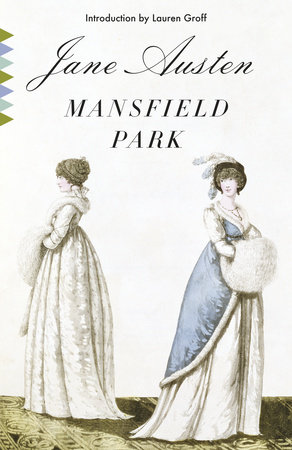
Mansfield Park by Jane Austen

Mansfield Park by Jane Austen: 9780307386885 | PenguinRandomHouse.com: Books

In Mansfield Park, Jane Austen skillfully combined the Cinderella theme with the fairy tale of the abandoned princess. Cinderella Fanny was brought up by an unworthy father, but without losing her natural goodness and gentleness. Fanny’s good qualities were in stark contrast to her shabby and dirty home in Puss. In Austen’s first several novels, the heroine’s moral standard is always higher than the traditional social concept, so that she can marry a good man. It is a reward for their good qualities, or compensation for their troubles and sufferings, and such heroines themselves are the yardstick of good judgment and good feelings. But Fanny Price, the heroine of Mansfield Park, succumbed to the virtues of those around her, such as Sir Thomas, the only father of Austen’s novels to be praised, and Edmund.

Fanny sought the traditional virtues of good manners and religious feeling, and she became an ardent supporter of the traditional moral standards. The book also catered to the praise of many traditionalist critics at the time. In the novel, Austen used the gentle words and deeds of Fanny to express her moral educator’s idea that moral perfection is difficult to achieve and needs to be achieved at the cost of self-restraint and sacrifice. The female voice is required to be static, so her eyes become the most effective agent. Because in the spiritual life of England in the 19th century, the moral sense was very strong. The church and its moral precepts, which dominated people’s lives, evoked not a desire to save souls but a sense of duty.

Therefore, in Mansfield Park, Austen strictly rejected the vigorous spirit of the immoral Mary Crawford, and blindly affirmed the weakness of the holy Fanny who believed in Christianity. This strange and abnormal likes and dislikes are the core of the intention of this novel. Austen made this frightened little daughter from a poor family conquer all people with virtue and finally became the mistress of Mansfield Manor. It shows holiness and greatness, emphasizes the close connection between happiness and virtue, and firmly believes that a good person has the right to develop and fulfill herself according to her own nature and good deeds.