Pride and Prejudice by Jane Austen

In this novel, through the different treatment of Bennett’s five daughters to life events, Austen shows the different attitudes of the girls from bourgeois families in the villages to marriage and love, thus reflecting the author’s own views on marriage. It is wrong to marry for property, money and status. It would also be foolish to marry without considering these factors. Therefore, she was against marrying for money and against treating marriage as a joke. She emphasized the importance of the ideal marriage, and made the feelings of both the man and the woman the cornerstone of the ideal marriage. Elizabeth, the heroine of the book, was born in a family of small landowners and loved by Darcy, the son of a rich man. Darcy, regardless of family and wealth gap, proposed to her, but was rejected. Elizabeth hated his arrogance.

Darcy’s hubris is actually a reflection of status differences. As long as such pride existed, he and Elizabeth could not have the same thoughts and feelings, and the ideal marriage. Later, Elizabeth observed Darcy’s behavior and a series of actions with her own eyes, especially saw that he had changed his proud and conceited manner in the past, eliminated his misunderstanding and prejudice, and thus concluded a happy marriage with him. Elizabeth’s different attitudes towards Darcy’s two marriage proposals actually reflect women’s pursuit of personality independence and equal rights. This is the progressive significance of the figure of Elizabeth.

From the novel, Elizabeth is intelligent, resourceful, courageous, visionary, has a strong self-esteem, and is good at thinking. Just because of this quality, she has an independent mind on the issue of love, making her and Darcy constitute a happy family. In Pride and Prejudice, Austen also writes about the marriages of Elizabeth’s sisters and girlfriends, which serve as a foil to the heroine’s ideal marriage. For example, although Charlotte and Collins live a comfortable material life after marriage, but there is no love between them. This kind of marriage is actually a social tragedy under the cloak of finery.
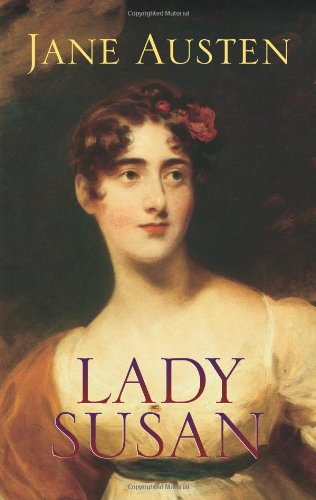
Lady Susan by Jane Austen

Amazon.com: Lady Susan (9780486444079): Austen, Jane, Chapman, R. W.: Books

An evil mother tries to force her daughter into a harmful marriage. Mrs. Susan was selfish, cruel and manipulative. She abused her children, betrayed her friends, and threw her weight around in horrible ways. Her original marriage plot fails, and Jane Austen fails to punish her for the shame and self-knowledge that the reader expects until the end of the novel. This may be because she is a bit of a fan of this deceitful and dour-headed character herself. After all, Lady Susan wielded power primarily to destroy other people’s homes and to try to torture her own daughter. In this work, Austen seems to divide herself into two parts. On the one hand, she delightedly displays the vital energy of a gifted, Bohemian lady, while at the same time rejecting the sexiness and selfish desires of her heroine’s story.

Mrs. Susan hopes to find another school for her daughter unless she gets married soon. Sympathetic Aunt Catherine had no idea of Mrs. Susan’s intentions, but she suspected that Frederica had had other reasons for dropping out of school than, as her mother claimed, an impatient attempt to escape the teacher’s education. And she believes that if you neglect early education, it will be difficult for children to make up for it when they grow up. Frederica stayed. She had a piano to play, but her aunt seldom heard her play. Similarly, there are many books in her room. But, she says, as a girl who has been running wild for the past 15 years, she can’t read them and won’t. Of course, what she said might be true, and Jane would probably agree with that. However, in this novel, Jane Austen’s purpose is not to talk about educational theory, but to expose the cruelty and hypocrisy of Lady Susan.

From the perspectives of Mrs. Susan, Mrs. Vernon, Mrs. Johnson, Master Reginald and other protagonists, the novel reveals the characters’ relations and ugliness, good and evil, and embodies the writing characteristics of the coexistence of multiple morality and the echo of narrators and their voices.

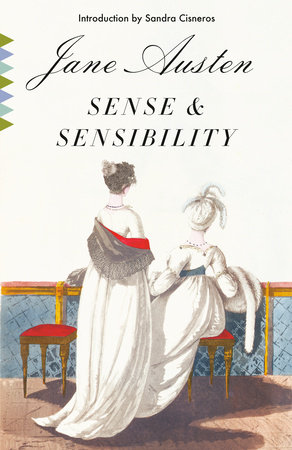
Book Review: Sense and Sensibility by Jane Austen

Sense and Sensibility by Jane Austen: 9780307386878 |  PenguinRandomHouse.com: Books

Austen made a highly realistic discussion of women’s issues at that time. She examines the heroines in the patriarchal society at that time. In that society, the value of a person is based on the ownership of property. Since generations of property went to male heirs, they were at a disadvantage from the start and could only be subordinated to men. As a result, these types of characters appear again and again in Austen’s writings: the assertive father; a mother who is obsessed with her social status and does everything possible to marry off her daughter, well-equipped young men, whose cynicism reflects their superior social position, and marriageable daughters, from the elegant headless girl to the sensible or emotional young woman.

How can a heroine achieve personal happiness through marriage in such a stern, demanding and often hostile world? Austen’s admonition was to use reason to control emotion She argues that emotions are often a dangerous guide to female behaviour. If a man of superior condition, but not of unrequited affections, is to be wooed, the consequences are often disastrous. Either because of his personal preference or because of parental disapproval, the man chooses a better match. These views of Austen are most evident in this first novel. The whole beginning of Sense and Sensibility revolved around the question of fortune in Dashwood’s will, and the want of avarice of Mrs. John Dashwood, who had an annual income of ten thousand pounds.

In the process of dividing up the estate, Austen makes no bones about the opposite characteristics of the two Dashwood sisters. Elinor was a very sensible, calm woman who, though only nineteen, was a good mother’s adviser. She was wonderfully kind and affectionate, but she knew how to hold back her feelings. It was a subject which her mother had yet to learn, and which one of her sisters had stubbornly refused to learn. Her sister Marianne’s talent was in many respects equal to her sister’s. She was inordinate in sorrow or joy. All is well but no discretion. That is to say, Marianne allowed her feelings to dominate her actions, while Elinor would not be swayed by such impulses.

Austen’s intention is very clear. She simply changed the original title of Elinor and Marianne to Sense and Sensibility to emphasize her theme. In this book, Austen shows the contrast between the characters of the two sisters. She narrates most of the stories from the perspective of Elinor’s outlook on life, ethics and social society, thus shaping a reasonable mortal. This is her ideal woman. When they learned that Willoughby had made full use of his superior social position, played with Marianne’s earnest love, abandoned the poor girl Eliza, and finally married the rich Miss Gray, Marianne was fully convinced of her folly, and her mother admitted that her admiration of Willoughby had been imprudent. Reason thus prevailed in both sisters. Austen arranged a happy ending for them. The book begins with comedy, and there is a disturbance in the middle. Marian almost becomes a tragedy, which ends in comedy.

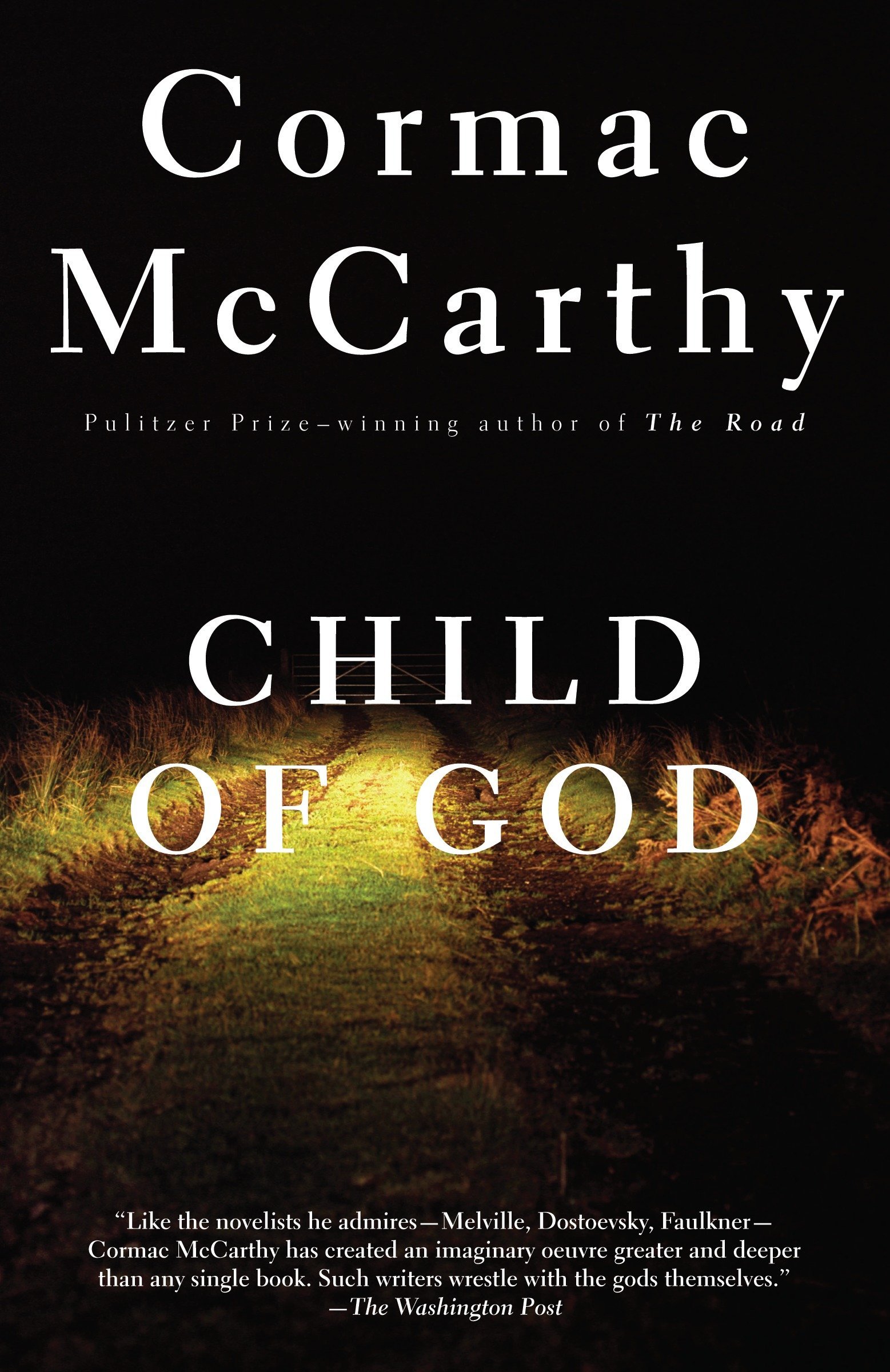
Child of God by Cormac McCarthy

Child of God: Cormac McCarthy: 9780679728740: Amazon.com: Books

In the Appalachian town of Seville, Tennessee, a 27-year-old young man named Ballard is deprived of his property by the town government for not paying property taxes. He is forced to retreat to the wilderness and gradually degenerates into a pathological killer and necrophiliac. Ballard is an Appalachian native, an oddity to outsiders, an outlier to the local community. After a fire, Ballard went to live in a cave, taking on an increasingly primitive look. He is losing his house, his reputation, his social ties, and his life. Modern civilization gradually retreated backward into the wilderness, to the edge of the world, and finally there was no way back. How does a person become progressively deprived? How could a naked life exist without anything? He was determined to go on, for there was no way back, and the world was as lovely as any other day, but he was riding his mule to death. Child of God is Cormac McCarthy’s third novel, written in a sober, everyday style about murder and mysterious nature. The short, concise and thick sentences are interlaced with long, grotesque sentences, with rich southern Gothic flavor and dark romantic color. Under McCarthy’s indifferent and compassionate eyes, young Ballard’s lonely life was like a cruel and moving wilderness epic, with the exiles singing silently from beginning to end.

The Old Man and the Sea by Ernest Hemingway

As one of Hemingway’s many classics, The Old Man and the Sea retells the story of man versus nature. Hemingway writes the novel in such a way that makes the reader urge for more.

The story begins with Santiago, an aged and experienced fisherman who has been out on the sea for 84 days with no luck of finding fish to catch. He is viewed as a lonely outcast to the rest of society, and his own apprentice is told to stay away from him. Santiago is even labeled as a word that means unluckiness in his native language.

Santiago’s character can be seen in today’s world in people who are still waiting for a win or change in their lives. Many individuals are still on their journey to reach their goals in life just like Santiago. Suddenly, on the 85th day, a large marlin takes the bait on Santiago’s hook that is 200 yards deep in the water. The marlin is massive and unlike anything, Santiago has ever seen in his years of fishing. Through the next days and nights, the marlin holds onto the line, but it is too heavy for Santiago to lift.

From breaking his wrist to cramping his whole body and not being able to sleep properly, Santiago risks everything he has to catch the great marlin and lift his pride. Finally, the marlin is caught, but Santiago admires and feels like he built a brotherly relationship with the animal.

Santiago’s story reflects the human relationship with nature that is filled with admiration and struggles. His character is not defined by his defeat or “unluckiness”, but rather his determination. It takes courage to endure pain and hardships.

Hemingway uses such symbolism and words that the novel requires an analytical mind to read. Every small detail is impressively used to build the theme of the novel in the end. This book can be read by anyone as young or as old because everyone is eventually lead to the same motif about life.

-Zohal N. 

The Old Man and the Sea by Ernest Hemingway is available for checkout from the Mission Viejo Library.

No Country for Old Men by Cormac McCarthy

Amazon.com: No Country for Old Men (9780375706677): Cormac McCarthy: Books

The story takes place in the town of Rio Grande river, west Texas, USA, on the border with Mexico in 1980. A penniless former Vietnam war veteran, Llewelyn Moss, came across several dead bodies, a huge amount of heroin and a large amount of cash used to trade drugs while hunting. The dead were gangsters who had been shot in a firefight. Llewelyn immediately decided to leave the scene of the gun drug trafficking money to take home to hide. During the night, the nervous Llewelyn returned to the trading site. So far, sinister gang leader sends out cold-blooded killer Anton Chigurh, Sheriff Ed Tom Bell, and Llewelyn launched the killing journey that pursues each other.

Moss gets in trouble for his lust for money, and his experience is representative of the universal human desire, and the constant pain and fear that comes with it. He reflects the good and evil side of human nature. The ending of the characters gives the world a lot of inspiration. People living in today can’t escape the temptation, who also have to face the temptation. Moss’s tragedy is undoubtedly a wake-up call for those who walk on the edge of desire. The most steadfast self-control is a powerful weapon against temptation. Temptation is the test of personal world outlook, outlook on life, values, moral character and other internal comprehensive quality, among which the most important one is virtue.

In the same circumstances, it is virtue that plays the fundamental role in why some people are able to survive and others are willing to perish. Therefore, in today’s society, everyone should strive to improve personal cultivation and self-protection awareness. At the same time, tempering desire is also key in the face of temptation. From the perspective of behavioral science, desire is a double-edged sword, reasonable and moderate desire is the basic psychological motivation to promote the development of social economy. The unrestrained selfish desire and evil thoughts will make people lose the true, the good and the beautiful and become the prisoners of material desire, and even become the root of evil.

The novel No Country for Old Men shows the dark side of American society, such as blood, violence and crime, attacks the anti-civilization phenomenon of excessive material desire and moral decay under the specific social and historical background, and expresses the sense of helplessness through the absence of heroes. Many Americans do not believe in heroes and worship money, indicating that they think money can bring them more security in life. Neither government nor personal heroes can be trusted. However, the author McCarthy still hopes to express his yearning for the peaceful and tranquil past of American society through allegorical novels, as well as his expectation of energetic heroes who can save human lives and souls.

Chamber Music by James Joyce

Chamber Music - Kindle edition by James Joyce. Literature & Fiction Kindle  eBooks @ Amazon.com.

Joyce started out as a poet. Chamber Music was his first work. Critics seem to have reached a final conclusion on it, such as the traditionality of the whole poem, traditional meter and rhyme, traditional image structure and so on. The musicality of the poetry is also widely talked about by critics. This was due to Joyce’s musical. According to the poet himself, every poem can be put to music. The style of the poem follows the romantic style of the 19th century, but it is not without sentimentality. There is also the integrity of the content, that is, the evolution of love and the journey of the soul, two threads that go hand in hand, complement each other, and constitute the emotional tone of the whole collection. And the poetry is stylistically very different from Joyce’s novels such as Ulysses. It is not unreasonable to point out that there is only one voice throughout the thirty-six poems.

For in the reader’s ears the hero is always pouring out his heart to his sweetheart, from infatuation, marriage proposals, happy conjunctions, to a change of heart, treachery, and, at last, solitary and drifting away. But we don’t hear the hero’s voice at the beginning, which would be too abrupt and leave the reader wondering if the hero is lyrically barking up the wrong tree. In other words, a stage should be set for the protagonist to perform first. Chamber Music is about the love story and mind journey of the hero, mainly told by his voice. In other words, the emotional experience between the male protagonist and the heroine is presented to the reader through the consciousness of the hero, that is, the dramatic expression of the emotional experience between them.

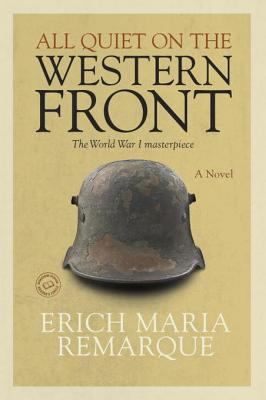
All Quiet on the Western Front by Erich Maria Remarque

All Quiet on the Western Front is a war novel by Erich Maria Remarque. The title is an allusion to a German army report that stated “All quiet on the Western Front” because there was no military activity that day. The novel is about German soldier Paul, who serves in World War I. As the war progresses, Paul begins to wonder what causes men of the same generation to fight one another, and he begins to wonder what future he will have after all the suffering he has seen.

The novel begins as Paul and his comrades line up for their meal. The men are joyful, for there is excess food, due to the fact that over half of their regiment had been killed on the Western Front. They speak of home and their past. However, as time passes, tragedies occur as one by one, Paul’s friends are taken from him. As Paul witnesses the suffering around him, he cannot help but wonder what about human nature causes men, who have no personal grievances against each other, to slaughter one another.

Paul soon no longer cares for anything. He longs for neither home nor peace; the only thing that matters to him is his comrades. He believes that his generation is lost, that they were irreversibly cut off from their past, that the war consumed them and prevented any hope of a future, and that they would be rejected by previous and following generations.

All Quiet on the Western Front reveals major themes about human nature and war, like what causes a soldier to kill another soldier, despite the fact that they have never known each other and harbor no grievances against each other. Overall, it’s a classic with many relevant themes and should be read by everyone; however, it does contain lots of violence and some inappropriate scenes.

-Josh N.

All Quiet on the Western Front by Erich Maria Remarque is available for checkout from the Mission Viejo Library. 

1984 by George Orwell

George Orwell’s 1984 is a dystopian novel read by countless high school students each academic year. It tells the story of a futuristic society(Oceania) under the rule of an elite group called the Party and the symbolic, mythical figurehead Big Brother from the perspective of an Outer Party member named Winston Smith. In this society, the population is divided into three main classes: the Inner Party (upper-class minority), the Outer Party (middle-class minority), and the Proles (lower class majority). Through the use of fear and mind control, Big Brother ensures that all citizens worship him, his administration, and his existence.

Excessive surveillance through telescreens and the Thought Police discourage rebellion and opposition. Individuality and basic human emotion and instinct are extinguished, and the citizens of Oceania have lost the ability to love and form familial loyalties. Techniques such as doublethink and crimestop are ingrained into the minds of citizens that prevent thoughtcrime, or having thoughts against Big Brother and the Party. Throughout the story, Winston battles with thoughtcrime in his brainwashed state, and struggles to become “conscious.” He falls in love with a fellow rebel, Julia, and tries to join the mythical anti-Party group known as the Brotherhood. However, this bliss soon comes to an end when Winston is caught by the Thought Police. He experiences both physical and psychological torture that transforms him into a devout follower and worshipper of Big Brother and the Party once again, and he sinks back into a brainwashed state as he waits for inevitable execution.

Orwell published this book in 1949 as both a prediction and a warning of what the year 1984 would have in store for human society. Although Orwell did not live long enough to see this fated year, his predictions create a shocking parallel with 2019. This book was not written as a simple story, but rather as an exemplar of our future and a passionate remonstrance against the direction it is taking. A message written to implore future generations to avoid bringing the world written in these pages to life. 1984 should be read by all voting Americans in 2019. We must understand that our actions have a power that can be used for better or for worse. Will 2019 become 1984? Only time will tell.

-Katie A. 

1984 by George Orwell is available for checkout from the Mission Viejo Library. It can also be downloaded for free from Overdrive

Finnegans Wake by James Joyce

Finnegans Wake by James Joyce

According to Greek mythology, Athens paid Crete seven virgins every nine years. The children were put into the Minos maze and, no matter how they walked, they died of thirst or were eaten by Minotaur, the monster of the labyrinth. Joyce associated this myth with Finnegans Wake. Finnegans Wake is a maze like the Minos Maze. Joyce created the maze with his own rules, a game he played his own way, in which he no longer had to obey other people’s rules, nor care about their recognition or participation. Just as the fate of children lurks in the Minos labyrinth, so the Finnega’s Wake contains a prediction of the fate of mankind that others may not understand, but will happen as predicted. From this perspective, Finnegans Wake is both a Minos labyrinth and an Eden created by Joyce himself, and also a prophecy about the fate of mankind.

In fact, In Joyce’s mind, Finnegans Wake was a work on a level with the Bible and other human sacred texts that readers must read with awe and shame. Finnegans Wake talks about a letter that the hen is constantly digging. The hen searched all the winding world for a very large piece of writing paper just as the clock struck twelve. The sentence, if read in Joyce’s way of making puns, could also be interpreted as the hen searching through all the complicated polysemous words at the stroke of twelve, looking for a piece of writing paper as big as God. Joyce also makes repeated references to the 6th or 9th century Irish holy book, The Great Book of Gaelic, and the hen digs the letter in Finnegans Wake is a stylistic parody of The Great Book of Gaelic. Historically, The Great Book of Gaelic had been buried like the letter dug up by the hen to protect it from the invading Danes, and centuries later it had been excavated and worn like a letter.

The letter, The Great Book of Gaelic, and Finnegans Wake are the same thing in Joyce’s mind, and if the hen is looking for the letter in a winding world, the reader is looking for clues to the Wake in Joyce’s labyrinth of complex and polysemous words. If the ragged book of The Great Book of Gaelic requires the reverence and patience of posterity, Finnegans Wake demands that its readers devote their lives to a book written, albeit by a contemporary writer. Most notably, Joyce actually regarded his Finnegans Wake as the same holy book as The Great Book of Gaelic. It’s as sacred and profound as The Great Book of Gaelic, and the process of reading it is the same as the process of interpreting The Great Book of Gaelic, the process of interpreting scripture. In this way the reader can understand why Joyce employs such obscure language in Finnegans Wake: Finnegans Wake is Joyce’s use of enigmatic language and content to reveal the mysteries of human destiny like The Great Book of Gaelic.