Fictional Worlds I’m Glad are Fictional

Books have a way of taking us to new and exciting places, and a lot of times those are places we wish we could go visit. Places like Hogwarts and Camp Half Blood are places that captures a reader’s heart and make you wish you could just jump through the pages and join in the adventure– and yet there a few fictional worlds that I am very glad are just that… fictional.

hunger_games_coverPanem – The Hunger Games series by Suzanne Collins

While the The Hunger Games is a great trilogy full of action and excitement, the country of Panem is one I’m glad exists only on paper. The thought of being entered into a drawing and forced to fight to the death at such young ages is something that I am glad I don’t have to worry about. Even though the concept that drives the story is something that I’m sure almost everyone would be against if it was implemented in society, there is something that makes it incredibly alluring to read about. The huge disconnect between the Capitol and the districts is something that in a way is reflective of our own government, and I think this is part of why readers are drawn to strongly to the story. This draw is further enhanced by Katniss’s incredible drive to protect those she loves, something which also aids in making the story relatable. Overall, the world of Panem is one that we can love to hate.

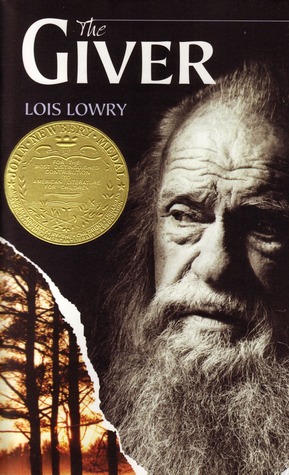
giver_coverThe Giver by Lois Lowry

The Giver takes place in an unnamed, futuristic society that at first glance is a utopia. Everything in this world is designed to make life as pleasant and convenient as possible; everyone is always polite, there is no war, no sickness, essentially everything unpleasant about life has been eliminated. Through reading the book and following the story of Jonas, the child who has been given the job of the Receiver of Memory at the Ceremony of Twelve (12 is the age at which children get their assignments, or roles they will play in the society), the reader begins to see that this utopia comes with a price. By eliminating all negatives aspects of life the society has really eliminated what makes people, people, something that Jonas learns while receiving the society’s collective memory. The Giver is a great reminder that even though life can be painful and unpleasant at times, it is these struggles that make life great in the long run.

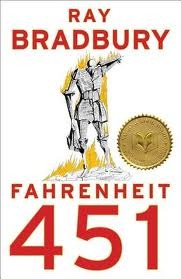
fahrenheit451_coverFuturistic America – Fahrenheit 451 by Ray Bradbury

The world of Fahrenheit 451 is another world that could be considered a utopia, however its flaws are more readily visible than other stories that feature utopia societies that dissolve into a dystopian society as the story progresses. In the society portrayed in the book people lives are all about quick gratification and easy living, they don’t think for themselves or having meaningful conversations, rather they settle for cheap thrills like driving their cars far too fast and letting technology essentially brainwash them into confirmatory. The biggest thing that sets the world of Fahrenheit 451 apart from our world is that books are illegal and fireman start fires, not stop them. Books are burned to prevent the spread of ideas and keep society uniform. With this restriction of thought it’s easy to see why that is a world better left on paper.

Overall, while there are many great fictional worlds that I would love to visit there are some that I am certainty glad are safely contained on the pages of books.

-Angela J., 12th grade

Winter Olympics 2014

olympics_sochi

2014 Winter Olympics logo designed by Guo Chunning

This year, the twenty-second Winter Olympics were held in Sochi, Russia. A very well known location, Sochi is on the Black Sea’s coast. The name “Sochi” comes from the river and the place of the Ubykh’s tribe. Most of Sochi is covered in the mountains of the Western Caucasus. Sochi also happens to be the heartland of tea. In the early 1900s, many settlers adopted an agricultural occupation to grow tea. It soon became the most popular beverage in Sochi. Before long, the Russians had created their own brand of tea: Krasnodarsky tea. It is the most famous Russian grown tea. Also, it is the one of the most “northern” tea you can find.

In anticipation of these games, many news broadcasters were filming segments on the Winter Olympics, during and after the games. In the Winter Olympics many sports are competed for, such as: Alpine Skiing, Biathlon, Bobsleigh, Cross Country Skiing, Curling, Figure Skating, Free Style Skiing, Ice Hokey, Luge, Nordic Combined, Short Track Speed Skating, Skeleton, Ski Jumping, Snowboard, and Speed Skating. In this year the standings were: Russia for 1st place, Norway for 2nd place, Canada for 3rd place, United States for 4th place, and so on.

The Winter Olympics are a great way to get together with your family and friends to watch sports that involve dedication, sacrifices, and snow! And even though the Olympics are now over, you can still enjoy winter sports through some good reads. Try these:

  • Bittersweet by Sarah Ockler (ice skating)
  • Being Sloane Jacobs by Lauren Morrill (ice skating, ice hockey)
  • Girl Overboard by Justina Chen (snowboarding)

Did you watch the Olympics? What was your favorite part?

-Nirmeet B., 10th grade

Reading for Fun

reading-takes-away-from-home

Image copyright Adazing.com

I think we can all agree that reading for fun has declined in popularity over the years.  I believe this may be partly due to the widely-held opinion that those who read for fun are “antisocial.”

This irks me a little.  I find it really annoying how the general populace believes that those who read for fun do not have any lives.  I read for fun.  However, I am also an International Baccalaureate student, a coach for a local running program, an avid watcher of Gossip Girl and Pretty Little Liars, and an involved friend. I have several interests outside the world of reading and overall, I would call myself a fairly busy and social person.

Just because I read for fun does not mean I have never had a boyfriend, or a job, or a social life.  I simply read because I enjoy it.  It helps my writing and critical thinking skills, and also serves as an escape, just like music, movies, or television.

According to the New York Times, reading literary fiction can actually help boost social skills.  During an experiment conducted by the students at New York’s New School for Social Research, those who read literary fiction performed better on tests measuring emotional intelligence and social perception than those who did not read often.  In other words, reading can actually make you more social.

Now, I am definitely not saying you have to read 24/7 and never see the light of day.  I am saying that as teenagers, we all need to try new things and find our places in the world, and reading can help you with that.  It’s all about balance.

Have you ever been labeled as antisocial because you read for fun?  What’s your opinion on this? Sound off in the comments!

-Amanda D., 11th grade

Audiobooks: A Different Way of Reading

audiobooksIf you are like most kids and teens, you may think that audiobooks are for adults.  Perhaps they are learning another language or getting some information on a new subject.  Or maybe they are looking for a book to distract themselves from a long road trip.  However, in my family, audio books are an everyday treat.

It is really interesting to learn how audiobook recordings  are made.  First, the reader auditions for the voice(s).  Sometimes there is one reader doing all of the voices, and in other cases, there are separate readers for different characters or voices.  Once a reader is chosen, he or she records several takes of a few chapters at a time.  If there are sound effects, then the company will sometimes hire a semi-professional sound effects person from the movie business to make the sounds.  If a door is slamming, then the sound could be made from celery slapping against leather!  The last step is to add music.  The music can come from any music group.  (Music is typically heard at the beginning and end of the audio tapes.)  It can cost anywhere from $1,000 (for a small children’s book) up to $10,000 (for a larger book) to make an audio book.

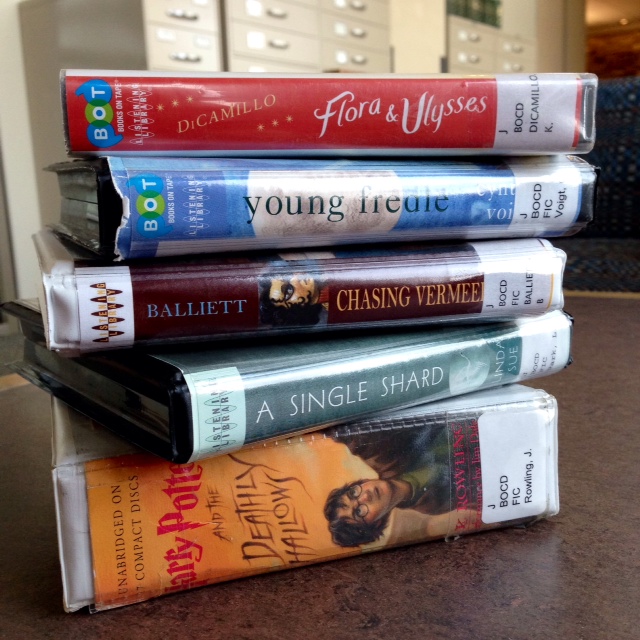
I’ve been told that I’ve been listening to books on tape since I was strapped into a car-seat.  Some of my earliest memories of audiobooks include  “Junie B. Jones”; “The Magic Tree House”; “Skippy-jon Jones”; “The Mouse and the Motorcycle”; and “Ramona.”  Later we graduated to books like “Peter Pan”; “Poppy”; “The Doll House”; and “Harry Potter.”  One of my favorite voice actors is Jim Dale, the man who has recorded all seven books in the Harry Potter series.  In fact, he created and recorded 146 different character voices for one book, “Harry Potter and the Deathly Hallows.”  His British accent is amazing as well as his other unique voices.

In my opinion, the best strategy when concentrating on an audiobook is to stare off into space without taking anything in except hearing the words from the book.  If you like the actual feel of a book, you can read along with the CD.  However, if you’re a fast reader, you may find yourself accidently reading ahead if the audiobook narrator isn’t going quickly enough.

The best part of an audiobook is you can read your book on the go!  You can just insert the disk into the car and listen.  Or at home, while you are getting ready for bed, you can put the CD into a CD player and listen to your book as you are brushing your teeth.  If that’s not convenient,  you can go on eBooks or Kindle read (on an electronic device) and download the book and listen with ear buds.  If you haven’t experienced this way of reading, try it out and comment below.  If you are also an audiobook enthusiast, tell me your favorite book on tape, voice actor, and where you enjoy listening.

-Maya S., 6th grade

Thoughts on Book Banning

banned_booksIn a country founded on the ideas of freedom and the idea of self expression is encouraged, it’s hard to imagine that books, of all things, are sometimes banned. Personally, book banning wasn’t really something I had thought about until Ellen Hopkins and Sonya Sones came to the library for a visit back in September. Sure, I had heard of books being banned– but I had never really thought that it was still something that was going on, and more importantly, what the effects of it are.

In this country, books get banned mostly because of complaints steaming from a small group of people; parents who aren’t pleased with what their children are reading in school, small communities who don’t think a book should be in their local library, and other similar cases and effect only a certain place or school. Book banning isn’t necessarily on a huge scale, this isn’t really a case of the government trying to control what people think, this is a matter of people trying to control other people. Still, book banning is a huge problem.

Most books that get banned are children’s or young adult books. The process of banning books starts with a challenge: a group of people don’t like the content, so they bring it up with someone who can do something about it. For example, a class is reading something that a group of parents don’t feel is acceptable for their children to be reading, and so they bring it up with the school board. From there, the school board can decide to ban the book, which basically makes it disappear from the curriculum. It’s not that someone who wants to read the book can’t get a copy of it anywhere, it’s just that they are going to have to look a little harder for it. On a basic level, these challenges usually come from a well-meaning place- parents wanting to “protect” their children from ideas they view unfit for them- but that is really where the trouble comes in.

The main problem with banning books is that when you ban a book, you are sending a clear message that an idea that the book is conveying is wrong and forcing your ideas onto someone else. Books can open up someone’s mind to all kinds of possibilities- that is what makes them so amazing. But when you are preventing people from reading them, you are closing off ideas. It’s understandable that some parents may not want children, especially younger ones, reading books that contain tough subject like suicide, drug use, and so on, or excessive use of language or sexual content, but banning books takes away the book from everyone. It is completely understandable for parents to filter their children’s reading, but it needs to be on a one-on-one basis without affecting any one else’s ability to read the book. Furthermore, regardless of what content the book may contain that makes it “unsuitable” for children, that content is rarely the entire point of a book and rather is being used to somehow enhance the story.

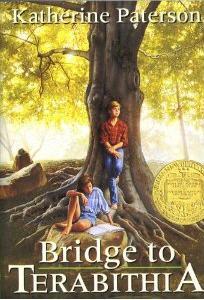
bridgeA final note on book banning is that this isn’t a problem that is limited to a certain era or genre of books but includes a vast array of books, including several which I have personally read in school. Some of the books that I was most shocked to find that were banned were: The Adventures of Huckleberry Finn by Mark Twain, Bridge to Terabithia by Katherine Paterson, and Flowers for Algernon by Daniel Keyes– although there are many, many more books that I have read that are included on lists of banned books.

Books banning can cause all kinds of problems, even if the intentions are good. At the end of the day, I really feel that it is up to the reader to decide what makes them uncomfortable and to have the choice to read whatever they want.

-Angela J., 12th grade

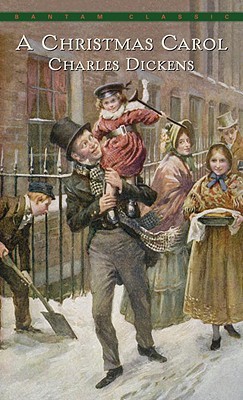
A Look at A Christmas Carol, by Charles Dickens

christmas_carol_coverThe following essay was originally written for a 7th grade English class.

Can one person hate so many things? Well, if know a man named Ebenezer Scrooge, you would have found out that he is that kind of person. In Charles Dickens’s play, “A Christmas Carol,” Ebenezer Scrooge finds a chance to change. During the play you are taken to the past, present, and future Scrooge. Also, Marley gives some key advice to Scrooge that helps him to turn into a genuine man. Slowly, through the conflicts of the play Scrooge realizes the error of his ways on Christmas Day. Dickens points out to the audience that the message is, be happy no matter what, because goods shouldn’t bring you happiness, love should.

“‘But nonetheless they do sing….. Fifteen shillings a week and they do sing.’” (p.635)
This quote represents the message of the whole play, be happy with what you have and don’t be greedy. Money shouldn’t bring you happiness, love should. When this quote occurs in the play, Present is telling Scrooge how thankful the Cratchits are for what they have, which isn’t much. This next quotes represents how ungrateful Scrooge is, of course before he transforms. “‘You will be wanting the whole day tomorrow?……. It’s not convenient, and it’s not fair.’” (p. 607) In this quote Scrooge is talking to Cratchit, he is giving his opinion on how much he wants Cratchit to come the next day and how much he opposes him not choosing to doing that. This last quote represents the change of Scrooge’s personality by the end of the play. “‘I’ll raise your salary…. to assist your struggling family’”(p.653) This quote represents the change of Scrooge’s personality. The message is clearly evident by these quotes.

Dickens’s play “A Christmas Carol” is about how Scrooge massively changes by the end of the play. He turns into a genuine man from a man who couldn’t care less. The message is very clear from this play. It is to be thankful for what you have and not always be wanting more. Dickens’s play send the message that being bad is never good, which should affect the whole world. Because it’s true.

-Satej B., 7th grade

Print Book vs Ebooks: Pros and Cons

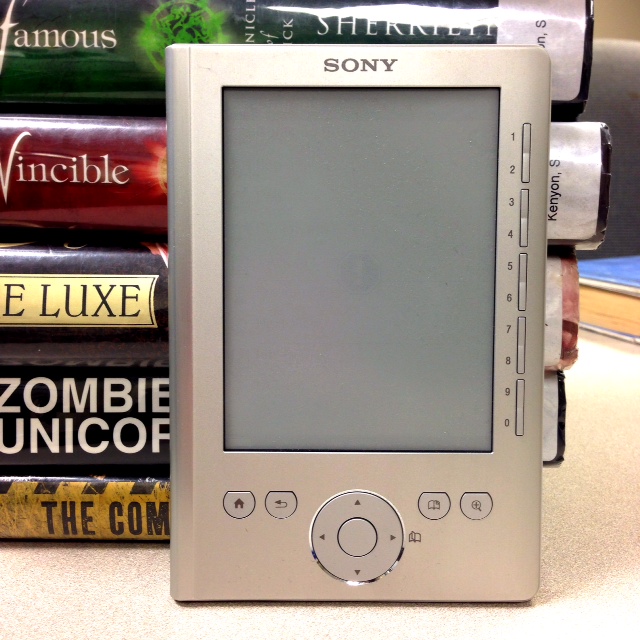
ereader_picBack in June, another blogger, Sarah B., wrote this wonderful post about the debate over ebooks which included some great information on the history of ebooks, and most recently Leila S. made great visual representation of the differences between the two. Today, I would like to talk more about the pros and cons of each.

Ebooks have more concrete pros and cons than print books do, a lot of the things that make print books great have more to do with preferences, while ebooks are more about convenience. First off, let’s take a look at the pros of ebooks.

  • Size: For me this is one of the greatest things about ebooks– you can fit hundreds on one small device, which- when you love reading- is an amazing thing. This small size is also great for traveling.
  • Font Options: Most ebooks let you adjust the font size to your liking, you can have anything from huge and easy to read to super small which lead to less “page turning”. This is a great feature especially if reading small print is difficult for you. Some e-readers also let you change the color and font type to make the font easier on the eyes.
  • Brightness: Many ereaders have either the ability to change the screen brightness or come with a built in light which makes it easier to read in any lighting condition, from dark nights to bright days outside.
  • Cost: Often times ebooks are cheaper than there print counterparts, and many classics are even offered for free. This is great for saving money.

And now onto the cons of ebooks…

  • Start-up Cost: To read ebooks you will need to get an e-reader, and even though there are e-readers priced at every budget level it can still be an investment, especially if you’re not totally sold on the idea.
  • Needs to be Charged: For light day to day reading at home battery life shouldn’t be a problem, but for long car trips or camping then having to have an electrical outlet can be a problem.
  • Hard to Lend Books: While there are some programs, like the Amazon Kindle Owners Lending Library, that allow ebooks to be lent to friends and family, it can be a hassle to figure out the system,not to mention all parties involved would need a device.
  • Digital Feel: For me part of the joy of reading is the book itself, the texture, the smell, the weight, and with ereaders, you just don’t get that.

Next I would like to talk about the pros of print books.

  • Easy to Share: Lending print books couldn’t be easier– just grab the book and pass it along; no set-up or hassle involved.
  • The Whole Experience: There is just something about print books that ebook can’t compete with, the way the spine cracks the fist time it’s open, the way the pages feel in your hands, the rich scent of paper, the way they wear over time and gain character.
  • Sentimental Value: While ebooks are probably going to be around for quite a while, there is something really special about being able to hold something in your hands that your parents, grandparents, and other family members had when they were young.
  • No Battery Required: With print books it’s grab and go– no need to worry about being miles away from electricity.

And finally, onto the cons of print books.

  • Size: The fact is print books take up space, and a lot of it. For avid readers it’s only a matter of time before the books move from the bookshelf onto tables, chairs, the floor, and anywhere that they will fit.
  • Cost: Print books, especially hardcovers, can add up fast. Although buying used or checking free carts at libraries can help, that can be a gamble and pursuing the newest book will usually result in a trip to the store.
  • Reading Conditions: Print books need light, and sometimes that can be a problem, especially if you’re a fan of reading at night before bed or on long night car trips.
  • Durability: Paper degrades over time, and while this won’t typically be a huge problem, it can be a hindrance if you like to travel with books or plan on passing them down to future generations. The plus side is this wear is usually just something that gives the book character and not a deal breaker.

Overall, both ebooks and print books have many advantages and disadvantages and when it comes down to it, it’s all about preference. Whatever you choose– read on!

-Angela J., 12th grade

Four things about Japanese culture and society that I bet you didn’t know

I’m not entirely sure on how to start this post, so we’ll start from the beginning… (And please excuse my tangent from the standard book review, welcome to an adventure in Japanese pop culture and society!)

256px-Satellite_View_of_Japan_1999So, this summer I was granted the wonderful opportunity to study abroad in Japan through the program American Field Service (AFS for short, more info at the end of this blog post*). I was placed in Nagoya, the third largest city in Japan, and lived with my wonderful host family for six weeks. During the span of living there I also attended a Japanese language school, to learn more and improve on my Japanese. I am so grateful I was able to experience Japan through this way, because of this I came back home a more outgoing and open minded worldly person, not to mention my Japanese dramatically improved.

I can honestly say I made many new best friends there and through truly immersing and experiencing the culture first hand my view of the world has changed for the better. It may sound a bit cliche and cheesy, but it’s true! Living abroad, let me repeat living, not being a tourist, changes everything about how you view the world, literally with “different eyes.” Ask any exchange student who has come back and genuinely grown from their experiences, I know I have.

As a little about myself, I am of Japanese background so I am and was deeply aware of many Japanese traditions and societal values, but being a Japanese American is entirely different than being a true Japanese person. It is incredible the amount of differences between our two cultures, so although I believe myself to be Japanese, I now know that I am proudly Japanese American. Although the two cultures are dramatically different, there are so many aspects that have been carried to my own life through my ancestry that I only became apparent of with this experience.

So why am I posting this as a blog post you ask? While I was in Japan, I decided to document my experiences in writing on a blog, which before my trip I showed to the lovely Allison Tran (Mission Viejo’s teen services librarian). After my return, she read a majority of my blog posts, she asked that I would write this blog post on different aspects of Japanese pop culture and society. So let’s get started!

Four things about Japanese culture and society that I bet you didn’t know.

(As a quick note: a majority of these things are based off of my own experiences living in Japan, so they may be specific to Nagoya, my host family, or my own experiences. Everyone’s experiences are different, and because of this you may not encounter or experience all the same things that I have.)

1. Japan IS NOT (most of the time) the country it is portrayed as in the “Meanwhile in Japan” memes. Although there are many crazy aspects of Japanese culture that are truly like what you sometimes find while roaming across the internet, there are also huge differences in everyday life as well. I can assure you that any culture has their share of things that would be viewed as “strange” by other cultures or ethnicities. Japan is very much so a culture of opposites, old and new-look at the ancient capital of Kyoto versus modern day Tokyo, people hold values on both ends of the spectrum, and that stuff that you saw in the “Meanwhile in Japan” probably only applies to a fraction of the actual population living there.

mcdonalds_japan_credit_nickypallas

Of course Japan has McDonald’s (photo by flickr user Nicky Pallas)

2. Japan and Japanese culture has a lot of adopted things from different cultures. Although they take many things and use them within their own culture, they change it and improve on it, putting a distinctly Japanese twist on it. Food, kanji (adopted Chinese characters), inventions, certain words and vocabulary, social norms of the younger generations, and fashion in Japan, are all things which a fraction of could be traced to another culture of origin. And although Japan does have a large amount of “borrowed” things, they will take it and modify it to be distinctly Japanese and entirely unlike the original imported item of choice. I often experienced culture shock finding so many familiar things there that weren’t all that familiar.

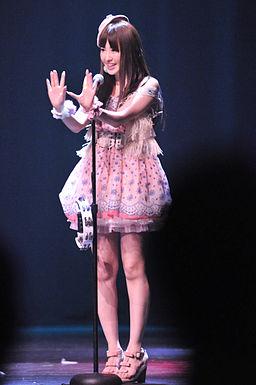
A member of the pop group AKB48 (photo by Dennis Amith)

A member of the pop group AKB48 (photo by Dennis Amith)

3. Dramas (basically television shows), manga (Japanese comics), J-pop (Japanese pop music), and anime (animation) isn’t as prominent as you would expect it to be. Of course there is a section in the bookstore of library dedicated to manga, but it’s not as if everyone is an “otaku” (the closest equivalent to this in English is a “geek” or a “nerd” who is obsessed with a certain thing like a certain manga, or anime shows). And yes, of course all of these are much more prominent in the country of their own origin, but I was definitely expecting a lot more. Everyone though does have their own favorites and many anime or manga in Japan could be connected to a certain generation as what they grew up to, similar to us saying we grew up reading dystopian novels that are popular with American teenagers nowadays.

I know I should be mentioning more about these aspects of pop culture so here are some sub-points to this topic:

  • Japanese dramas: The standard format of Japanese dramas are around ten to eleven episodes long depending on how well it is received and if liked even more, maybe a second season will be installed. I personally prefer dramas over anime because of the amount of dramas that can truly reveal aspects of daily life and culture in Japan, versus the selection in anime (but this may also be because I haven’t taken the time to actually watch many animes yet). Dramas are basically Japanese television shows, created for a Japanese audience. Since they are produced specifically for a Japanese audience the Japanese humor runs rampant and hilarious. Many Japanese dramas are also adaptations of other mangas, and sometimes animes, and due to the popularity many Korean and Taiwanese versions of the same drama crop up.
  • Manga: There are many different styles of manga and genres, very much similar to how one would organize a book collection by genre. Many very successful manga go on to have anime and drama versions. Manga can also be seen as forms of art within the storylines told and art forms themselves. Huge fan bases have been created for various manga, and often times these books are considered real forms of literature with overarching themes that can connect readers to the situations the protagonist is going through. I often read the more girly form of manga named “shoujo,” which isn’t necessarily girly, but known for its emphasis on emotions, relationships between people (not all romantic), and is usually directed towards a target audience of teenage to young adult women (although anyone can read it!)
  • J-pop (and other assorted music): Believe it or not, a majority of music is marketed towards the younger generation through television, (if you search through my posts you’ll be able to find mine about the amount of television watched in Japan…if you’re wondering it’s a lot.) There are many channels that are very similar to what MTV was originally, before all the reality TV set in, music artists are invited onto television show to perform and promote themselves. They sometimes have funny challenges for band members to participate in and interview questions so the watcher can learn more about their favorite artist. In this way people in Japan are much more connected to their favorite idol or artist through their television, and these performers probably reveal more things about their own personality and who they are through these shows versus how teens in the United States obtain information about their favorite music artist. It is also interesting to note that there are huge idol groups such as AKB48- which actually has 48 members- formed on the basis of fans being able to connect with at least one of these many girls who have a range of hobbies, likes, and interests. Many J-pop idols are also well into their 30s and 40s for age, yet are still extremely popular. SMAP is Japan’s number one idol group and is composed of members all in their 40s, who aren’t just listened to by women their age, but also by teenagers.
  • Anime: Personally I don’t watch a huge amount of anime, but in many cases it could be considered an art form. Much like in the United States there are huge fan bases for popular shows, and many “otaku.” Anime could be comparatively what some people watch in Japan today, versus what we Americans watch as television shows. Many go on for years, a famous example “One Piece” started as a manga in 1997 and is still running having around 400 something episodes. Studio Ghibli, the creators of many classics such as “Spirited Away” and “Totoro” are in particular regarded as one of the highest quality art form of anime produced in Japan.
souji_credit_allisontran

Students working together to clean their school (photo by Allison Tran)

4. Many people don’t expect this- I certainly didn’t- but everyone works together so well in a group mentality in Japan, versus the mentality of Americans, which emphasizes independence. People act for the betterment of society, for the betterment of their family, or for the betterment of their group, not for individualistic means. I knew my host family’s neighbors extremely well, maybe even better than my neighbors here at home. It’s not as if everyone is extremely self-righteous and friendly towards everyone, but everyone acts more cooperatively and openly with other people. Certainly the culture is shifting a little at the borders and the younger generation may experience it in different ways, but everyone is there to support the others, often placing others before themselves. My own theory for why this came to be is the small size of Japan as a whole, because of this more people have to work harder to understand each other and be a team in times of crisis within the islands. It’s based on the shared experiences of living together, a shared awareness shaped by their own society. Perhaps many other cultures have this as well, but it was highlighted in sharp contrast for me coming from a very American mindset and cultural background.

Oh wow! The memories! You may not believe it, but after living somewhere and truly being a part of the community you may return home and experience homesickness for the country and people you were with before. I can now testify that although I only stayed for around six weeks, I am homesick for Nagoya and I miss my host family and my friends dearly, they have all become like a second family to me. If you would like to check out all of my previous posts and experiences from my time in Japan, check out my blog: http://letters-from-land-of-the-rising-sun.blogspot.com/

I have a bit of a backlog of posts that I started in Japan, but neglected to post, so if you keep reading, I’ll be sure to keep posting!

*  As a bit of background related to AFS: A group of young American ambulance workers named the “American Field Service” were sent to France during both world wars to help with aiding the war effort by tending to the wounded French soldiers on the front lines. Many of the young American ambulance workers and French soldiers formed extremely close bonds with one another, becoming almost inseparable friends. The Americans soon realized that one-on-one relationships between people of different countries was major piece of the puzzle in creating world peace, dispelling ethnic stereotypes, and as they said, “breaking down barriers and forming bridges” between different cultures. As soon as World War II ended they decided to do something to recreate the great friendships they encountered with the French soldiers for other people as well. In 1947 the first student exchanges were started.  Since then AFS has been promoting positive diplomatic relationships between countries through high school age student exchange. I honestly belief that AFS is an amazing organization that is achieving what was originally intended to occur- the promotion of better country relations and the dispelling of racial stereotypes through one-on-one relations between people of different cultures.

Ok, thanks for reading through such a long post! I hope you learned a little more about Japan, and rid yourself of some stereotypes!

-Sophia U., 11th grade

What Books Would Harry Potter Read?

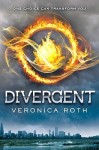
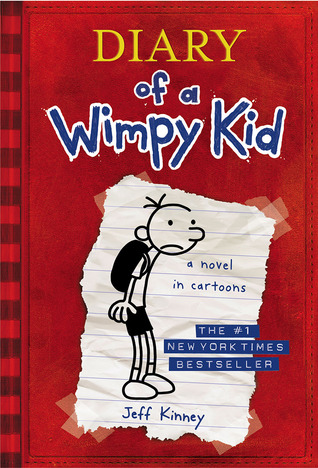
If Harry Potter was real and he wanted to read a good book… what would I recommend to him? Though there are a lot of great books out there, I think I would have him read Divergent by Veronica Roth, The Hunger Games by Suzanne Collins, and Diary of a Wimpy Kid by Jeff Kinney.

divergent_cover

I picked Divergent because the action-packed book is so suspenseful, it makes the story all that more exciting. With everything Harry has been through, I think that the mix of suspense and action is just right for him. Also, in reading Divergent, Harry might relearn how it is one’s choices that make one who they really are.

hunger_games_coverIn The Hunger Games and its sequels, rebellious thoughts are what drive the people forward to keep them sane. I thought that the battles of mind and body might make a fun read for Harry. He knows all about trying to keep a straight mind and a ready body. In doing so, one can focus on the task at hand and see it finished. Without this determination, all main characters would not succeed.

diary_of_a_wimpy_kidFinally, I chose Diary of a Wimpy Kid because with all this violence and hardships, one should be able to sit back and relax with a fun, entertaining book. It must be hard to live through all the tough times and not have a laugh, so I thought Harry would have a good time enjoying a book so different from his own life. These are all books that I liked and found entertaining, so I would believe that Harry Potter would like to relax and take a ride down imagination lane during these thrilling tales.

-Kyle H., 7th grade

Transitioning from Young Adult Novels to the Classics

bookstack2The transition from young adult novels to classic novels can be difficult. I started reading classic novels when I was in eighth grade. However, I still read young adult novels. I love both genres!

The key to transitioning from reading young adult novels to reading classic novels lies in the plot. Many young adult novels are affiliated with the supernatural, be it vampires, werewolves, zombies, or magic. The common factor is an element of fantasy. Most teens dismiss classic literature as boring but what they might not know is that classic novels were catalysts for contemporary young adult novels. Examples include Dracula by, Bram Stoker and Frankenstein by, Mary Shelley. Dracula and Frankenstein are two of the oldest fantasy novels. Frankenstein is considered by some to be the first science-fiction novel and Dracula, of course, was the first novel to debut vampires. They are also two of the most famous classic novels– cult classics, even.

dracula_coverDracula was written in 1897 and Frankenstein was written in 1818. Dracula is the story of a vampire who moves from England to Romania. Jonathan Harker is in charge of Dracula’s move but after spending time in his castle, he starts to suspect that Dracula is a vampire. Once he comes to this realization, he also realizes that he’s trapped in the castle and barely escapes with his life. He makes his way back home but little does he know that Dracula is now terrorizing his fiancee Mina and her friend Lucy by drinking their blood. Lucy begins to become very sick and Mina calls Dr. Van Helsing for help and he realizes what is happening to her but does not reveal it. Mina then becomes sick herself and it is then when Van Helsing and others try and put a stop to Dracula and they follow him back to Transylvania for a final battle.

frankenstein_coverFrankenstein is the story of a mad scientist named Victor Frankenstein who creates a creature. Frankenstein is commonly mistaken as the monster when in fact, Frankenstein is the creator of the monster. Victor has been passionate about science since he was a child and gets the idea of reanimation from watching lighting strike a tree. He reanimates a creature with expectations of beauty and is disappointed with how the creature turns out and rejects him, so the creature flees. Victor sees his creature again framed for his brother’s death. The creature explains his innocence and says that if Victor would make him a female companion, he would leave him alone forever. Victor agrees and makes him a companion but kills her out of fear of them breeding and creating a race. The creature sees Victor kill his companion-to-be and the two fight for the last time.

While it is true that classic novels start off slow, it is worth it to read them until the end. It is easier to ease into classic literature with novels that include aspects of what you’re already used to reading. The familiarity is essential in transitioning!

-Sarah B., 12th grade